-
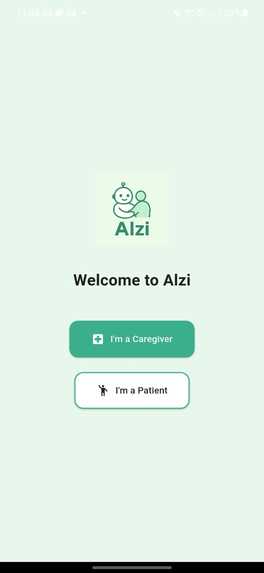
Login Screen
-
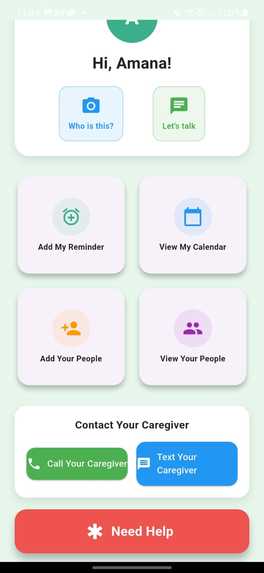
Patients Home Screen


Project Story: ALZI – An AI Memory Companion for Alzheimer’s Care
Inspiration
This project began with something deeply personal. I used to spend a lot of time with my grandfather, and after he passed away, I visited one of his old friends. To my surprise, he didn’t recognize me. When I introduced myself as “Imam’s granddaughter, Arshia” he asked, “Who’s Imam?”—even though Imam had been his close friend for years. Within five minutes, he forgot again. This cycle repeated nearly ten times.
What struck me most was how painful it was not just for him, but for his wife—his caregiver—who gently redirected him each time. That moment stayed with me.
It inspired me to learn more about Alzheimer's and how AI can support memory, emotion, and daily life. With the incredible people I met at USC, that spark turned into something real.
What We Built
ALZI is a mobile application that acts as a cognitive AI companion for individuals with early-stage Alzheimer’s. The app uses voice, vision, and contextual awareness to assist with memory recall and emotional well-being.
We started with two core features:
- Smart reminders integrated with natural language and Calendar
- Face recognition of close family and friends
Key Features
- Face Recognition + People Profiles: Patients can recognize and recall important individuals details such as relation with patient and short description about the individual using AI-powered vision.
- Smart, Voice-Activated Reminders: Natural language-based reminders support daily routines and important events.
- Voice Narration: Text-to-speech uses voices that feel personal and warm.
- Natural Language Understanding: Conversational inputs are parsed using Google's Gemini API to extract structured event details.
- Memory Support for Daily Tasks: ALZI helps patients recall the location of personal belongings like wallets or phones, and provides contextual support for daily routines—answering questions like “Where is my bag?” or “Did I take my medicine?” using stored memory cues and patient input data.
- Calendar Integration: Routine support is enhanced with structured reminders and events.
Stack and Technologies
| Layer | Technology Used |
|---|---|
| Frontend | Flutter (mobile and web support) and Android Studio |
| Backend API | Python Flask, Face Recognition API |
| Data Storage | Firebase Firestore |
| AI Services | Gemini |
| Voice | LMNT Text to Speech (Custom Voice Profile) |
Challenges Faced
- Understanding the emotional burden on caregivers and building empathetic interfaces
- Handling natural language parsing and designing fallback logic when AI model fails
- Structuring data effectively for reusability, especially storing event details in a consistent format so they can be fetched and accurately added to calendars later
- Managing real-time camera input and latency while integrating Face Recognition API into the Flask backend
- Maintaining UI consistency and performance across both mobile and web views using Flutter and Android Studio, especially with accessibility needs in mind
- Ensuring smooth audio playback and natural tone delivery when using LMNT's custom voice profile for text-to-speech, particularly in noisy or emotional environments
What We Learned
Alzheimer’s is not just about memory loss—it’s about preserving identity, reducing confusion, and supporting both patients and caregivers emotionally.
We learned that AI doesn’t have to be cold or clinical. It can be warm, familiar, and deeply personal. That’s exactly the experience we aim to create with ALZI.
Roadmap and Future Scope
We’re currently focused on supporting individuals with early-stage Alzheimer’s who are still able to interact with smartphones. Our future roadmap includes:
- Appliance usage help through camera input – ALZI will guide users in real-time using camera input to identify household appliances and provide step-by-step assistance. For example, if a patient is confused while trying to make coffee or use a microwave, the app will recognize the appliance and respond with simple, voice-guided instructions to complete the task safely and independently.
- Calming voice support during anxiety episodes
- Live location tracking to prevent wandering – ALZI will monitor the patient’s real-time location and detect when they move outside predefined safe zones (geofence). If the patient enters an unfamiliar or unrecognized location, the system will alert caregivers immediately, helping prevent confusion, getting lost, or potential safety risks in unknown environments.
- Conversational guidance when patients feel stuck
Built With
- android-studio
- dart
- face-recognition-api
- firebase
- flask
- flutter
- google-cloud-run
- google-gemini-api
- google-speech-to-text
- lmnt-text-to-speech
- python

Log in or sign up for Devpost to join the conversation.