-
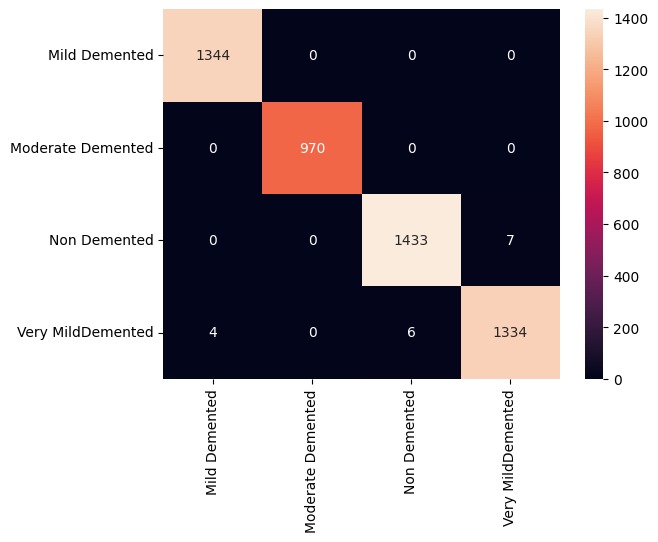
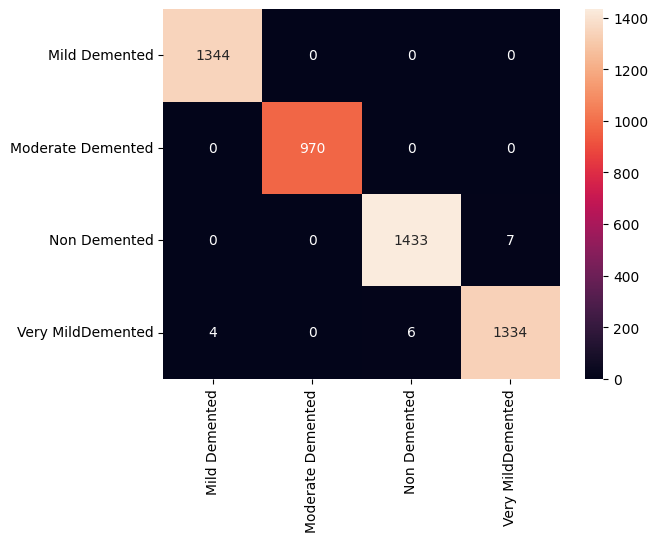
Confusion matrix
-
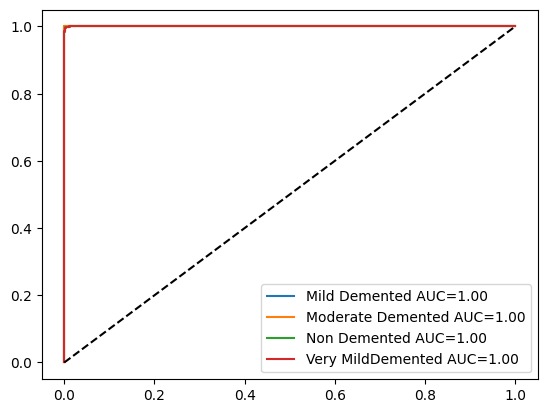
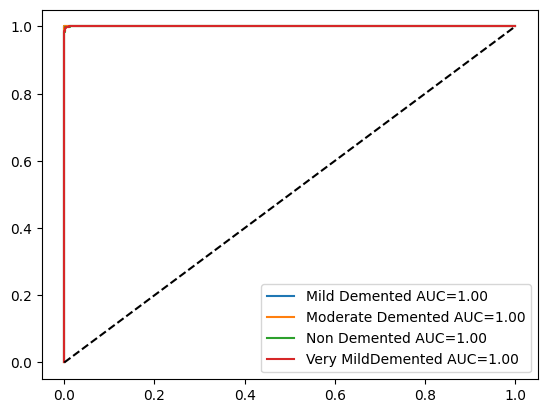
AUC_ROC curve
-
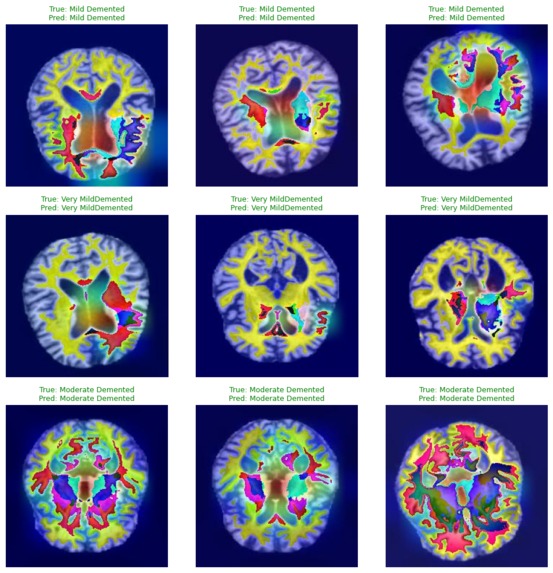
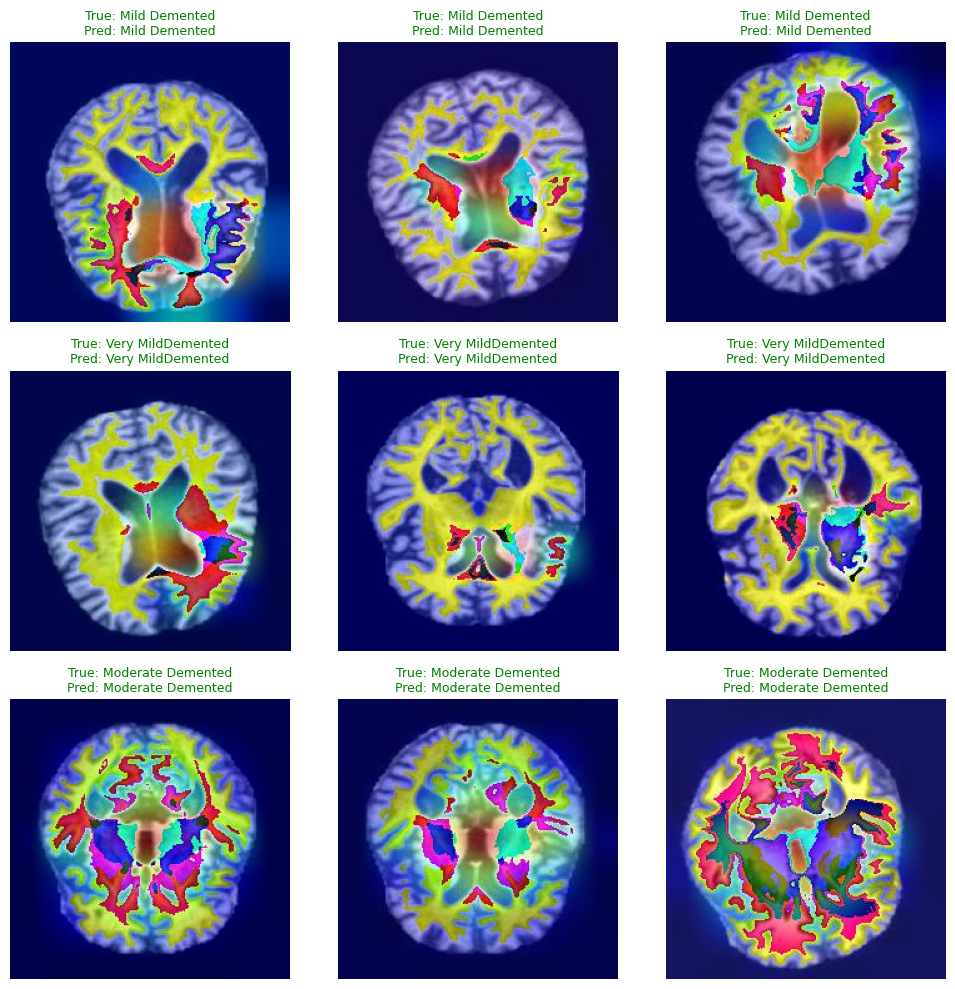
Grad-cam(Explainable ai)
Inspiration
Alzheimer’s disease is a progressive neurological disorder where early and stage-wise diagnosis plays a critical role in patient care. While learning deep learning and medical image analysis, I was motivated by the challenge of applying computer vision techniques to MRI data, where visual differences between disease stages are subtle. The idea was to explore how deep learning models can assist clinicians by providing automated, consistent, and scalable MRI-based diagnosis support.
What it does
Alzheimer_MRI is a deep learning–based system that classifies brain MRI images into four stages of Alzheimer’s disease: Non-Demented, Very Mild Demented, Mild Demented, and Moderate Demented. The model processes MRI scans and predicts the disease stage, providing quantitative evaluation metrics to assess classification performance.
How we built it
The project was built using a PyTorch-based pipeline. MRI images were preprocessed through resizing and normalization, and the dataset was split into training, validation, and testing sets using stratified sampling. A pretrained Xception convolutional neural network was used as the backbone through transfer learning, with custom classification layers added for four-class prediction. The model was trained using the Adamax optimizer and cross-entropy loss, and evaluated using accuracy, confusion matrices, and multi-class ROC–AUC scores.
Challenges we ran into
One major challenge was distinguishing between early-stage Alzheimer’s classes, where MRI structural differences are minimal. Another challenge was ensuring a clean transition from high-level frameworks to PyTorch, especially managing tensor shapes, gradient flow, and reproducibility. Designing a fair evaluation strategy for multi-class medical data also required careful consideration.
Accomplishments that we're proud of
We successfully developed an end-to-end, reproducible deep learning pipeline for multi-class Alzheimer’s MRI classification. The project demonstrates effective use of transfer learning on medical images, achieves meaningful performance across all classes, and follows proper evaluation practices suitable for healthcare-related AI systems.
What we learned
This project deepened our understanding of medical image preprocessing, transfer learning, and multi-class evaluation techniques. We learned that high accuracy alone is insufficient in medical applications—robust evaluation, transparency, and understanding model limitations are equally important.
What's next for Alzheimer_MRI
Future work includes extending the approach to 3D MRI volumes, validating the model on multi-center datasets, incorporating additional clinical features, and exploring lightweight architectures for real-time clinical deployment. With further validation, Alzheimer_MRI could evolve into a practical decision-support tool for early Alzheimer’s screening.
Built With
- pytorch
- sklearn


Log in or sign up for Devpost to join the conversation.