-
-
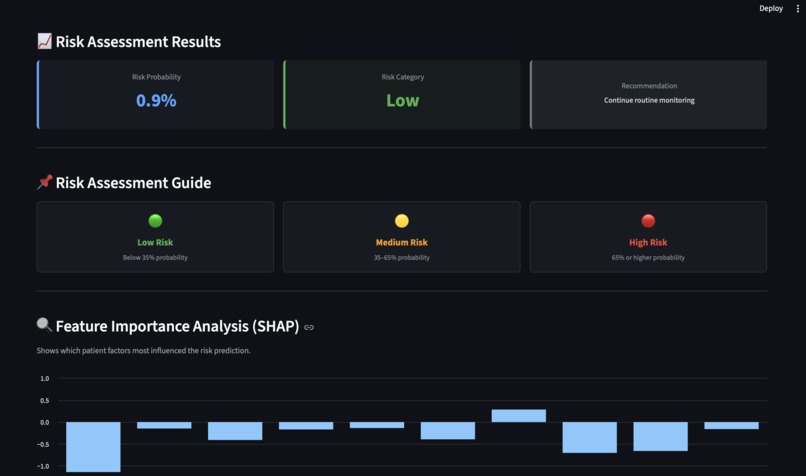
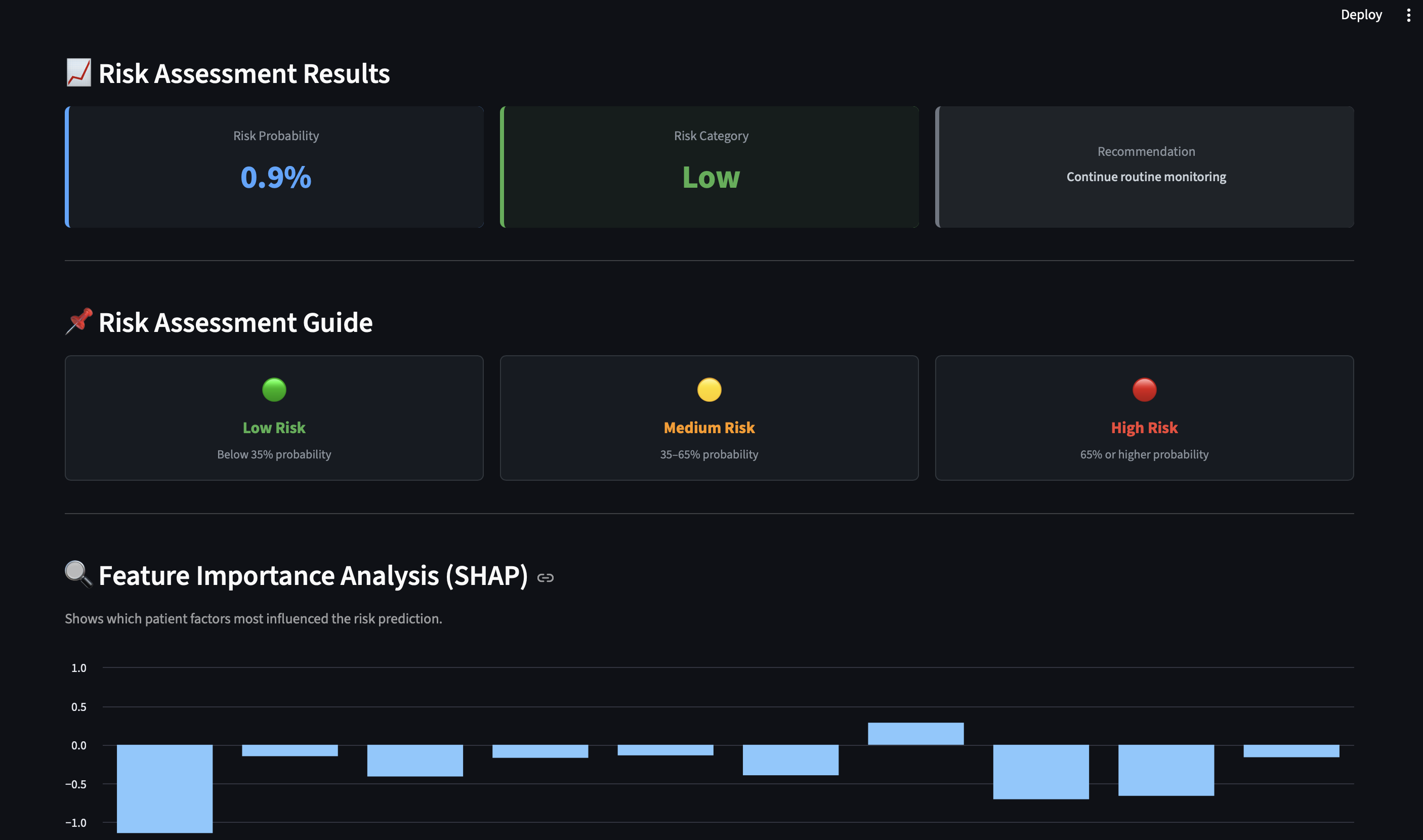
Risk Scoring
-
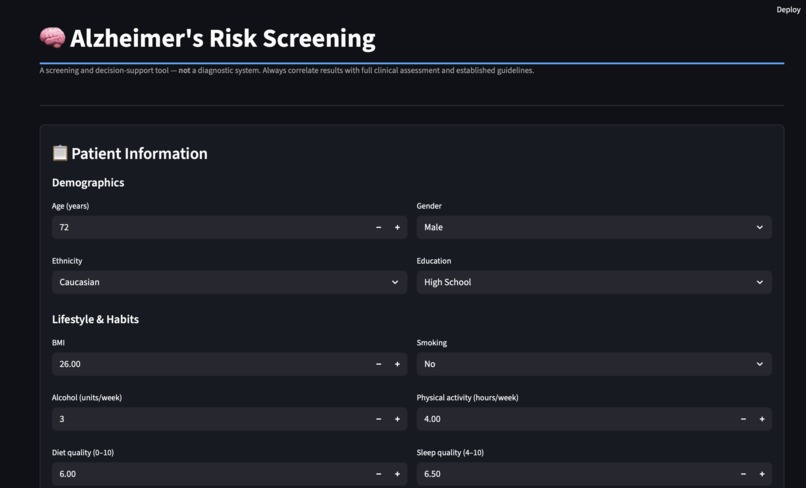
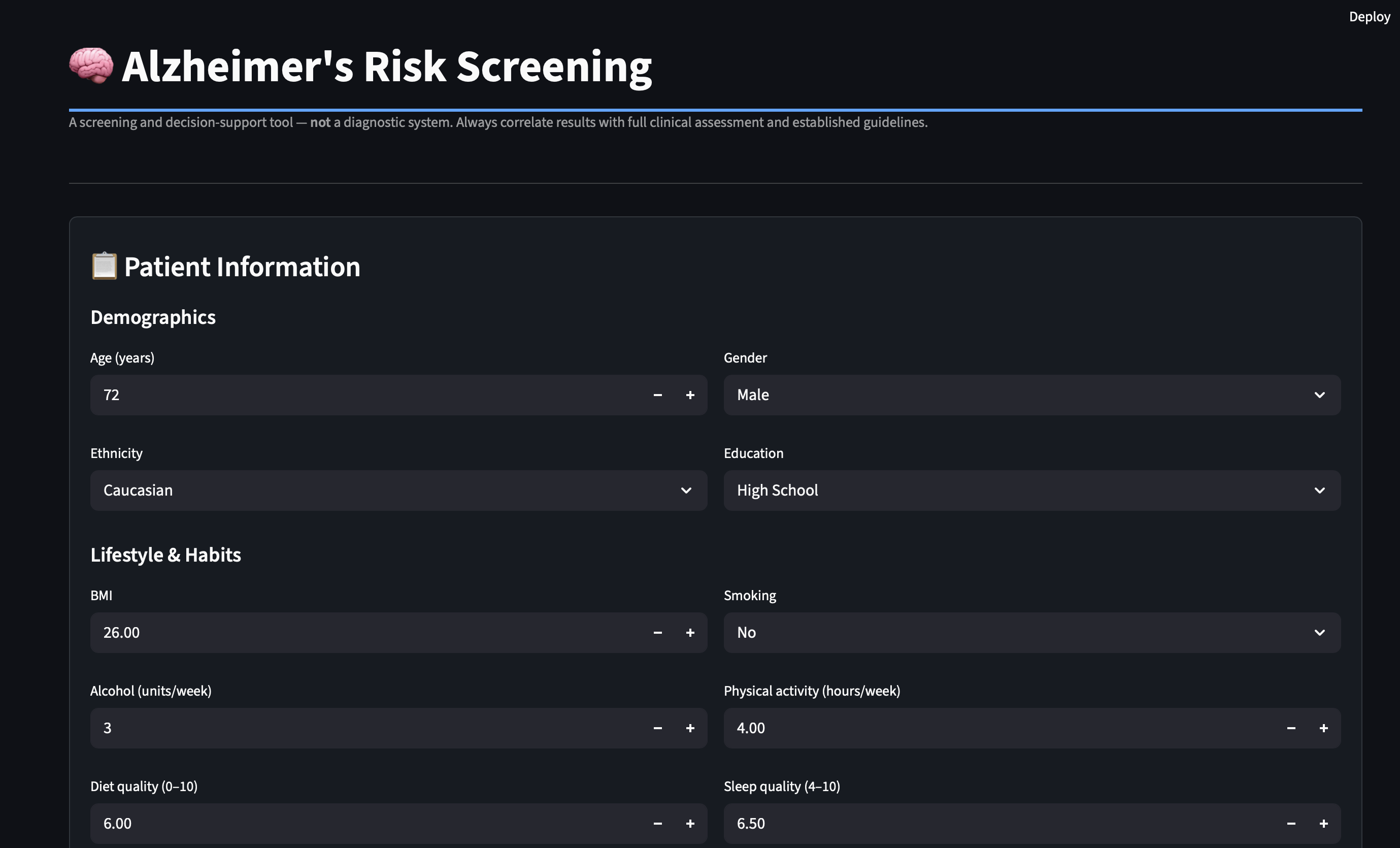
Input Variables
-
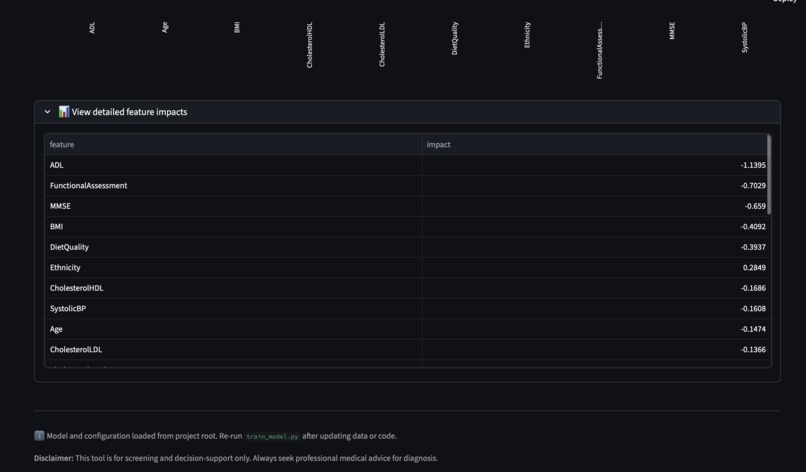
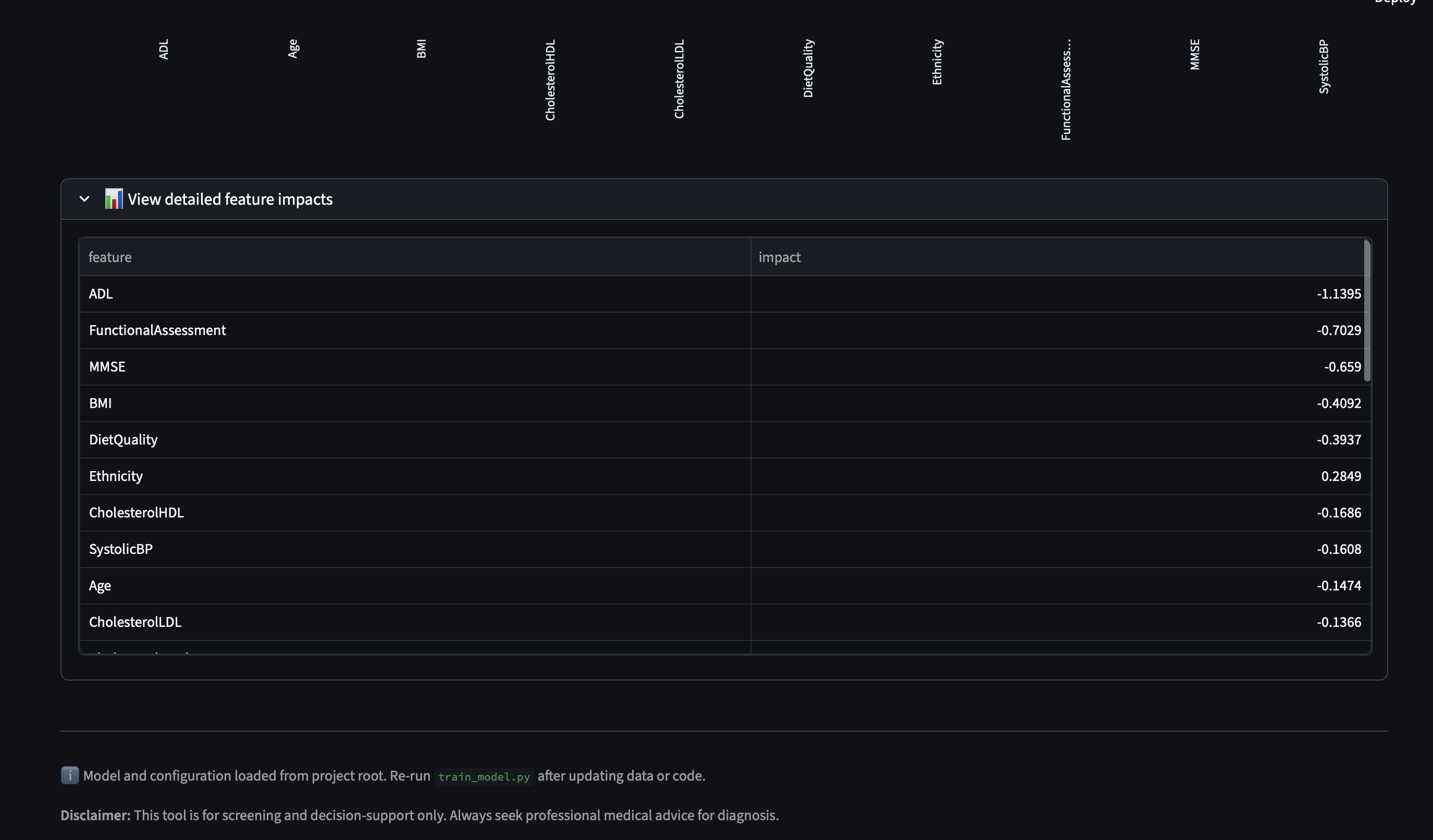
Feature Impact
Project Description
Our Alzheimer’s Risk Screening Dashboard is an app that uses patient data to predict the risk of Alzheimer’s progression. The user inputs cognitive, lifestyle, clinical, and medical history data and the model produces a risk score, risk band, and contributing factors based on the input. Results are intended as a screening support tool for clinicians, not as a diagnostic tool, enabling early identification of high-risk patients.
What problem are you solving and how?
Alzheimer’s can be challenging for clinicians to detect early, and delayed detection can result in worse outcomes for patients. Early identification of patient risk for Alzheimer’s is important for timely, preventative care and monitoring. Our tool helps clinicians assess risk using patient data, supporting early detection and informed decision making.
Who benefits from your solution?
Individuals who are at high risk of developing Alzheimer’s benefit the most from this solution, as it allows them to receive timely care to help delay the onset of Alzheimer’s. Clinicians also benefit from having a quick and simple tool they can use to predict the risk of Alzheimer’s for their patients. The tool also gives recommendations to clinicians that can be used when determining the next steps for high risk patients.
Core functions and tech stack used
The application processes data using a trained machine learning model to generate an Alzheimer’s risk probability, assigns the patient to a Low, Medium, or High risk band, and highlights the key factors contributing to the prediction using explainable AI techniques (SHAP). The application is built using Python and deployed with Streamlit for the user interface. Data preprocessing and model integration are handled using scikit-learn pipelines. XGBoost is used as the primary classification model, with Random Forest serving as a fallback option. SHAP is used for model interpretability, while Pandas supports data handling and preprocessing. The trained model is saved using Pickle to allow fast loading in future sessions.
Why is your solution better or different?
Our solution is better because it compiles the data into one place, providing a clean, readable output for clinicians. The tool gives clinicians a quick, automated method of data analysis, reducing cognitive load and allowing for more face-to-face time with their patients.
Brief feedback from your target group
"It’s an interesting dashboard and feels approachable from a non technical perspective. The layout makes sense clinically and it’s easy to see how different factors contribute to risk. This seems great as an educational or screening tool, especially for understanding how variables like cognition and vitals play into Alzheimer’s risk. Definitely something that should be used in conjunction with a physician and full clinical evaluation, not on its own, but as a learning and decision support aid it’s solid."
How could this become economically viable
The dashboard could be licensed to healthcare organizations or integrated into existing electronic health record (EHR) systems, creating value through improved workflow efficiency and preventive care. Additionally, the model could support research institutions or pharmaceutical companies by enabling large-scale risk stratification for clinical trials and population health studies.
Technical and organizational next steps
Ideally, as patients are screened using our tool, we can add more data to our model to improve performance and accuracy.
Data needs, GDPR compliance, and security
Our tool requires patient cognitive, lifestyle, clinical, and medical history data to generate Alzheimer’s risk predictions. For GDPR and privacy compliance, our app does not require or ask for input of personally identifiable information (PII). In real-world development, the patient will be kept anonymous. The application runs entirely locally, with no external API calls, ensuring sensitive data never leaves the clinician’s environment.
Built With
- numpy
- pandas
- python
- scikit-learn
- streamlit


Log in or sign up for Devpost to join the conversation.