Inspiration
I have been seeing people suffering from Alzheimer's, who slowly forget the things around them and also lose the capacity to recollect the memories. At the very final stage, they even forget to re-collect their own children or their parents. As Machine Learning techniques are having a greater boom these days we came up with a solution for identifying Alzheimer's in prior and also their classification.
What it does
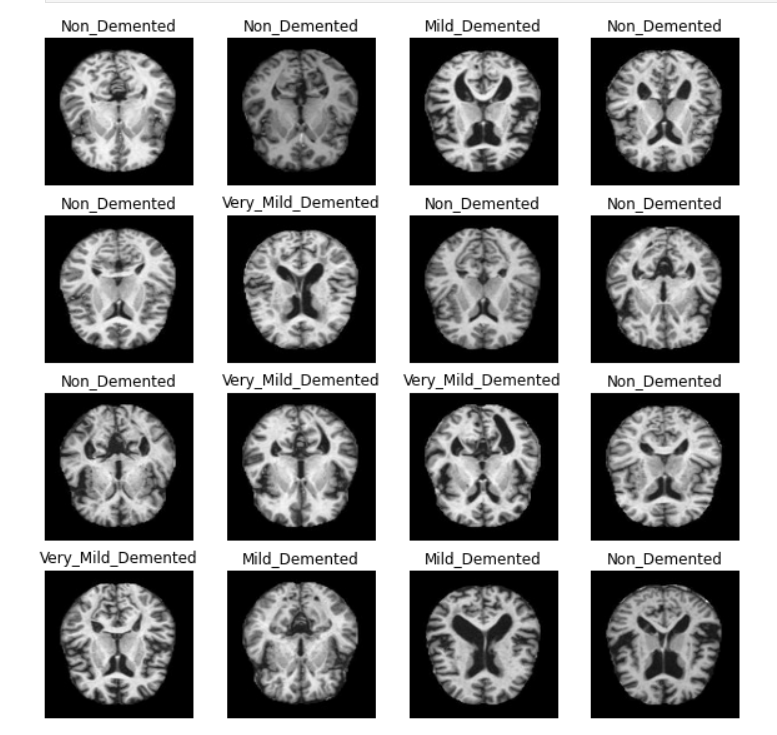
Firstly, we have the MRI datasets of the brain which are classified into Non_Demented,Mild_Demented,Very_Mild_Demented,Moderate_Demented Model-Architecture The sequential model you gave was created using Keras, a sophisticated deep-learning framework. Let's dissect the architecture in detail:
1) Rescaling Layer:
The Rescaling layer is used to normalize the pixel values of the input images. It scales the pixel values to the range of [0, 1] by dividing them by 255. The input_shape parameter specifies the shape of the input images, assuming they have IMG_HEIGHT and IMG_WIDTH dimensions, and 3 channels (RGB). 2) Convolutional Layers:
The first Conv2D layer has 16 filters (also referred to as channels or feature maps) with a kernel size of (3, 3). It uses the ReLU activation function and the He normal initializer for weight initialization. The padding parameter is set to 'same', which means that zero-padding is added to the input to ensure the output feature maps have the same spatial dimensions as the input. After the convolution, a MaxPooling2D layer with a pool size of (2, 2) is applied to reduce the spatial dimensions of the feature maps by taking the maximum value within each pooling region.
3) Additional Convolutional Layers:
Two more sets of Conv2D and MaxPooling2D layers follow a similar pattern. The second Conv2D layer has 32 filters, and the third Conv2D layer has 64 filters. Each layer uses the ReLU activation function and the He normal initializer. Dropout layers with dropout rates of 0.25 are added after each of the second and third pooling layers.
4) Fully Connected Layers:
Two fully connected (Dense) layers are added after the flattening layer. The first dense layer has 128 units and uses the ReLU activation function and the He normal initializer. The second dense layer has 64 units and also uses the ReLU activation function. Finally, a Dense layer with 4 units and the softmax activation function is added as the output layer. This layer produces the predicted probabilities for the 4 classes or categories of the problem.
How we built it
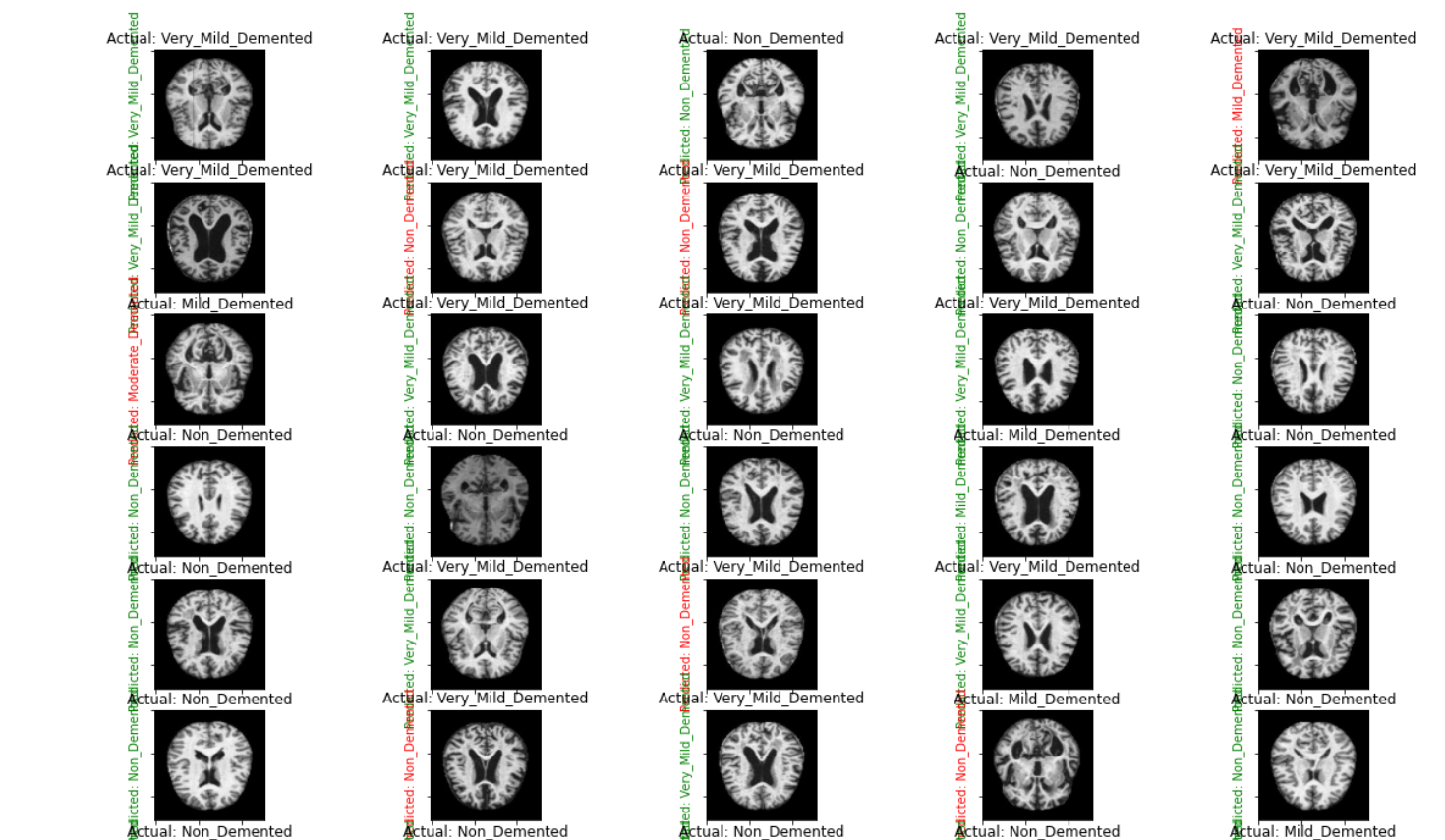
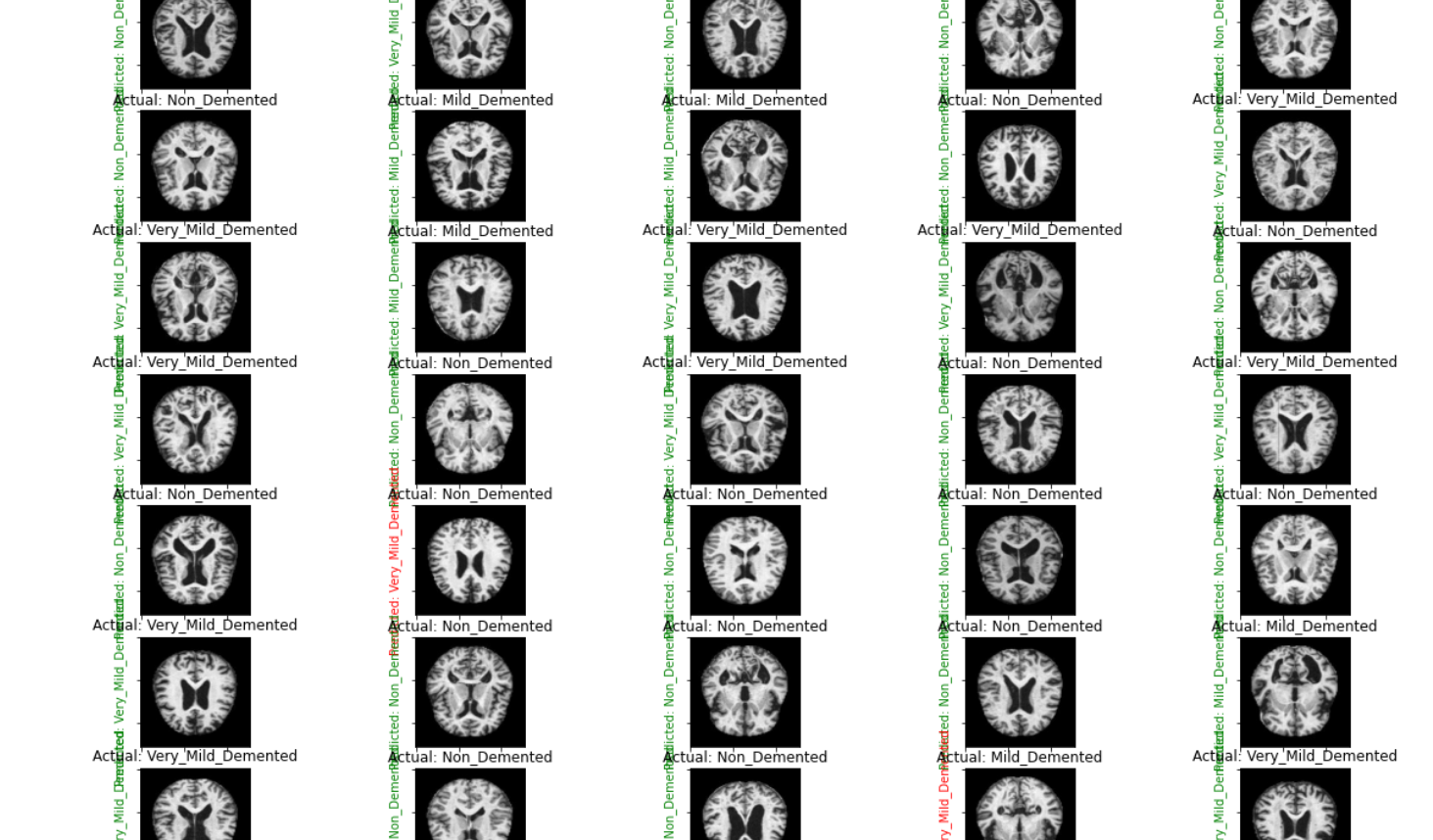
After building the above layers we have connected the layers and trained the data using many variations
Challenges we ran into
While building the above model architecture, there could be several challenges that one might encounter. Here are some potential challenges:
Dataset Size: Acquiring a large and diverse dataset for Alzheimer's detection can be challenging. Limited data may lead to overfitting, where the model performs well on the training set but fails to generalize to new data. Augmentation techniques, collaboration with institutions, or exploring publicly available datasets could help mitigate this challenge.
Model Complexity: Determining the optimal complexity of the model can be challenging. Too simple of a model may struggle to capture the necessary patterns and features, while an overly complex model may lead to overfitting. Iteratively adjusting the number of layers, filters, and other hyperparameters while monitoring performance on the validation set can help strike the right balance.
Hyperparameter Tuning: Selecting appropriate hyperparameters, such as learning rate, dropout rate, and kernel size, can significantly impact the model's performance. Experimenting with different values and using techniques like grid search or random search can help find the optimal hyperparameters.
Computational Resources: Training deep CNN models on large datasets can be computationally intensive and time-consuming. Limited computational resources may hinder the ability to train and iterate on the model efficiently. Using cloud-based platforms or leveraging GPU resources can help alleviate this challenge.
Model Interpretability: CNNs are known for their black-box nature, making it challenging to interpret the learned features and understand the decision-making process. Interpreting and explaining the model's predictions in the context of Alzheimer's detection is crucial for clinical use and research. Techniques such as visualization of feature maps or gradient-based methods for interpreting CNNs can be explored.
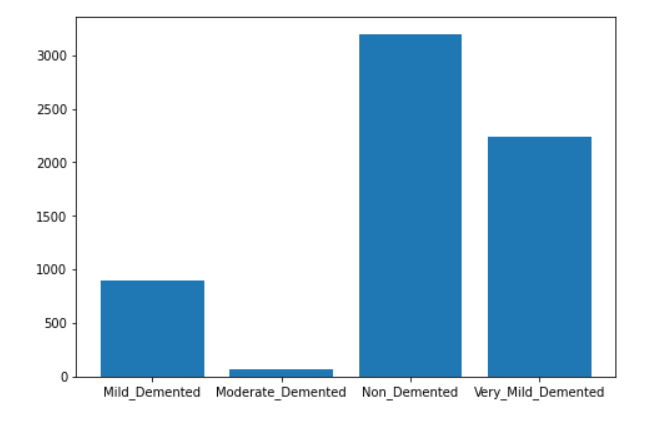
Class Imbalance: If the dataset has an imbalance in the number of samples across different classes, the model may become biased towards the majority class. Addressing class imbalance through techniques such as oversampling, undersampling, or using class weights during training can help improve the model's performance on underrepresented classes.
Accomplishments that we're proud of
Throughout the process of building the Alzheimer's detection project using CNNs, there are several accomplishments that can be a source of pride:
Model Development: Successfully developing a CNN model architecture tailored specifically for Alzheimer's detection is a significant accomplishment. Designing the architecture by understanding the underlying principles and leveraging techniques such as convolutional layers, pooling, and dropout demonstrates the ability to apply deep learning concepts to solve real-world problems.
Data Acquisition and Curation: Acquiring and curating a diverse and representative dataset of brain MRI scans is an accomplishment in itself. Collaborating with medical institutions and research organizations to obtain labeled images demonstrates proactive engagement with experts and stakeholders in the field.
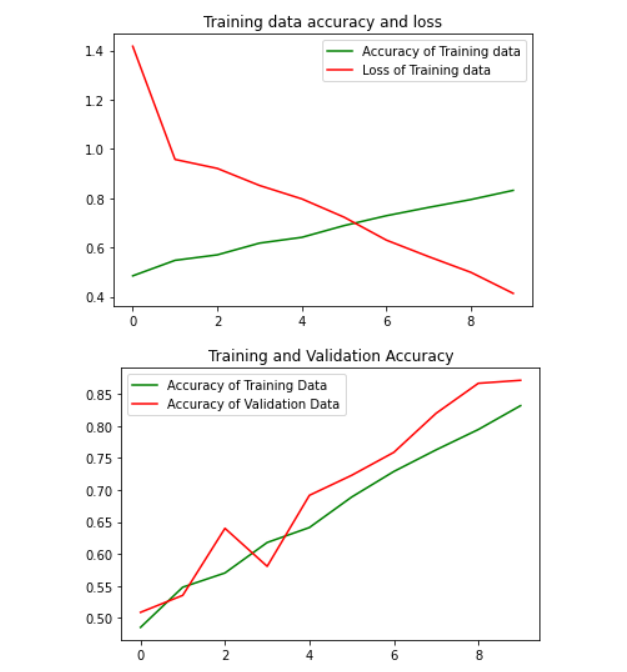
Model Performance: Achieving high accuracy or other evaluation metrics in detecting Alzheimer's disease is a major accomplishment. Successfully training the model to generalize well on unseen data and accurately distinguish between healthy individuals and those with Alzheimer's disease showcases the effectiveness of the developed CNN architecture.
Translational Potential: Building an Alzheimer's detection system with machine learning has the potential for significant impact in the medical field. Creating a tool that aids in early detection of Alzheimer's disease can potentially lead to timely interventions, improved patient outcomes, and advancements in research and treatment.
Collaboration and Contributions: Collaborating with medical professionals, researchers, and institutions throughout the project is an accomplishment that demonstrates the ability to work as part of a multidisciplinary team. Contributing to the field of Alzheimer's research by providing a valuable tool for detection showcases a commitment to making a positive difference in the lives of individuals affected by the disease.
Learning and Growth: Undertaking and completing a complex project like Alzheimer's detection with CNNs involves a significant learning journey. The accumulation of knowledge, skills, and experience gained throughout the project is an accomplishment that can be applied to future endeavors and contribute to personal and professional growth.
What we learned
Throughout the process of building the Alzheimer's detection project using CNNs, several key learnings can be highlighted:
Understanding Alzheimer's Disease: The project provided an opportunity to dive deep into the understanding of Alzheimer's disease, including its symptoms, progression, and impact on brain MRI scans. Learning about the specific features and patterns associated with Alzheimer's disease in medical imaging helped in developing a targeted detection model.
Convolutional Neural Networks (CNNs): The project involved a comprehensive study of CNNs and their application in image analysis tasks. Understanding the architecture, working principles, and various layers of CNNs, such as convolutional, pooling, and fully connected layers, was essential in designing an effective model for Alzheimer's detection.
Preprocessing Techniques: Preprocessing played a crucial role in preparing the MRI images for training the CNN model. Learning about image resizing, normalization, and noise reduction techniques helped in enhancing the quality and consistency of the input data, leading to improved model performance.
Transfer Learning: Exploring transfer learning and leveraging pre-trained CNN models, such as VGG or ResNet, proved to be a valuable technique. Understanding how to adapt and fine-tune pre-trained models for Alzheimer's detection allowed for utilizing learned features and accelerating the training process, especially in cases where limited training data was available.
Hyperparameter Tuning: The project highlighted the significance of hyperparameter tuning in optimizing the model's performance. Experimenting with learning rates, batch sizes, dropout rates, and other hyperparameters helped in finding the optimal configuration that improved the model's accuracy and generalization.
Interpretability Challenges: The project brought attention to the interpretability challenges associated with CNN models. Understanding the need for transparency and explainability in the medical field, efforts were made to explore techniques such as visualization of feature maps and gradient-based methods to gain insights into the learned features and enhance interpretability.
Collaboration and Communication: Collaborating with medical professionals, researchers, and institutions fostered an interdisciplinary approach to the project. Effective communication and collaboration skills were developed through engaging with domain experts and understanding their perspectives and requirements.
Ethical Considerations: Building an Alzheimer's detection system raised awareness of the ethical considerations in handling medical data and ensuring privacy and consent. Learning about data protection, compliance with regulations, and ethical guidelines helped in maintaining the integrity of the project.
These learnings not only contributed to the successful completion of the Alzheimer's detection project but also equipped the team with valuable knowledge and skills applicable to future endeavors in medical imaging, machine learning, and healthcare research.
What's Next for Alzheimer's Detection using ML
Moving forward, there are several potential avenues to explore for Alzheimer's detection using ML:
Refinement of Existing Models: Continuously refining and optimizing the existing ML models for Alzheimer's detection is essential. This involves further fine-tuning the model architecture, hyperparameter tuning, and exploring advanced techniques such as ensembling or model distillation to improve performance.
Multi-Modal Approaches: Investigating the integration of multiple imaging modalities, such as MRI, PET scans, or EEG data, can enhance the accuracy and reliability of Alzheimer's detection. Exploring fusion techniques and developing models that can effectively integrate information from various modalities can be a promising direction.
Longitudinal Analysis: Alzheimer's disease is a progressive condition, and analyzing longitudinal data can provide valuable insights into disease progression and early detection. Developing ML models that can analyze temporal changes in brain imaging data over time can aid in identifying subtle patterns and predicting disease progression.
Explainability and Interpretability: Enhancing the interpretability of ML models for Alzheimer's detection is crucial for gaining trust and acceptance in clinical settings. Researching and developing techniques for explaining model predictions, visualizing learned features, and providing transparent decision-making can facilitate the adoption of ML-based diagnostic tools.
Real-time Monitoring and Intervention: Investigating the feasibility of real-time monitoring and intervention using ML techniques can be a promising area of research. Developing models that can continuously analyze streaming data, such as wearable device data or patient monitoring records, may enable early detection and timely interventions.
Large-Scale Collaborative Efforts: Collaborating with medical institutions, research organizations, and other stakeholders can accelerate progress in Alzheimer's detection using ML. Sharing data, establishing benchmark datasets, and fostering collaborations can lead to more robust models and facilitate the development of standardized diagnostic tools.
Validation and Clinical Trials: Conducting rigorous validation studies and clinical trials is crucial to evaluate the performance and effectiveness of ML-based Alzheimer's detection models. Collaborating with clinicians and researchers to conduct large-scale studies with diverse patient populations can provide evidence for the clinical utility of these models.
Personalized Medicine and Risk Stratification: Exploring ML techniques for personalized medicine and risk stratification in Alzheimer's disease can enable targeted interventions and treatment plans. Developing models that can predict disease progression, assess individual risk factors, and guide personalized interventions can have a significant impact on patient outcomes.
These potential directions demonstrate the ongoing opportunities and challenges in leveraging ML for Alzheimer's detection. Continued research, collaboration, and innovation are vital for advancing the field and developing effective tools for early detection and intervention in Alzheimer's disease.
Built With
- cnn
- python
- rnn


Log in or sign up for Devpost to join the conversation.