-
-
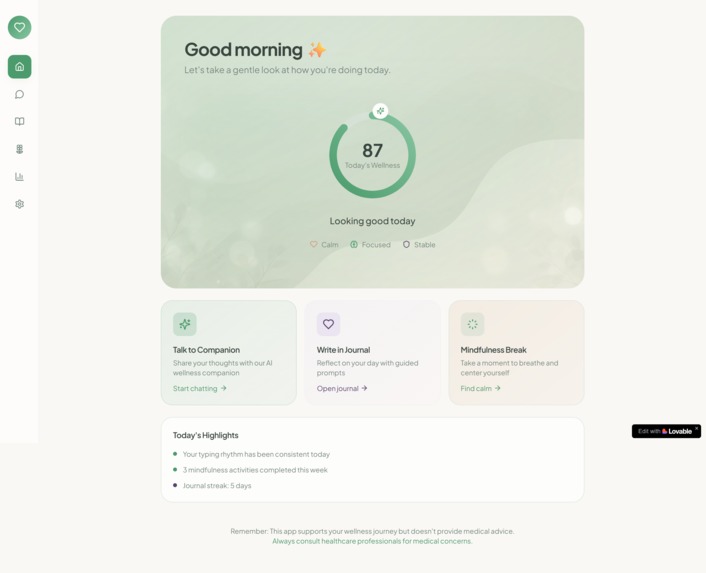
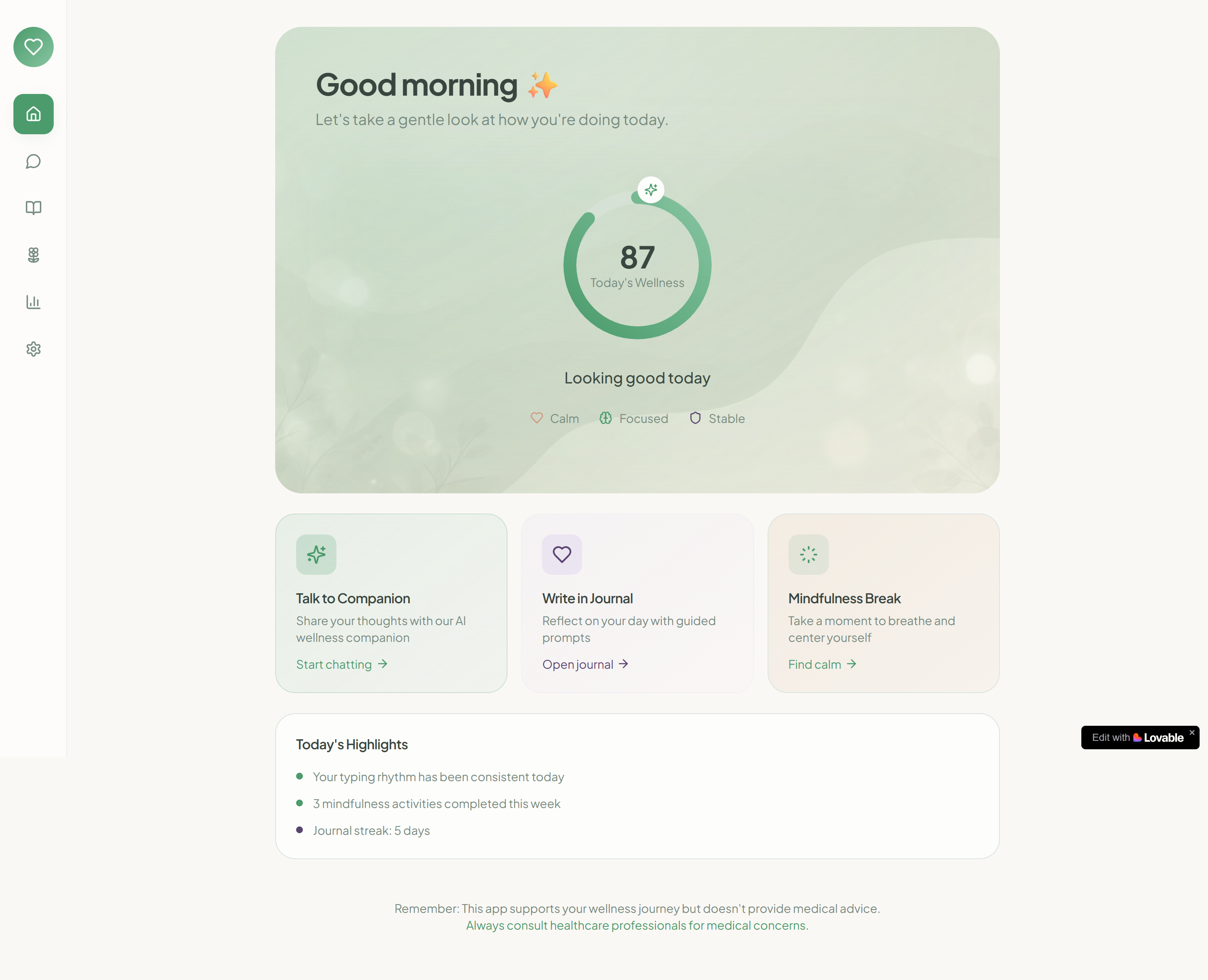
Home page
-
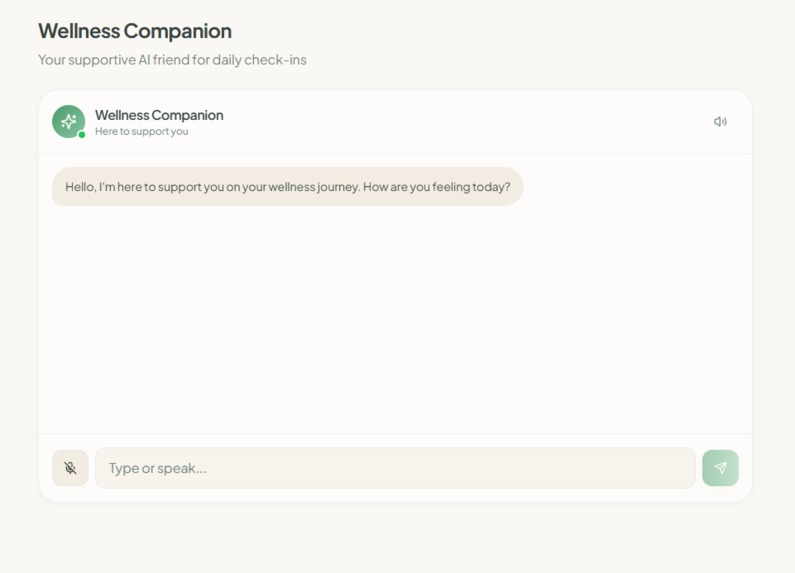
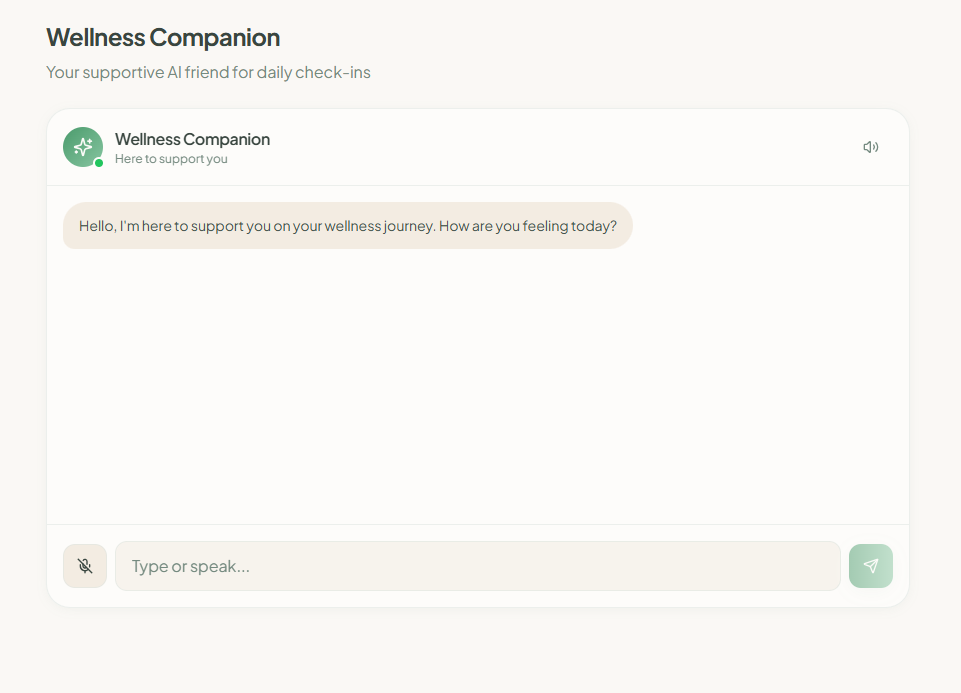
Companion
-
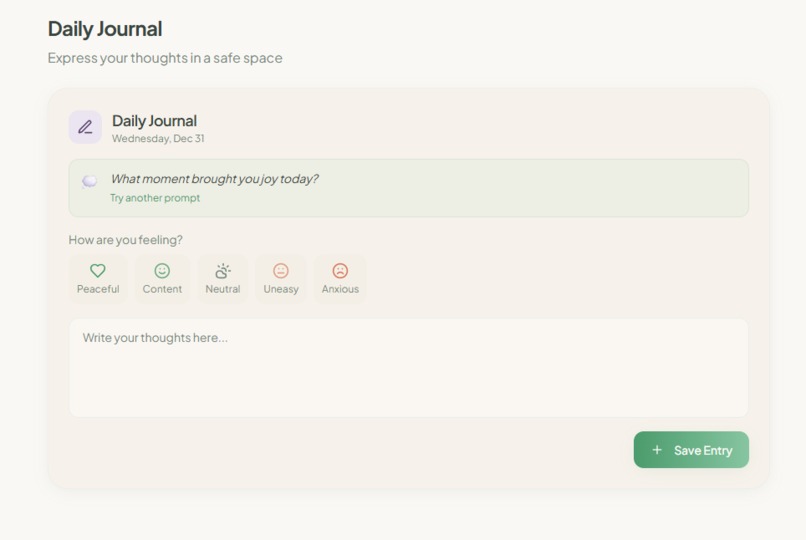
Journal
-
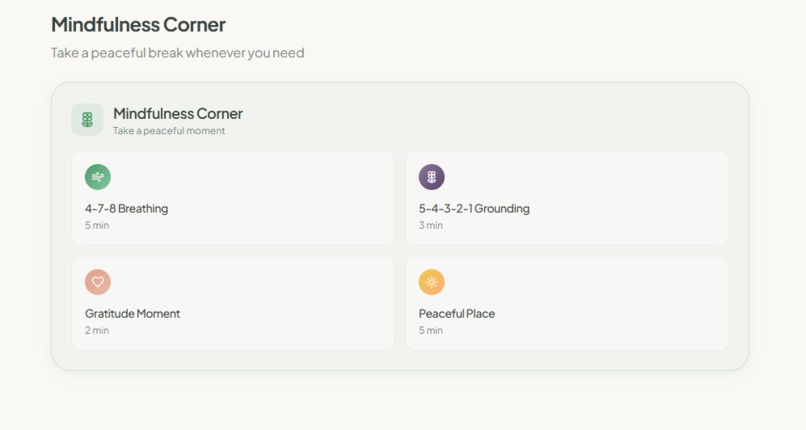
Mindfulness
-
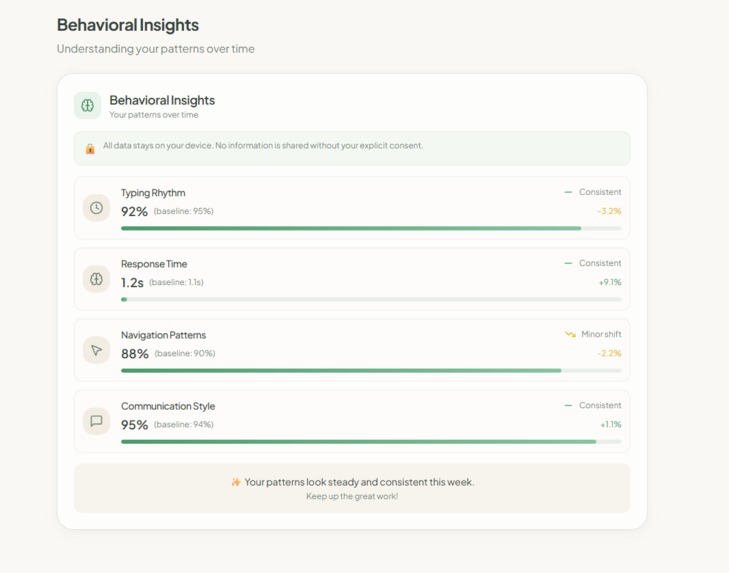
Insights
-
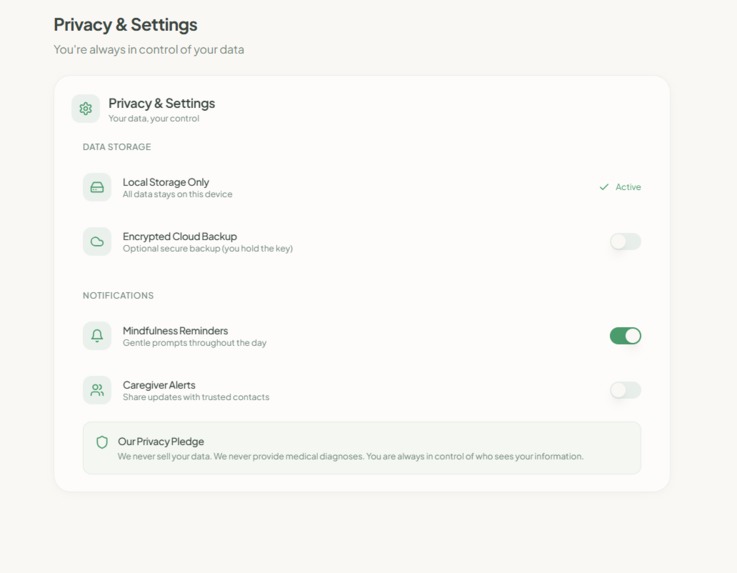
Settings
Inspiration
Early cognitive changes often appear in everyday behavior long before a clinical diagnosis, but they are easy to miss. We wanted to explore whether a calm, privacy-first digital companion could help people become aware of subtle cognitive drift early — without fear, labels, or medical claims.
What it does
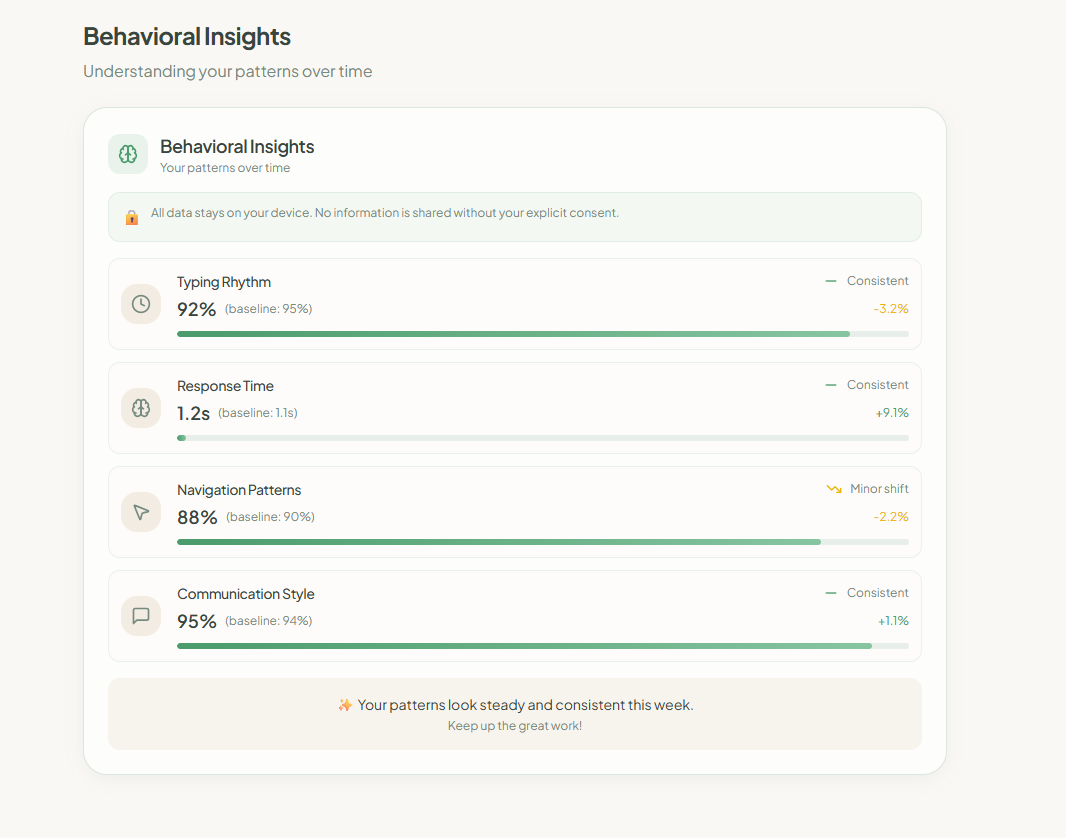
AlzAware is an AI-powered wellness companion prototype that passively learns a user’s communication and interaction patterns over time. It gently highlights long-term behavioral changes and offers supportive insights, never medical diagnoses.
The app provides:
- Conversational and voice-based interaction
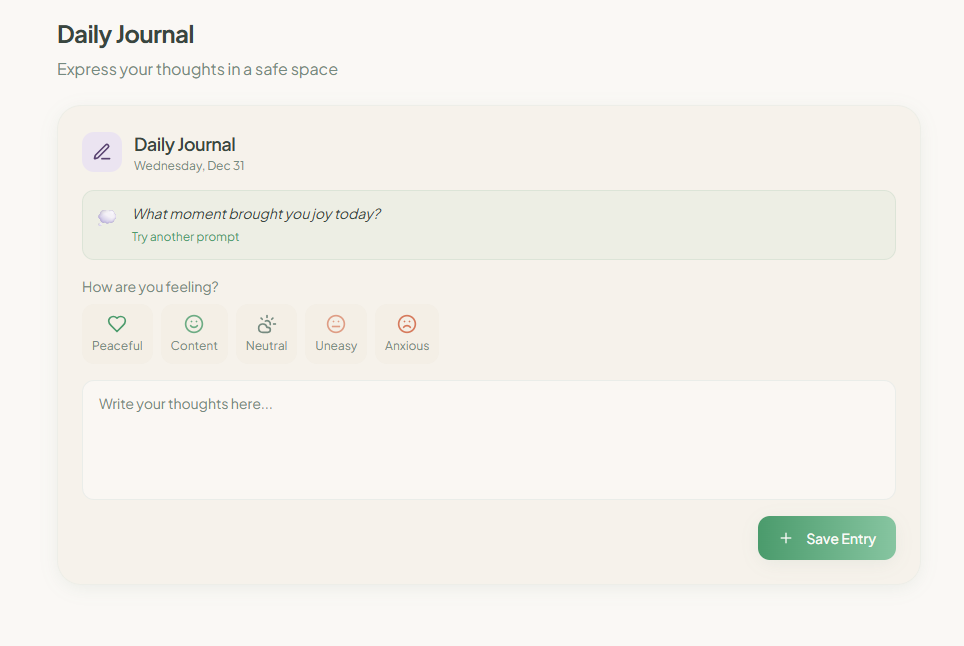
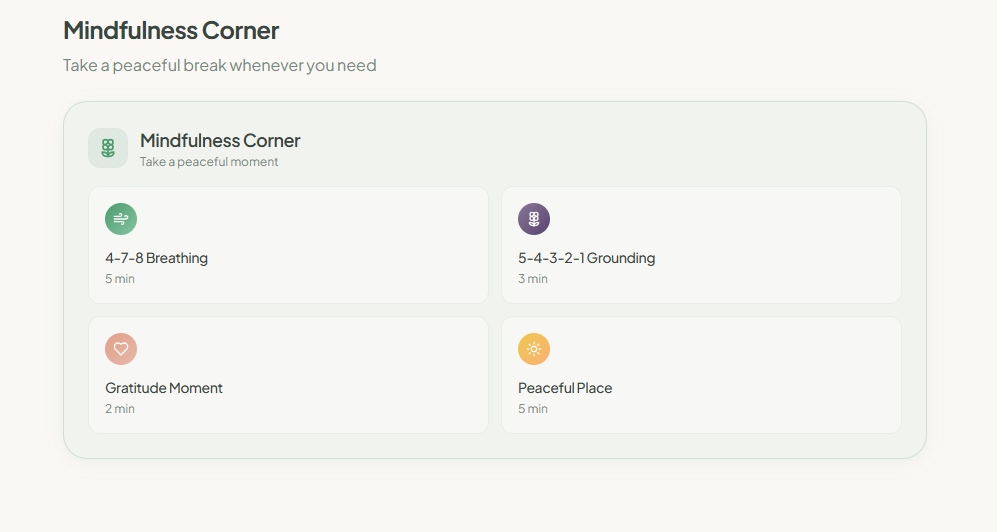
- Journaling and mindfulness prompts
- Easy-to-understand, empathetic risk indicators
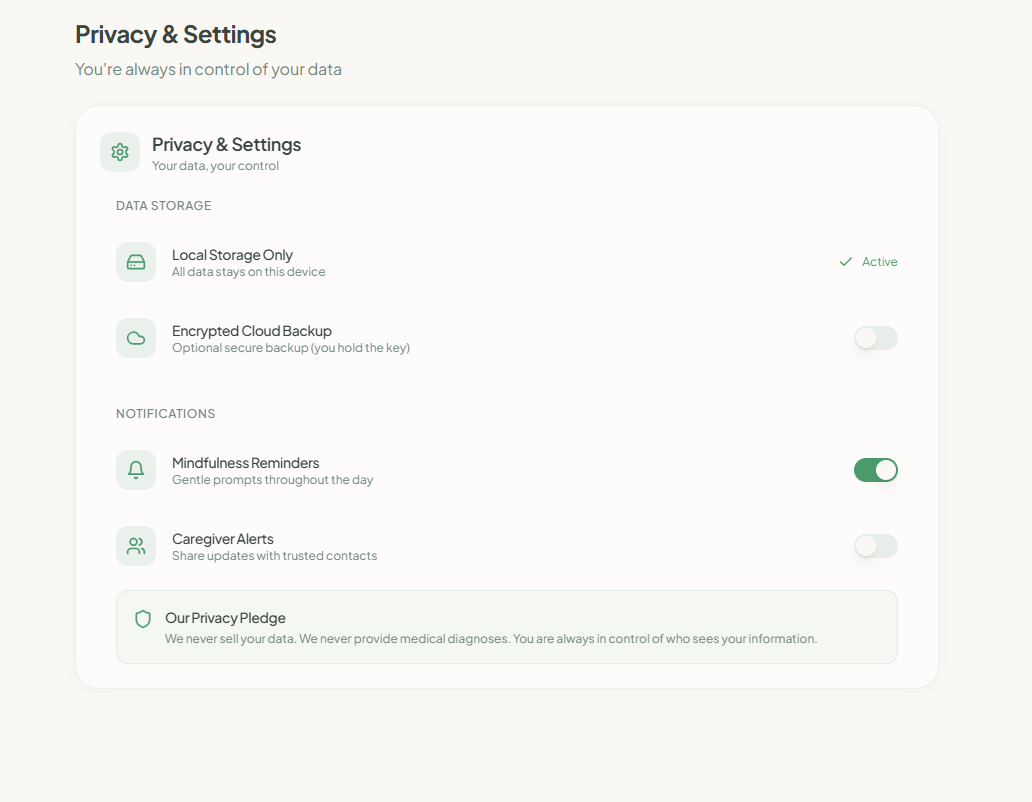
- Full user control over data and alerts
How we built it
We designed the system architecture and ethical boundaries, then used Lovable AI to generate the prototype. The app integrates conversational AI, speech-to-text, text-to-speech, and image generation APIs. The system is designed with a privacy-first, on-device approach, with optional encrypted backup only by user consent.
Challenges we ran into
Balancing meaningful insights with ethical responsibility, avoiding medical diagnosis, and presenting sensitive information in a calm, non-alarming way.
Accomplishments that we're proud of
Building an ethical, privacy-focused prototype that demonstrates how everyday behavior can be used for early cognitive awareness.
What we learned
Early awareness tools must prioritize empathy, transparency, and user trust over prediction accuracy.
What's next for AlzAware
Expanding longitudinal analysis, improving on-device intelligence, and collaborating with clinicians and researchers for validation.
Built With
- css
- html
- javascript
- lovable-ai
- python
- rest-api
- speech-to-text
- text-to-speech


Log in or sign up for Devpost to join the conversation.