-
-
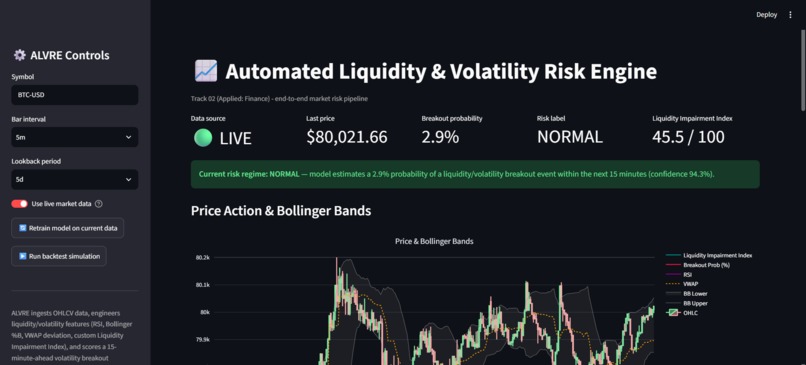
ALVRE Controls
-
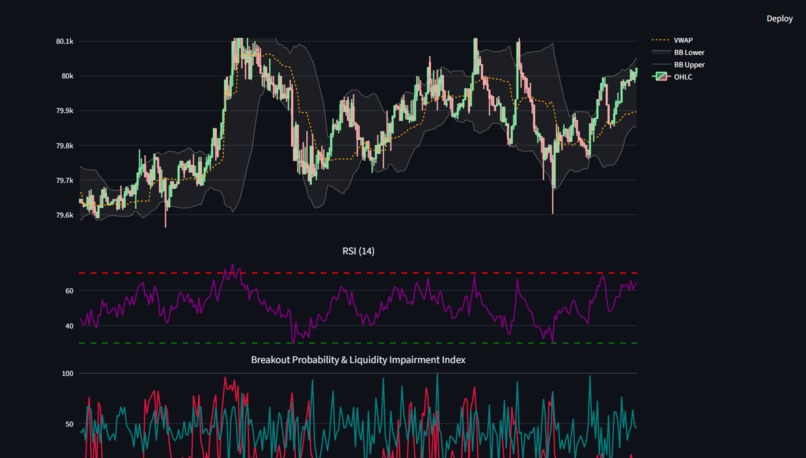
Graphs And Trends
-
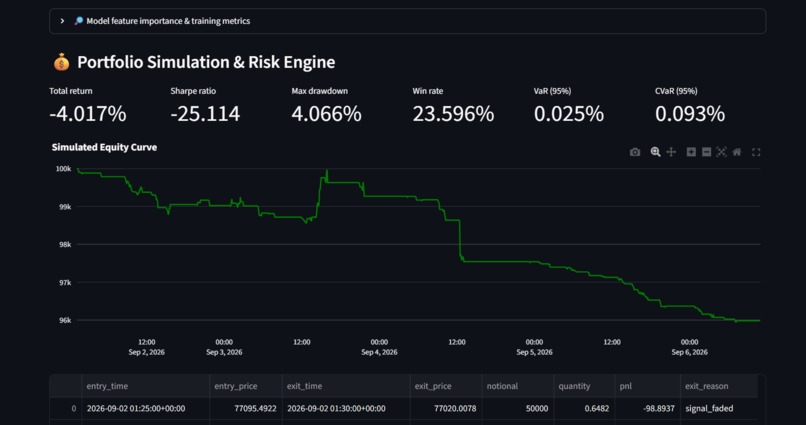
Risk Engine
Inspiration
I wanted to bridge the gap between complex institutional quantitative risk metrics and accessible, real-time developer tooling. Traditional liquidity and volatility analysis tools are usually locked behind expensive corporate terminals or bloated proprietary software. I wanted to build something lightweight, modular, and open-source that brings institutional-grade risk monitoring directly to developers and independent traders.
What it does
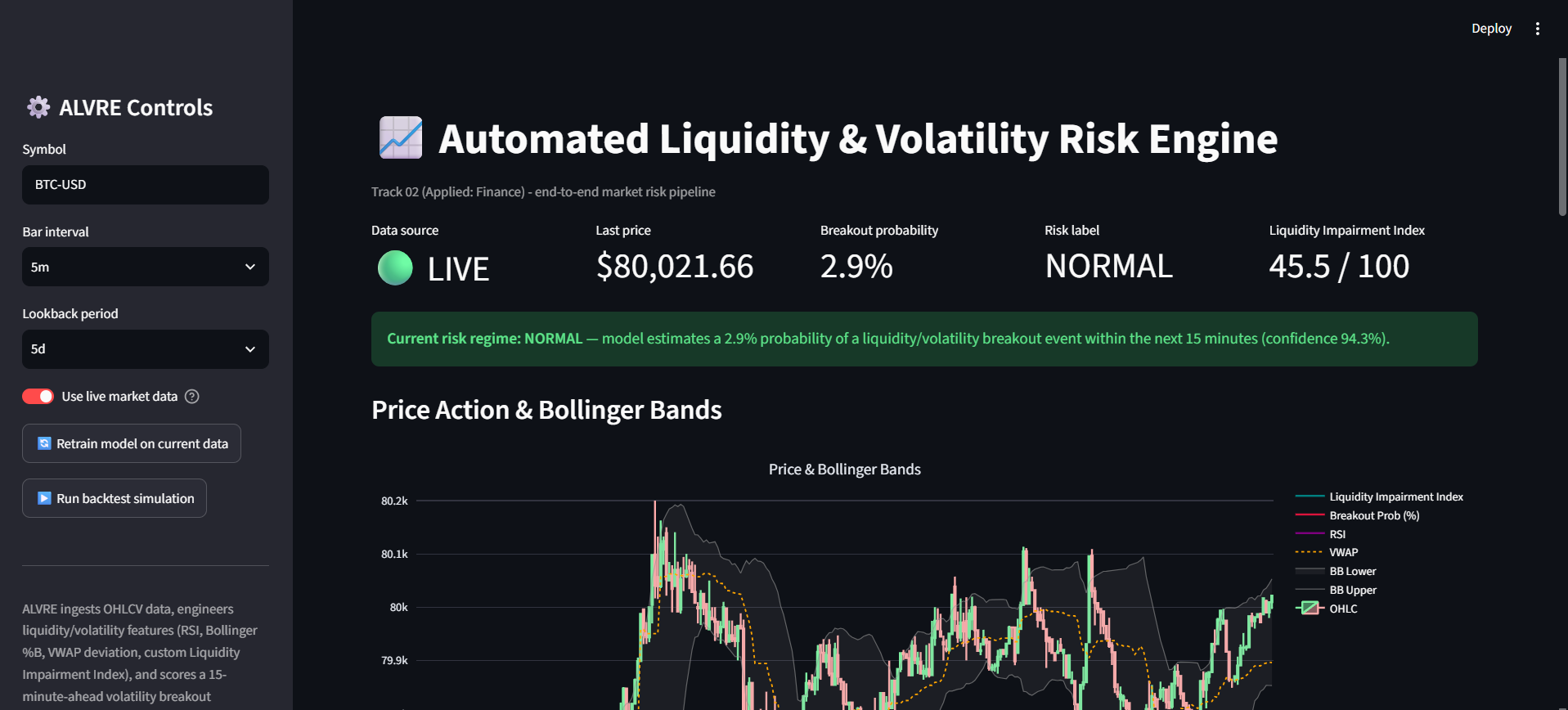
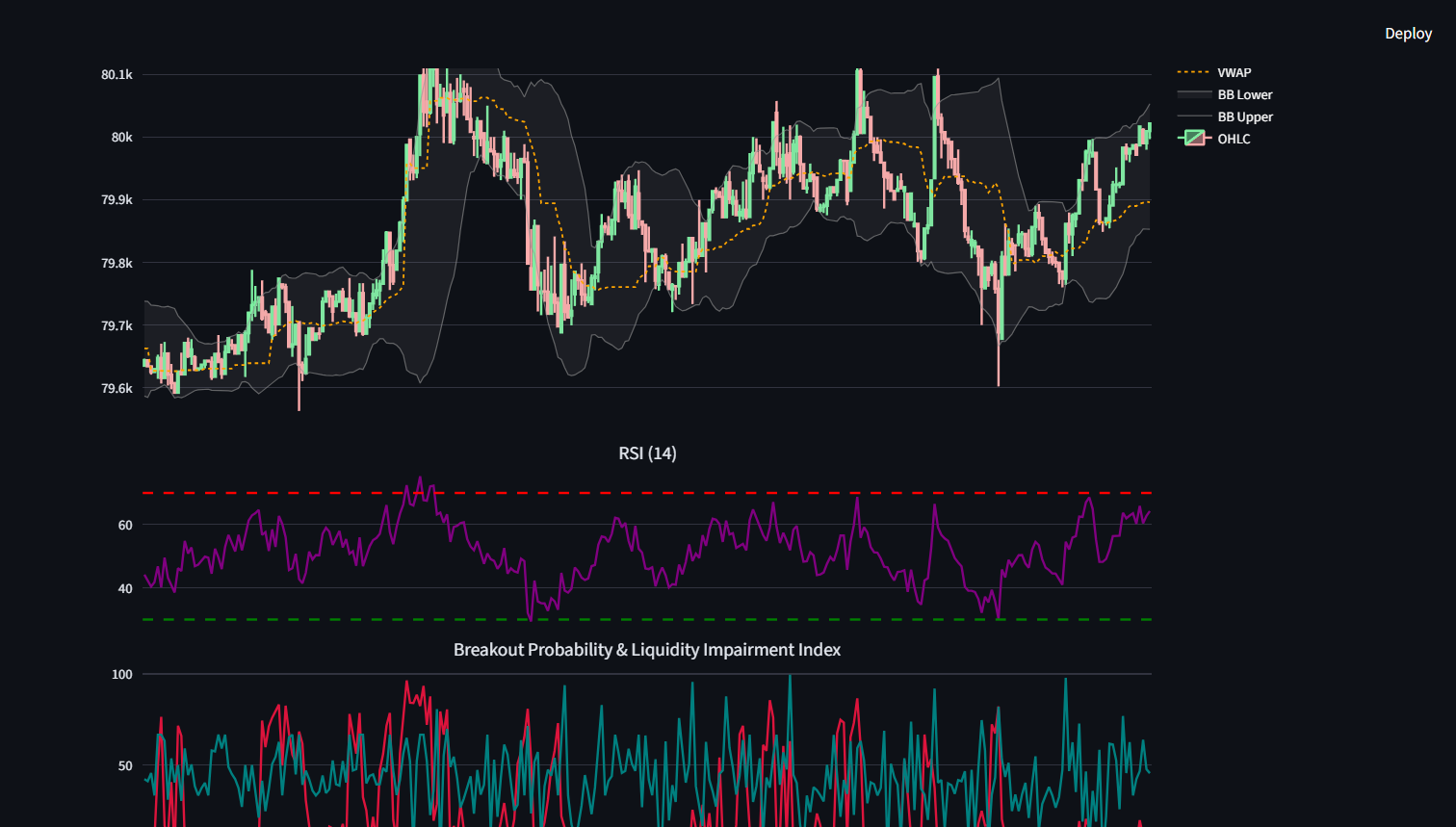
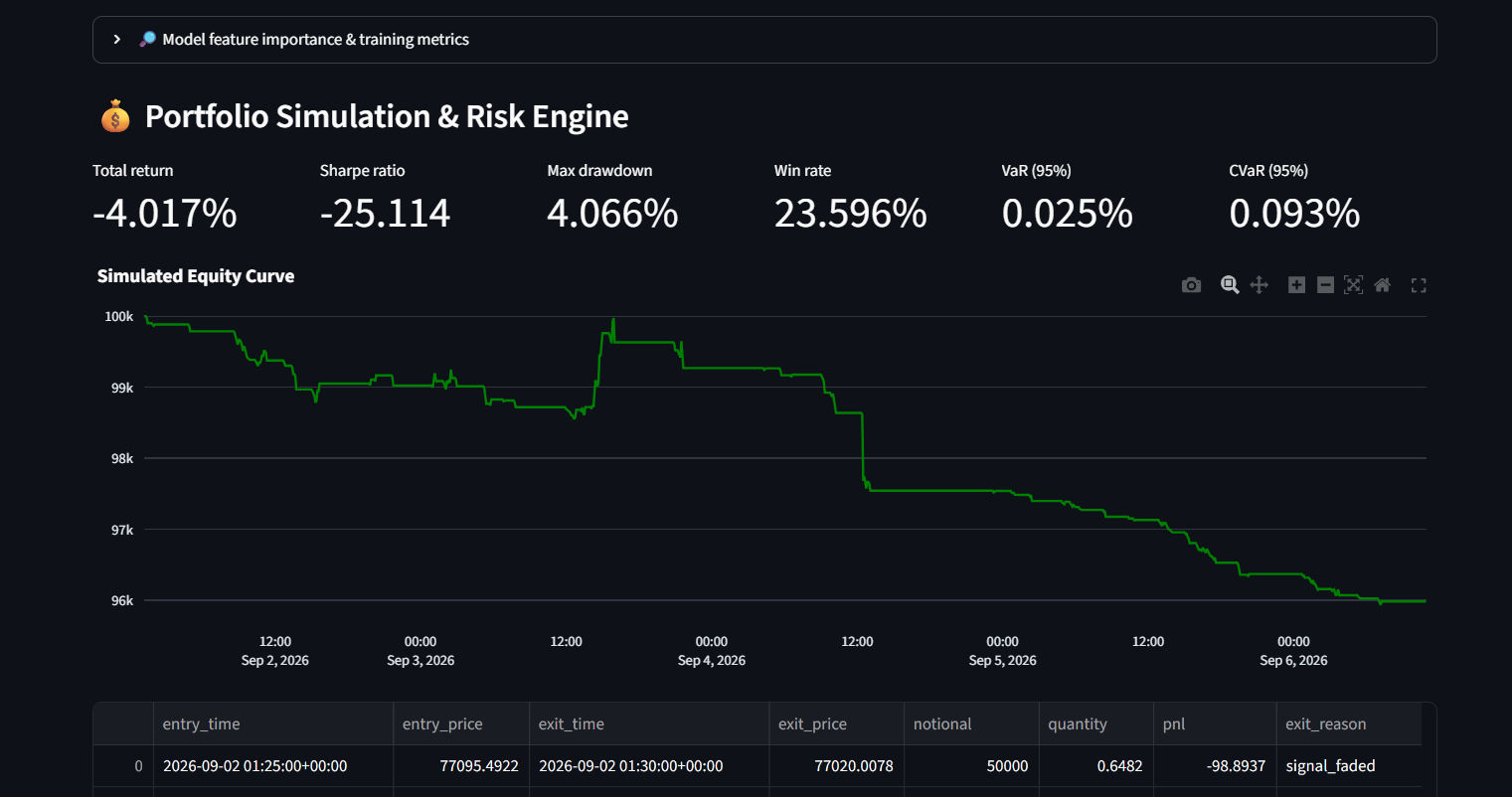
I built an automated liquidity and volatility risk engine (ALVRE) designed to ingest real-time OHLCV market data, process dynamic risk indicators (such as RSI, Bollinger Bands, and custom Liquidity Impairment Indexes), and score 15-minute-ahead volatility breakout probabilities using machine learning. The entire pipeline features a live interactive Streamlit web dashboard that visualizes regimes, risk labels, and live market trends seamlessly.
How I built it
I engineered a modular Python architecture consisting of a robust data ingestion pipeline, a machine learning model framework, a backtesting engine, and a web application interface. I implemented structured error handling and automated script execution via a command-line interface. For the visualization layer, I integrated Streamlit to display dynamic charting alongside live API data feeds.
Challenges I faced
Balancing real-time data streaming without desynchronizing historical windows was a major hurdle. I had to carefully handle missing values, timestamp discrepancies, and API timeouts to ensure the mathematical feature calculations for indicators like Bollinger Bands and Value at Risk (VaR) didn't break during live feeds.
What I learned
I deepened my understanding of quantitative financial engineering, particularly around calculating Liquidity Impairment Indexes and managing machine learning pipelines for time-series data. I also learned how to structure a production-ready repository with proper configuration management and clean separation of concerns.
What's next for ALVRE
I plan to integrate multi-exchange WebSocket feeds, expand the machine learning models to include deep learning volatility estimators, and add secure paper-trading execution sandboxes for automated strategy testing.


Log in or sign up for Devpost to join the conversation.