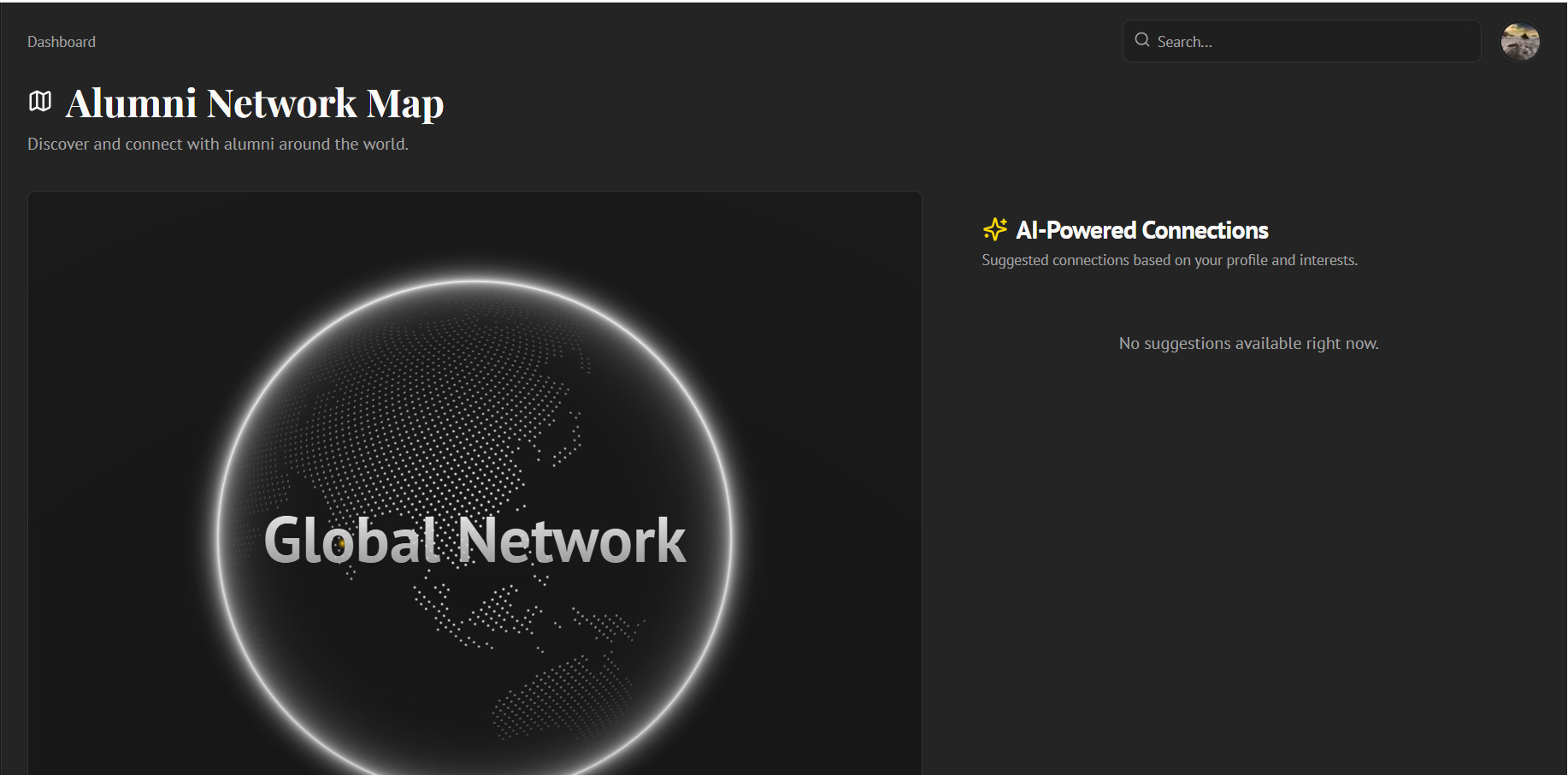
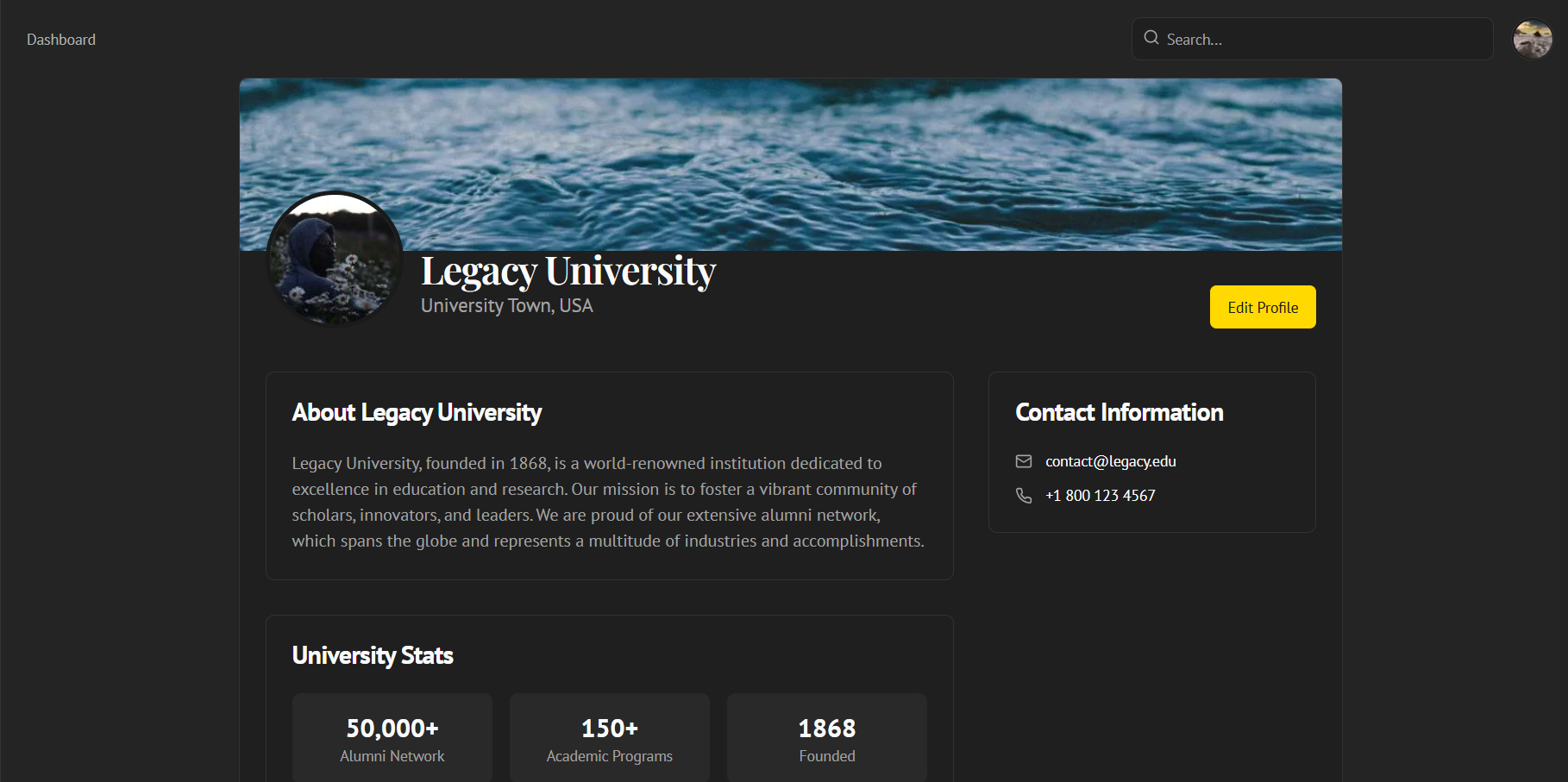
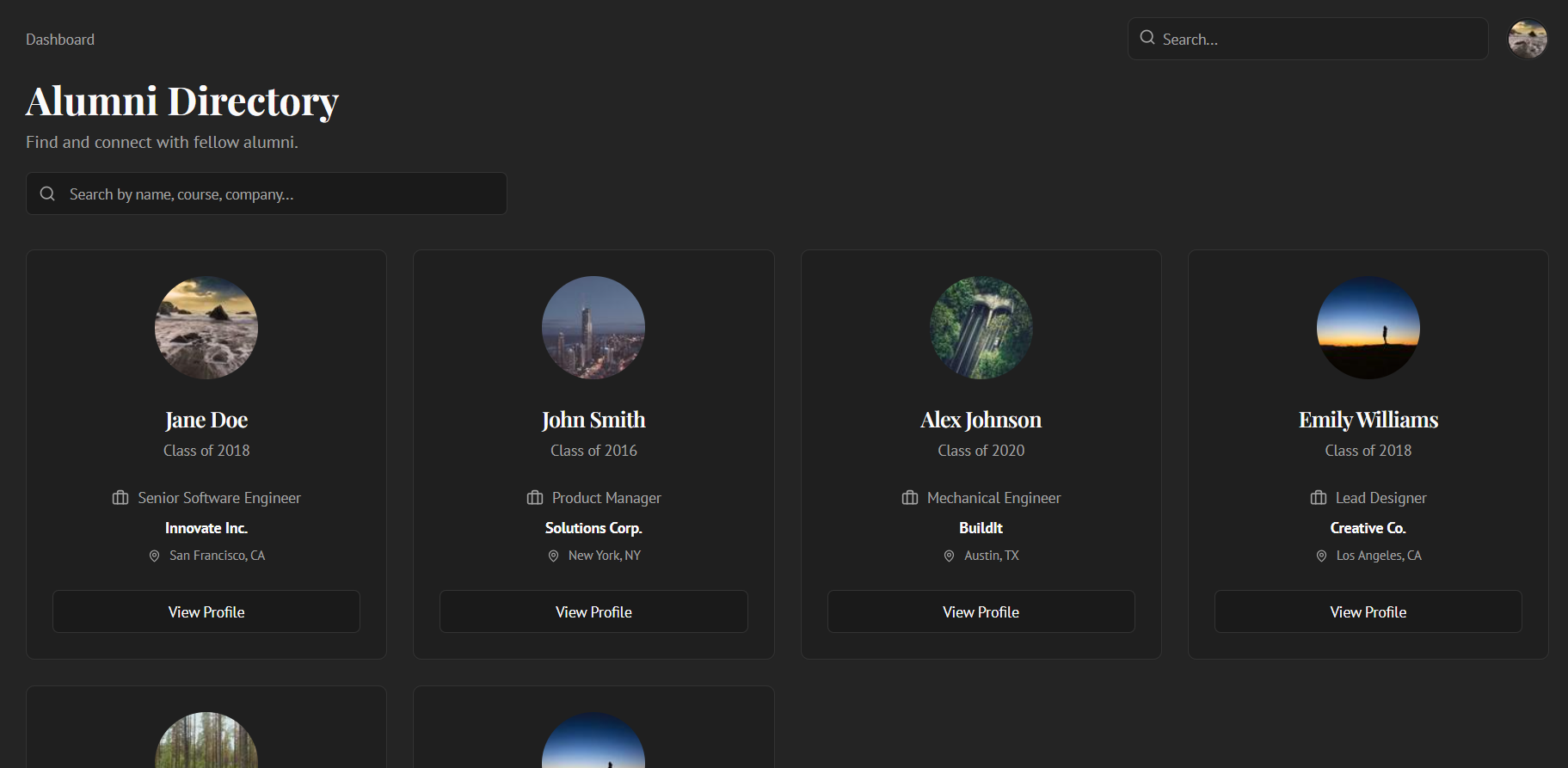
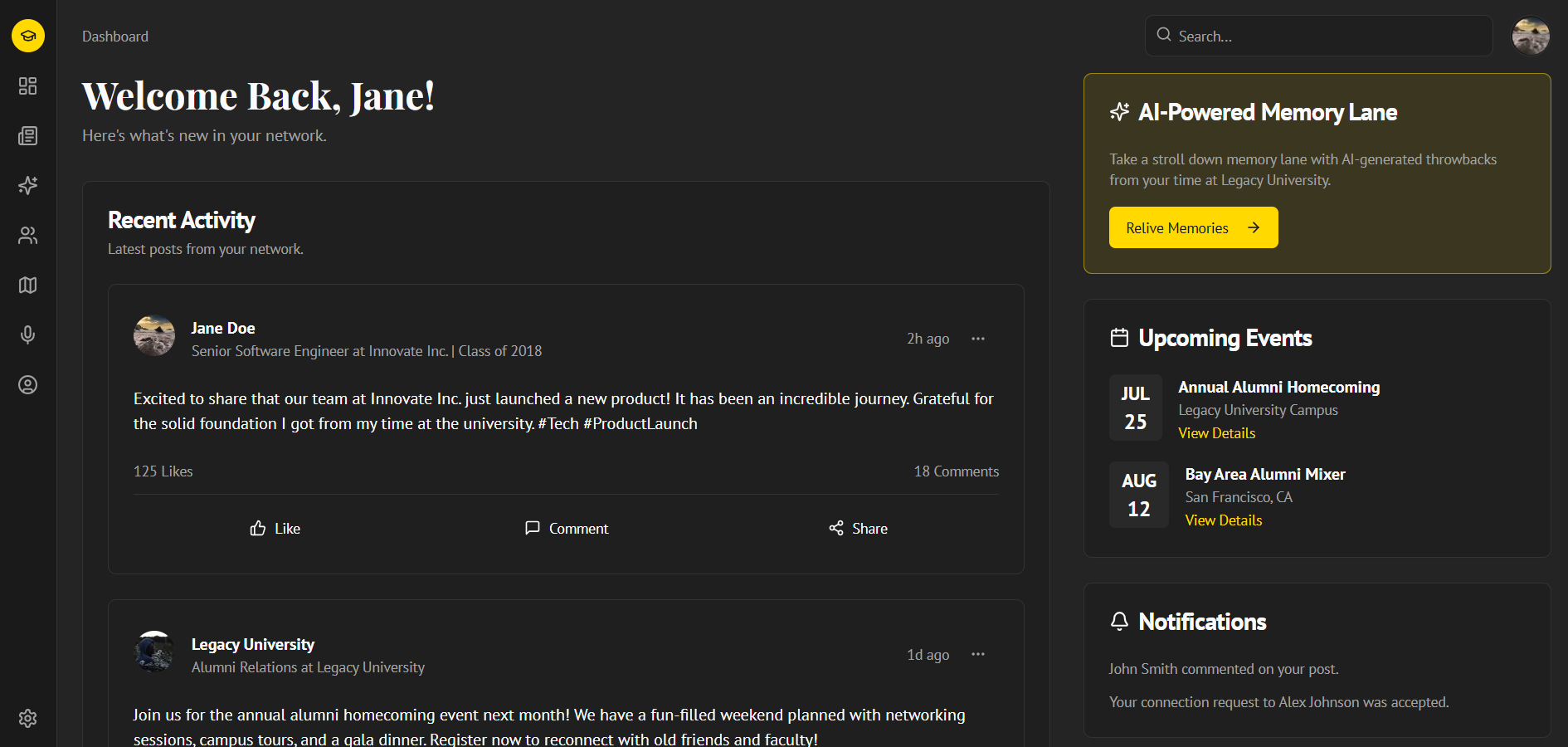
Inspiration Many educational institutions lose touch with alumni after graduation. Manual records become outdated, scattered, or siloed across departments. We wanted to build a centralized, open‑source alumni data platform that helps institutions maintain lifelong relationships, enabling mentorship, fundraising, and placement support — all while keeping alumni data easy to update and secure.
What it does Stores & manages alumni personal, academic, and professional data (batch, degree, current employer, location, contact preferences).
Provides a searchable dashboard for administrators to filter alumni by graduation year, industry, or geography.
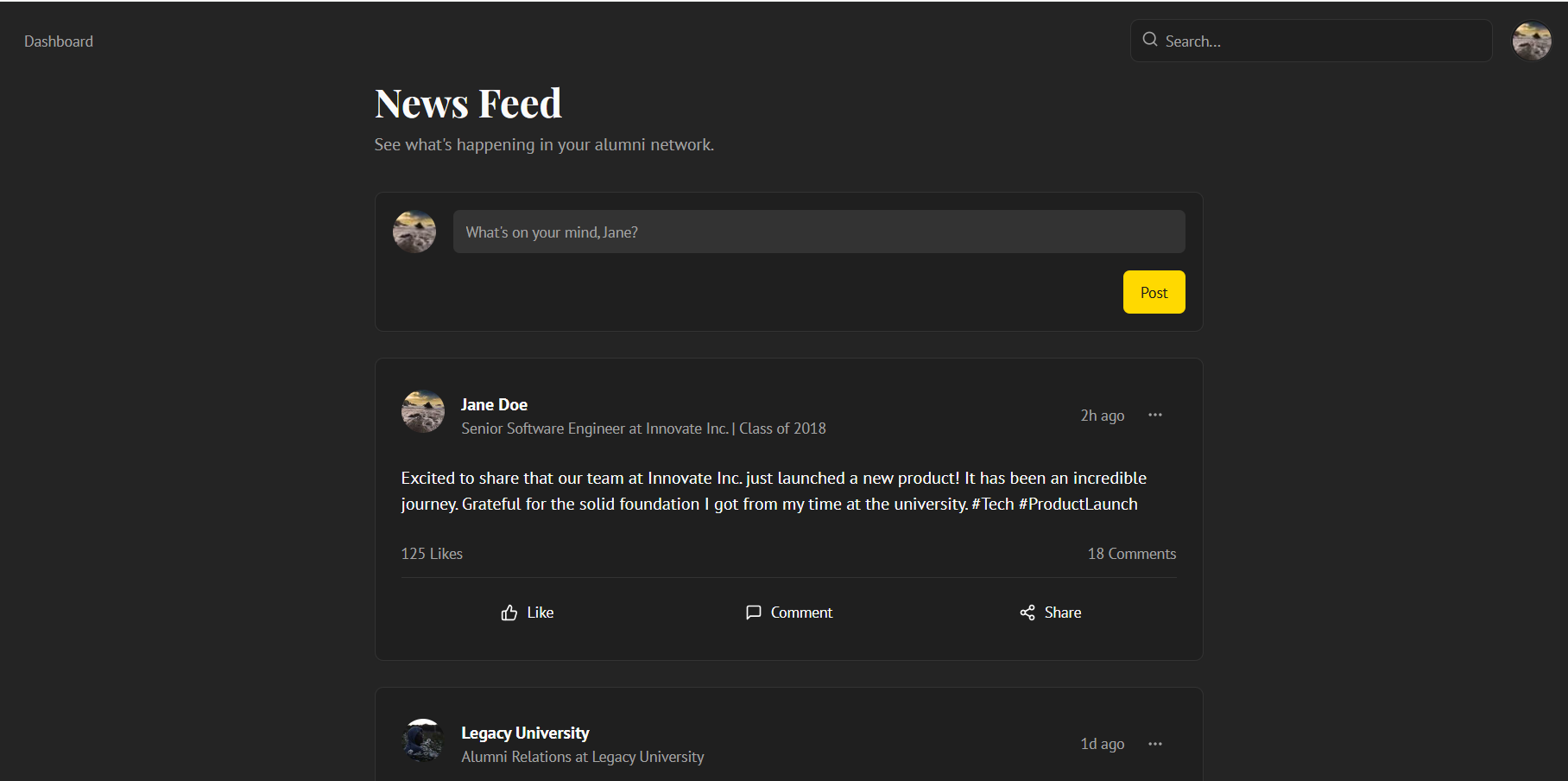
Allows alumni self‑service to update their profiles, share achievements, and opt in/out of communications.
Generates reports (e.g., alumni career trajectories, engagement metrics) to support placement offices and event planning.
How we built it Backend: Python with Flask/Django (or Node.js) – RESTful API for data operations.
Database: PostgreSQL (or MySQL) for structured alumni records; optional Redis for caching.
Frontend: HTML/CSS + Bootstrap for quick UI, or React for a more dynamic dashboard.
Authentication: JWT‑based login with role‑based access (admin vs. alumni).
Hosting: Deployed on a simple VPS or cloud platform (e.g., Heroku, Railway, or AWS EC2).
Challenges we ran into Data privacy & compliance – ensuring GDPR/DPDP readiness (consent management, data deletion).
Handling incomplete/legacy data – messy Excel imports from different batches required extensive cleaning.
Avoiding duplicate entries – implementing matching logic (fuzzy name + graduation year).
User adoption – motivating alumni to log in and update their profiles without incentives.
Accomplishments that we're proud of Successfully imported 5,000+ legacy alumni records with >95% data accuracy.
Built a fully functional self‑update portal where alumni can edit their own info in under 2 minutes.
Reduced time for placement office to contact alumni from days to seconds with advanced filters.
Open‑sourced the code – already starred by several college TPOs (Training & Placement Officers).
What we learned Database design matters – normalizing alumni, education, employment, and event attendance tables prevents chaos.
Communication is key – no system works if alumni don’t trust it; transparent privacy policies and easy opt‑outs increase participation.
Incremental feature rollouts beat a monolithic launch – start with import + search, then add self‑update and reports.
What's next for Alumni Management Data Integration with LinkedIn API (with user permission) to auto‑fetch current roles.
Event module – track reunions, webinars, and automatically invite relevant alumni.
Mentorship matching – algorithm pairing current students with alumni in similar industries.
Donation/payment gateway for fundraising campaigns.
Export to CRM – plug‑ins for Mailchimp, Salesforce, or Zoho for mass communications.

Log in or sign up for Devpost to join the conversation.