Inspiration
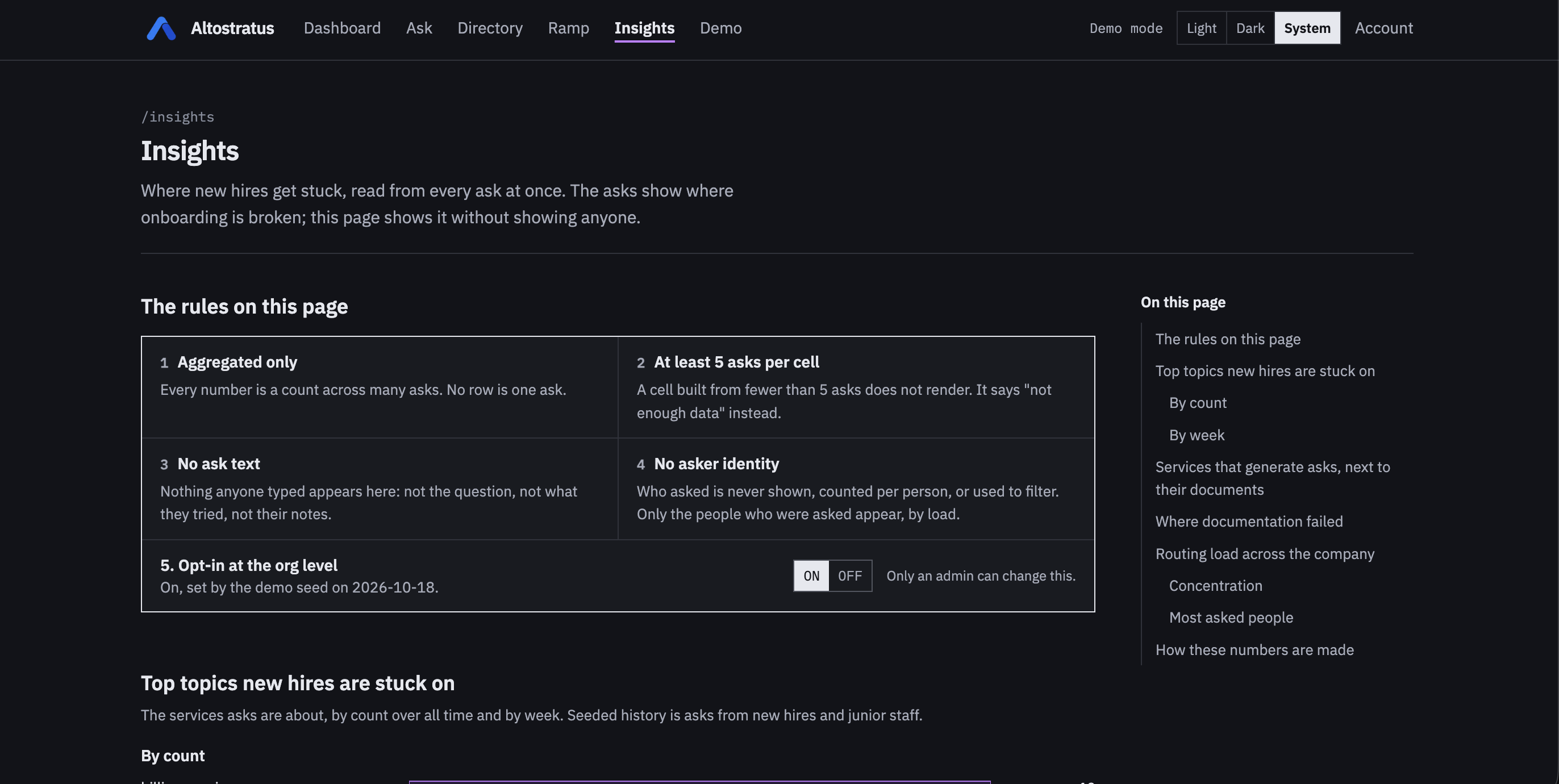
New hires rarely get stuck on the problem itself, they get stuck on who to ask. They either wait too long or keep bothering the same senior engineer who's already busy.
What it does
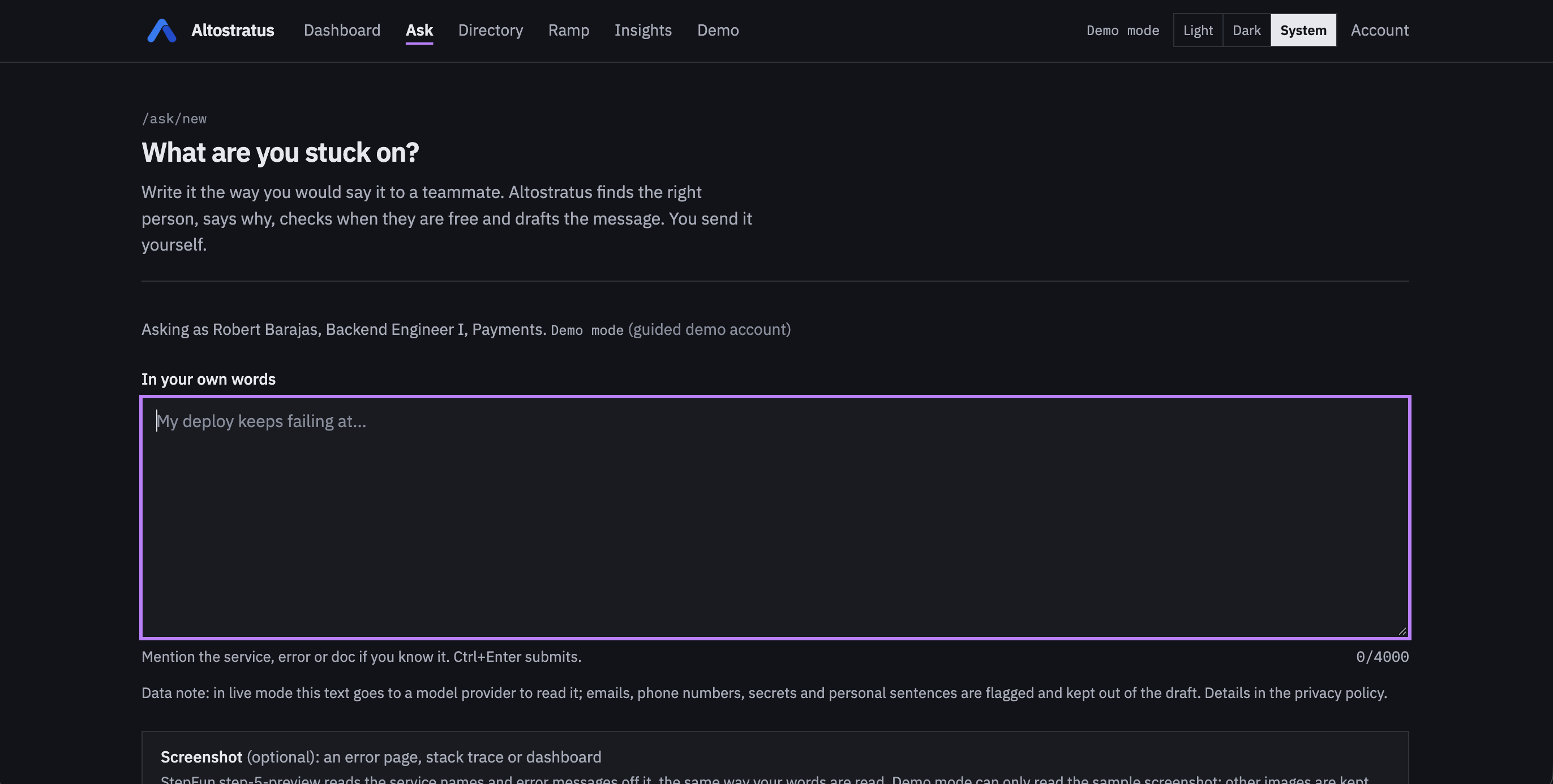
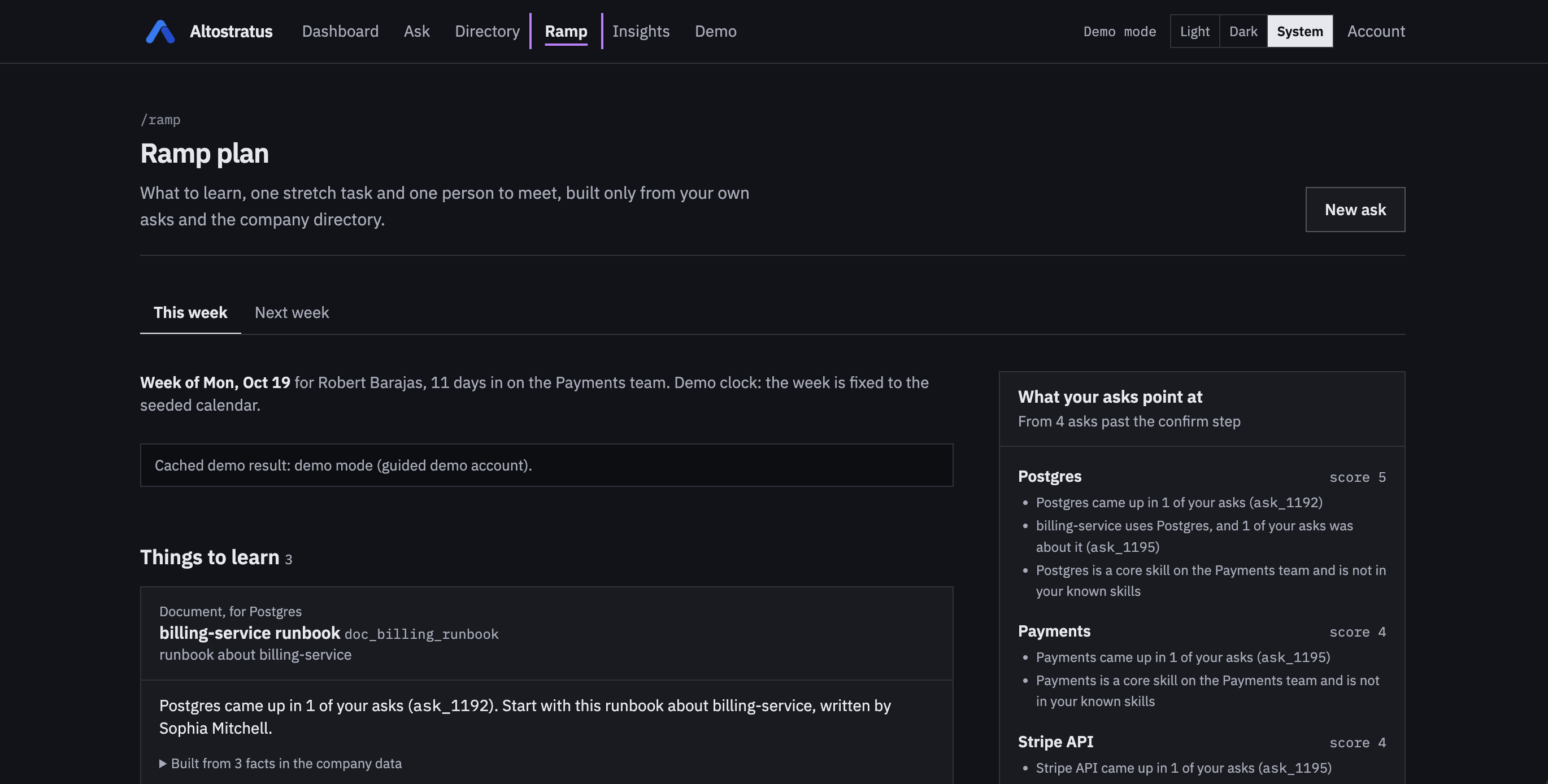
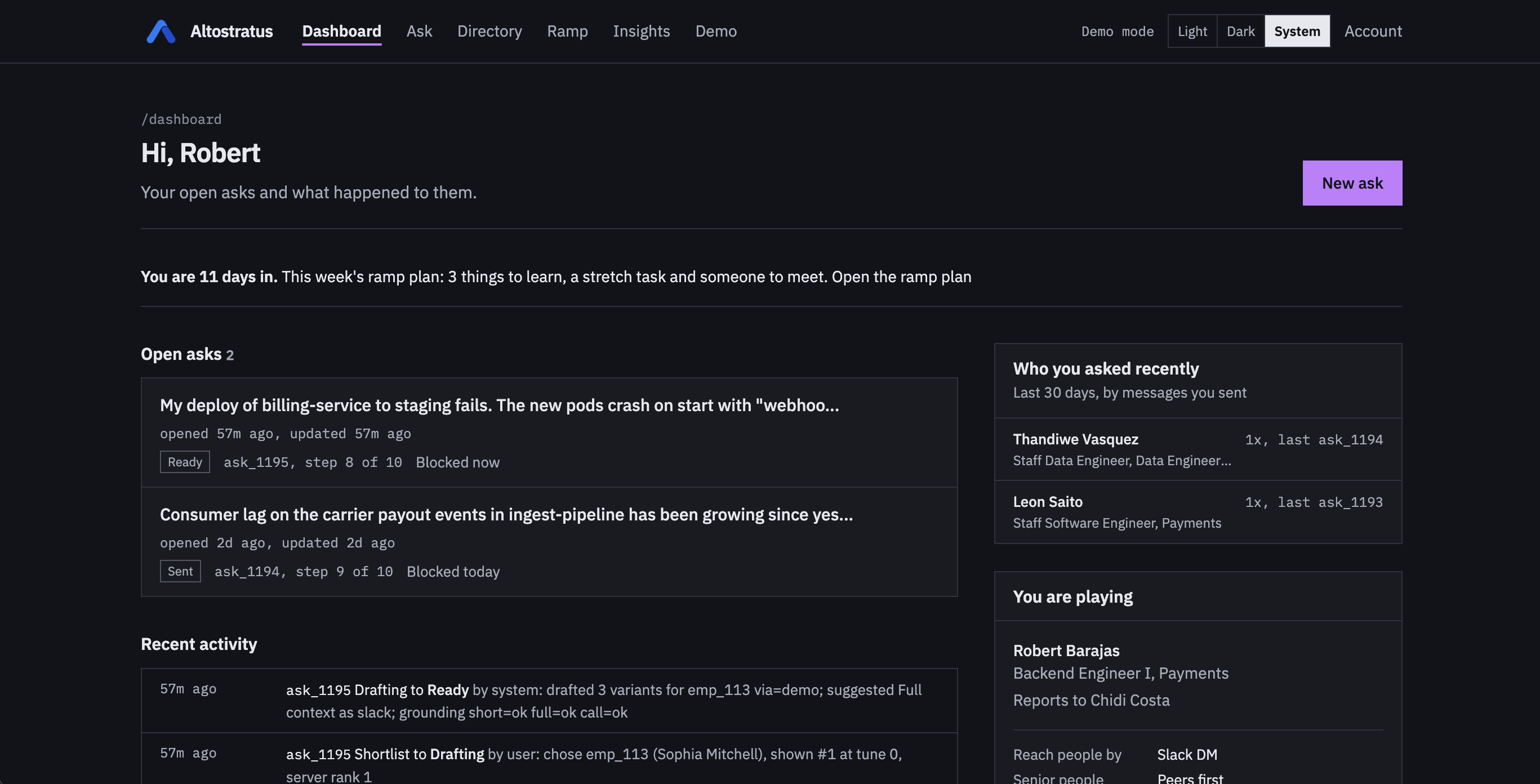
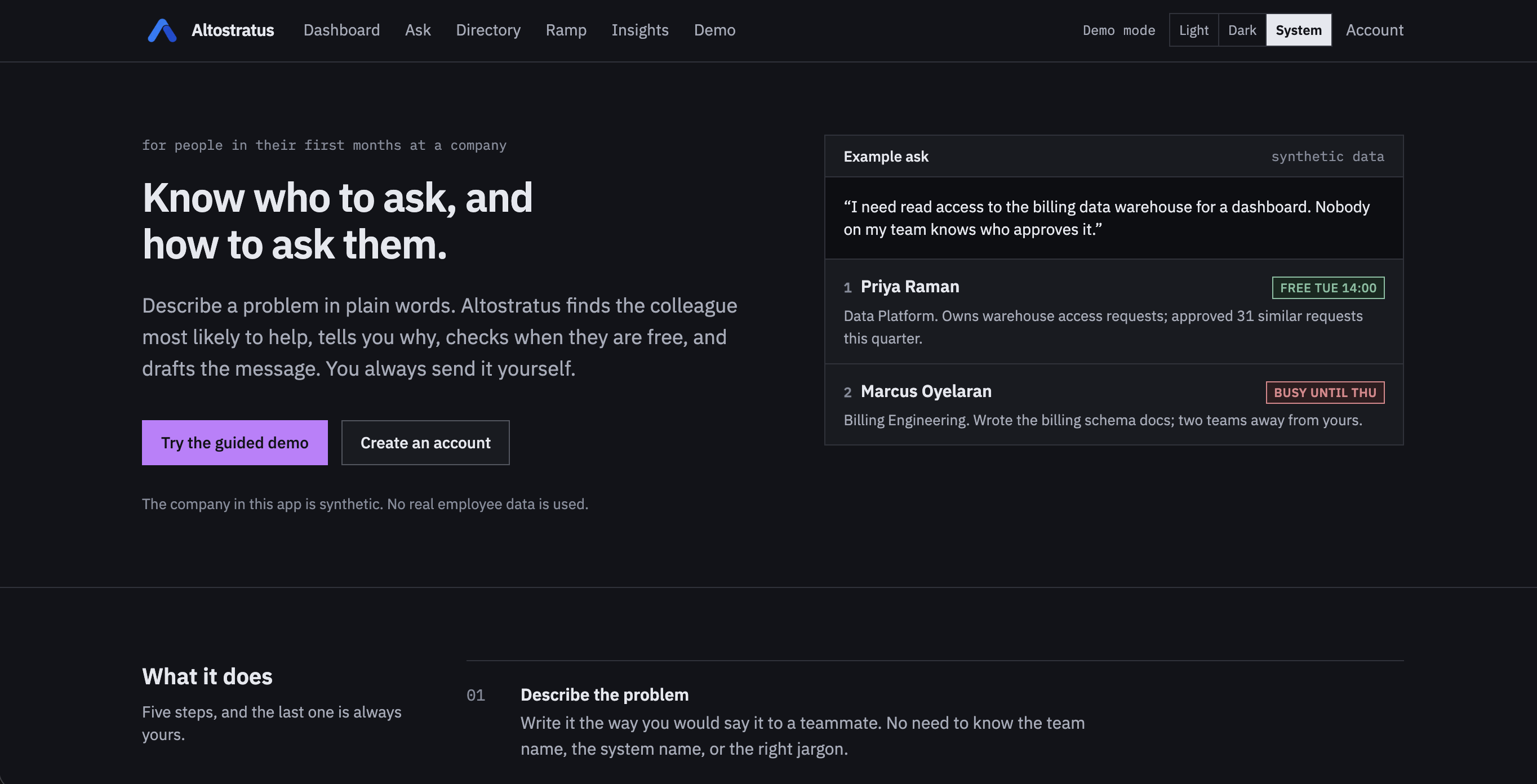
You describe a problem in plain words. Altostratus reads it, checks the docs first, finds who actually knows, ranks people by expertise, load and availability, suggests when and how to reach them, and drafts the message. You send it yourself.
How we built it
Next.js 16, Postgres + pgvector and Drizzle, on a synthetic 200-person company. A fine-tuned Qwen2.5 1.5B (LoRA on Veri) parses each ask, with Claude Haiku as the fallback. Ranking is plain code with four fairness guardrails, and an overloaded expert's score drops with (load/limit)^3. Every model call goes through one gate with budgets and demo fallbacks. A Fetch.ai agent runs the whole flow inside ASI:One.
Challenges we ran into
- Similarity search alone ranked keyword decoys first.
- Our eval script used up the app's own daily token budget.
- The trained LoRA adapter was never attached to the serving fleet.
Accomplishments that we're proud of
- A $1.45 fine-tune beat frontier models: 90.9% vs 78.2% entity F1, and 86% vs 48% on vague asks.
- Every ranking is explainable, and every model sentence is fact-checked.
- No send button - the human stays in control.
What we learned
Similarity =/= expertise. On a narrow/structured task, a small fine-tune beats a big general model.
What's next for Altostratus
Real Slack and calendar data (read-only), team communication plugins, per-person working hours, and evals on real new-hire questions.
Built With
- agentverse
- anthropic
- asi:one
- auth.js
- claude
- creao
- devin
- drizzle-orm
- fetch.ai
- lora
- neon
- next.js
- node.js
- pgvector
- postgresql
- python
- qwen
- react
- tailwindcss
- typescript
- uagents
- veri
- zod

Log in or sign up for Devpost to join the conversation.