-
-
Altın: an Arabic-first AI treasurer for jam’iyya savings circles. PayPal sandbox demo.
-
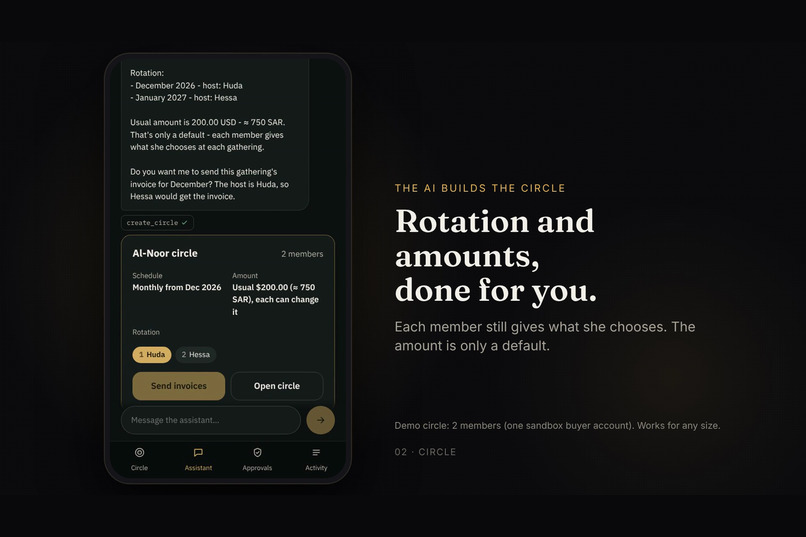
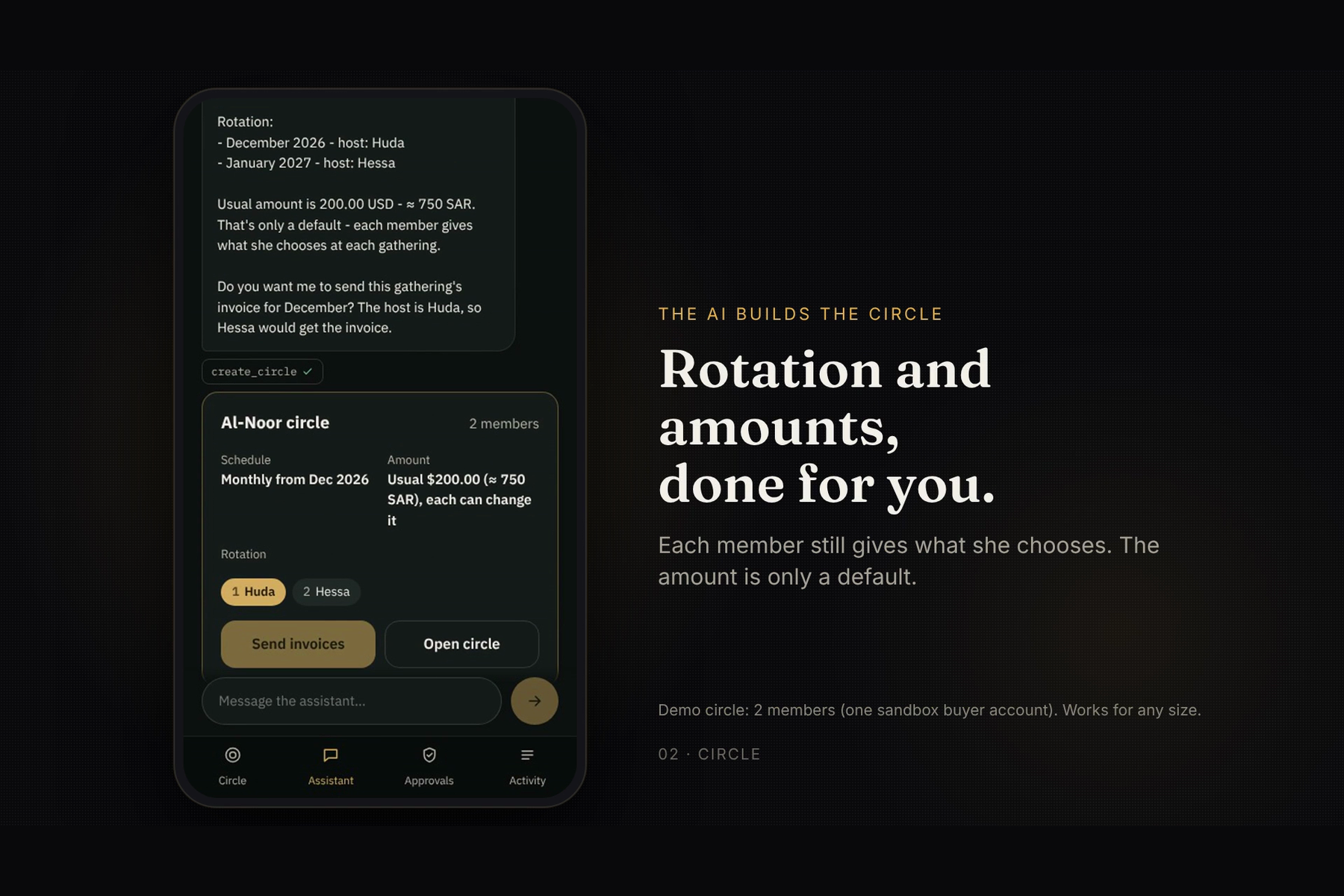
The AI builds the circle from one plain message, in Arabic or English: rotation, members and usual amount.
-
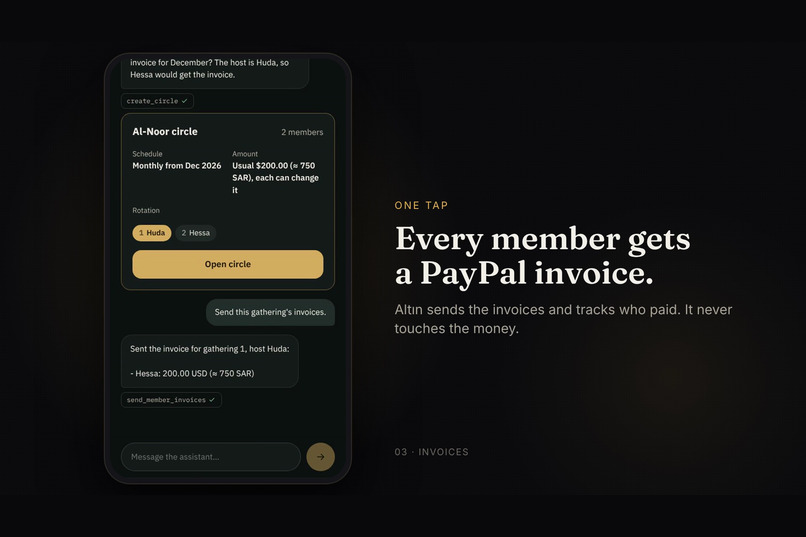
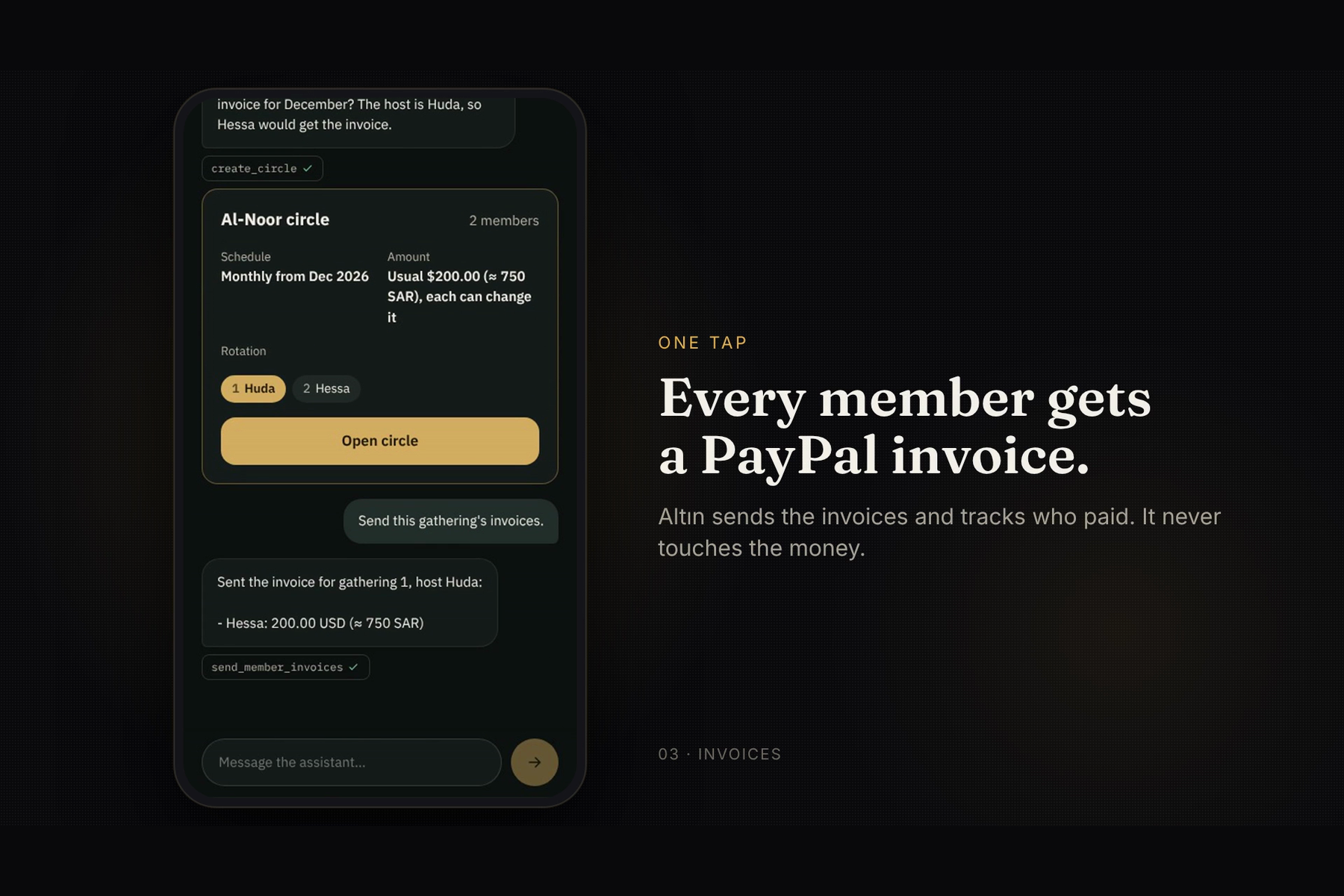
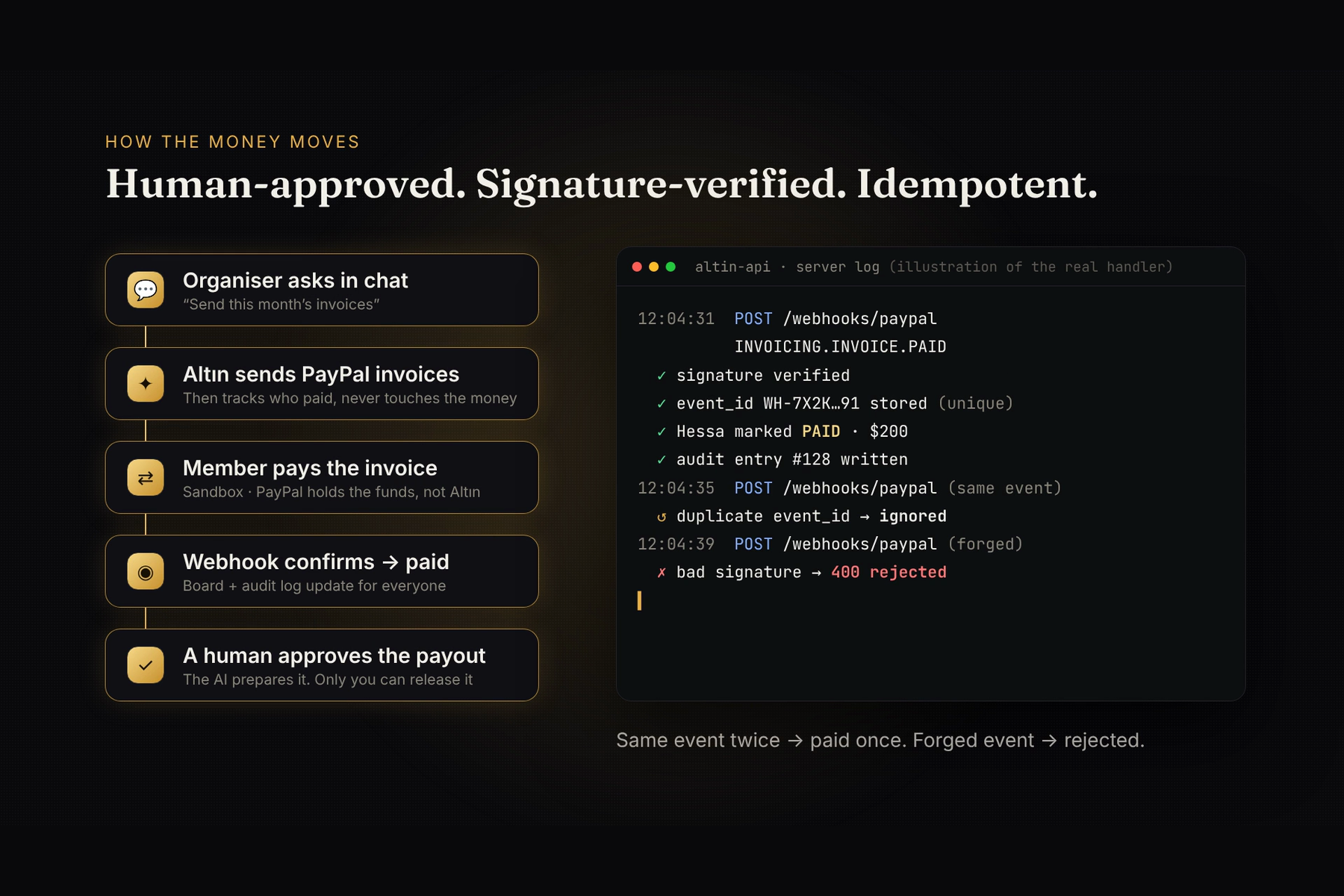
One tap sends every member a PayPal invoice. Altın tracks who paid and never touches the money.
-
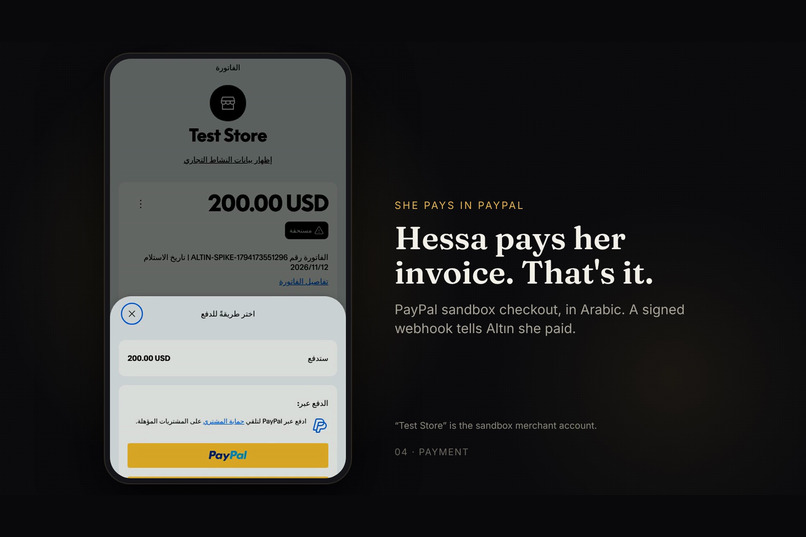
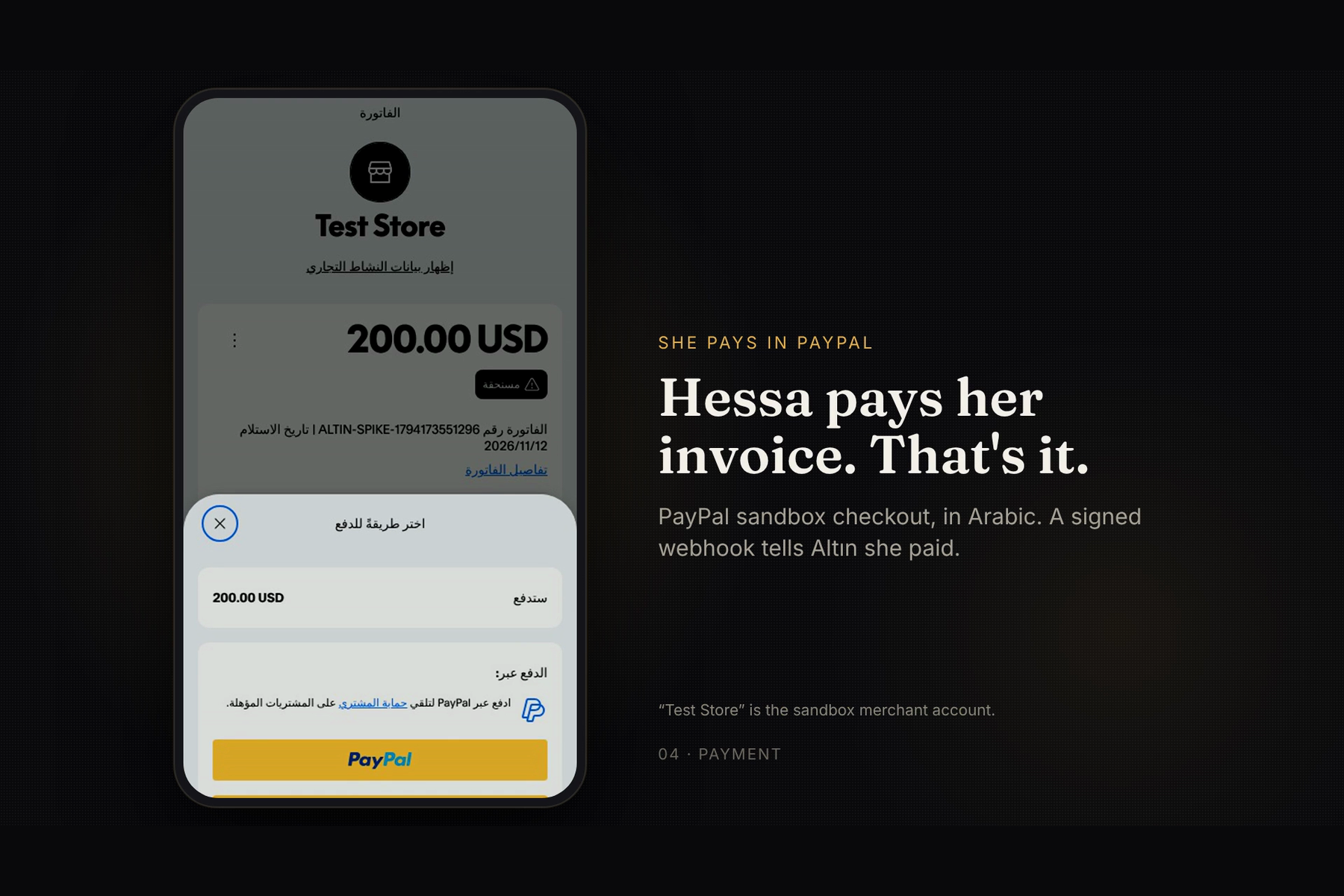
Hessa pays her invoice in PayPal’s Arabic checkout. A signed webhook marks her paid on the board.
-
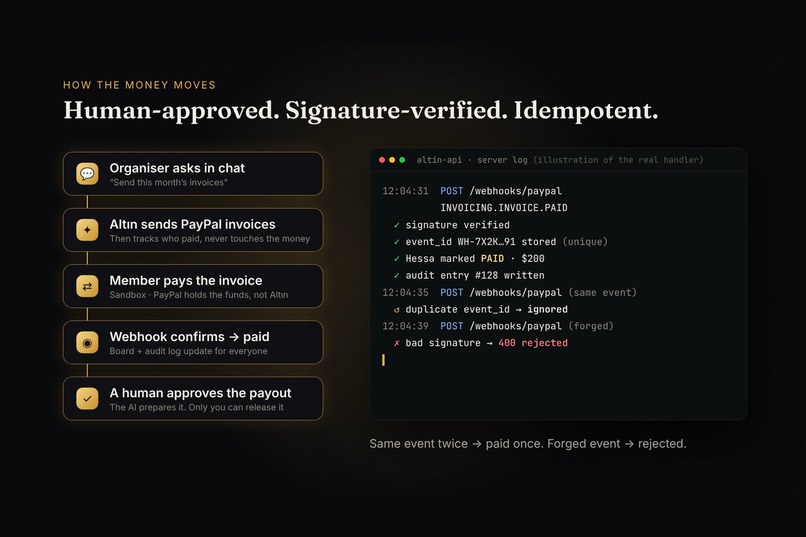
How the money moves: signature-verified, idempotent webhooks. A duplicate event is paid once, and a forged one is rejected.
-
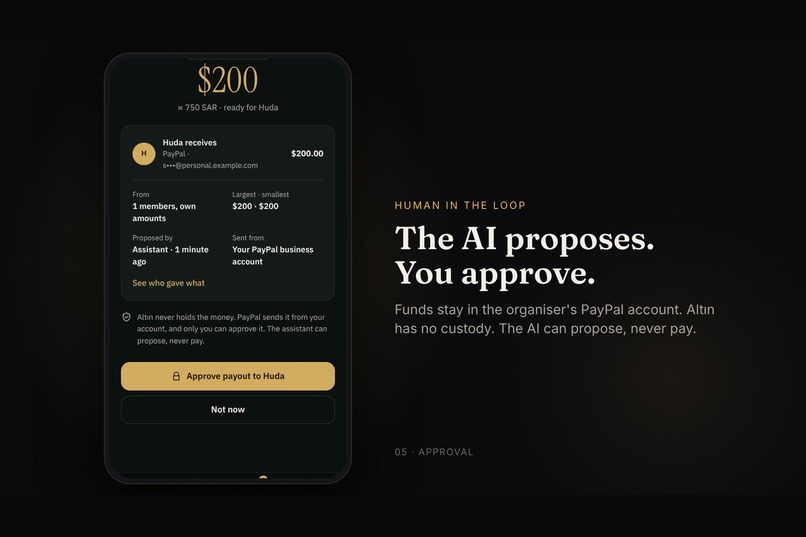
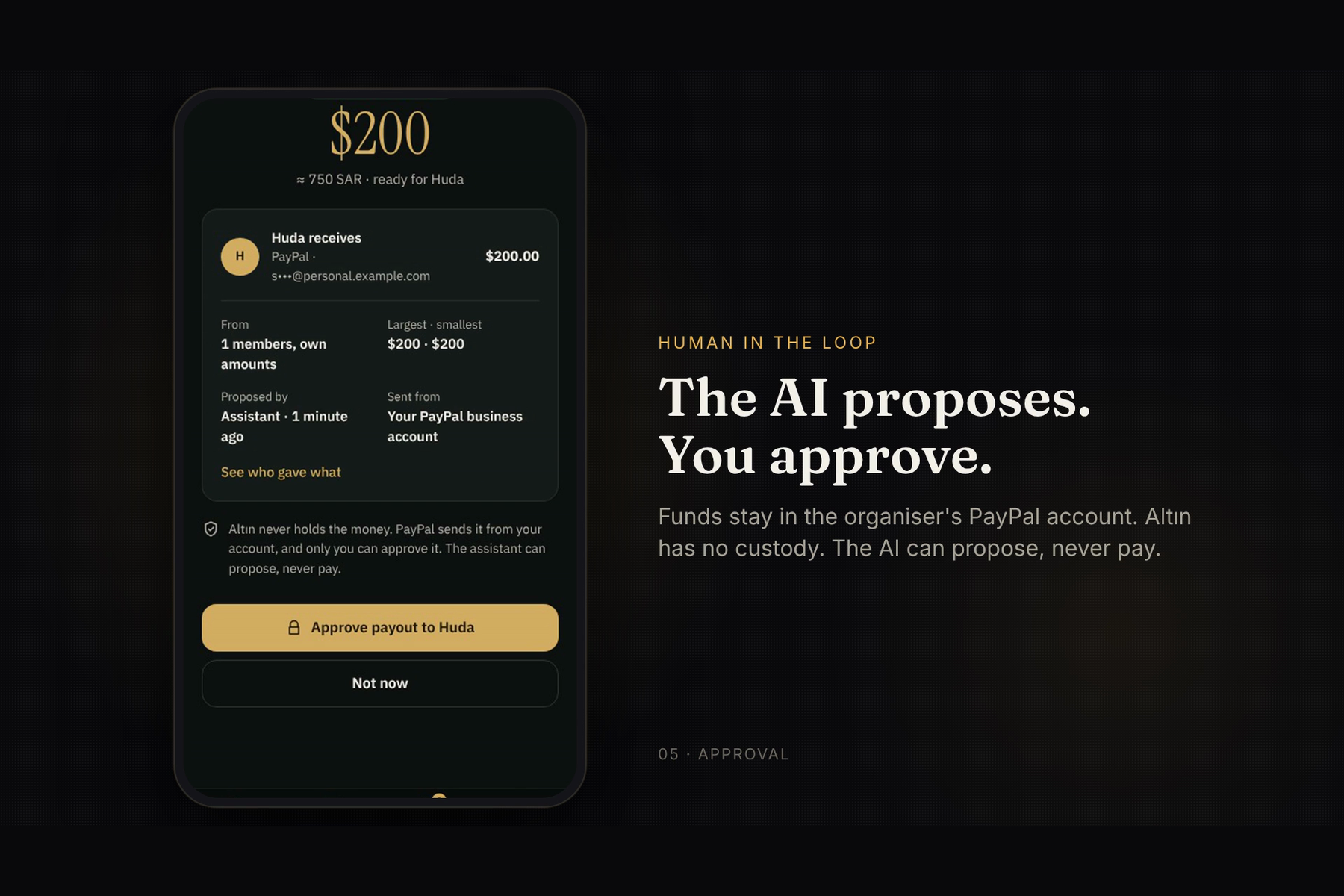
Human in the loop: the AI proposes the payout, and only the organiser can approve it. Funds stay in the organiser’s PayPal account.
-
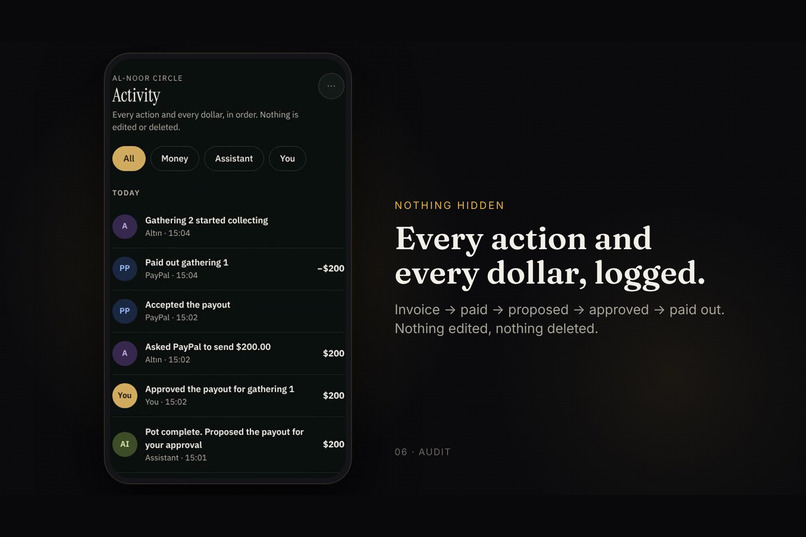
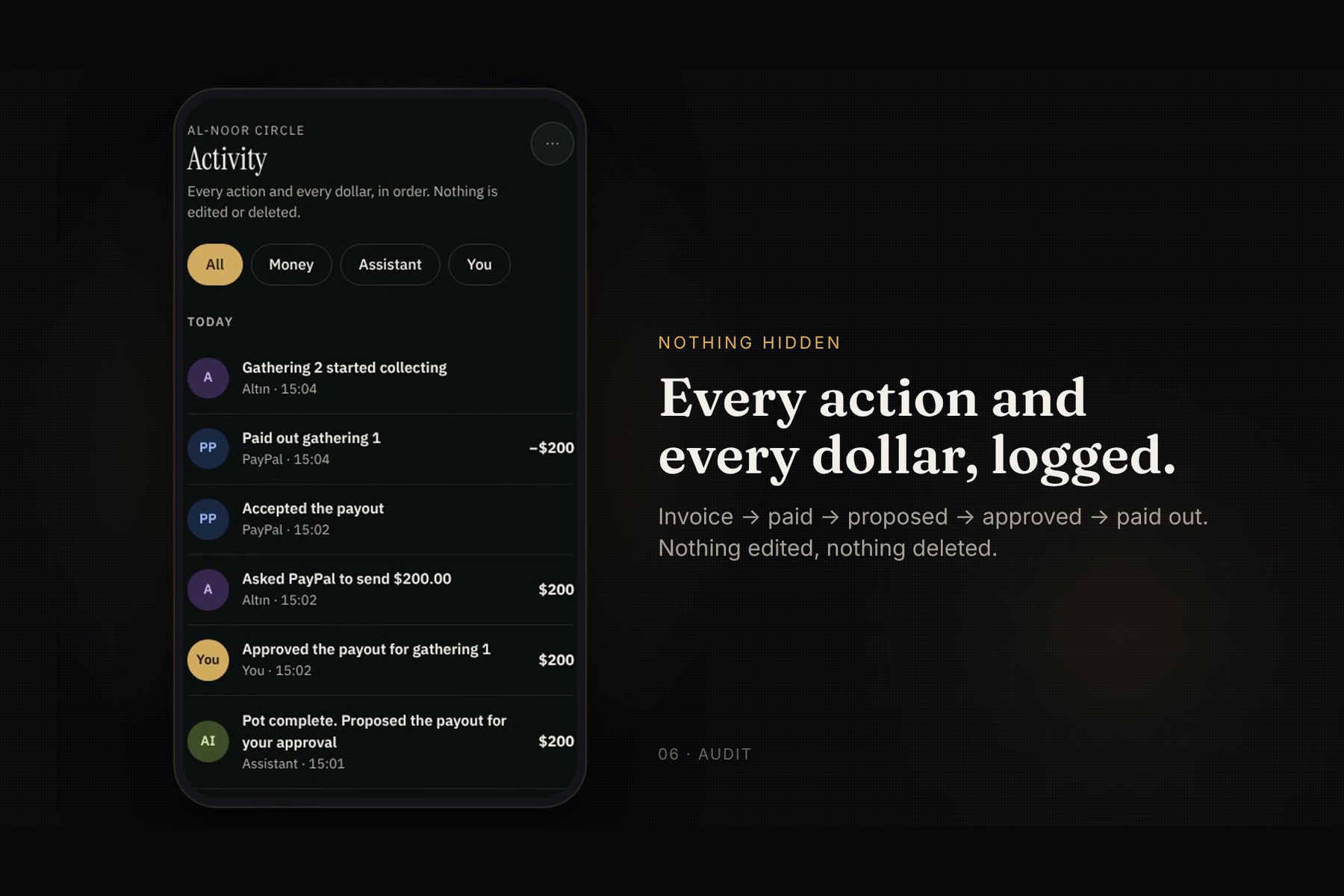
Every action and every dollar is logged, from invoice to paid to approved to paid out. Nothing is edited or deleted.
-
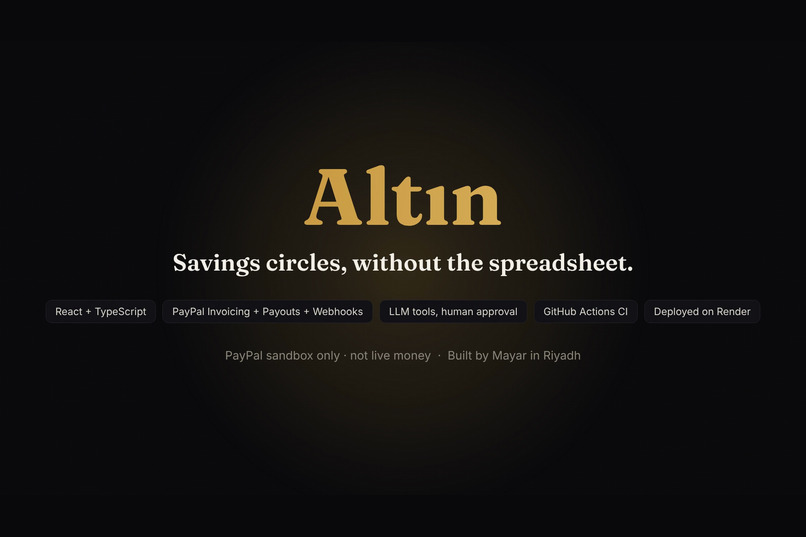
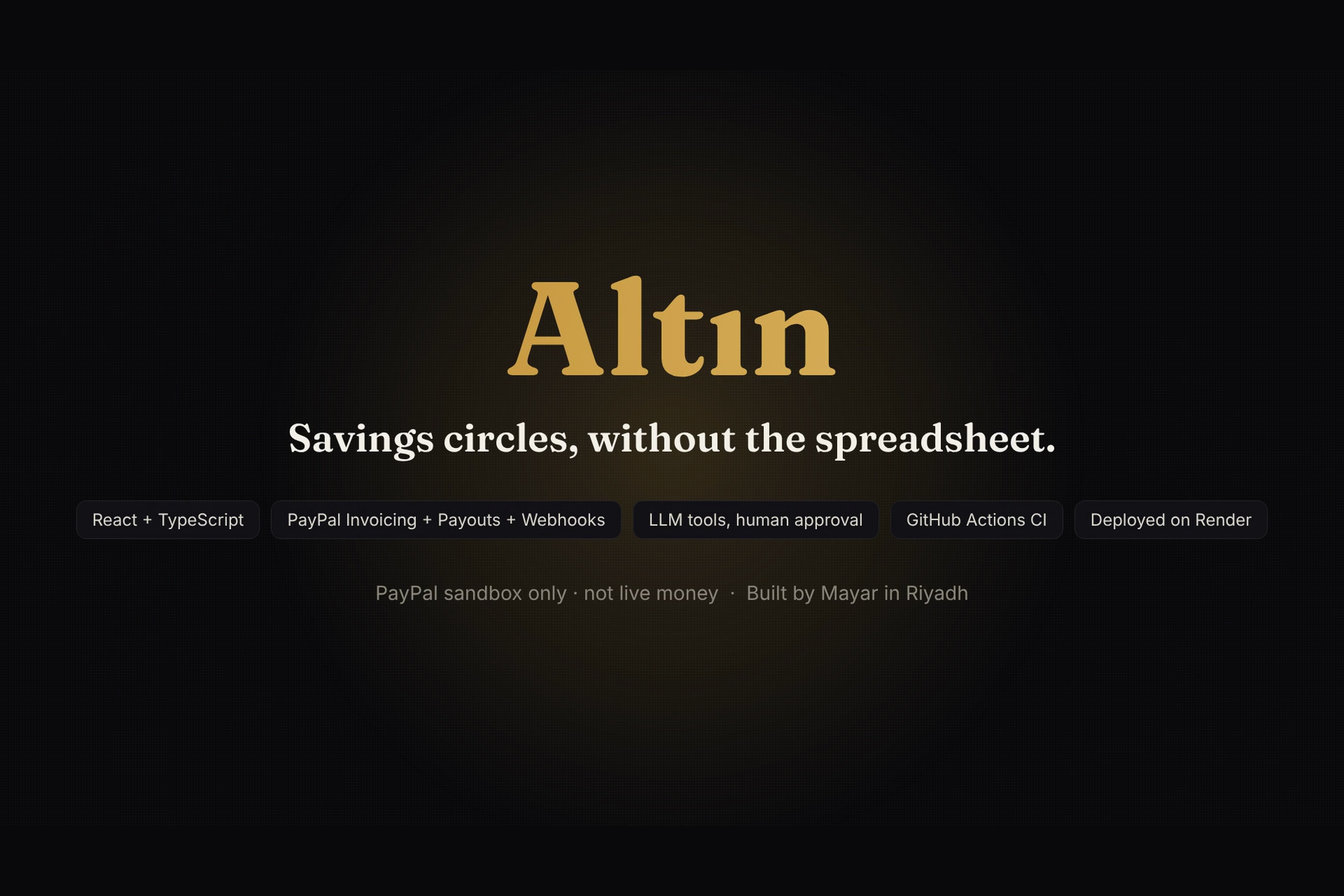
Built with React + TypeScript, PayPal Invoicing, Payouts and Webhooks, LLM tools, GitHub Actions CI, and deployed on Render.
Inspiration
Altın means gold in Turkish.
In Turkey I watched women run altın günü, "gold days": once a month everyone brings money (or gold) to one host, and the host changes every time until everyone has had a turn. No bank, no interest, no contract. Just trust and a group chat.
The same circle exists everywhere: jam'iya in the Arab world, tanda, susu, chit fund. It works beautifully, until someone has to chase twelve people for money, keep the spreadsheet and remember whose turn it is. That person is the organizer, and they usually do it for free.
I wanted to give her a treasurer.
What it does
Describe your circle in one message, in English or Arabic: "Six of us, $200 a month, Layla goes first." Altın builds the rotation and sends every member a PayPal invoice in US dollars.
When PayPal says an invoice is paid, Altın asks PayPal again before it marks anyone as paid, because that notification also fires for partial and pending payments.
When the pot is full, the organizer sees one Approve button. Nothing moves until she clicks it. Then PayPal Payouts sends the pot to that month's recipient.
Rules the AI can't break
- The AI never moves money. A payout only happens after the organizer approves.
- Altın never holds funds. PayPal moves the money.
- A member counts as paid only after PayPal confirms the invoice.
- Every money request carries a key built from the real event (circle, month, member), never a random value, so a retry can't pay twice.
How I built it
React + TypeScript front end, Node + TypeScript API, Postgres, hosted on Render. PayPal Invoicing API for invoices, Webhooks (signature-verified and de-duplicated) for payment events, Payouts for the pot. Meta's Muse Spark model turns the chat message into a validated circle, calling Altın's own tools, which call the PayPal APIs directly. The agent can propose a payout but has no tool that sends money.
Challenges
Money software has to be boring on purpose. Webhooks arrive at least once, so the same "paid" event can show up twice, and retries after a timeout must never pay twice. Most of the work is making the unlucky path as safe as the happy one. A real bug: members added without an email got invoices addressed to placeholder inboxes nobody owns, so in testing no sandbox account ever saw them. The board sat at $0 and I couldn't work out why. Now every payer needs a real email, and a circle rejects duplicate emails. I also learned that PayPal's webhook simulator events can't pass signature verification, so I tested with real sandbox payments instead.
What I learned
How PayPal's sandbox, OAuth, invoices, webhooks and payouts fit together, and why idempotency keys come from business events, not random values. I also learned how to design AI tools so the model can propose a money movement but never execute one, and how to ship a full collect-and-payout loop end to end on my own.
What's next
Altın is a test-mode demo and concept. A real circle product that touches people's money, in Saudi Arabia for example, would need proper licensing, so it is designed to orchestrate PayPal and never hold funds. All names in the demo are fictional.
Disclosure
The voiceover in the demo video is AI-generated: ElevenLabs, in a clone of my own voice.
Built With
- muse-spark
- node.js
- paypal-invoicing-api
- paypal-payouts-api
- paypal-sandbox
- paypal-webhooks
- postgresql
- react
- render
- typescript

