Inspiration
Every classroom starts as a "black box." For novice teachers, silence is often misleading: it does not equal understanding. We recognized a massive gap between university pedagogical theory and the complex reality of a live classroom. This is especially critical when teaching students with Special Educational Needs (SEN) or ADHD, where differentiated instruction is not just a concept but a necessity. The inspiration for IEdu was to make this invisible web of social connections and attention transparent and measurable.
What it does
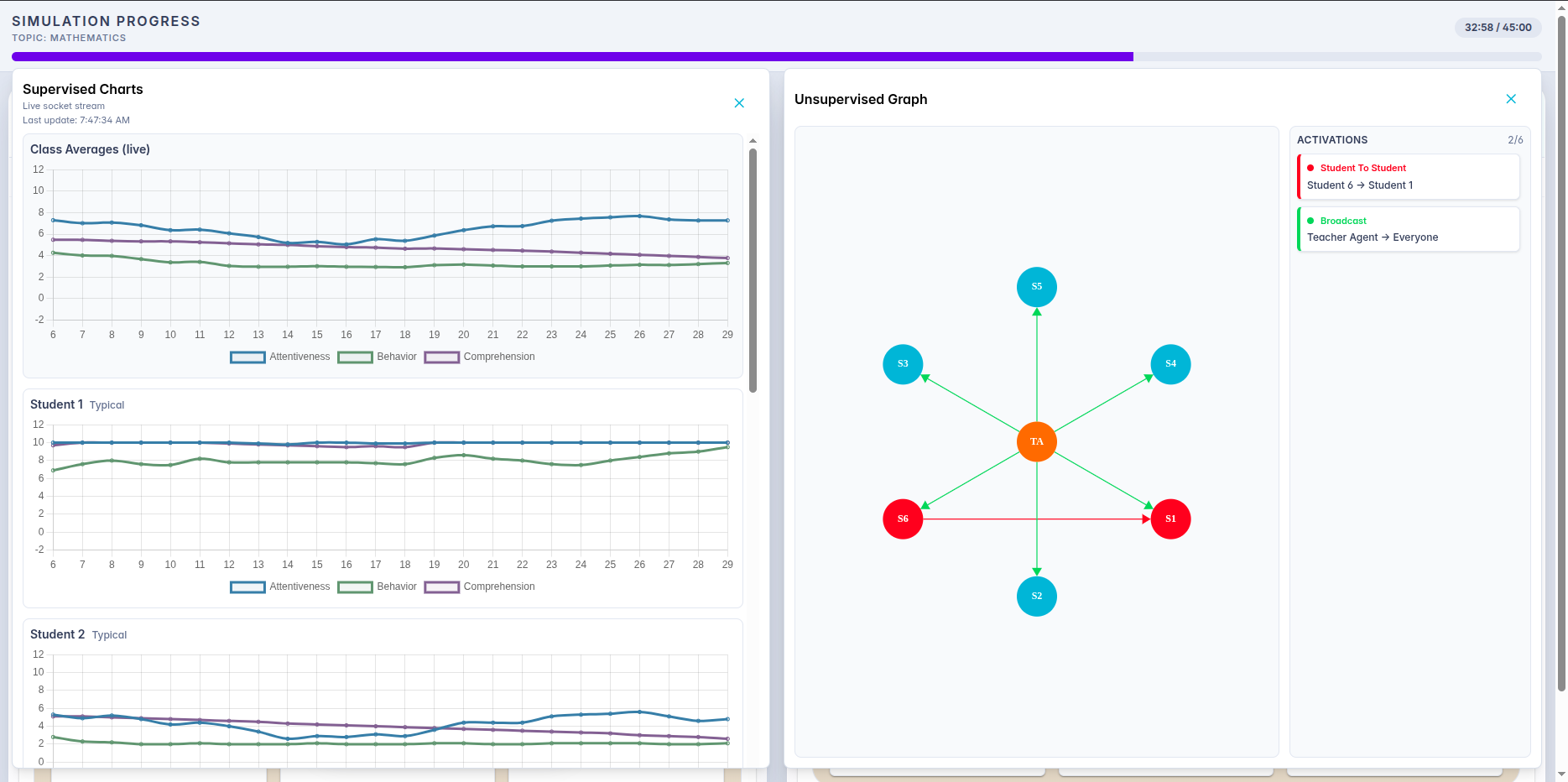
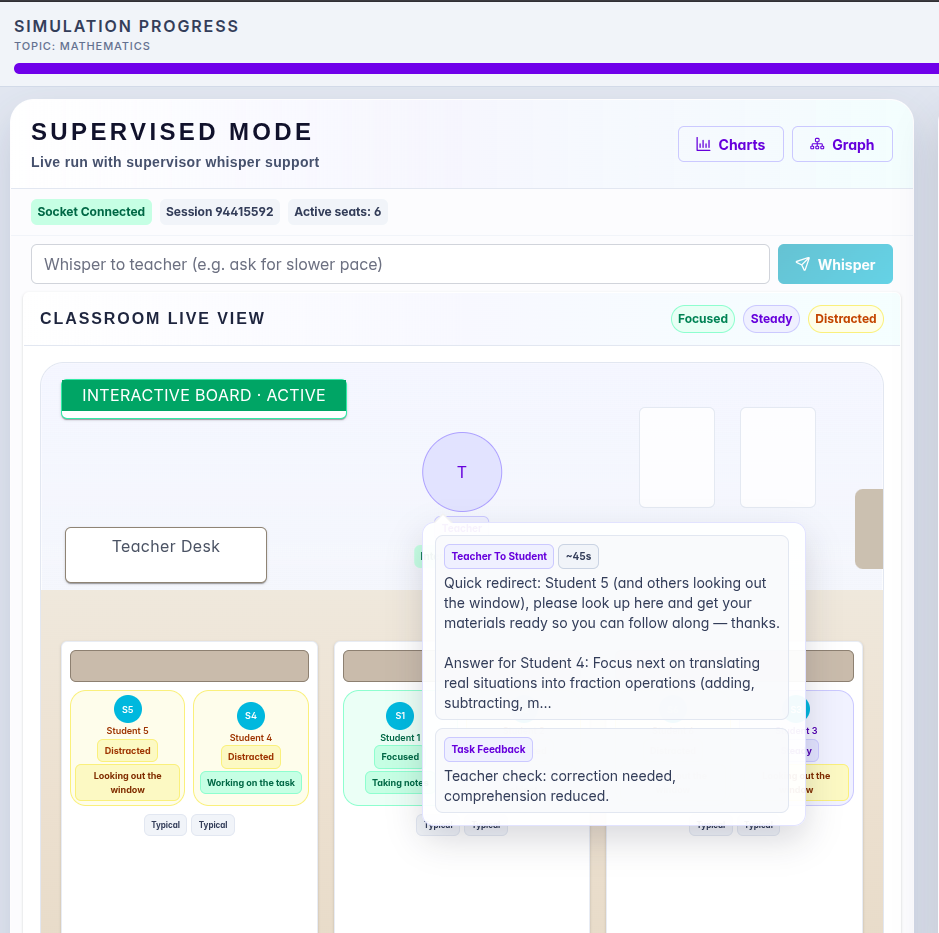
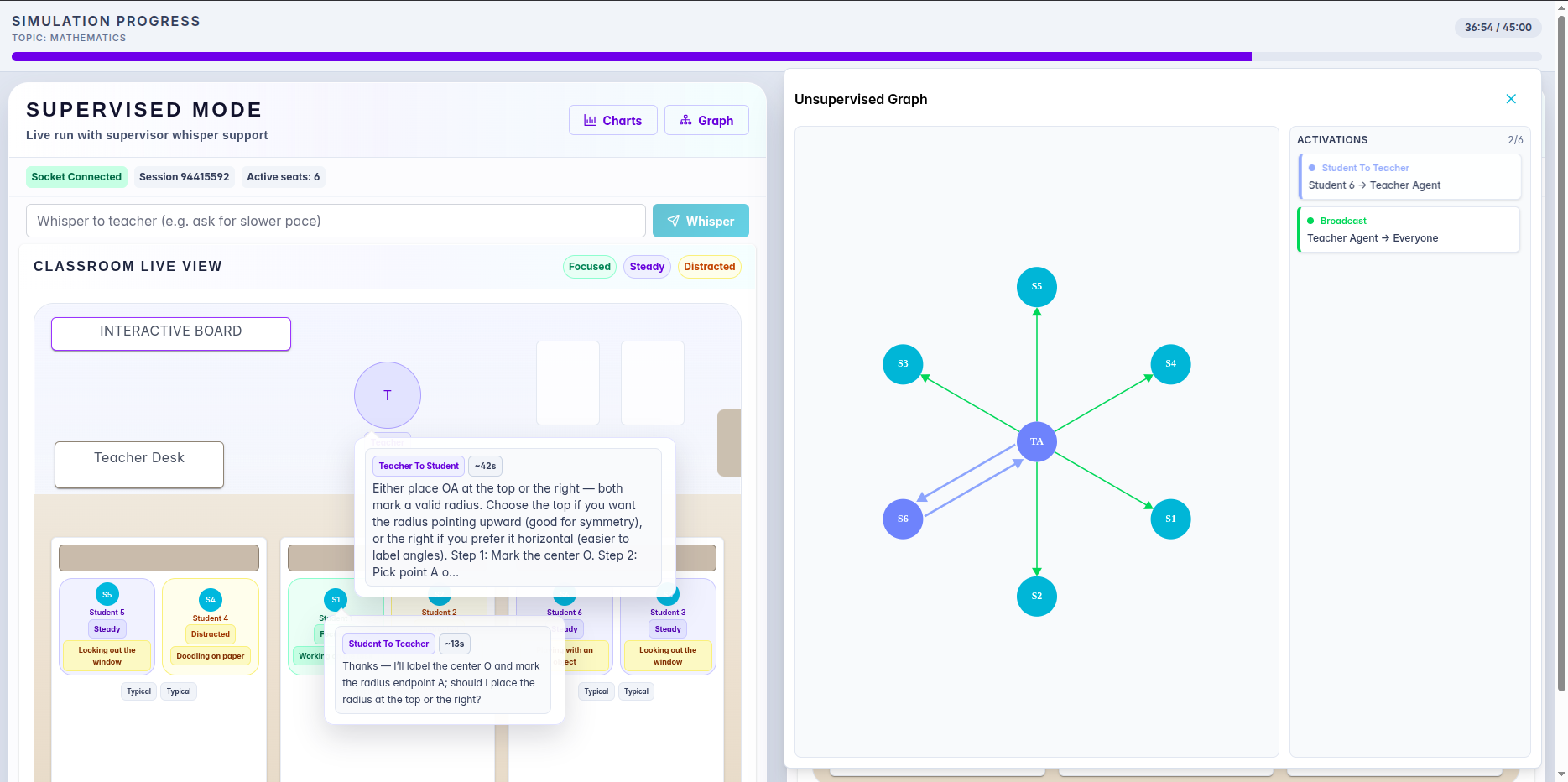
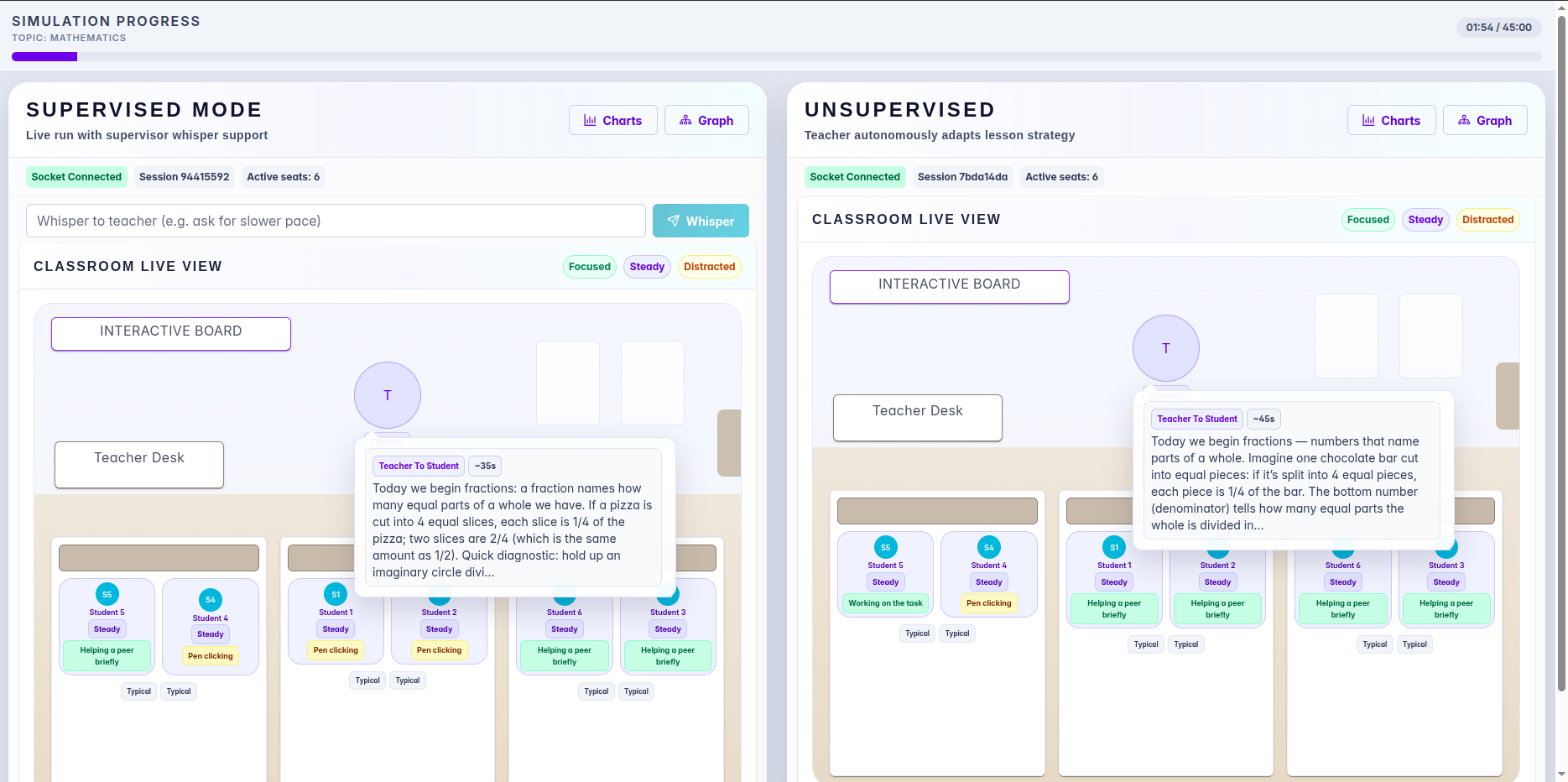
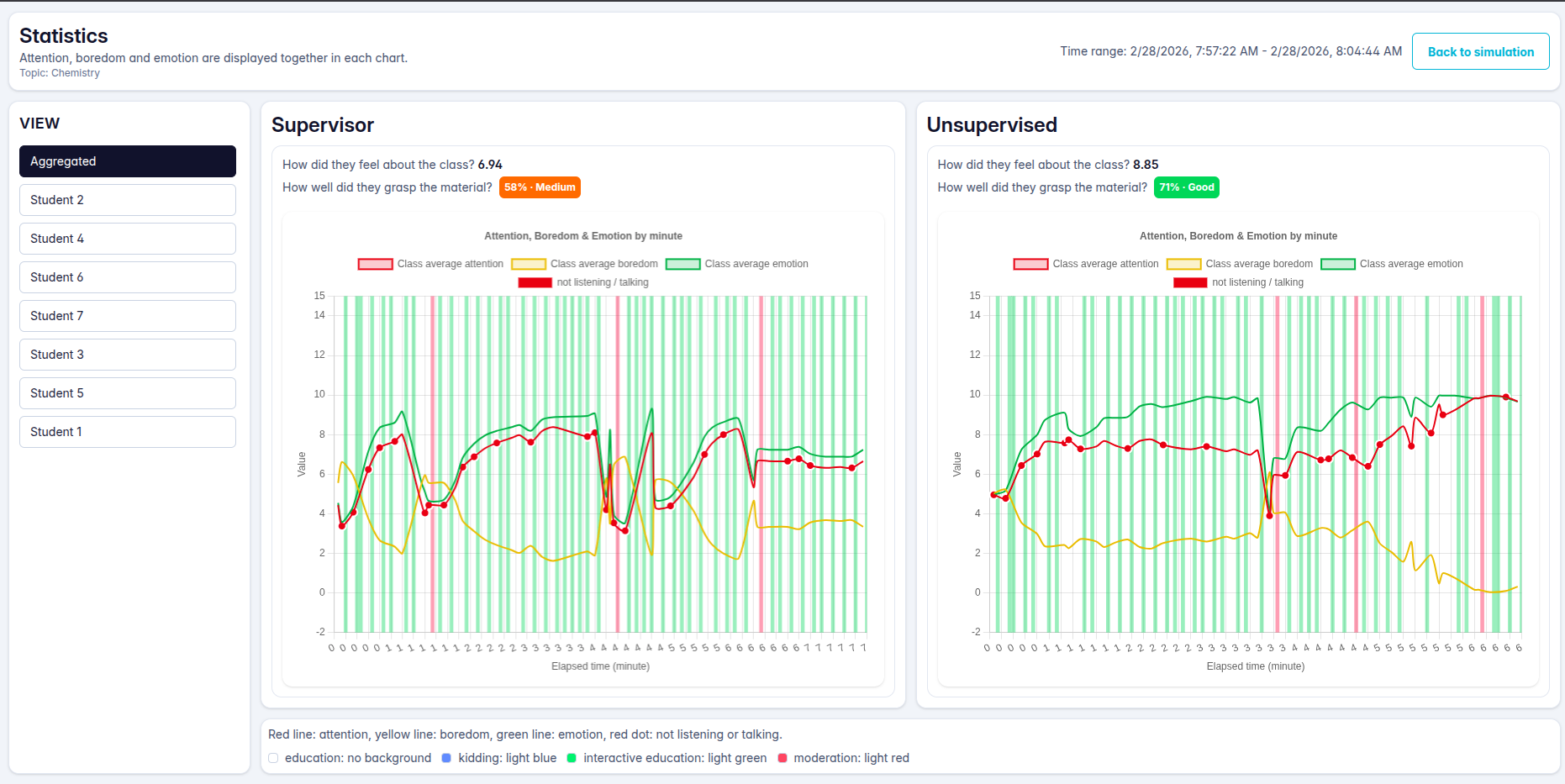
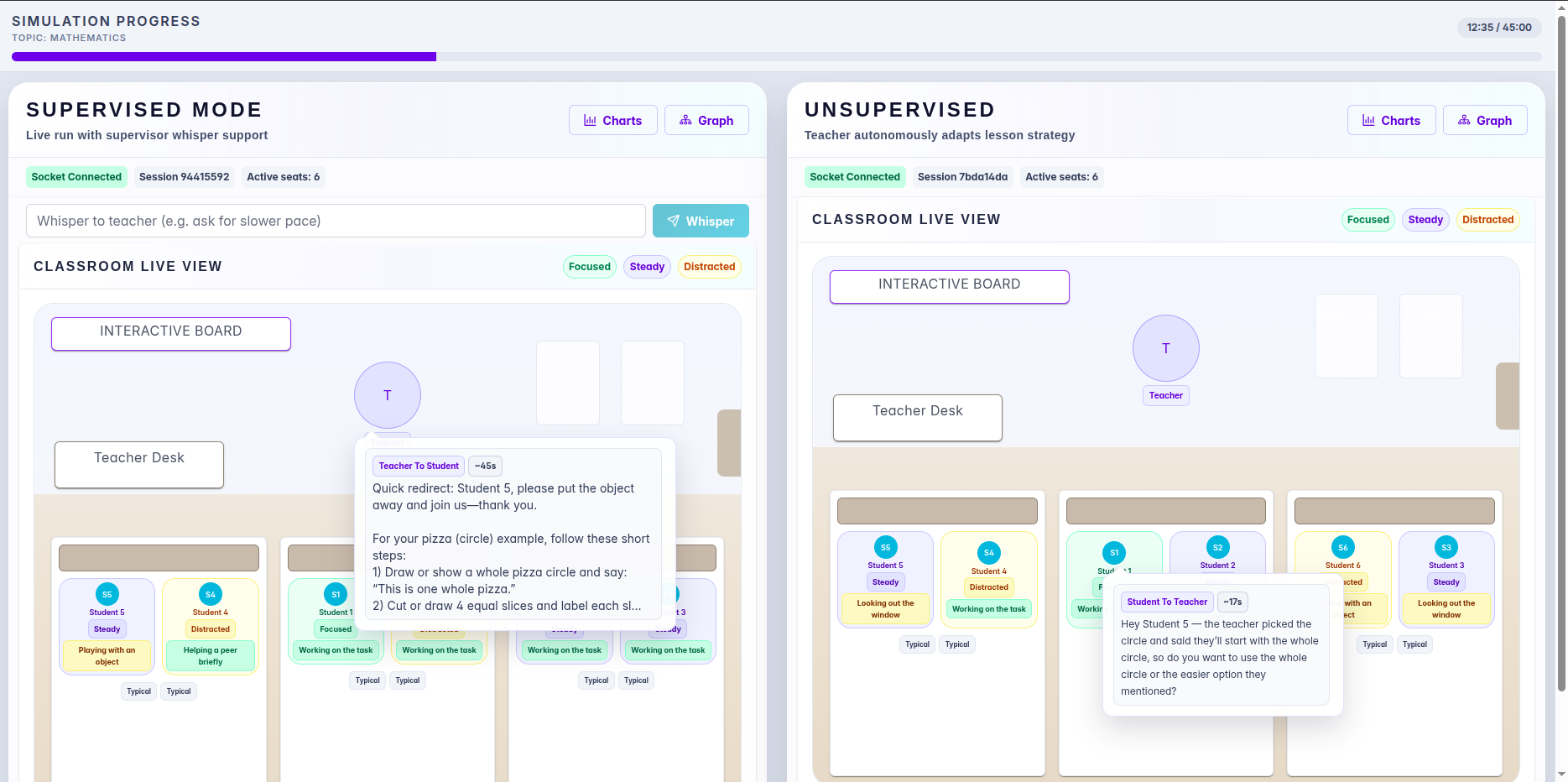
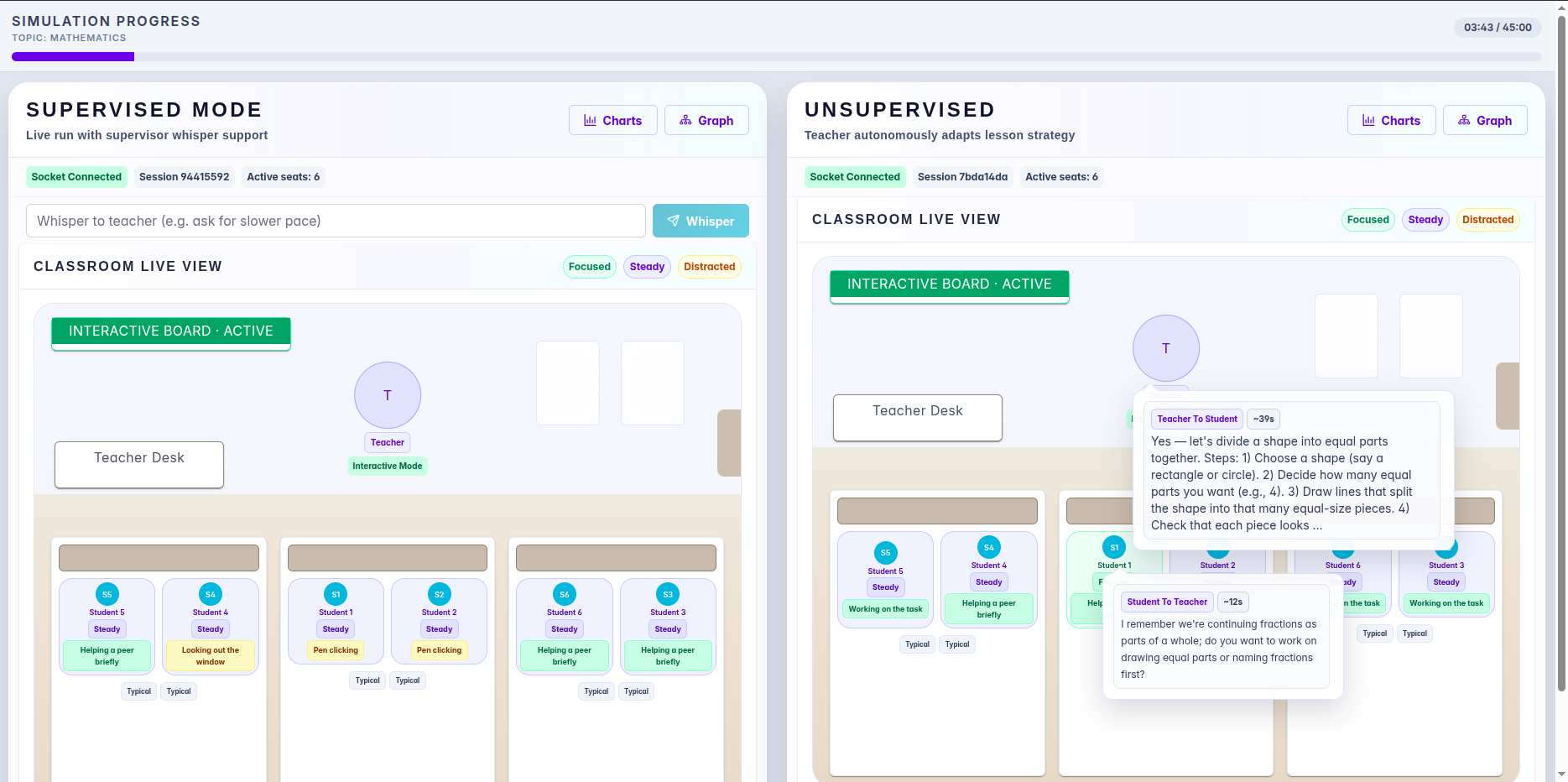
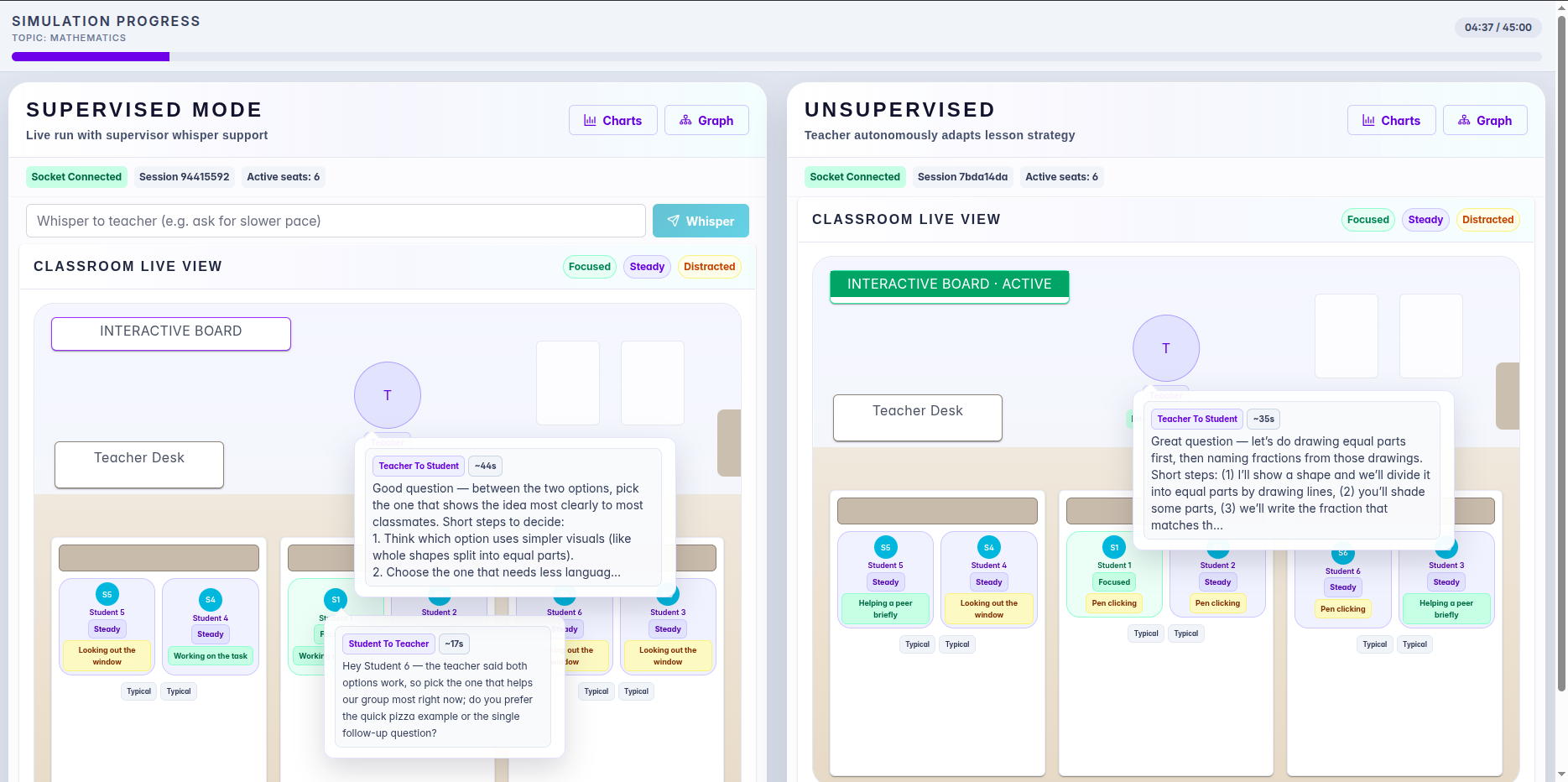
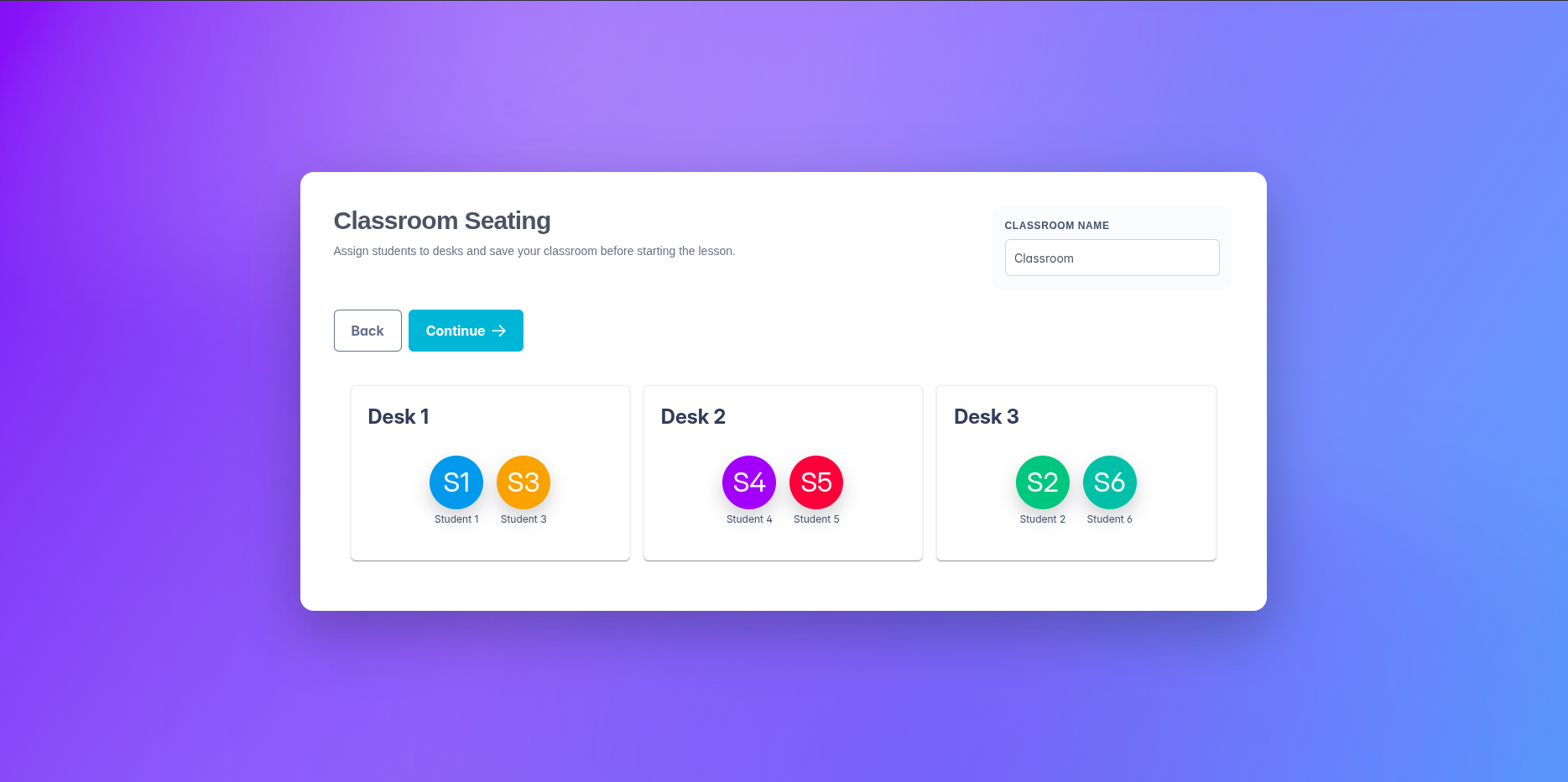
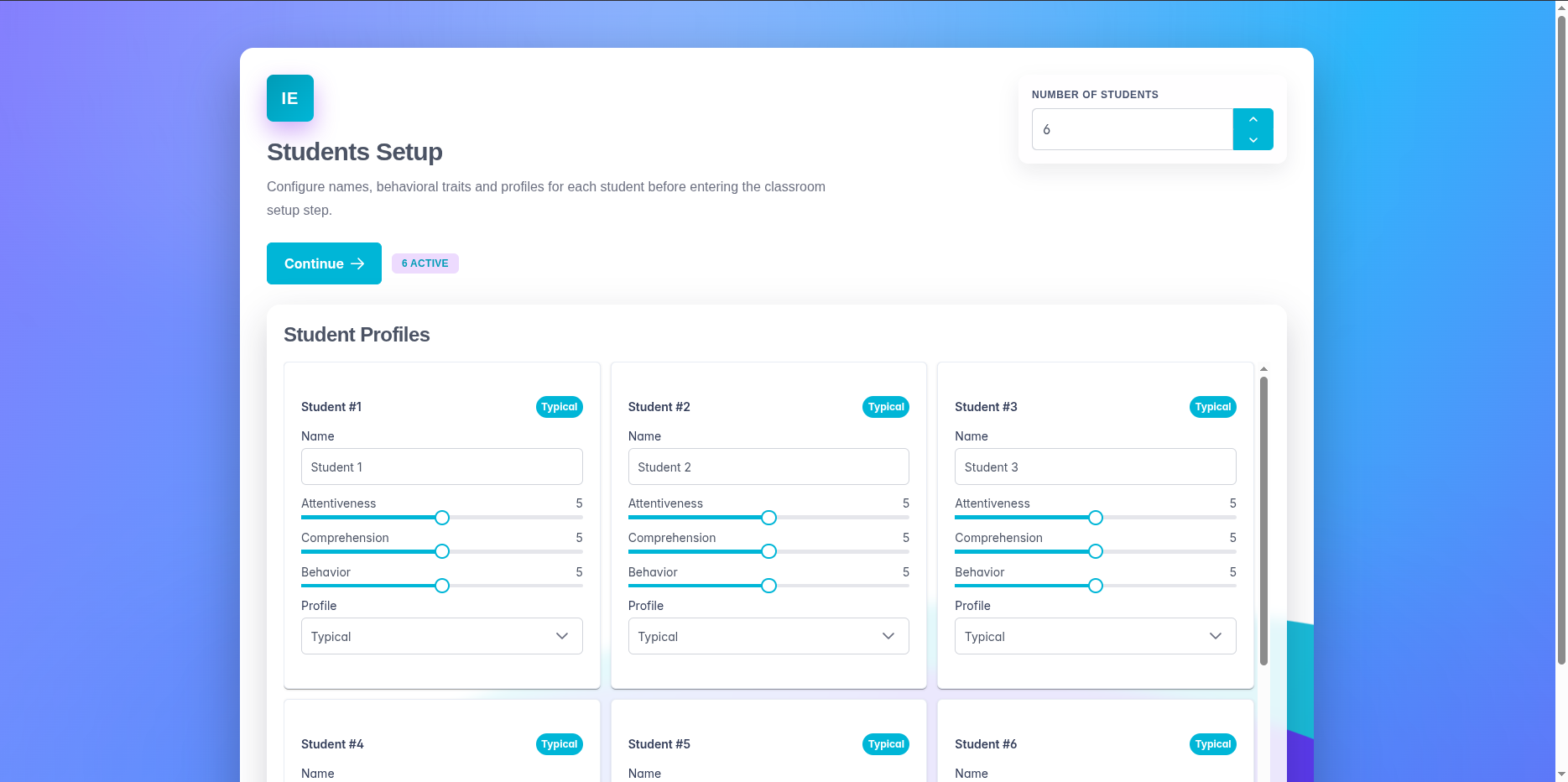
IEdu is an AI-driven classroom simulation laboratory where users can create fully customizable virtual environments.Student Profiling: Every student agent is parameterized with unique cognitive abilities, emotional triggers, and behavioral traits.Pedagogical A/B Testing: Our core innovation allows running two simulations in parallel. A teacher can test their own strategies in Supervisor Mode while a Reinforcement Learning (RL) agent simultaneously identifies the data-driven "optimum" for that specific group.Total Transparency: The lesson is visualized through three lenses: a spatial Classroom Map, a Chart View for live attention tracking, and a Neural Map (Graph View) showing the communicative links between students and the teacher.Objective Measurement: At the end of the session, student agents take an assessment based strictly on their "Memory Logs"—processing only what was actually heard during the simulation to provide a quantifiable measure of knowledge transfer.
How we built it
The platform is powered by a Tiered AI Architecture:
Teacher Agent: Utilizes a high-reasoning LLM capable of complex pedagogical logic and strategic decision-making.
Student Agents: Operate on optimized, lightweight models with constrained knowledge bases. This ensures they mirror authentic cognitive limits and only "know" what has been taught during the session.
Real-time Engine: Built to handle parallel simulations with low latency, providing
Challenges we ran into
One of our primary challenges was authentically modeling neurodivergent behavior. We had to carefully balance the AI's natural "omniscience" with realistic cognitive constraints so that agents wouldn't simply know everything by default. Engineering the A/B testing environment to sync two different AI logic streams (human-led vs. RL-optimized) while maintaining real-time dialogue logging also required significant technical iteration.
Accomplishments that we're proud of
We are incredibly proud of our Neural Map visualization, which successfully exposes the hidden social dynamics that teachers often miss. Additionally, we developed a functioning "data flywheel"—a summary dashboard that correlates specific teaching methodologies (like humor or interdisciplinary links) with measurable changes in class mood and learning retention.
What we learned
We discovered that AI's greatest potential in education lies not just in answering questions, but in modeling complex human interactions. We learned that a stress-free laboratory—a safe-to-fail environment—is an invaluable bridge for educators to gain confidence and expertise before ever stepping into a real classroom.
What's next for IEdu
Strategic Knowledge Base: Building a global hub of validated teaching methods specifically tailored for various neurodivergent profiles.Corporate & Healthcare Scaling: Adapting our behavioral modeling for executive leadership coaching and large-scale mental health research.Mobile Practice: Developing a mobile-friendly interface so educators can practice classroom management strategies anywhere, anytime.
Built With
- azure
- chart.js
- clipchamp
- node.js
- openai
- postgresql
- primereact
- react
- socket.io
- typescript


Log in or sign up for Devpost to join the conversation.