-
-
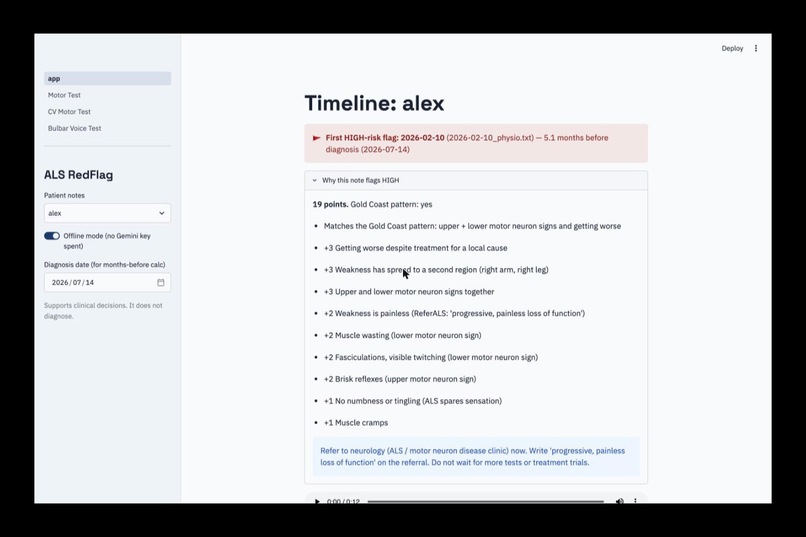
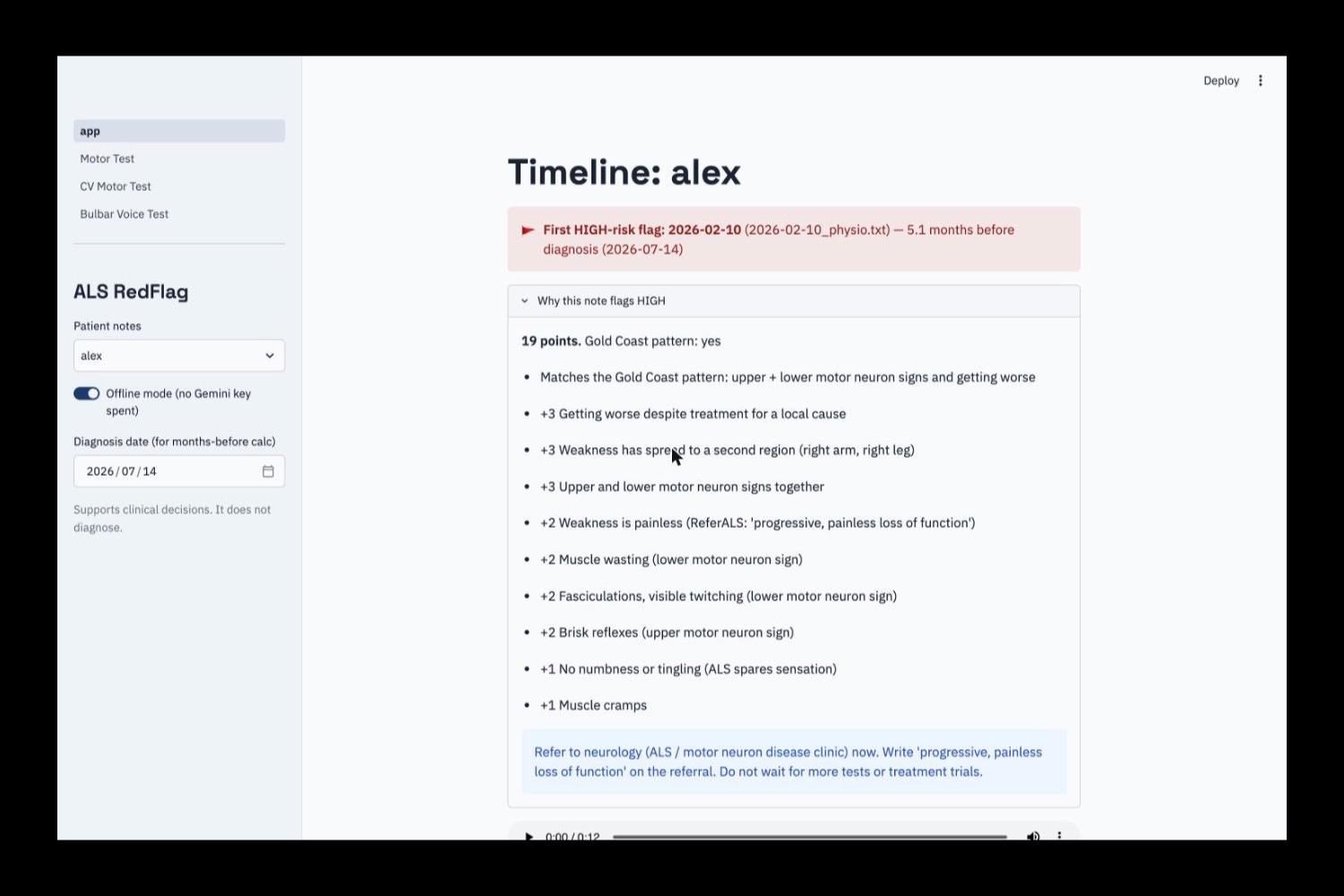
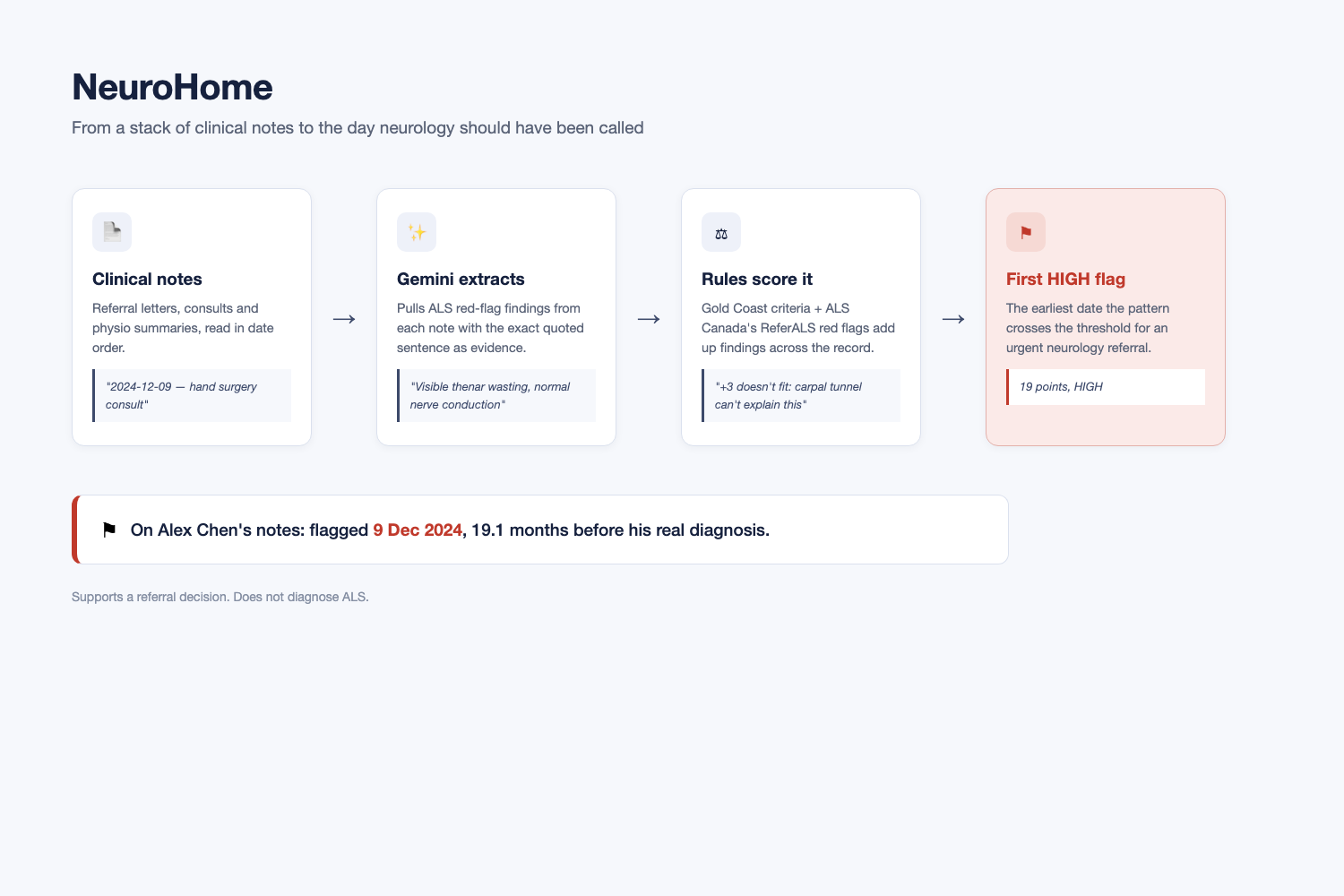
The first HIGH-risk flag on Alex Chen's notes, with every point traced to a rule
-
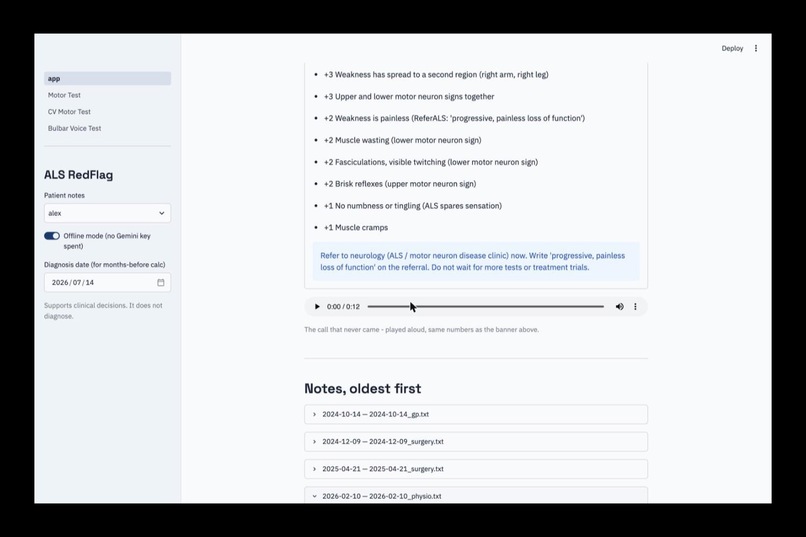
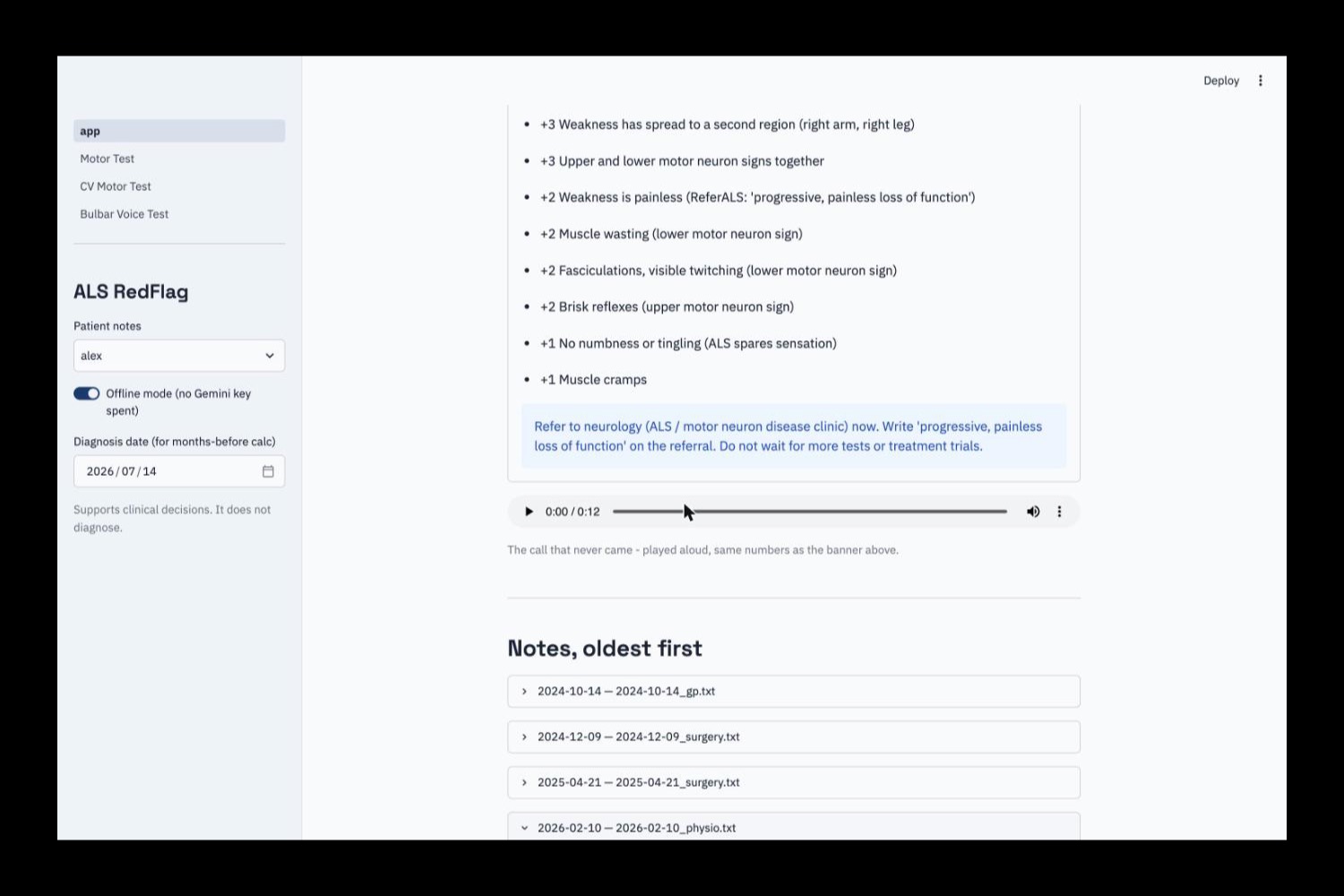
Notes read in order, each finding tied to the exact sentence it came from
-
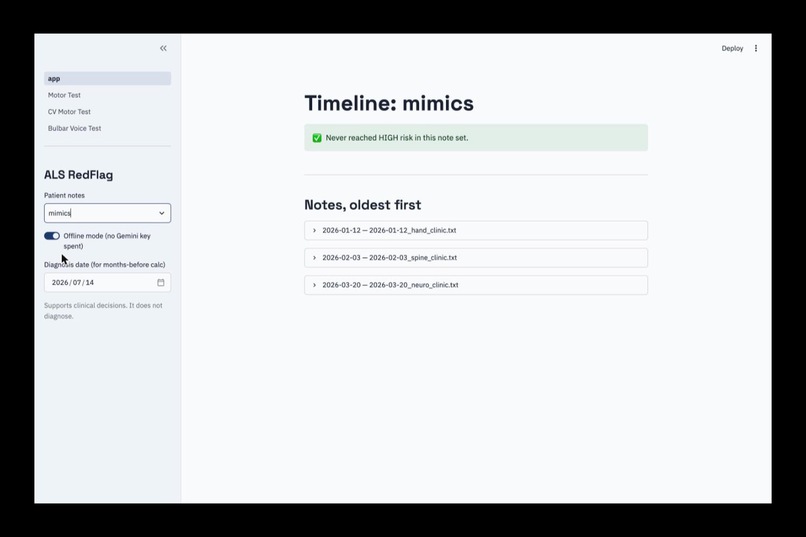
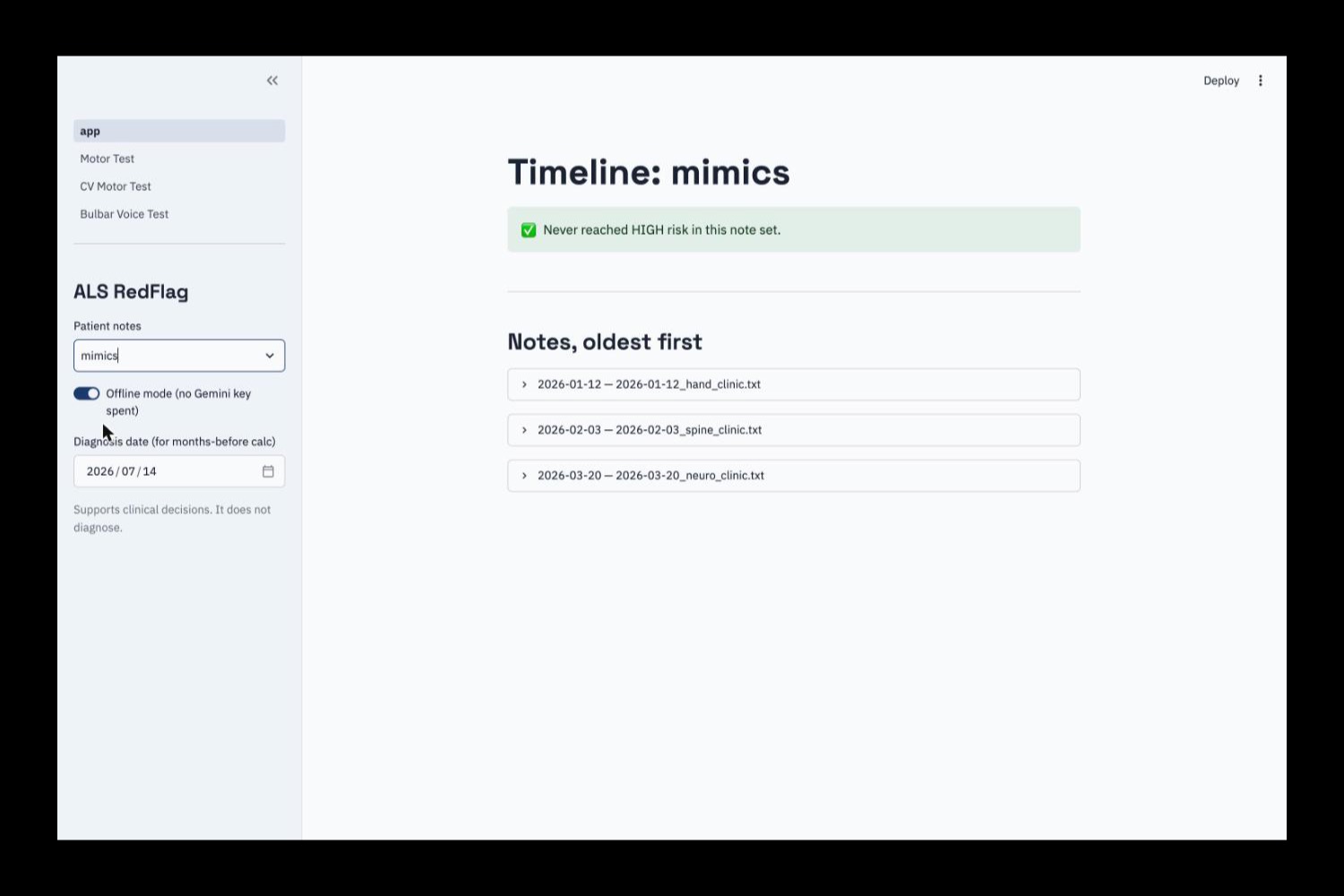
A non-ALS mimic case (carpal tunnel, a pinched nerve, peripheral neuropathy) correctly stays LOW
-
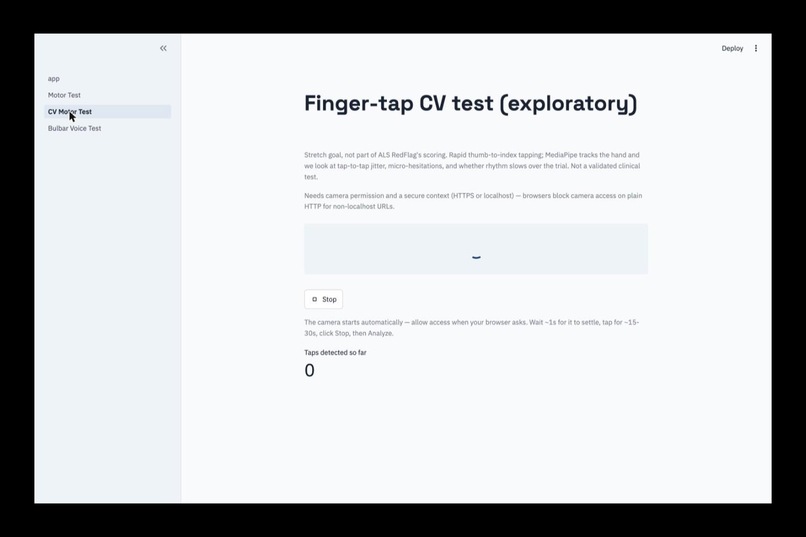
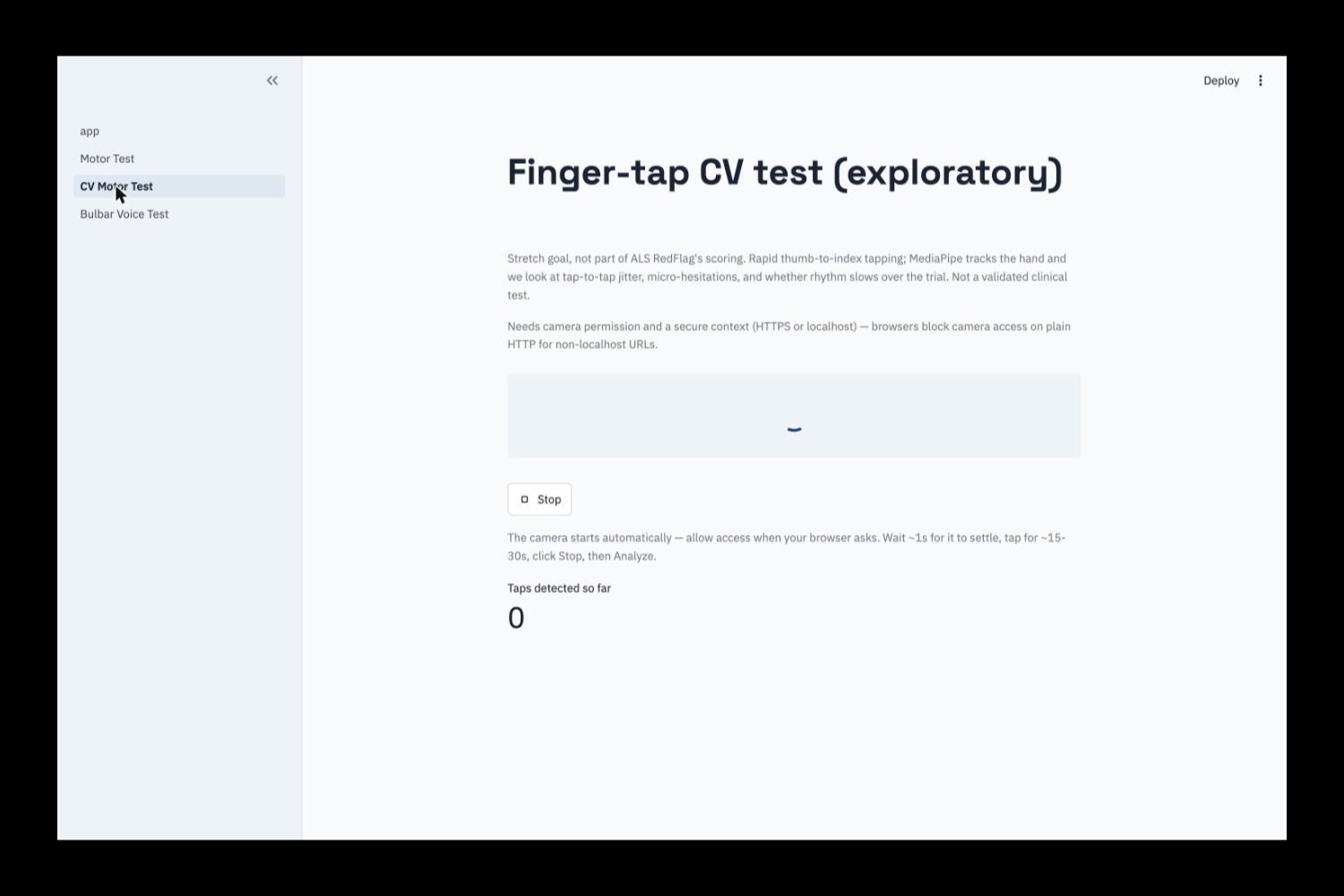
Finger-tap CV test: an exploratory webcam test, kept separate from the referral score
-
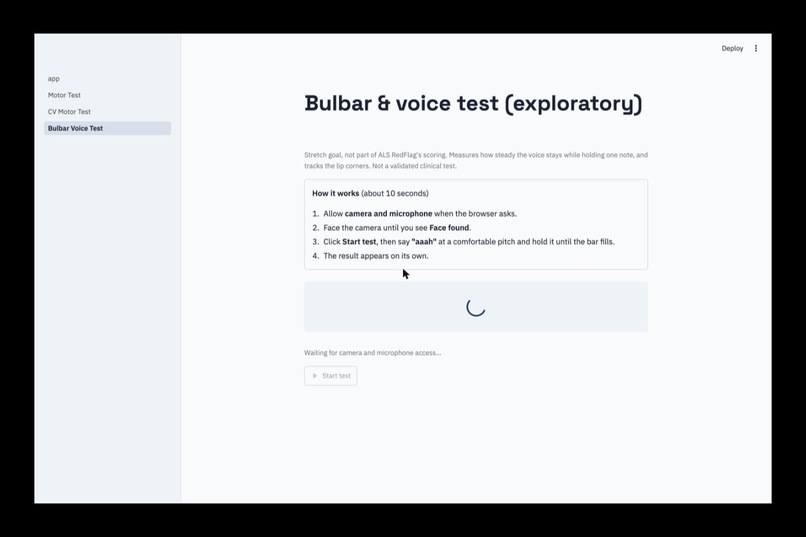
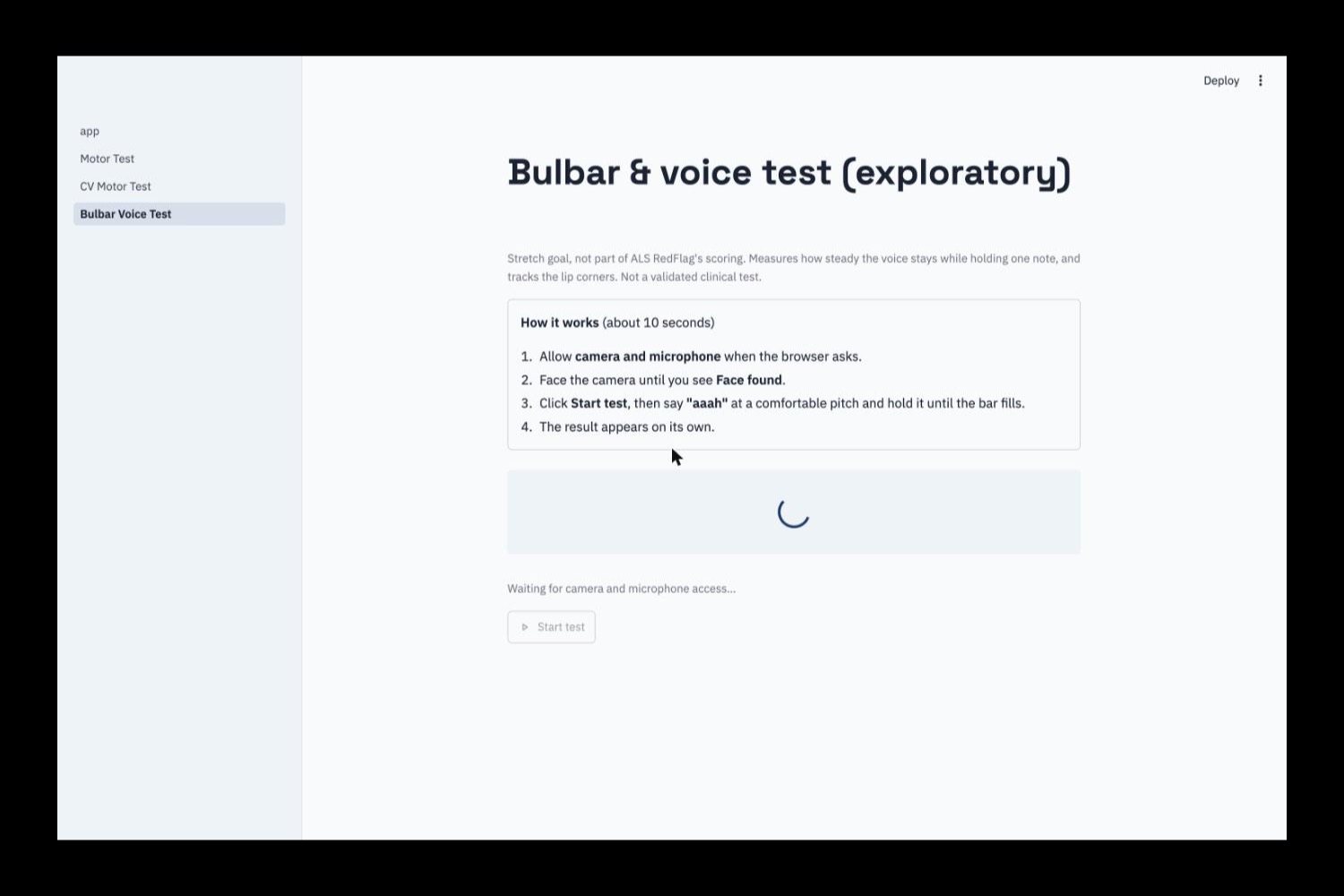
Bulbar voice test: a guided 8-second "aaah," auto-analyzed for pitch and resonance
-
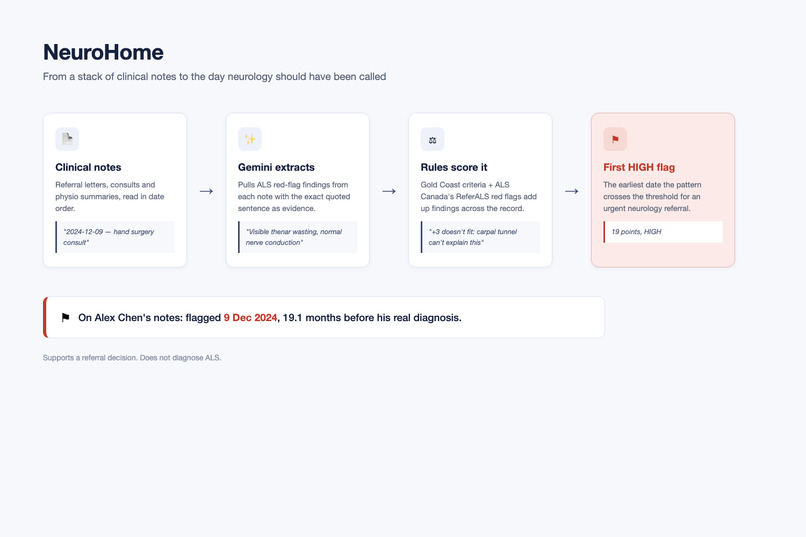
How NeuroHome turns a stack of notes into one flagged date
Inspired
We were inspired by ALS Canada and the stories of ALS patients
The Mission
NeuroHome is an integrated, dual-modality early-detection and triage platform designed to bridge the critical 15–27 month diagnostic delay in Amyotrophic Lateral Sclerosis (ALS). By shifting detection from late-stage physical symptom observation to pre-symptomatic and early-stage screening, we aims to make detection faster
The Solution
NeuroHome combines molecular biology with digital phenotyping into a seamless, point-of-care workflow:
The Multiplexed Microfluidic Cartridge (Biological Validation): A single-use, credit-card-sized plastic chip that processes a finger-prick blood sample (~50 µL) on-chip. Using capillary action and an integrated asymmetric membrane, it isolates plasma and simultaneously measures a 3-point biomarker panel:
NfL & pNfH: Indicators of active neuro-axonal destruction.
pTDP-43: The pathological protein misfolding hallmark of ALS.
The Handheld Electronic Reader: A compact, Bluetooth-enabled reader that interfaces with the chip, quantifies the picogram-level protein concentrations, and syncs the data securely to the mobile app.
The Digital Phenotyping App (Functional Specificity): A built-in smart home assisstant application that passively and actively tracks subtle neuromuscular degradation—such as finger-tapping cadence decay, micro-coordination shifts, and vocal fatigue.
What we have built
Today, we are presenting Phase 1 of NeuroHome: a deployed web-based triage engine. It combines an algorithmic clinical symptom screener with a micro-coordination motor typing test to quantify subtle finger-tapping decay and motor latency right in the browser.
What we want to build
Instead of relying on a one-time clinic visit, Phase 2 passively monitors a user's smartphone sensors or smart home assistant and daily voice interactions to catch progressive muscular weakening across two core domains:
Gait Mechanics (LMN Track): Using background mobile IMU sensors, we track subtle decreases in stride length, decay in walking velocity, and loss of peak foot impact force (early foot drop)—distinguishing progressive neurogenic weakness from general tiredness.
Bulbar Speech Dynamics: We analyze speaking speed (words per minute), pause frequency, and acoustic jitter to detect sub-clinical vocal fold and articulatory degradation.
When our algorithms flag a progressive downward trend across gait and speech over a 14-day window, the app prompts the user to perform our Phase 3 Point-of-Care Microfluidic Blood Test—combining continuous digital telemetry with objective molecular proof (NfL, pNfH, pTDP-43) for immediate neurological referral.
Built With
- gemini
- librosa
- mediapipe
- python
- scikit-learn
- streamlit

