Inspiration
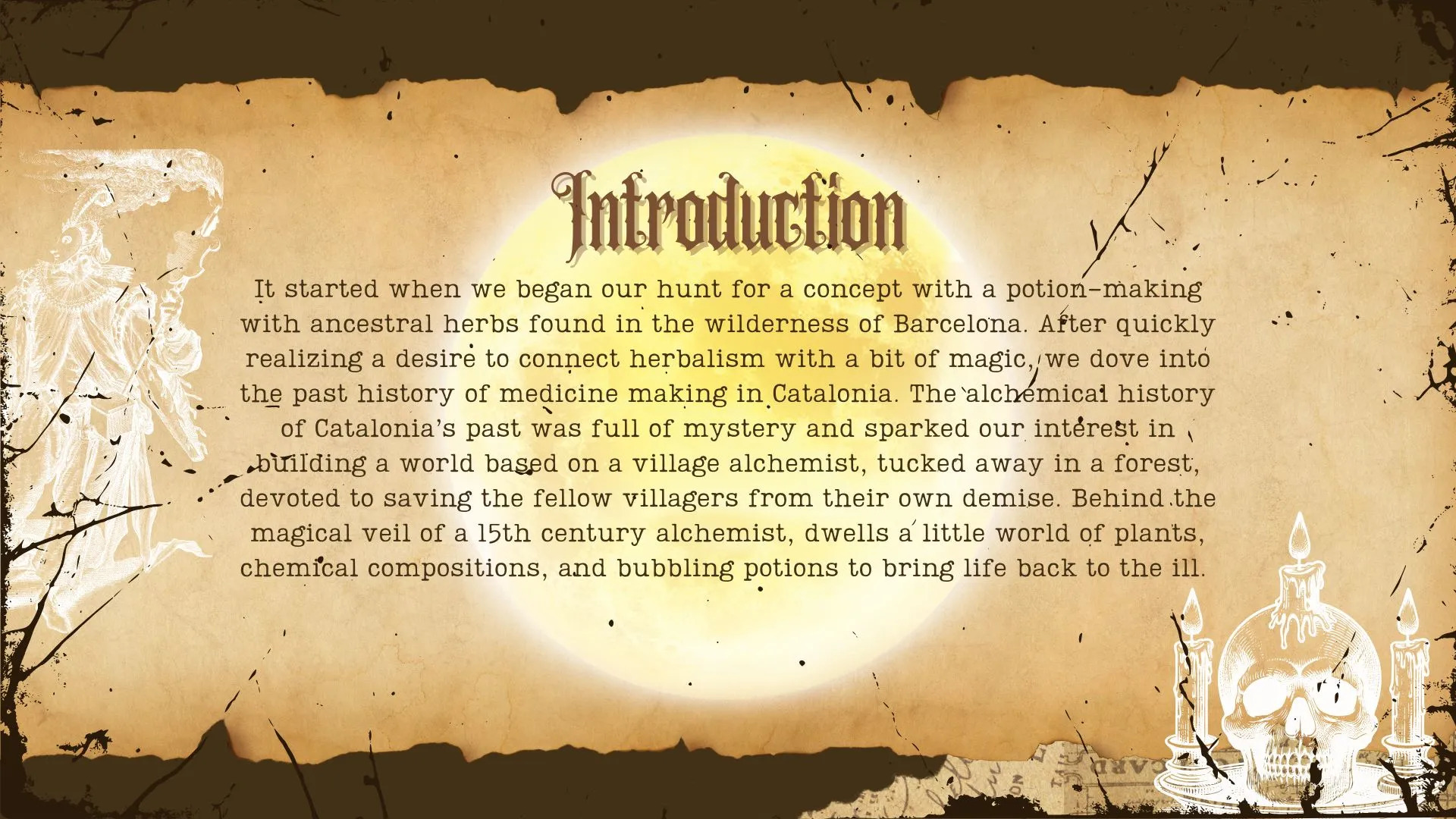
We were inspired by the rich history of alchemy in Barcelona including thinkers like Jean de Roquetaillade and the recent exhibition at the Monasterio de Santa María de Pedralbes, which brought to life a medieval garden of over 50 plants and herbs. We wanted to create a rich and somewhat educative playing experience, where players were trusted to make connections between the ailments of peasants & nobles and the herbs, fungi and distilled wines available, using authentic recipes from the time. We also wanted to embed humour as well as "the humours" (à la Hippocrates), and tried to create zany animations and characters from a broad social spectrum of Catalan life.
How we built it
The game was built in Unity with logic from C# and Meta SDK. We embedded medieval Catalan (Occitan) into the character dialogue and our sound designer recorded a range of unique atmospheric sounds to immerse the player further in a sonically satisfying and addictive playing environment. We generated some assets and textures using meshy.ai to save time to record and act out these world building, educative elements.
Challenges we ran into
We ran into a number of challenges reconciling our ambitions to create a historically accurate, fun and playable prototype within the time. We ended up abandoning some of the authentic methods for preparing ingredients (Mortero y Pistilo, Atanor, Alambic etc) as asset creation and game mechanics were already under strain in other areas, and collision based interactions are hard. We also struggled with organising our ingredient assets (where herbs ended up looking slightly similar) with the game logic to make potions appear and move the game along to the next peasant or noble and their ailment.
Accomplishments that we're proud of
We are proud of the narrative elements and how they contained lots of educative historical and linguistic references to medieval Barcelona. The character names, for example, were sourced from REPERTORI D'ANTROPÒNIMS CATALANS (RAC) I, Institut d'Estudis Catalans, Barcelona (1994) and we were able to include unique references in the character design too (e.g. a somewhat authentic crest of Cabrera on Ramon de Cabrera, Catalan patterns on nobles outfits drawn from the paintings of Jaume Huguet etc). We are also proud of the sound design and how we utilised field recording to achieve almost ASMR-like qualities, making the game relaxing and engaging to play. It is tempting to lean on narrative, design and sound elements when expressing what we are proud of as they were less tricky to achieve in a polished fashion in the time frame. We ran into more issues with the game development, but ultimately we are most proud of our ability to pull together a working prototype in the time frame, as this is the greatest indication that the ceiling of potential for our game is actually achievable.
What we learned
We had so many ideas, we would have benefitted from stripping down our concept at the very start. Being aware of our limitations and the timeframe is a key takeaway. We mispent time going down historical rabbit-holes about medieval alchemy, and trying to implement collision or complex mortar interactions. Instead of adding so many ingredients, recipes and characters, we could have worked on making the core gameplay work without bugs. If we had focused on getting the game mechanics to work for one elixir - before stacking ingredients, recipes and character ailments - we could have avoided some stress. On a positive note, we learnt that we were able to emulate this ancient medicinal practice to some extent with aesthetic and narrative references and that VR can provide an entertaining and immersive way for players to engage with a historical niche.
What's next for Alquimista de Barcelona
We think there is a lot of potential for this concept in terms of engaging younger generations with apothecary and Catalan medicinal history. A full range of processes, equipment (Atanor, Alambic, Retorta, Matraz, Crisoles, Mortero y Pistilo, Balanza, Kerotakis, Baño María) and astrological/religious superstitions could be added to give greater insight into the life of the Alquimista de Barcelona and make for a richer playing experience. Implementing game mechanics which took into account these astrological timings and authentic processes to provide a structure for challenging players to achieve XP and purchase real, digitised ancient texts like Liber In Examen Apothecariorum (Pere Benet Mateu, a Barcelona apothecary, 1495) & Concordie Apothecariorum Barchinone (1511) would be a dream. It would also be great to use the VR experience to encourage wider knowledge of herbs and their medicinal applications, to cultivate survival skills and medical independence for the future. We would love to increase the range of herbs and elixirs through further research and collaboration with academics. We would also love to work with local government to bring this prototype fully to life, grounding it in the rich archival history of alchemy in Catalonia.


Log in or sign up for Devpost to join the conversation.