-
-

Alphaslice Logo
-
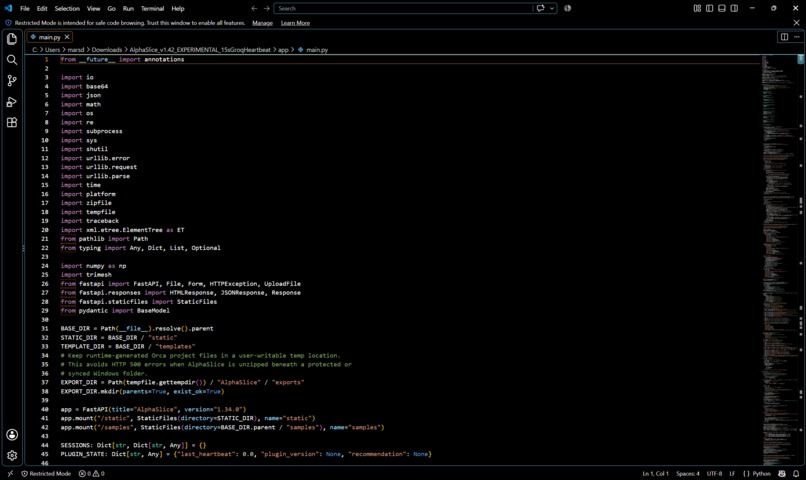
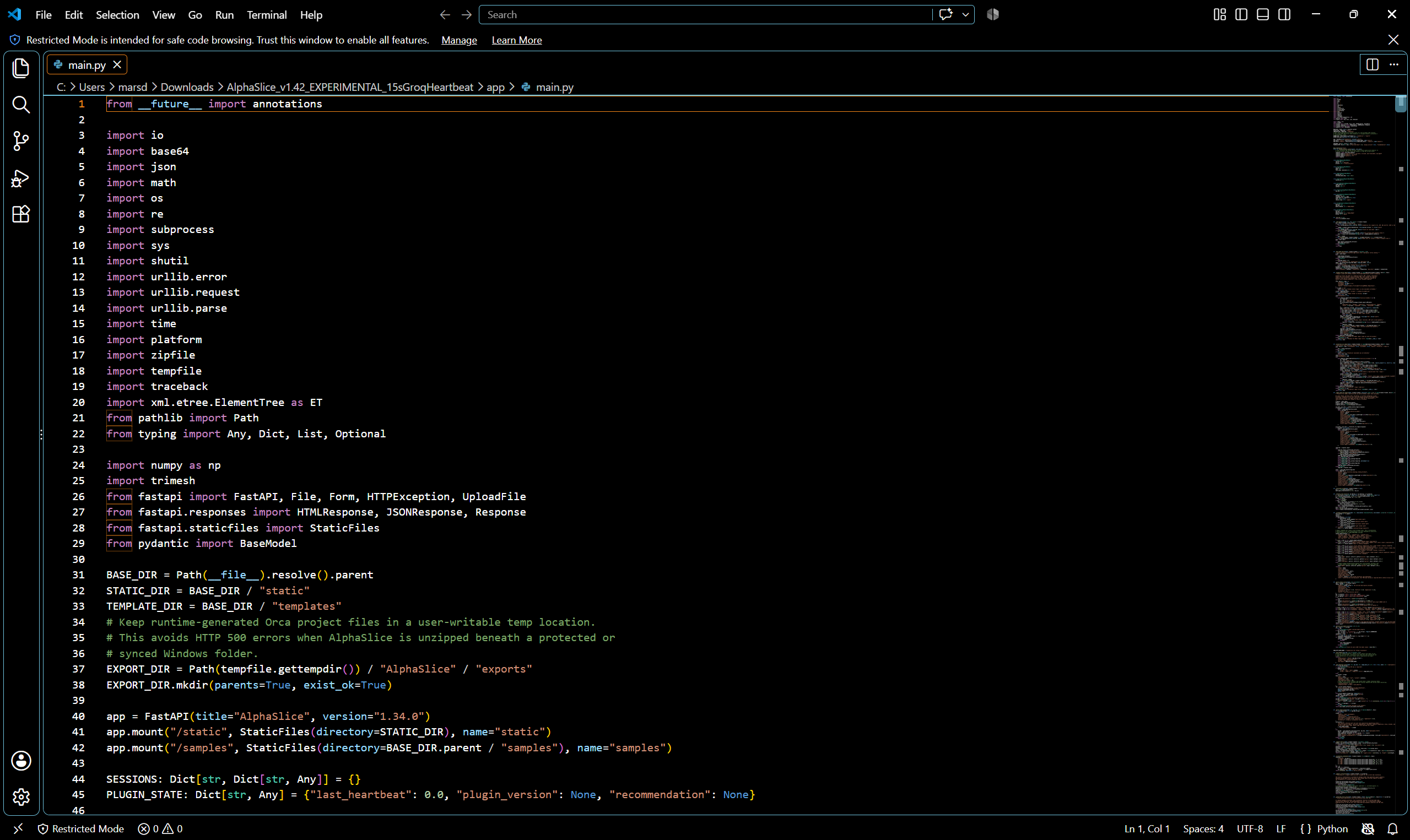
Coding the main python file, with help of Claude
-
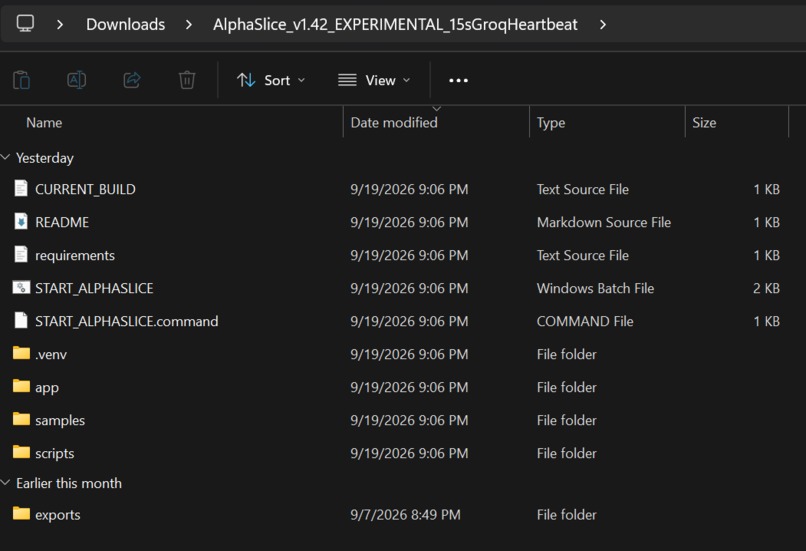
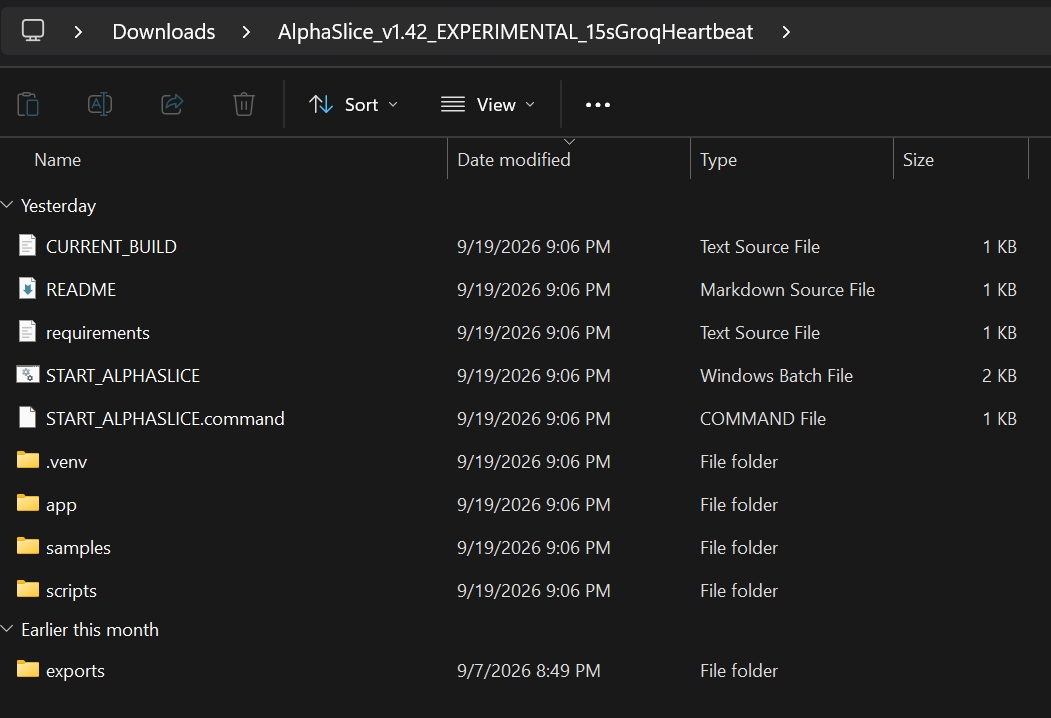
AlphaSlice Folder Architecture
-
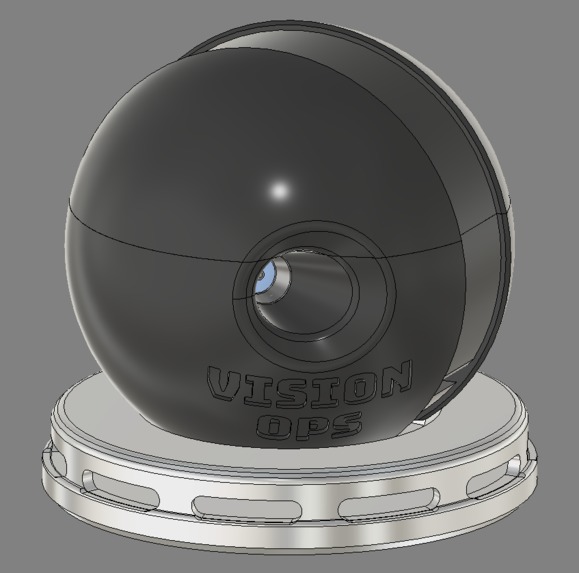
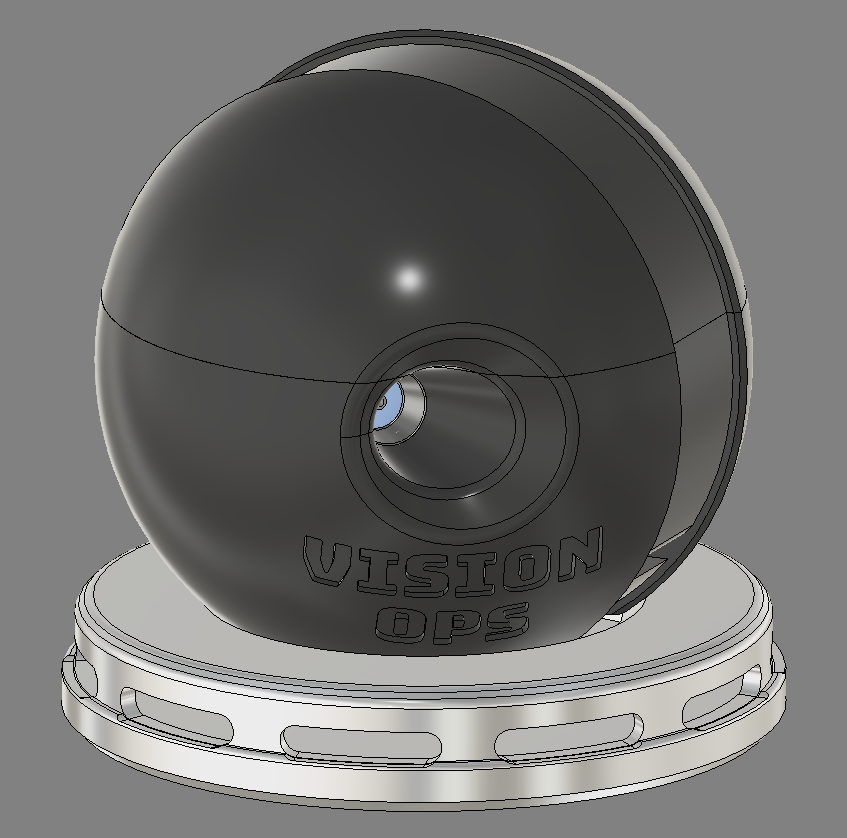
Vision OPS Cad-Fusion 360.
-
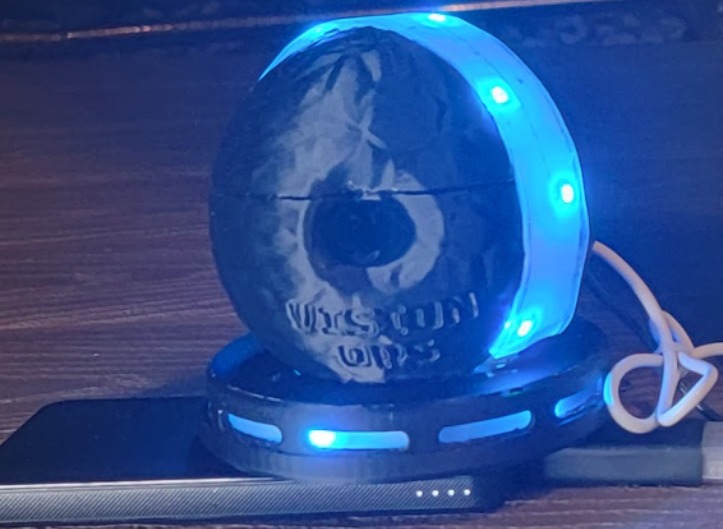
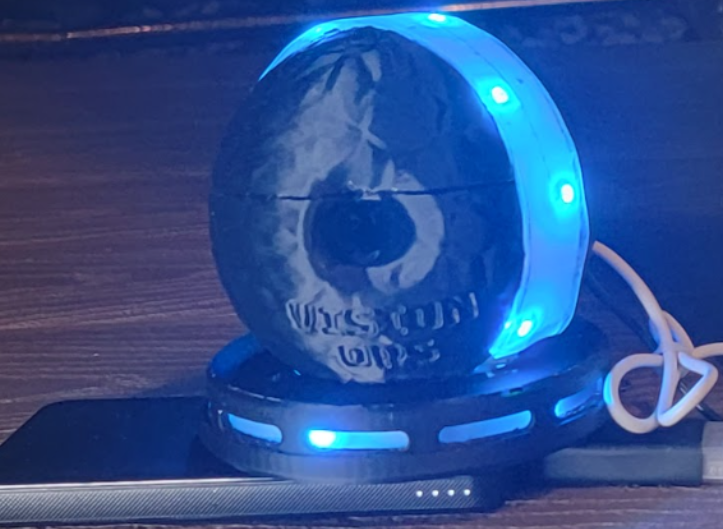
Vision OPS Orb Assembly, with LED ring lighting.
-
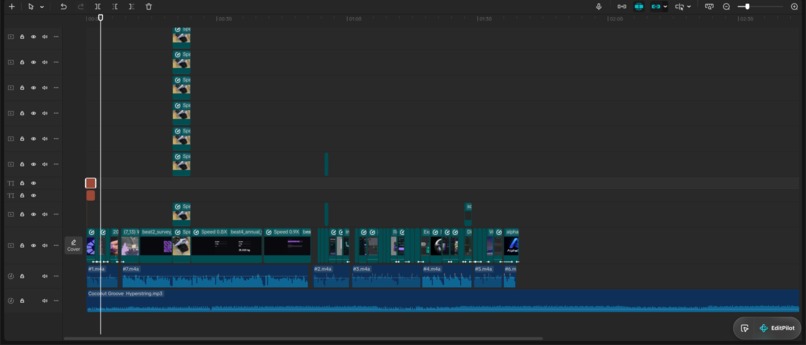
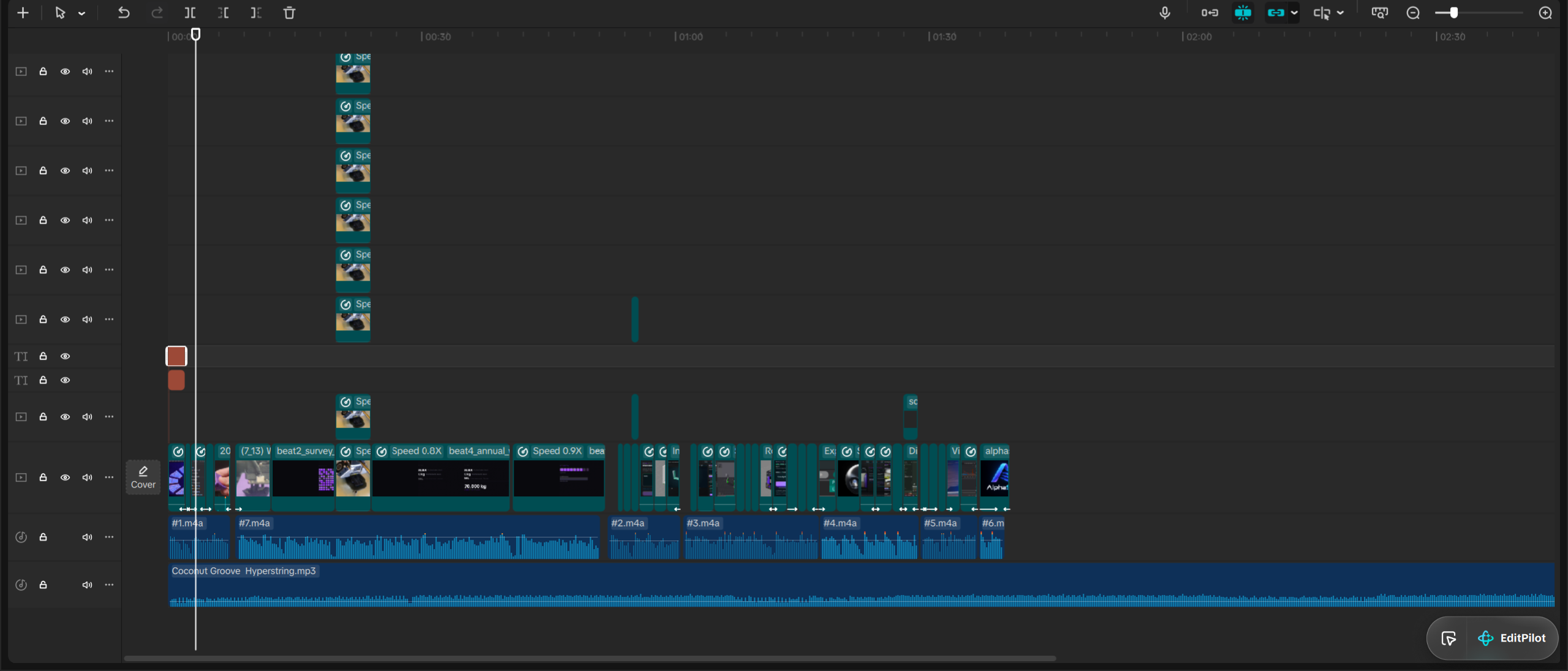
Editing the production project reveal video
-
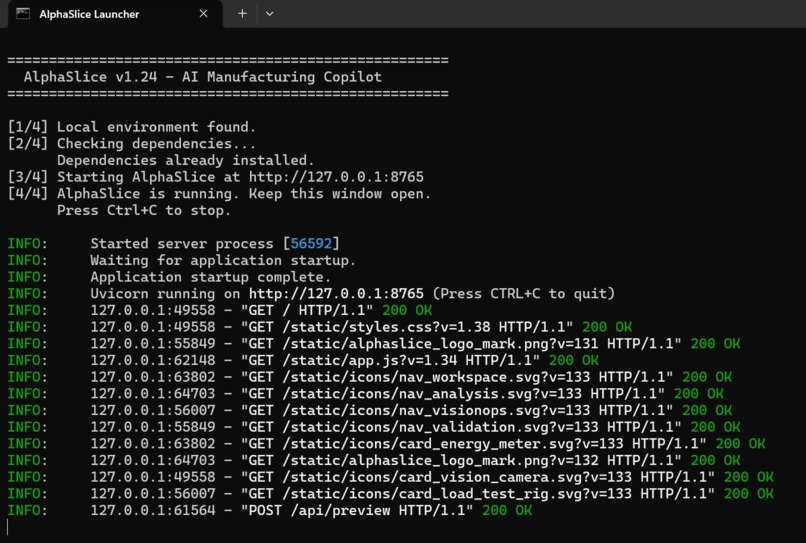
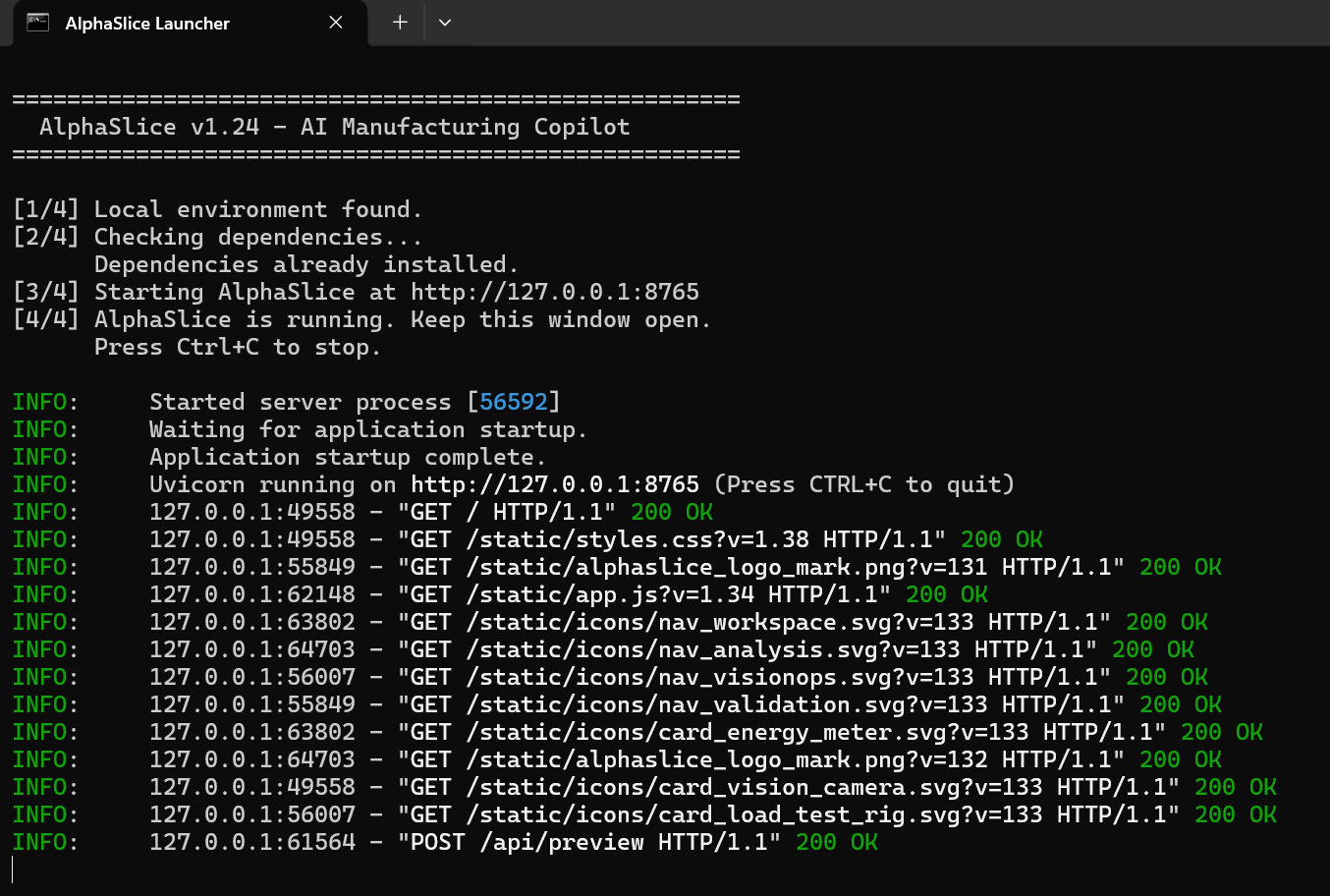
AlphaSlice Auto-Launching Terminal
-
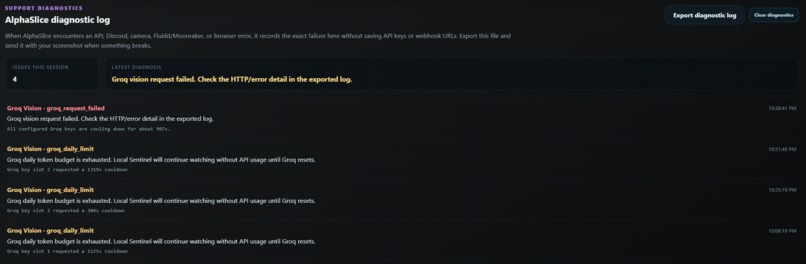
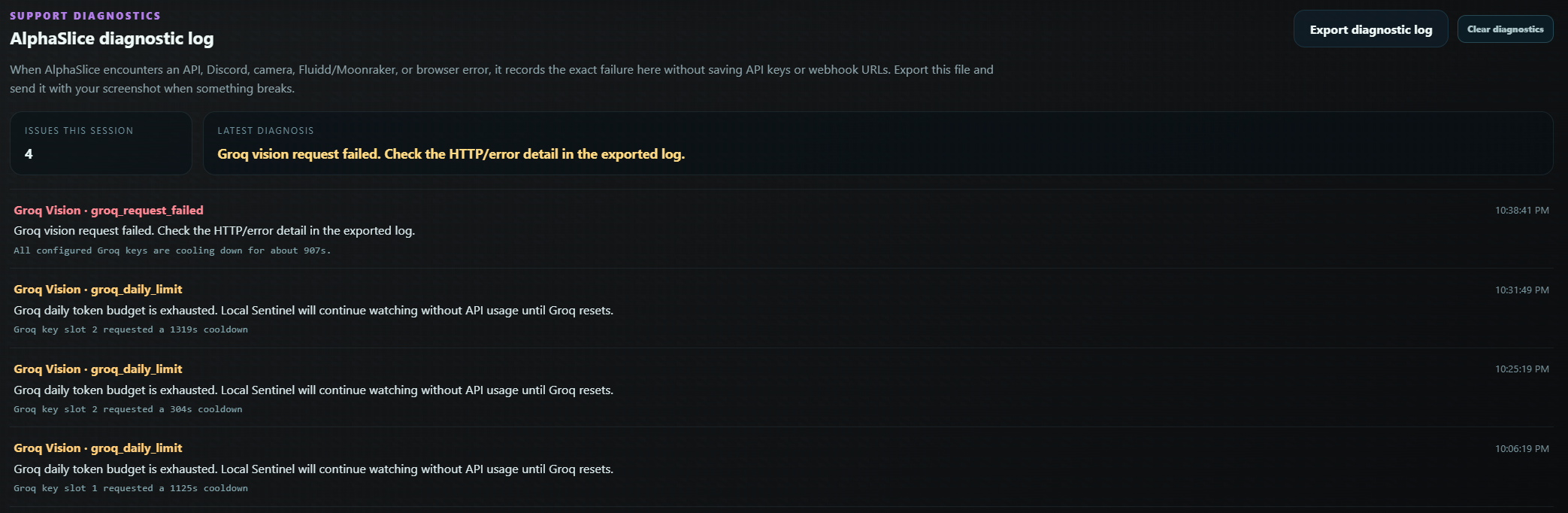
Custom Issue Logger you can export and fix issues. ALL ISSUES HAVE BEEN PATCHED AND FIXED!!!
-
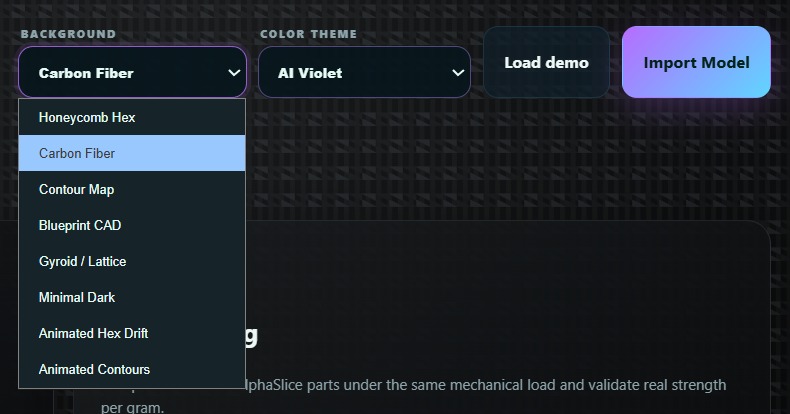
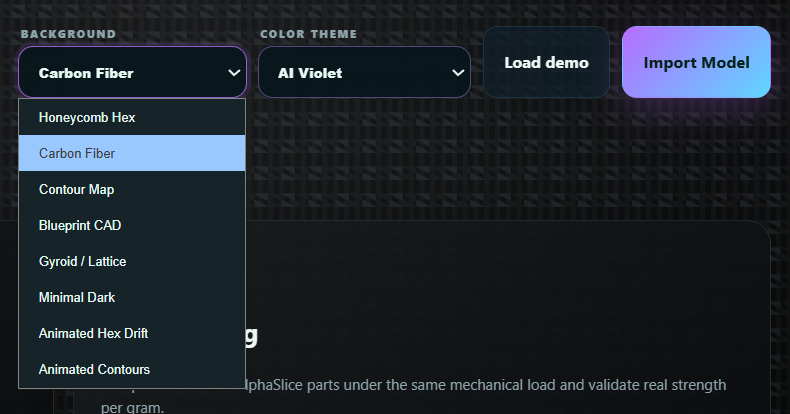
Highly customizable website
-
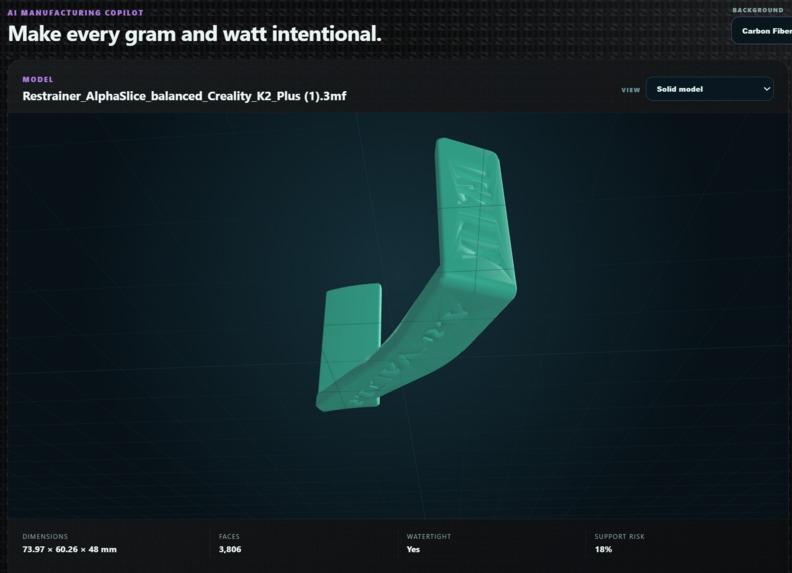
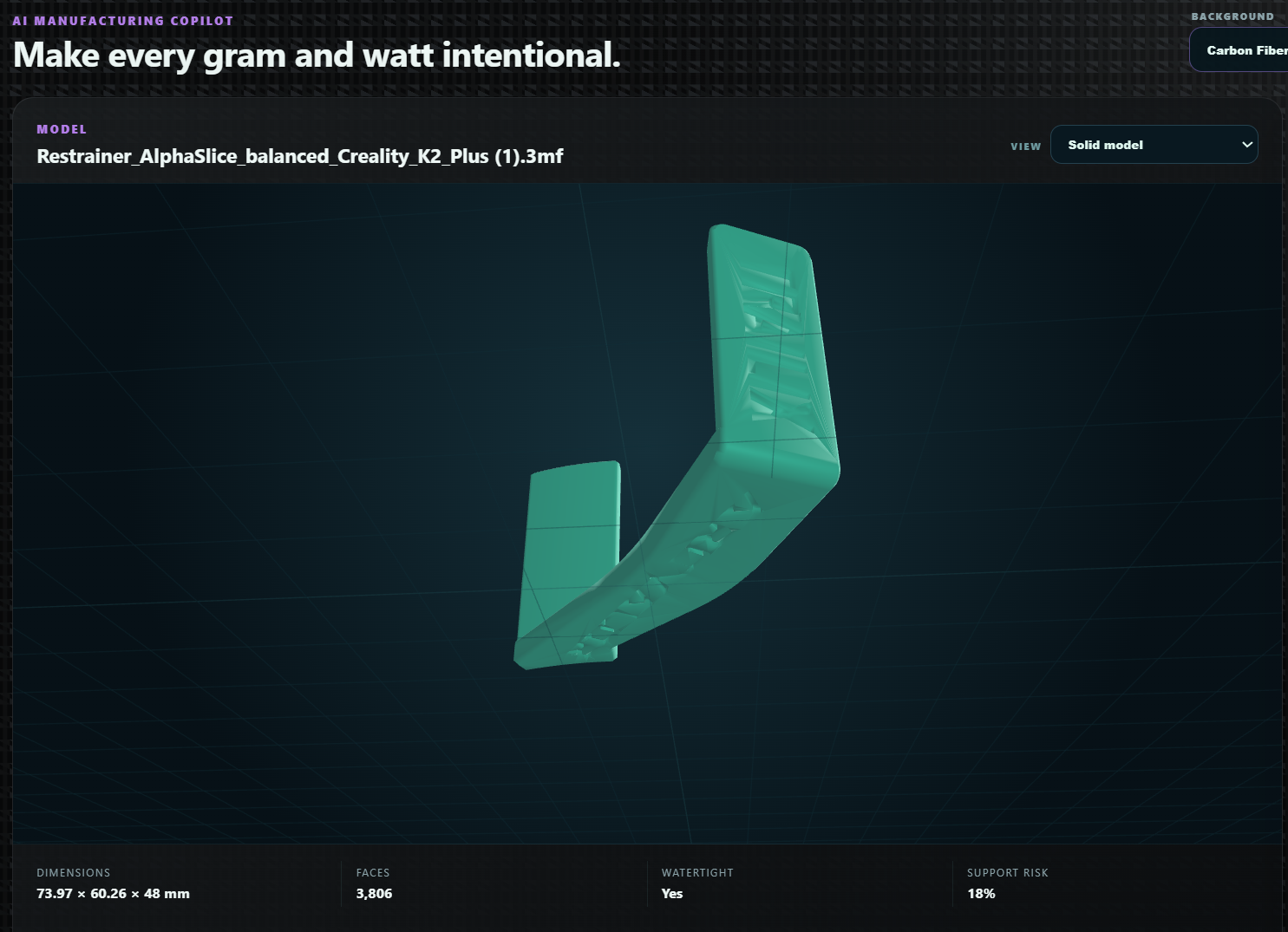
3D Viewing window
-
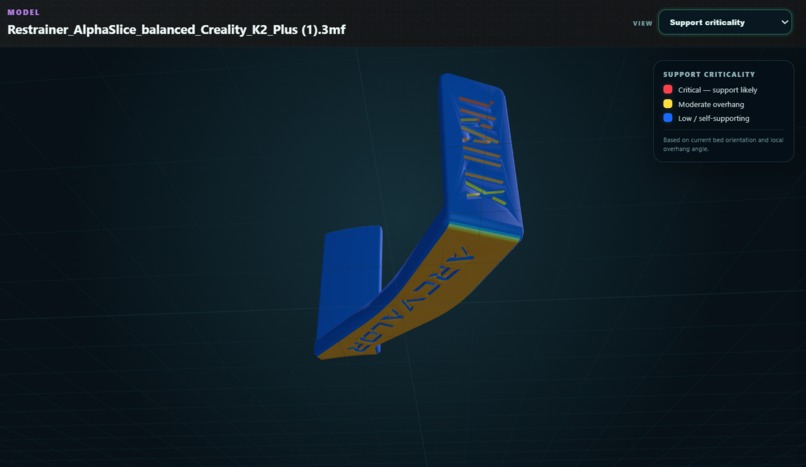
Support Analysis
-
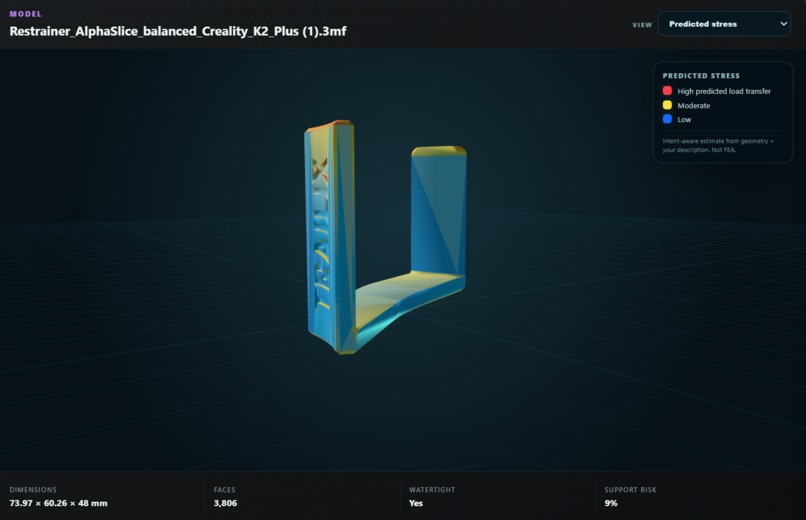
Stress Analysis and prediction based on model geometry

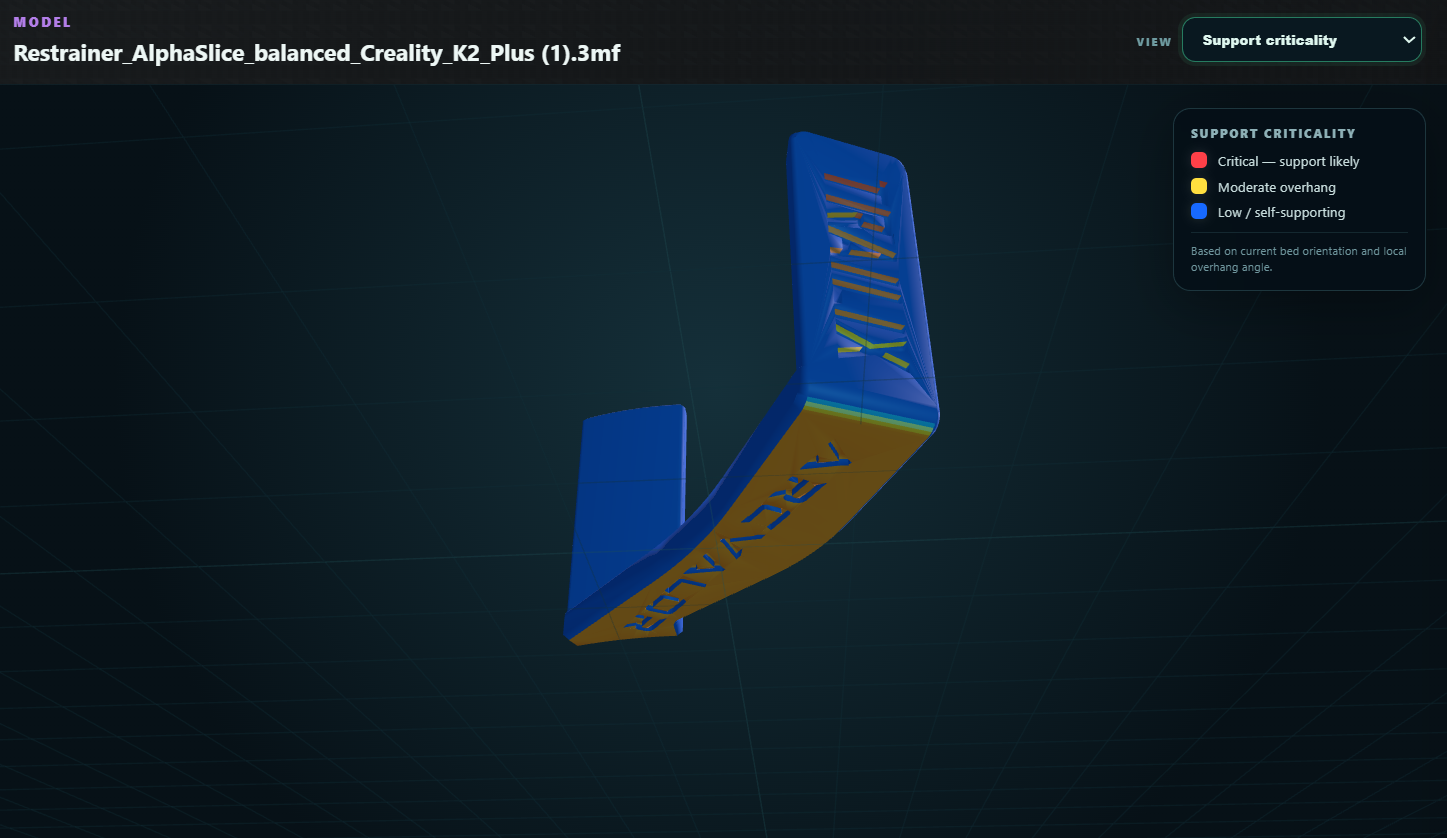
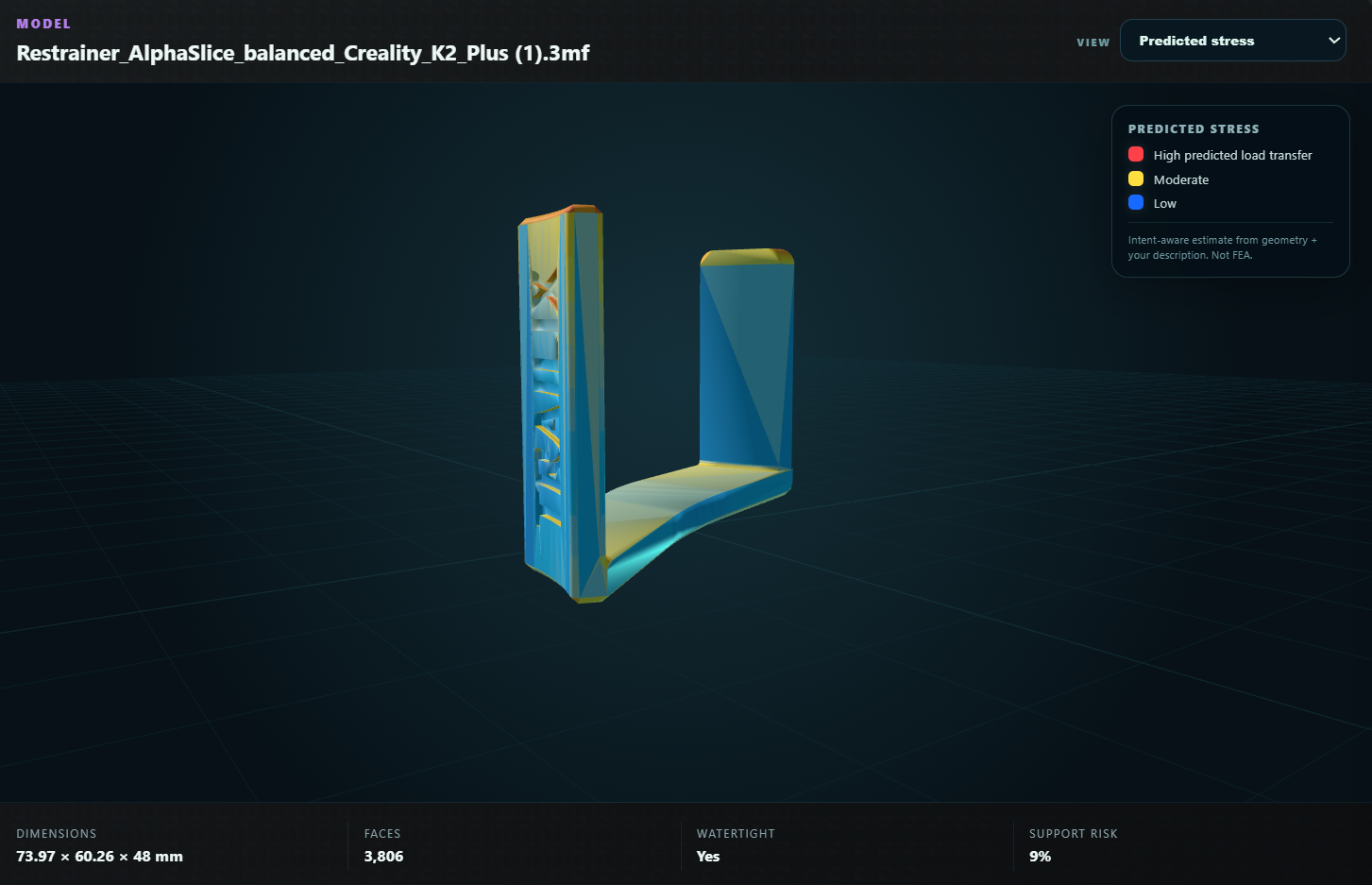
Project Introduction video: https://www.youtube.com/watch?v=cJW_EpPYO_Q
No AI was used in the production. 🌳🌳🌳🌳🌳
Economic and environmental impact:
The environmental benefit of AlphaSlice comes from reducing waste at several stages of the printing process.
Before printing, better orientation and process settings can reduce unnecessary filament, supports, and print time. During printing, earlier failure detection can prevent a failed job from continuing for hours while consuming material and electricity.
These environmental benefits also directly translate into economic benefits. Less filament waste means lower material cost. Shorter and more efficient prints reduce energy use and increase printer availability. Early failure detection saves machine time and reduces the need to restart long jobs.
For makers, schools, robotics teams, print farms, and small manufacturers, even small savings per print can become substantial when multiplied across hundreds or thousands of jobs.
🌳🌳🌳🌳🌳
Inspiration:
3D printing is incredibly useful, but it is also inefficient in ways that are easy to overlook. Failed prints can waste hours of machine time, large amounts of filament, and unnecessary electricity. Even successful prints are often sliced with generic settings that use more material than necessary because the slicer does not understand what the part actually needs to do.
We wanted to build a system that makes 3D printing both more economical and more environmentally responsible. Instead of treating optimization and print monitoring as separate tasks, AlphaSlice connects them into one workflow: optimize the part before printing, then continue watching the real print while it is happening.
🌳🌳🌳🌳🌳
What AlphaSlice does:
AlphaSlice is an AI-assisted 3D printing copilot designed to reduce material waste, energy use, failed prints, and unnecessary machine time.
A user imports a printable model and describes what the part needs to do in plain language. AlphaSlice interprets that design intent and analyzes the model for factors such as geometry, printability, orientation, support requirements, and expected strength. It then recommends printing parameters such as wall count, infill, top and bottom layers, and orientation based on the actual use case instead of relying only on generic presets.
For example, a lightly loaded decorative part should not need the same amount of material as a robot component expected to take repeated impacts. AlphaSlice matches manufacturing resources to the real engineering requirement.
The optimized part can then be exported as a slicer-ready 3MF for a selected printer.
🌳🌳🌳🌳🌳
Vision OPS:
Optimization only solves part of the waste problem. A print can still fail after it begins.
We therefore built Vision OPS, AlphaSlice's real-time print monitoring system. Vision OPS observes the printer through a camera and analyzes the build area for visible failures such as spaghetti, adhesion loss, detached parts, layer shifts, filament blobs, and other abnormal print behavior.
The system combines local monitoring with cloud-based vision analysis. Local monitoring provides continuous, free observation, while AI vision is used for more detailed confirmation. To reduce false alarms, AlphaSlice requires repeated evidence before escalating most failures.
When an incident is confirmed, AlphaSlice can send a Discord notification containing the detected problem, confidence, recommended action, and a snapshot from the camera.
We also integrated AlphaSlice with Fluidd/Moonraker, allowing it to pause a Klipper-based printer automatically when a serious print failure is confirmed. This turns the system from a passive monitoring dashboard into an active manufacturing safety layer.
🌳🌳🌳🌳🌳
How we built it:
AlphaSlice was built as a local web application with a Python backend and browser-based interface.
The model workspace allows users to import STL, 3MF, OBJ, and PLY files, inspect the model, choose or automatically determine print orientation, and generate optimized printing recommendations.
For AI interpretation and computer vision, we integrated Groq-hosted multimodal models. We also developed a quota-aware monitoring architecture so that continuous observation does not require a cloud AI request every few seconds.
Vision OPS captures printer-camera frames, evaluates print conditions, maintains an incident timeline, and can route different events to separate Discord webhooks. Normal status updates can go to one channel, while confirmed failures can go to a dedicated emergency channel.
For printer intervention, AlphaSlice communicates with Moonraker, the API commonly used by Fluidd and Klipper systems. This allows AlphaSlice to verify printer state and issue pause or cancel commands when necessary.
We also created an internal diagnostic logging system. If something fails, the user can export a diagnostic report containing system state, monitoring settings, provider errors, and event history without exposing API keys or webhook secrets.
🌳🌳🌳🌳🌳
Challenges we faced:
One major challenge was making the vision system reliable enough to distinguish an actual print failure from unusual but normal geometry. Early versions were sometimes too confident, for example interpreting a valid part on the build plate as adhesion loss. We improved this by making the detection criteria more conservative and requiring repeated evidence before escalating most incidents.
Another challenge was cloud AI rate limits. Sending camera frames continuously can consume a large token budget very quickly. We experimented with lower-resolution frames, multiple API keys, cooldown handling, and local monitoring before moving toward a hybrid architecture that reserves cloud AI calls for meaningful events and periodic verification.
Printer control also required careful debugging. Different Klipper installations can use different pause macros, and an HTTP response does not necessarily mean that the printer actually paused. We improved the integration so AlphaSlice verifies the printer's resulting state instead of assuming a command succeeded.
These challenges changed the project significantly. AlphaSlice evolved from a simple optimization interface into a more complete closed-loop manufacturing system.
🌳🌳🌳🌳🌳
What we learned:
One of the biggest lessons from building AlphaSlice was that sustainable manufacturing is not just about using less material. It is about making better decisions throughout the entire manufacturing process.
A small design improvement can reduce filament usage. Better orientation can eliminate support material. A faster failure response can prevent hours of wasted printing. Reliable automation can also reduce the amount of human attention required to supervise machines.
We also learned that AI works best when combined with deterministic engineering logic rather than being trusted blindly. AlphaSlice uses AI where interpretation and visual reasoning are useful, while maintaining explicit rules, repeated-evidence checks, local monitoring, and printer-state verification around it.
🌳🌳🌳🌳🌳
What's next:
Our goal is to turn AlphaSlice into a true closed-loop manufacturing platform.
Future development could include more advanced structural analysis, automatic comparison of multiple orientations, live printer telemetry, power measurement, automatic failure recovery, multi-printer monitoring, and learning from previous print outcomes.
Ultimately, AlphaSlice could help printers continuously improve their own manufacturing decisions: design, optimize, print, observe, measure, and learn.
The goal is simple: make every gram of material, every watt of electricity, and every minute of machine time more intentional.
🌳🌳🌳🌳🌳
-The Alphaslice team
Built With
- 3d-printing
- additive-manufacturing
- ai
- artificial-intelligence
- computer-vision
- digital-manufacturing
- eco-friendly
- energy-efficiency
- engineering
- failure-detection
- fluidd
- green-technology
- klipper
- maker-technology
- manufacturing-automation
- material-optimization
- moonraker
- print-monitoring
- print-optimization
- robotics
- smart-manufacturing
- spaghetti-detection
- sustainable-manufacturing
- waste-reduction


Log in or sign up for Devpost to join the conversation.