Inspiration
AI has made massive progress in analyzing markets, but most trading systems still behave like black boxes producing signals without explanations. In real trading environments, lack of transparency creates mistrust, limits adoption and increases risk.
AlphaLens AI was inspired by a simple question: What if AI could reason like a professional analyst, while still operating inside strict, human-defined risk boundaries?
We wanted to move away from blind automation and build an expert-in-the-loop trading agent that combines AI reasoning, explainability and institutional discipline.
What it does
AlphaLens AI is an explainable AI trading agent designed for the U.S. market.
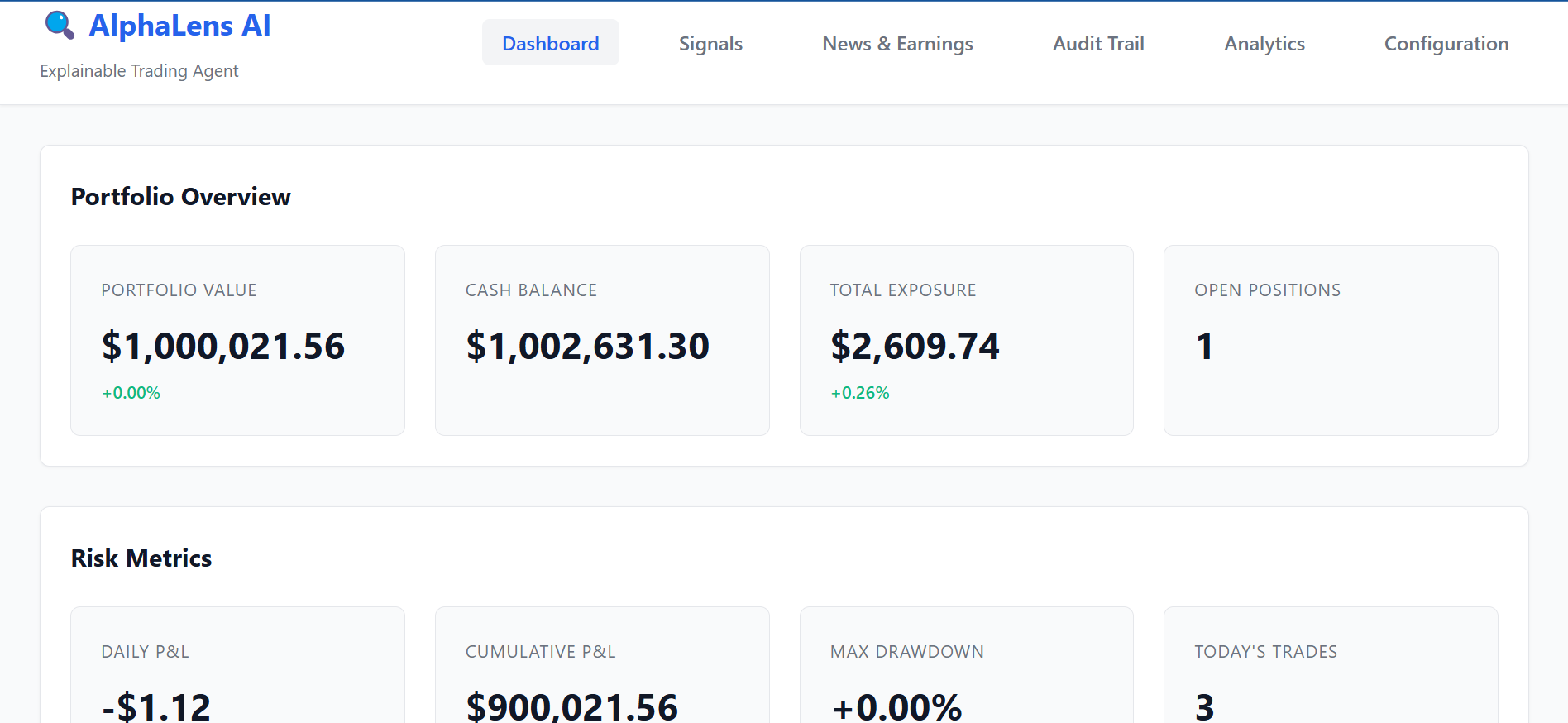
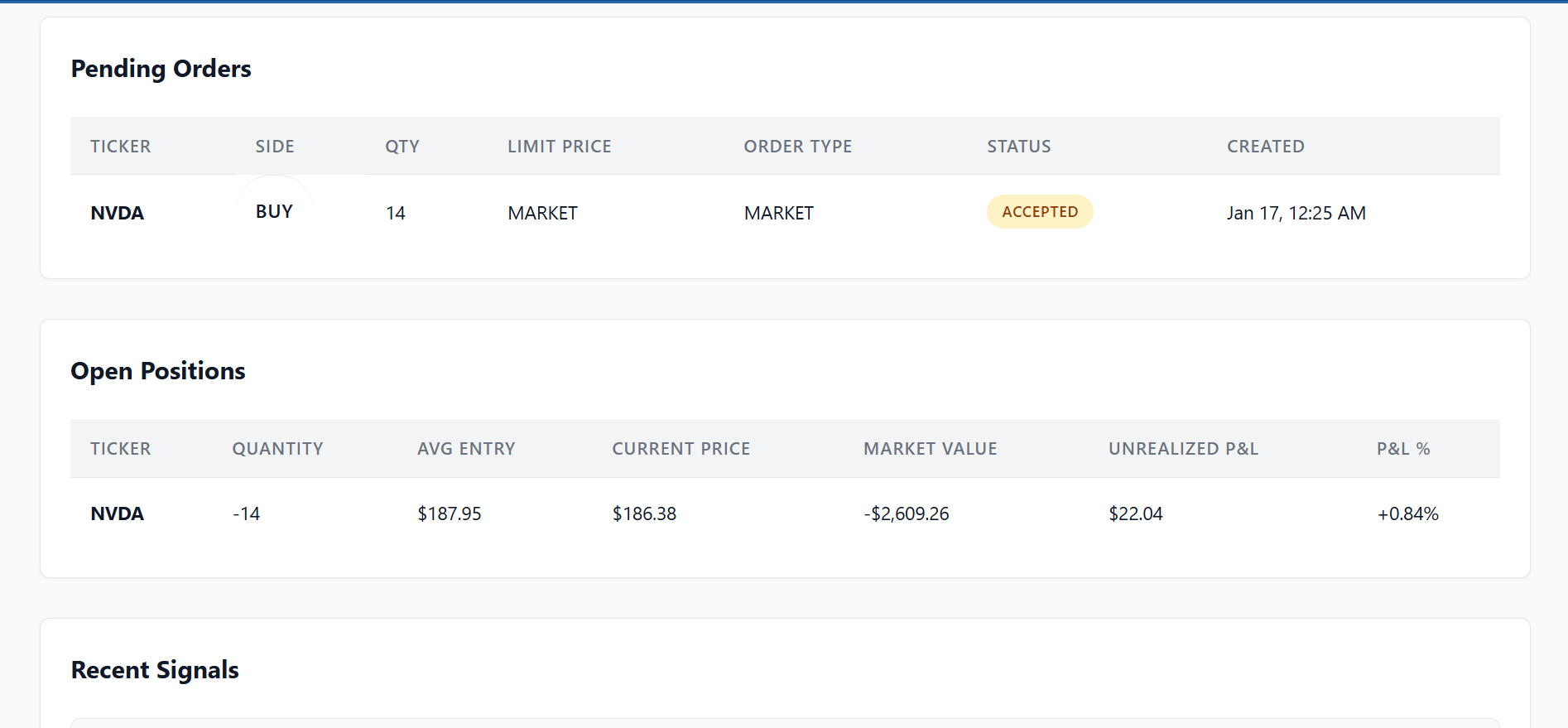
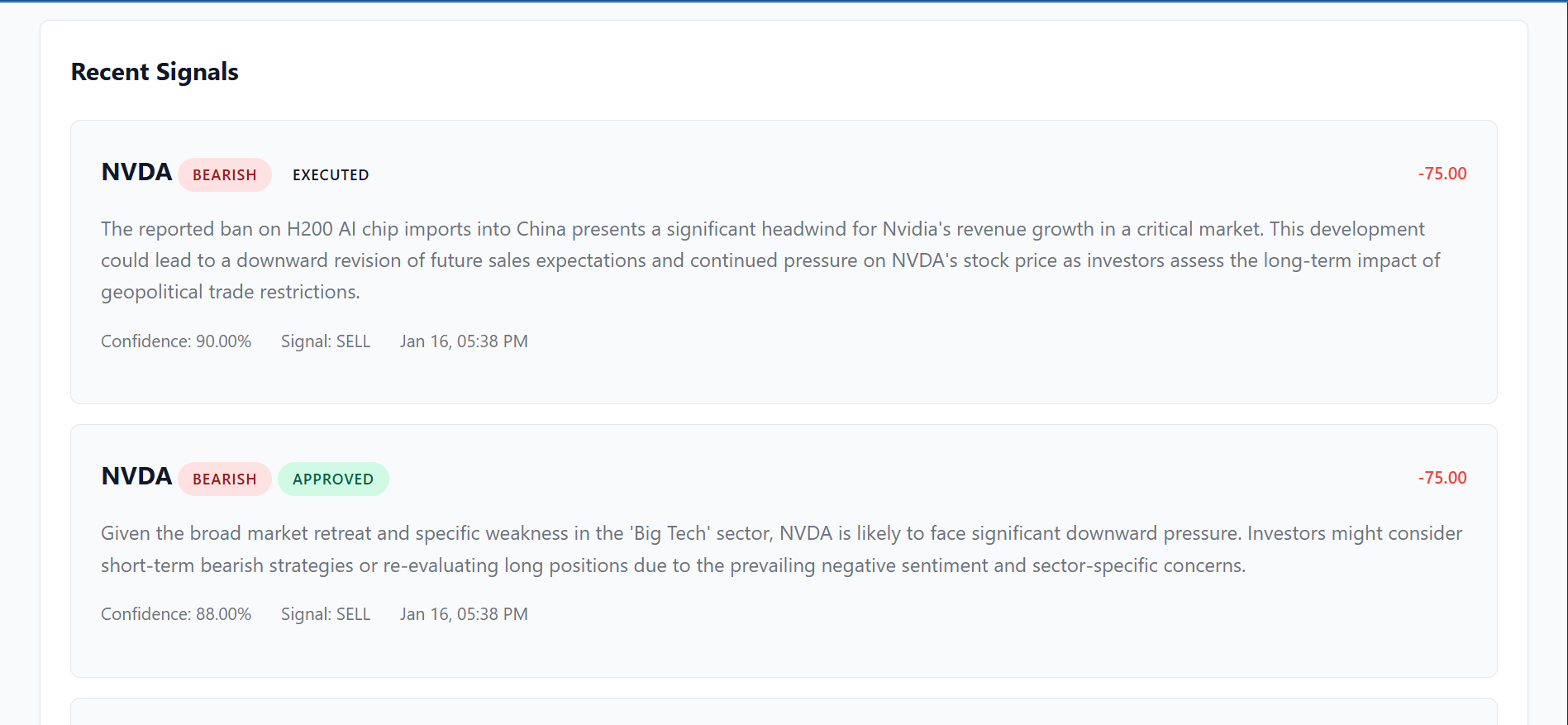
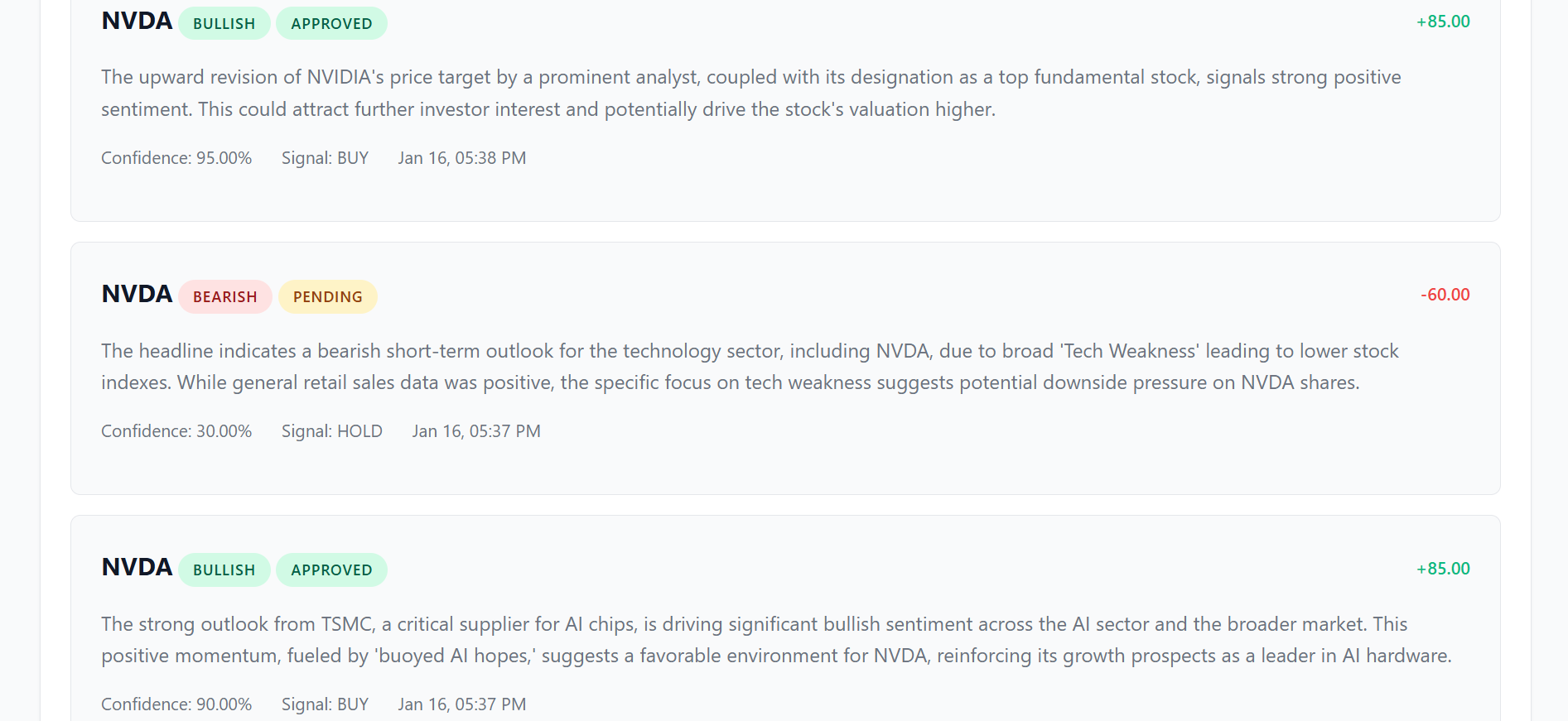
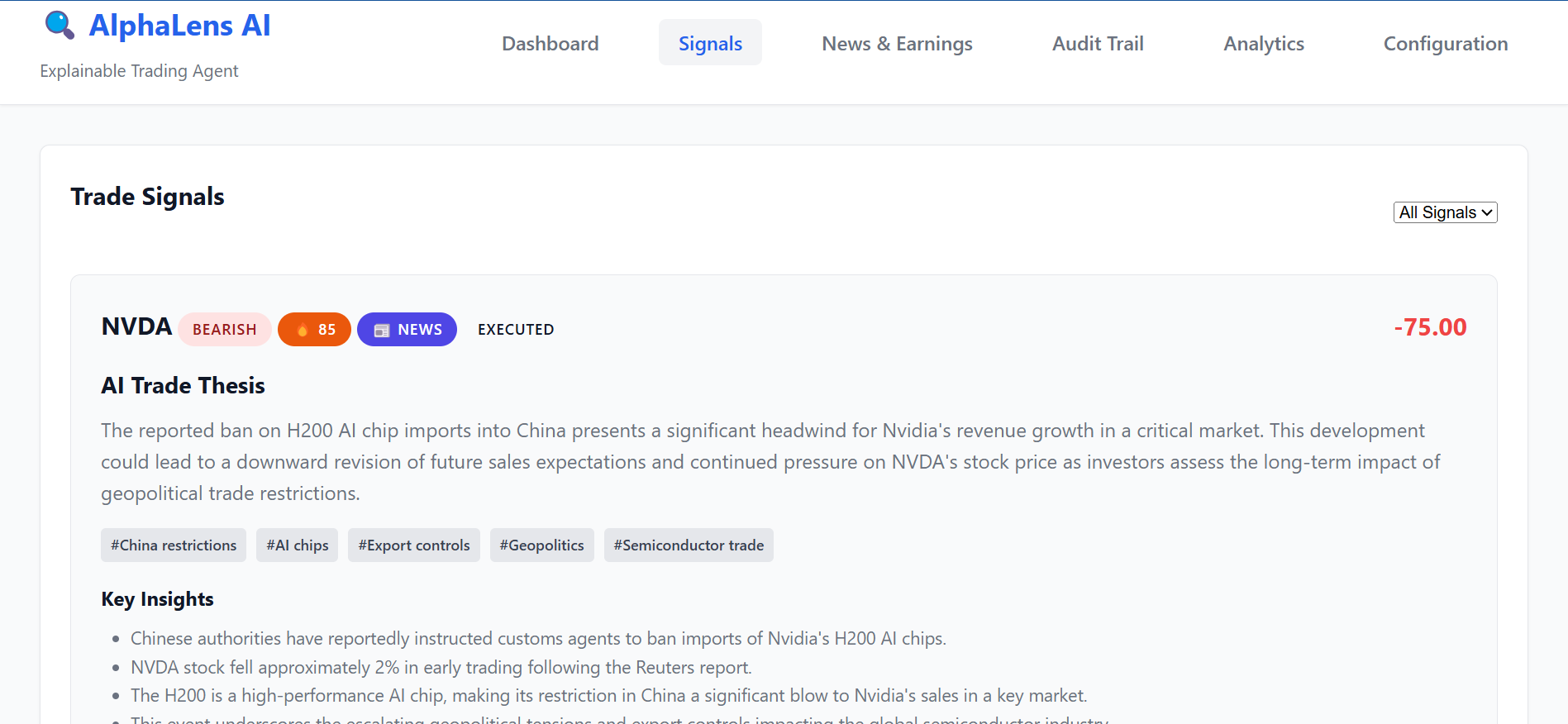
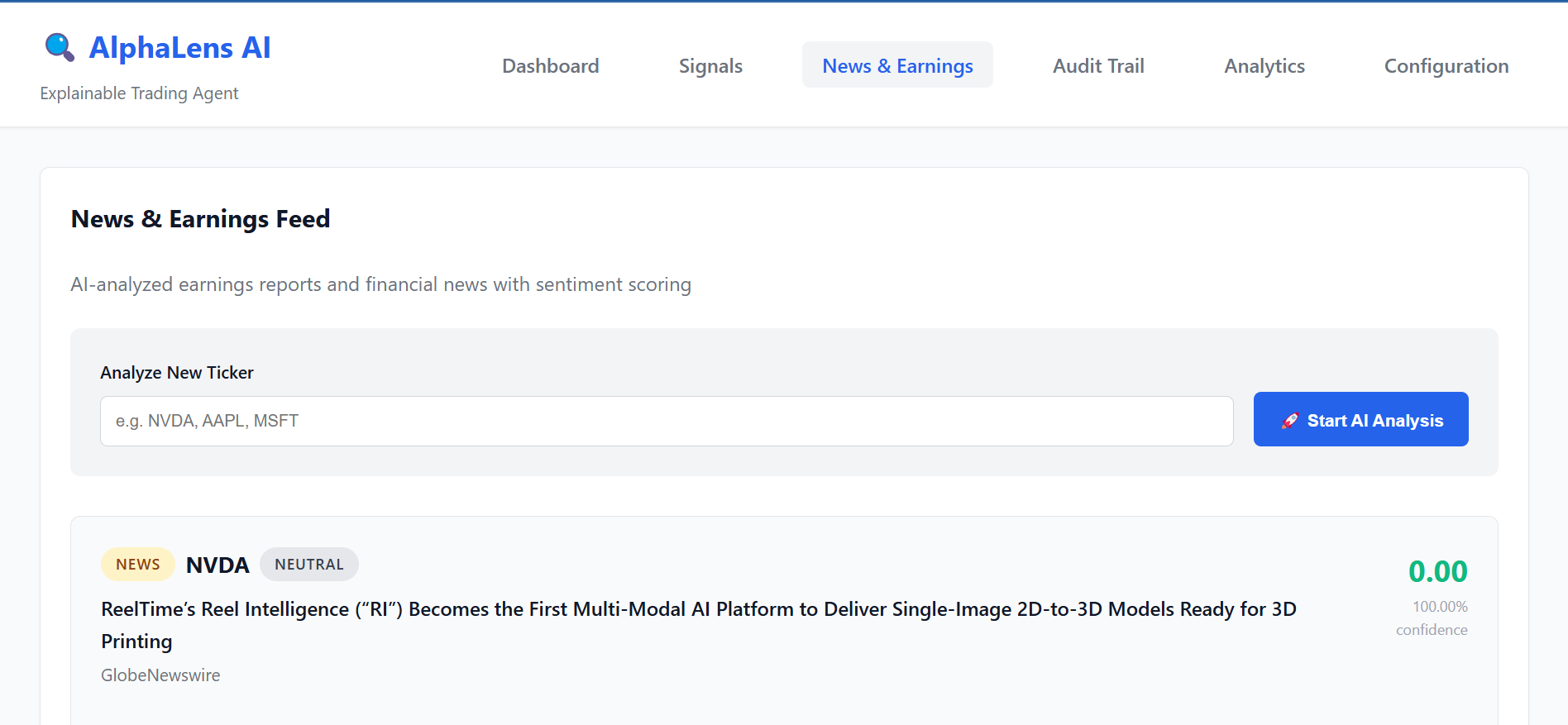
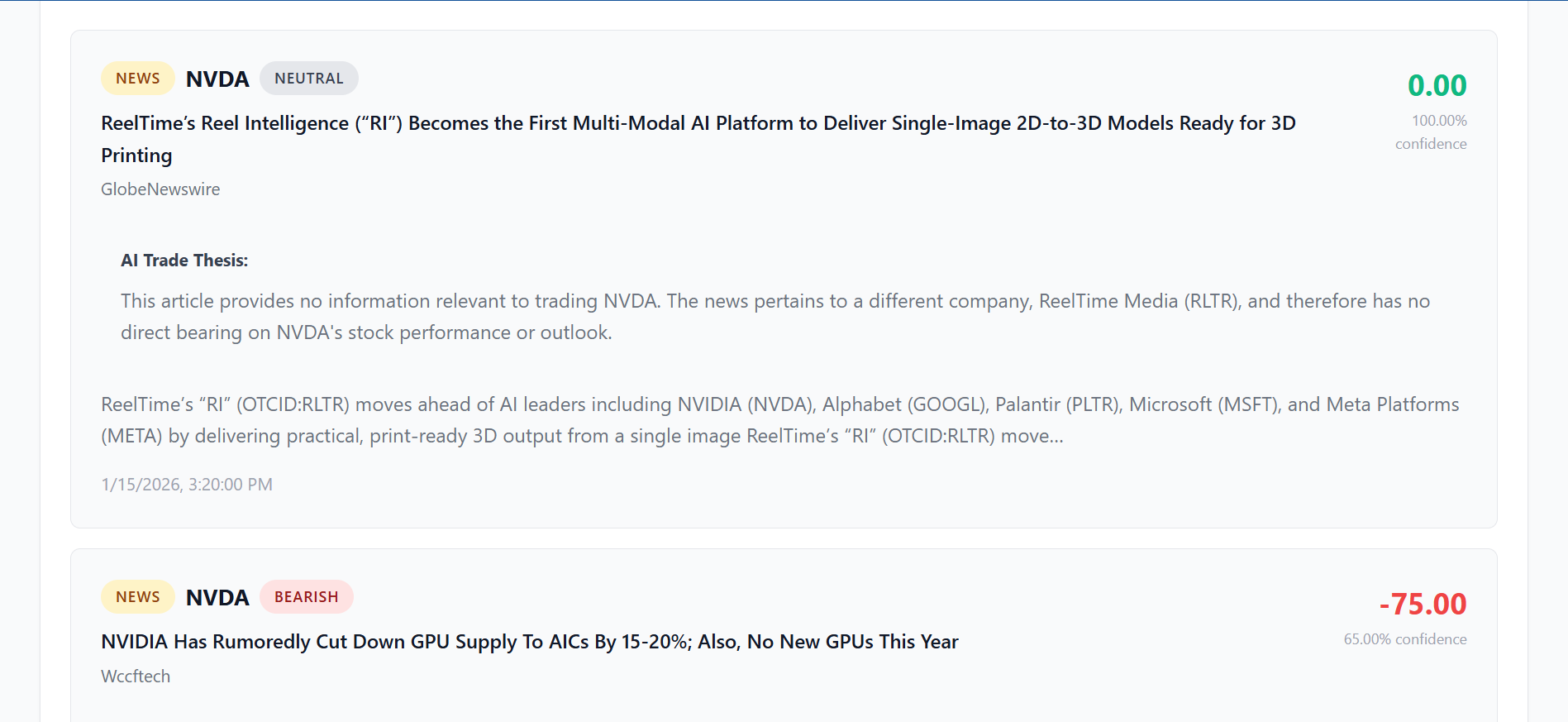
It analyzes earnings releases, news and narrative sentiment using a large language model, converts those insights into structured trade theses and executes trades inside the C Field trading sandbox under strict risk controls.
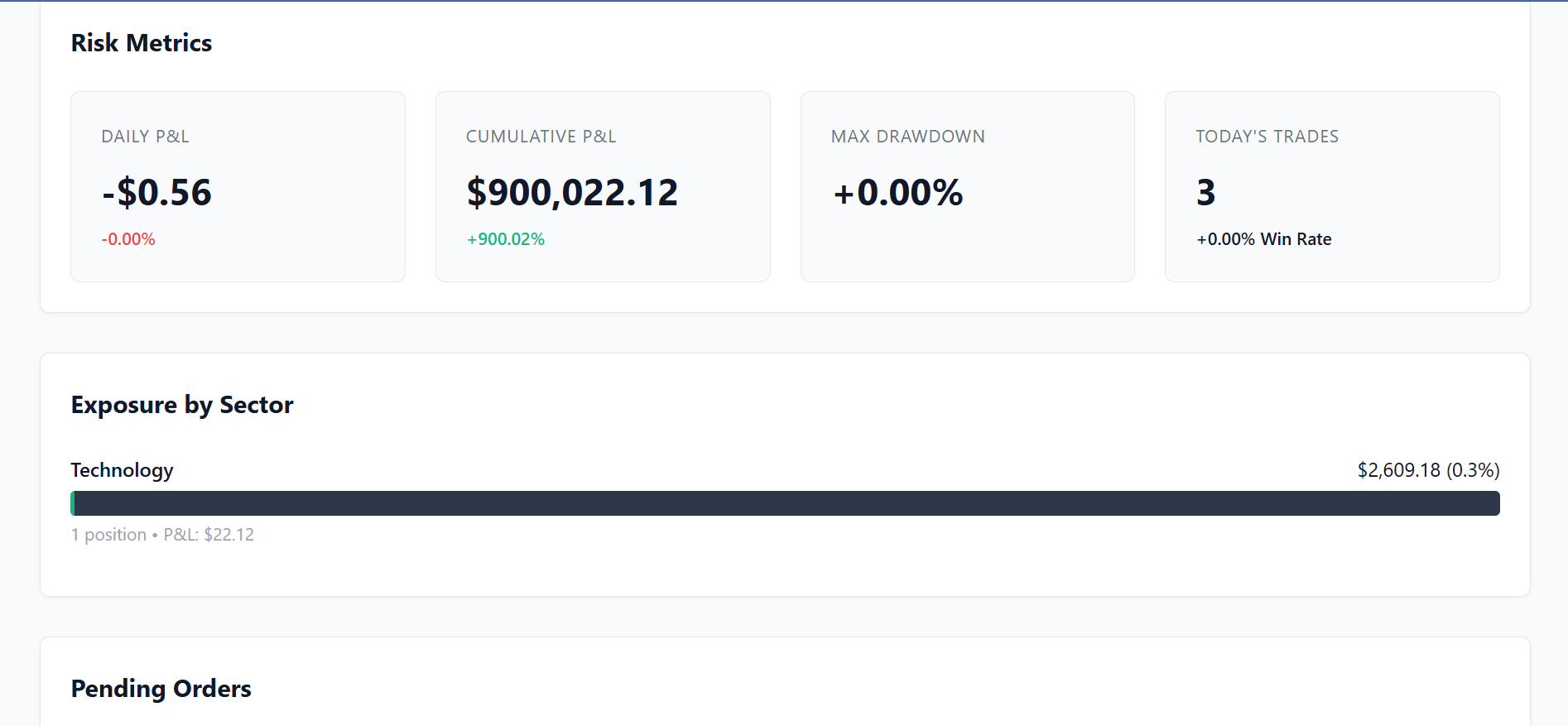
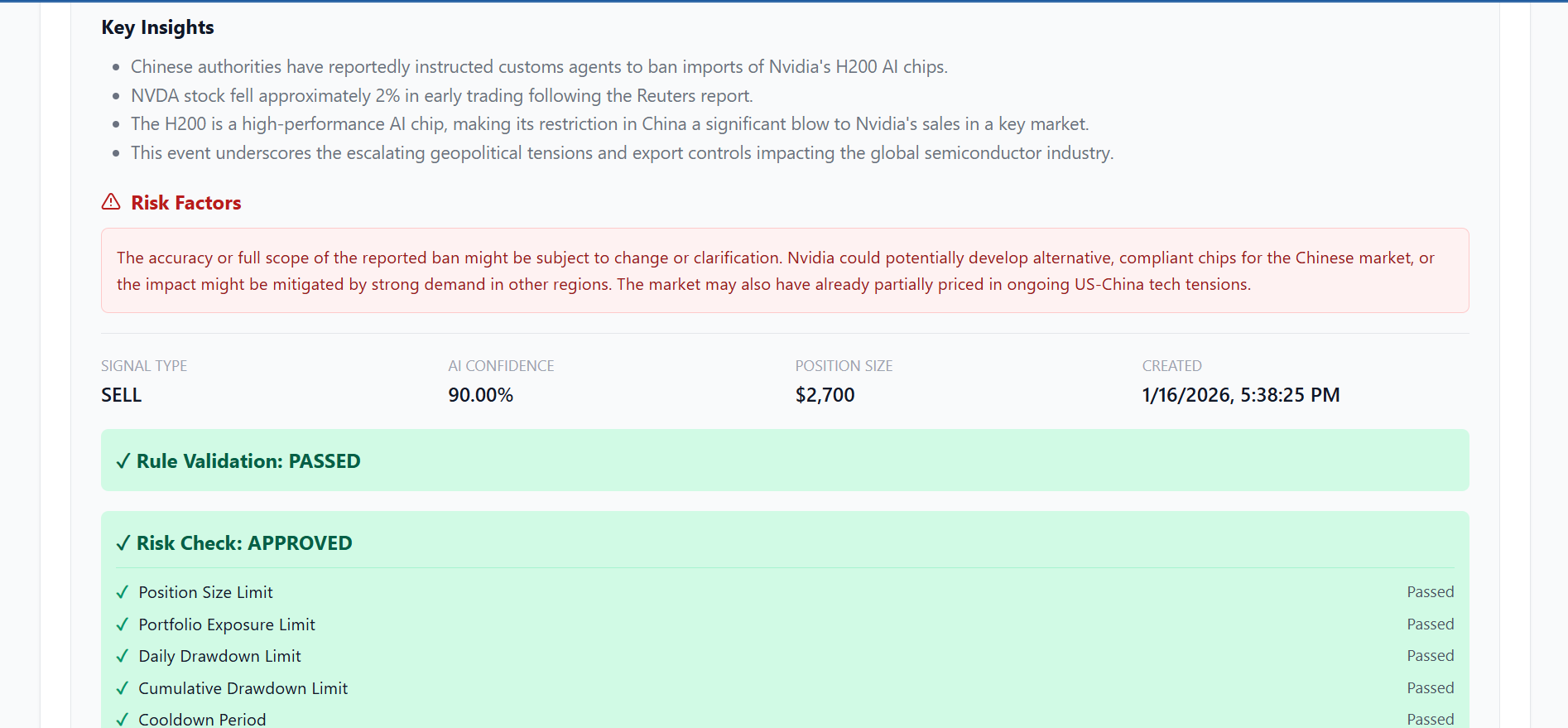
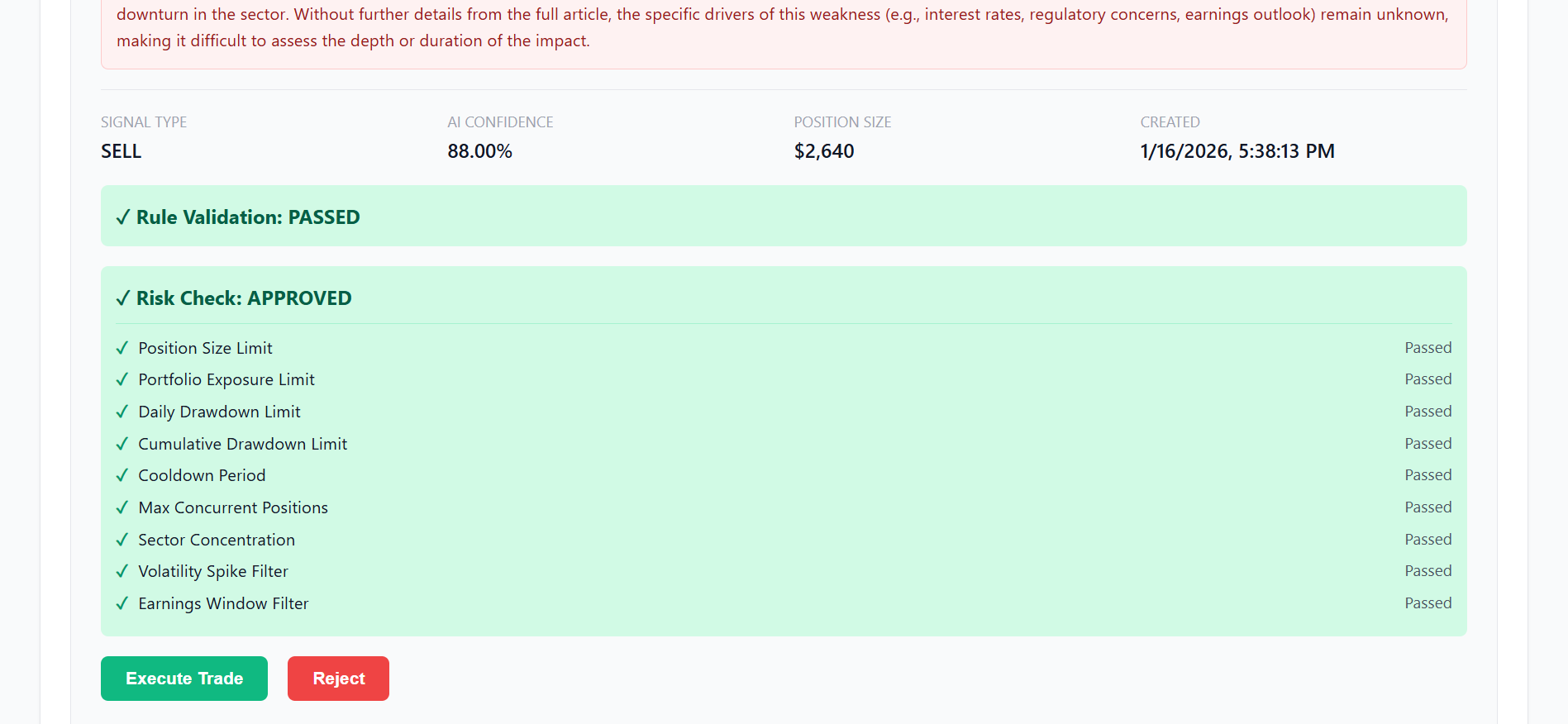
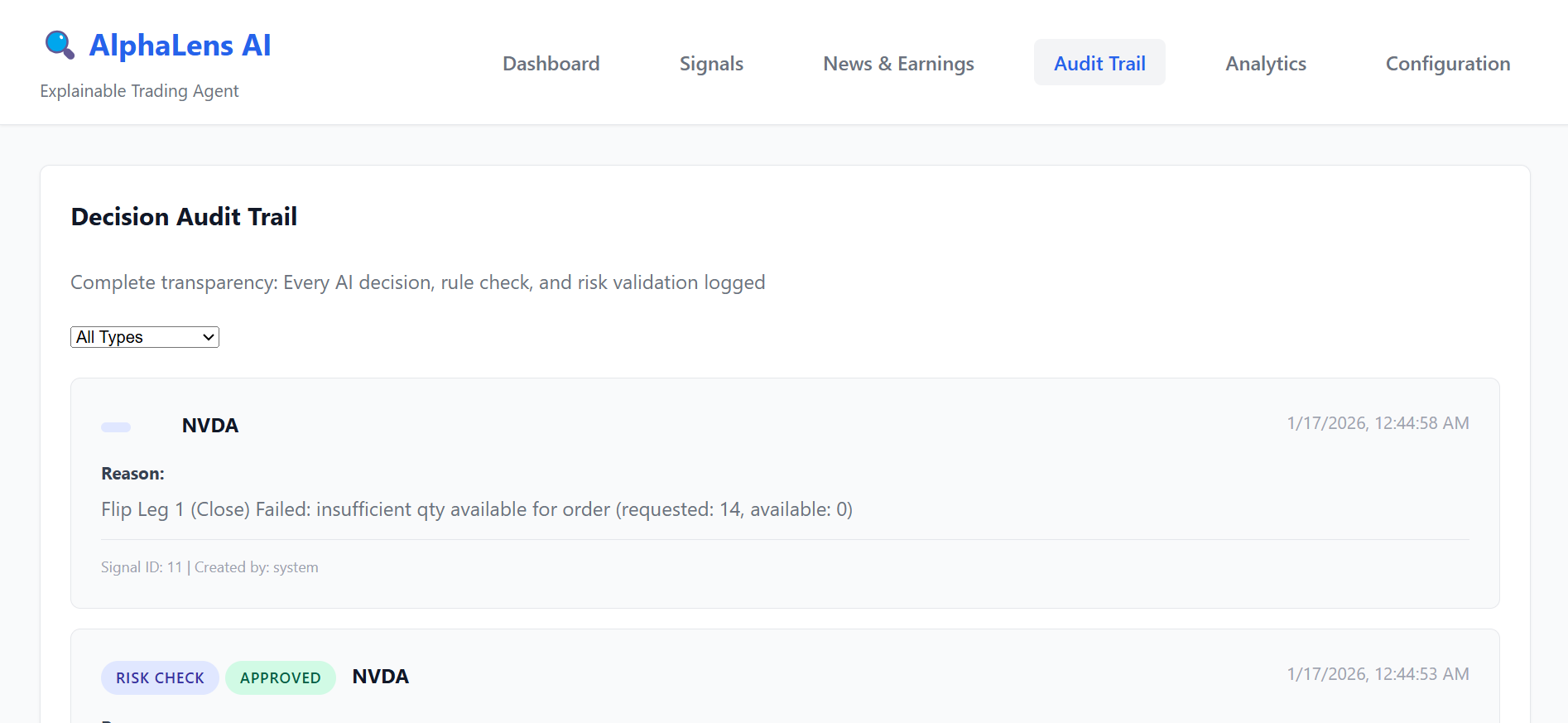
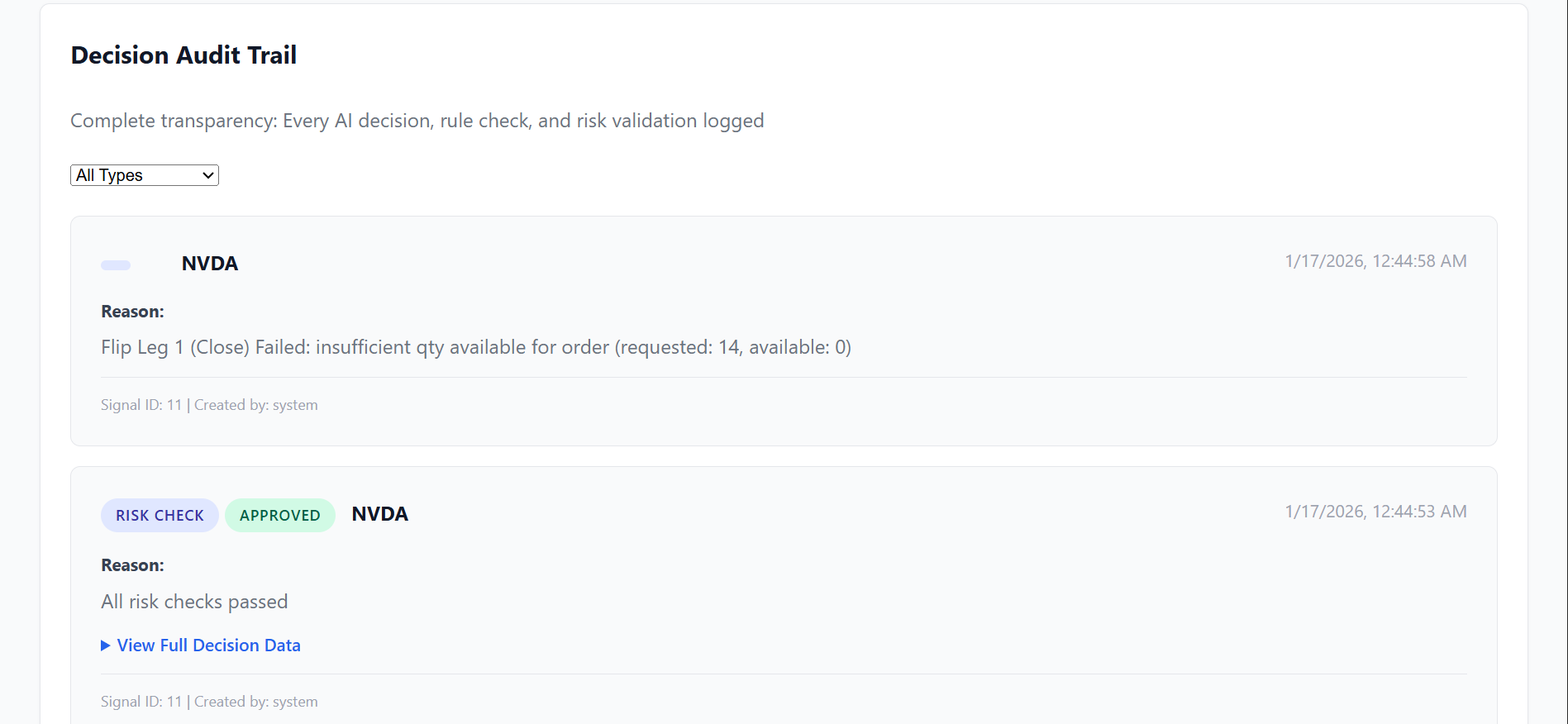
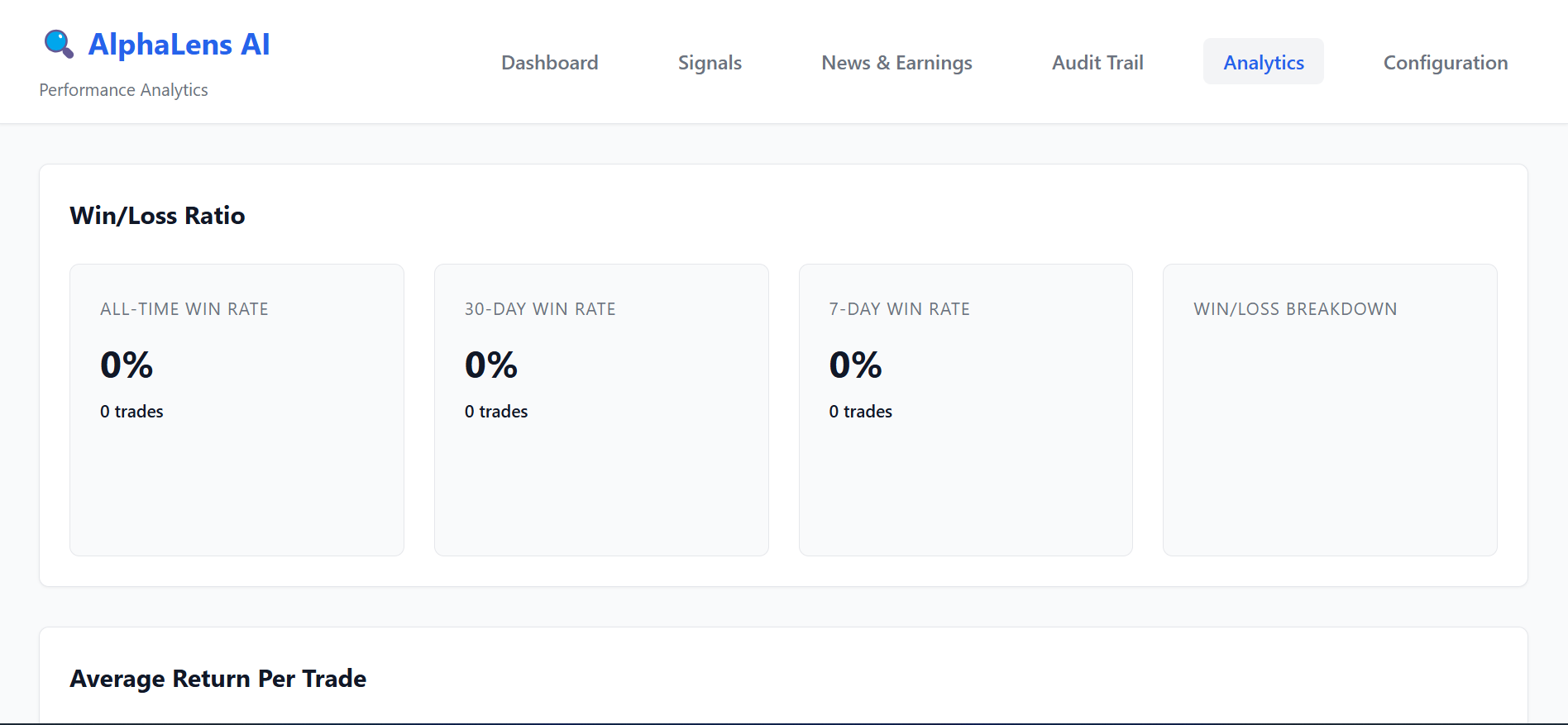
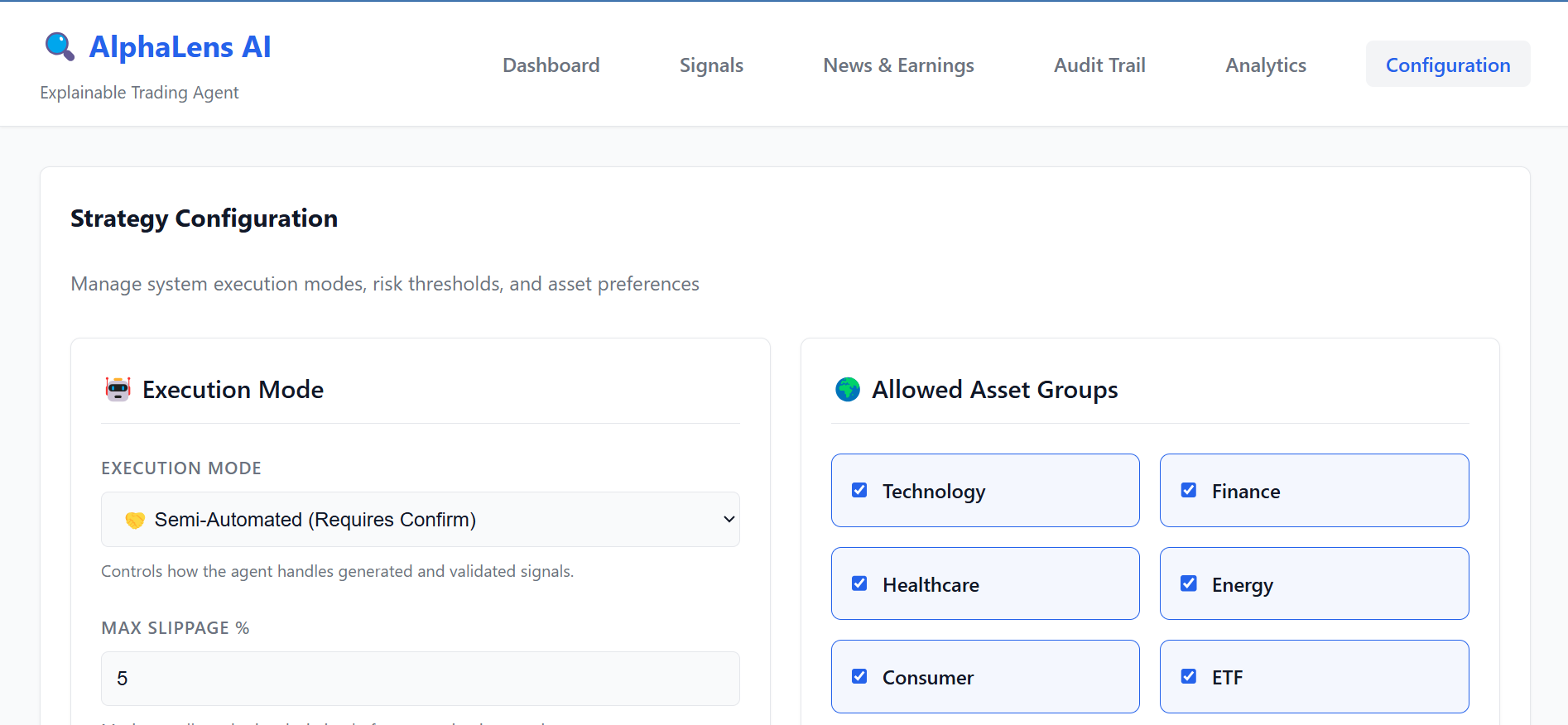
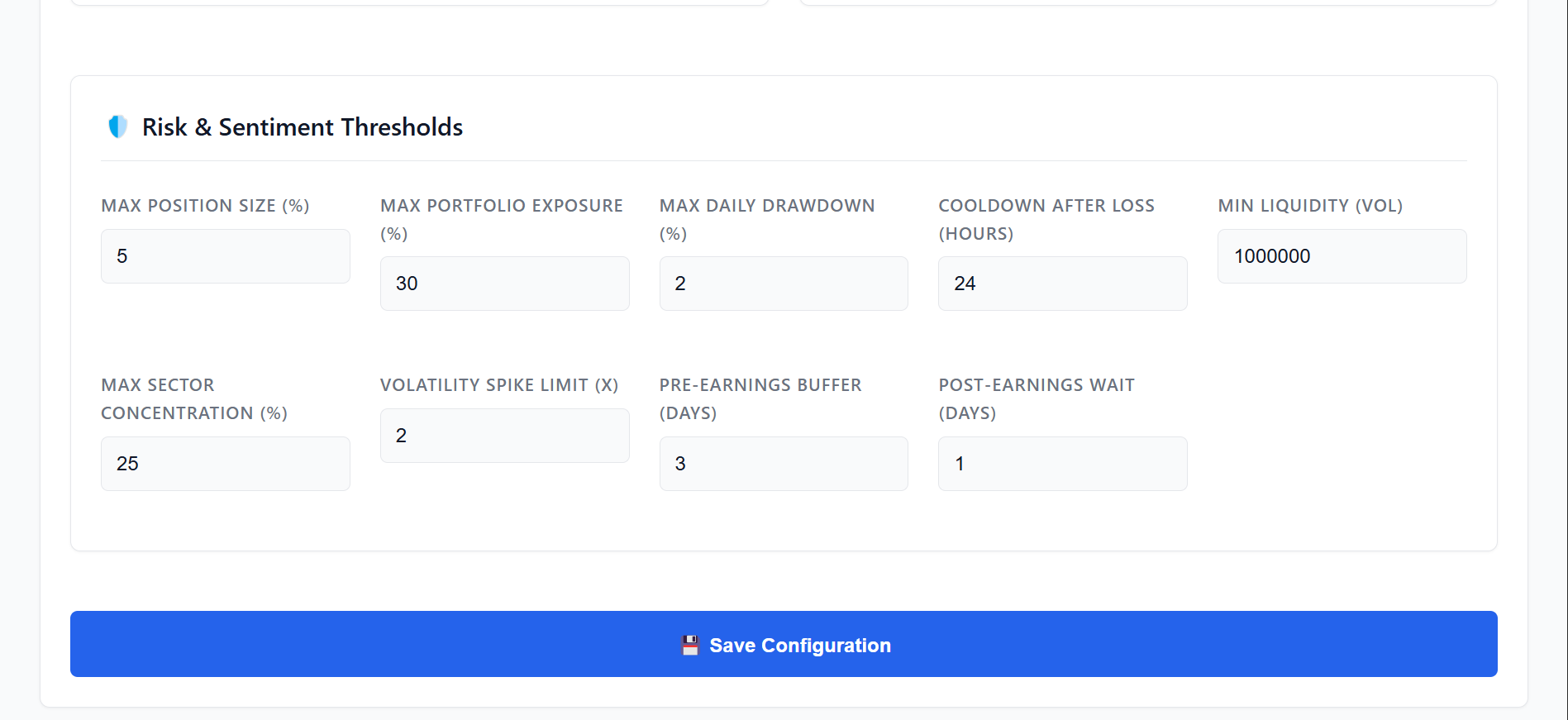
Key capabilities include: AI-driven sentiment and narrative analysis Structured trade thesis generation with confidence scoring Multiple execution modes: advisory, semi-automated and fully automated System-level risk management that the AI cannot override Transparent audit trail for every AI decision
How I built it
AlphaLens AI was built using a modular agent architecture aligned with the Agent Track. AI Reasoning Layer: Gemini API is used to analyze unstructured market data (earnings transcripts, news, guidance changes) and generate explainable trade rationales. Control & Risk Layer: Deterministic rules enforce exposure limits, volatility filters, drawdown controls and trade veto logic. Execution Layer: Trades are submitted and evaluated inside the C Field sandbox, which simulates real U.S. market structure. Tech Stack: HTML, CSS, JavaScript for the interface; PHP for backend logic; MySQL for persistence and auditability. The AI provides intelligence the system enforces discipline.
Challenges I ran into
One major challenge was balancing AI flexibility with safety. Allowing an LLM too much freedom introduces unpredictability, while over-constraining it removes its value.
Another challenge was designing prompts that produce consistent, auditable outputs rather than free-form text. This required structured prompting and strict separation between AI reasoning and execution logic.
Finally, aligning the system with real trading constraints such as execution modes, drawdown controls, and market regimes required thinking beyond a typical hackathon prototype.
Accomplishments that I'm proud of
Designing an explainable trading agent rather than a black-box model Implementing a clear separation between AI reasoning and execution Building a system that mirrors institutional trading discipline Successfully integrating AI reasoning into a real-market sandbox environment Creating a solution aligned with professional trading workflows, not just demos
What I learned
This project reinforced that AI in finance is not about prediction alone it’s about control, trust, and interpretability.
Large language models are most powerful when used as reasoning engines, not autonomous decision-makers. Combining AI insight with deterministic systems produces safer, more scalable outcomes.
I also learned the importance of designing AI systems that communicate their thinking clearly to humans.
What's next for AlphaLens AI
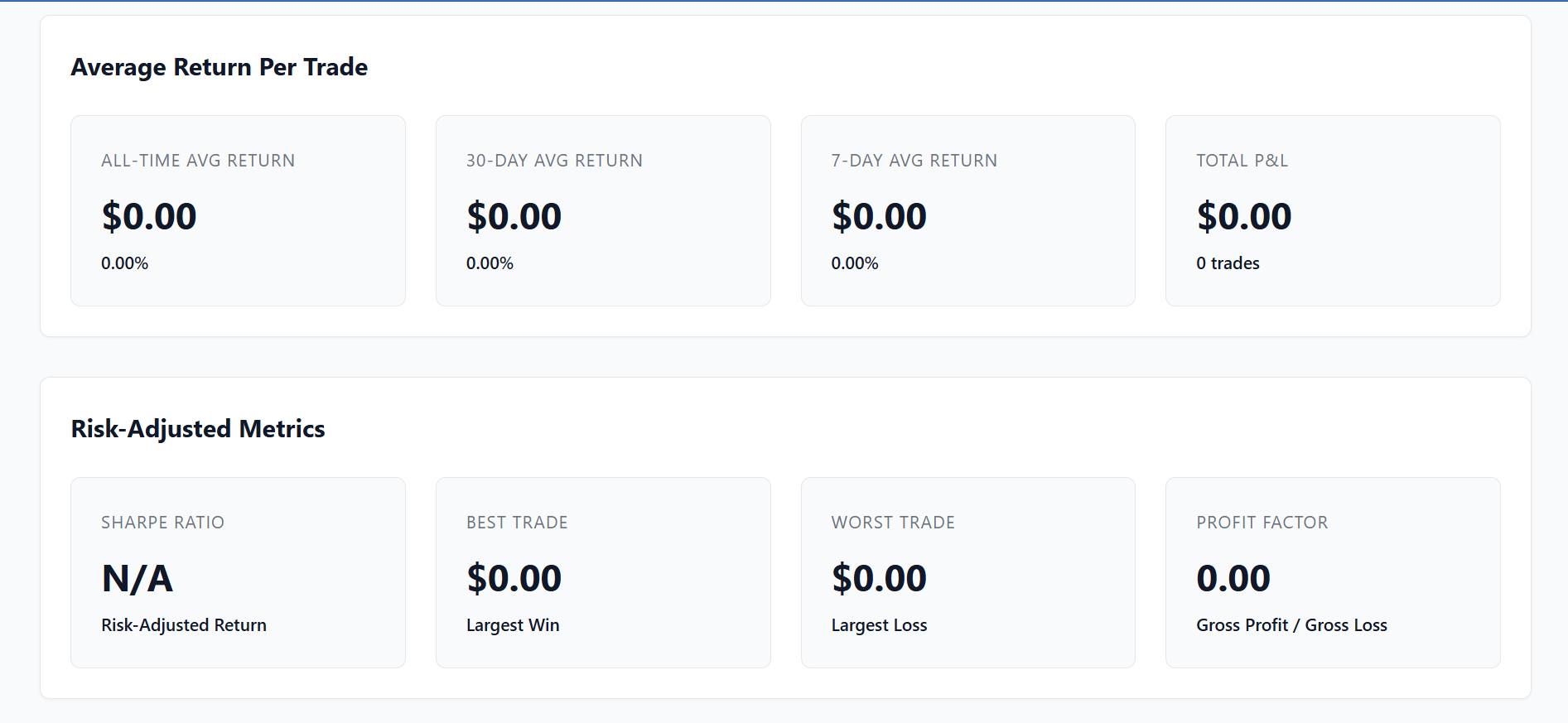
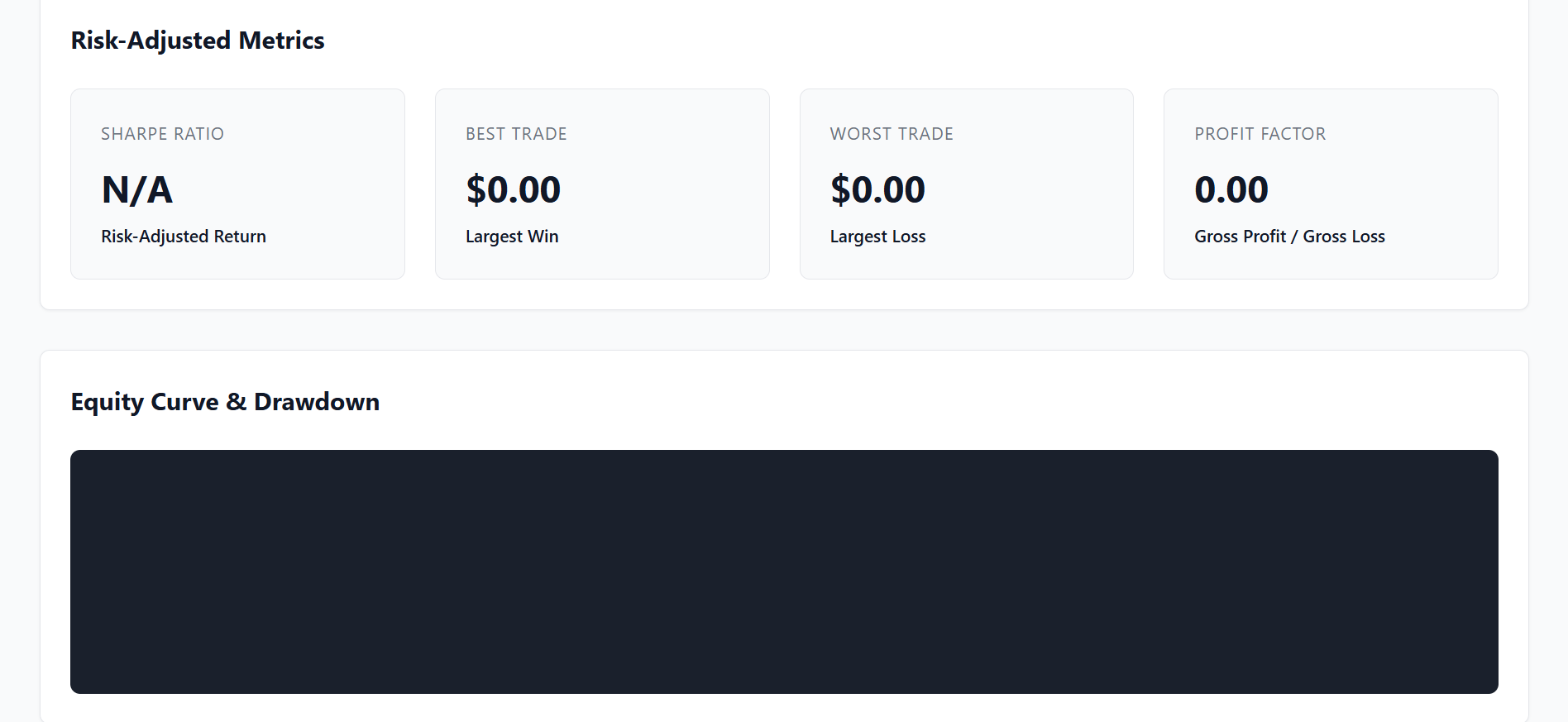
Next steps include: Expanding factor discovery across macro and sector-level signals Improving regime detection and dynamic risk adjustment Deeper performance analytics and attribution Extended live testing through sandbox-to-production pathways Exploring collaboration and incubation opportunities with Creek Labs AlphaLens AI is designed to evolve from a sandbox-tested agent into a production-ready, explainable trading system.


Log in or sign up for Devpost to join the conversation.