-
-
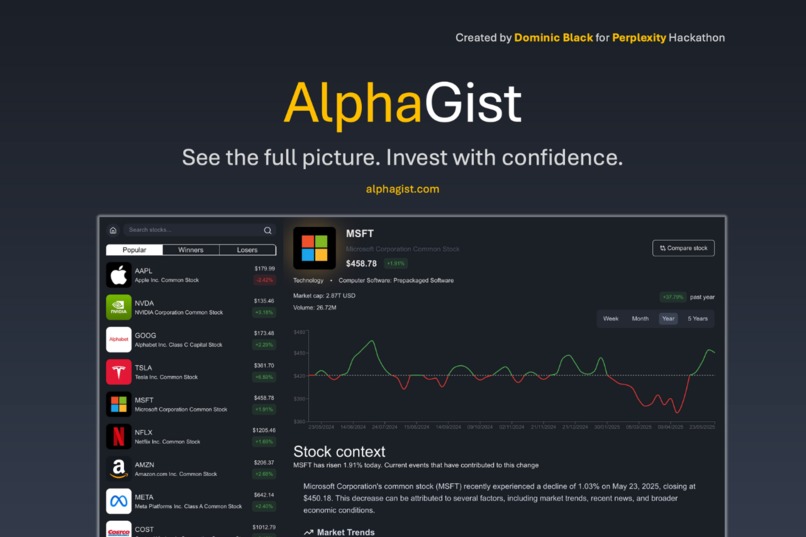
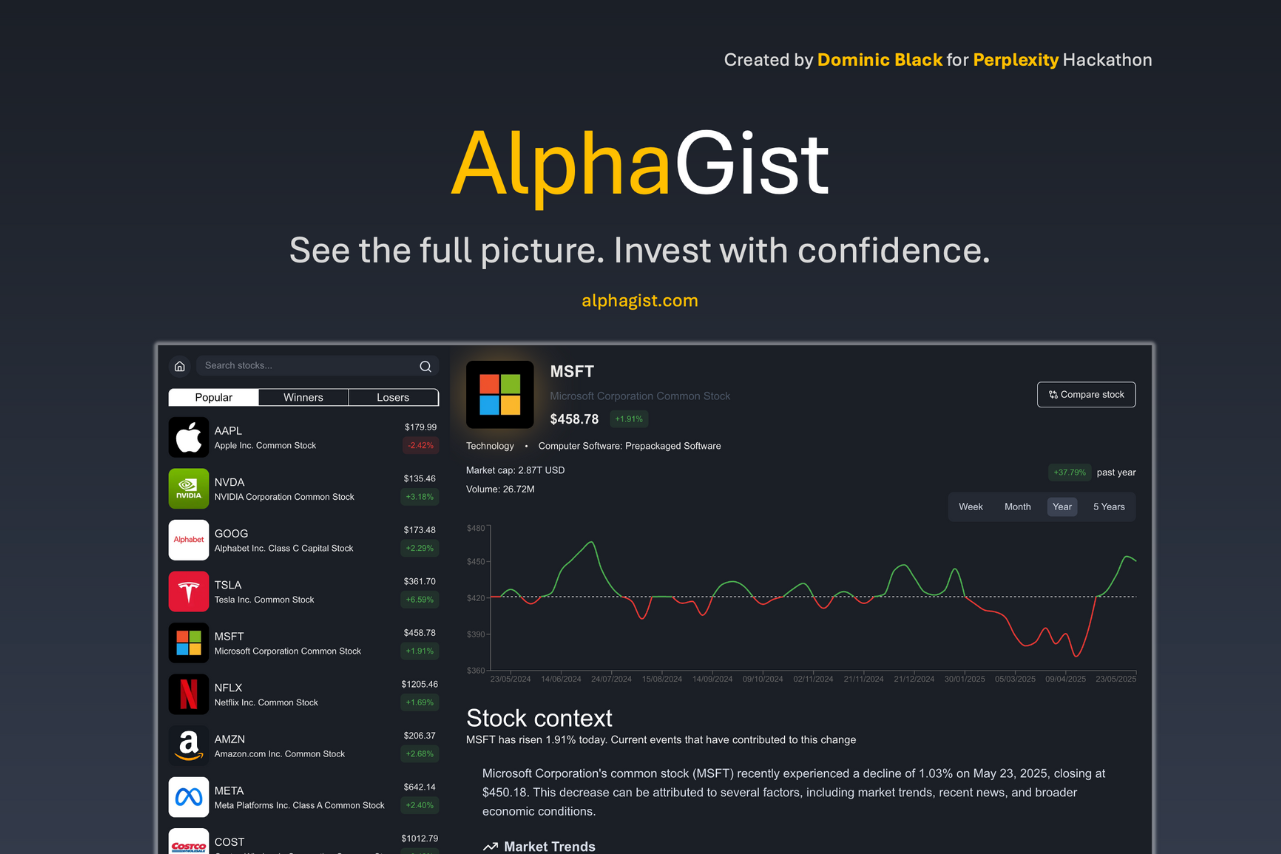
AlphaGist Hackathon Banner
-
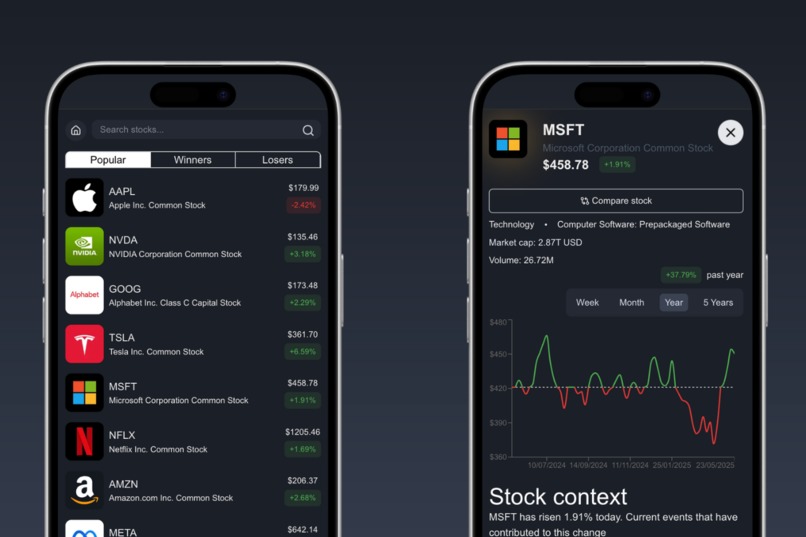
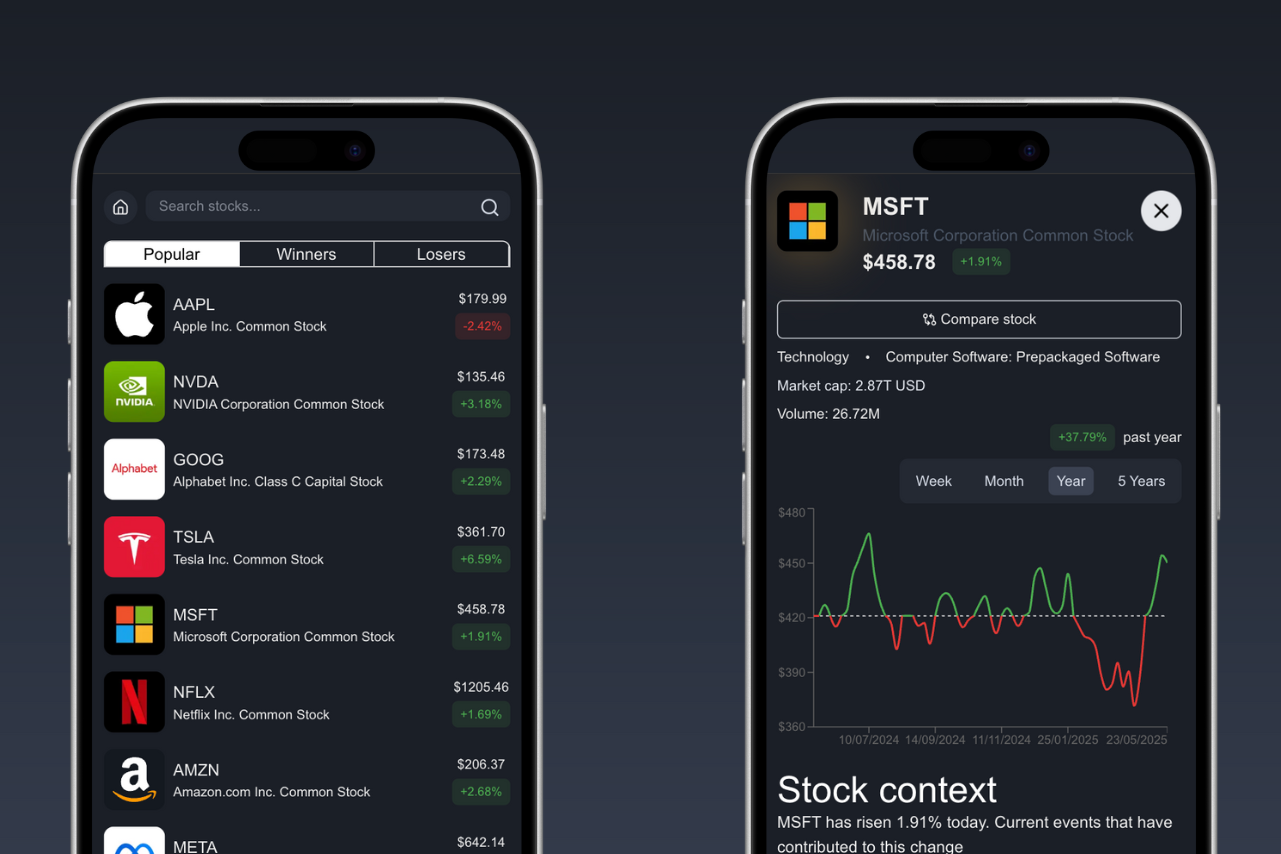
Responsive design
-
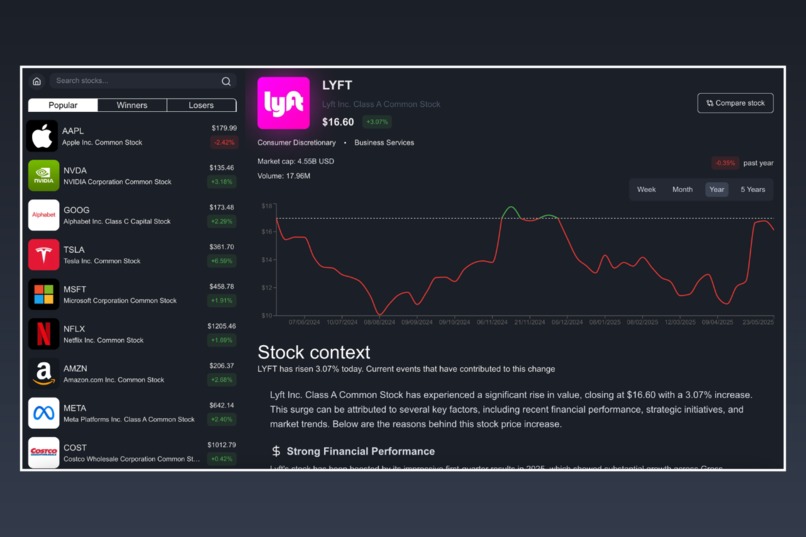
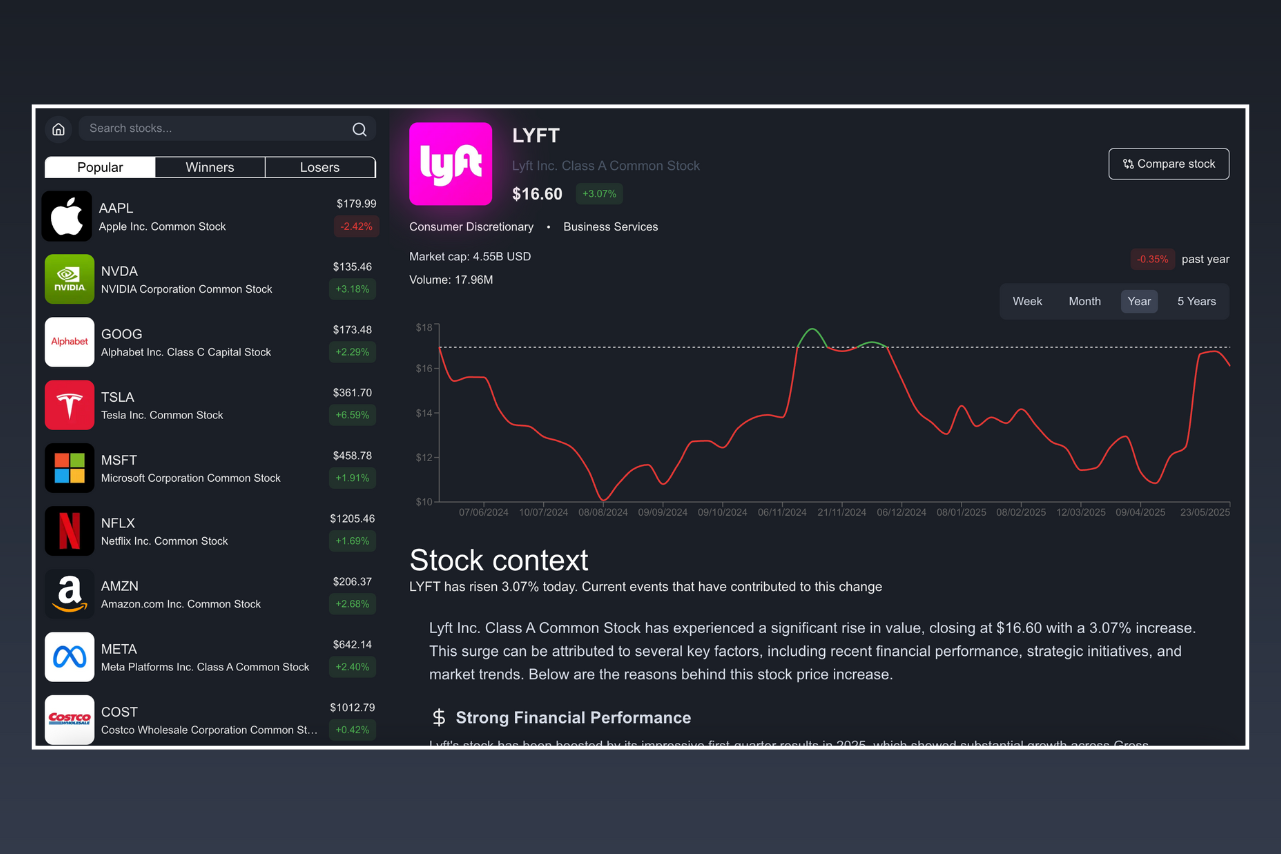
Access real time stock data
-
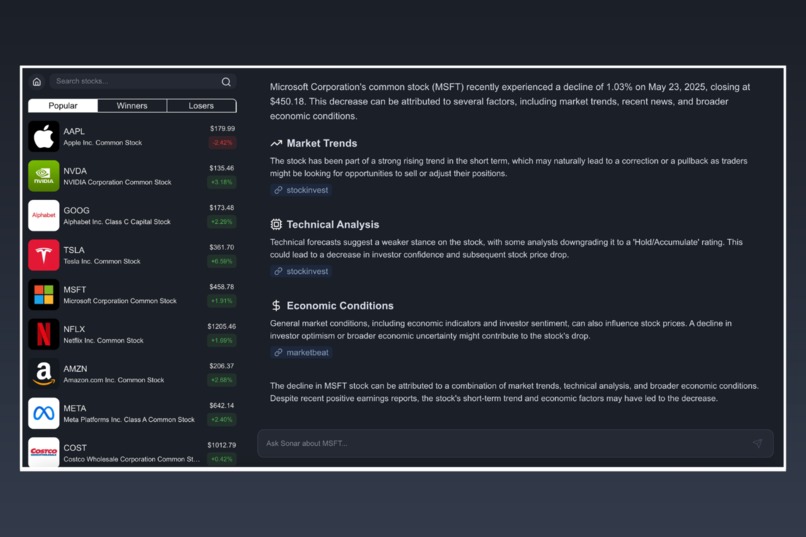
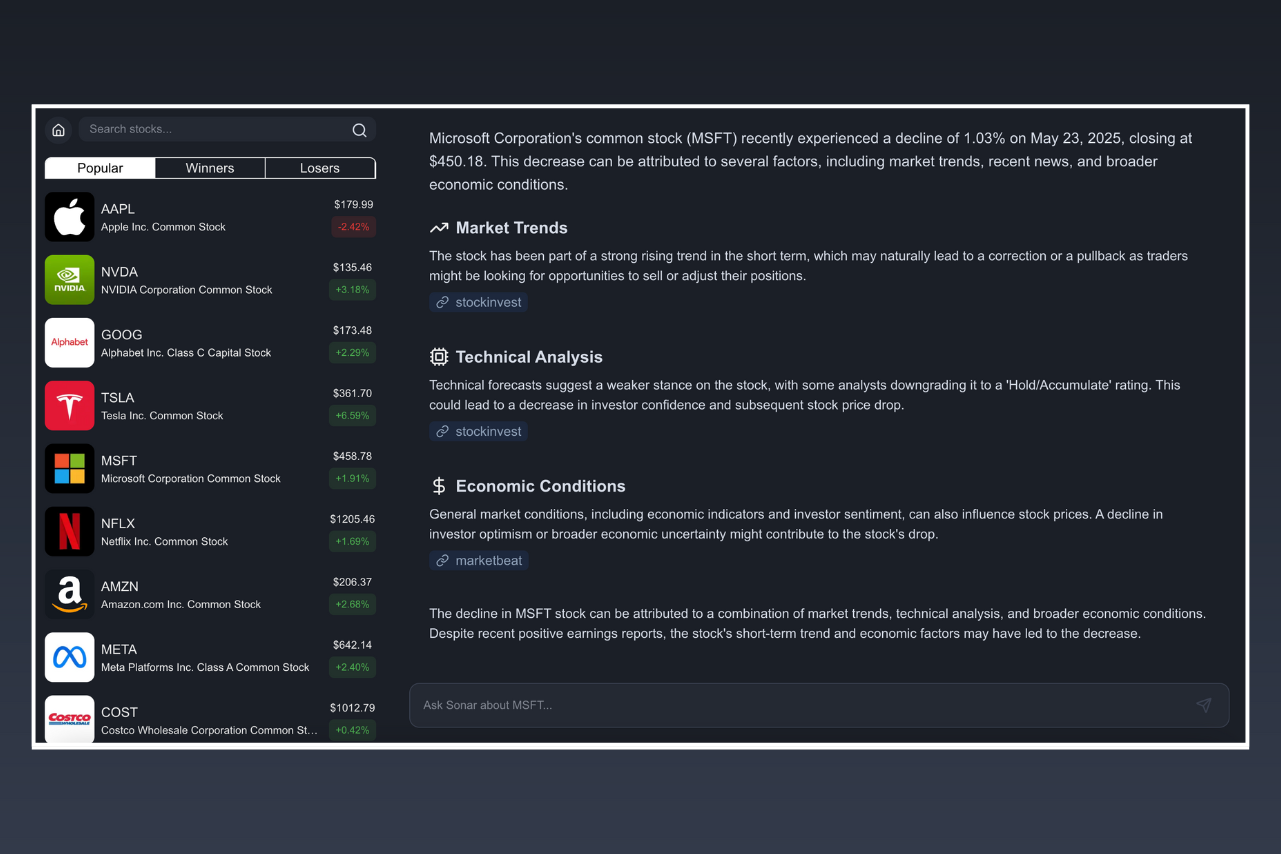
Perplexity AI generated stock summary based of news and current events.
-
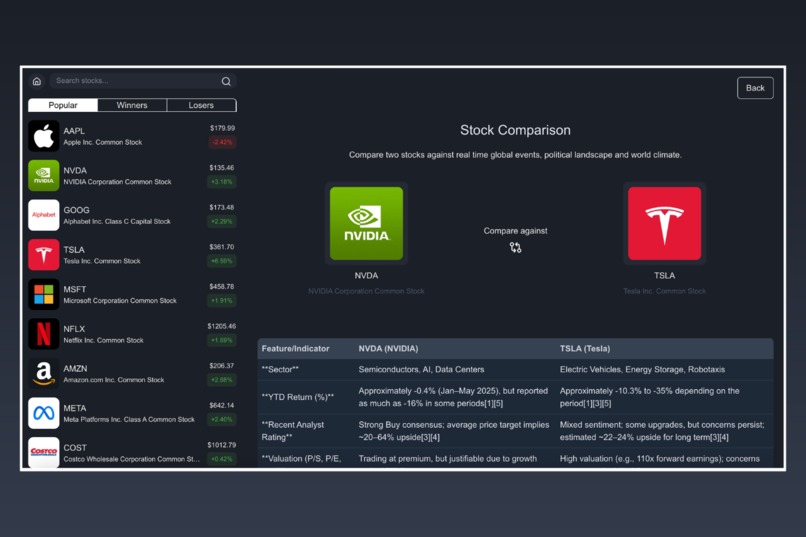
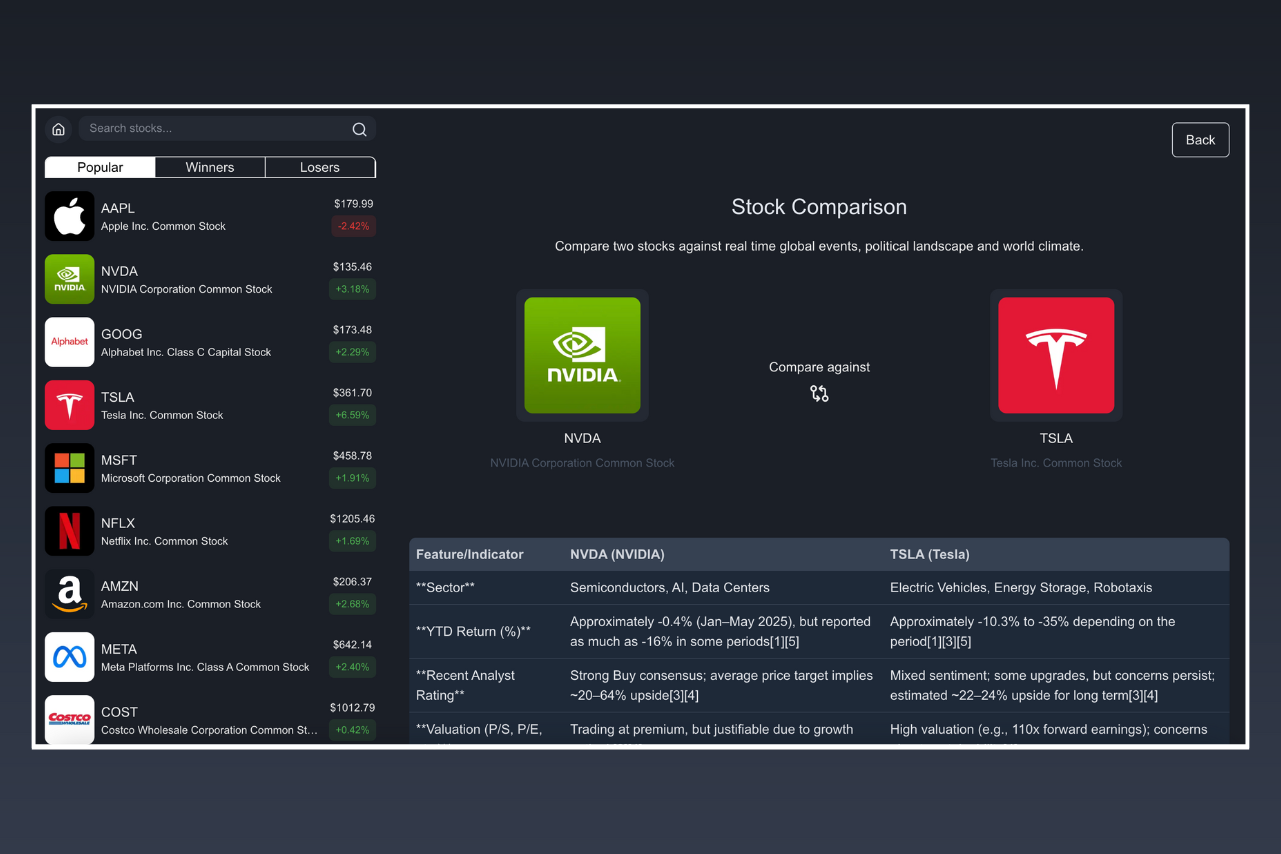
Compare multiple stocks
Inspiration
I wanted to build a tool that bridges the gap between the complex, fast-moving world of financial markets and the people trying to make sense of it. The stock market reacts instantly to global news, yet most tools only show what is happening — not why. I saw an opportunity to help both beginner and experienced investors gain that missing context.
Perplexity’s Sonar model gave me a unique advantage: a real-time, web-search-powered AI that could analyze breaking events and connect them to stock movements. That inspired me to build AlphaGist — a platform that transforms noisy financial information into clear, actionable insights.
What it does
AlphaGist is a Perplexity AI–powered web app that allows users to:
- Analyze any stock using live market data
- Generate reports that explain why a stock is rising or falling using real-time event analysis from Perplexity Sonar
- Chat with an AI assistant to explore stock viability, risks, breaking news, and terminology
- Compare two stocks side-by-side in a report or table format
- Toggle an educational mode for beginner-friendly explanations of complex concepts
- Explore over 3,700 NASDAQ and NYSE stocks with real-time data, 5 years of historical context, and sentiment filters
How I built it
I built AlphaGist using a modern and scalable tech stack:
- Frontend: Built with Next.js
- Backend & Storage: Powered by Firebase Functions and Firestore for handling APIs and storing persistent data
- AI Intelligence Layer: All core functionality is powered by Perplexity’s Sonar AI, which performs live web searches and delivers contextualized insights
- Automation & Scraping: I wrote custom Node.js and Puppeteer scripts that run on CRON schedules during market hours. These scripts track and update stock prices in near real-time, ensuring the platform always reflects the latest market activity
Challenges I ran into
Prompt Response Formatting: Initially, I struggled with getting consistent JSON responses from the Sonar model. Providing examples worked, but it significantly increased token usage. I eventually discovered the
response_formatparameter in the Perplexity API, which allowed me to define the output structure explicitly — and from that point on, responses were returned accurately every time.Performance at Scale: Ensuring that my
stock-scraper.jsscript could keep all 3,700+ stocks updated while the market was open was a big challenge. I solved this by distributing the workload across multiple workers, enabling parallel scraping. After a lot of iteration and testing, I brought the update time down to just 7.5 minutes — meaning all stock prices are refreshed within that window.Rate Limiting: Managing API limits while keeping data fresh during trading hours required careful orchestration across all worker scripts and API requests.
Accomplishments I'm proud of
- Successfully combined live market data with live web search AI to deliver real-time, explainable insights
- Built a unique educational mode that dynamically simplifies responses, making the platform accessible and useful for everyone
- Implemented strategies that keep load times, server usage, and API calls to a minimum
- Created a clean, intuitive interface that allows users of all skill levels to understand stock movements and market context in seconds
- Automated the retrieval and updating of live and historical data for over 3,700 stocks
What I learned
- How to effectively prompt and integrate Perplexity Sonar for financial and domain-specific use cases
- Techniques for delivering a dual-layer UX that balances advanced tools with beginner accessibility
- Efficient strategies for maintaining data freshness while managing external API rate limits
- How to extract narrative value from raw market data using natural language generation
What's next for AlphaGist
- 📱 Mobile app: I plan to build a React Native version of AlphaGist for iOS and Android
- 📈 Deeper analytics: Include earnings breakdowns, insider trades, and sentiment history
Built With
- ai
- next
- node.js
- perplexity
- tailwind



Log in or sign up for Devpost to join the conversation.