Bounce
In an era where algorithms shape what we see, hear, and engage with, our digital experiences often feel less like choices and more like habitual cycles of doomscrolling. Social media platforms, designed for connection, now leave users feeling mentally exhausted, disengaged, and overwhelmed by negative content. The constant flood of information makes it harder to consume media intentionally, leaving many questioning:
How can we reclaim control over our digital experiences and engage with content in a way that feels human?
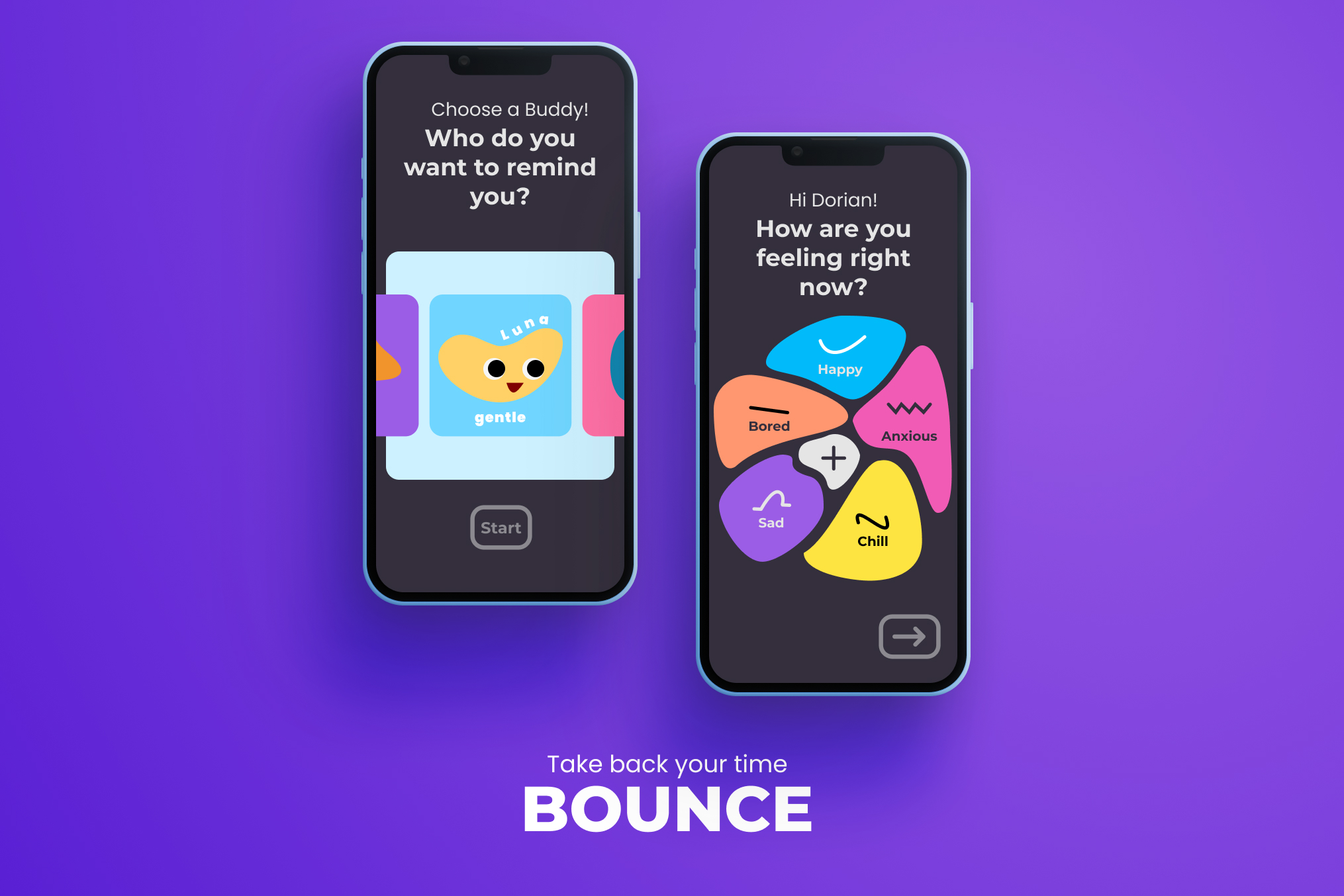
Bounce is a space designed for mindful, intentional engagement, helping users break free from passive scrolling. Instead of an endless feed, content is delivered in structured, digestible batches, encouraging reflection and balance. Thoughtful design choices create natural stopping points, helping users stay informed without feeling overwhelmed. By shifting focus from reactivity to intentionality, [App Name] redefines how we engage with digital content—creating a healthier, more human experience.
Research and Insights
Our research findings reveal that users often feel mentally exhausted, anxious, and emotionally overwhelmed after engaging with social media. This highlights the need for a more intentional, structured approach to content consumption—one that reduces doomscrolling, promotes mindful engagement, and prioritizes well-being over algorithm-driven engagement loops. These insights directly informed our design decisions, shaping a solution that helps users interact with digital content in a way that feels more human-centered, balanced, and emotionally sustainable.
A core issue identified in our research was the loss of control over content consumption. Many participants described mindlessly scrolling through overwhelming feeds, encountering negative content they didn’t seek out, and struggling to disconnect without guilt. To address this, our solution moves away from infinite scrolling and algorithmically dictated feeds by implementing structured content experiences that allow users to engage in intentional, digestible interactions rather than passive, endless consumption.
Another key insight was the emotional impact of social comparison and performative interactions. Users expressed frustration with the highly curated nature of social media, which often leads to self-doubt and heightened anxiety. Rather than emphasizing engagement metrics and viral content, our approach prioritizes emotional well-being by allowing users to filter content based on their mood and interests, helping them cultivate a more intentional and personalized experience.
Participants also struggled with information overload, particularly in relation to breaking news and algorithm-driven exposure to distressing content. Many described feeling mentally drained by the constant influx of information, making it difficult to step away without feeling disconnected. Our design decisions focus on helping users regain agency over their digital experience, implementing natural stopping points, content segmentation, and customizable content exposure levels to reduce cognitive overload and reinforce mindful engagement.
These design decisions are reinforced by behavioral research indicating that structured, intentional engagement leads to more positive digital experiences. By replacing passive consumption patterns with mindful interaction opportunities, we create a system that encourages users to engage with content on their own terms, rather than being drawn into an endless, emotionally exhausting cycle.
In shaping our solution, we also considered the trade-offs between accessibility, engagement, and user autonomy. While restricting engagement patterns too much might feel overly restrictive, our approach finds a balance by providing tools for users to self-regulate their content consumption without imposing a one-size-fits-all limitation.
Ultimately, our research findings emphasize that users want a digital space that supports their well-being rather than drains it. Our design decisions reflect this by focusing on structured, mindful, and customizable engagement, helping users reconnect with digital content in a way that feels intentional, empowering, and emotionally sustainable.
Design Decisions
Our research revealed that many social media users feel emotionally exhausted, drained, and disconnected after prolonged use. Through surveys, in-person interviews, and a literature review on social media’s effects on mental health, we found that doomscrolling, algorithm-driven content loops, and lack of control over what users see contribute to increased anxiety, stress, and digital fatigue. These insights directly informed our design decisions, which focus on promoting mindful engagement, emotional well-being, and user autonomy in the digital space. A Calming Visual Experience for Emotional Regulation Our research confirmed that color psychology plays a significant role in shaping mood and behavior. Unlike traditional platforms that use high-contrast, attention-seeking colors to maximize engagement, we implemented a soft, warm color palette that fosters a sense of calm and ease. This helps reduce overstimulation and mental fatigue, allowing users to engage with content in a more intentional and emotionally balanced way. Replacing Doomscrolling with Structured Content Batching One of the biggest contributors to mental exhaustion from social media is infinite scrolling, which removes natural stopping points and encourages passive consumption. Our research showed that users often felt trapped in content loops, leading to emotional burnout. Instead, we designed a structured content experience, where posts appear in controlled segments, encouraging pauses and reflection rather than mindless scrolling. This approach restores agency to users, helping them develop healthier content consumption habits. ** Mindfulness Activity Prompts for Intentional Breaks** Rather than relying on engagement-driven tactics, our platform integrates mindfulness activity prompts that encourage healthy, reflective interactions. These prompts serve as small interventions that guide users toward active self-awareness rather than passive consumption. Whether through quick breathing exercises, reflection questions, or simple check-ins, these activities help users engage with their digital experience in a more conscious and meaningful way. Customizable Character Tones for Personal Connection Recognizing that different users find encouragement in different ways, we designed characters with distinct tones to help create a more personalized and relatable experience. Some users prefer straightforward, no-nonsense reminders, while others may respond better to gentle encouragement or humor. By allowing users to choose the tone that resonates with them, we create a system that feels more human and supportive, rather than overly prescriptive or rigid. Conclusion: Designing for a More Human Social Media Experience By focusing on intentional engagement, emotional balance, and user autonomy, our design decisions directly address the negative effects of traditional social media. Our platform reshapes content consumption by prioritizing well-being over engagement metrics, ensuring that users feel supported, in control, and emotionally refreshed rather than overwhelmed.
Built With
- figma
- jitter


Log in or sign up for Devpost to join the conversation.