-
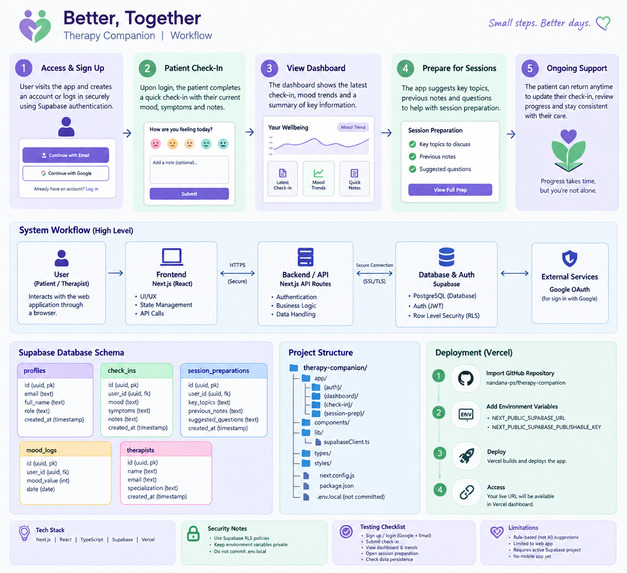
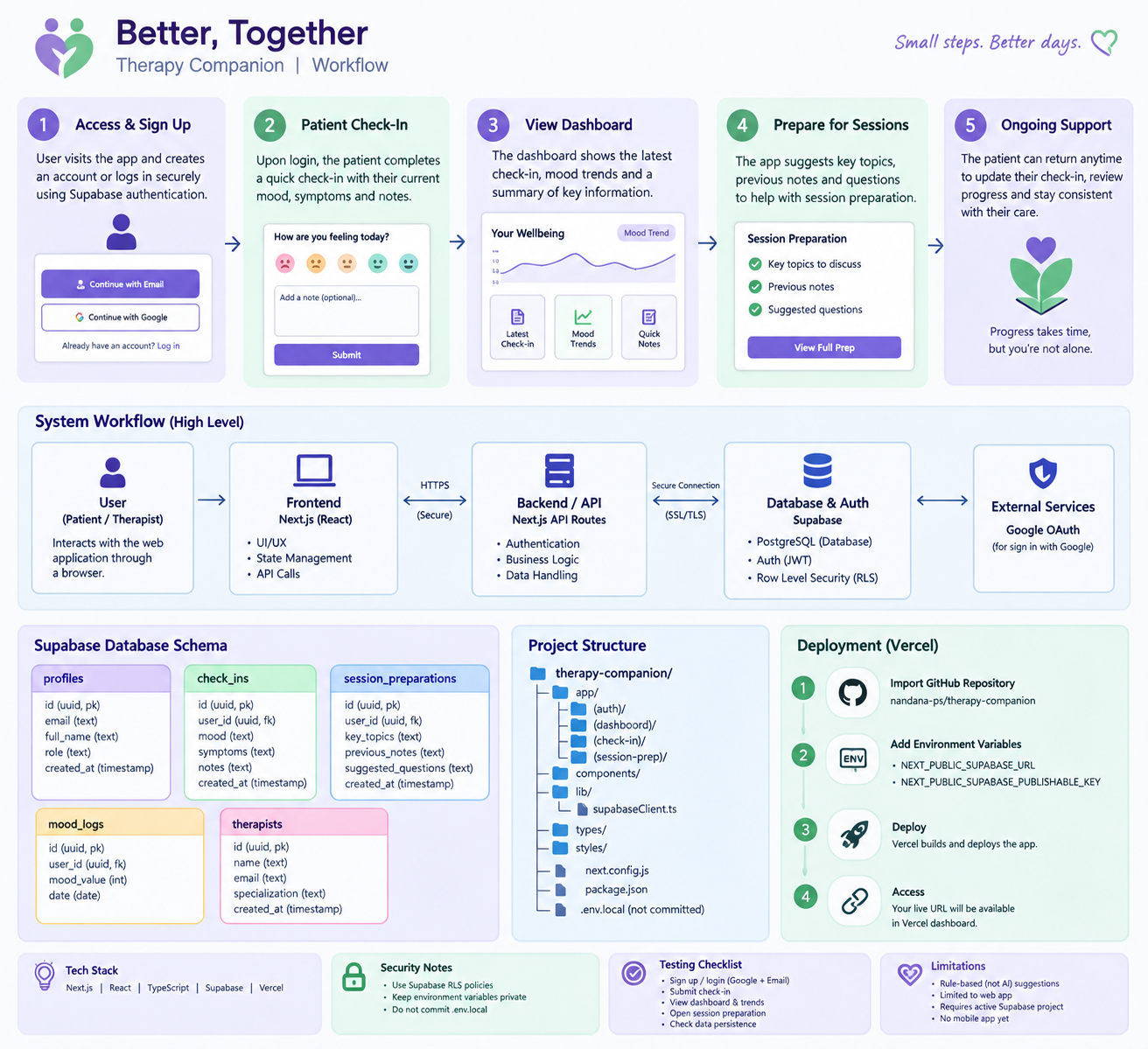
WORKFLOW
-
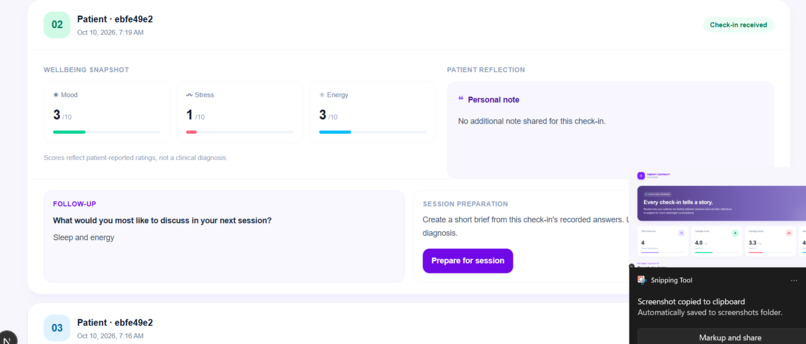
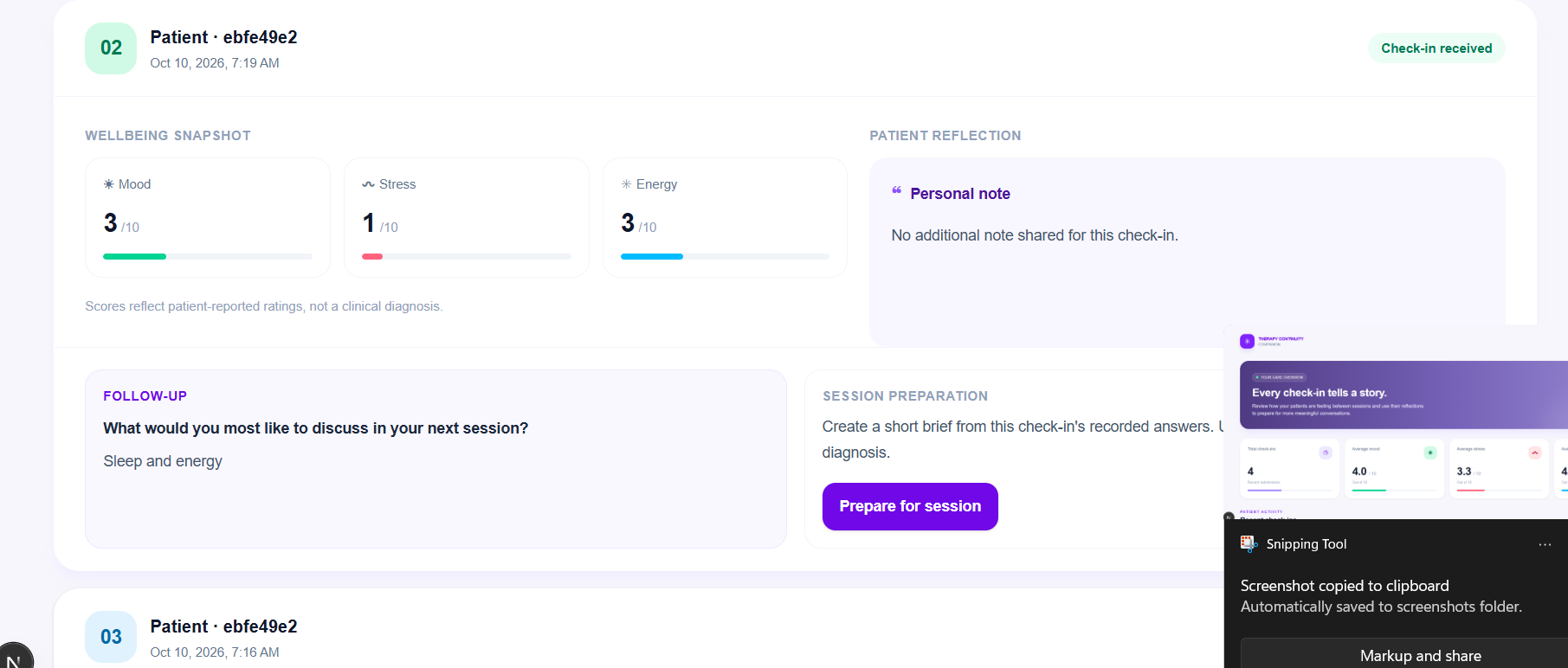
SUMMARY OF A PATIENT
-
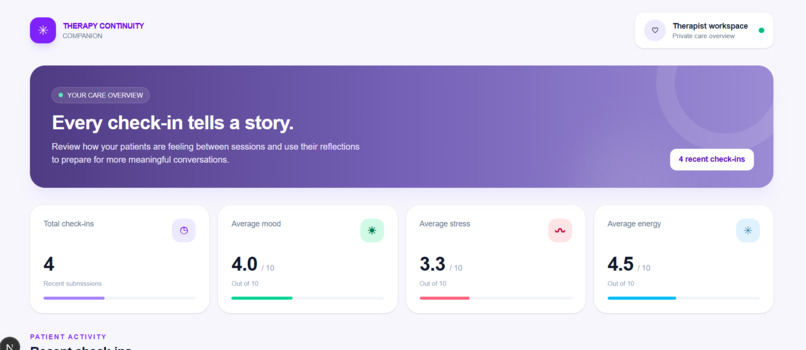
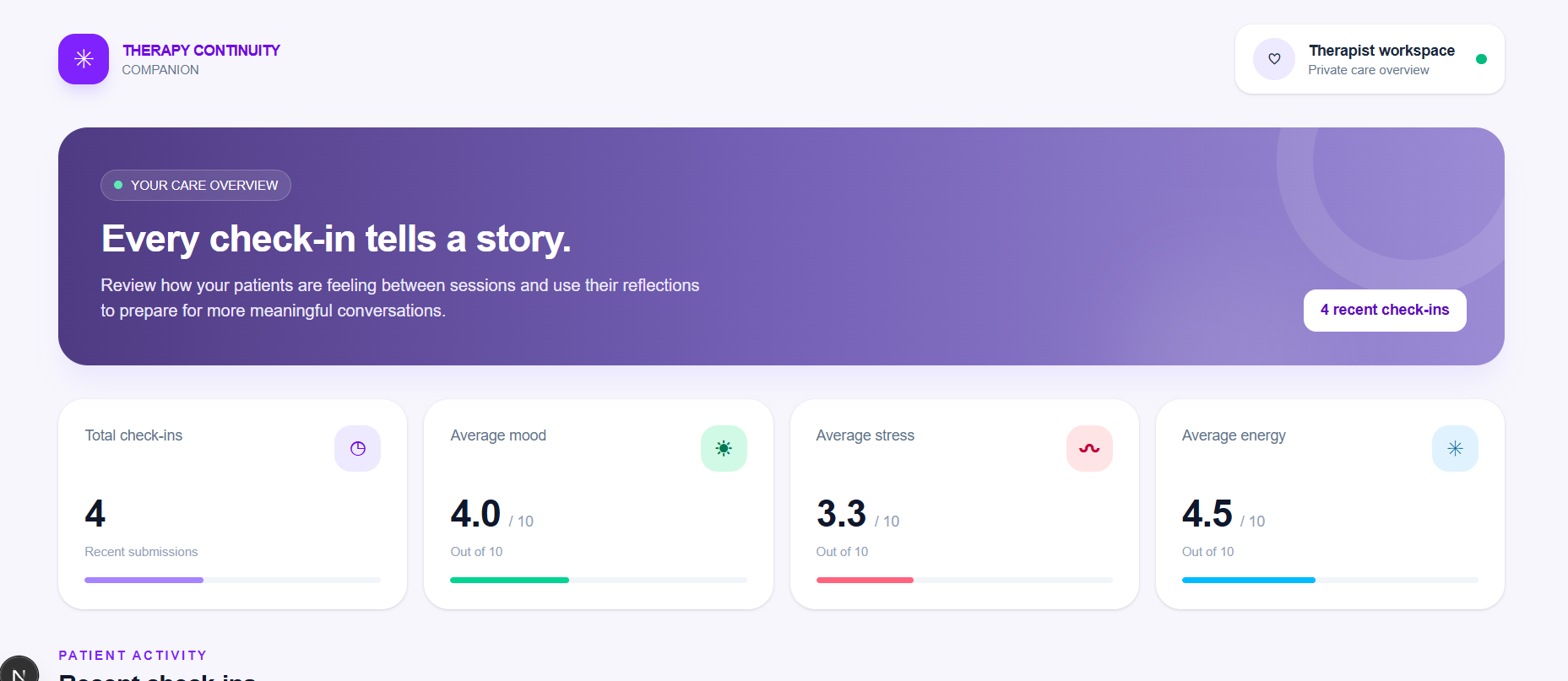
THERAPIST DASHBOARD
-
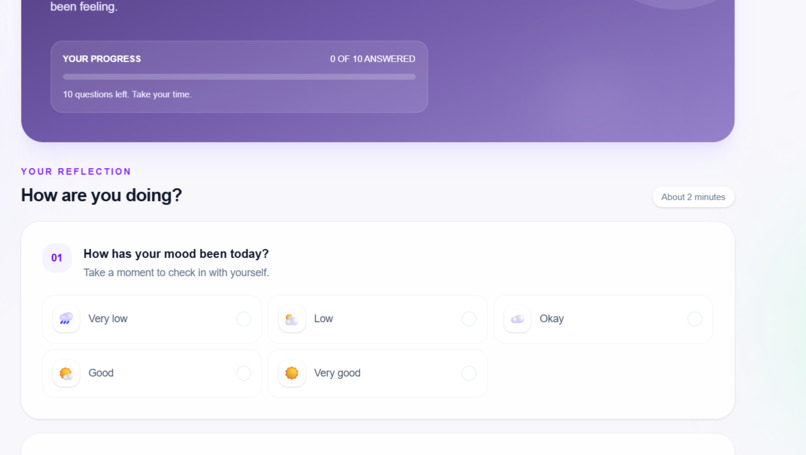
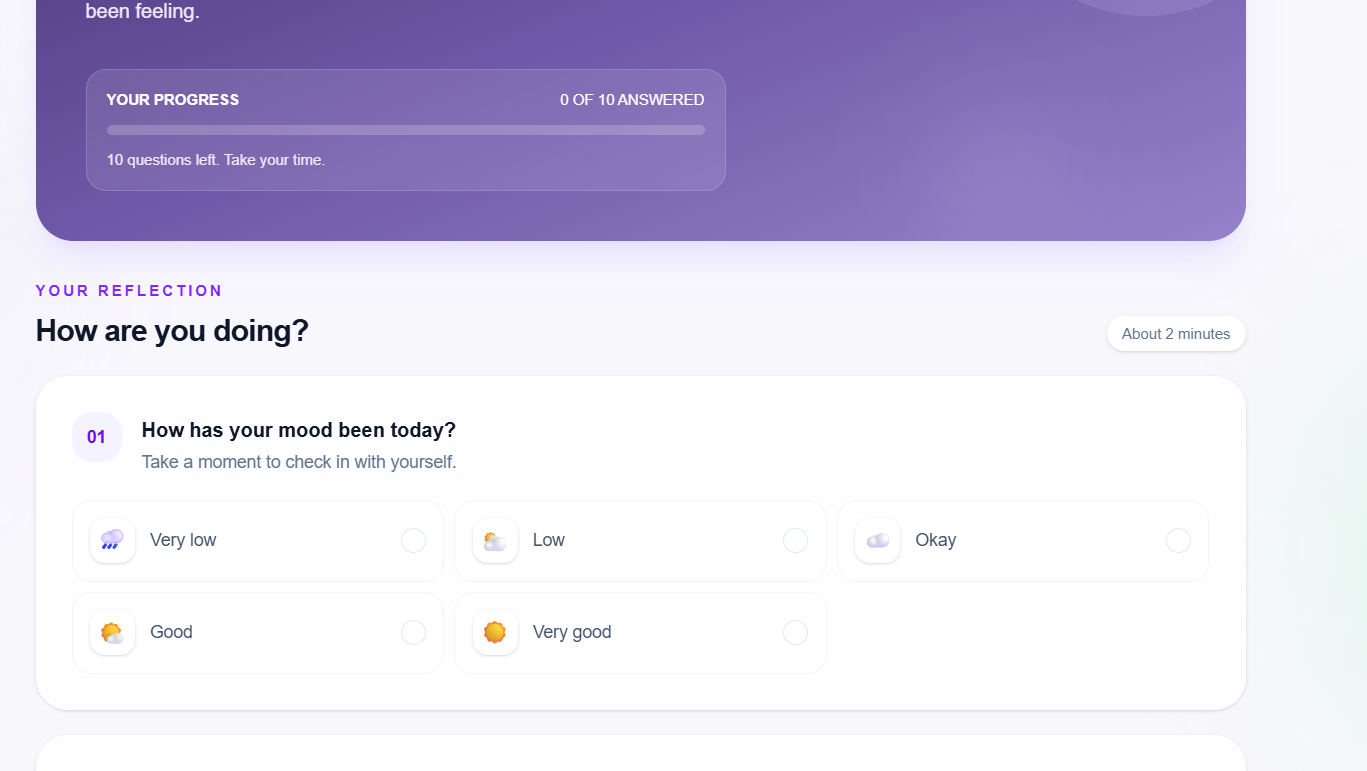
CHECKIN PAGE PATIENT
Better, Together: Let's Make Things Better Together
The Inspiration
This idea came from my own personal experience and observations. I've realised that taking care of our mental well-being isn't something that happens only during a therapy session. A lot can happen in between. Sometimes, we struggle with things we don't know how to explain, notice changes in how we feel, or even forget to bring up certain things when we're finally sitting down with our therapist.
That got me thinking. What if there was a simple way to keep track of these experiences and help therapists understand how their patients have been doing between sessions? That's where Better, Together began.
What I Built
Better, Together is a therapy continuity companion that helps patients reflect on their well-being through regular check-ins and helps therapists prepare for upcoming sessions. Patients can share how they've been feeling through questions about their mood, stress, and energy levels. They can also answer a follow-up question and add anything else they feel is important.
On the therapist's side, there's a dashboard where they can review these check-ins and use the information to prepare for their next session. The idea is to make conversations more meaningful by helping therapists understand what their patients have been experiencing between appointments.
How I Built It
I built the MVP using Next.js, TypeScript, and Supabase. Next.js helped me develop the interface and application flow, while Supabase handles authentication and stores the check-in data.
I connected the patient check-in flow to the database, built the therapist dashboard, and worked on making sure the submitted responses appeared correctly. I also added contextual follow-up questions and a session preparation brief based on the information patients provide. For now, these features use rule-based logic rather than an AI model. I wanted to get the core idea working first and build on it from there.
The Challenges
One of the biggest challenges was getting everything to work together. Building the interface was one thing, but making sure responses were saved properly, remained available after refreshing the page, and appeared correctly on the therapist's dashboard took quite a bit of testing and debugging.
Setting up authentication and making sure the patient and therapist experiences worked as intended also took some figuring out. I had to test the application from both sides and work through issues as they came up. I also had to decide what to prioritise for the MVP instead of trying to build every feature at once.
What I Learned
This project gave me hands-on experience with building a full-stack application and understanding how its different parts connect. I learned more about authentication, database integration, handling user data, and debugging issues across an entire application.
More than anything, it reminded me that a project doesn't always have to start with a big idea. Sometimes, you notice something that could be better, wonder if there's a way to improve it, and decide to try building something yourself.
What's Next?
This is just the beginning. I'd like to improve patient and therapist management, expand the dashboard, and explore responsible ways to introduce AI-assisted summaries in the future. Since the application deals with sensitive personal information, privacy and appropriate professional oversight will be important as it develops.
For now, Better, Together is my attempt to turn a personal observation into something useful. Because care shouldn't stop when a session ends. Sometimes, what happens in between matters just as much.
Built With
- ai
- ml
- next.js
- postgresql
- react
- supabase
- typescript

Log in or sign up for Devpost to join the conversation.