-
-
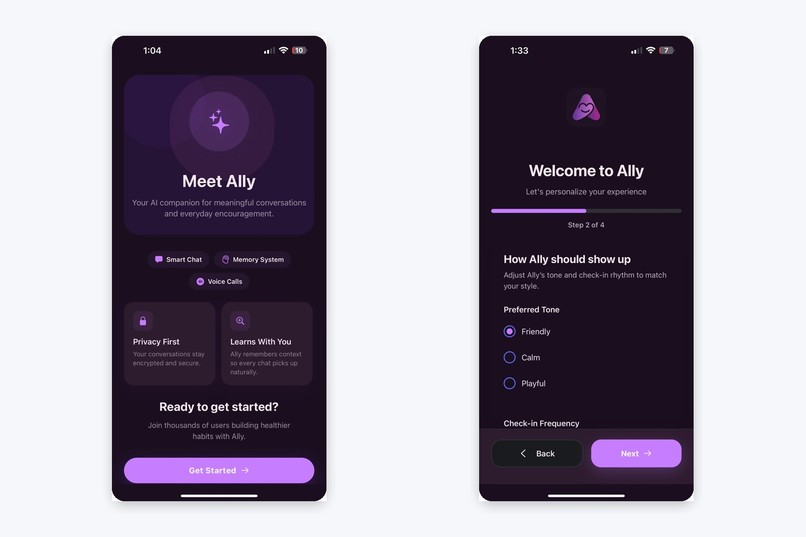
Home Screen & Companion Setup
-
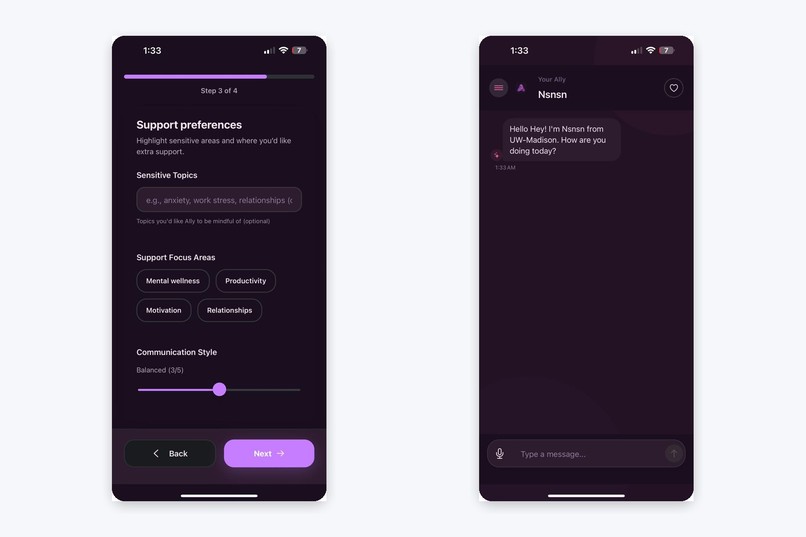
Companion Setup & Chat Interface
-
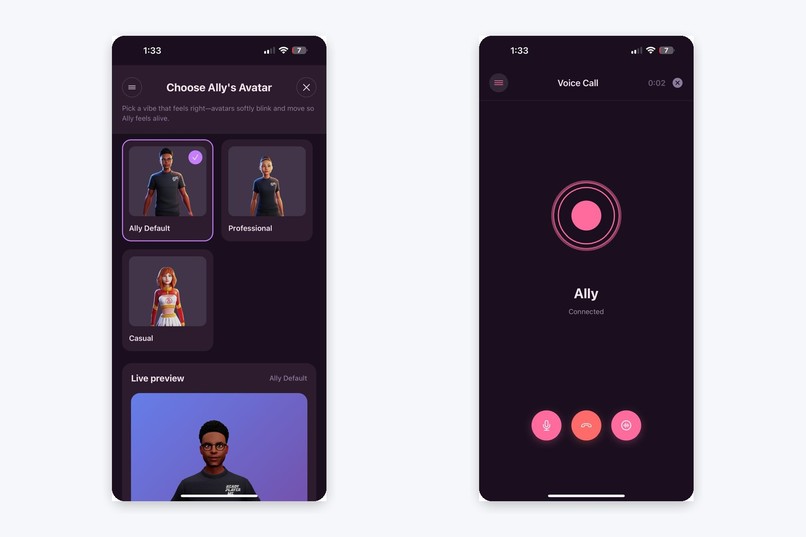
Avatar Selection & Call Screen
-
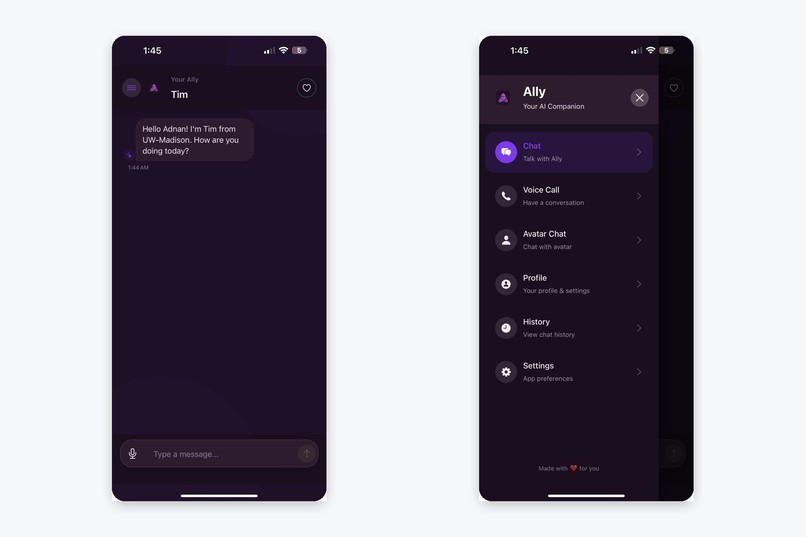
Extra Images
-
Extra Images
Inspiration
We built Ally from a very personal feeling: being far away from the people who normally ground you.
When we moved to different cities for internships, and especially as international students dealing with time zone differences from family and close friends, we realized how difficult it can be to find support that is consistently there in the moments you need it most. At the same time, we noticed that while people are using AI more than ever, most tools still feel transactional. They can answer questions, but they do not make people feel understood, remembered, or emotionally supported.
That is what inspired Ally: an AI companion designed not just to respond, but to build a relationship that feels natural, steady, and human.
What it does
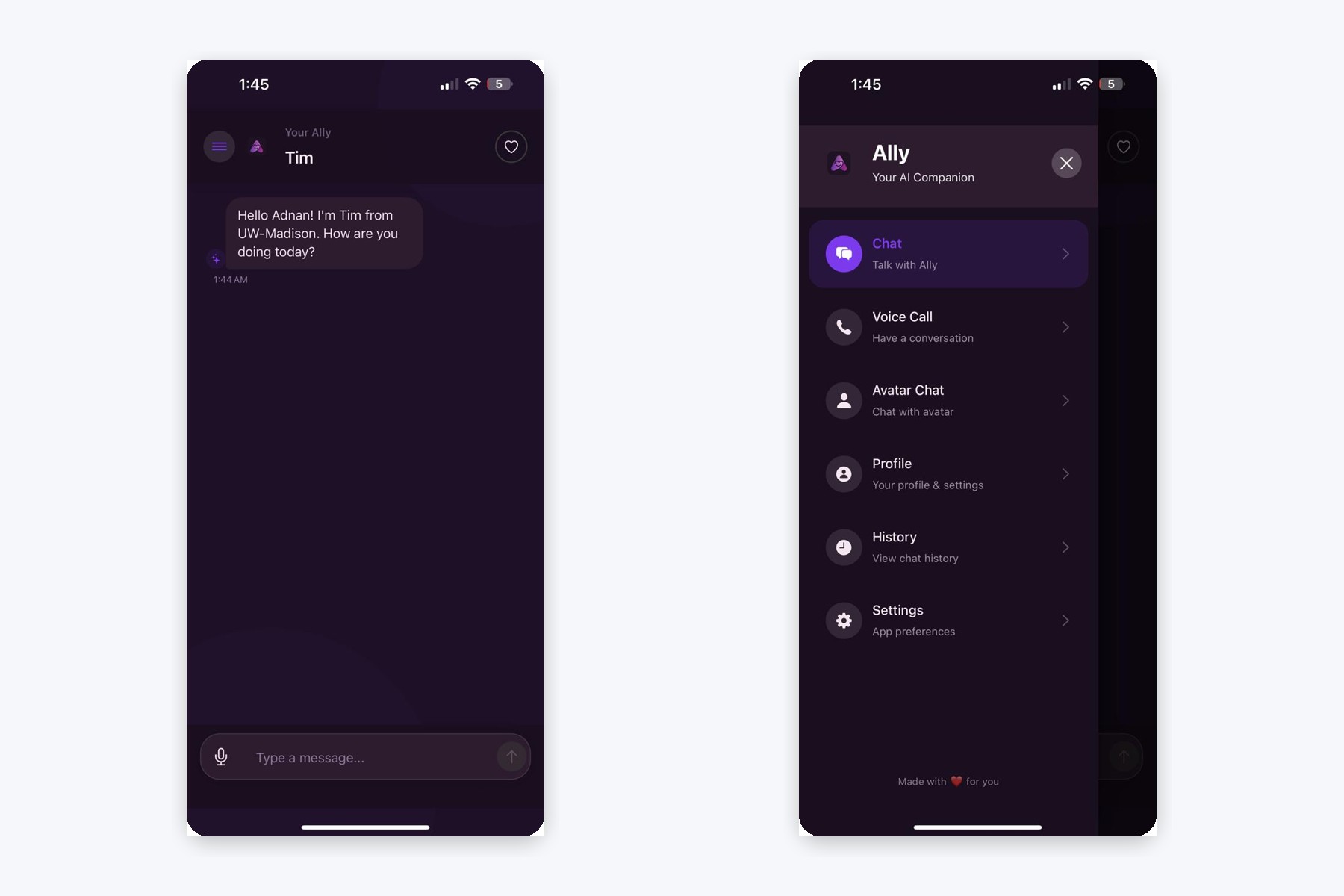
Ally is an emotionally intelligent AI companion that recognizes how a user is feeling, adapts to emotional patterns over time, and remembers important details from past conversations.
Instead of acting like a generic chatbot, Ally is designed to feel consistent and grounded. It remembers milestones, stress points, preferences, and personal context so that conversations feel continuous rather than starting from zero every time. The goal is to create an experience where users feel understood, supported, and less alone.
How we built it
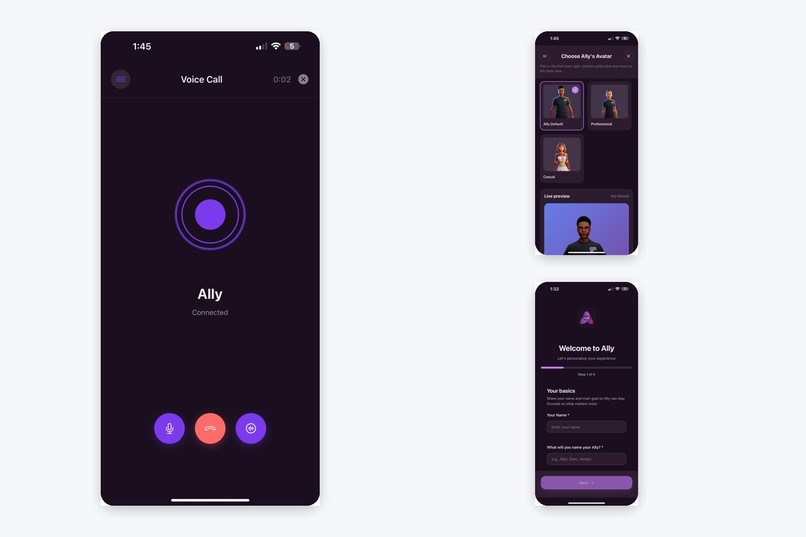
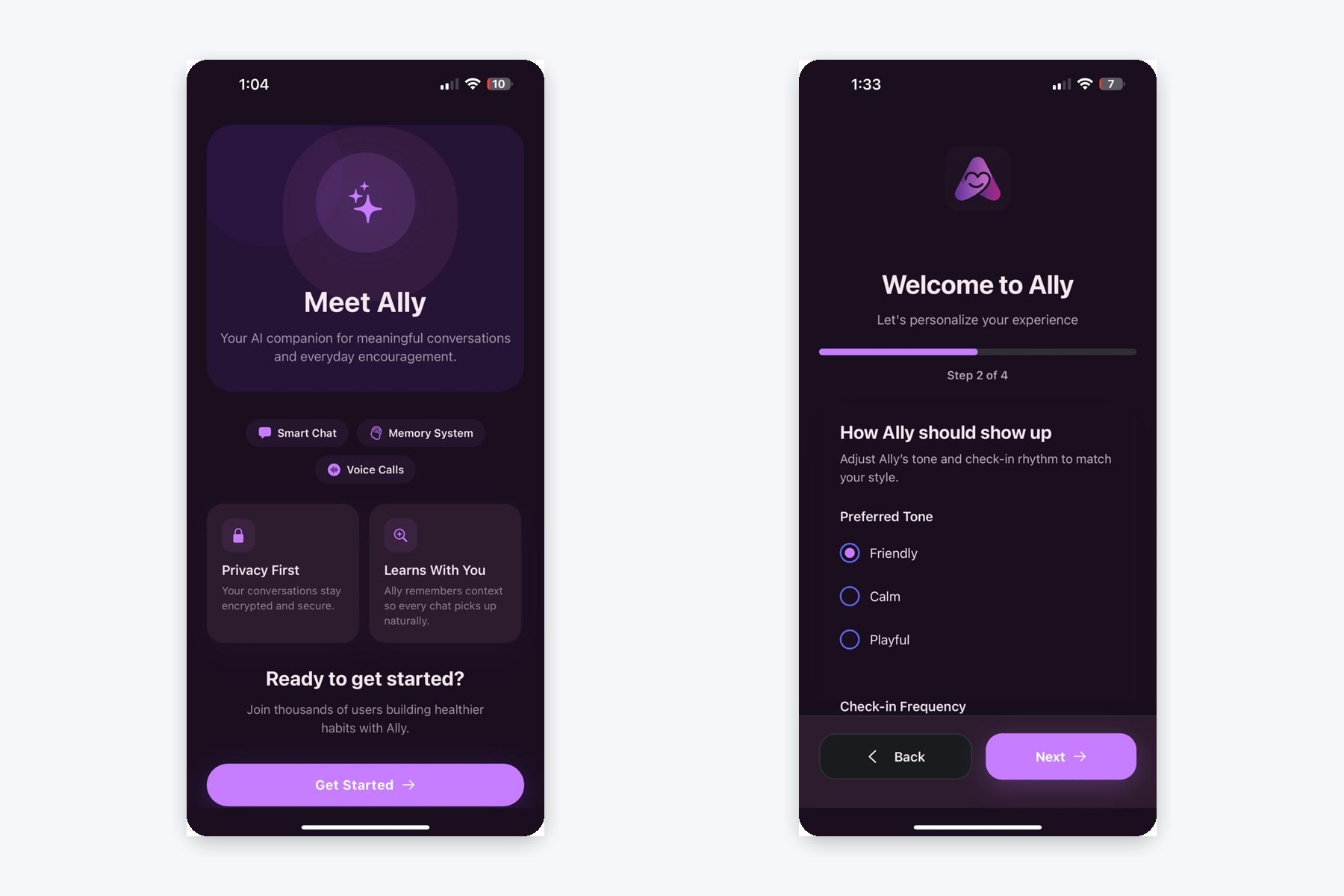
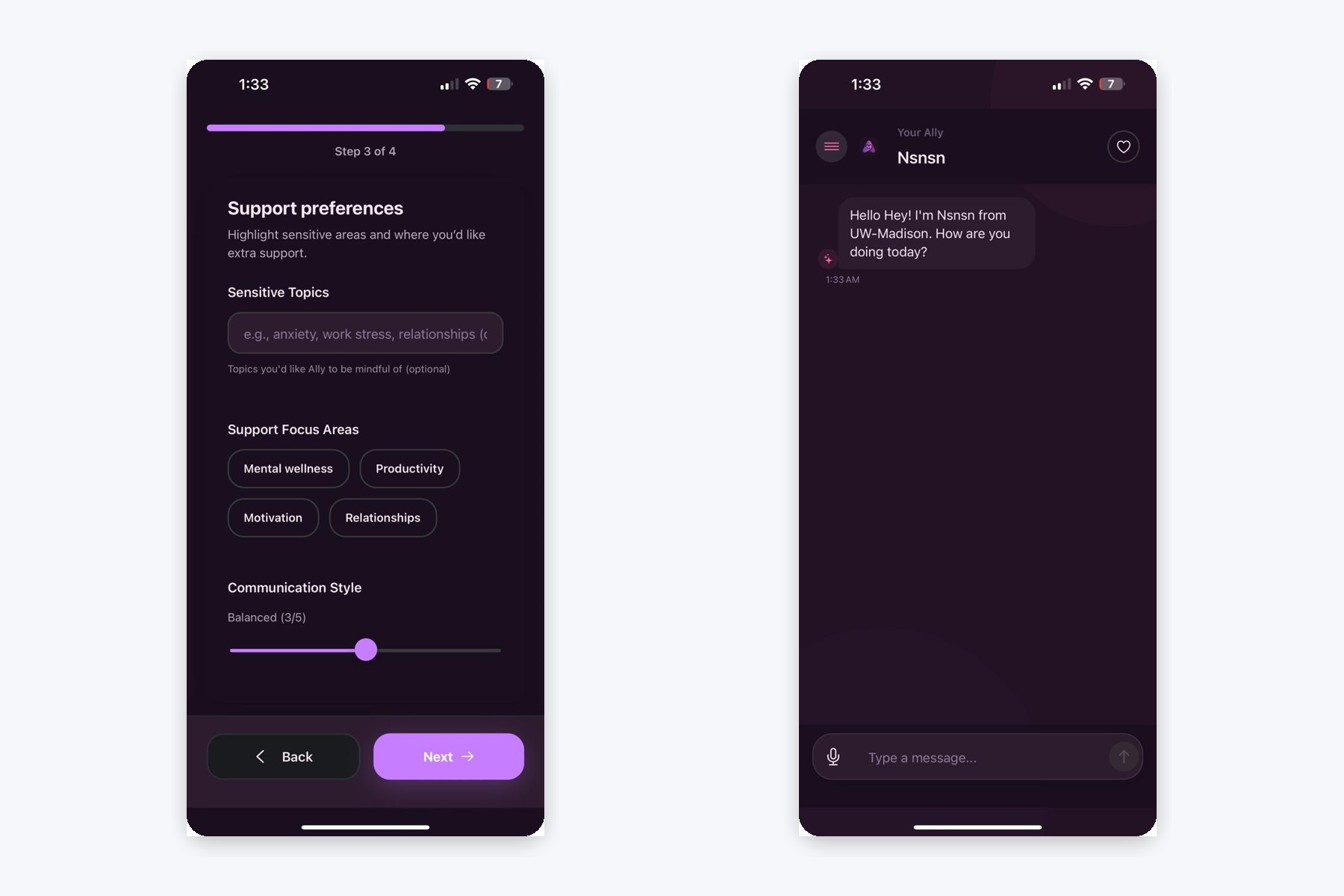
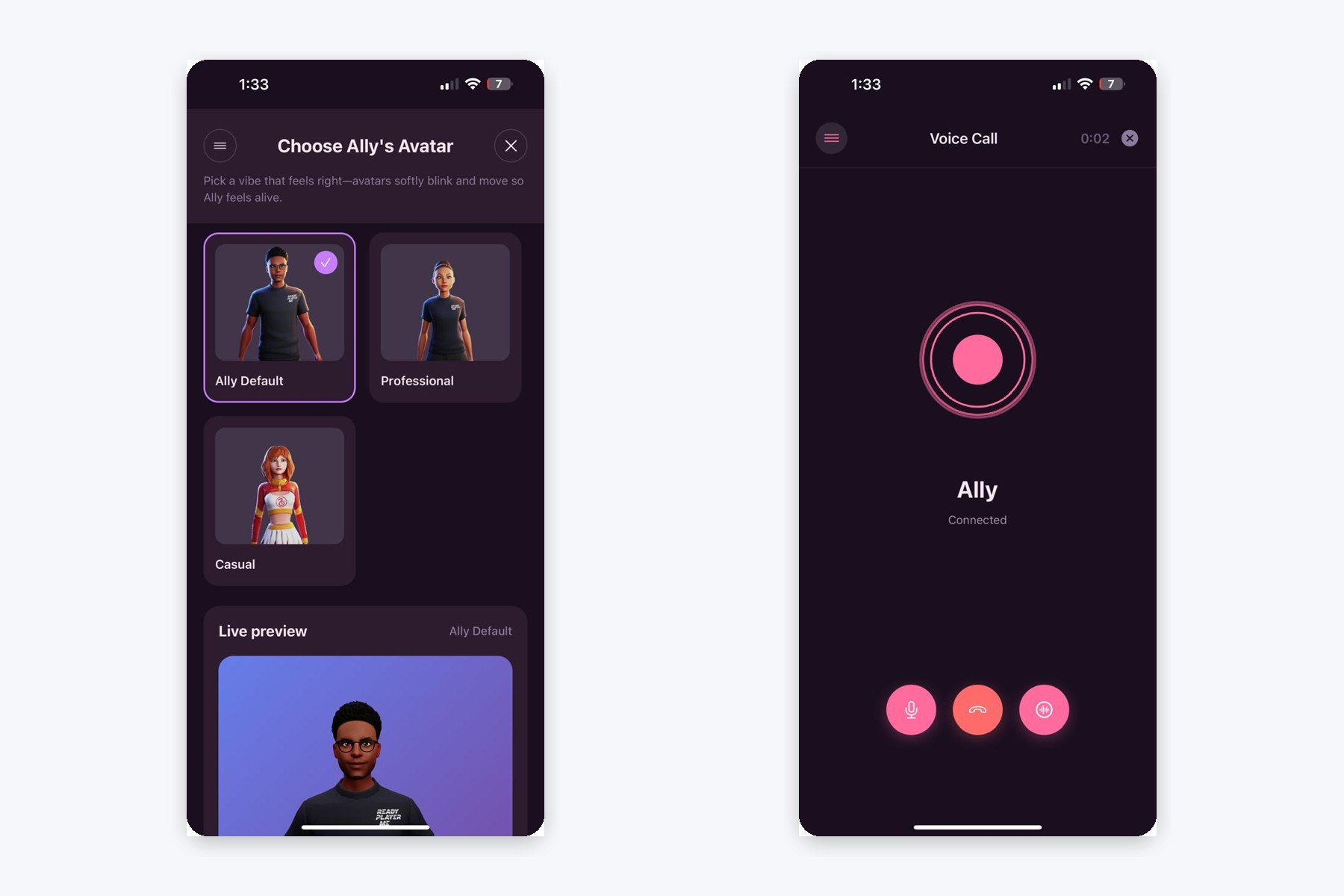
We built Ally as a full-stack AI application with a polished, mobile-first experience.
From the beginning, we believed Ally should feel like a companion people could turn to naturally throughout the day, which is why we chose an app-first approach. Emotional support is most valuable when it is immediate, private, and always accessible, and that made mobile the right long-term product direction for us.
At the same time, to move faster and learn from users early, we used a web app for beta testing. That gave us a much quicker way to onboard people, share access, and observe usage patterns without the extra friction of app distribution. It let us validate the product before fully committing to deeper mobile development, while still designing the overall experience with a mobile-first mindset.
On the frontend, we focused on creating a clean and calming interface that feels more like talking to a trusted companion than using a tool. On the backend, we built the logic for emotion-aware conversation, persistent memory, and personality consistency. We also integrated a database layer so user context and prior conversations could be stored and retrieved in a meaningful way.
A major focus during development was making sure Ally did not just generate good responses in isolation, but maintained continuity across interactions. That meant thinking carefully about what should be remembered, when memory should be retrieved, and how emotional context should shape tone and behavior.
Beta testing and user feedback
Beyond building the product, we wanted to make sure Ally solved a real emotional need rather than just sounding impressive in a demo. So far, we have beta tested Ally with around 50 users through our web app and actively gathered feedback on how people interacted with it over repeated conversations.
That beta testing taught us a lot.
First, users cared less about having the “smartest” AI response and more about whether Ally felt steady, warm, and consistent. They noticed quickly when the tone felt too robotic, too overly enthusiastic, or emotionally out of sync.
Second, we learned that memory was one of the strongest drivers of connection, but only when it felt selective and relevant. Users loved when Ally remembered meaningful details such as a stressful week, an important event, or something personal they had shared earlier. But they did not want the system to bring back every detail all the time. That pushed us to think more carefully about memory prioritization and retrieval.
Third, users wanted Ally to feel supportive without becoming intrusive. Some people wanted deep reflection and emotional check-ins, while others preferred a lighter and more casual tone. That helped us see the importance of adaptive personality tuning rather than taking a one-size-fits-all approach.
Finally, testing through the web app helped us validate the core behavior before optimizing the full mobile product. It gave us faster feedback loops, helped us identify friction in onboarding and conversation flow, and confirmed that the strongest value of Ally was not just chat, but continuity over time.
Challenges we ran into
One of our biggest challenges was making Ally feel consistently human without making it feel repetitive or artificial. It is relatively easy to create a chatbot that sounds good for one message, but much harder to create one that feels emotionally stable and coherent over time.
Another challenge was memory. We wanted Ally to remember the right things, not everything. That meant thinking deeply about what kinds of moments matter in a relationship, how to store them, and how to bring them back naturally in future conversations.
We also faced the challenge of balancing technical capability with trust. Since Ally is positioned as an emotional companion, the tone, reliability, and consistency of responses matter even more than in a typical AI app.
A practical challenge was deciding where to test first. While our long-term vision was mobile, building a polished beta experience quickly mattered more than forcing an early native rollout. Choosing a web app for initial testing turned out to be the right decision because it let us learn faster while keeping the product direction app-first.
What we learned
Through building Ally, we learned that emotional intelligence in AI is not just about sentiment detection. It is about continuity, tone, trust, and designing interactions that feel emotionally safe.
We also learned how important product framing is. Users do not simply want a smarter chatbot. They want technology that feels more present, more personal, and more supportive. That insight shaped everything from our naming and branding to the way we designed memory and personality.
Our beta testing also reinforced that emotional AI products live or die by consistency. Users were willing to forgive an occasional imperfect response, but they cared deeply about whether Ally felt dependable across repeated conversations. That changed how we thought about quality. It was not just about intelligence. It was about emotional reliability.
Most importantly, we learned that building meaningful AI experiences requires both technical systems and human-centered design. The best AI products will not just be the most powerful. They will be the ones that make people feel seen.
What's next for Ally
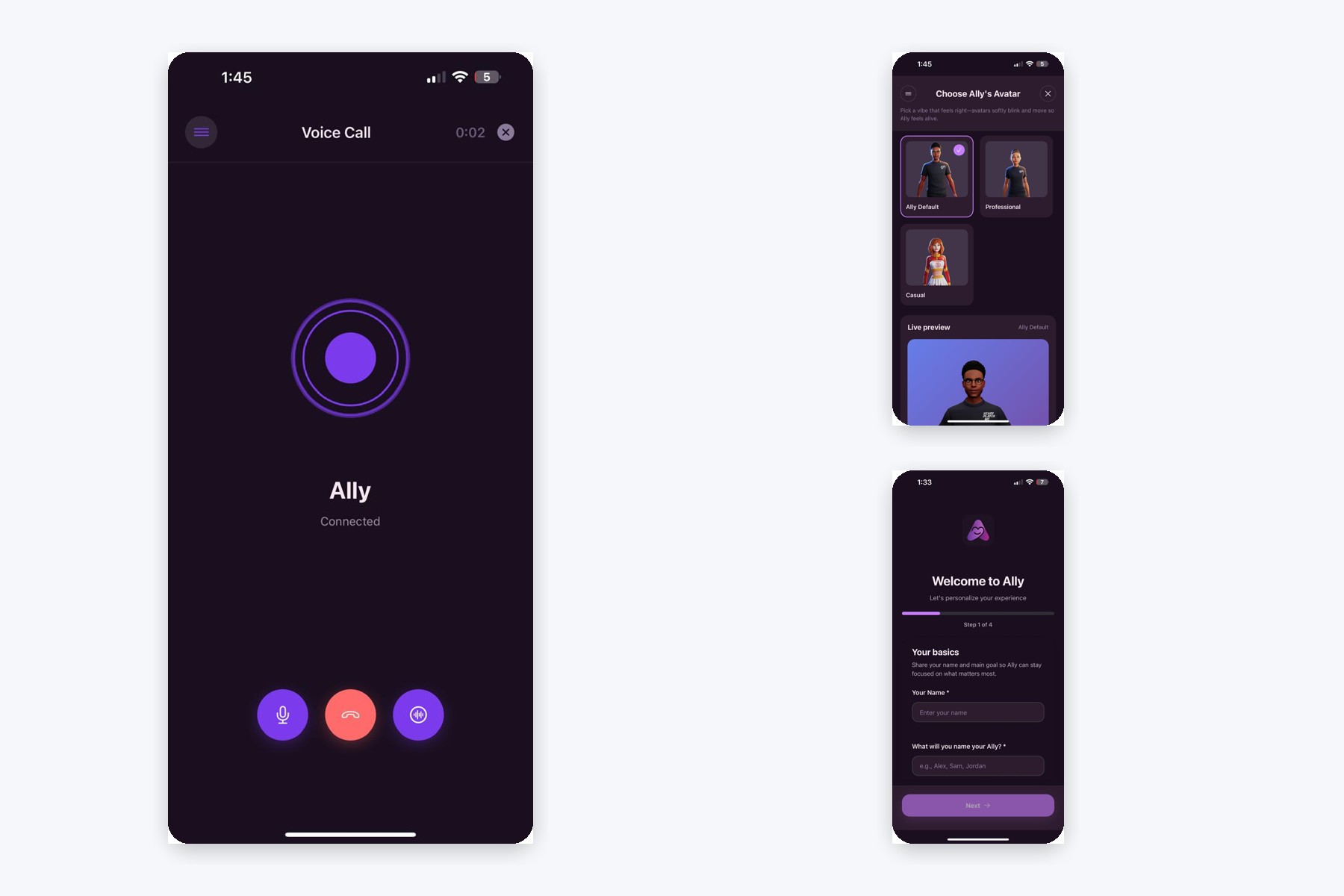
Our next steps are to improve Ally’s memory system, expand adaptive personality tuning, add voice-based interaction, and deepen emotional profiling so the companion can become even more personalized over time.
As we continue building, we want to take what we learned from our first 50 beta users and apply it to a stronger mobile experience that feels even more natural, consistent, and trustworthy.
Long term, we see Ally as more than an app. We see it as an emotional operating system that could eventually power future AI companions, including voice assistants and even humanoid robotics.
Built With
- css
- express.js
- html
- javascript
- node.js
- openai-api
- postgresql
- react
- supabase
- typescript
- vite

Log in or sign up for Devpost to join the conversation.