-
-
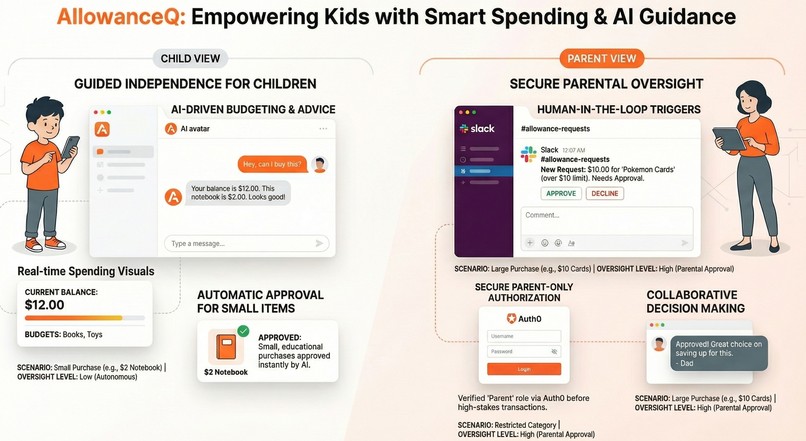
AllowanceQ: Empowering kids with financial independence through secure, AI-driven guidance and parent-in-the-loop oversight.
-
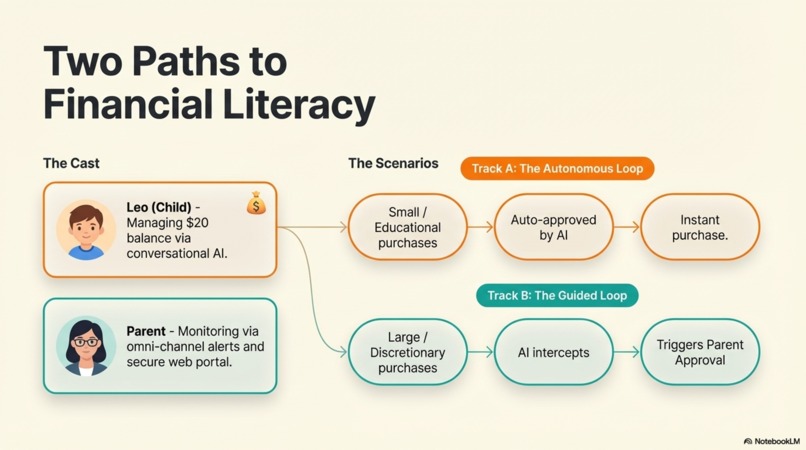
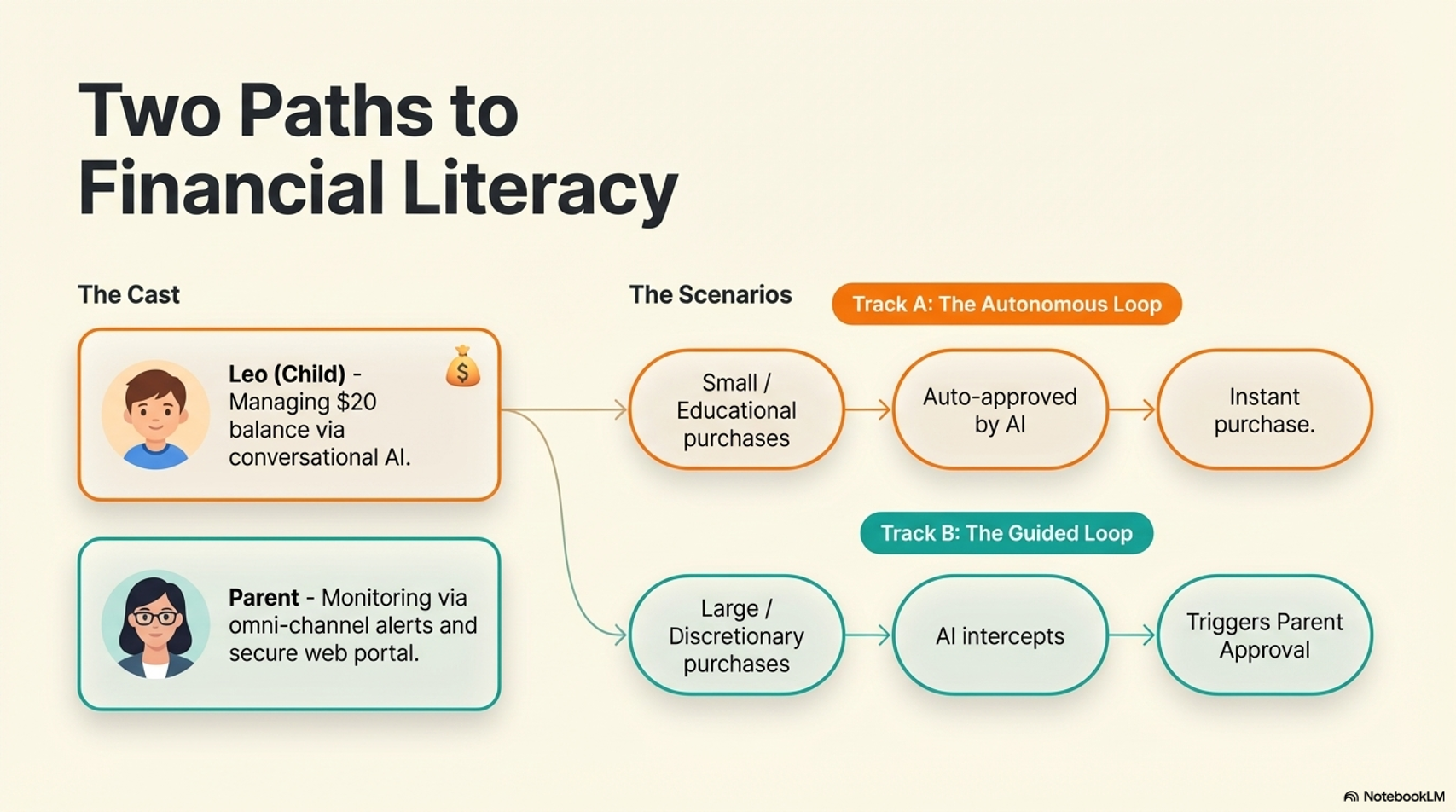
AllowanceQ_1_The Hybrid Approval Model
-
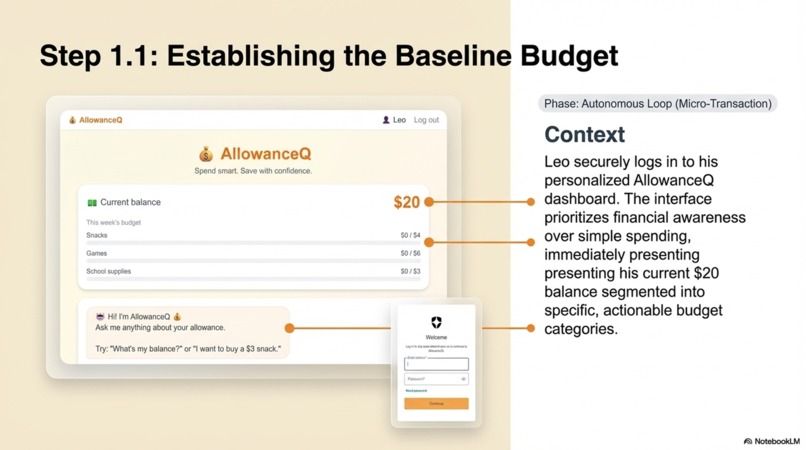
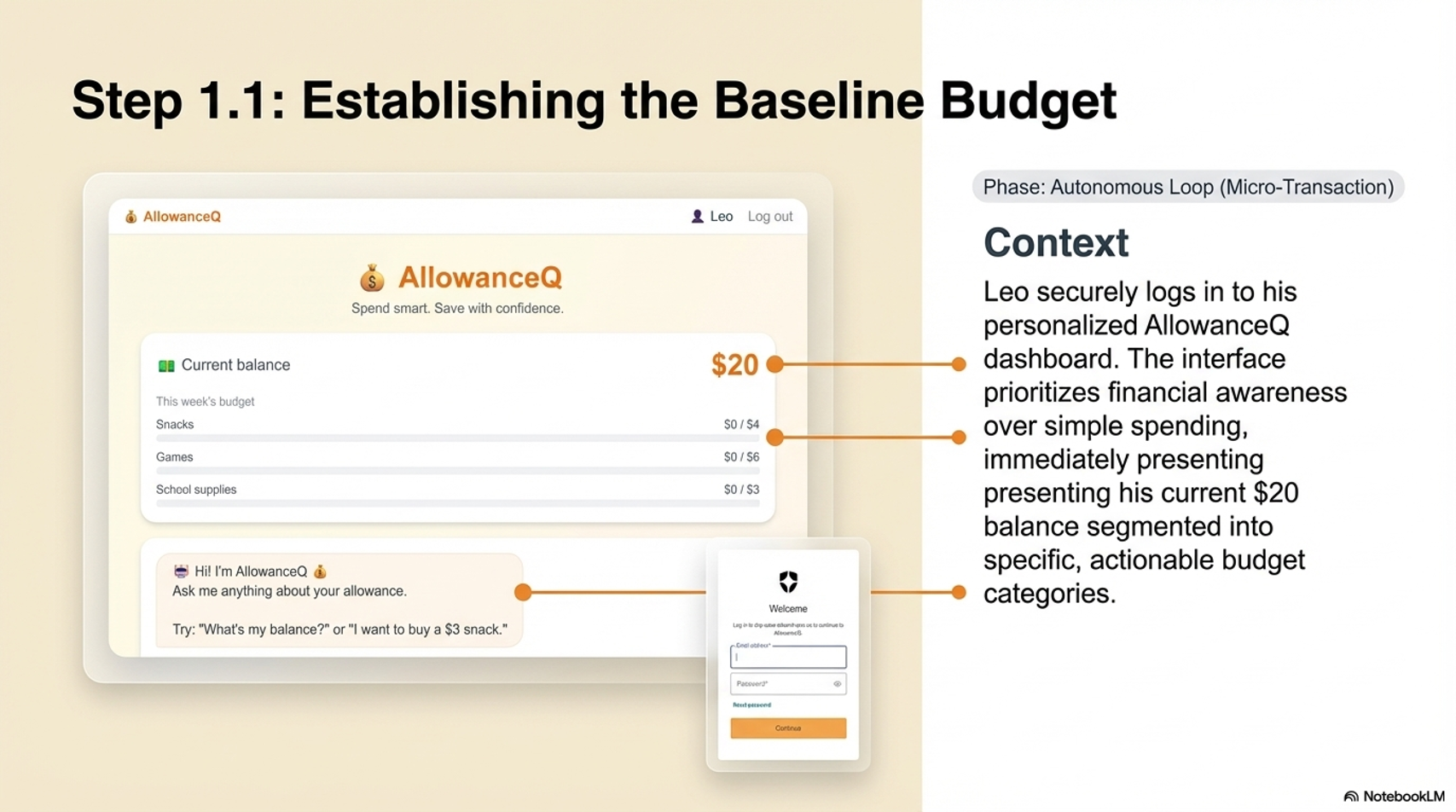
AllowanceQ_Step 1.1 Establishing the Baseline Budget
-
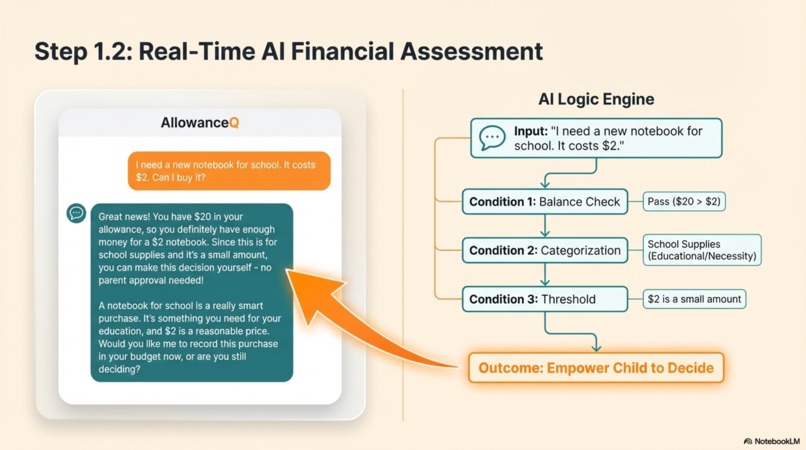
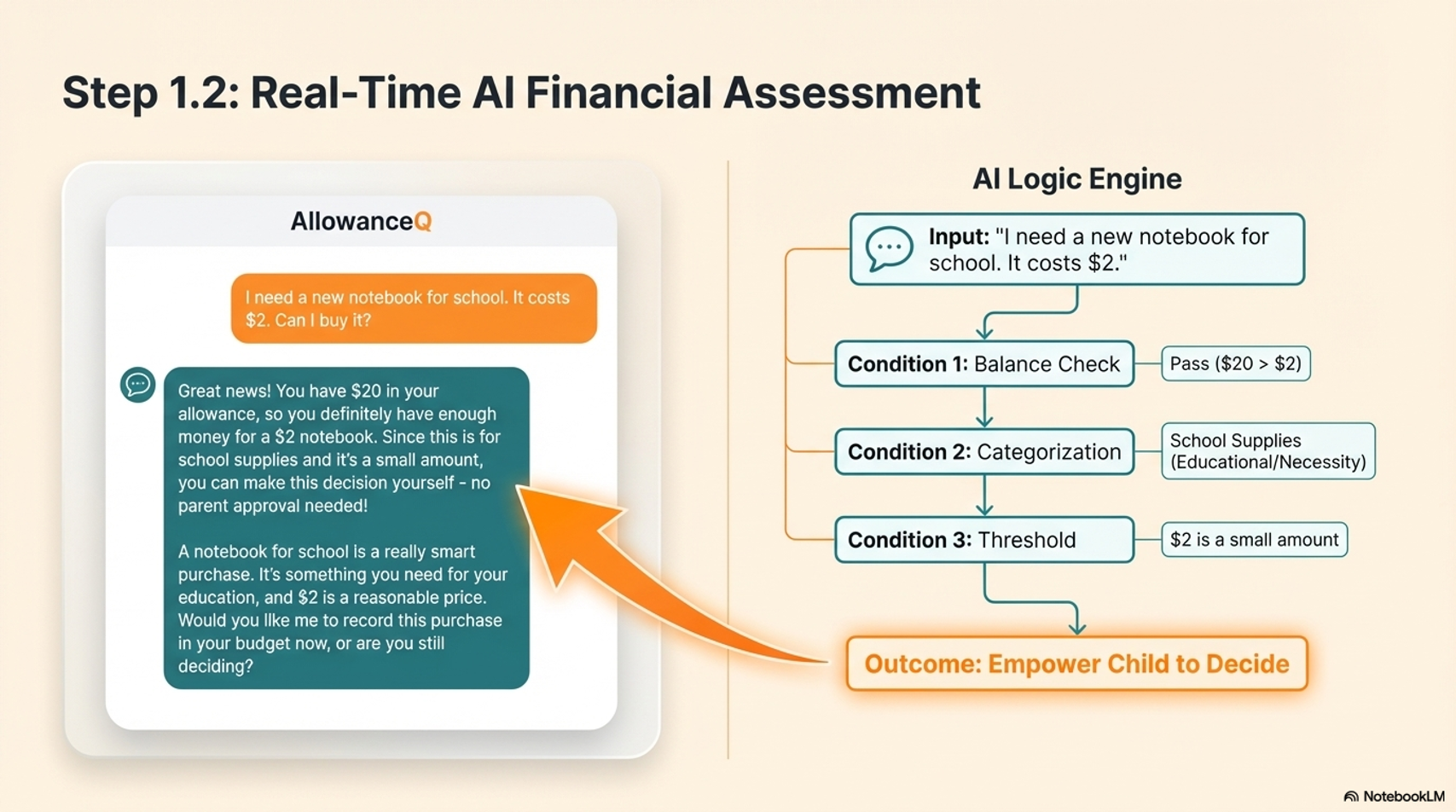
AllowanceQ_Step 1.2 Real-Time AI Financial Assessment
-
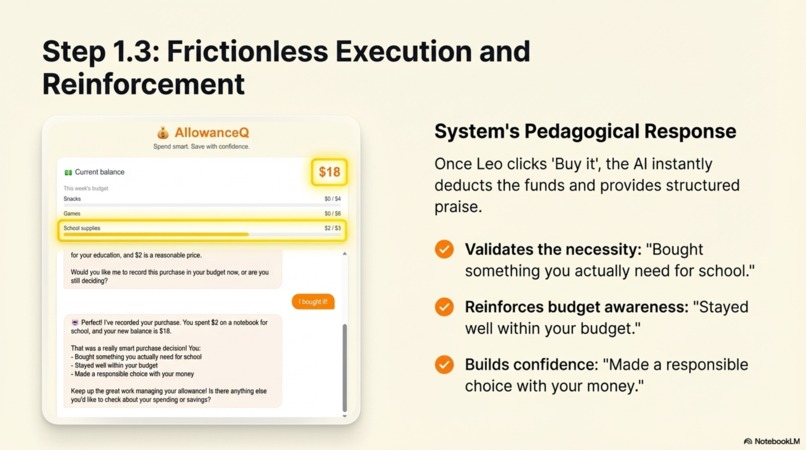
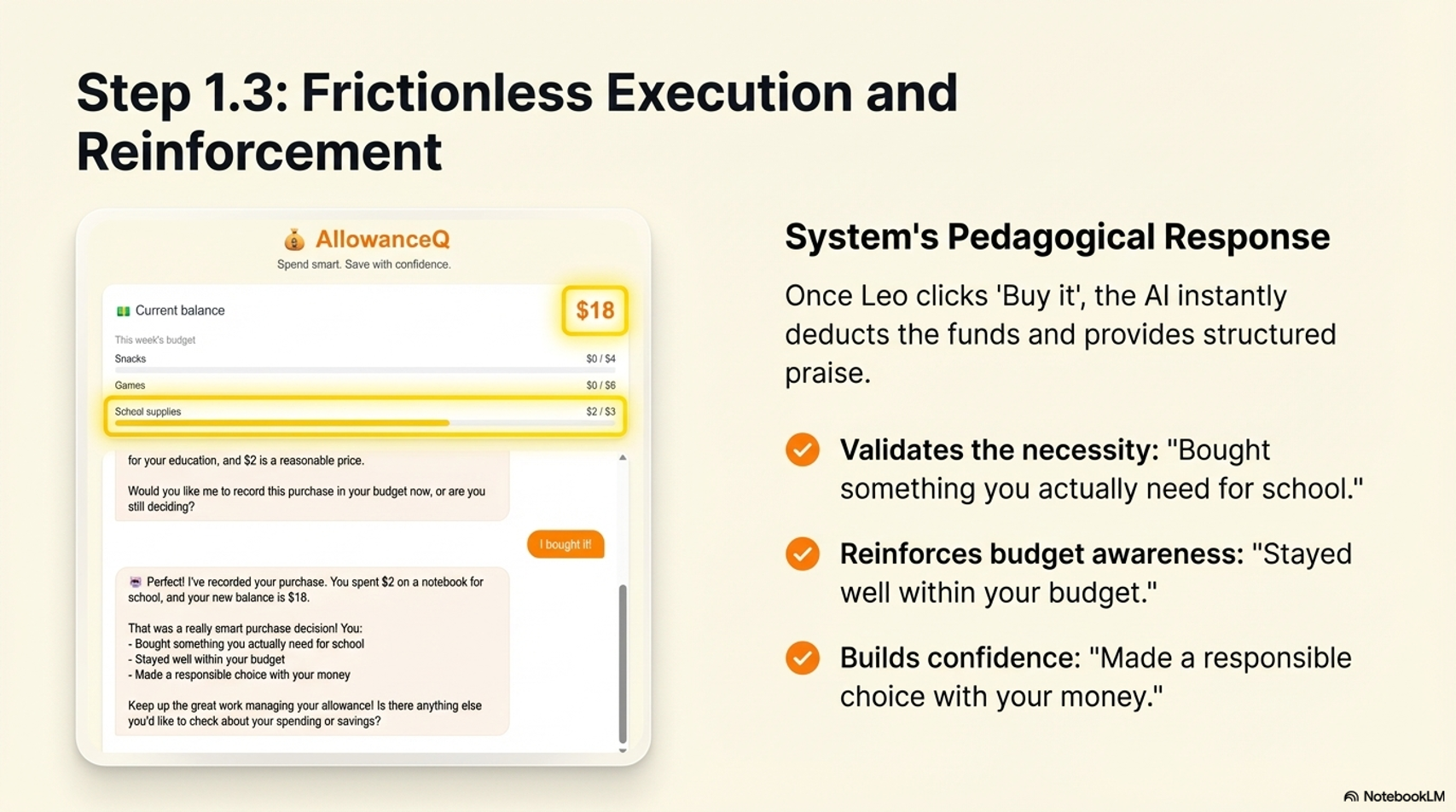
AllowanceQ_Step 1.3 Frictionless Execution and Reinforcement
-
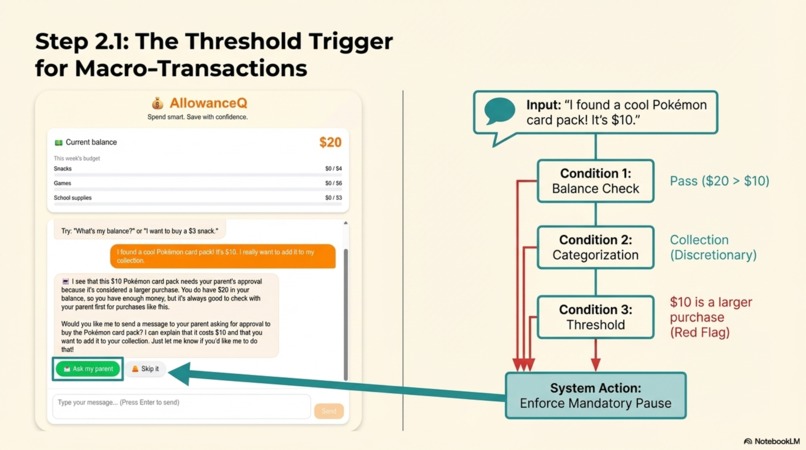
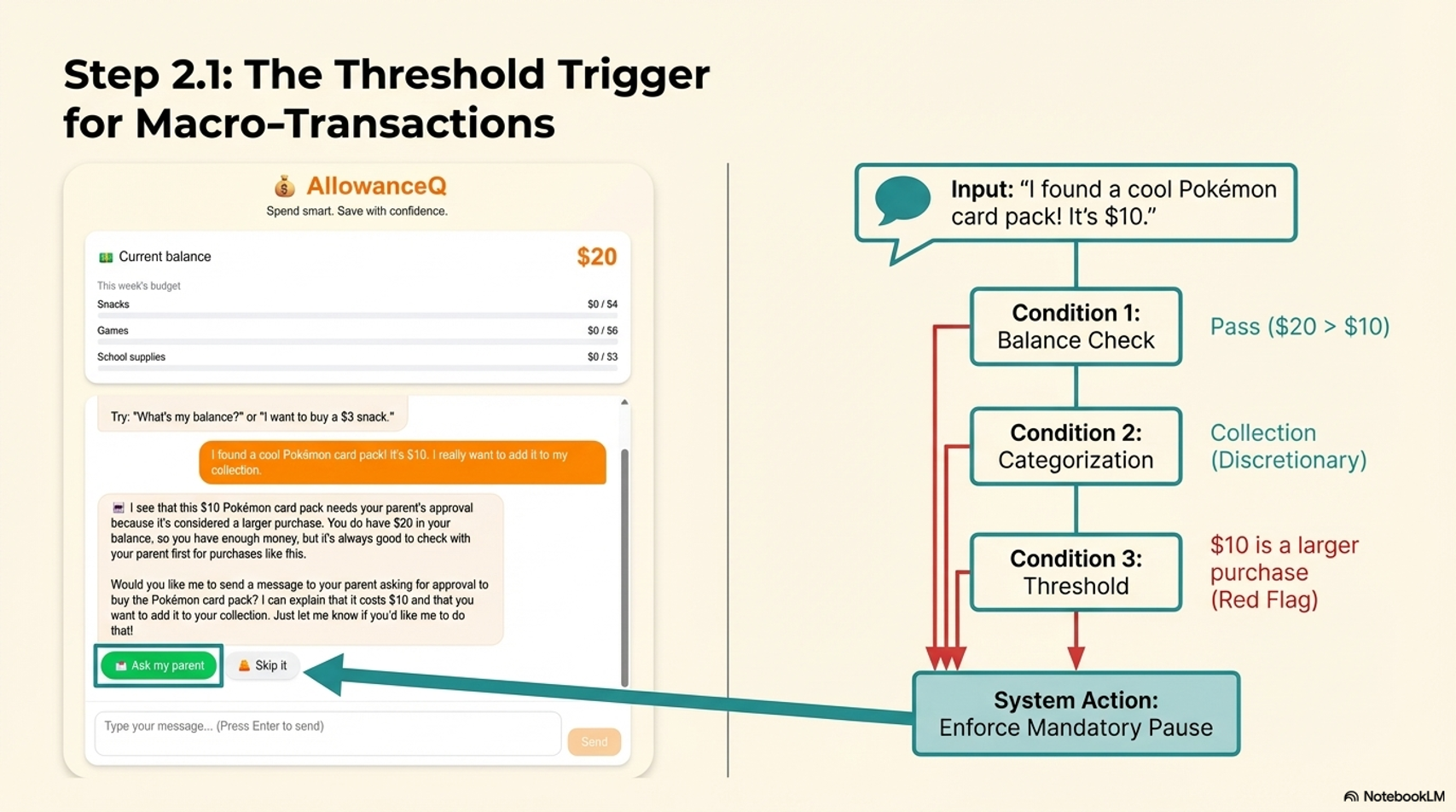
AllowanceQ_Step 2.1 The Threshold Trigger for Macro-Transactions
-
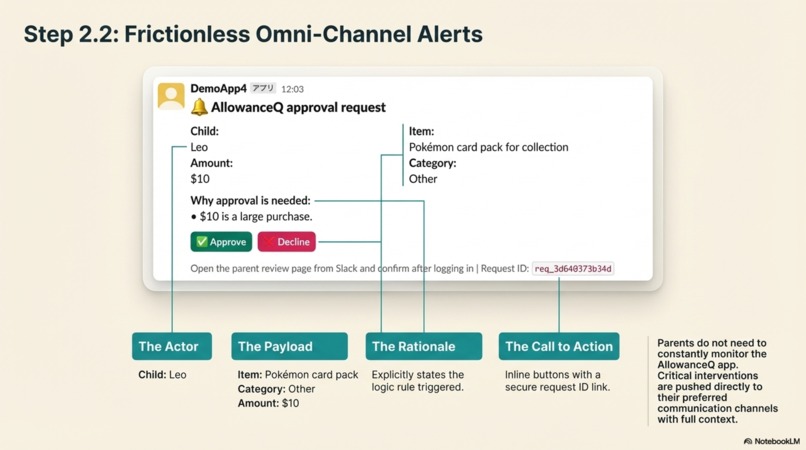
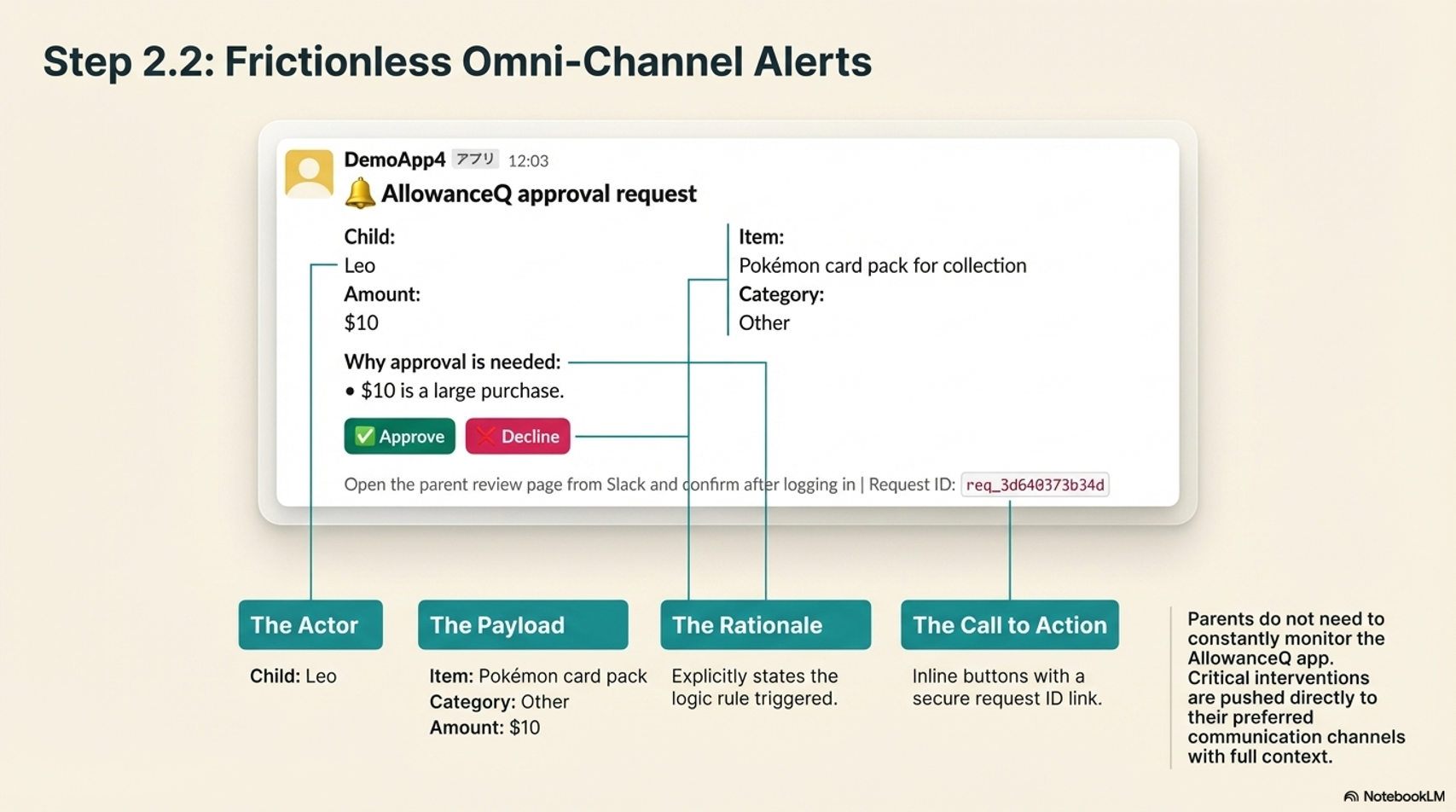
AllowanceQ_Step 2.2 Frictionless Omni-Channel Alerts
-
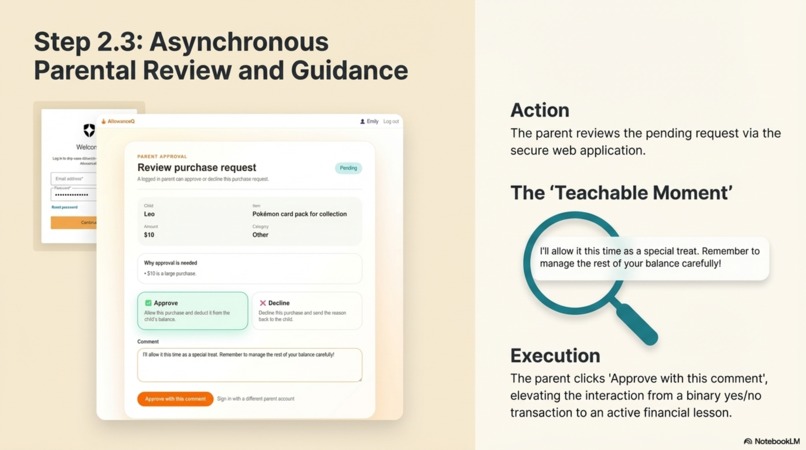
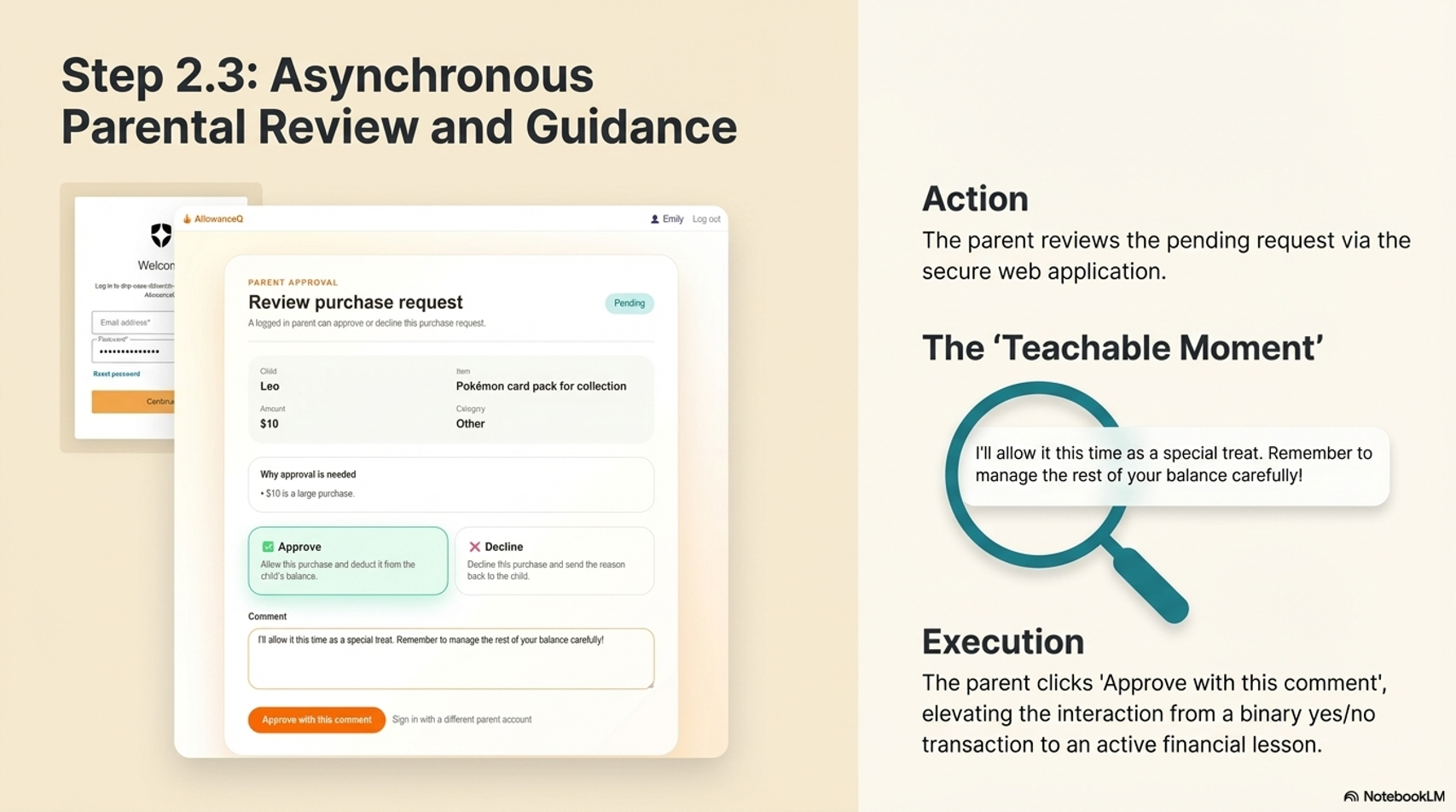
AllowanceQ_Step 2.3 Asynchronous Parental Review and Guidance
-
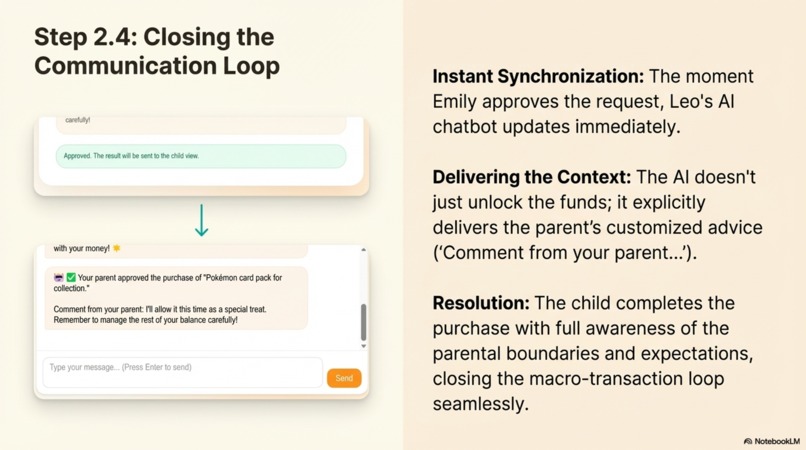
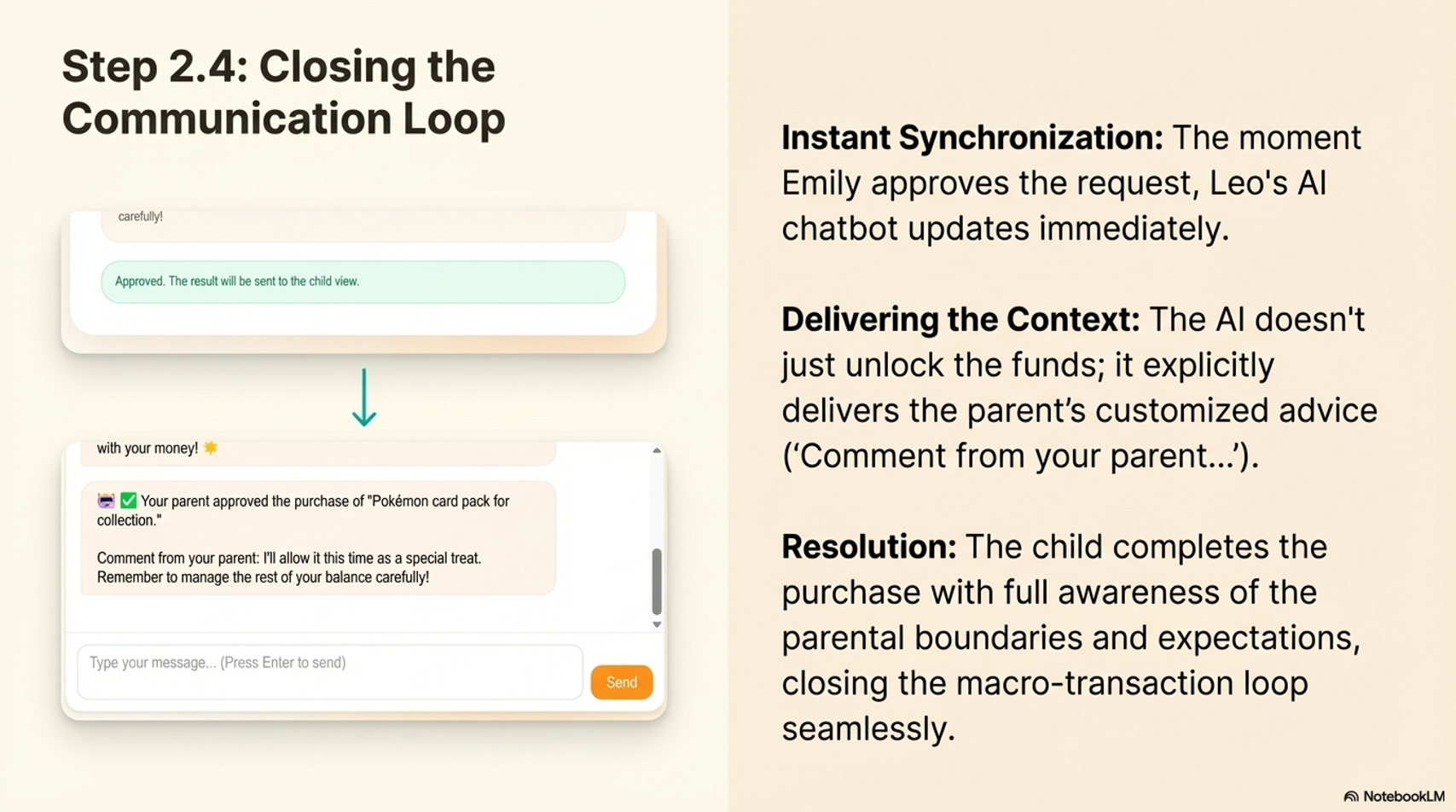
AllowanceQ_Step 2.4 Closing the Communication Loop
-
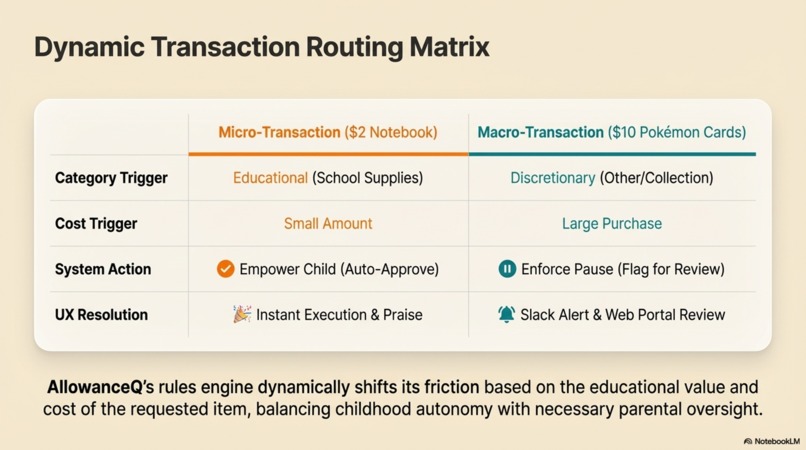
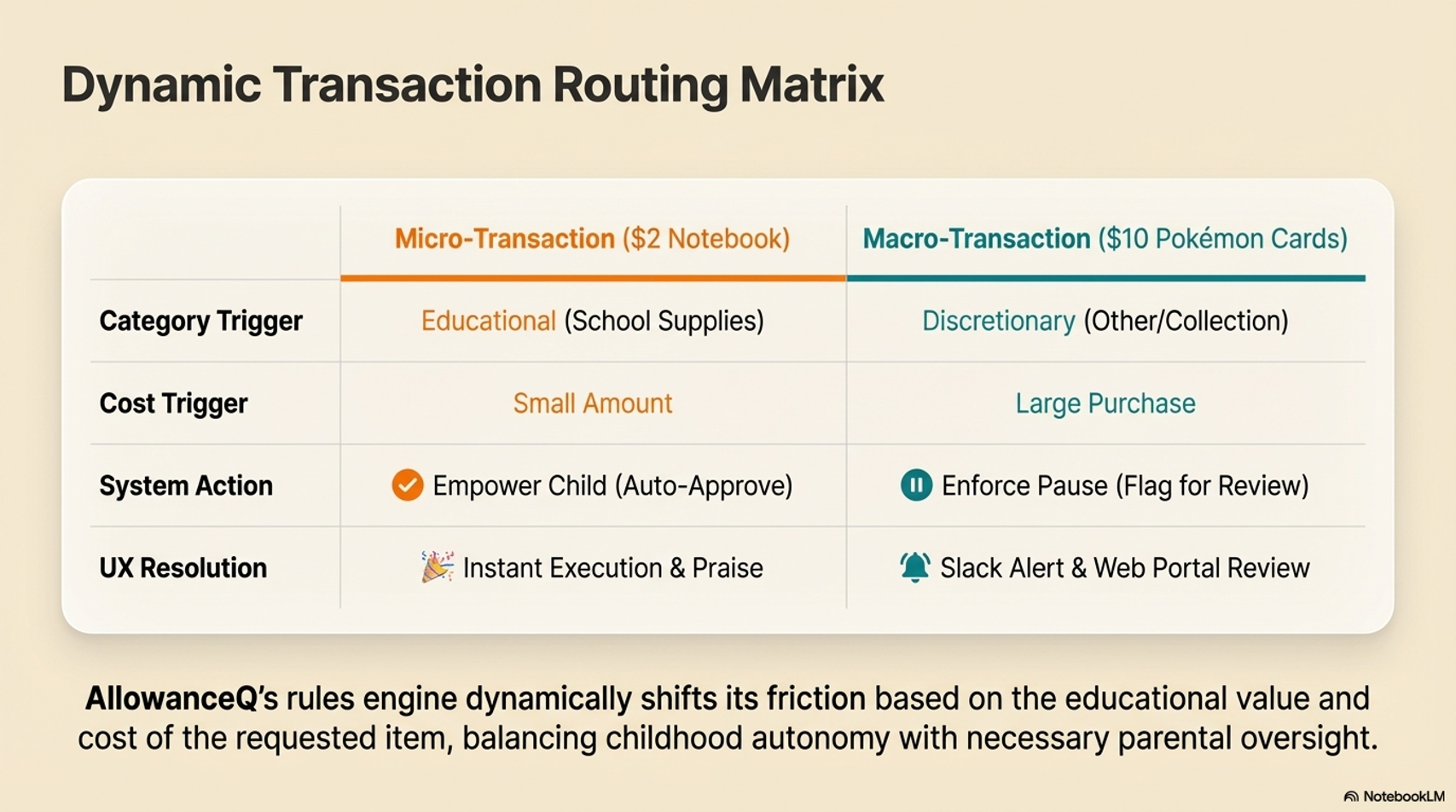
AllowanceQ_2_Dynamic Transaction Routing Matrix
-
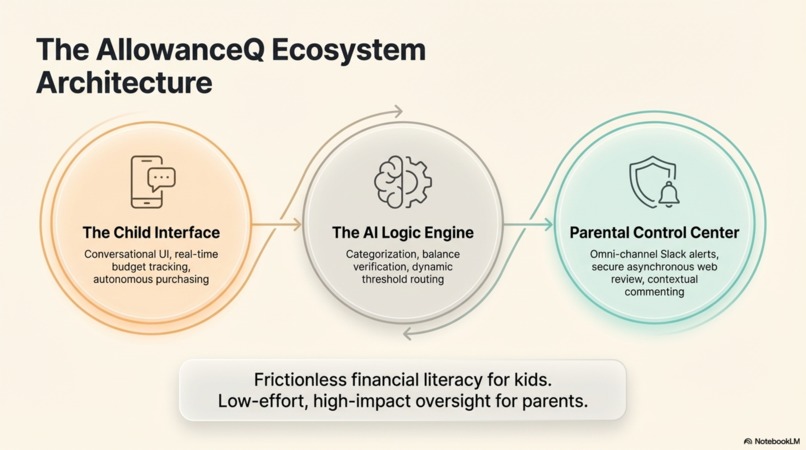
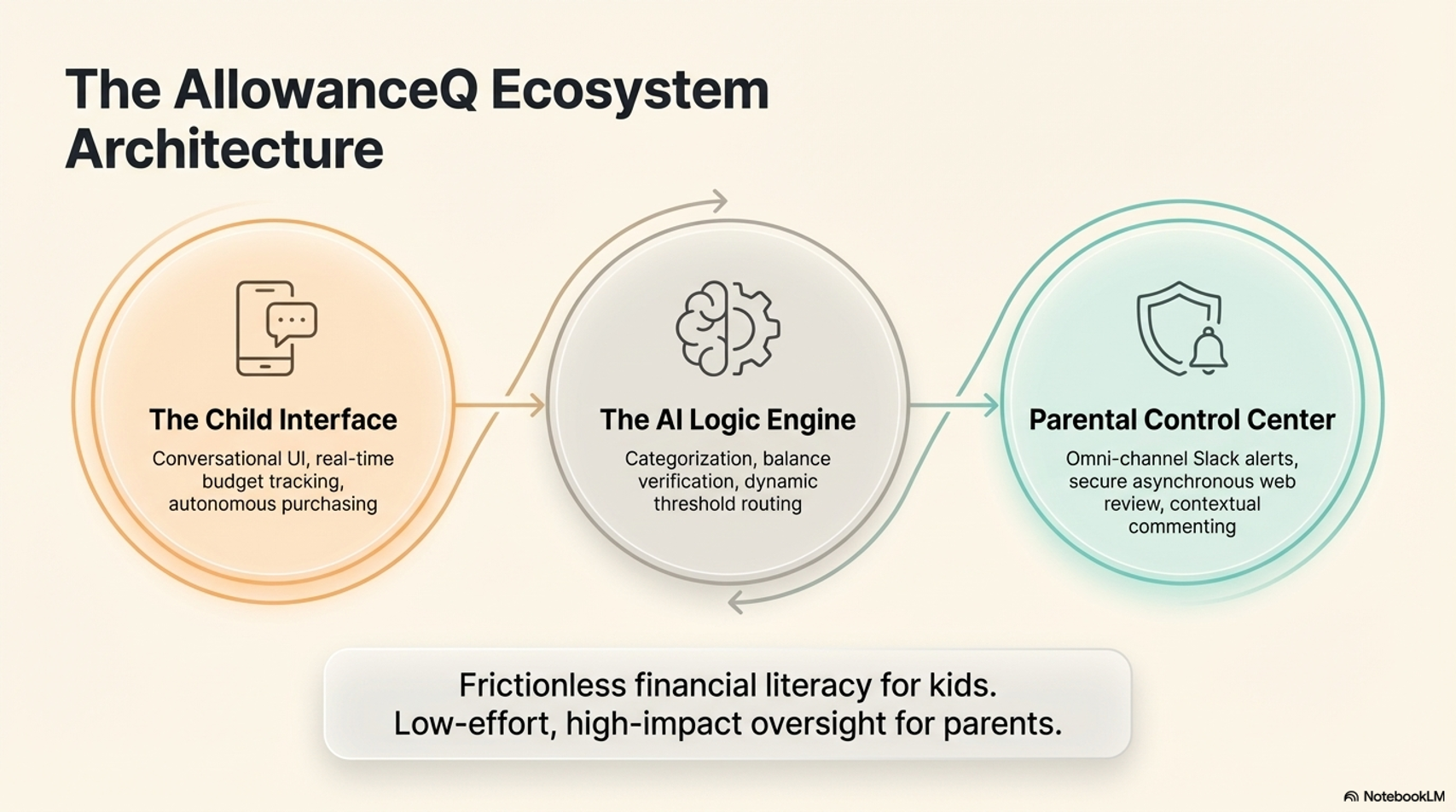
AllowanceQ_3_The AllowanceQ Ecosystem Architecture
Inspiration
The inspiration for AllowanceQ came from a common modern parenting dilemma: how to introduce children to the digital economy safely. While digital payments are convenient, they lack the "physical friction" of cash that helps children understand value. I wanted to build an AI agent that acts as a bridge—giving children the freedom to manage their money while ensuring parents remain the ultimate authority for high-stakes decisions.
What it does
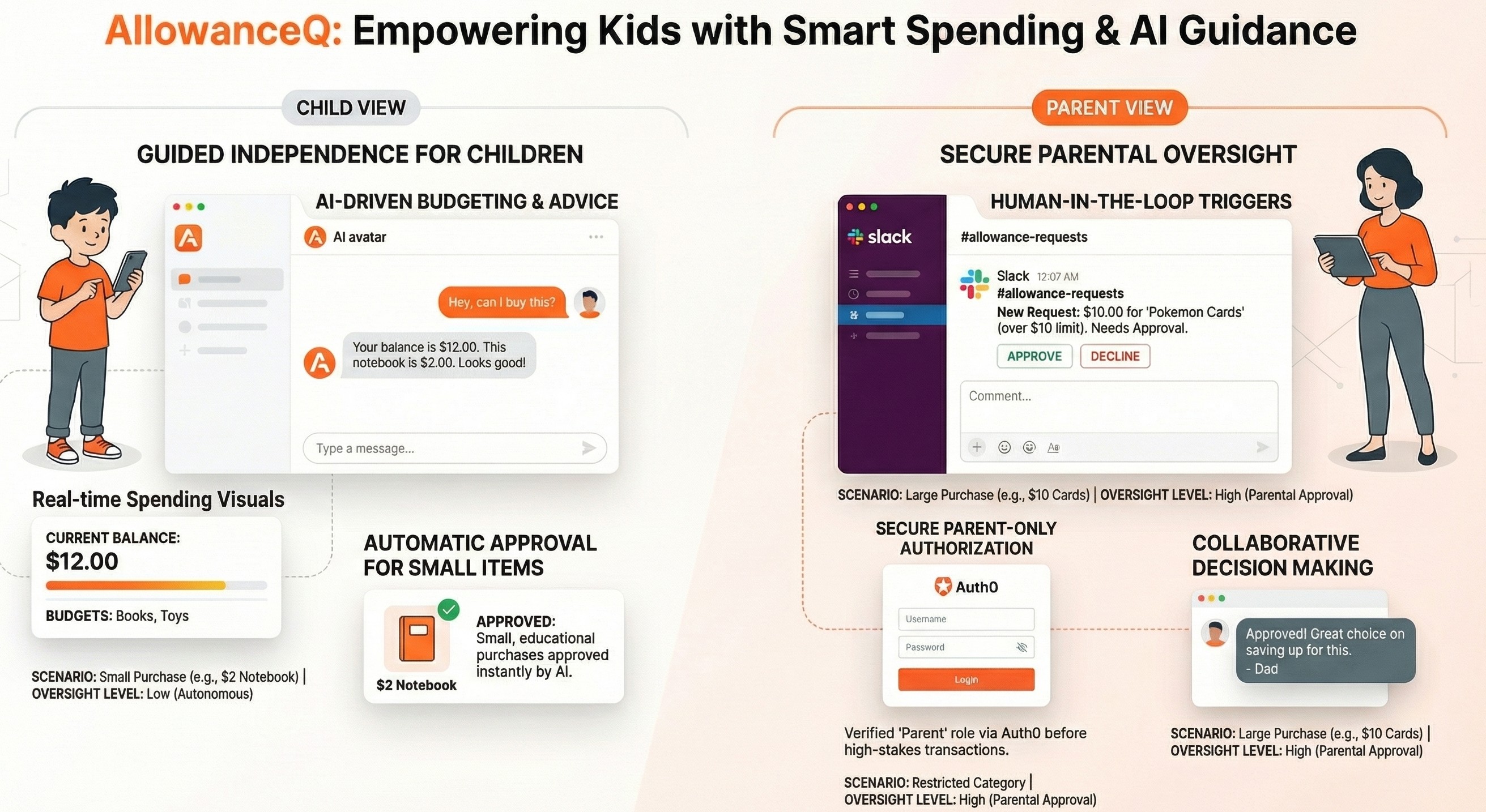
AllowanceQ is an AI-powered pocket money assistant. Children can chat with the agent to check their balance, track spending, and ask for purchase advice. When a child attempts a "high-risk" transaction—such as spending over $10 or buying from restricted categories like games—the system automatically triggers a human-in-the-loop workflow. The parent receives a request via Slack, where they can approve or deny the transaction with a comment.
How we built it
The project is built on a modern stack centered around security and real-time interaction:
- Authentication & Security: We used Auth0 Universal Login for secure user access.
- Token Management: Auth0 Token Vault was implemented to securely handle Slack API tokens.
- Frontend: Built with Next.js 16 and Tailwind CSS for a responsive chat interface.
- AI Agent: Powered by LangChain, integrating tools that interact with our backend and external notification services.
- Authorization: We leveraged Step-up Authentication patterns to ensure sensitive actions require parental consent.
Challenges we ran into
The primary challenge in developing AllowanceQ was architecting a dual-user system (Parent and Child) within a single agentic workflow. Introducing an AI agent as a mediator raised a complex design question: "How do we translate the human relationship of 'parental oversight' into a rigorous system model that verifies who is granting authorization to whom?"
To resolve this, we focused on modeling the authorization loop:
- Delegated Tool Access: Initially, it was confusing to determine how the agent should access the parent's communication channels (Slack). To simplify the use case, we implemented a flow where the parent configures the Slack Social Connection and Token Vault during setup. This ensures the agent calls the Slack API using a token securely stored and managed by Auth0, tied to the parental "Source of Truth".
- Verification of Parental Intent: Instead of relying solely on the LLM’s interpretation, we implemented a strict check to verify that the approving user possesses the specific "Parent" role within Auth0 before the agent can execute a transaction.
Accomplishments that we're proud of
- Secure Multi-User Authorization: We successfully built a model that handles the gap between a child's real-time request and a parent's delayed response using Asynchronous Authorization.
- Production-Ready Security: By leveraging Auth0 Token Vault, we ensured the AI agent interacts with third-party APIs without ever handling raw credentials directly in the application code.
- Human-in-the-Loop Integrity: We take pride in the robust Step-up Authentication triggers, which ensure high-stakes actions are identified and protected by real human intent.
What we learned
Through the development of AllowanceQ, we gained deep insights into securing agentic workflows using Auth0 for AI Agents:
- Mastering Connected Accounts: We learned how to implement Connected Accounts to link multiple identities—such as Slack—to a single, unified Auth0 user profile.
- Strategic Use of Token Vault: We discovered the critical role of Token Vault in removing sensitive credentials from our application code.
- Practical AI Authorization: We learned that the key to production-ready AI is not just the model's intelligence, but the robustness of its authorization model, ensuring every high-stakes action is backed by explicit user consent.
What's next for AllowanceQ
- Dynamic Limit Adjustments: Implementing a "Temporary Boost" feature where parents can instantaneously increase spending limits for specific occasions using Auth0's updateSession.
- Interactive Financial Reflection: Developing a "Weekly Review" dashboard where parents and children can review AI-generated spending insights together, fostering open communication about money management.
Bonus Blog Post
“Who Authorizes What?”: Defining Identity Boundaries in Family AI Design
Developing “AllowanceQ” highlighted the unique challenges of designing AI agents for a multi-user family environment. In a household, helping one another is second nature, and individual identity boundaries are often blurred. Translating this "informal trust" into a rigorous security system proved to be a significant hurdle.
During the design phase, I faced two core questions: “When a child triggers a tool, whose credentials should be used?” and “How much of a parent’s authority can be safely delegated to an agent?” Balancing family convenience with robust security was my primary focus.
To address this, I utilized the “Authorized to Act” concept within Auth0. Specifically, I implemented a flow where a parent explicitly grants the AI agent permission to send Slack notifications on their behalf. By leveraging the Auth0 AI SDK and Token Vault, I ensured the agent operates strictly within a secure "sandbox" authorized by the parent.
This journey taught me that the essence of AI agents is not just automation, but the secure, intentional delegation of identity based on trust. This small implementation is a practical first step toward a future where families can support each other through digital tools without compromising security.

Log in or sign up for Devpost to join the conversation.