-
-
landing page
-
-
-
Inspiration
What it does
about the project
inspiration
ai agents are moving beyond answering questions. they're beginning to take actions, interact with services, and make decisions on behalf of users. naturally, the next step is letting them make purchases and handle payments.
but that creates a serious problem: how much financial authority should an ai agent have?
giving an agent unrestricted access to a payment account is risky. it could exceed a budget, purchase something outside the user's intentions, or repeat a transaction when a request fails.
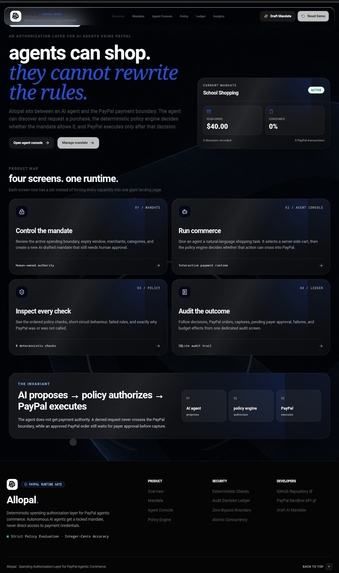
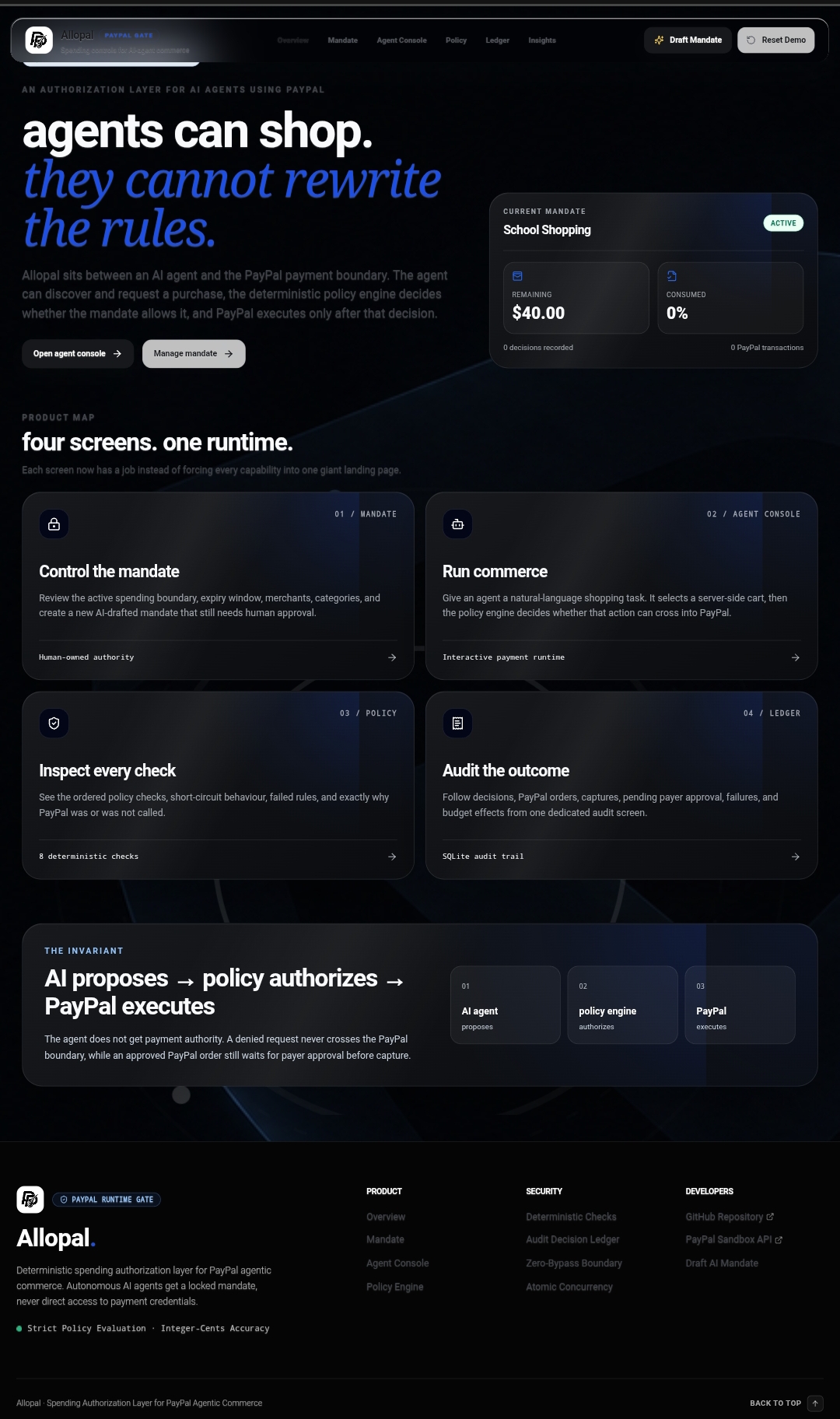
this question inspired me to build allopal, a payment authorization gateway that allows ai agents to request purchases while keeping spending decisions within boundaries defined by the user.
the goal is to make autonomous payments safer without taking away the convenience that makes AI agents useful.
how i built it
i built allopal as a web application using next.js, typescript, prisma, and sqlite, with paypal sandbox integration for the checkout flow.
the core of the application is a deterministic policy engine supported by user-defined spending mandates.
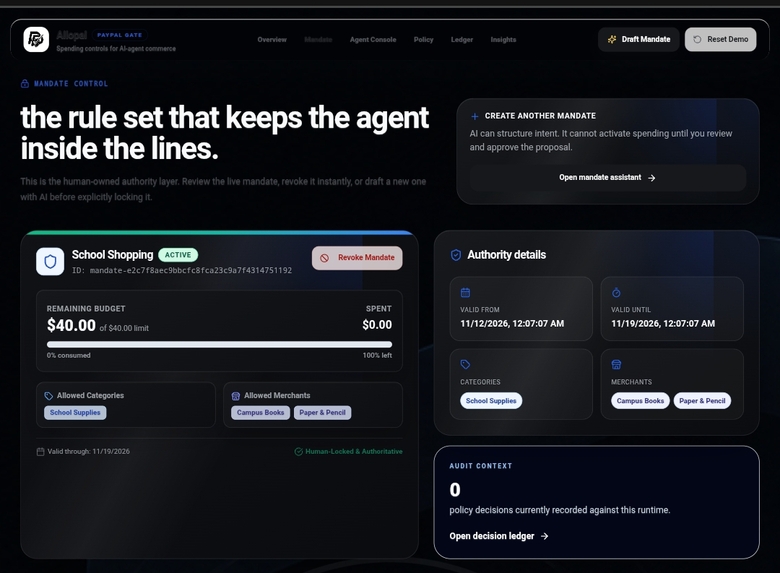
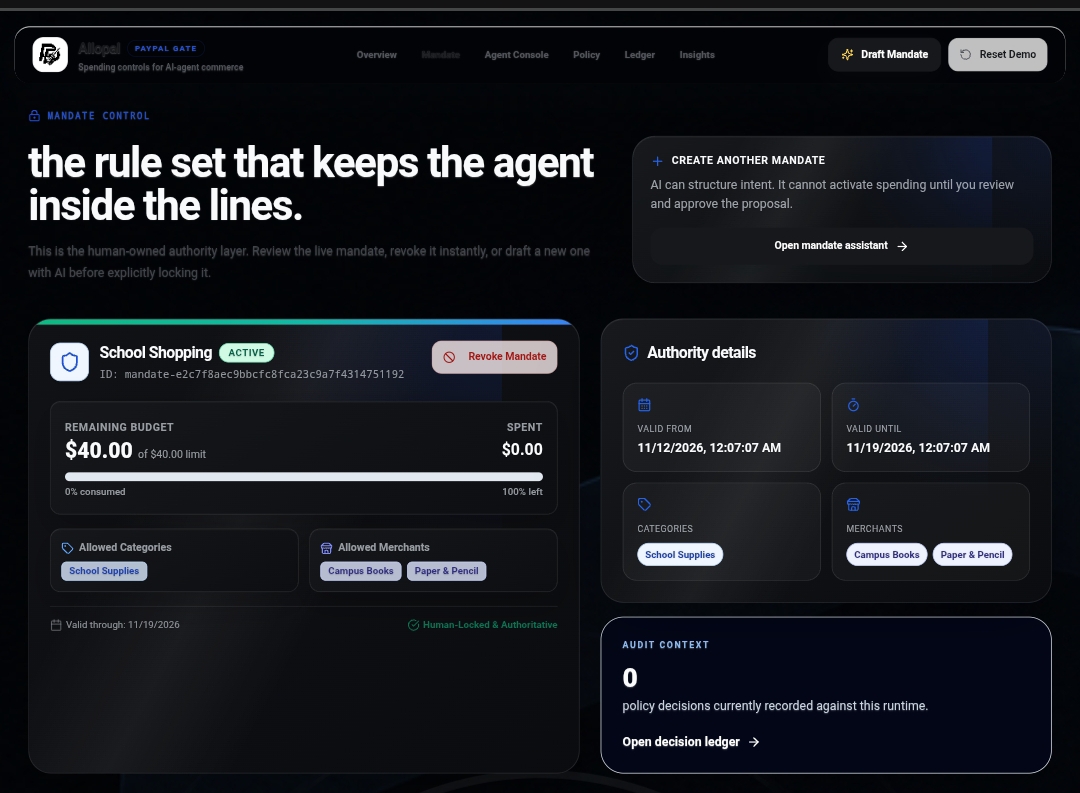
a mandate defines what an agent is allowed to do, including its spending limit, permitted purchase categories, approved merchants, and authorization period.
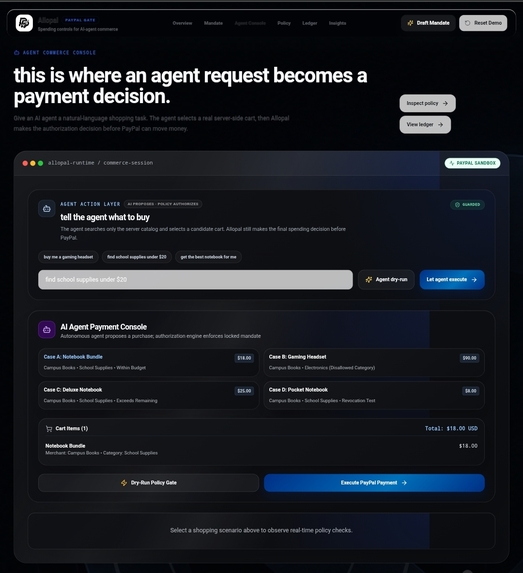
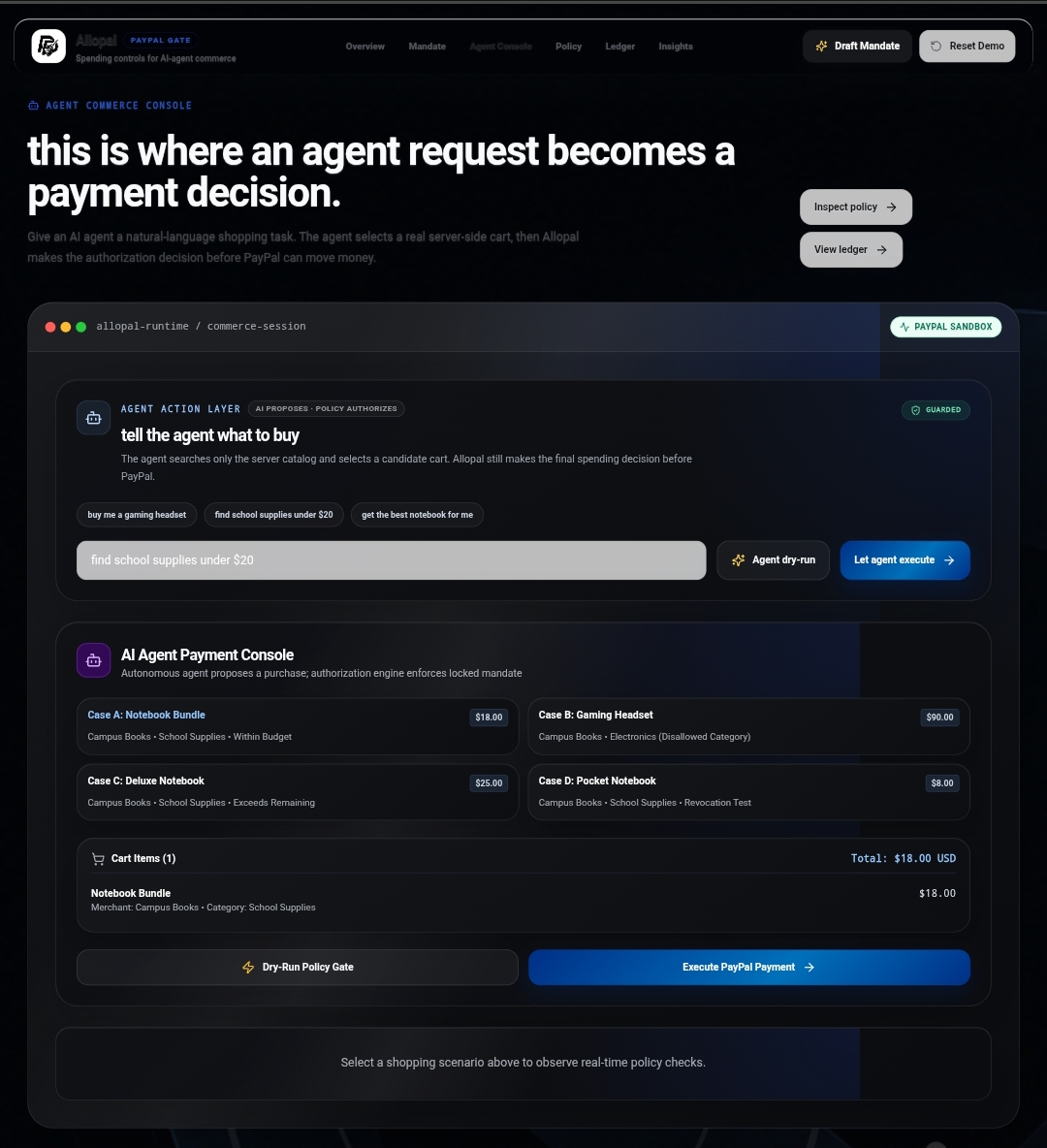
when an agent submits a purchase request, allopal evaluates it against the active mandate before allowing it to proceed. requests that violate the rules are blocked, while authorized requests can move into the paypal checkout flow.
i also implemented payment-state protections, including budget reservation before capture, idempotency safeguards, and handling for uncertain payment outcomes. these controls help reduce the risk of duplicate spending when payment operations fail or return unexpected responses.
finally, i added a decision ledger to make authorization activity traceable. users can inspect requests, policy decisions, rejection reasons, and payment references.
what i learned
building allopal taught me that agentic commerce requires more than connecting an AI model to a payment API.
the most important lesson was the need to separate an agent's ability to request an action from the system's authority to approve it.
i also learned more about payment lifecycles, transaction states, idempotency, budget reservation, failure recovery, and the importance of keeping financial decisions deterministic and auditable.
working through these challenges gave me a better understanding of how AI applications and traditional financial infrastructure need to work together.
challenges i faced
one of the biggest challenges was designing a system that could handle payment failures safely.
a payment request can time out even when the provider has already processed part of the operation. blindly retrying such a request could create duplicate transactions.
i had to think carefully about payment states, reservations, capture and cancellation coordination, and how the system should behave when the outcome is uncertain.
another challenge was making the authorization rules reliable. an AI agent can generate a purchase request, but the system must independently validate the amount, merchant, category, available budget, and mandate status before allowing it to proceed.
integrating the payment flow with these controls also required careful handling of sandbox checkout states and application-side records.
what's next
i want to take allopal further by strengthening its production database architecture, expanding agent identity and permission management, improving payment reconciliation, and testing more failure scenarios.
the longer-term vision is to make allopal a reusable authorization layer that developers can integrate into AI agents and commerce platforms.
allopal is built around one principle: agents should be able to act on behalf of users without gaining unrestricted control over their money.
How we built it
Challenges we ran into
Accomplishments that we're proud of
What we learned
What's next for ALLOPAL
Built With
- and
- built-with-next.js
- groq
- paypal
- prisma
- sqlite
- typescript
