Inspiration
AllergyIQ was born from a collective recognition of the complex challenges individuals face when navigating dietary restrictions that intersect health requirements and cultural practices. The team identified a critical need for a comprehensive solution that helps people manage their unique dietary needs without compromising health or cultural identity.
What it does
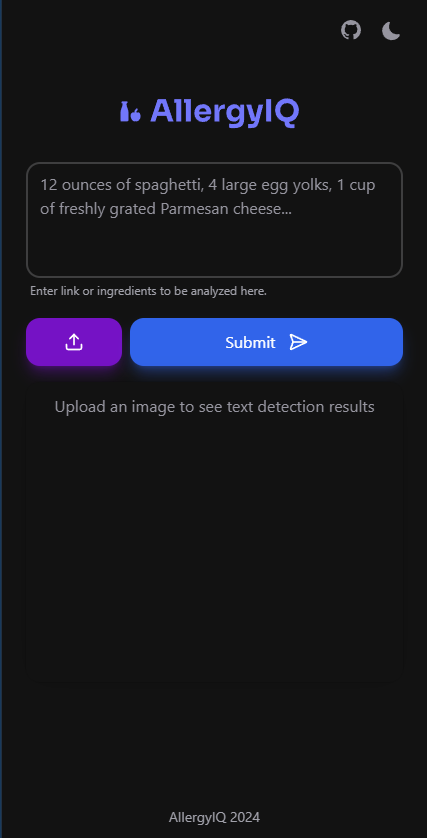
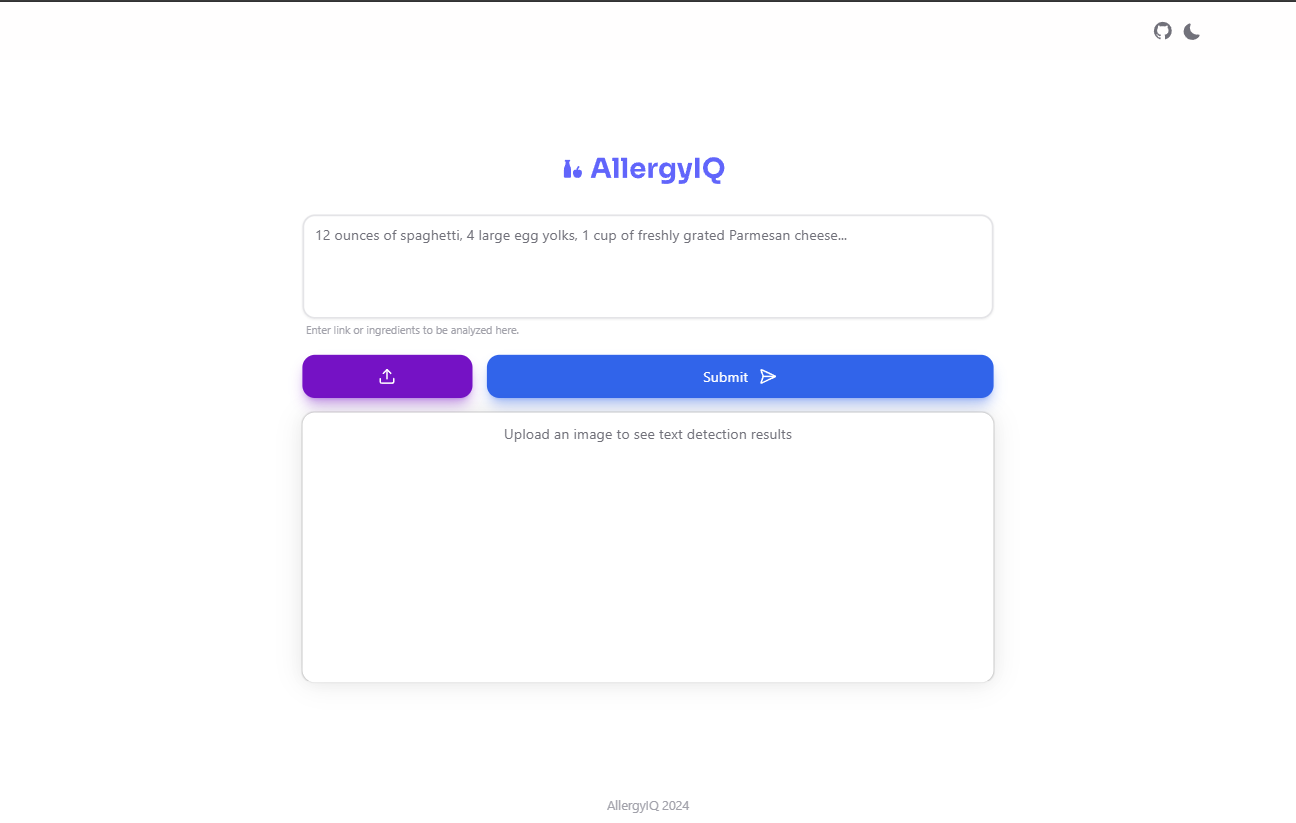
AllergyIQ is an AI-driven dietary detection companion that:
- Scans ingredients through text, URLs, or photos
- Instantly identifies potential allergens and dietary restrictions
- Provides comprehensive analysis across multiple dimensions:
- Medical Requirements
- Cultural Preferences
- Nutritional Balance
Users can check their meals against health conditions (like diabetes) and cultural guidelines (such as Halal) with a single scan, ensuring safer and more informed food choices.
How We Built It
The project was developed using a robust tech stack:
- Frontend: React, Vite, TypeScript
- Backend: MongoDB
- Cloud Infrastructure: Google Cloud
- AI Integration: Google's Gemini API
The team implemented a custom response formatter to standardize API outputs and ensure seamless integration with the MongoDB database. The development process involved overcoming complex technical challenges, particularly in AI and database integration.
Challenges We Encountered
The most significant challenge was MongoDB-Gemini API Integration. The development team faced:
- Inconsistent JSON structures from Gemini's ingredient analysis
- Missing required fields in allergen classification responses
- Nested arrays incompatible with the MongoDB schema
To address these issues, the team:
- Developed a custom response formatter
- Implemented robust error handling
- Created flexible data parsing mechanisms
- Ensured consistent data validation across API responses
Accomplishments
The team is proud of:
- Successfully integrating AI technology with complex dietary analysis
- Creating a solution that respects both health and cultural dietary needs
- Developing a robust, flexible system that handles diverse input methods
- Overcoming significant technical integration challenges
- Building a tool that can potentially improve users' health outcomes and dietary choices
Key Learning Outcomes
Through the project, the team gained insights into:
- Advanced API integration techniques
- Complex data parsing and validation
- Importance of flexible system architecture
- Balancing technical complexity with user-friendly design
- Collaborative problem-solving in distributed team environments
Future of AllergyIQ
The team plans to:
- Expand cultural and dietary restriction databases
- Improve AI accuracy and response parsing
- Develop more comprehensive nutritional analysis
- Create personalized dietary recommendation features
- Enhance user interface and experience
- Explore potential partnerships with nutritionists and health organizations
Built With
- google-gemini
- google-vision-api
- mongodb
- node.js
- react
- typescript

Log in or sign up for Devpost to join the conversation.