-
-
Logo
-
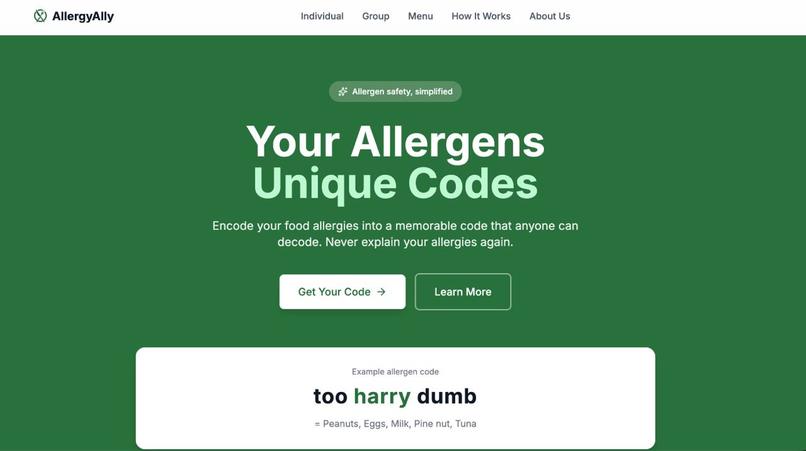
Updated frontend design
-
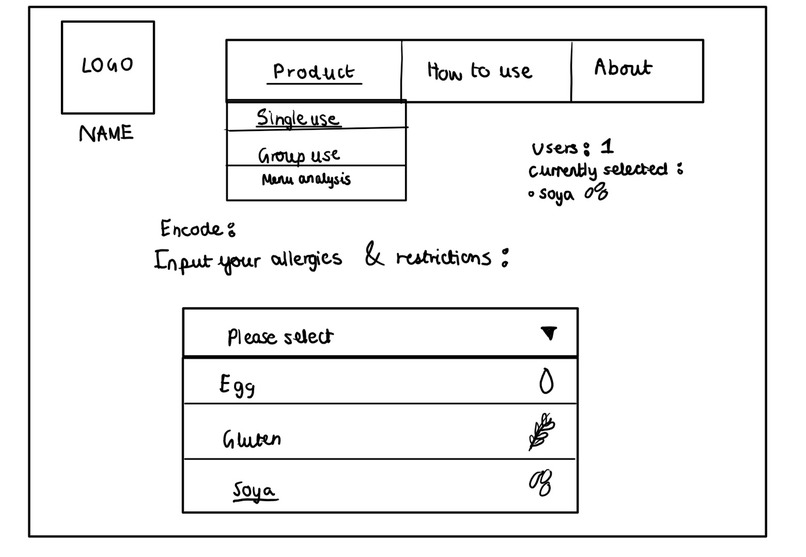
Original frontend design
-
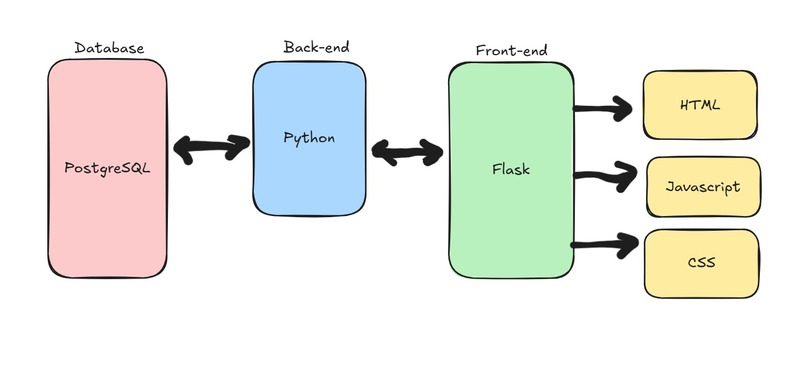
Figure 1 - Framework
-

Charity


Inspiration
Allergies affect millions of people worldwide, yet the systems we use to communicate allergy information remain fragmented and inconsistent. These numbers are not abstract, they represent friends, family members, and the ever-present fear of an accidental reaction at a meal out.
Our team includes members with close family ties to severe allergy experiences. We’ve seen loved ones read menus over and over, questioning if it’s safe to eat, only to find that allergen information is unclear or missing. We knew there had to be a better way, not just for us, but for everyone.
Don't just take our word for it, let's make the data do the talking.
In the UK alone:
0ver 25,000 hospital admissions in England (2022/23) for allergies and anaphylaxis (more than double 12,361 in 2002/03) costing the UK £55m. These are great for “pressure on the NHS” because they’re actual admission counts, not estimates.
~21 million people in the UK are estimated to be living with allergies (just under one third of the population).
44% of UK adultssuffer from at least one allergy (Allergy UK).
So we asked:
What if there was a universal, standard way to encode and share allergy information — one that could travel with the person, connect with restaurants instantly, and reduce needless risk and NHS burden?
That idea sparked AllergyAlly.
What it does
AllergyAlly standardises how allergy information is shared between people and restaurants.
Users can generate a unique allergy code, inspired by what3words, which represents their allergy profile and can be shared as a QR code. This removes the need to repeatedly explain complex allergies and ensures information is communicated clearly and consistently.
When scanned or decoded, the code shows which allergens apply in a structured, unambiguous way.
Alongside this, AllergyAlly includes a menu analysis tool. Users or restaurants can upload a menu image, and the system: extracts the text, identifies explicit allergen mentions, matches them against the user’s allergy code, and highlights which meals are safe or should be avoided.
By combining a portable allergy identity with menu analysis, AllergyAlly reduces guesswork, improves safety, and supports safer dining while helping reduce avoidable pressure on the NHS. (reffer to figure 1)
How we built it
We built AllergyAlly as a modular system that prioritises safety, transparency, and standardisation.
The core of the project uses optical character recognition (OCR) to extract text from menu images, allowing the system to work with real-world menus that are often photographs rather than structured PDFs. We used image preprocessing techniques such as resizing and thresholding to improve OCR accuracy on varied lighting and layouts.
Once text is extracted, we apply rule-based allergen detection that looks only for explicit mentions of allergens from the UK Top-14 list. This ensures that decisions are explainable and avoids making unsafe assumptions about ingredients.
In parallel, we designed a what3words-style allergy encoding system. Users input their allergies, which are converted into a compact, shareable code that can also be represented as a QR code. This code acts as a portable allergy identity that can be decoded consistently by restaurants or systems.
Finally, we combined these components so that a menu can be analysed against a user’s allergy code, producing a clear and deterministic outcome that highlights which meals should be avoided.
Challenges we ran into
One of the biggest challenges was menu variability. Menus come in many formats, fonts, and layouts, and OCR accuracy can vary significantly depending on image quality. We addressed this by improving preprocessing and designing the system to be resilient to imperfect text extraction.
Another challenge was avoiding over-inference. Many tools attempt to guess allergens based on dish names, but this can be dangerous in a health context. We deliberately limited our system to explicit allergen mentions, prioritising safety and trust over aggressive prediction.
We also faced the challenge of standardising allergy communication. There is currently no universal way for people to share allergy information with restaurants. Designing a system inspired by what3words required balancing simplicity, clarity, and extensibility while remaining easy to understand for non-technical users.
Finally, working within a hackathon timeframe meant making careful trade-offs between ambition and reliability, focusing on building a solid, working core that could realistically scale with further development.
Accomplishments that we're proud of
From the very beginning, our goal was to be the voice for people with allergies and create a product capable of simplifying their lives. One of our proudest accomplishments was the development of AllergyAlly's user-friendly platform.
While most of our team had no prior experience with front-end development, we decided to tackle the challenge head-on to maximize our efficiency. The journey was filled with struggles, particularly in task distribution and coordination, but we pushed through. We used HTML, JavaScript, CSS, Python, and PostgreSQL to bring our ambitious vision to life, despite the steep learning curve. Initially, just two of us started on the work, but as the project progressed, the entire team rallied together, contributing their skills to create the final product.
Our main focus was to design an intuitive, easy-to-use interface that people of all ages could navigate with ease, and we’re extremely proud of the result that reflects the hard work and collaboration of the whole team.
What we learned
Building AllergyAlly highlighted how complex and high-stakes allergy communication really is. We learned that in health-related systems, clarity and safety matter more than cleverness. Making conservative, explainable decisions builds far more trust than trying to infer or guess missing information.
We also learned that data quality drives outcomes. Small improvements in image preprocessing often had a bigger impact on accuracy than adding more sophisticated models. This reinforced the importance of focusing on the fundamentals before introducing additional complexity.
From a product perspective, we learned that standardisation is as much a human problem as a technical one. Creating something inspired by what3words showed us the value of simple, shared representations that non-technical users can adopt quickly.
Finally, working on a problem that directly affects people we know reinforced the importance of empathy-driven design. Building with real users in mind shaped our decisions and kept the project grounded in real-world impact.
What's next for AllergyAlly
As we explored real-world deployment, we realised that language translation is a major barrier to safe allergy communication. Existing solutions often require restaurants to pay separately for each language, making them expensive, fragmented, and inaccessible. AllergyAlly aims to remove this barrier by creating a language-independent allergy code, allowing allergy information to be shared universally without repeated translation costs.
Our next steps focus on making AllergyAlly a truly global standard. We plan to expand partnerships with charities such as Allergy UK and international advocacy groups to validate the system, raise awareness, and encourage responsible adoption across the food industry.
We also want to work directly with restaurants to drive uptake and trust. A key future feature is the introduction of an AllergyAlly certification, which restaurants can display to show that they support standardised allergy communication and safer dining practices. This would provide reassurance to customers while incentivising better allergen awareness and training.
Longer-term, we envision AllergyAlly supporting cross-border dining, improving accessibility for travellers, and reducing avoidable allergic reactions at scale by standardising how allergy information is communicated worldwide.
Built With
- css
- flask
- github
- html
- javascript
- postgresql
- pytesseract
- python


Log in or sign up for Devpost to join the conversation.