-
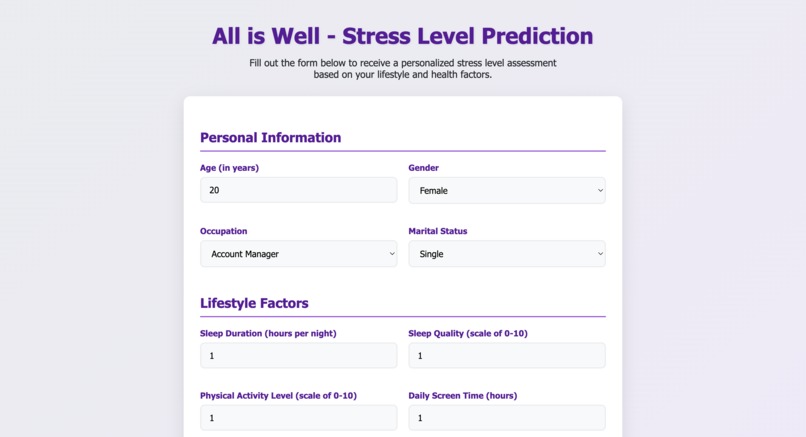
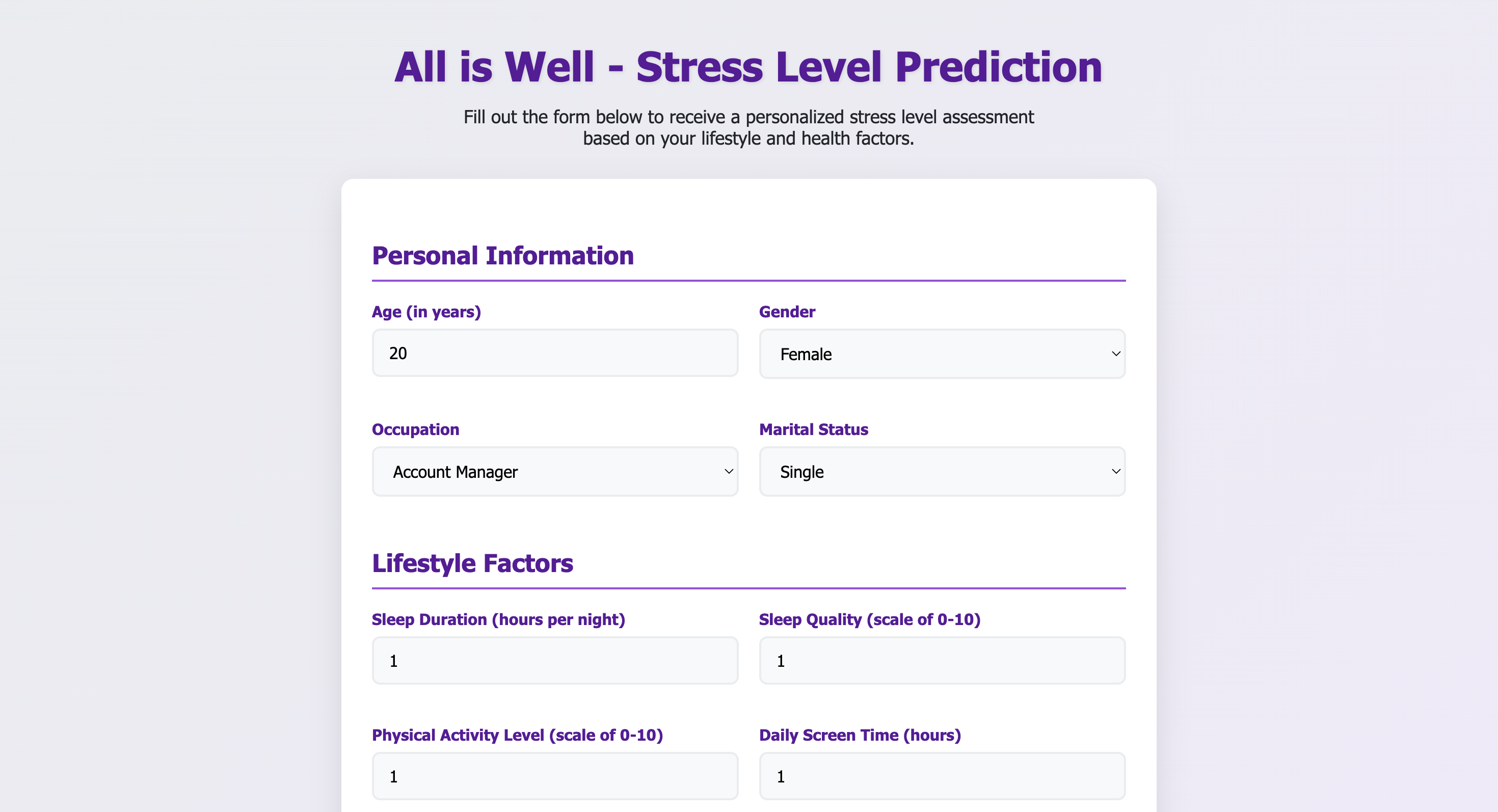
Home Page
-
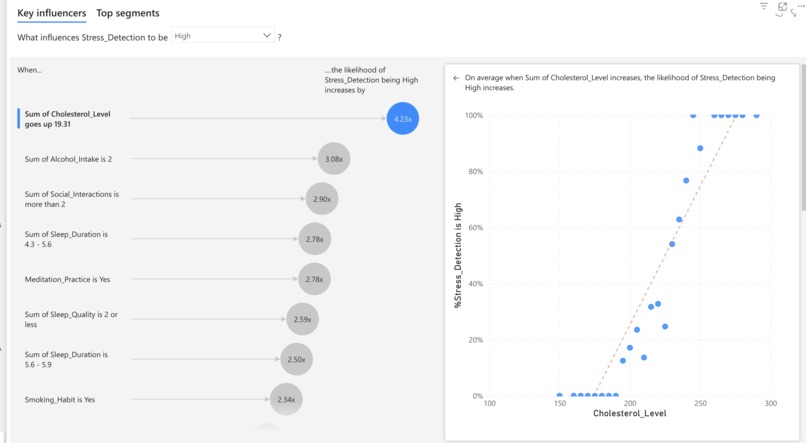
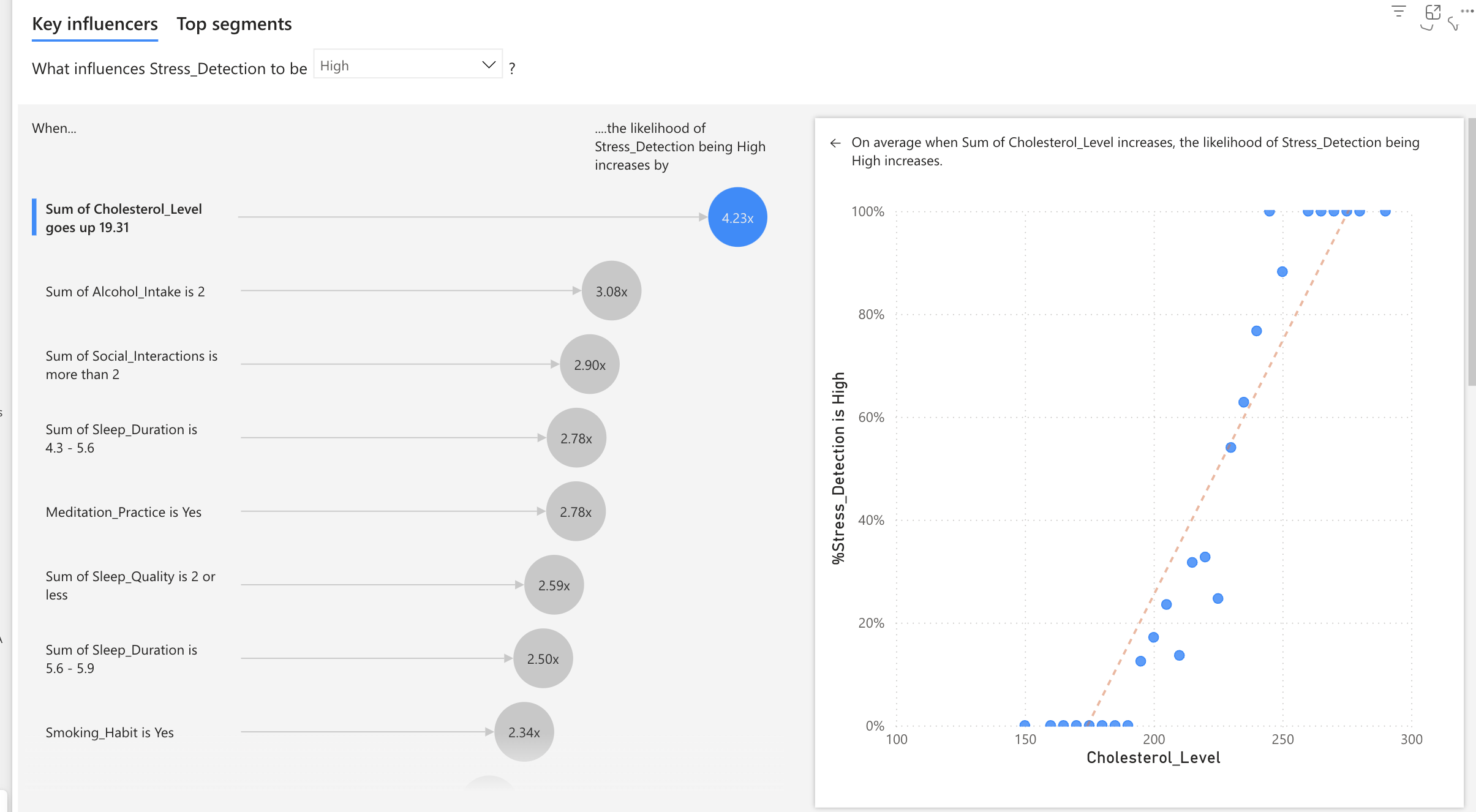
Power BI Analysis
Inspiration
Stress is a major factor affecting mental and physical health, yet its impact varies significantly across individuals. Some people with similar health conditions exhibit different responses to treatment due to underlying factors such as age, socioeconomic status, environmental influences, and lifestyle behaviors. Understanding these variations is essential for improving public health strategies and creating personalized healthcare solutions. This project aims to leverage machine learning to predict stress levels based on demographic and health data, helping individuals and healthcare professionals gain better insights into stress-related risks.
What It Does
Our project uses machine learning to predict stress levels based on a dataset containing various demographic and health-related features. Users can input their data, and the model will predict their stress levels, providing insights into key influencing factors. Additionally, we conducted a Power BI analysis to identify special trends and correlations within the dataset. The project is deployed as a web application using Django, making it accessible to users seeking to understand their stress levels better.
How We Built It
- Dataset: We used the stress-level dataset from Kaggle (link), which includes features such as age, employment status, income, lifestyle habits, sleep patterns, and medical history.
- Data Preprocessing: We cleaned and preprocessed the dataset using Pandas and NumPy, handling missing values, normalizing numerical features, and encoding categorical variables.
- Machine Learning Model: We implemented a classification model using Scikit-learn, testing different algorithms such as decision trees, random forests, and support vector machines. Initially, the model performed poorly with an accuracy of 60%, but through multiple iterations and hyperparameter tuning, we improved it to 78%.
- Web Application: The model was integrated into a Django-based web application, allowing users to input their data and receive predictions on their stress levels.
- Power BI Analysis: We used Power BI to analyze the dataset, visualizing trends and identifying key factors contributing to high-stress levels.
Challenges We Ran Into
- Model Performance: The initial model accuracy was low at 60%. We experimented with different algorithms, feature engineering techniques, and hyperparameter tuning, eventually improving it to 78%.
- Feature Selection: Identifying the most relevant features for stress prediction involved multiple iterations and testing different combinations of variables.
- Deployment: Integrating the machine learning model into a Django web application required careful optimization to ensure fast and accurate predictions.
Accomplishments That We're Proud Of
- Successfully building a machine learning model that predicts stress levels with improved accuracy.
- Developing an interactive web application that allows users to assess their stress levels easily.
- Conducting a Power BI analysis to extract meaningful insights from the dataset.
- Overcoming technical challenges related to model performance and optimization.
What We Learned
- The importance of thorough data preprocessing and feature selection in improving model accuracy.
- The effectiveness of different classification algorithms in predicting stress levels.
- How to integrate machine learning models into a web-based application using Django.
- The power of data visualization in identifying trends and patterns using Power BI.
What's Next for All is Well! - Don’t Be Stressed!
- Enhancing Model Performance: Experimenting with deep learning models to improve prediction accuracy.
- Expanding Features: Incorporating real-time stress tracking using wearable data (e.g., heart rate, activity levels).
- User Personalization: Customizing recommendations based on predicted stress levels.
- Mobile App Integration: Developing a mobile-friendly version to make stress prediction more accessible.
- Community Engagement: Partnering with healthcare organizations to provide data-driven stress management solutions.
This project is a step toward leveraging AI for better mental health awareness and proactive stress management. By identifying high-risk individuals early, we can contribute to improving overall well-being and public health initiatives.

Log in or sign up for Devpost to join the conversation.