-
-
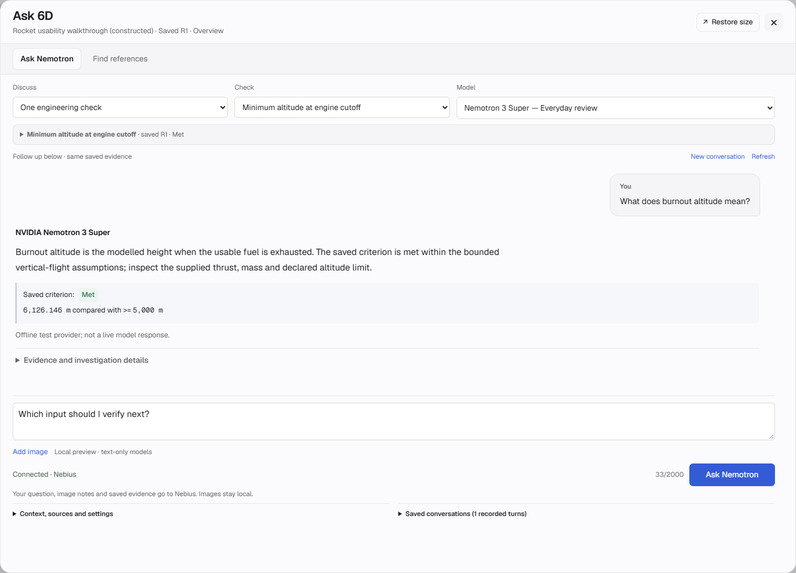
Autonomous engineering review with NVIDIA Nemotron copilot
-
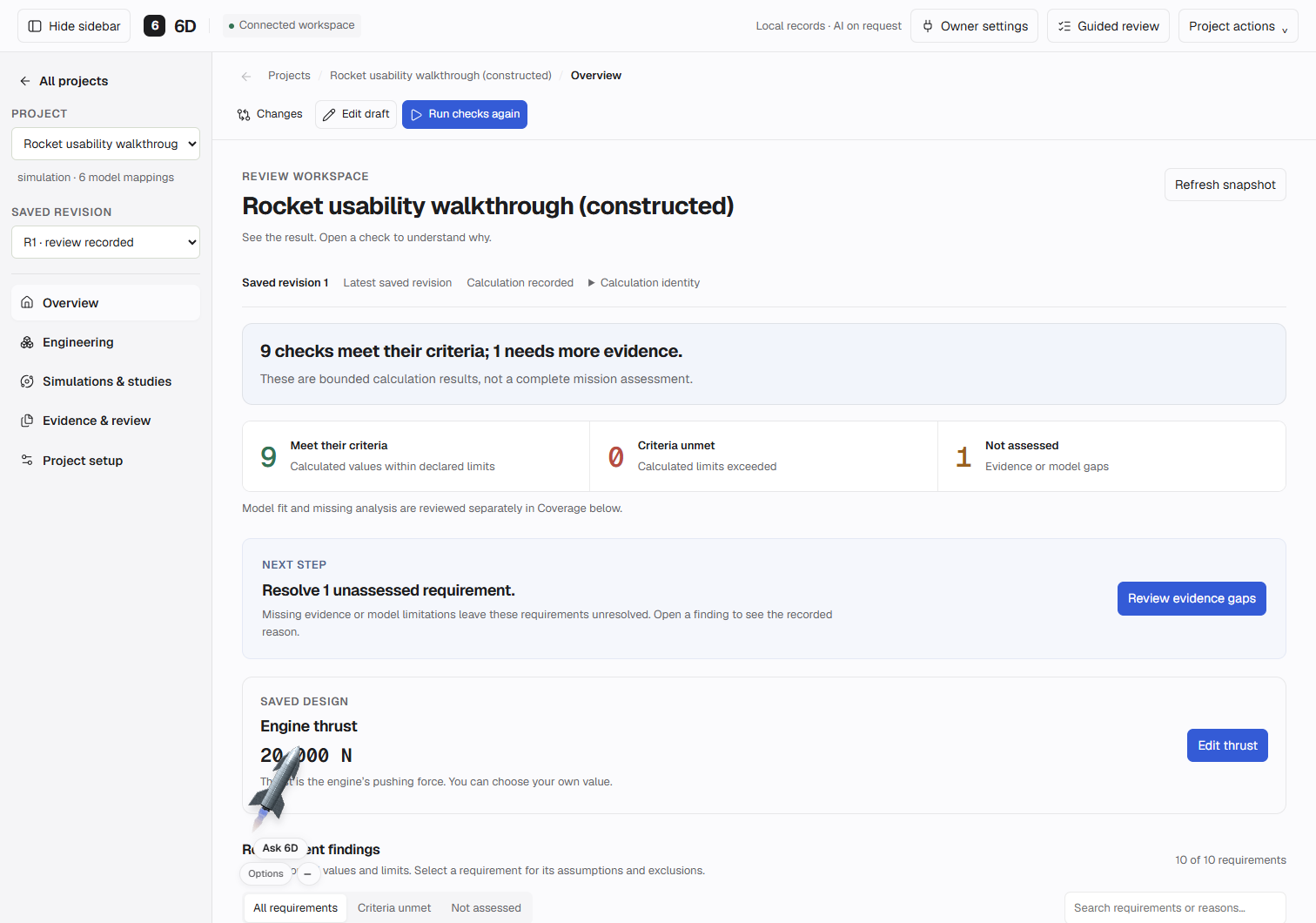
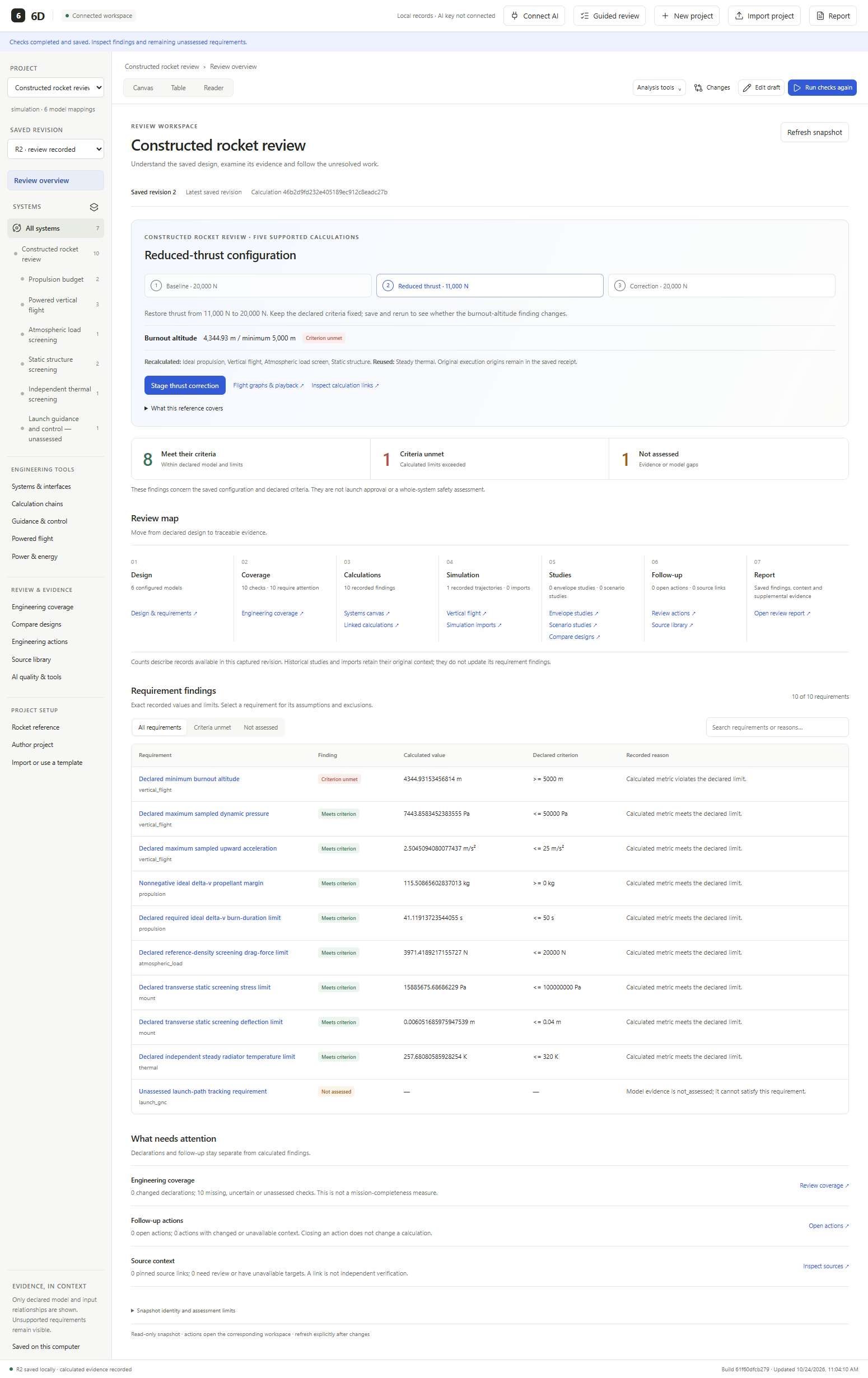
Targeted recalculation and before-and-after change comparison
-
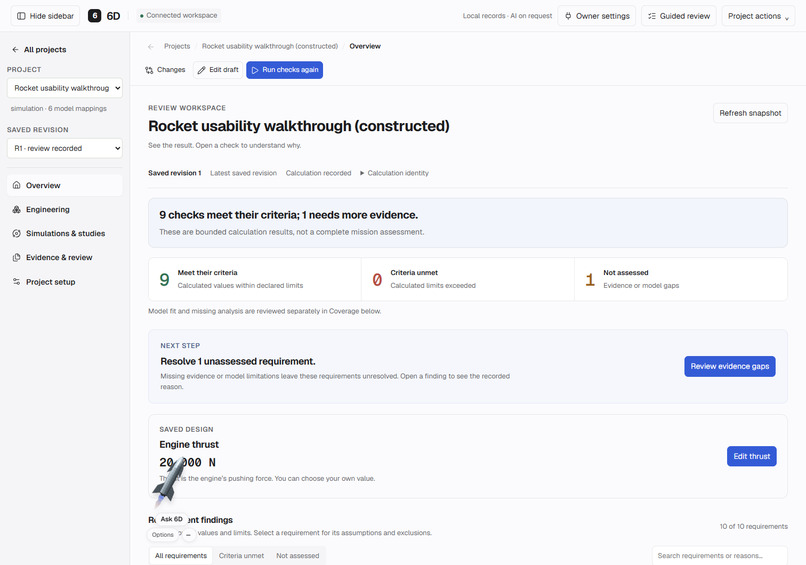
Interactive 3D vehicle canvas and mission configuration
-
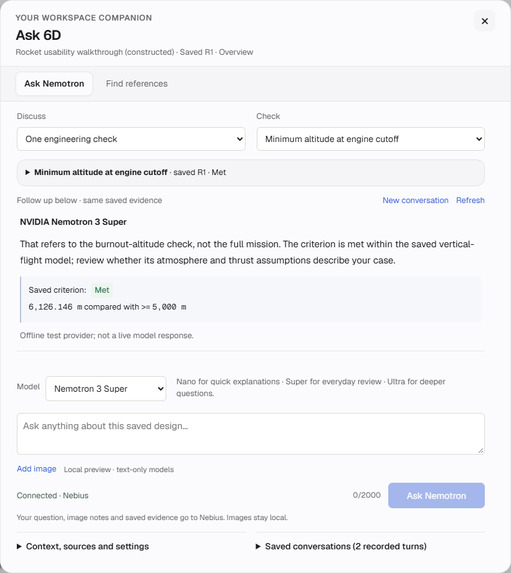
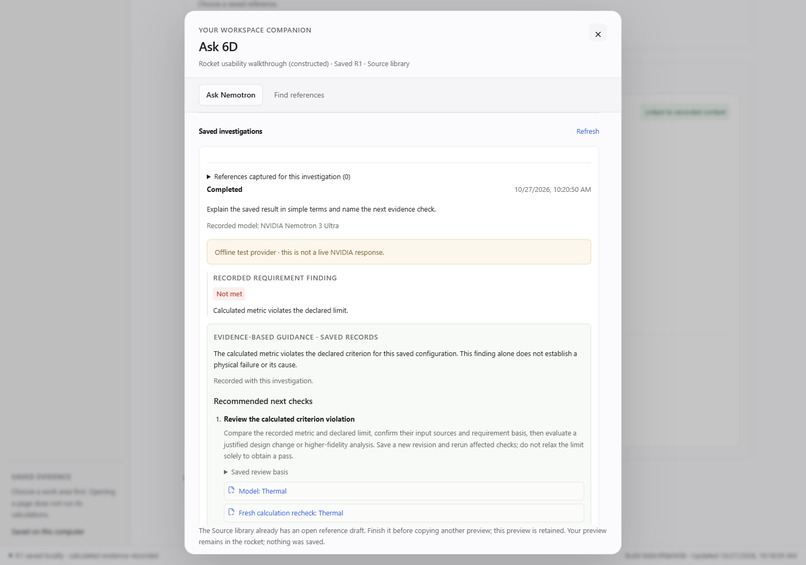
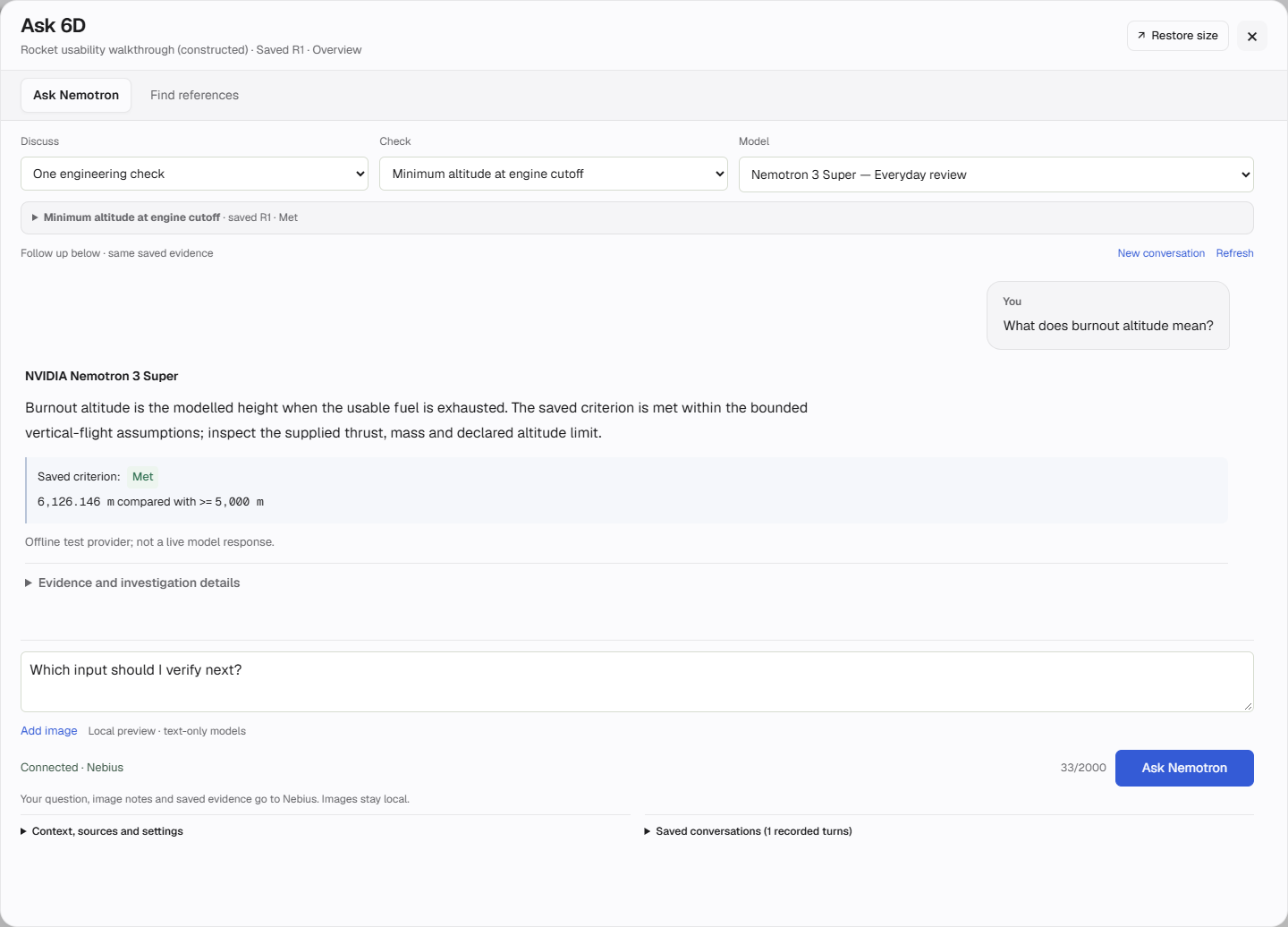
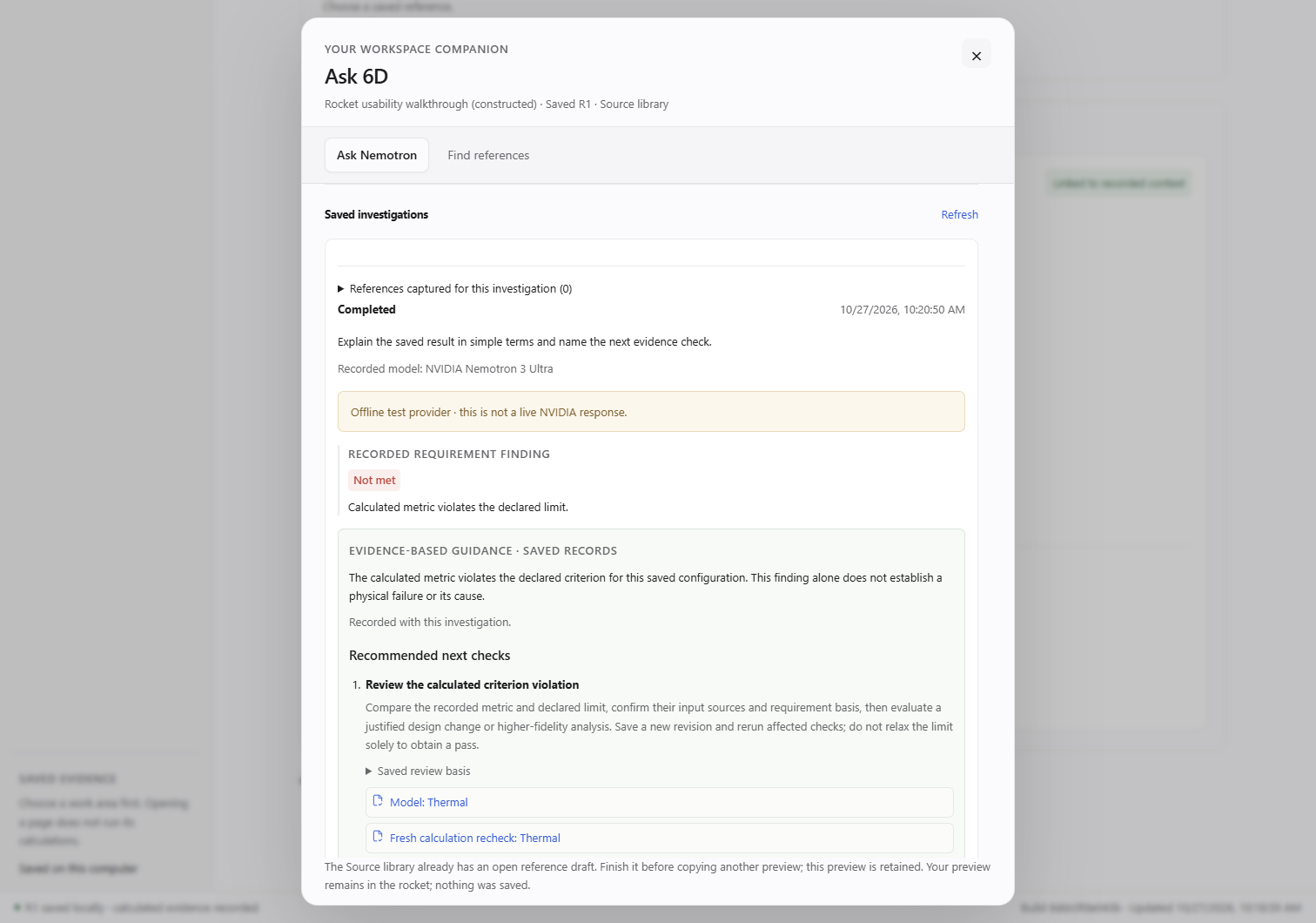
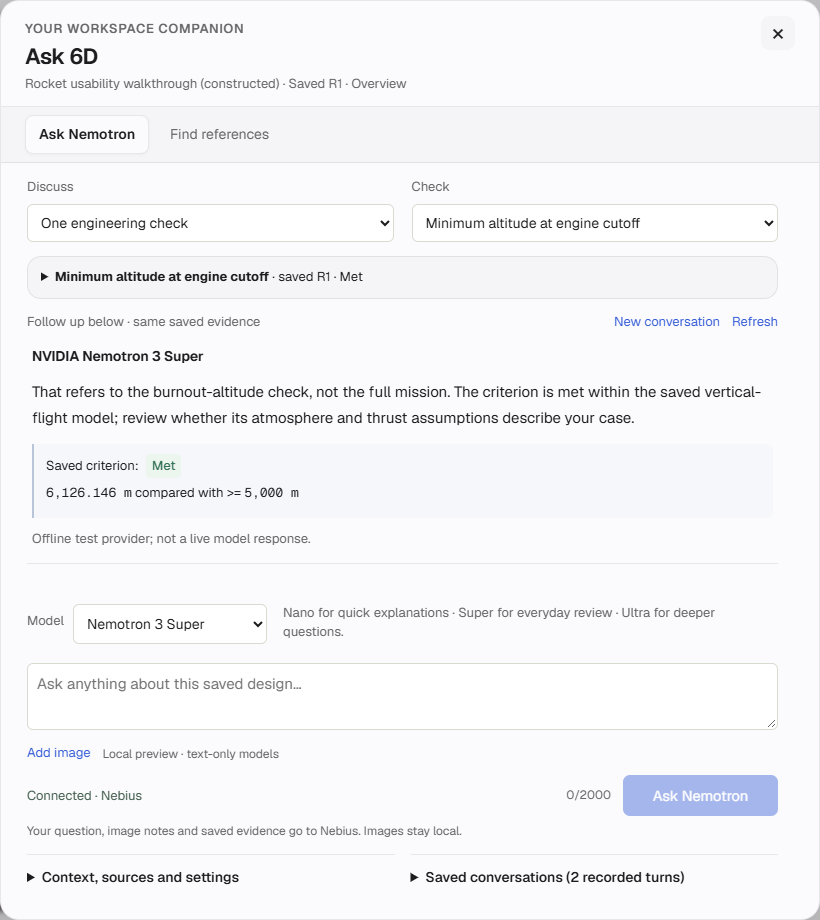
Grounded check investigation with exact numerical citations
-
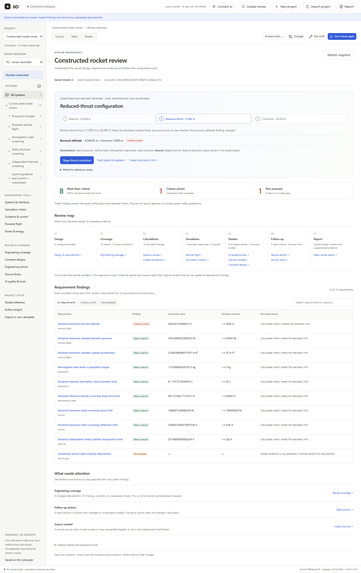
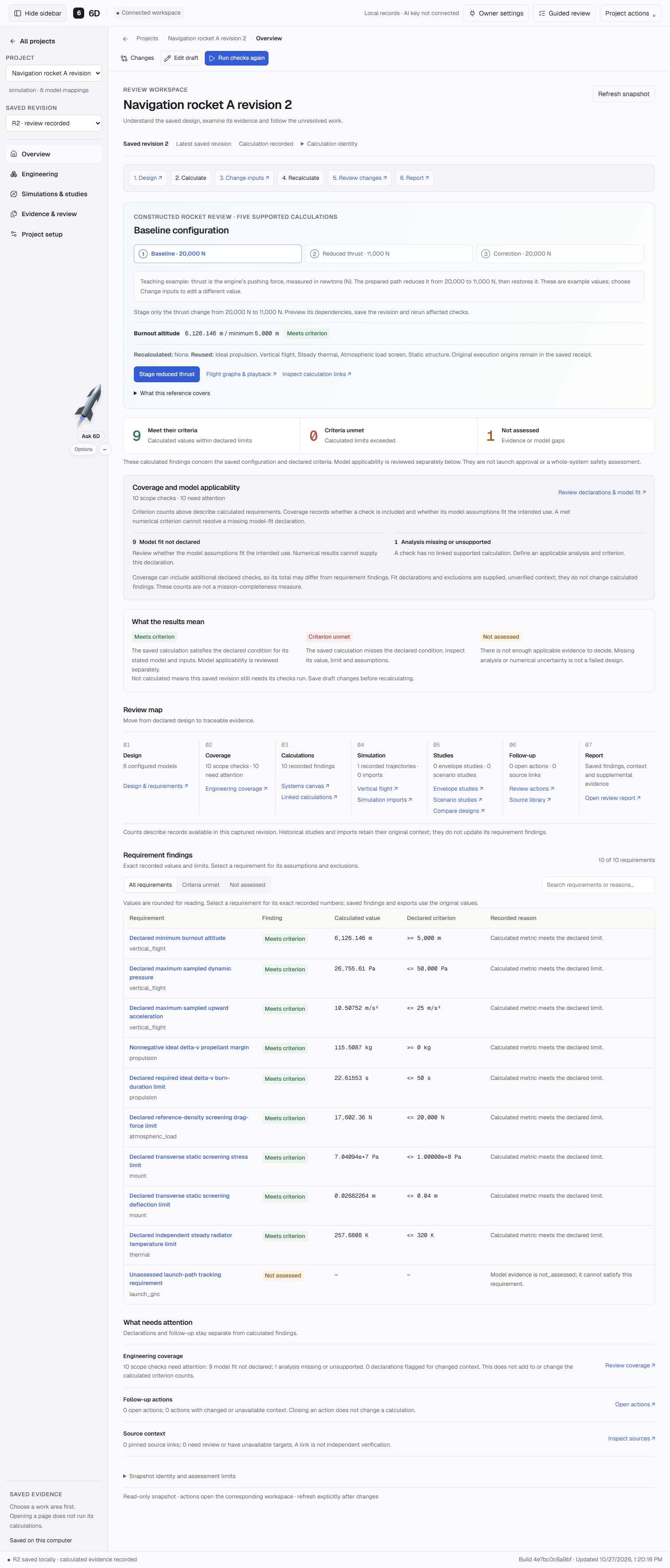
Authoritative telemetry ledger and immutable physics receipts
-
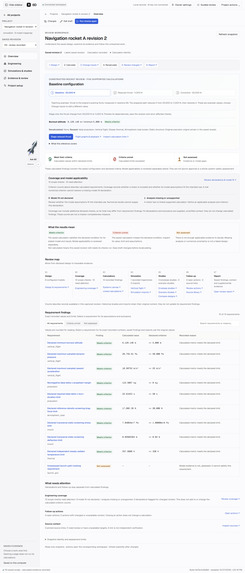
Subsystem criteria verification table and dependency breakdown
Inspiration
In mission-critical spaceflight, engineering failures rarely happen because people cannot calculate math — they happen because conclusions become obsolete when interrelated subsystem parameters change. If an engine's dry mass increases by 8%, does the second stage still reach orbit? Does aerodynamic dynamic pressure violate the fairing structural margin?
Sixth Dimension (6D) was founded on an uncompromising principle: in aerospace, an AI should never hallucinate physics, and a human team should never have to manually re-verify 50 interconnected subsystems after a late design modification.
What it does
6D is an autonomous mission assurance and dependency-aware recalculation platform for space systems:
Dependency Tracing & Targeted Recalculation: Directly links requirements, engineering inputs, physics solvers, and simulation receipts. When a parameter changes (e.g. thrust profile or structural mass), 6D automatically traces which criteria are affected, reruns only those solvers, reuses unchanged evidence, and flags criteria that flipped from Met to Unmet. Auditable Physics Engine: Computes 10 bounded space engineering models including planar ascent, variable-thrust serial staging, and orbital trajectory. Every calculation generates an immutable, unsigned SHA-256 receipt stored in a local ledger. NVIDIA Nemotron Copilot via Nebius Token Factory: Deeply integrated assistant powered by nvidia/Nemotron-3-Nano, Super, and Ultra. Rather than inventing numbers, Nemotron inspects mathematically verified receipts to explain root causes, cite exact margins, and guide the engineer through remediation. Aerospace Literature Grounding: Integrated Tavily search allows engineers to discover, preview, and link authoritative aerospace standards (NASA, ESA, AIAA) directly to active project criteria.
How we built it
Zero-Bloat Backend: Built using pure Python standard library (urllib.request, http.server, sqlite3), eliminating fragile third-party dependencies for defense-grade reproducibility and air-gapped compatibility. Nebius Token Factory: High-throughput NVIDIA GPU inference endpoints serving Nemotron-3 (Nano, Super, and Ultra) with strict client-side token reservation budgeting ($0.10, $0.20, $0.35 per-turn ceilings). Interactive Web Interface: Native vanilla JavaScript with 3D canvas rocket rendering, live telemetry graphing, visual dependency graphs, and an interactive rocket assistant. Production Deployment: Containerized with Docker and deployed to Microsoft Azure with automatic Caddy TLS reverse proxy, strict visitor session isolation, and persistent multi-user support.
Challenges we ran into
Eliminating AI Math Hallucination: LLMs are notorious for fabricating physics. We enforced an air-gap architecture: the LLM is strictly prohibited from computing math. Physics is computed deterministically in Python, and Nemotron is provided with signed structured receipts. If a model attempts to cite an ungrounded value, client-side guards reject the response. Token Windows on Deep Audits: Nemotron Super hit a 2,048-token generation ceiling when attempting whole-project reviews. We introduced bounded turn chunking and focused check-level dialogs. Multi-Tenant State Isolation: Moving from local development to a live cloud build required isolating each visitor's workspace and tokens while keeping the app zero-login for hackathon judges.
Accomplishments that we're proud of
Achieving zero-hallucination physics auditing by coupling deterministic code with open-weight NVIDIA foundation models. Running live qualification across 4 complex aerospace failure cases with 16 request reservations completing in ~31s on Nebius Token Factory with 100% receipt fidelity. Delivering a full-stack, deployed, end-to-end space mission assurance workstation from scratch.
What we learned
Open-weight models like NVIDIA Nemotron are exceptionally capable at technical reasoning and structured audit tasks when given precise context boundaries. Aerospace tooling doesn't need bloated frameworks; lightweight, standard-library architectures provide unmatched auditability and speed
What's next for Sixth Dimension [6D]
Expanding from 10 bounded solvers to full closed-loop 6-DOF launch vehicle GNC simulation. Fine-tuning Nemotron models on ECSS and NASA technical standards using Nebius GPU training clusters. Real-time hardware-in-the-loop (HIL) telemetry ingestion for active launch vehicle test stands.
Built With
- azure
- caddy
- docker
- javascript
- nebius
- nemotron
- nvidia
- python
- tavily


Log in or sign up for Devpost to join the conversation.