-
-
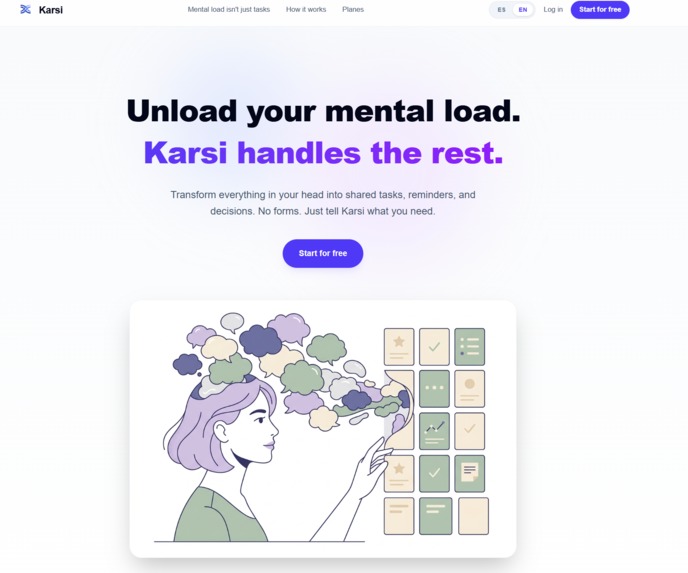
Karsi — AI-powered mental load assistant for individuals and shared spaces.
-
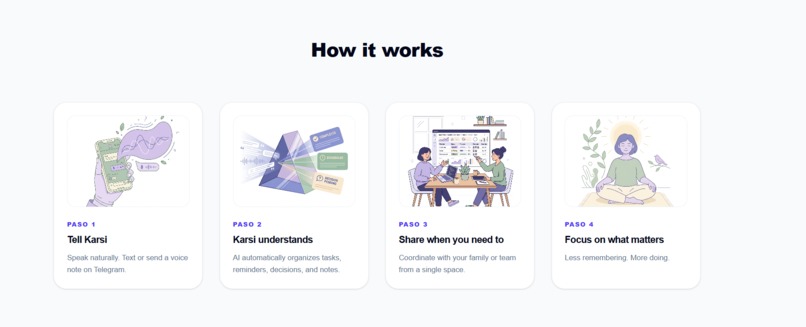
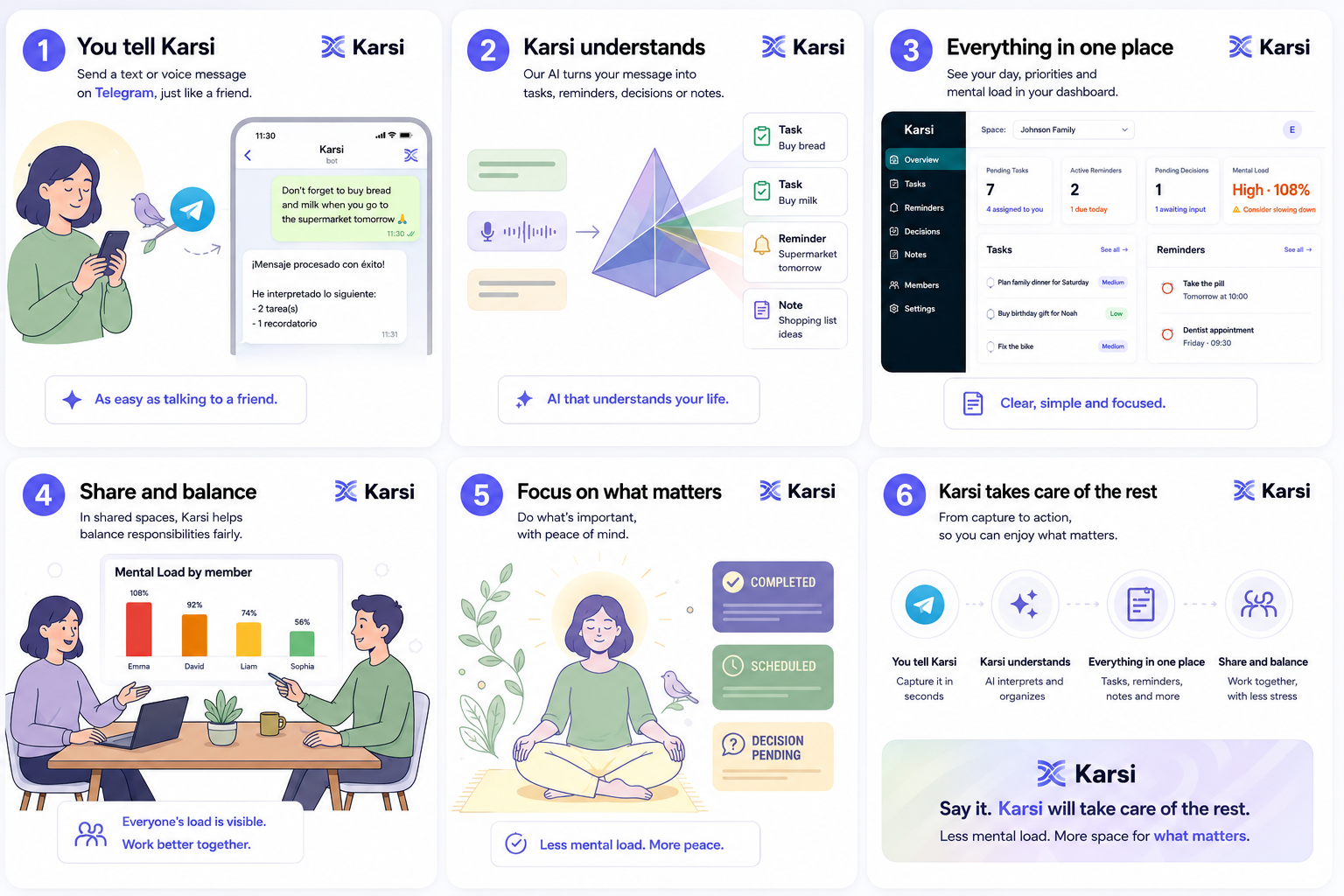
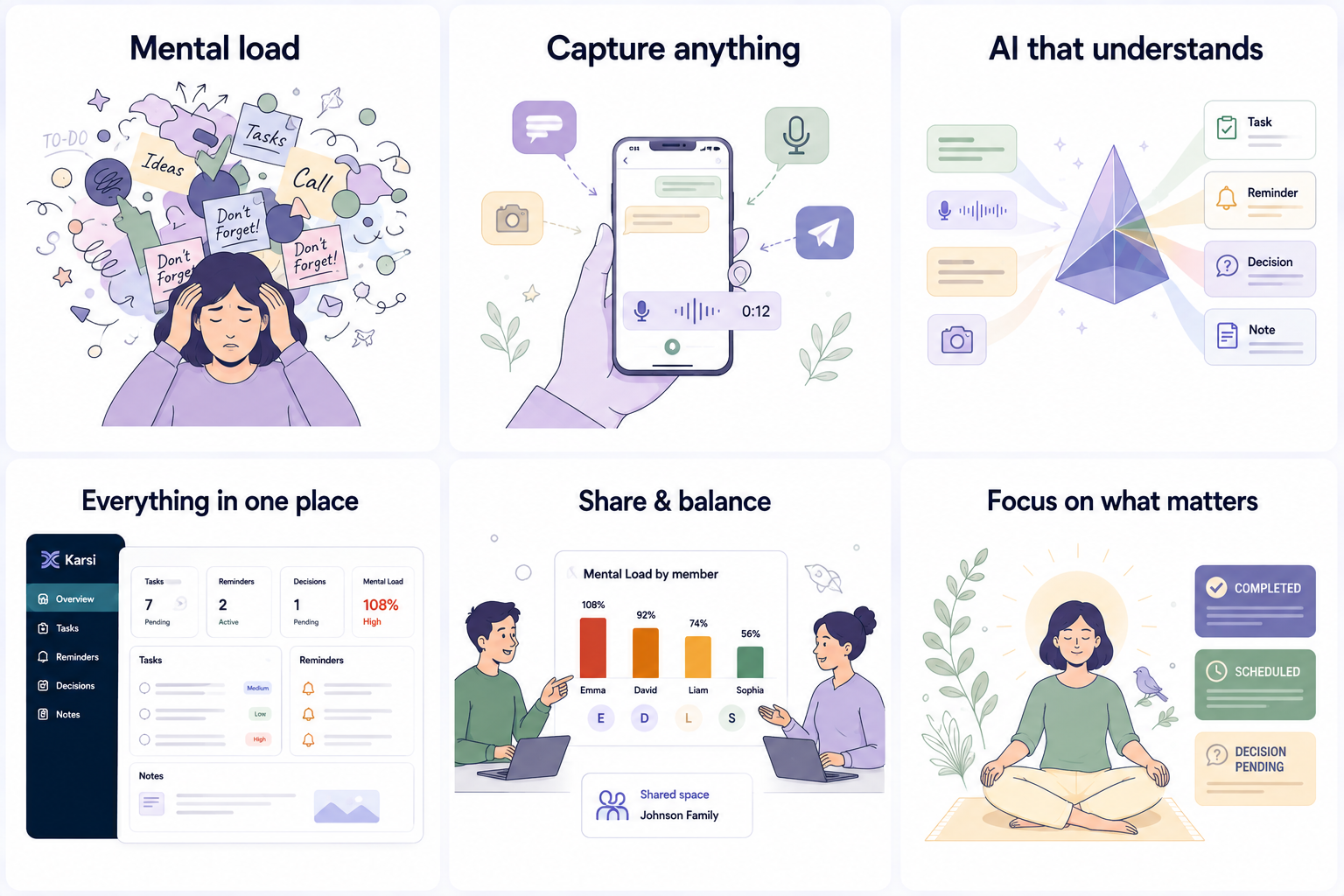
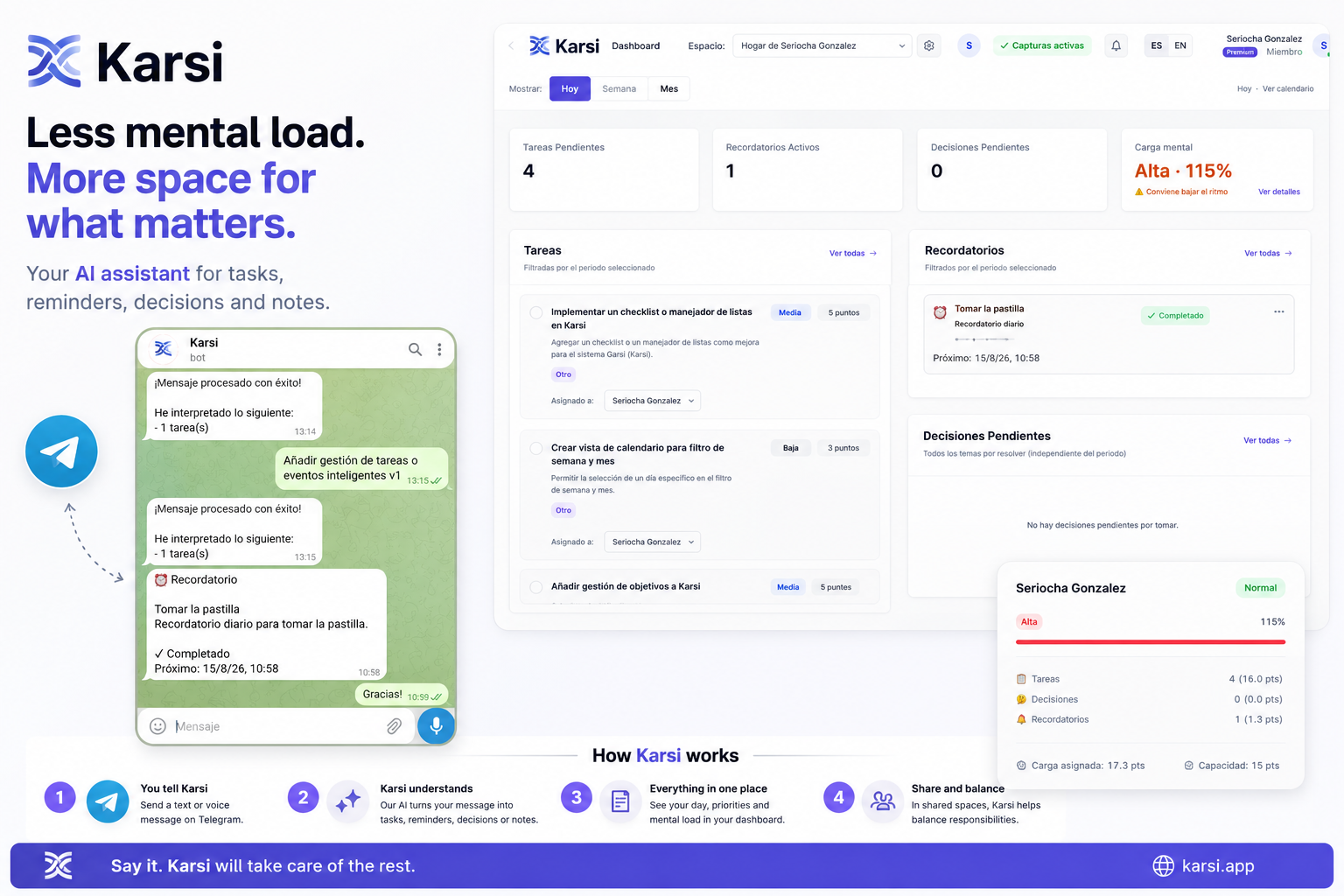
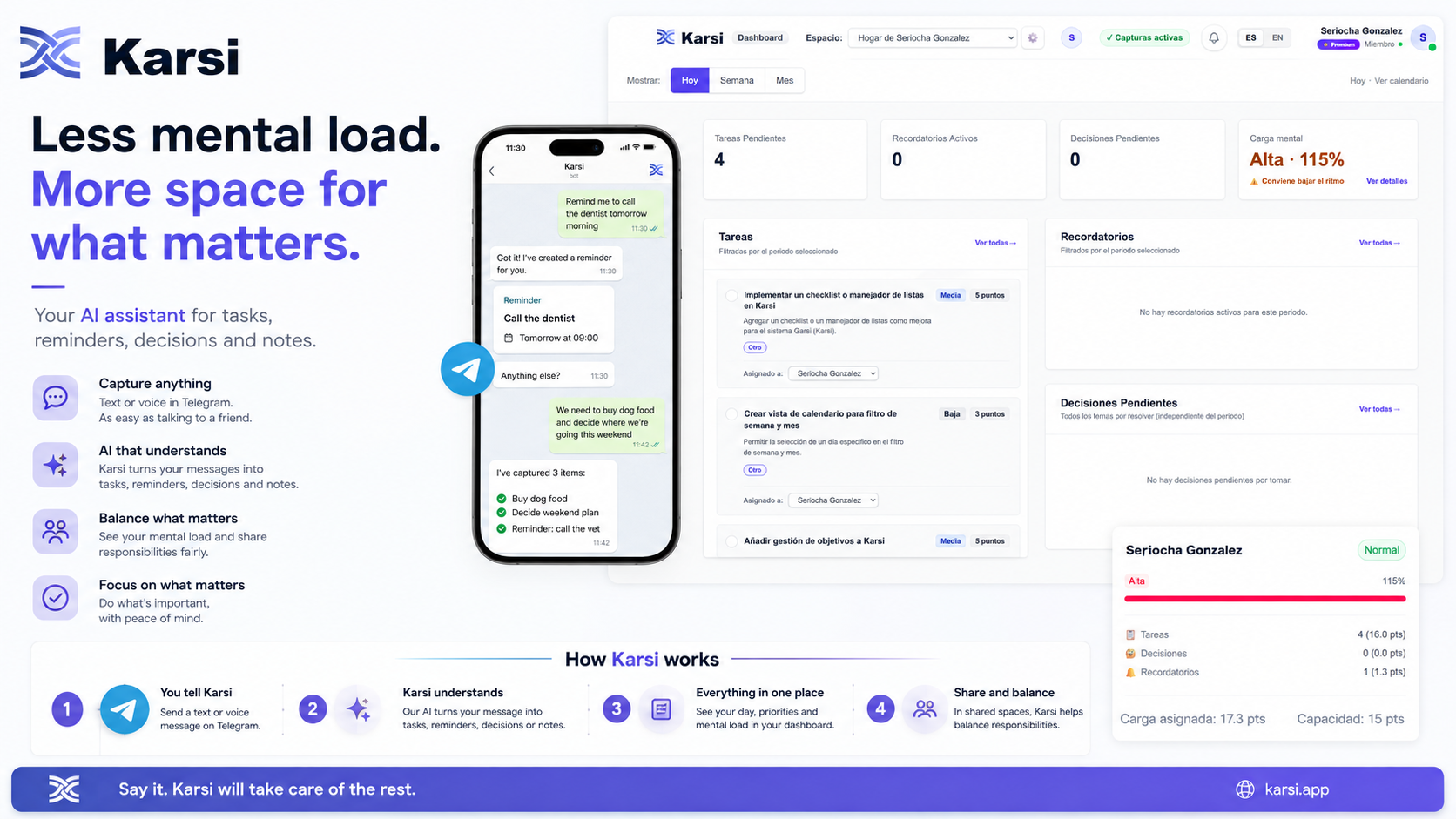
karsi - How it works
-
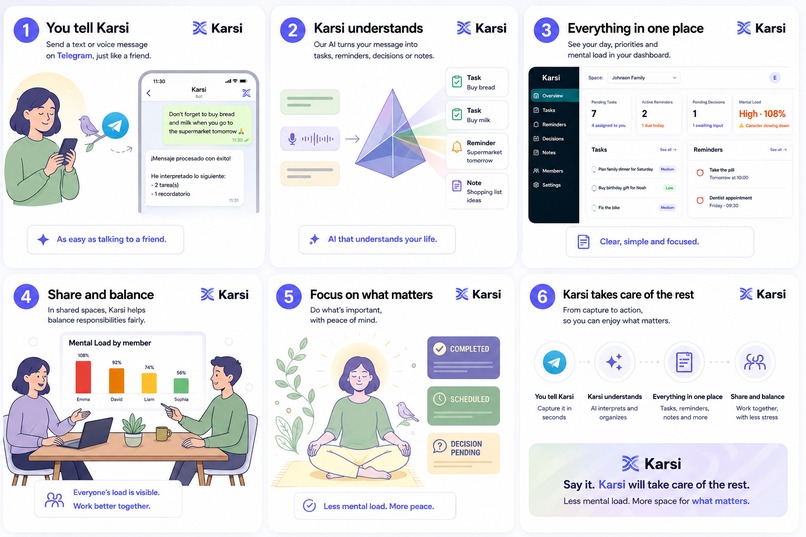
Say it. karsi wil take care of the rest
-
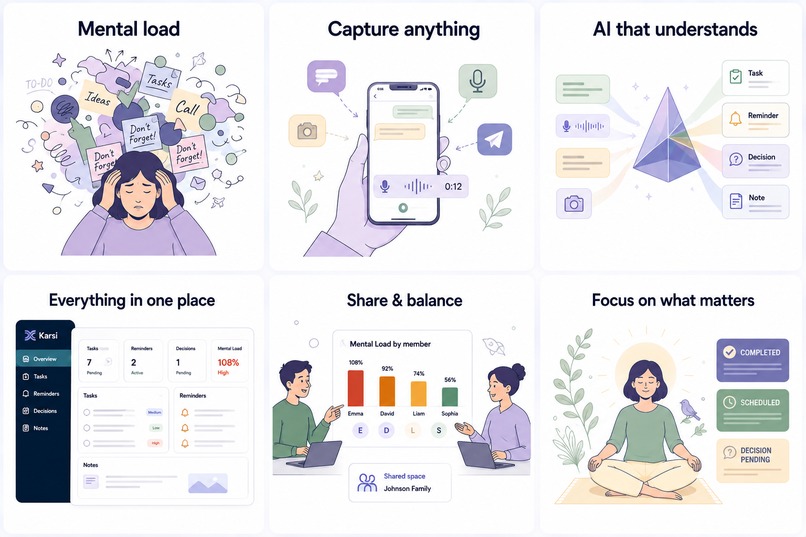
Less mental load. More space for what matters
-
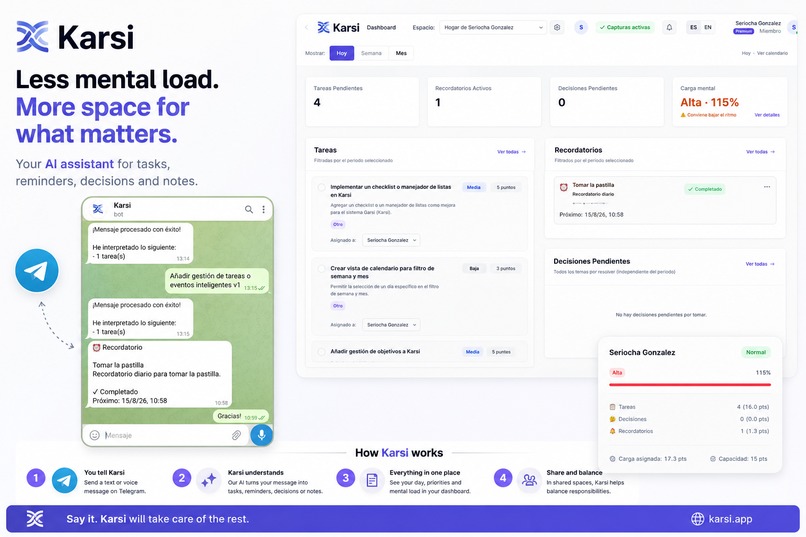
karsi - flow
-
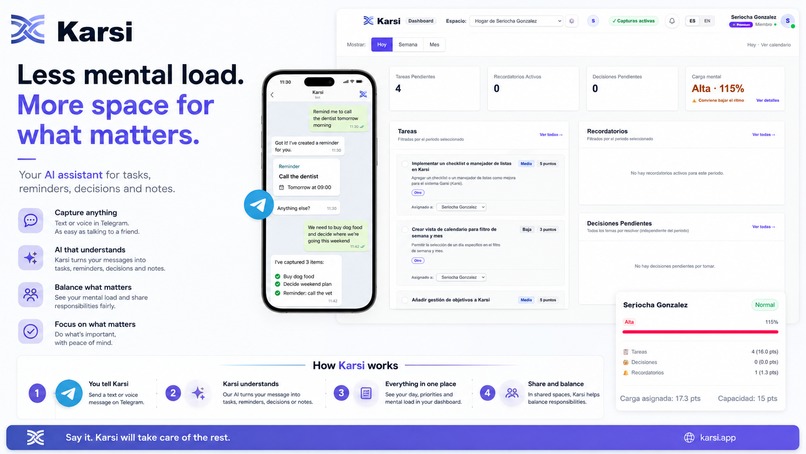
karsi - flow
Inspiration
Modern life comes with a hidden workload: remembering what needs to be done, keeping track of decisions, coordinating responsibilities, and making sure nothing important falls through the cracks.
Traditional task managers can help organize this work, but they often create another job: maintaining the task manager itself.
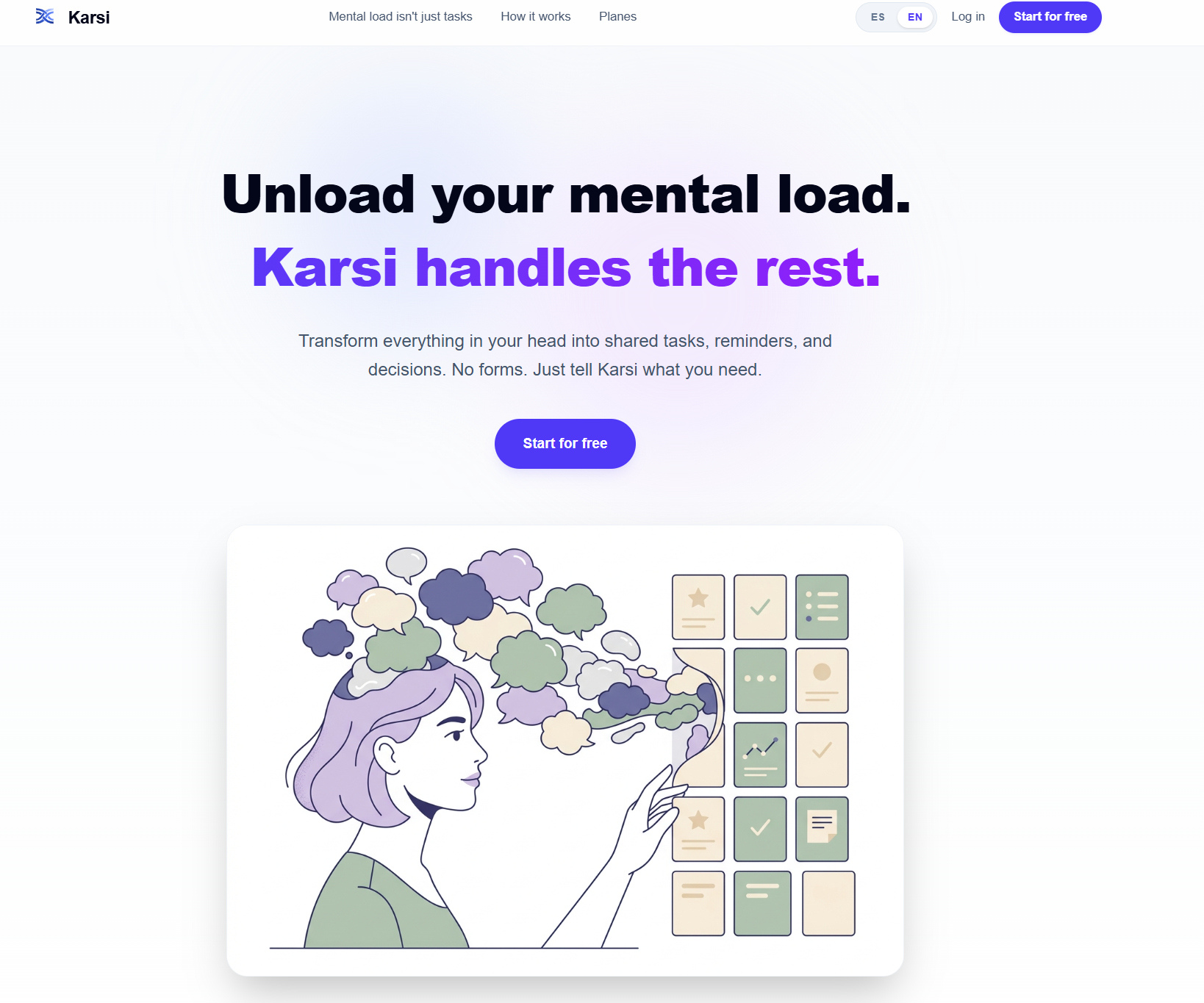
We built Karsi around a different idea: capture first, organize automatically. Instead of asking people to constantly structure their lives around an app, Karsi uses AI to turn everyday conversations into organized, actionable information — while helping individuals and shared spaces understand and balance their mental load.
What it does
Karsi is an AI-powered mental load assistant for individuals and shared spaces.
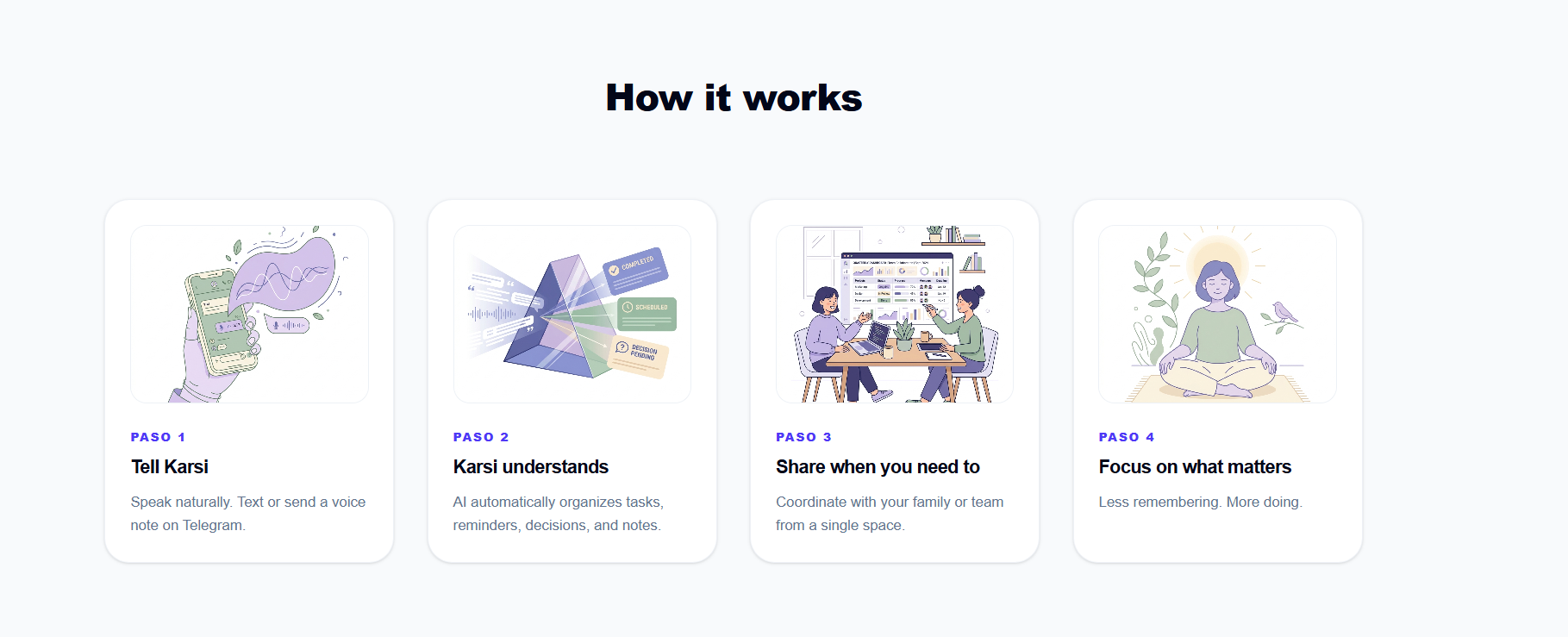
Users can simply send a text or voice message through Telegram, just as they would message another person. Karsi uses Gemini to understand the intent and automatically turns the message into structured Tasks, Decisions, Reminders, or Notes.
Everything is then available in a web dashboard where users can organize their personal space or collaborate in shared spaces.
Karsi also includes a Mental Load Balancer that combines workload and individual capacity to make invisible load visible, helping shared spaces identify imbalance and saturation before responsibilities become overwhelming.
The goal is simple: spend less time managing your organization system and more time on what actually matters.
How we built it
Karsi is built as a TypeScript monorepo with a modular architecture:
- Capture: Telegram provides a low-friction interface for text and voice input.
- AI interpretation: Gemini transforms unstructured input into structured Tasks, Decisions, Reminders, and Notes, including context such as priority, effort, urgency, and dates.
- Data layer: PostgreSQL and Prisma provide persistent, structured storage.
- Mental Load Balancer: Karsi combines active workload and individual capacity to calculate and surface load distribution in shared spaces.
- Automation: A reminder system supports scheduled and recurring reminders while respecting each space's timezone.
- Experience: A Next.js dashboard provides personal and shared spaces, collaboration, lifecycle management, history, and mental-load visibility.
We also built Karsi with internationalization and timezone-aware behavior from the start, allowing the same architecture to support users and shared spaces across different regions.
Challenges we faced
One of our biggest challenges was transforming natural, ambiguous everyday language into reliable application state.
A message such as "Remind me tomorrow to call the dentist, and we also need to decide where we're going this weekend" contains different intentions that need to become separate objects with different lifecycles.
Gemini gave us the flexibility to interpret that language, but the real challenge was building a deterministic system around it: structured schemas, persistence, idempotent materialization, authorization, reminders, recurrence, timezones, and lifecycle management.
Another challenge was designing the Mental Load Balancer. Mental load cannot be represented by simply counting tasks, so Karsi considers both estimated effort and individual capacity to provide a more meaningful picture of how responsibilities are distributed.
What we learned
The biggest lesson was that reducing mental load is not the same as building a better to-do list.
The friction often happens before a task reaches a list: remembering it, describing it, deciding what kind of thing it is, determining when it matters, and communicating it to somebody else.
Generative AI makes it possible to remove much of that structural work.
We also learned that AI works best in Karsi when it does not replace the application's business logic. Gemini interprets human language; Karsi's deterministic services handle persistence, permissions, lifecycle, scheduling, and workload calculations.
That separation became one of the most important architectural principles of the project.
What's next for Karsi
Our next step is evolving Karsi from a functional MVP into a production-ready product.
We plan to expand integrations beyond Telegram, starting with calendars and other everyday communication channels, improve the Mental Load Balancer with richer planning capabilities, and continue developing Karsi Premium with advanced automation and collaboration features.
Longer term, we want Karsi to become a quiet coordination layer between people and the responsibilities surrounding them — capturing what matters, organizing it automatically, and helping distribute the load more fairly.
Built With
- cloud-run
- gemini-api
- google-cloud
- json
- multi-agent-systems
- next.js
- node.js
- postgresql
- telegram-api
- vertex-ai


Log in or sign up for Devpost to join the conversation.