-
-
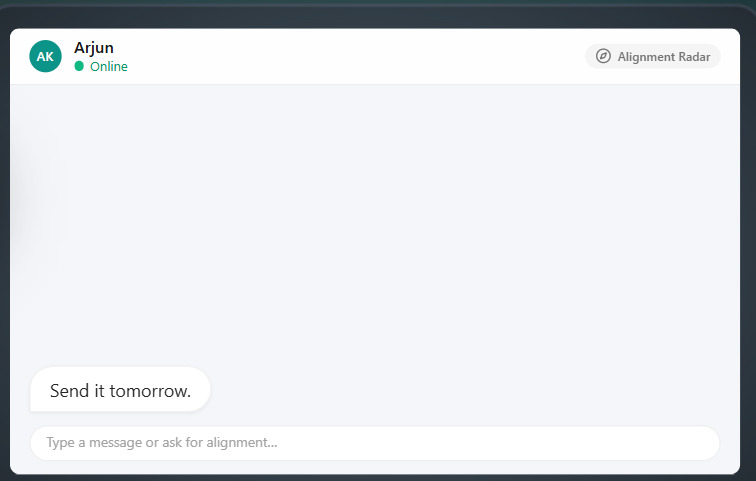
Demo1
-
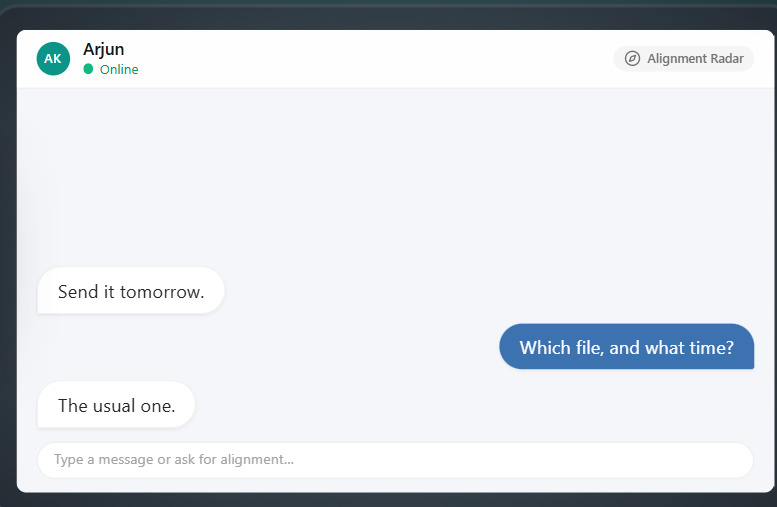
Demo3
-
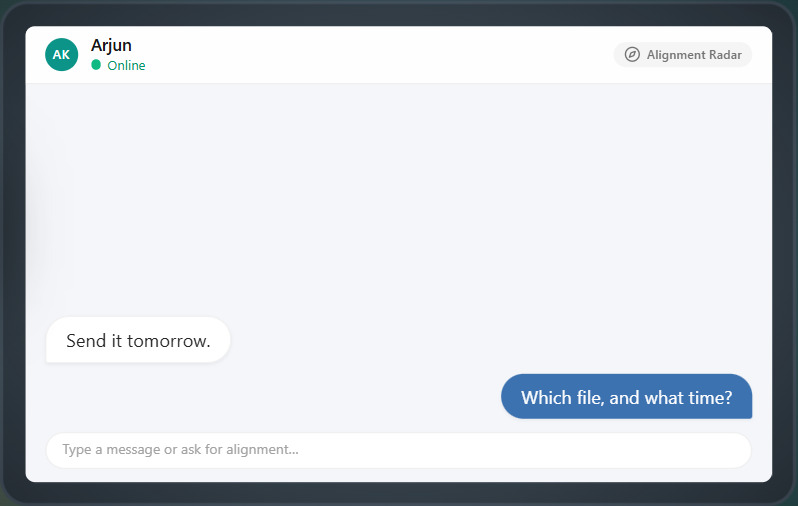
Demo2
-
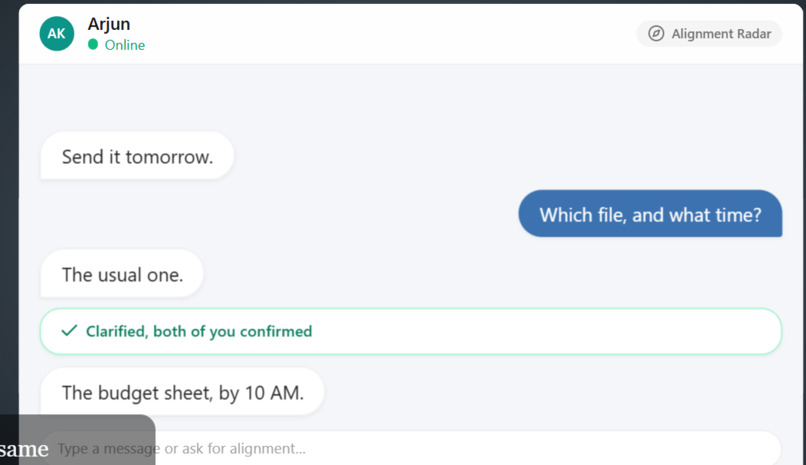
Demo5
-
Demo4
-
-
-
Main features
-
-
-
-
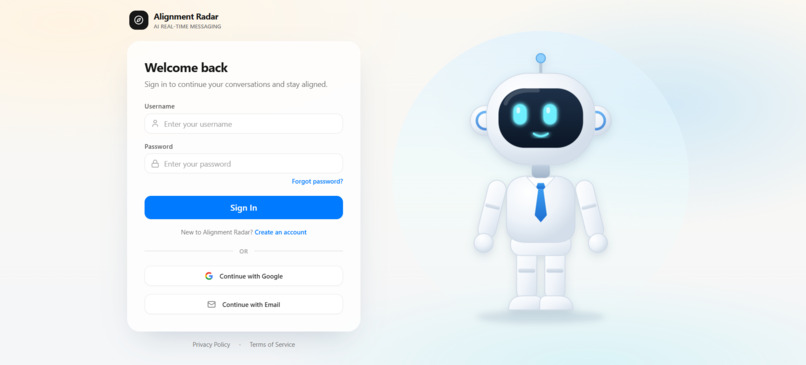
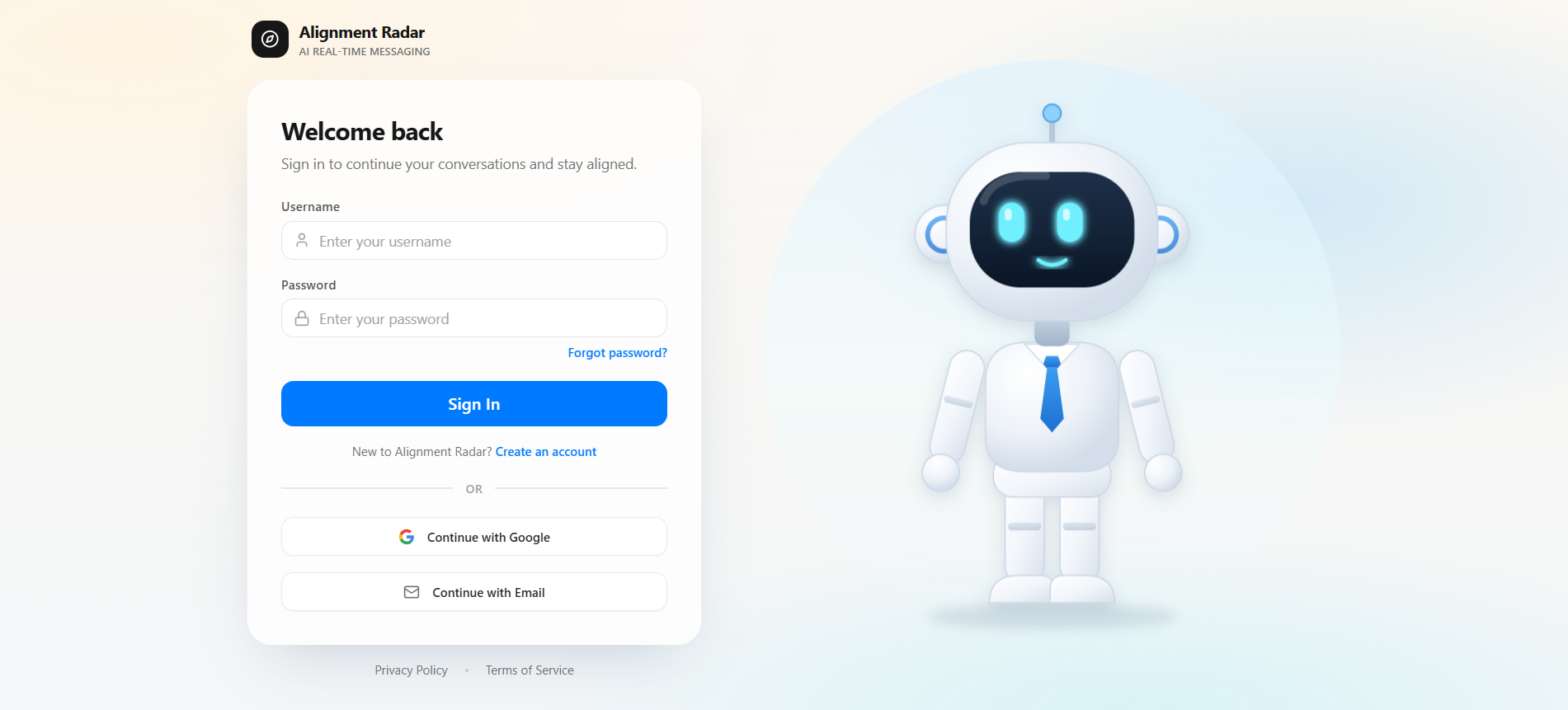
Login page
-
Inspiration
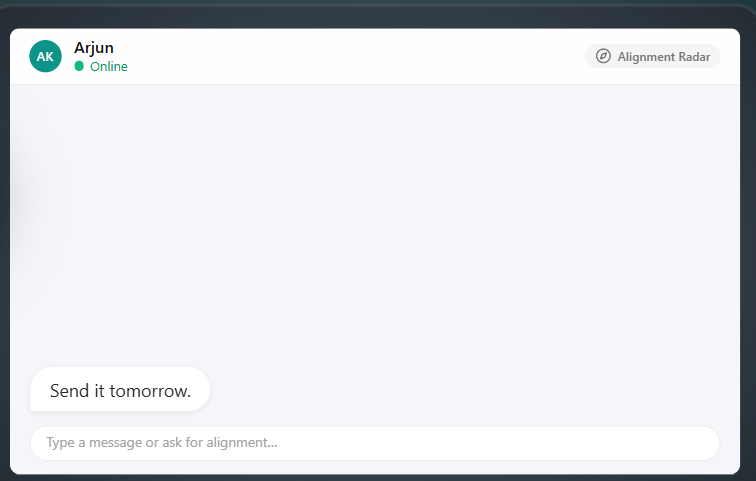
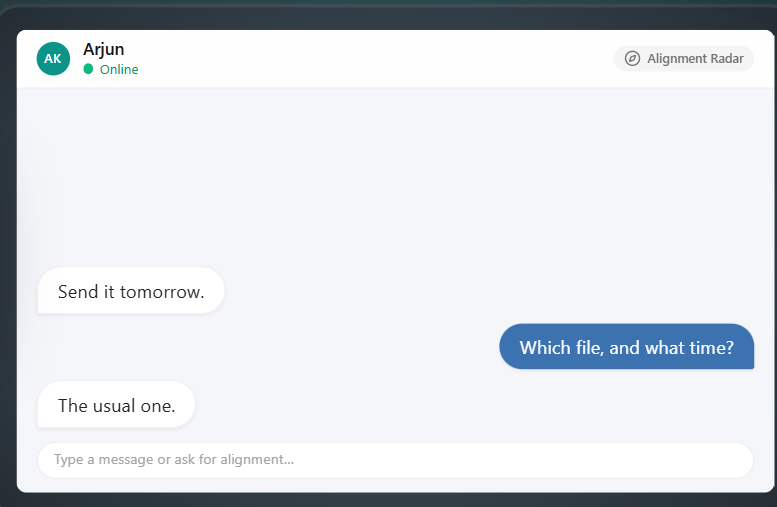
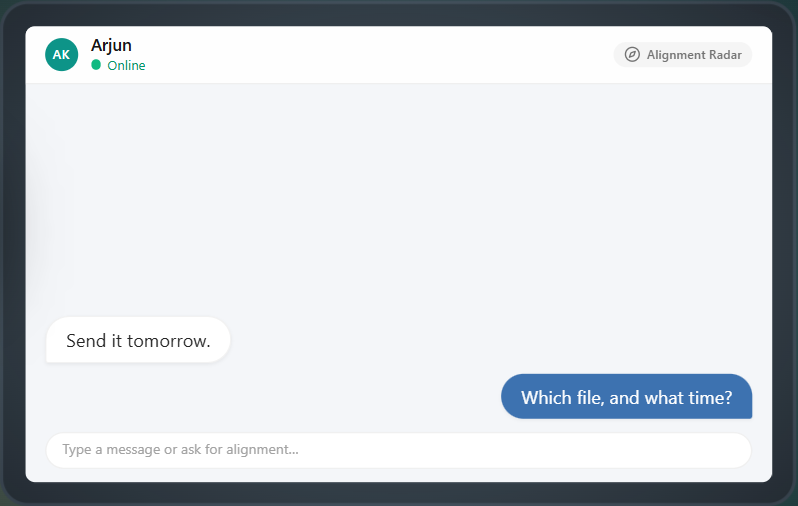
Miscommunication is a common problem in digital conversations. A message that seems clear to one person may be confusing to another. Missing context, ambiguous wording, and assumptions can lead to misunderstandings, especially in group discussions.
Most messaging applications focus on delivering messages, but they rarely help people understand each other. We wanted to build something different: a messaging application that helps people identify possible misunderstandings and clarify their intentions while chatting.
That idea became Alignment Radar.
What It Does
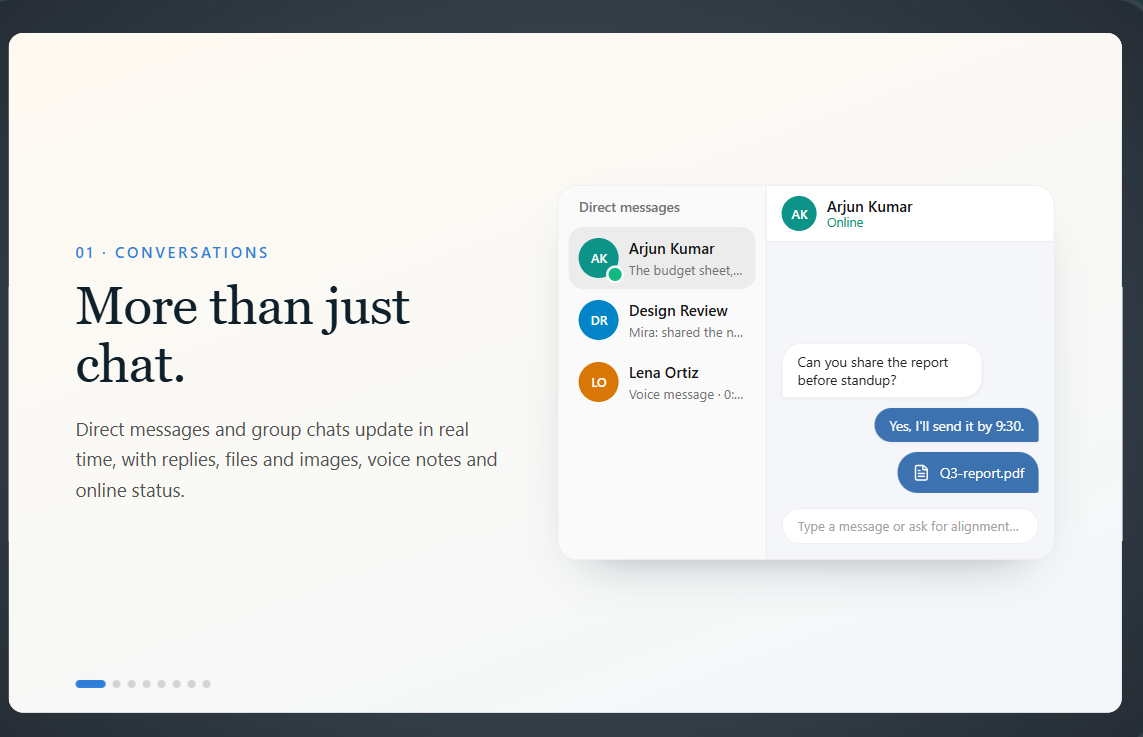
Alignment Radar is an AI-assisted messaging application designed to make digital conversations clearer.
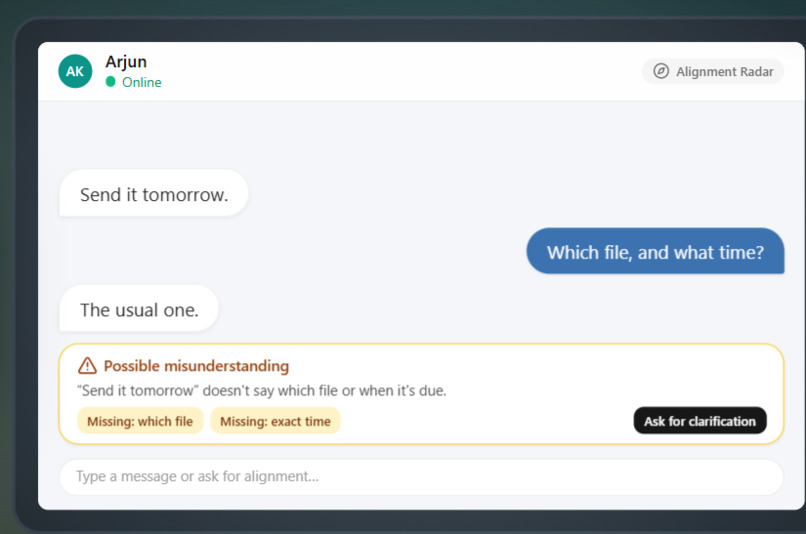
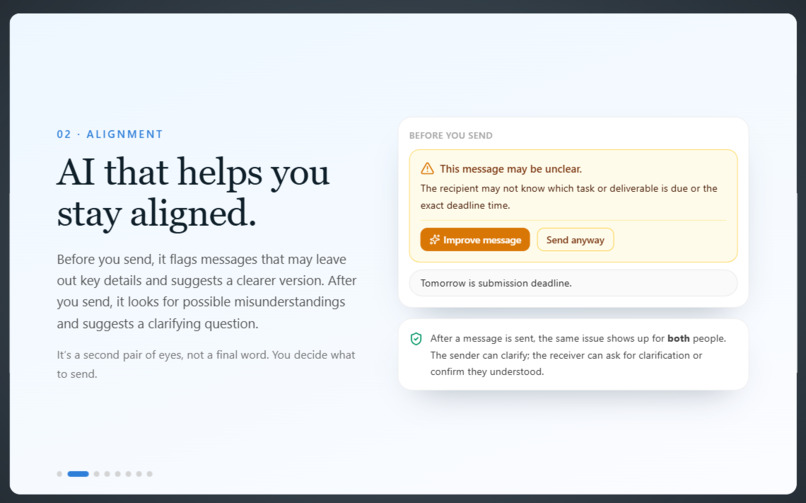
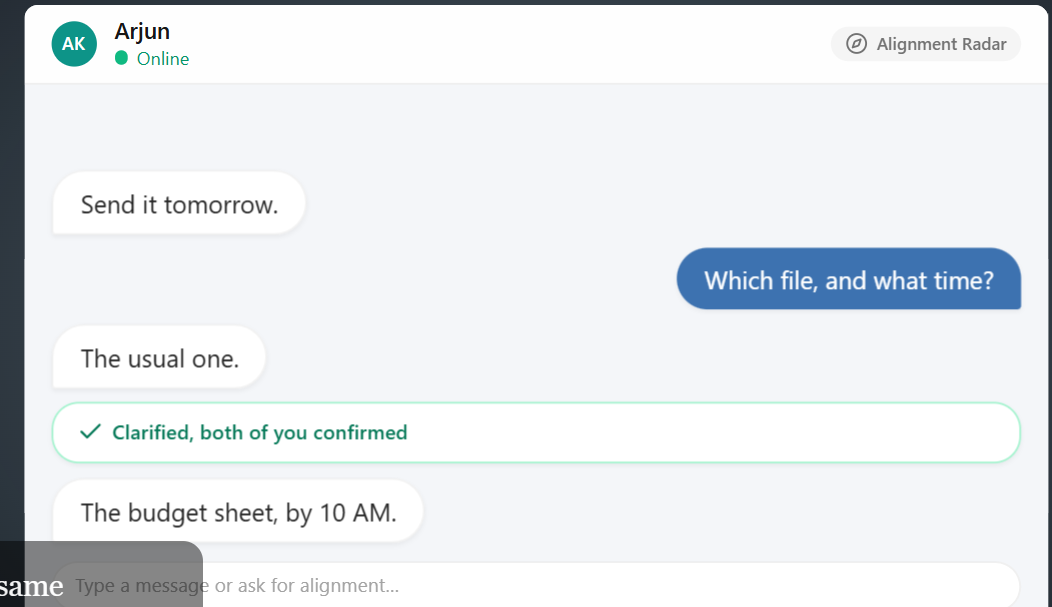
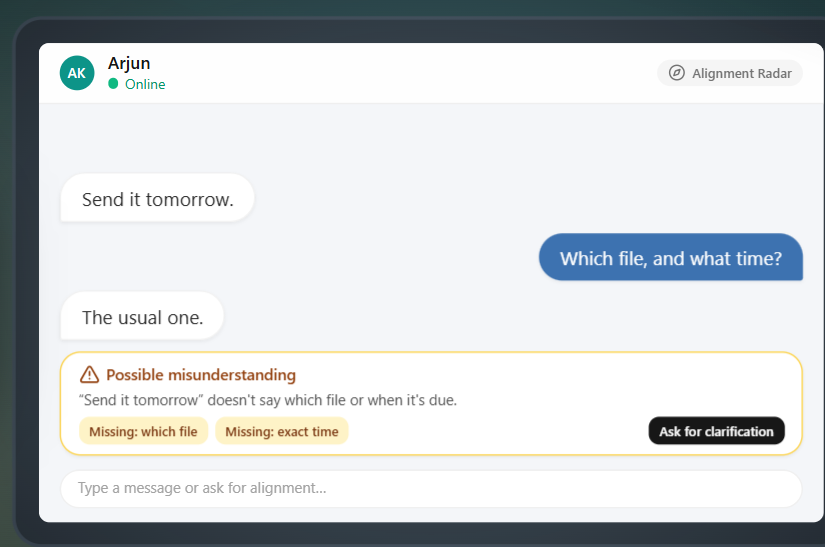
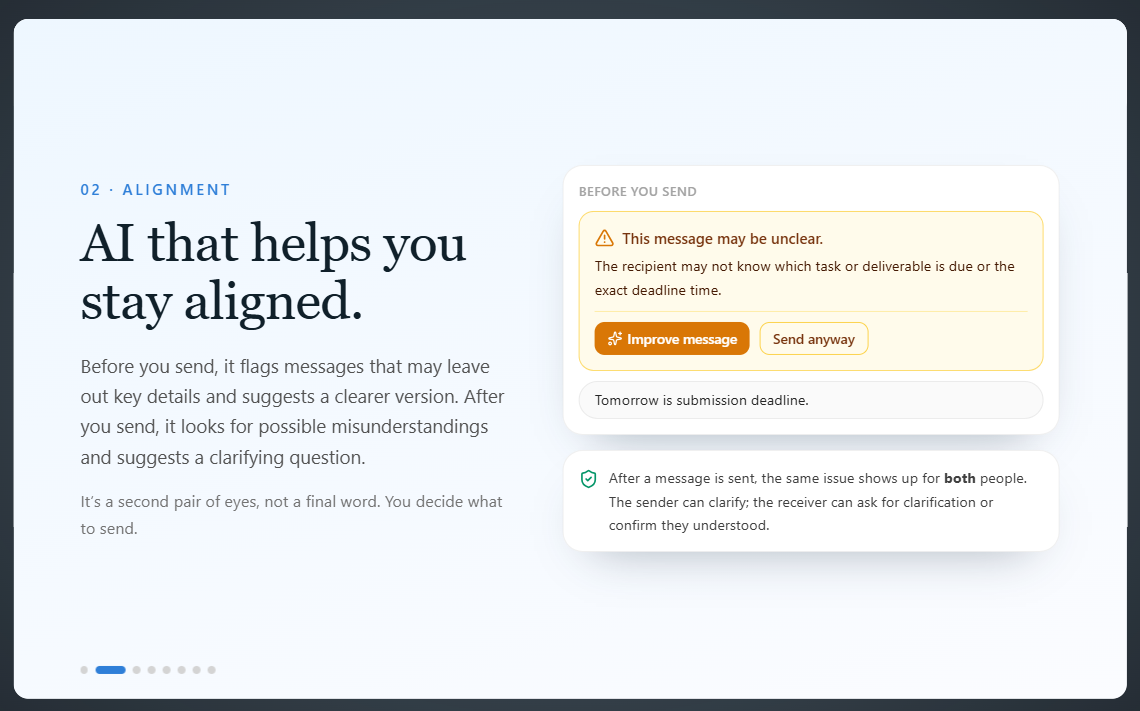
It analyzes messages to identify potentially unclear wording, missing context, and possible misunderstandings. When an issue is detected, it can suggest questions that help participants clarify what they mean.
The application also helps users correct spelling mistakes and improve unclear messages before sending them. Participants can review potential alignment issues and mark them as resolved after reaching a shared understanding.
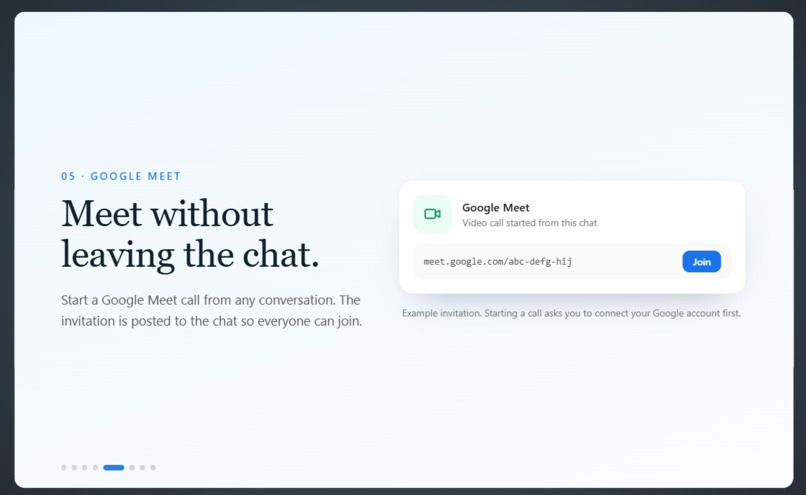
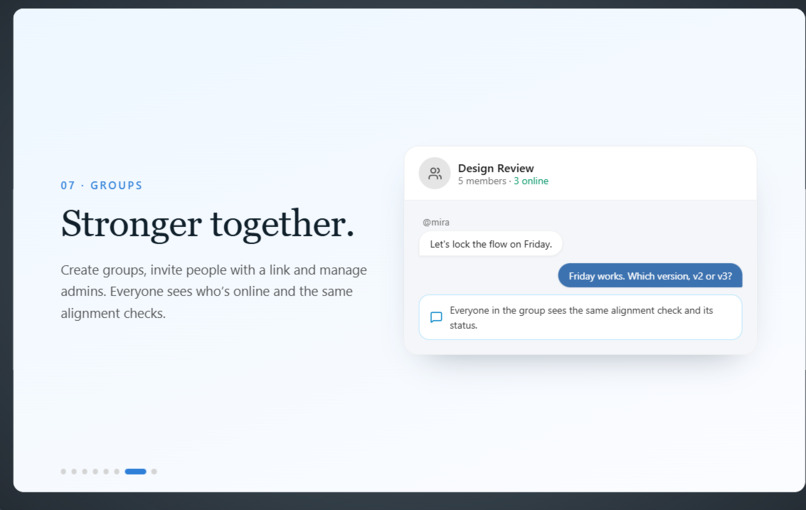
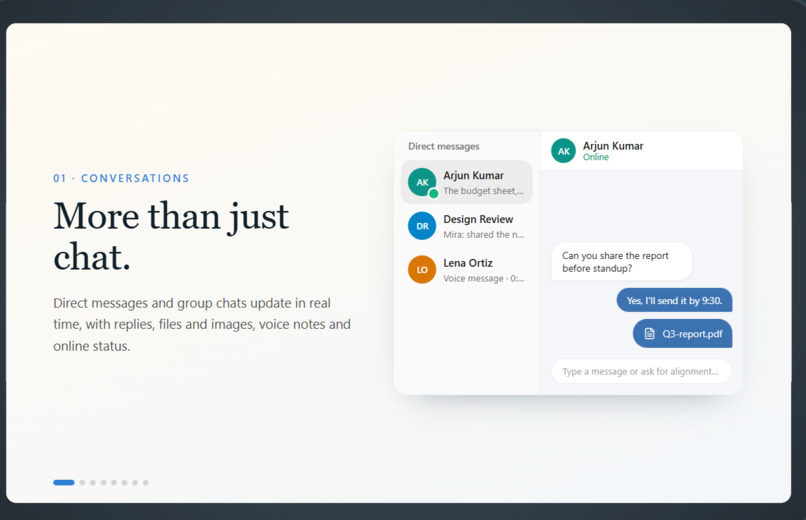
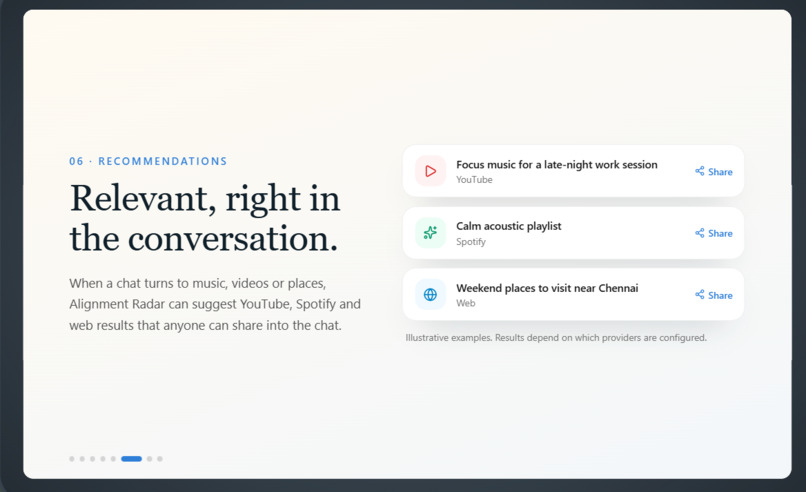
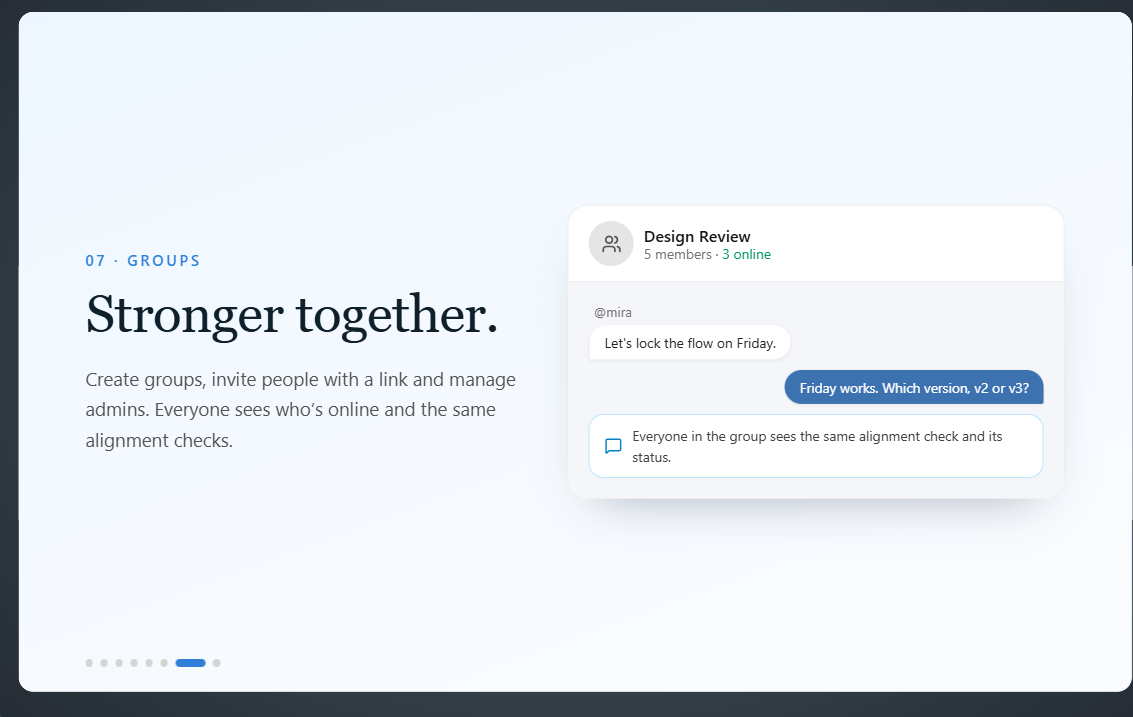
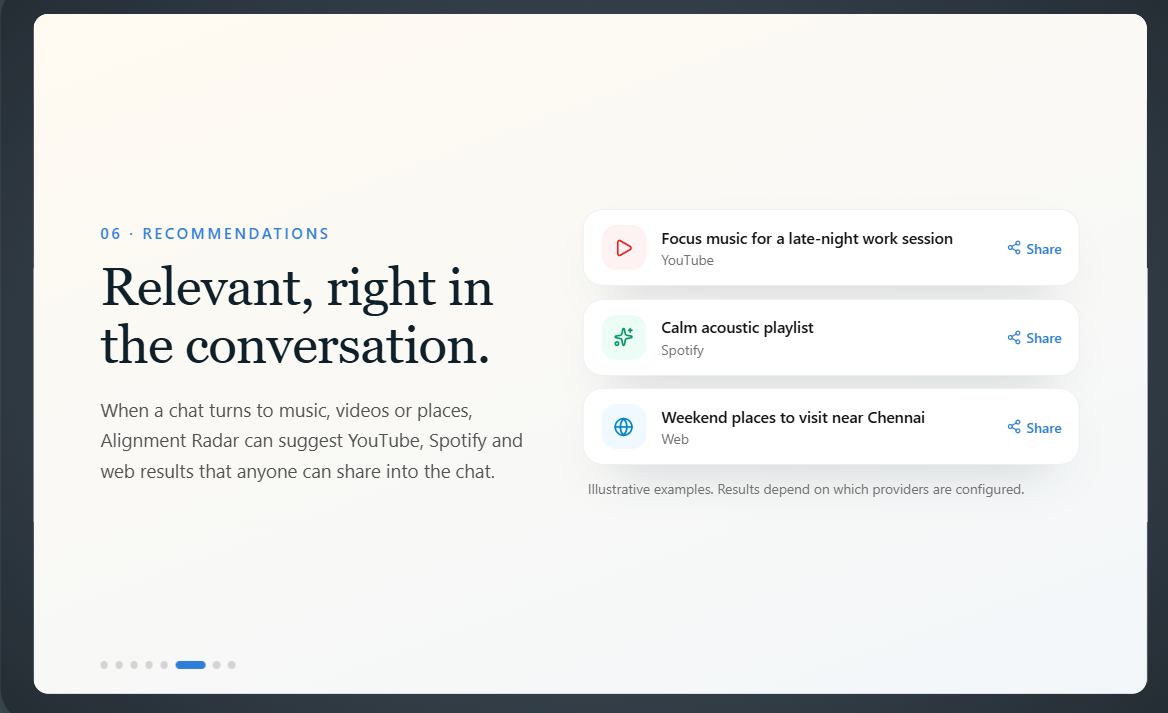
Alignment Radar supports direct messaging and group conversations. It also provides contextual recommendations for discovering relevant videos, music, and web resources during conversations.
The goal is simple: help people understand each other better without interrupting the natural flow of chatting.
How We Built It
We built Alignment Radar using React, JavaScript, and Vite for the frontend, with FastAPI powering the backend. PostgreSQL supports persistent data storage, and Socket.IO enables real-time communication.
For AI-powered analysis, we integrated NVIDIA AI services, including NVIDIA NIM and Nemotron, to help identify potential misunderstandings and analyze message context. We also explored different processing paths for tasks with different complexity and response-time requirements.
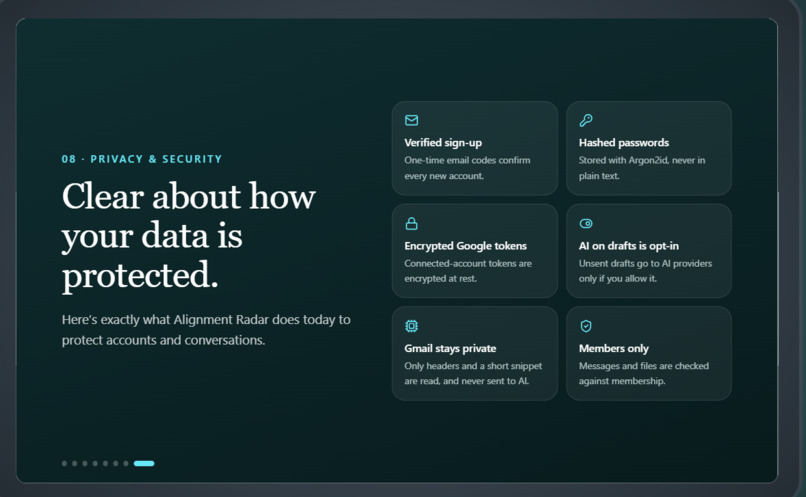
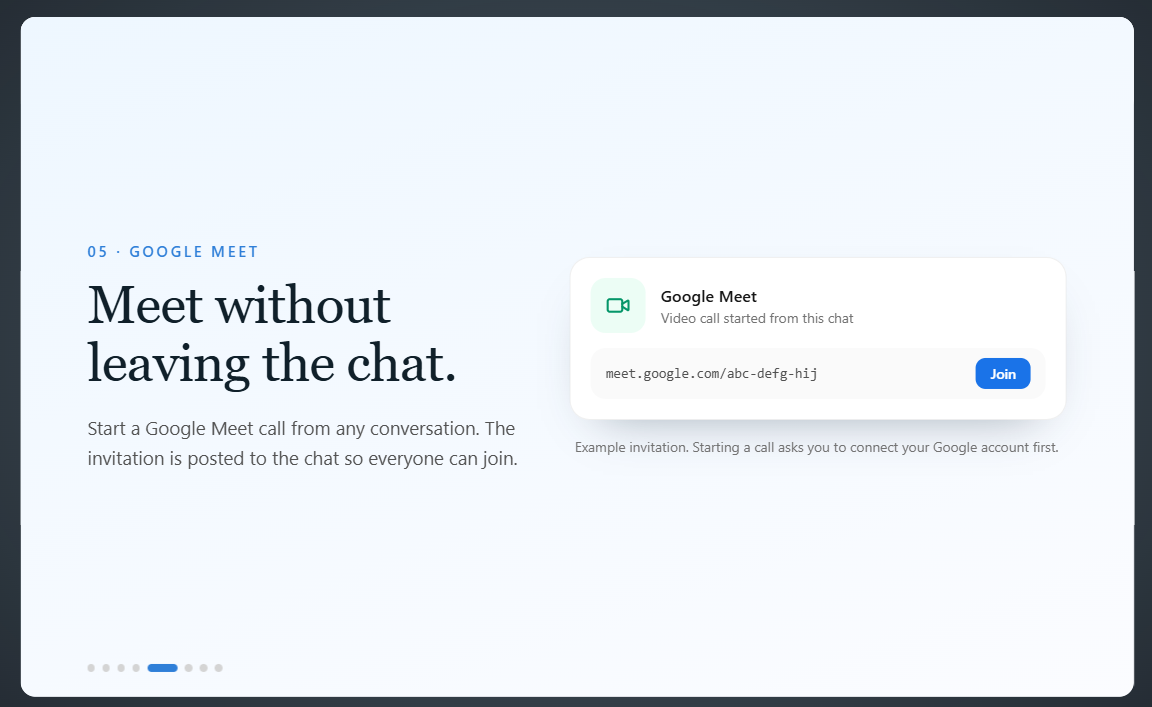
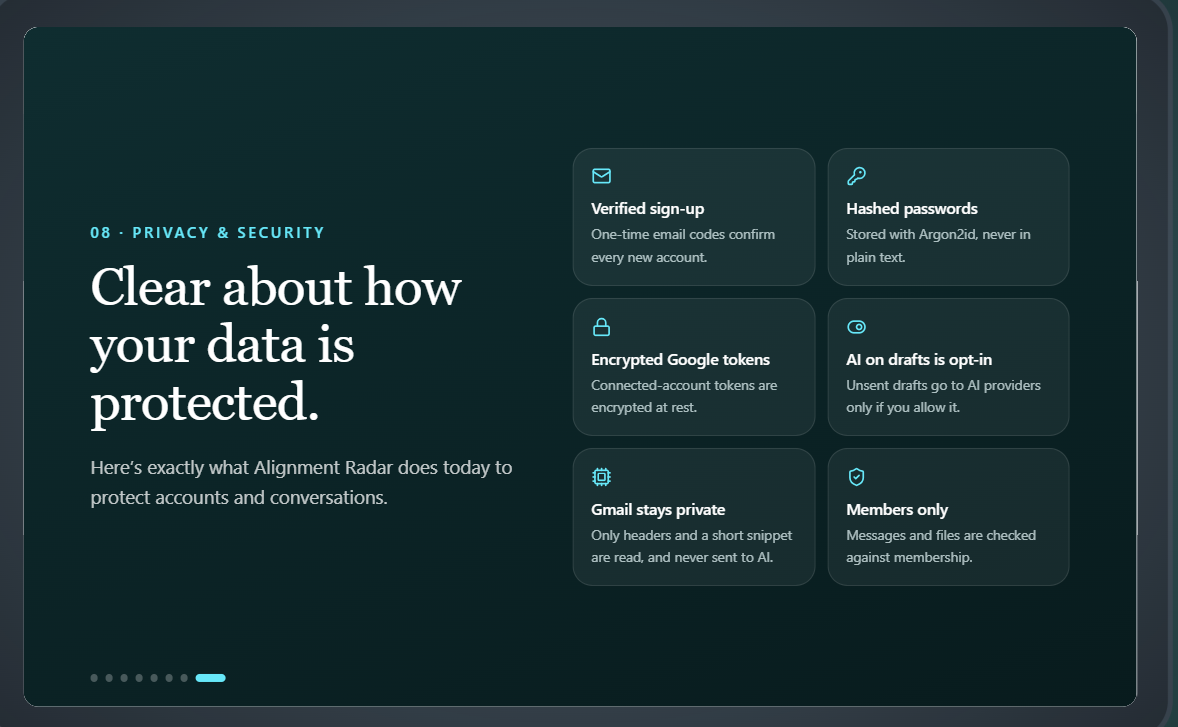
The application supports email verification and Google Sign-In. We also integrated external services for contextual recommendations, including YouTube, Spotify, and web search.
The frontend is deployed on Vercel, and the backend is hosted on Render.
Challenges We Ran Into
One of our biggest challenges was making AI assistance useful without interrupting conversations.
Different messages require different levels of analysis. Correcting a spelling mistake is relatively simple, while identifying a misunderstanding may require considering the surrounding conversation. We explored ways to handle these tasks according to their requirements.
Another challenge was avoiding unnecessary alerts. Informal language and incomplete sentences are common in everyday conversations, so not every unusual sentence should be treated as a communication problem.
We also worked on coordinating real-time messages, AI analysis, and alignment status updates while integrating authentication and external services.
Accomplishments That We're Proud Of
We built a working foundation for a messaging application that focuses on communication clarity rather than simply delivering messages.
We are proud of bringing AI-assisted message analysis directly into conversations, supporting direct and group chats, and creating a workflow that allows participants to clarify and resolve potential misunderstandings.
We also brought together real-time communication, authentication, AI services, and contextual recommendations in one application.
Most importantly, we turned an everyday problem into a practical project that explores how AI can help people communicate more effectively.
What We Learned
Building Alignment Radar taught us that creating a useful AI application involves more than connecting a language model to an API. The system must respond quickly, consider context, and provide suggestions that are genuinely helpful.
We also learned that AI cannot always determine what someone means with complete accuracy. A message that appears ambiguous to a model may be perfectly understandable to the people involved.
This shaped our approach: AI should help people recognize possible misunderstandings and ask better questions, rather than assume it always knows the correct interpretation.
Along the way, we gained experience with full-stack development, real-time communication, external API integration, authentication, and deployment.
What's Next for Alignment Radar
We plan to improve Alignment Radar by making its analysis more context-aware, reducing response times, and supporting more languages and communication styles.
We also want to improve group conversations by identifying unresolved questions, highlighting different interpretations, and helping participants confirm important decisions.
Future improvements will focus on stronger privacy controls, greater transparency around AI processing, and testing with real users to understand how effectively the application reduces misunderstandings.
Our vision is to make digital conversations clearer, more meaningful, and easier to understand.
Built With
- api
- artificial
- data
- fastapi
- intelligence
- javascript
- language
- large
- models
- nemotron
- nim
- nvidia
- postgresql
- python
- react
- render
- rest
- socket.io
- spotify
- vercel
- vite
- youtube


Log in or sign up for Devpost to join the conversation.