-
-
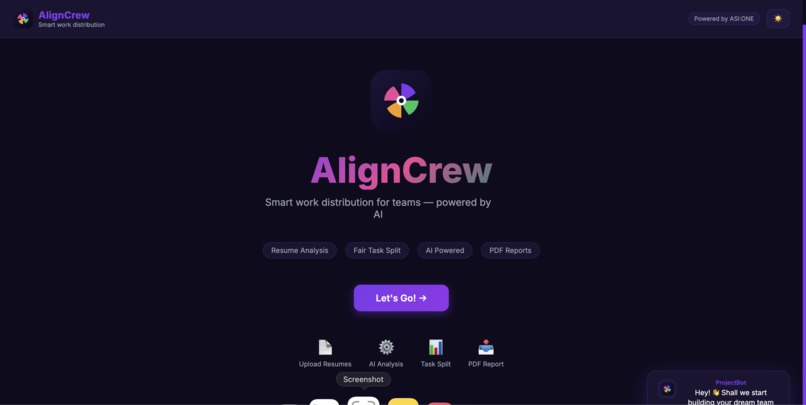
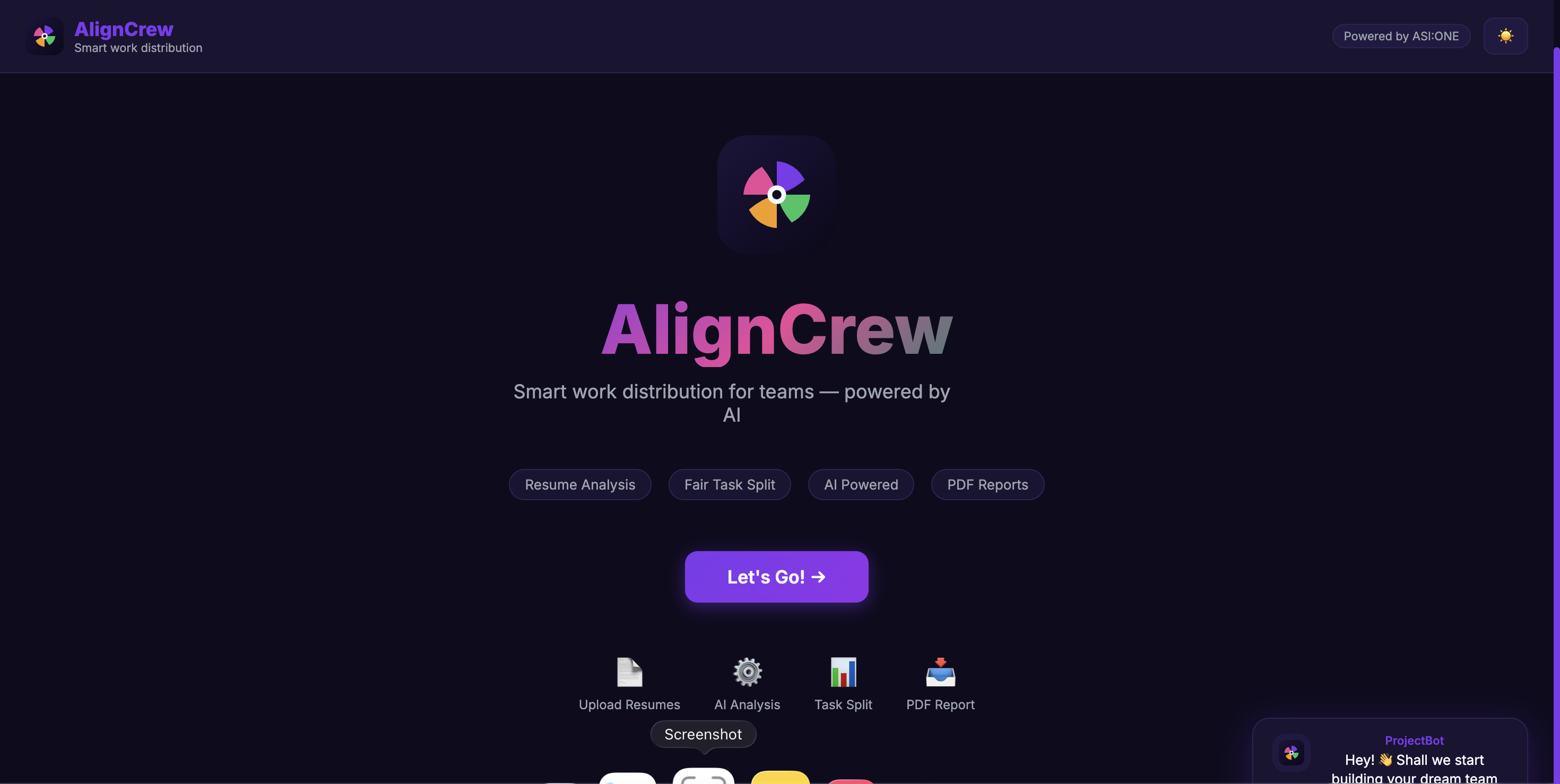
Welcome page in dark mode
-
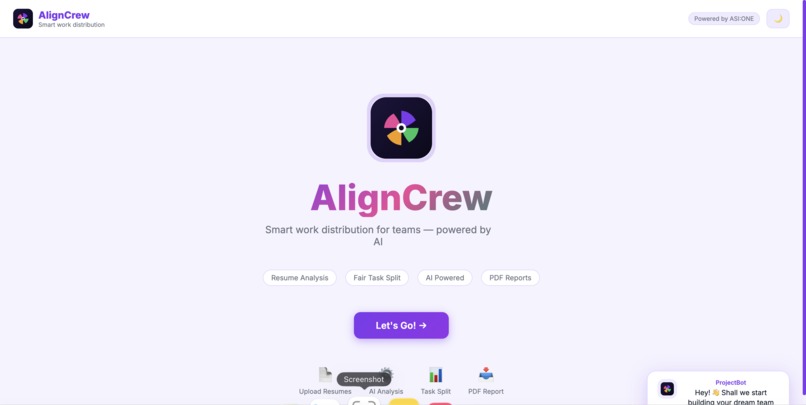
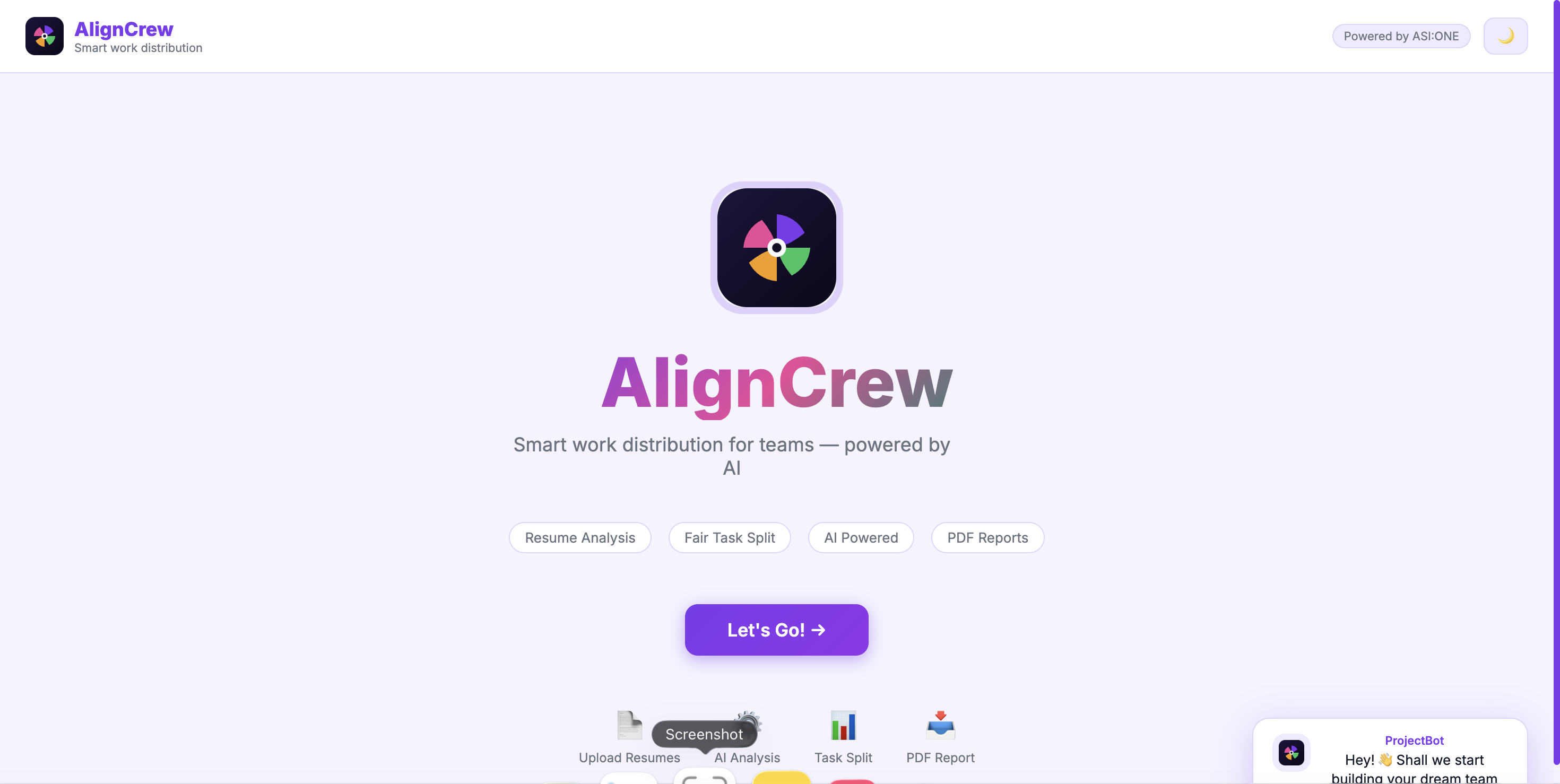
Welcome page in light mode
-
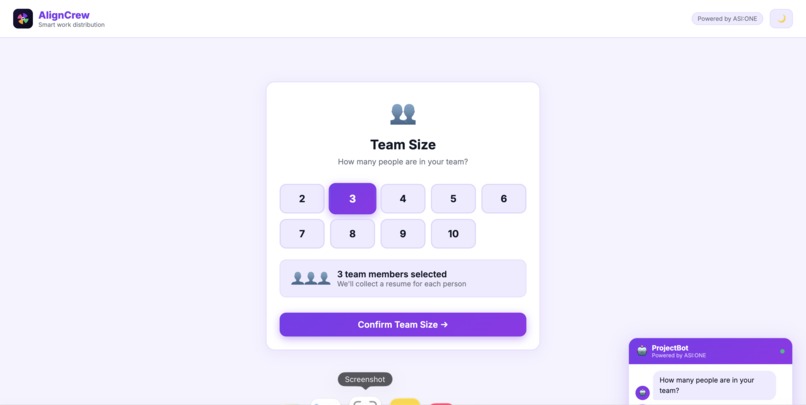
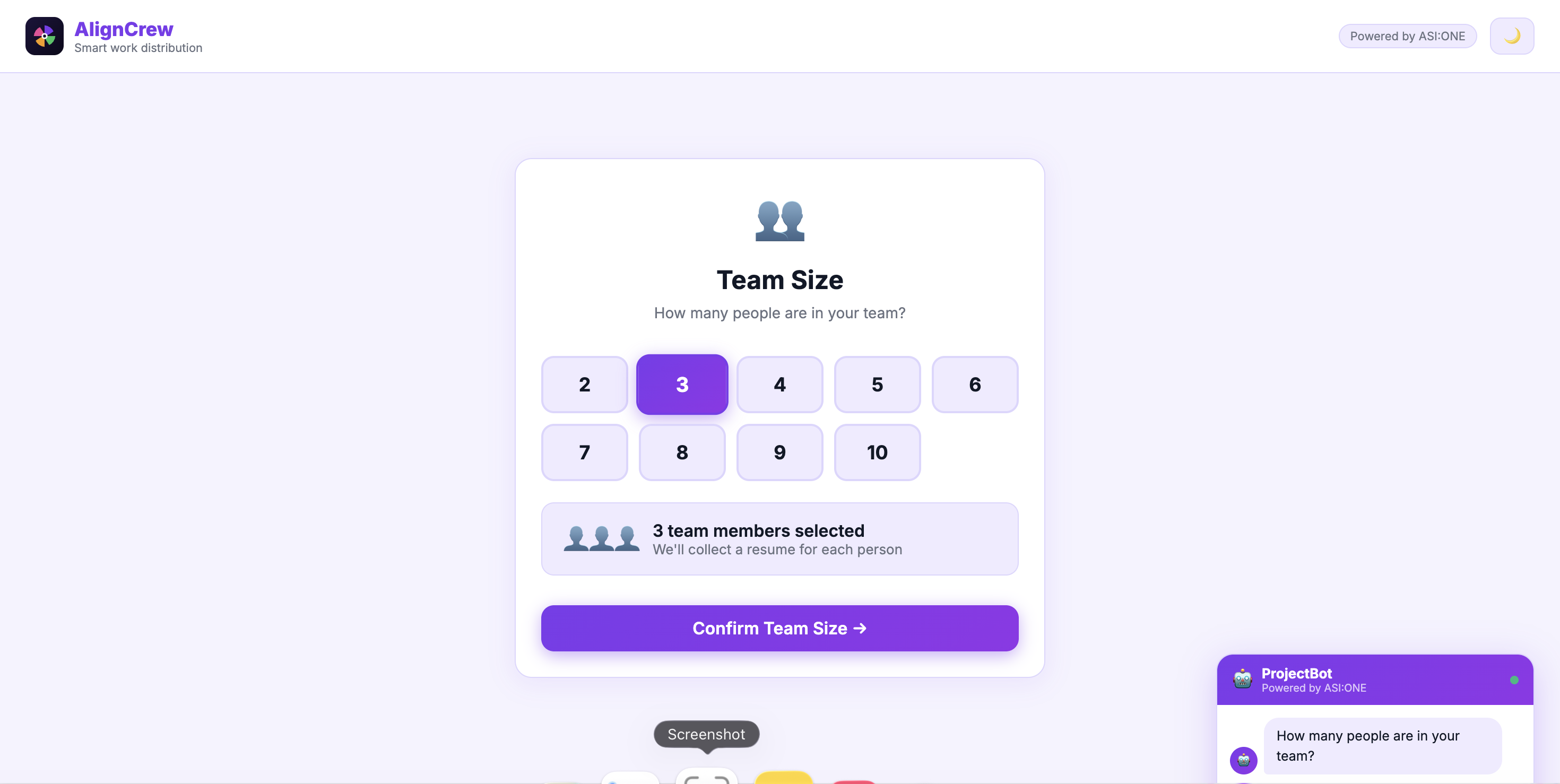
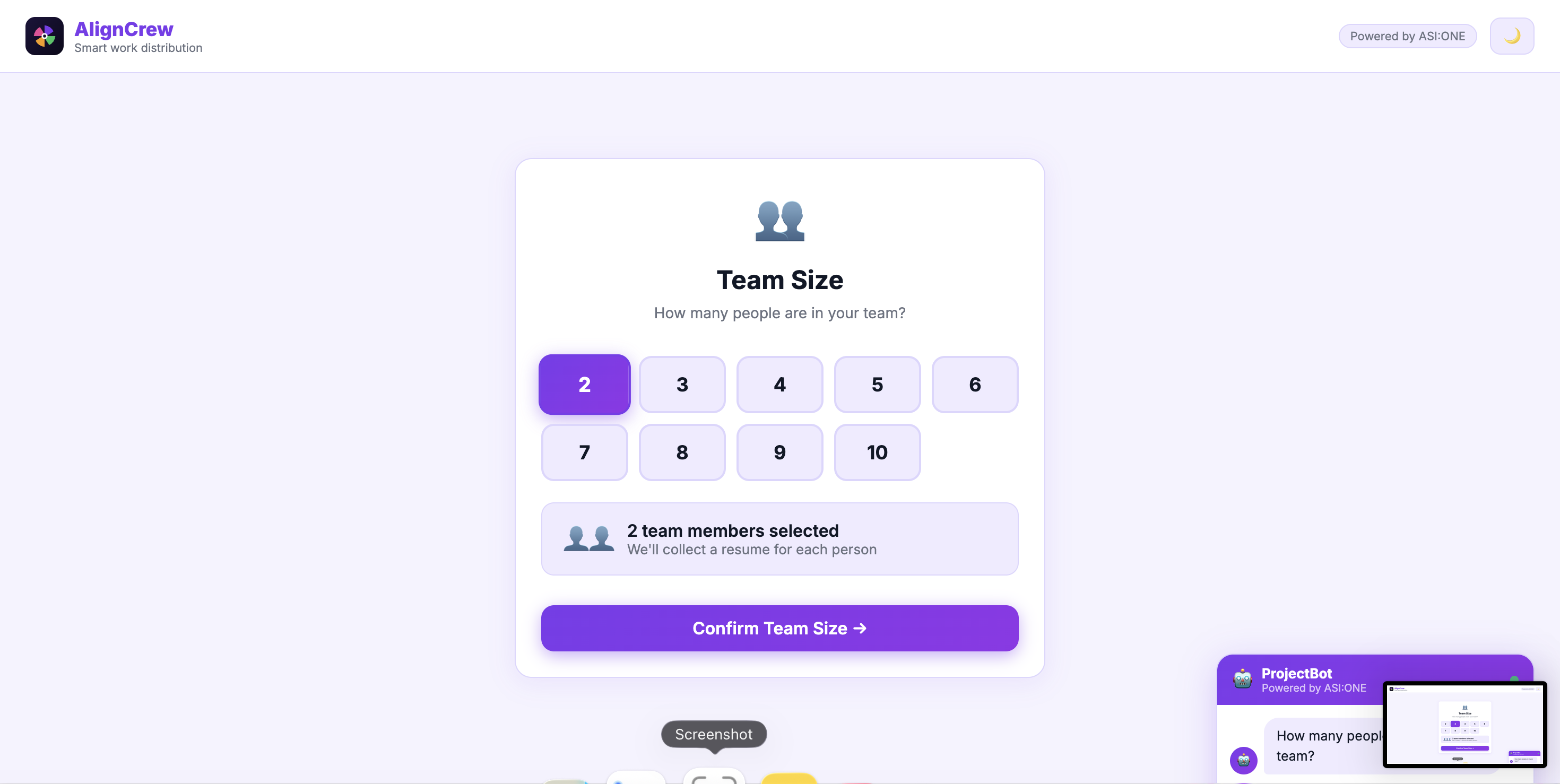
Selecting number of people in the team
-
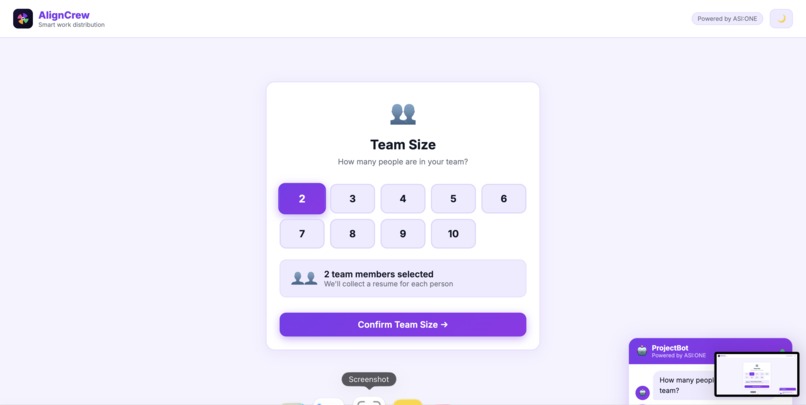
Testcase : Took our team as a test case
-
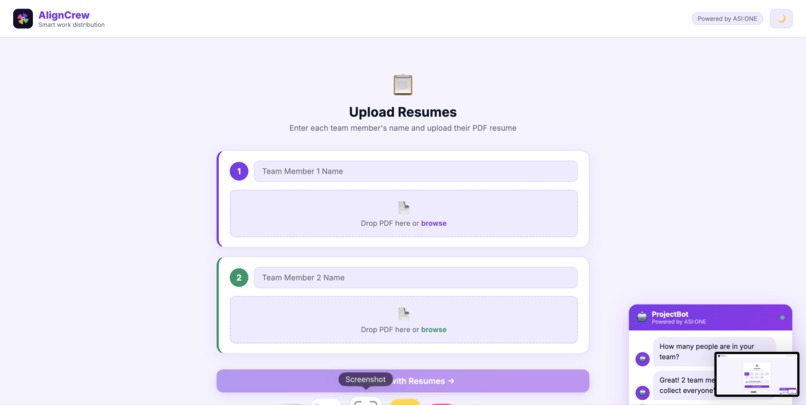
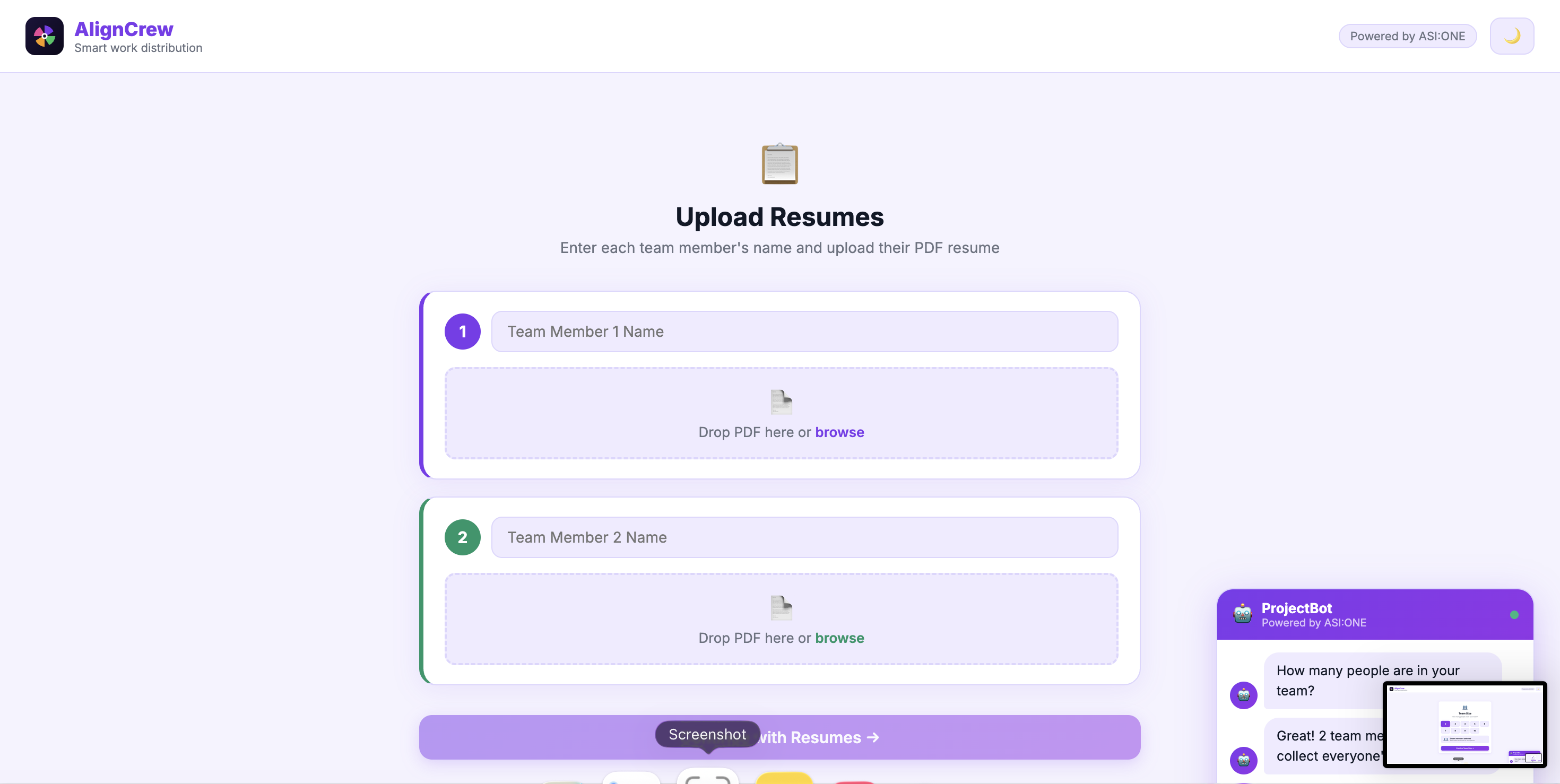
Page where we give the details of the users
-
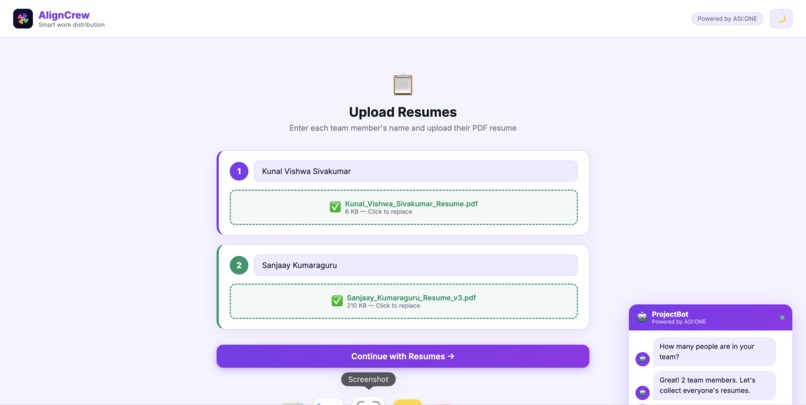
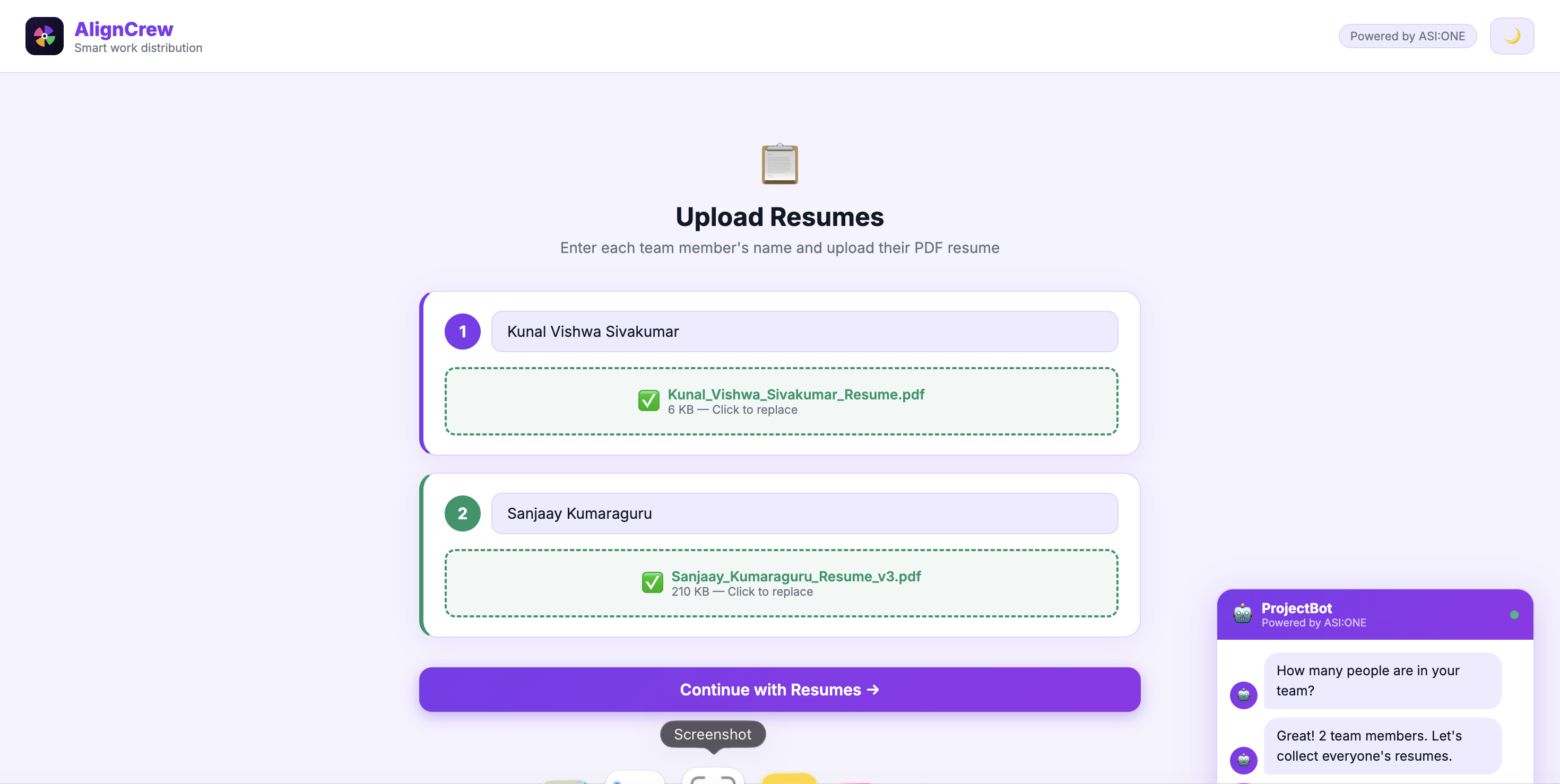
Testcase : Naming the person and attaching their resumes
-
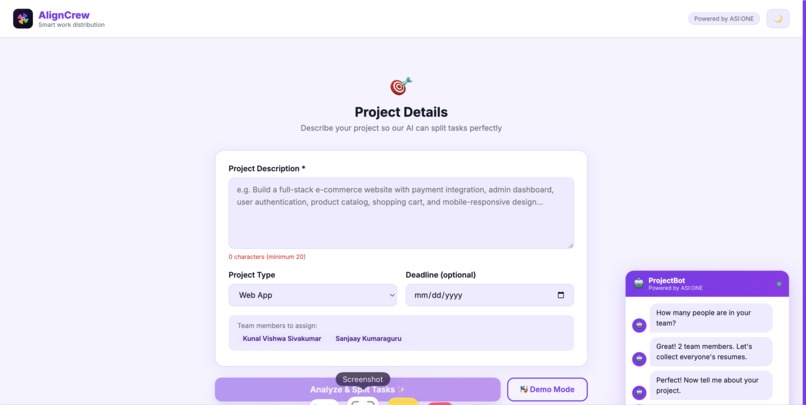
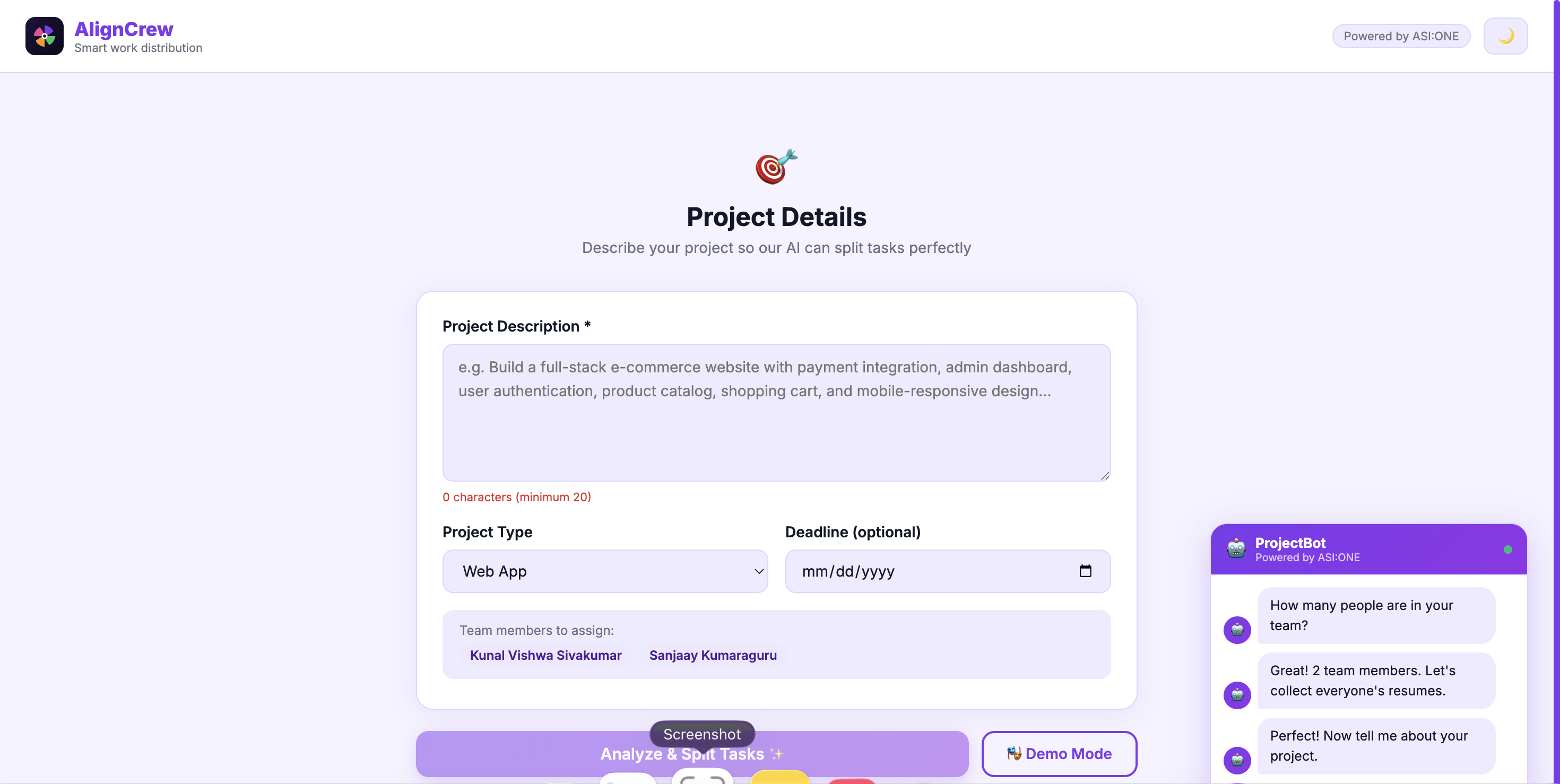
Page where we give the description of the project and deadline
-
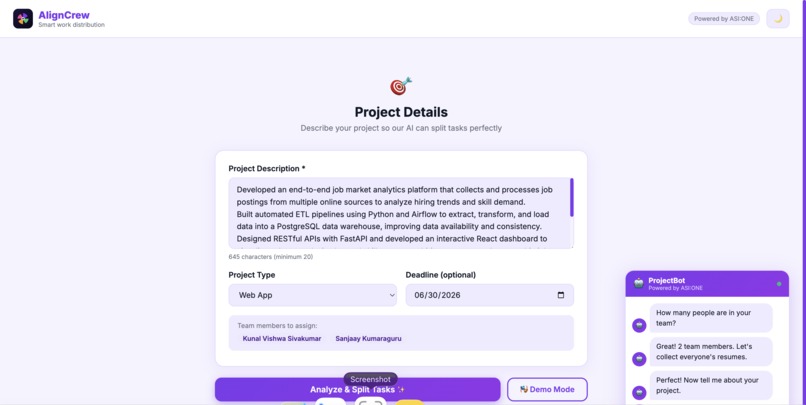
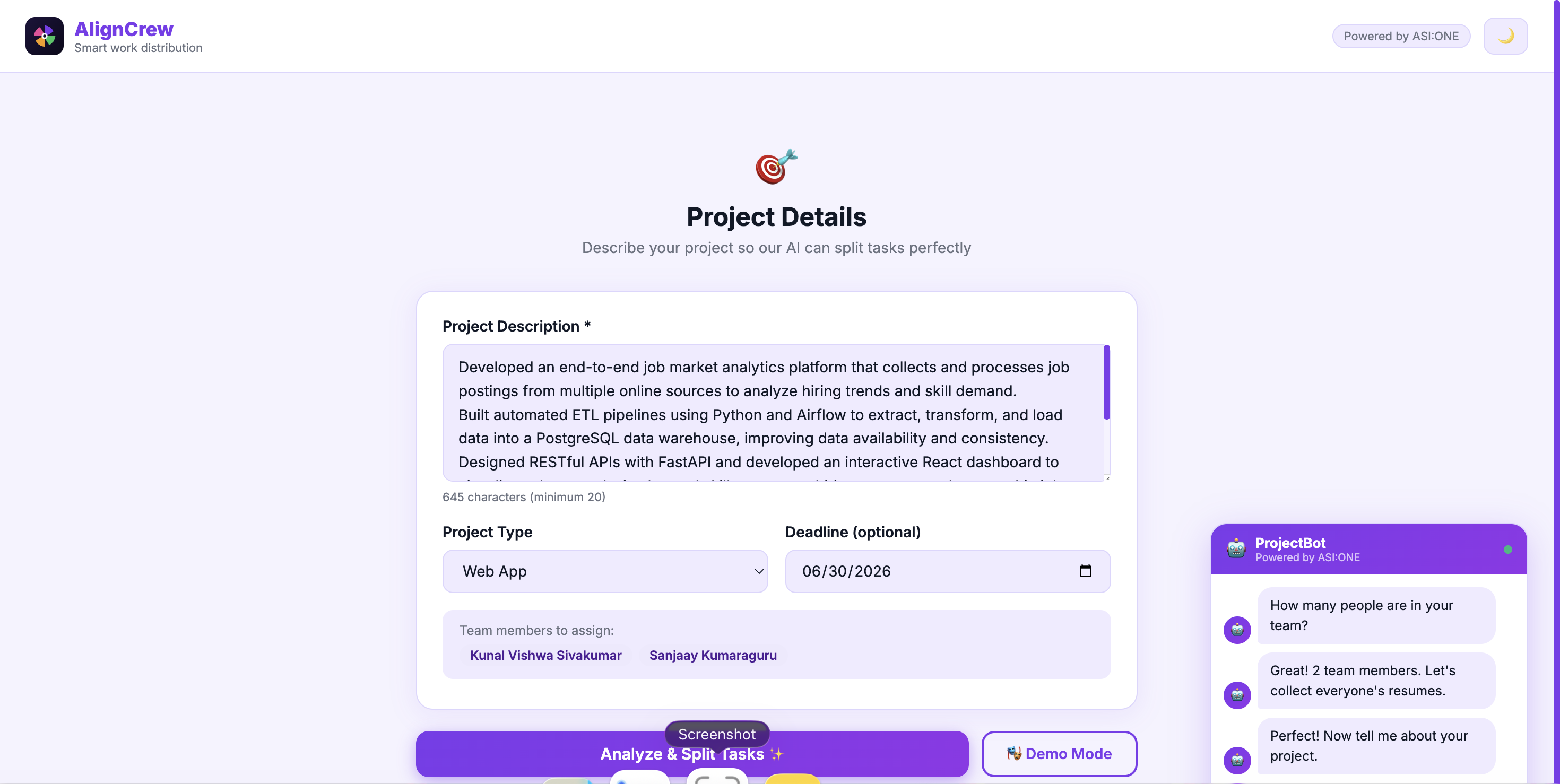
Testcase : Gave a sample project with a deadline
-
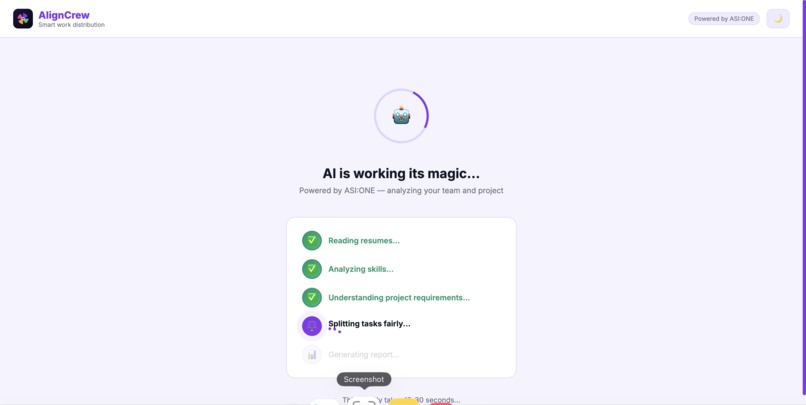
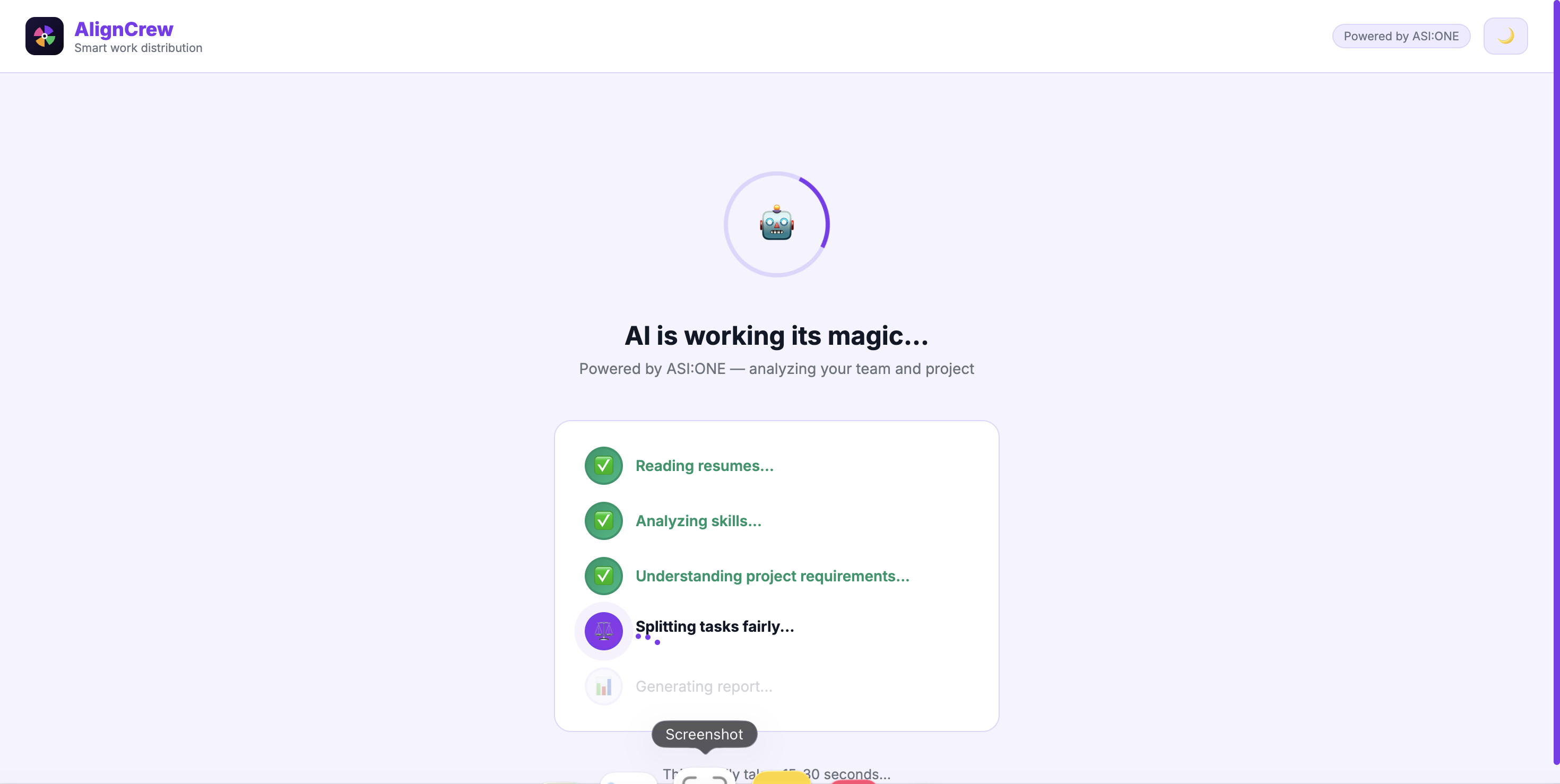
Testcase : AlignCrew starts analyzing
-
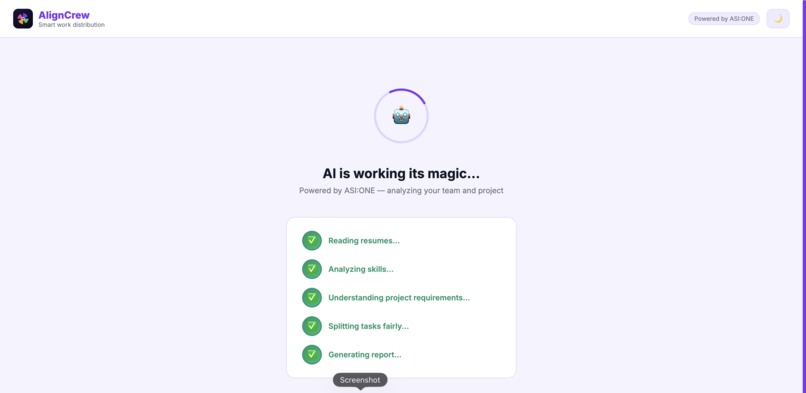
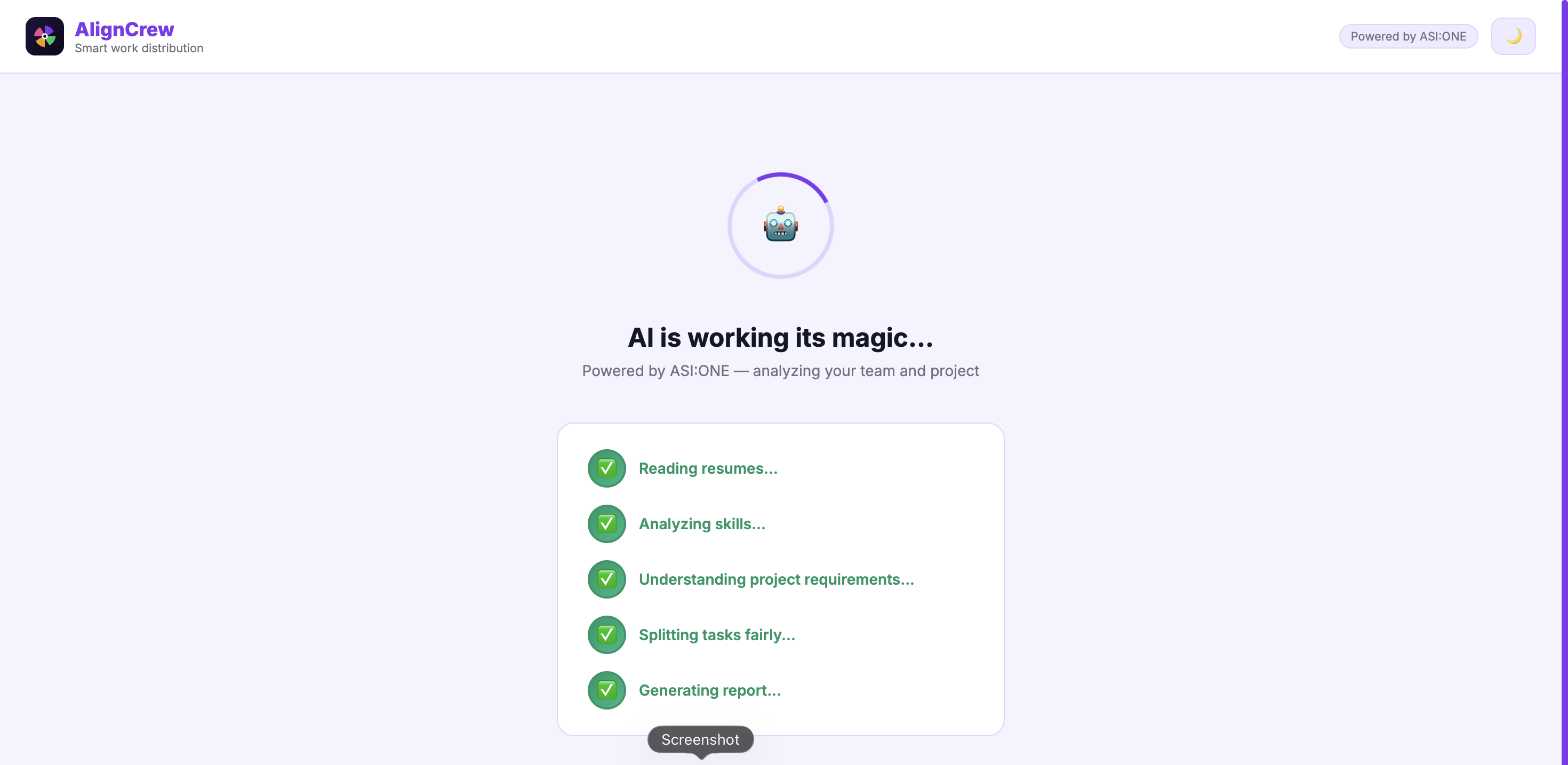
Testcase : AlignCrew finished analyzing
-
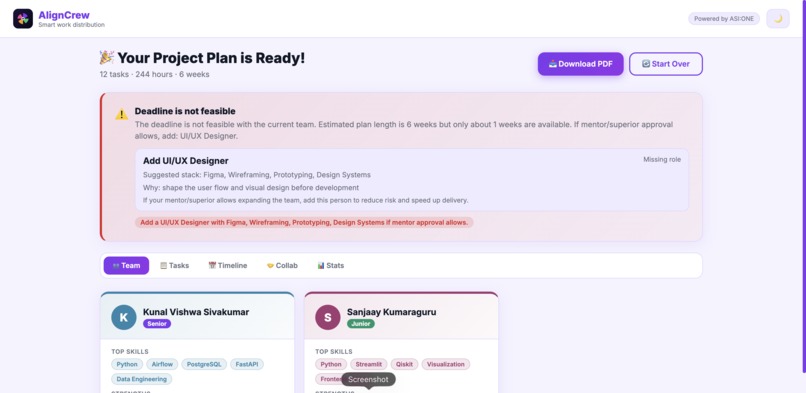
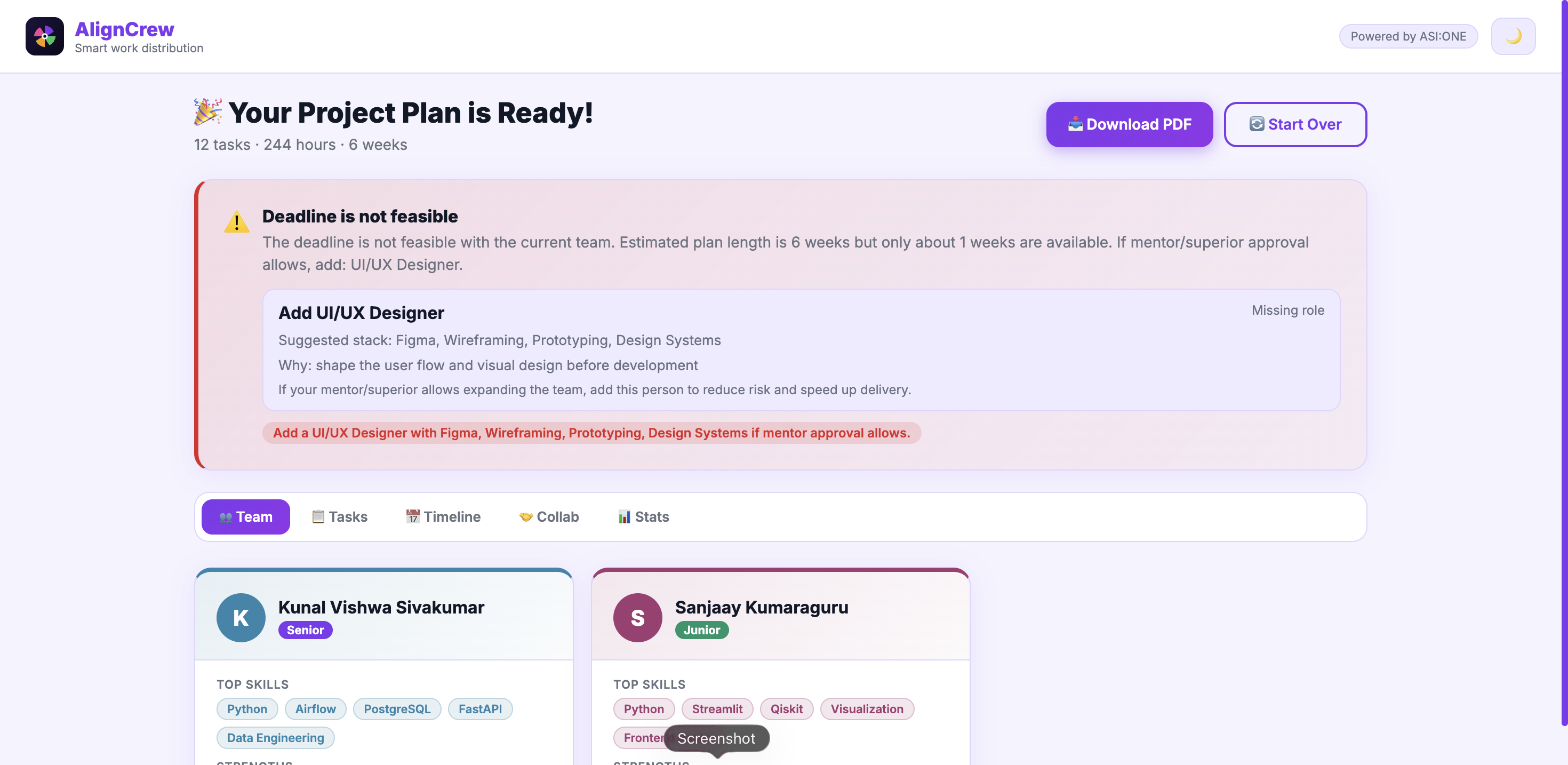
Testcase : Gives a detailed report based on the resume for the project given
-
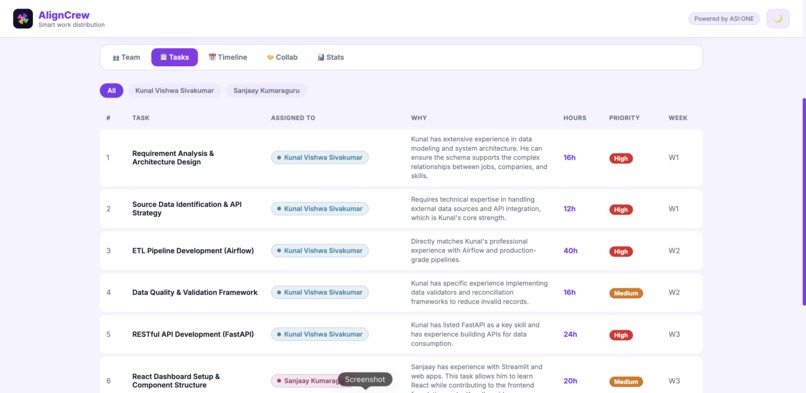
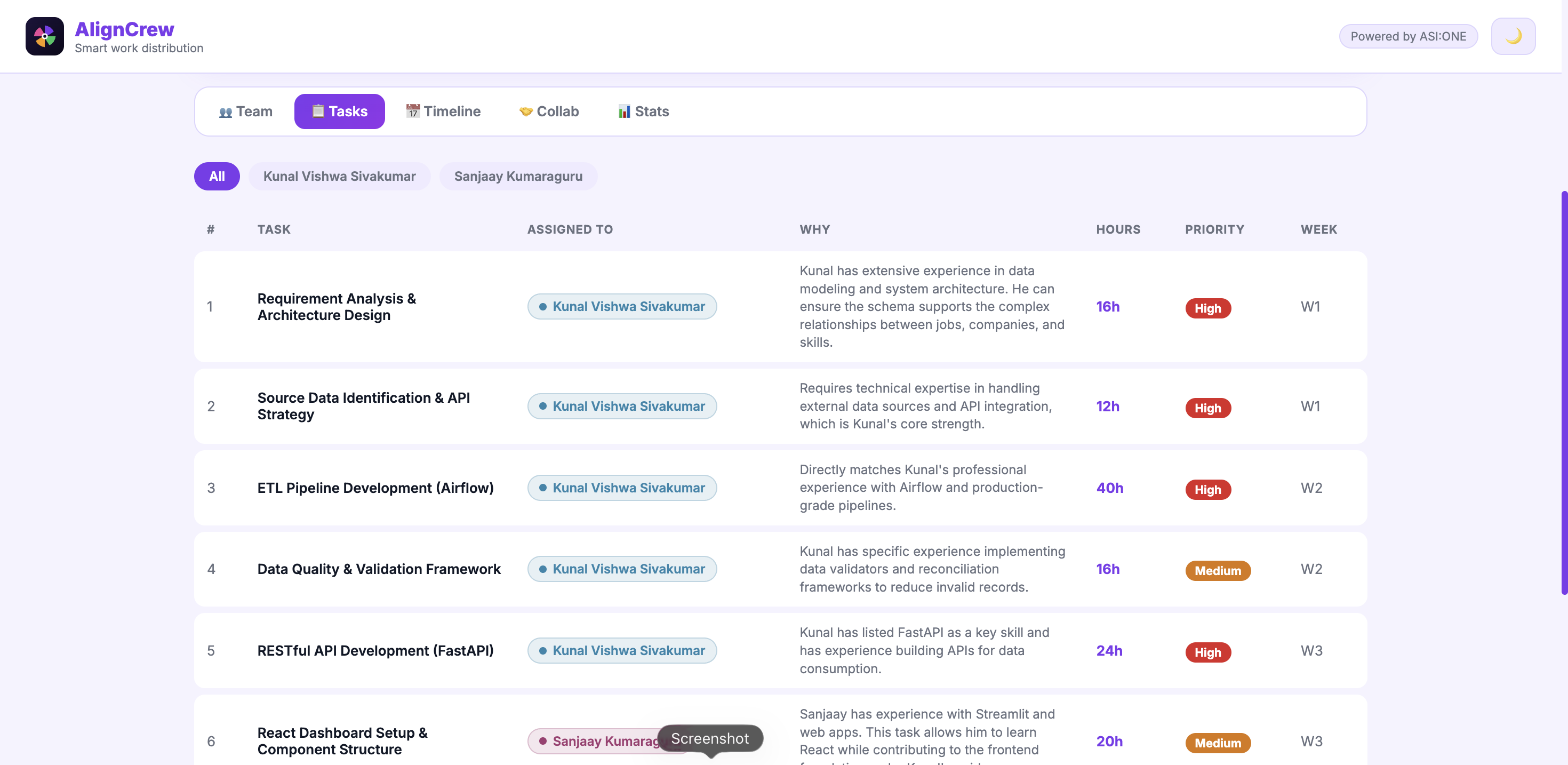
Testcase : Task split page
-
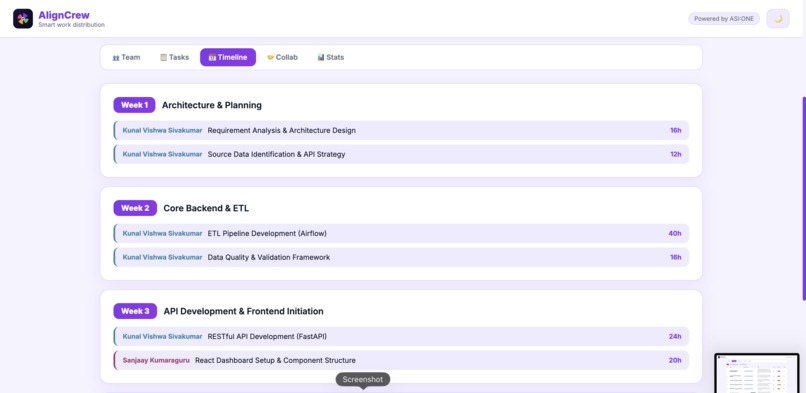
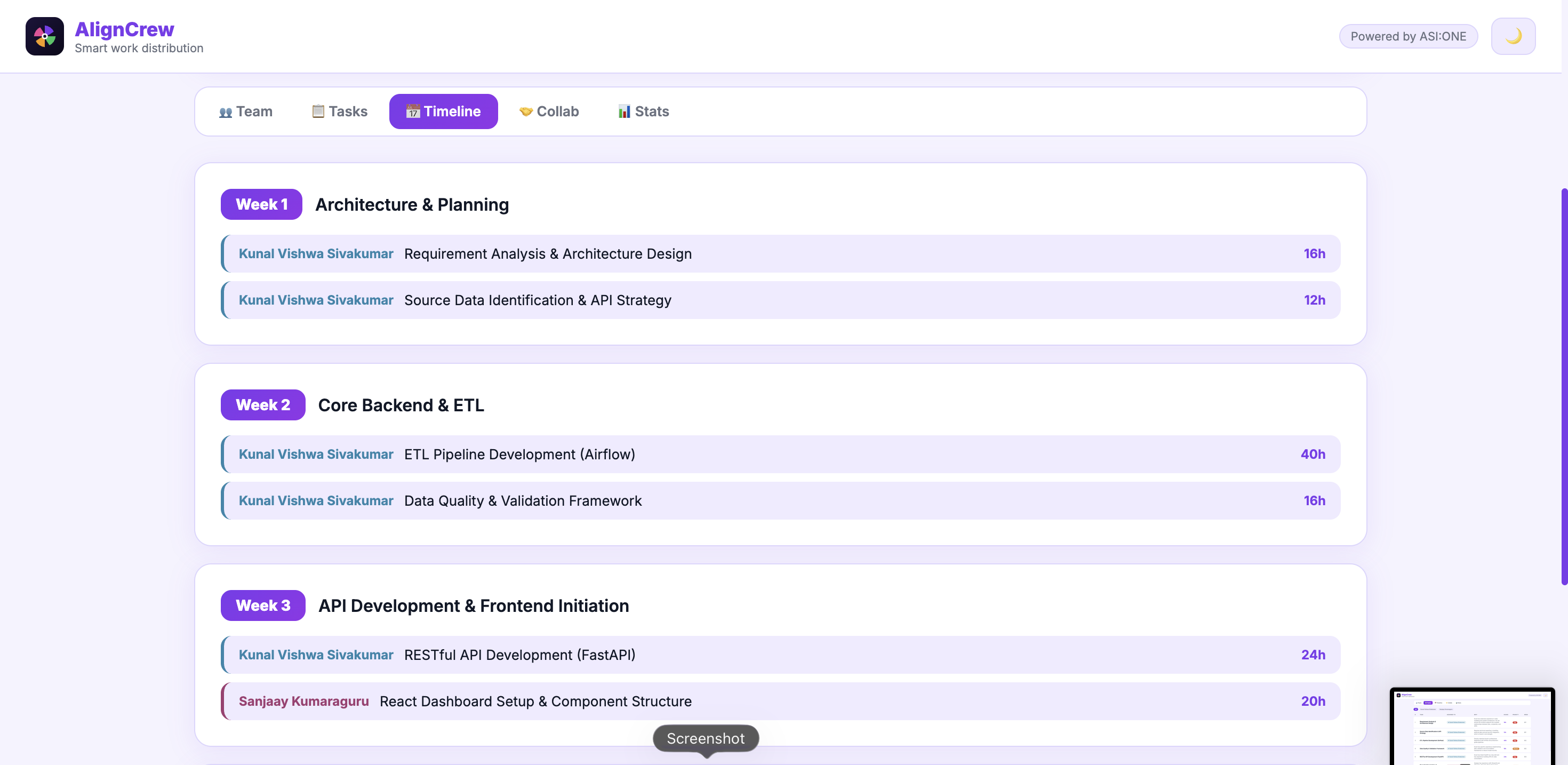
Testcase : Timeline page
-
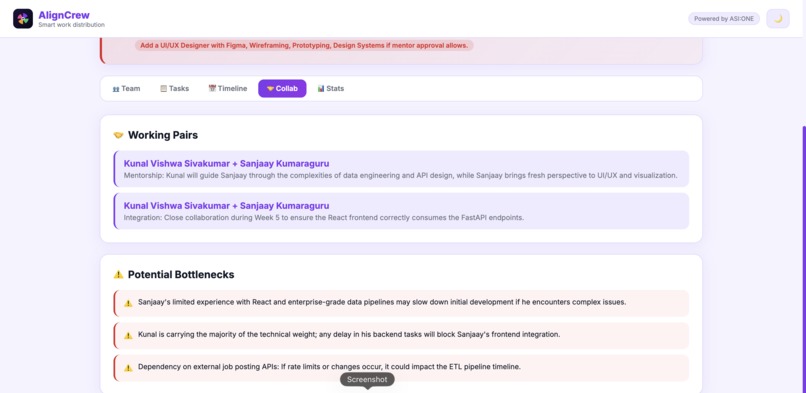
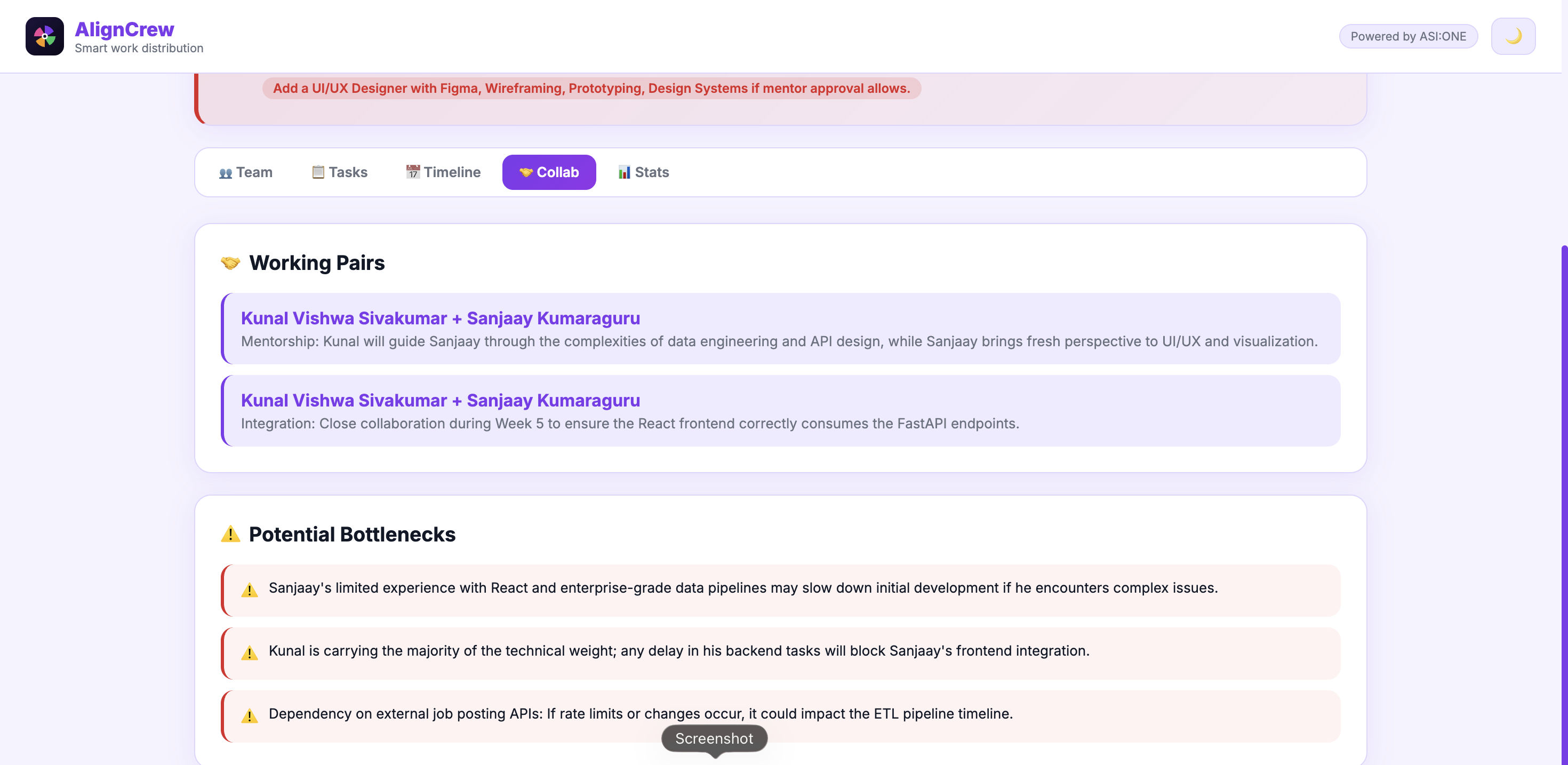
Testcase : Collab Page
-
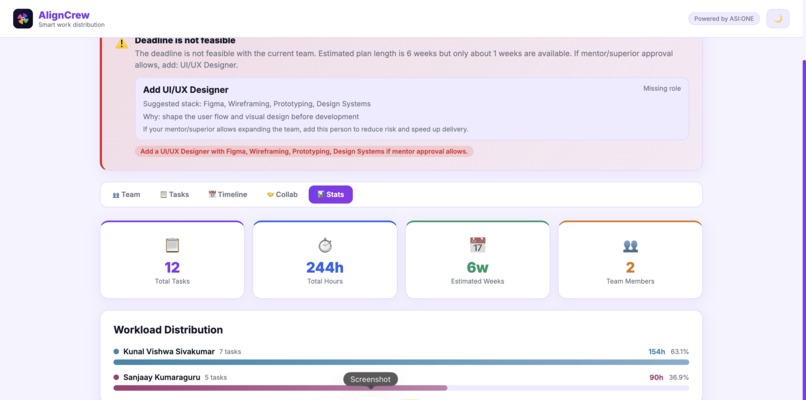
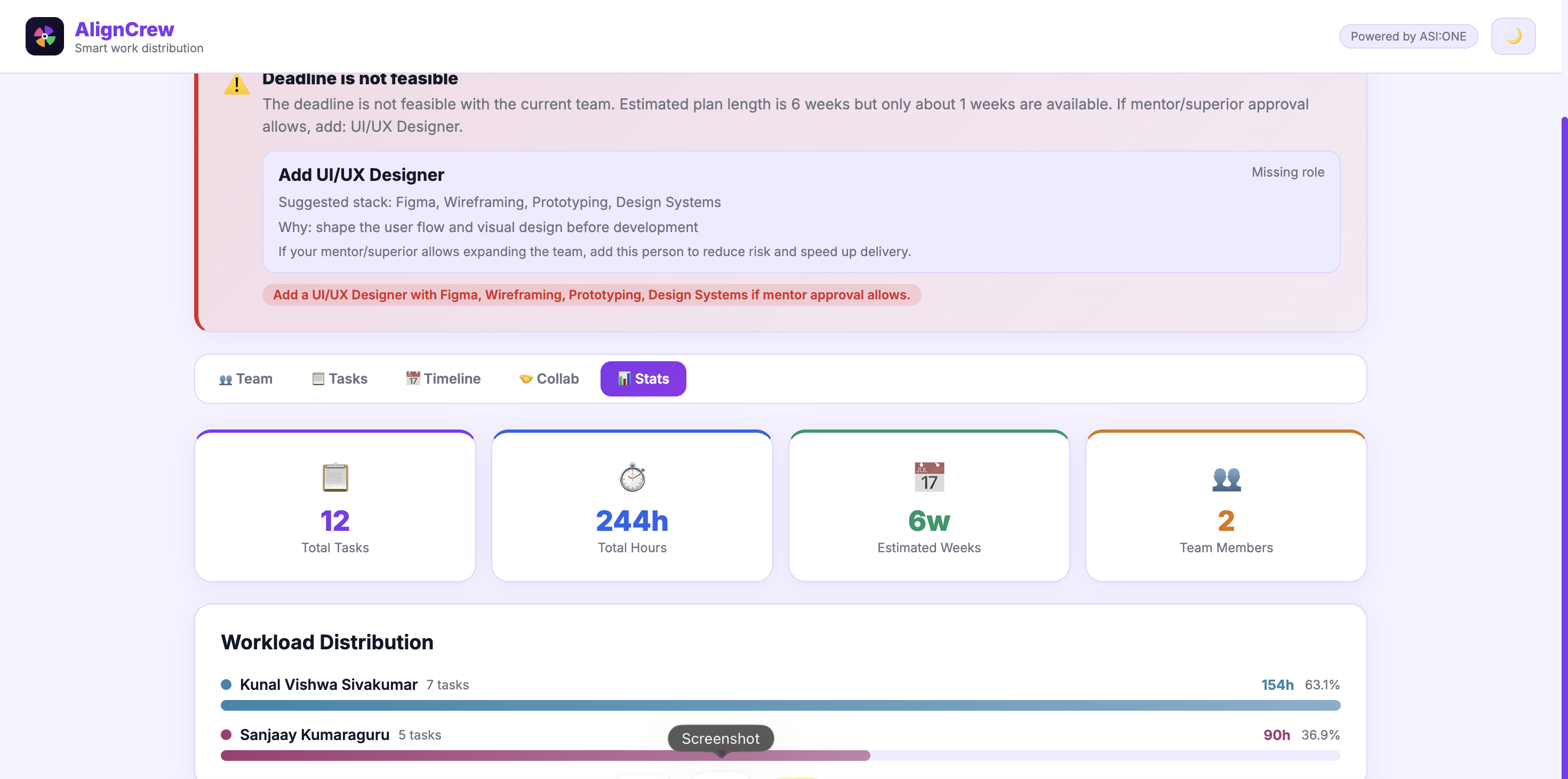
Testcase : Stats
-
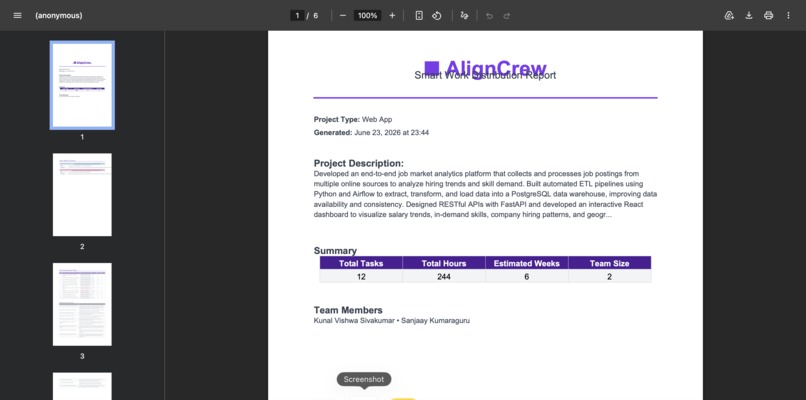
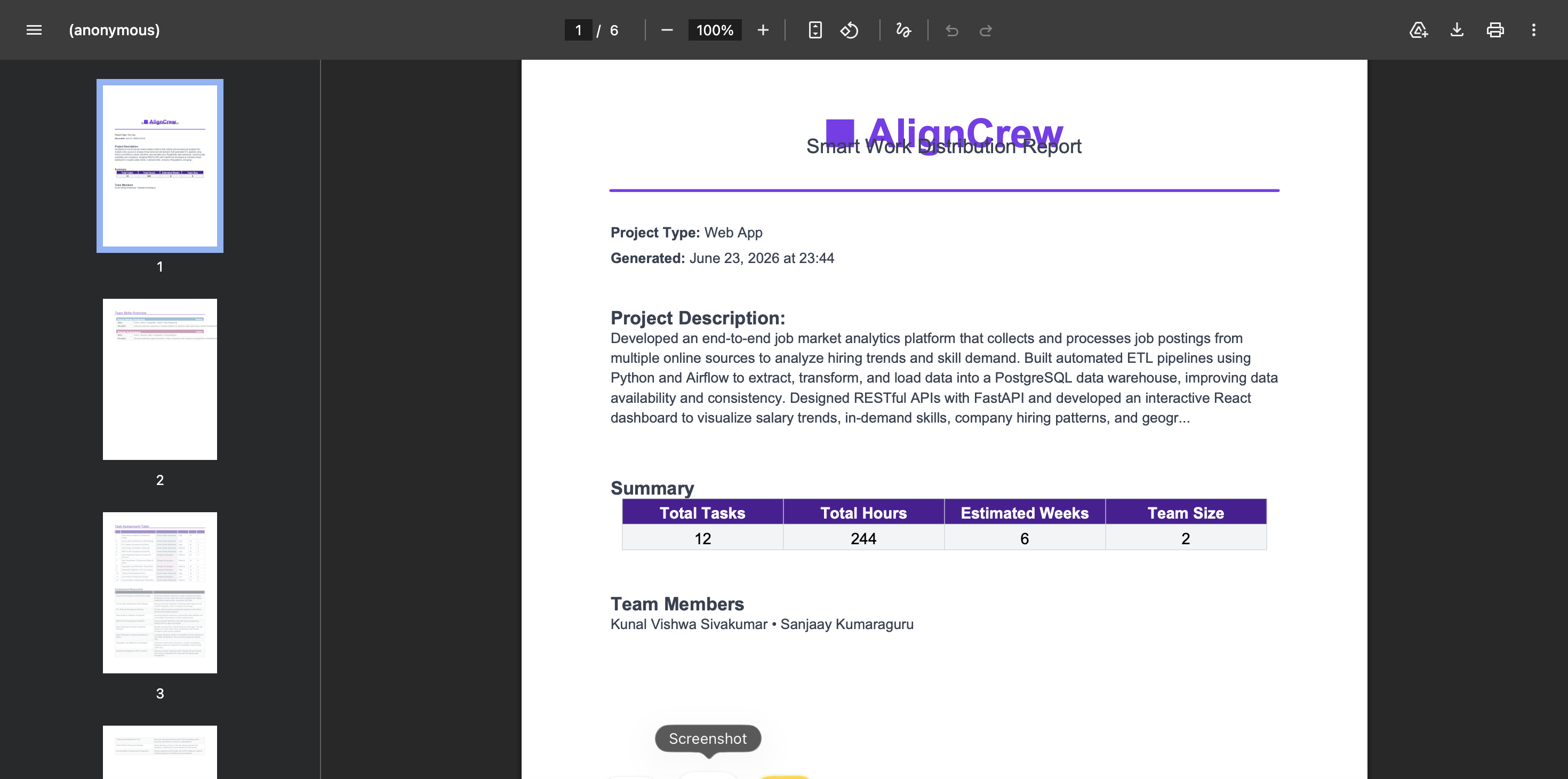
Testcase : Downloaded report
Inspiration
The inspiration came before we even had an idea. When our team sat down to start the hackathon, the first thing we got stuck on was how to split the work among ourselves. Who takes the frontend, who handles the AI, who is better suited for what? We spent real time just trying to divide tasks fairly, and we realized that the struggle we were having was the problem itself. Almost every team, in school, at work, or in a hackathon, hits this same wall at the start. So instead of looking past it, we turned it into our problem statement: what if an AI could look at everyone's actual skills and split the work for us? That is how AlignCrew was born, out of the exact problem we were living through.
What it does
AlignCrew reads each team member's resume, pulls out their real skills and experience, and then matches every project task to the person most ready to own it. It also balances the workload so nobody gets buried, lays out a week by week timeline, suggests which people should pair up, and flags likely bottlenecks before they happen. When you are done, you can download a clean PDF report of the whole plan. There is also a demo mode so you can see the full flow without uploading anything or needing an API key.
How we built it
The frontend is a React 18 app built with Vite, with a focus on a clean, modern UI and smooth transitions. The backend is a Python FastAPI service that handles uploads, parsing, and analysis. We use PyMuPDF to extract text from the uploaded PDF resumes, then send that to the ASI:ONE API (which is OpenAI compatible) to analyze skills and generate the task assignments. ReportLab turns the final plan into a downloadable PDF. The backend is hosted on Render and the frontend on Vercel, with API requests proxied through so the two talk to each other cleanly.
What we learned
We learned a lot about getting reliable, structured output out of an LLM. Asking a model to return clean JSON for task assignments sounds easy until it hands you slightly malformed responses, so we had to design the prompts and parsing to be forgiving. We also got hands on experience wiring a Python backend and a React frontend together in production, dealing with CORS, environment variables, and free tier hosting quirks like cold starts.
Challenges we ran into
The biggest one was deployment. Our build kept failing because the host defaulted to a brand new Python version that had no prebuilt packages, so we had to pin a stable version to get it working. Connecting the frontend and backend across two different platforms without running into CORS issues took some figuring out, and we solved it by routing API calls through a proxy. On the AI side, handling inconsistent JSON from the model and keeping resume parsing robust across different PDF formats were ongoing challenges we kept refining.
What's next for AlignCrew
The big one is a direct Jira integration, so AlignCrew can read your backlog and assign tasks straight into your board without any copy pasting. After that we want to let teams give feedback on assignments so the AI learns and improves over time, and add live collaboration so a whole team can adjust the plan together in real time.
Built With
- asi:one
- css
- fastapi
- html
- javascript
- openai-api
- pymupdf
- python
- react
- render
- reportlab
- vercel
- vite


Log in or sign up for Devpost to join the conversation.