-
-
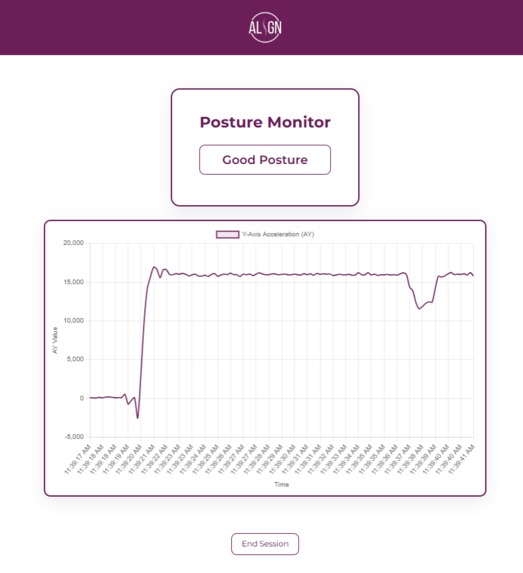
Front-end
-
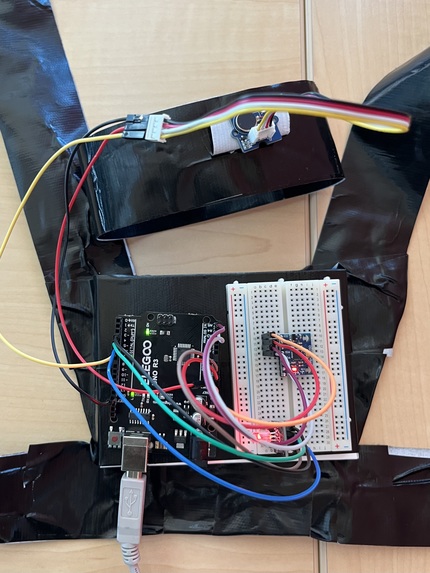
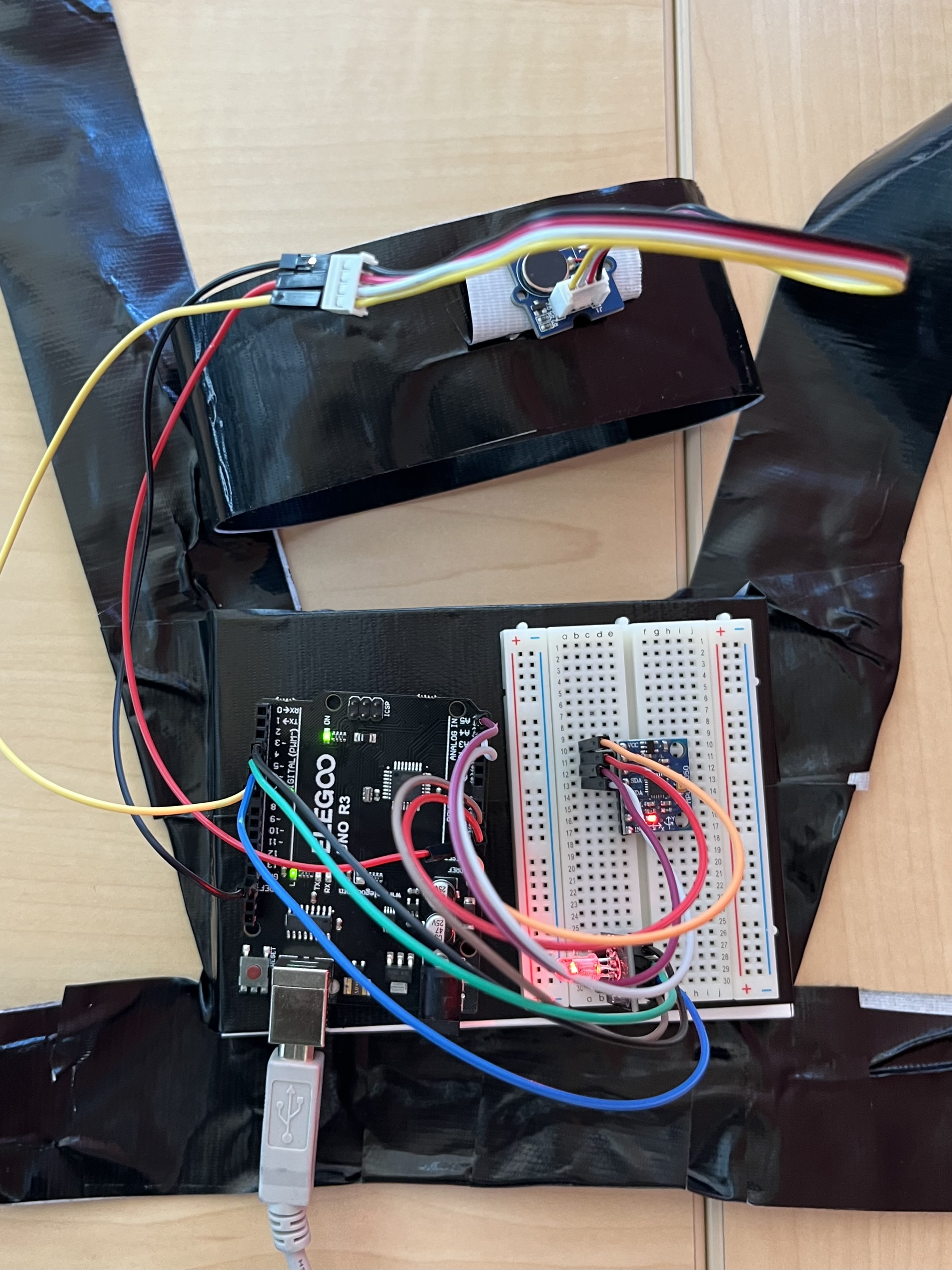
Arduino Circuit
-
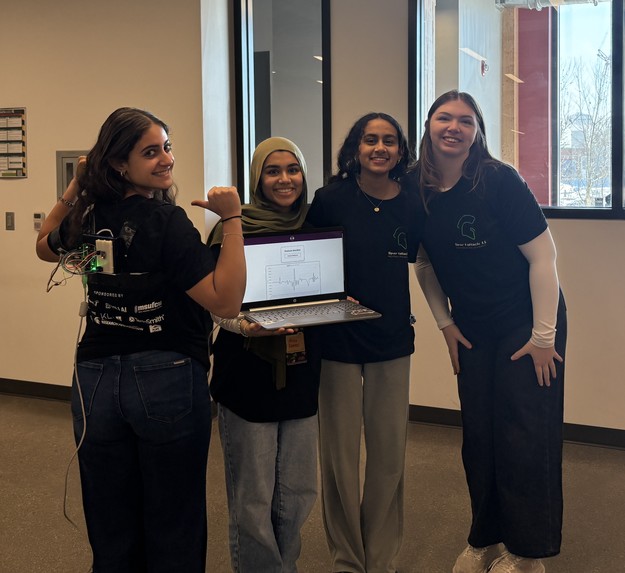
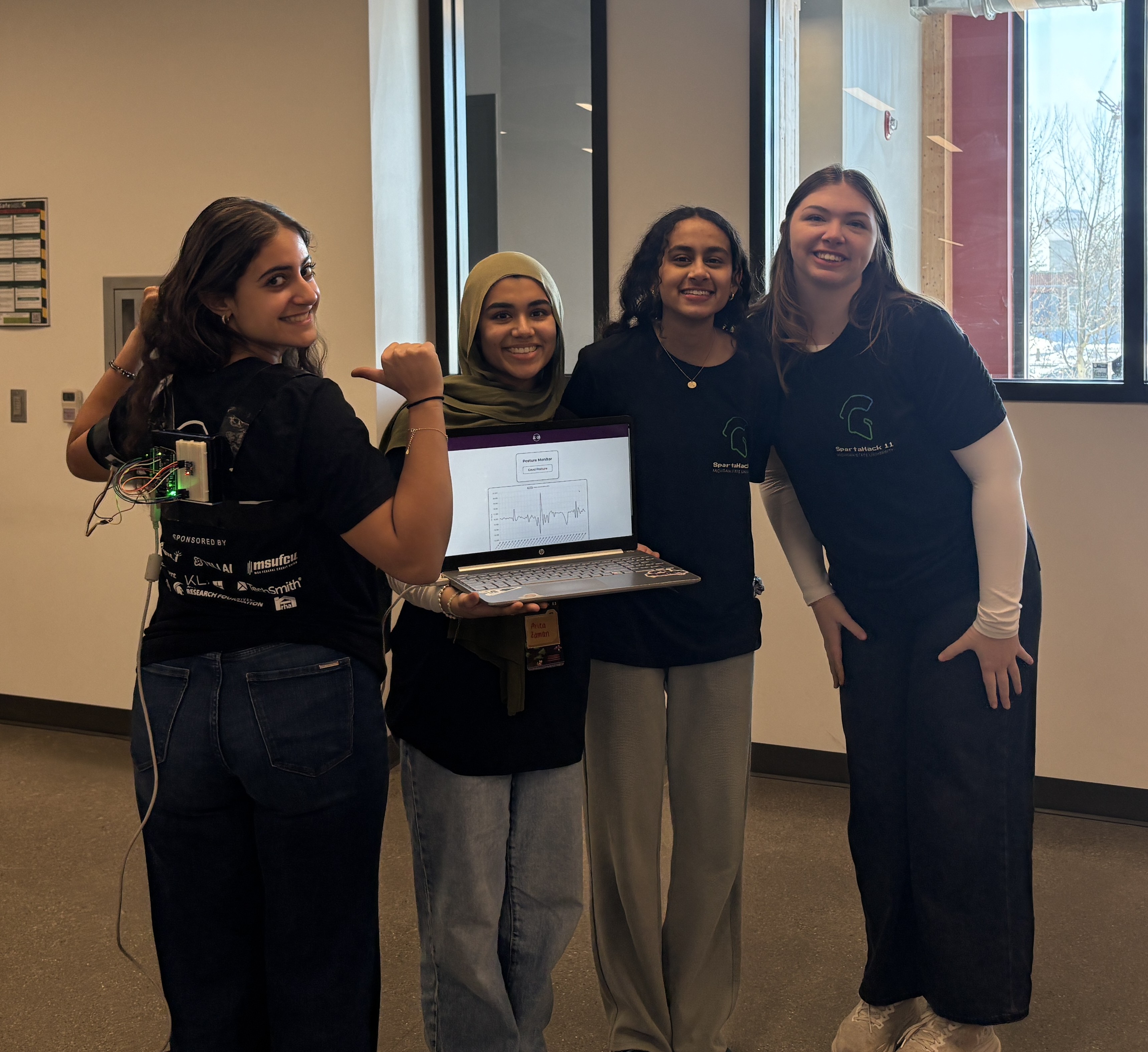
Our team!!
Inspiration
As CS + CE students, we spend hours hunched over laptops, often forgetting to sit up straight. We wanted a simple way to help ourselves and others maintain good posture throughout the day.
What it does
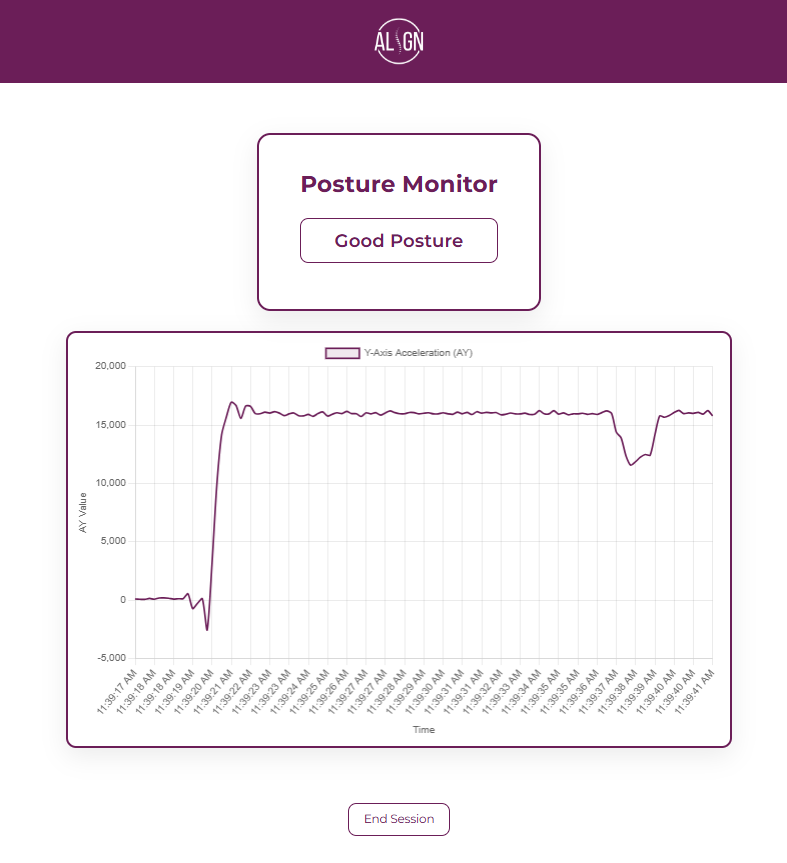
ALIGN uses a wearable harness with an IMU sensor to detect posture in real time. The Arduino streams posture data to a Node.js server, which updates a web dashboard live. The dashboard displays a Chart.js graph of your posture over time, shows your current status, and triggers a chime plus vibration via a Grove vibration motor whenever your posture switches from good to bad.
How we built it
We attached an IMU sensor and a Grove vibration motor to a harness connected to an Arduino. The Arduino reads the sensor’s Y-axis and triggers the vibration motor and a chime when poor posture is detected. Using Node.js and the serialport library, posture data is sent to a WebSocket server, and the frontend updates the Chart.js live chart and status display in real time.
Challenges we ran into
- The first IMU we tried was powered with 5V, which was too high and caused issues.
- We downloaded two different Arduino libraries and each had different functions and syntax, which made the code harder to unify.
- We had to experiment with the slouch threshold to find the “sweet spot” that accurately detected poor posture without too many false alerts.
- Ensuring accurate frontend updates required trimming and normalizing sensor data.
- Making sure the vibration motor didn't affect the data the IMU picked up was tricky.
- Auto-detecting the correct COM port reliably across Windows systems added complexity.
- Accessing the Arduino port from Node while the IDE was open caused “Access denied” errors.
Accomplishments that we're proud of
- Built a fully functional wearable posture monitor with live data visualization.
- Integrated a Grove vibration motor and chime for instant feedback on bad posture.
- Created a clean, user-friendly dashboard with a real-time Chart.js graph to track posture trends.
- Solved tricky hardware-to-software communication issues on the first hackathon project try.
What we learned
We gained hands-on experience with Arduino sensors, Grove motors, serial communication, WebSockets, Chart.js, and real-time frontend updates. We also learned how small tweaks in timing and data handling can make a big difference in user experience and reliability.
What's next for ALIGN
- Monitoring scoliosis progression.
- Making the hardware more compact and wearable.
- Developing a mobile app for posture tracking on the go.
- AI-powered coaching and personalized reminders.
- Expanding sensor use to other body parts to support movement or alignment improvement, like gait correction or ergonomic training.


Log in or sign up for Devpost to join the conversation.