-
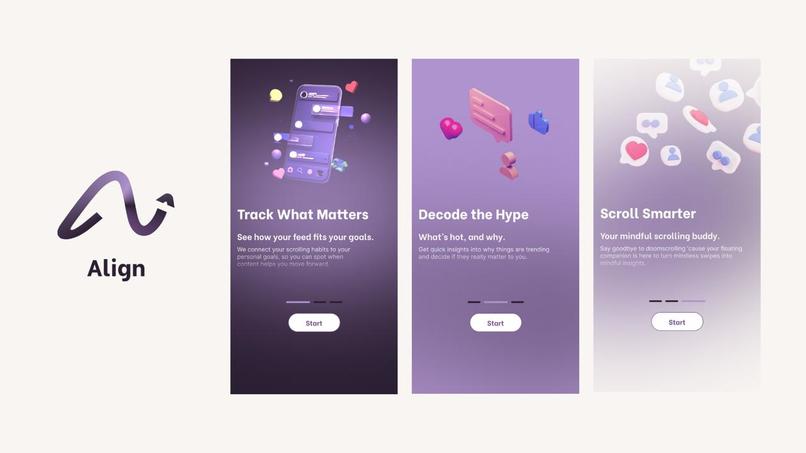
App Introduction
-
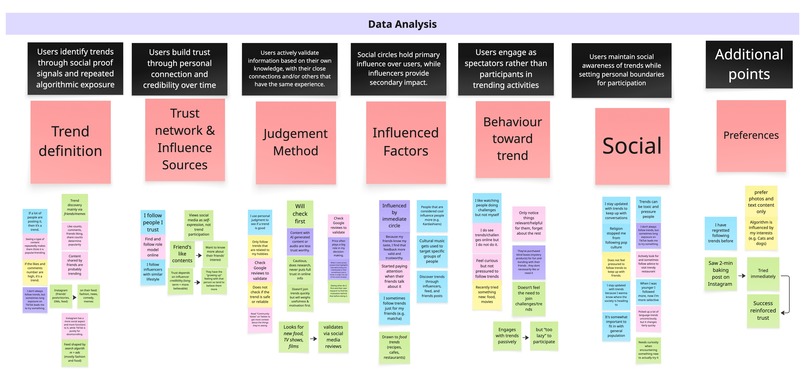
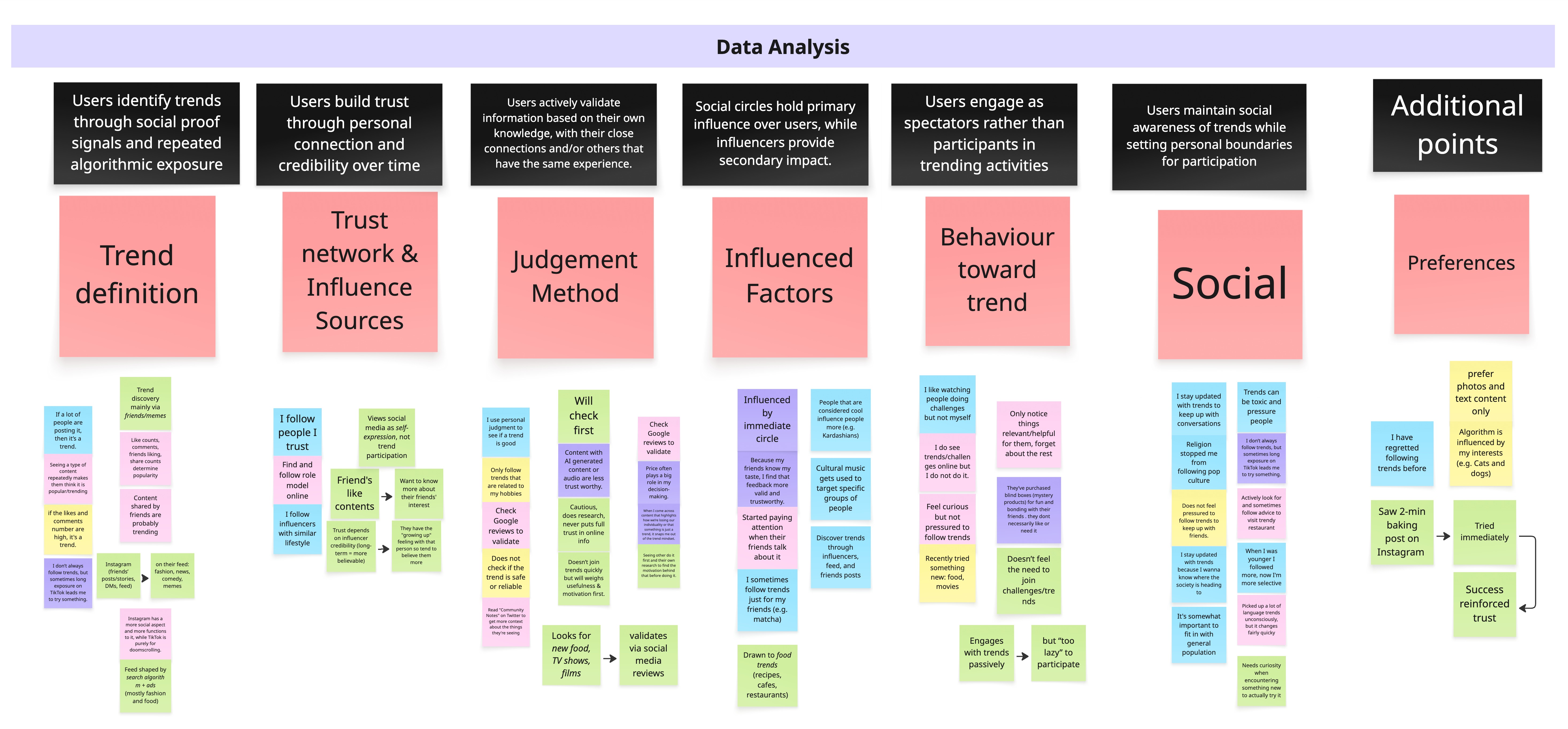
Interview Data Analysis
-
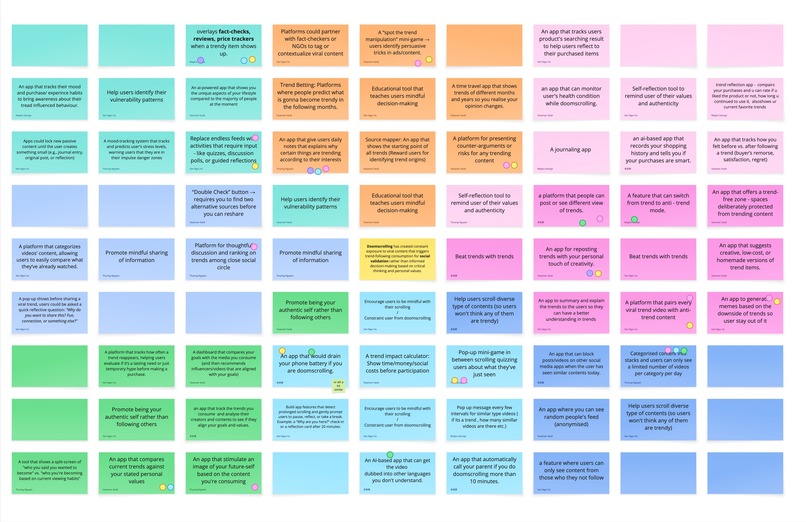
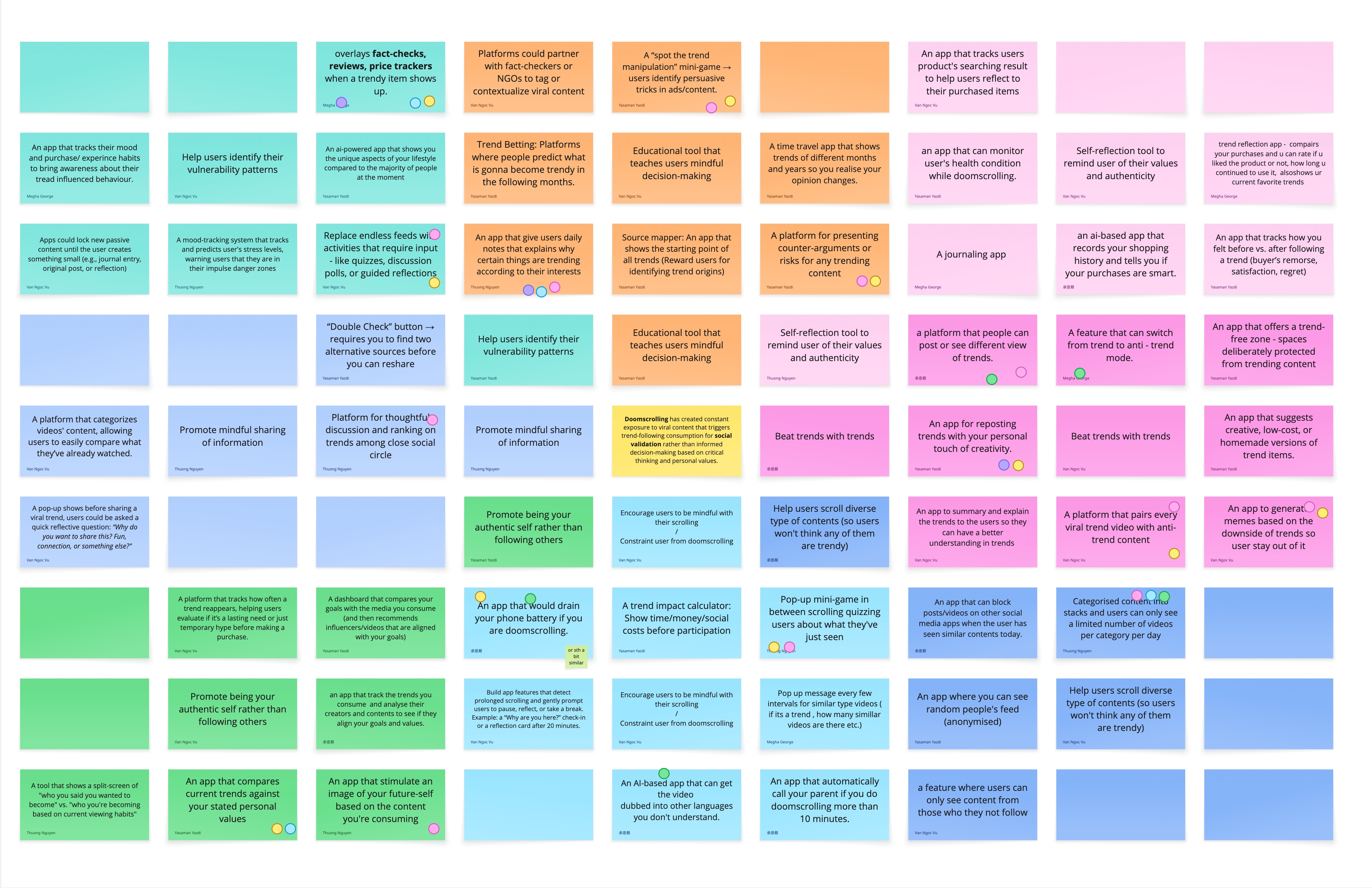
Lotus Blossom (Ideation)
-
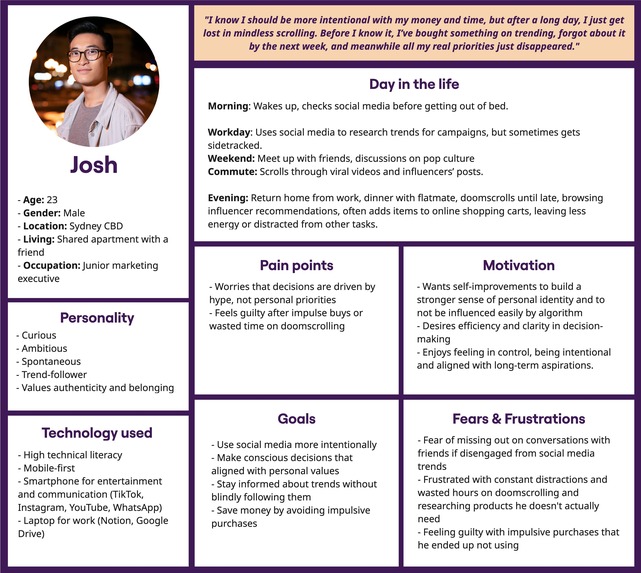
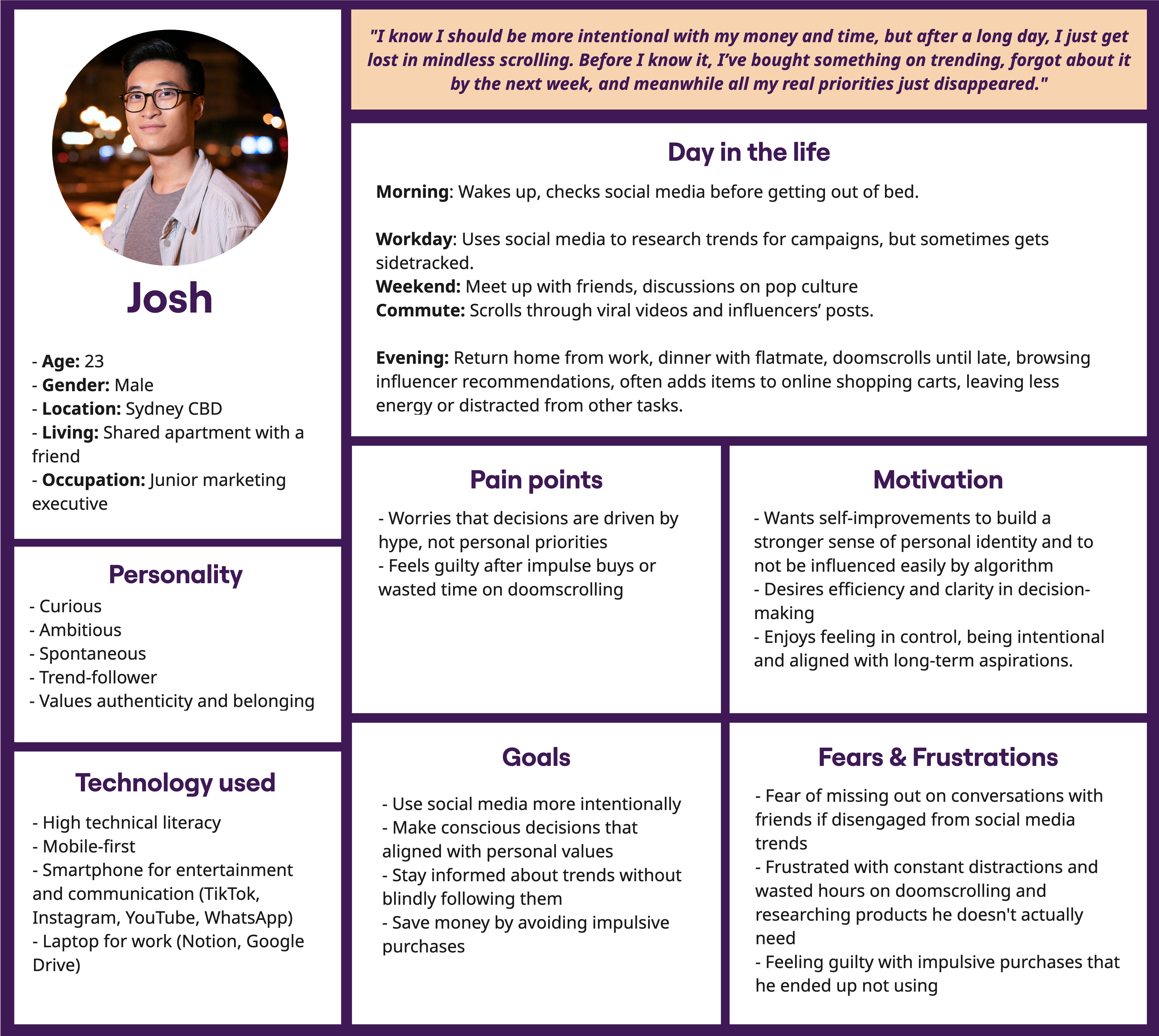
User Persona

Inspiration
In Australia, young adults spend an average of over 5 hours a day on social media, much of it on platforms like TikTok and Instagram. These feeds are not just entertainment; they shape what young people buy, wear, and aspire to. During our interviews, we noticed that many of the people didn’t consciously realise how much trends influenced their choices until later, when they felt regret or discovered that those trends didn’t match who they wanted to be.
This sparked our guiding question: “How might we help Australian young adults engage with social media trends more mindfully, without taking away the fun?”
What it does
How we built it
Research
We conducted desk research, interviews and coded insights to identify themes like FOMO, peer validation, and post-trend regret.
Brainstorming
Using the lotus blossom framework, we brainstormed around 60 potential solution concepts and throght team voting we narrowed down to our final solution.
Narrowing Focus
Over time, we narrowed the scope of our work to focus specifically on trends that target the users's lifestyle, as this areas had the strongest impact on our participants’ decision-making.
Prototyping
From there, we designed Align as an app that blends habit-building with self-reflection, using algorithms and goals as the key comparison points.
Challenges we ran into
One of the main challenges we faced was defining the scope of our project. Initially, we wanted to cover trends in a broad sense, but this proved not to be specific enough . Narrowing our focus to lifestyle trends among young adults gave the project both clarity and impact. Another challenge was in our research design: we had to carefully frame our interview questions so as not to bias participants to simply state their opinions about trends. Additionally, we faced the challenge of ensuring that Align felt seamless and non-intrusive. We knew that young adults are already bombarded with digital content, so our solution needed to feel like a supportive companion rather than another obligation. Finally, we wrestled with the balance between prevention and empowerment. The aim was never to block trends, but to help users pause, reflect, and make mindful decisions.
Accomplishments that we're proud of
As a team, we are proud of the research and progress we were able to achieve in such a short period of time. We take pride in our collaborative approach where we held open discussions and welcomed constructive criticism.
What we learned
From designing under pressure in the Designathon we learned invaluable lessons about rapid ideation and decision-making. Working within tight constraints forced us to prioritize ruthlessly, we learned to distinguish between "nice-to-have" features and core functionality that actually addresses user needs. The time pressure also pushed us to embrace imperfect prototypes and iterate quickly rather than getting stuck in perfectionist cycles. We discovered that constraints can be liberating; they force you to make decisions and move forward rather than endlessly deliberating possibilities.
Built With
- figma


Log in or sign up for Devpost to join the conversation.