-
-
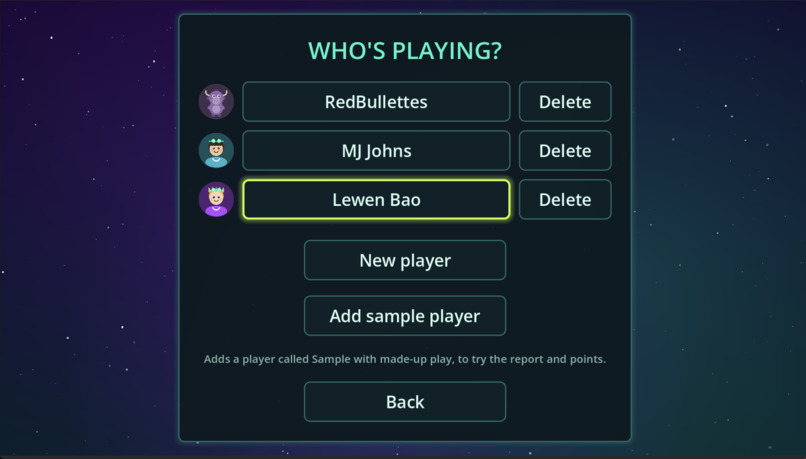
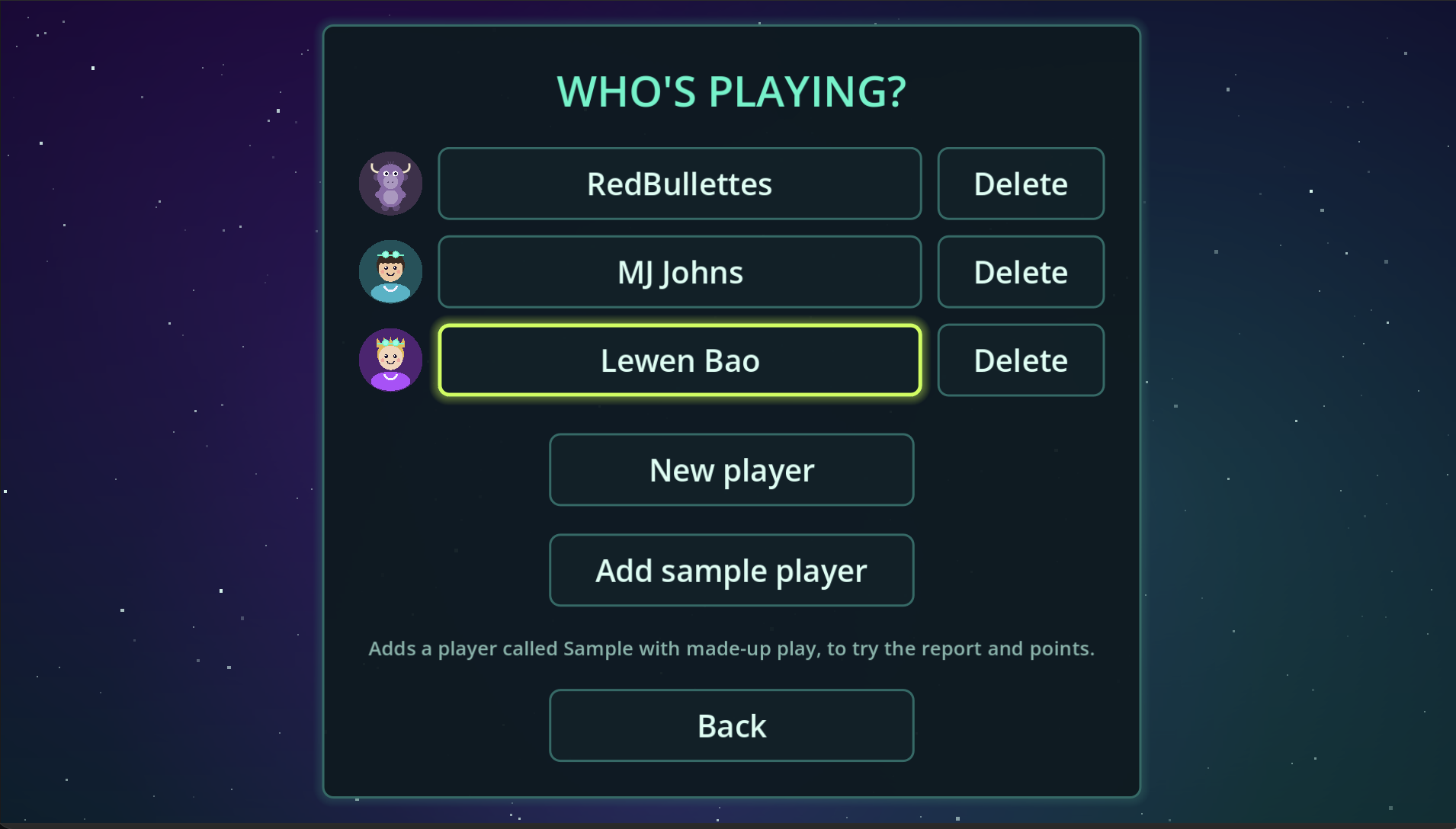
Profile maker screen
-
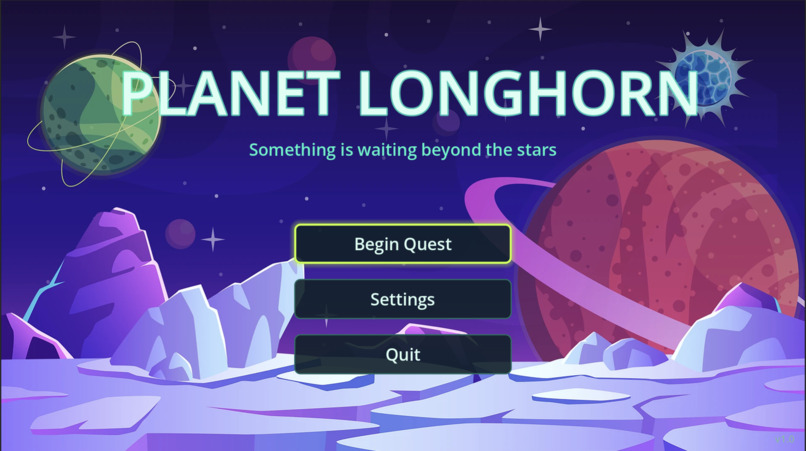
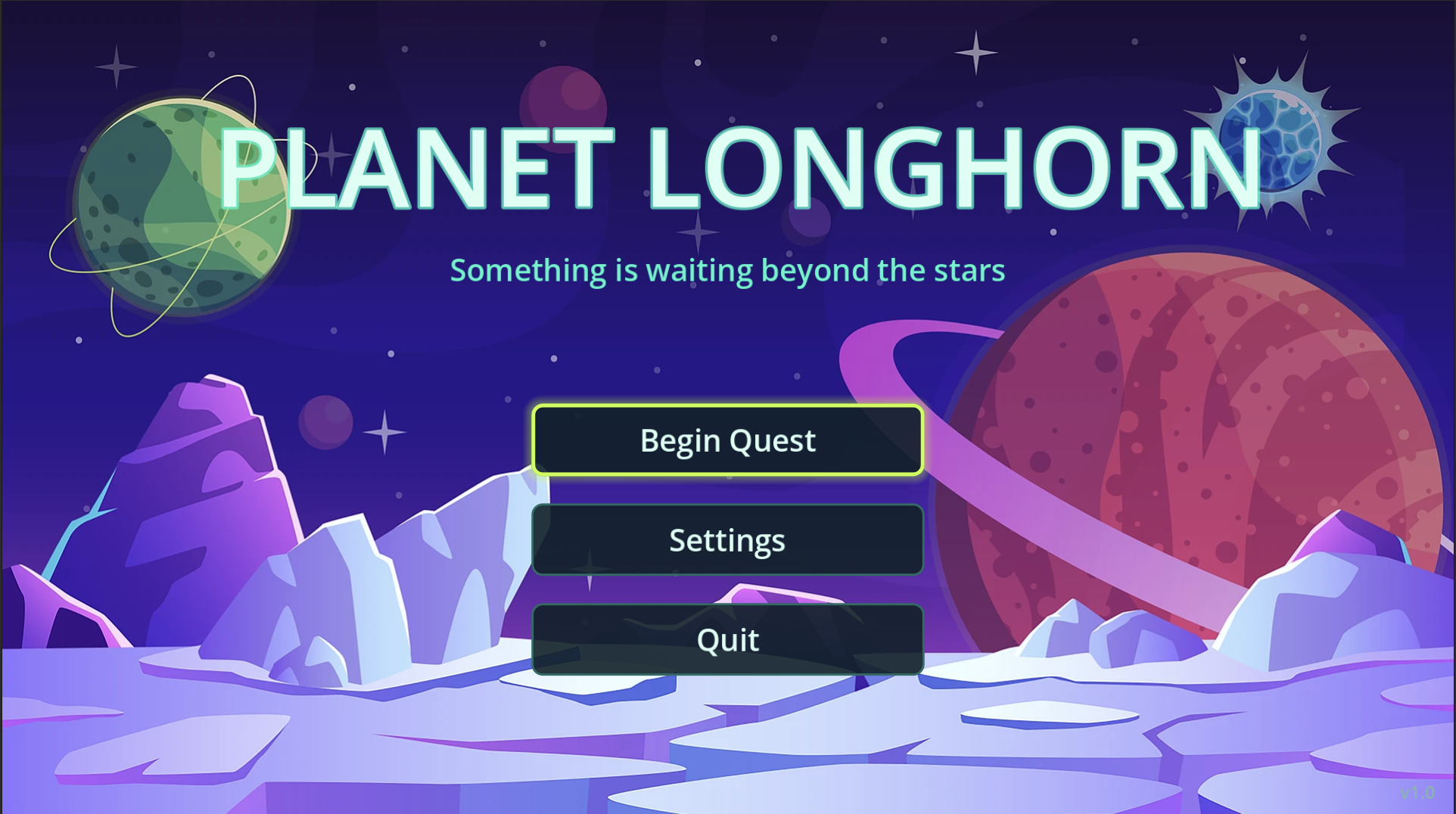
Home Screen
-
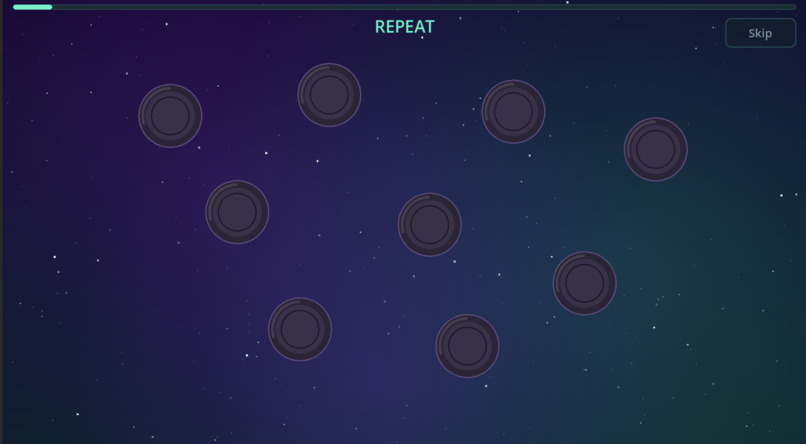
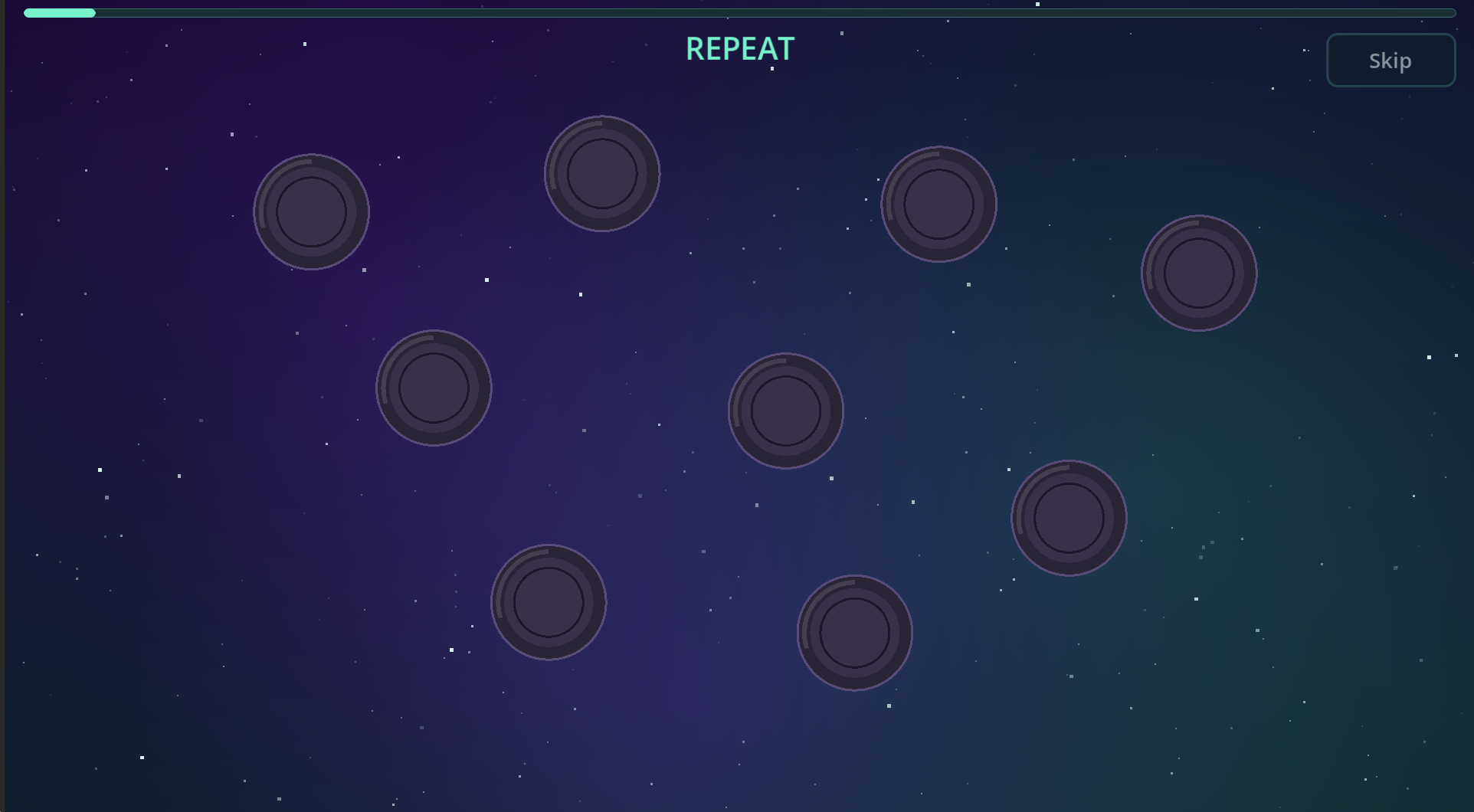
Beat game (Corsi)
-
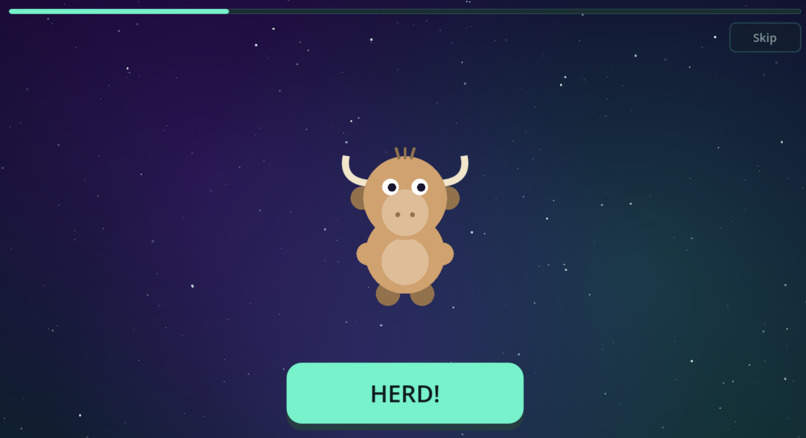
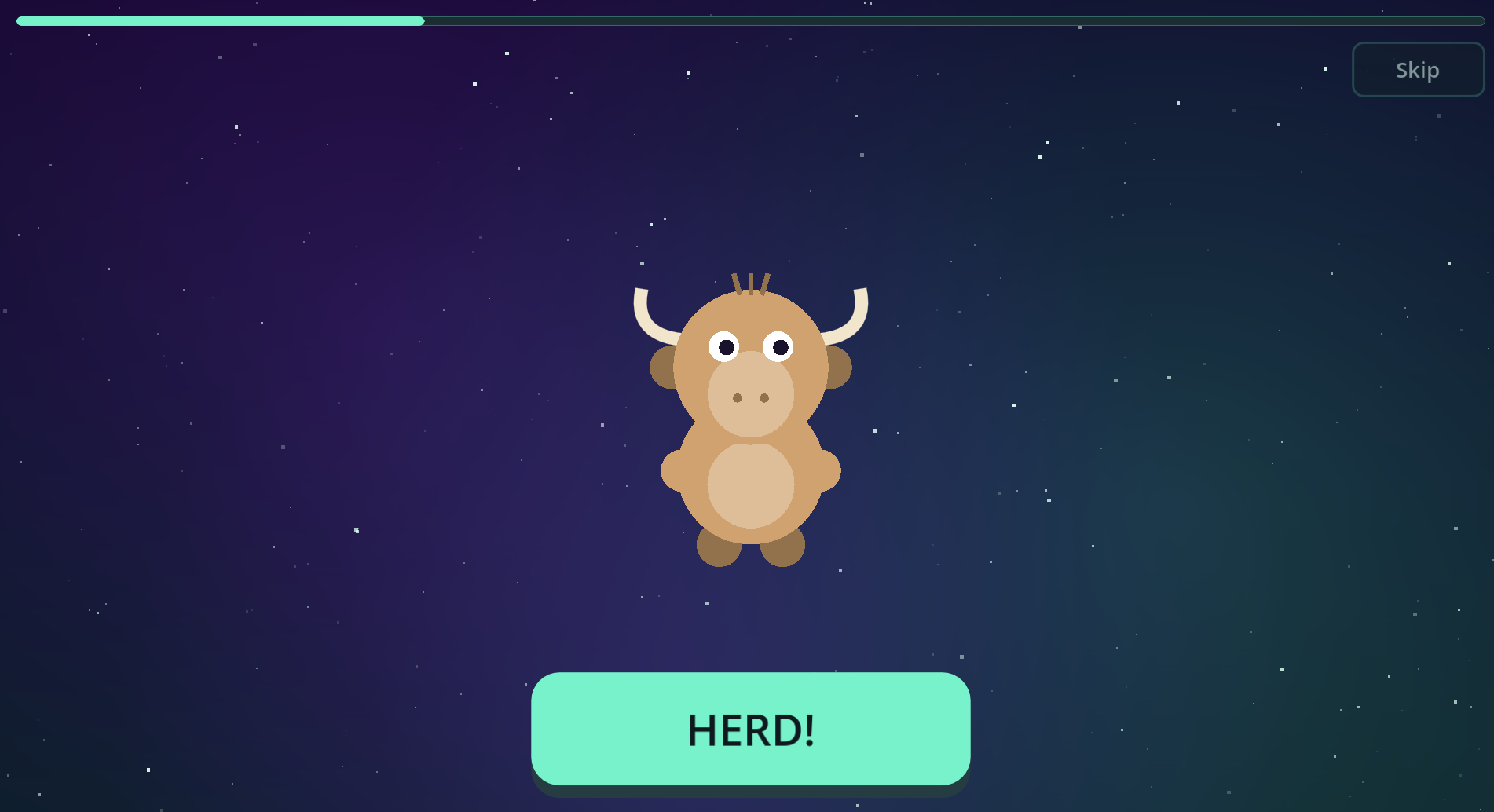
Beat game (go, no go)
-
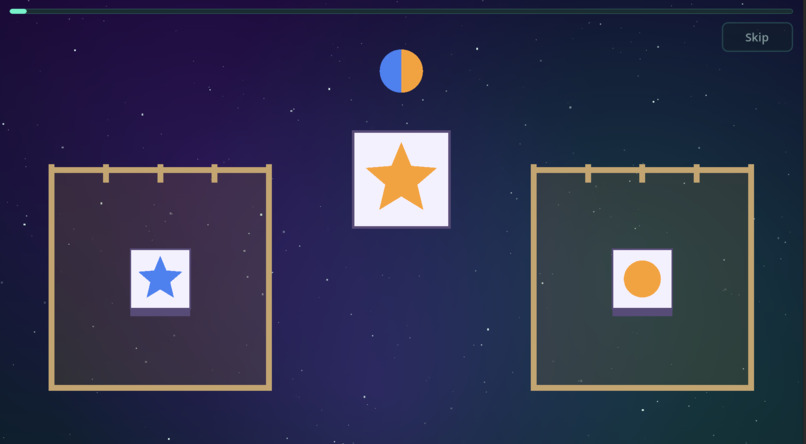
Sorting game (CPT)
-
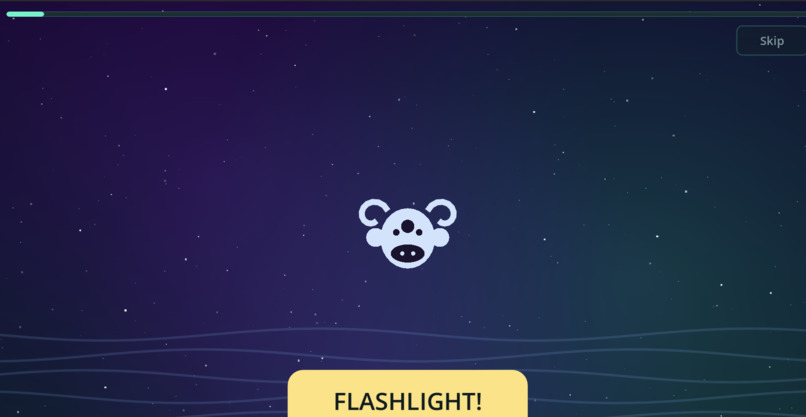
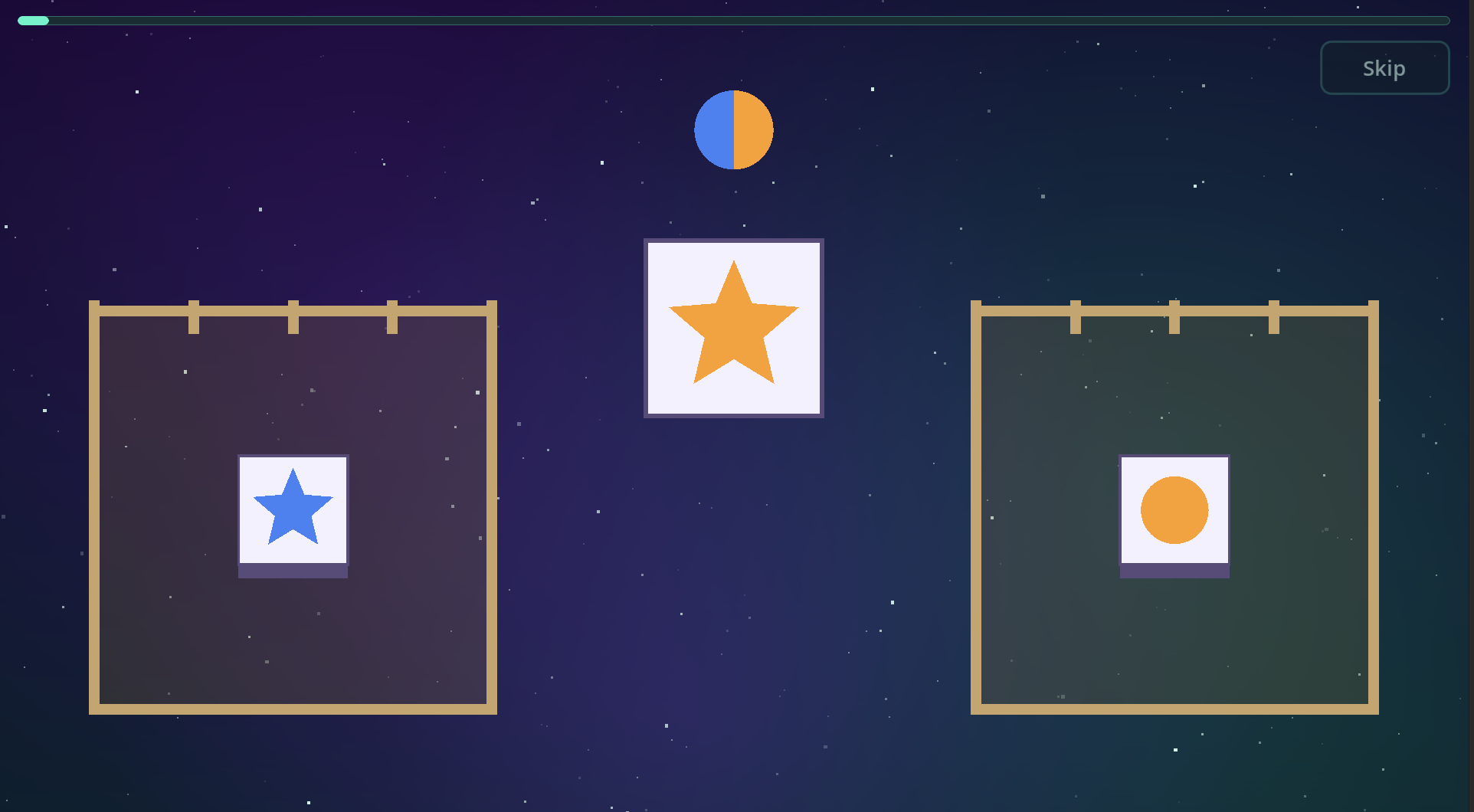
Sorting game (DCCS)
-
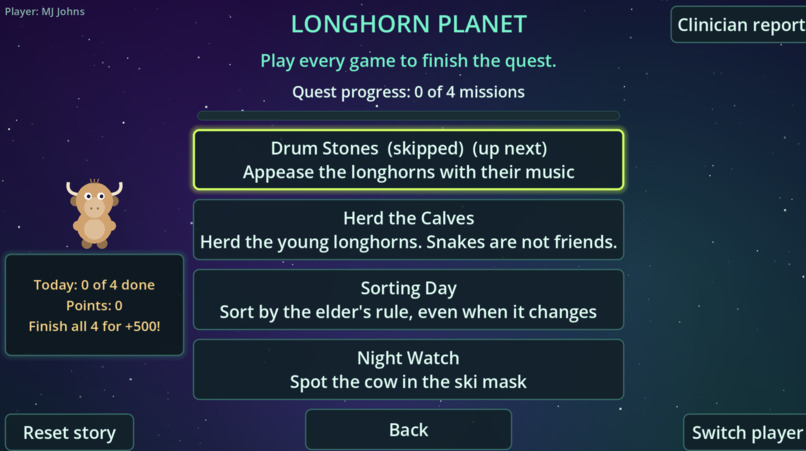
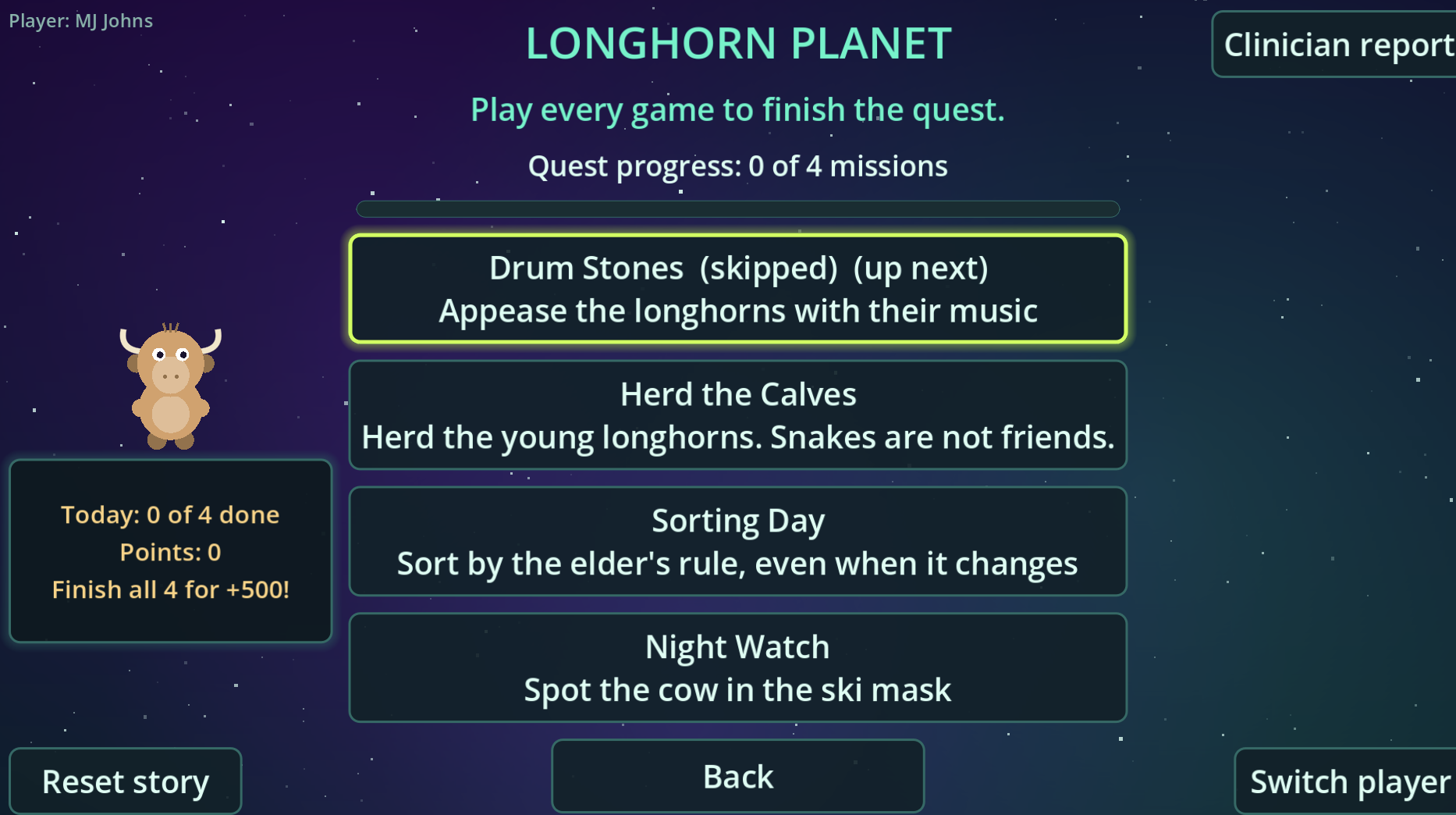
Game chooser (start)
-
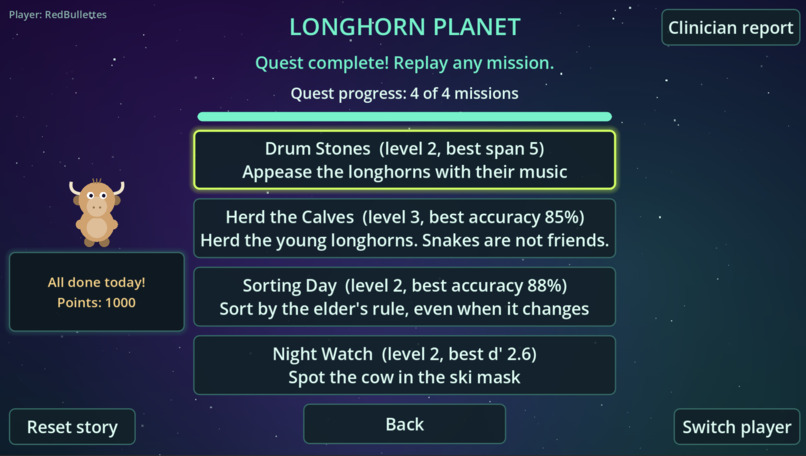
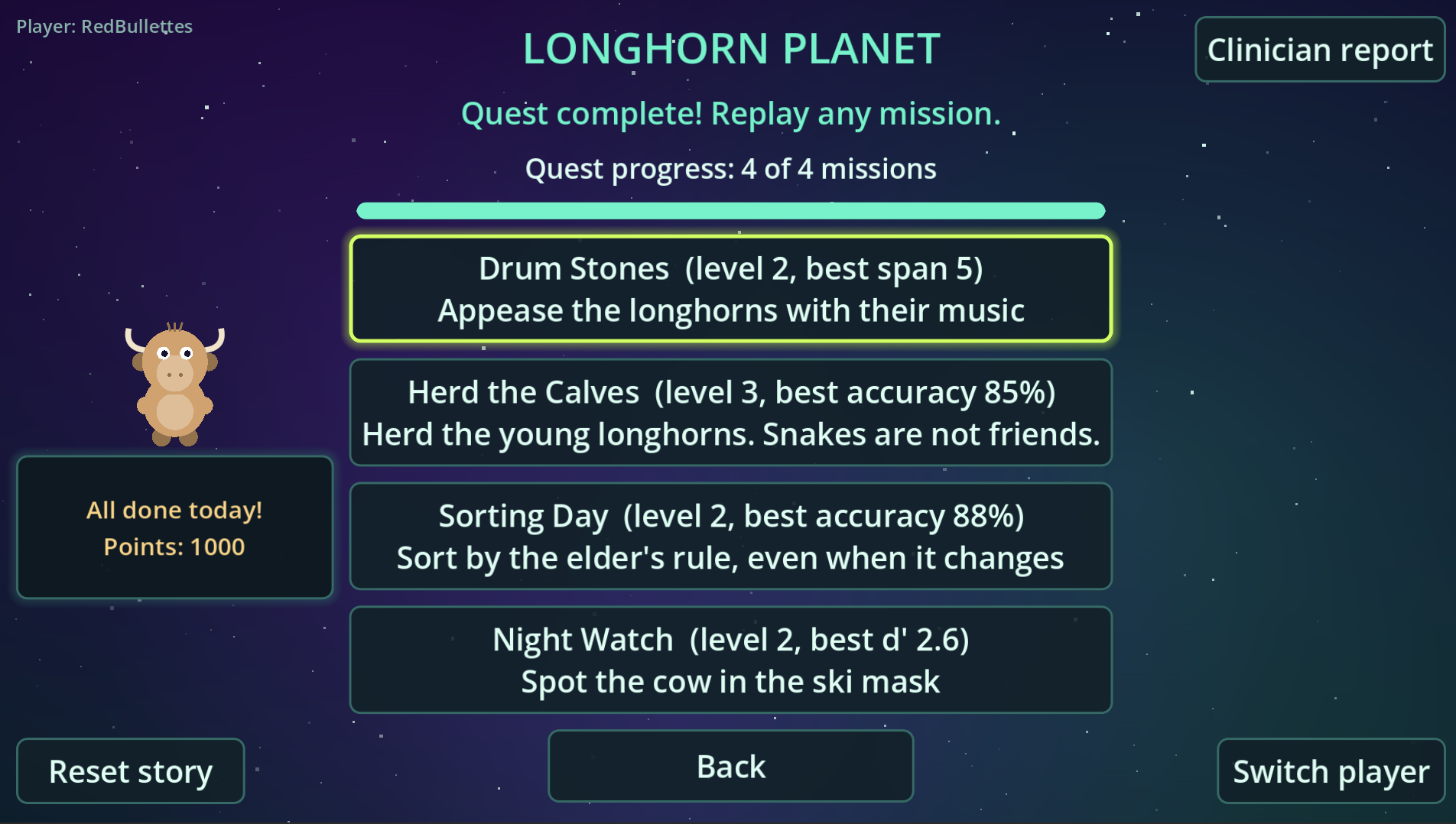
Game chooser (completed)
-
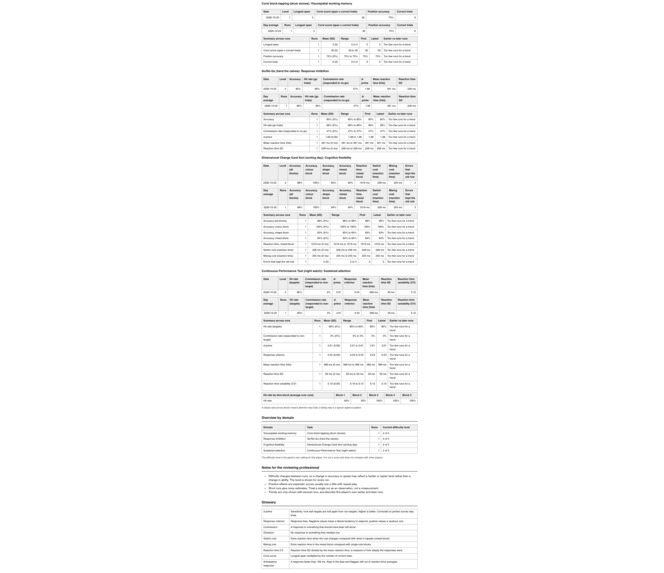
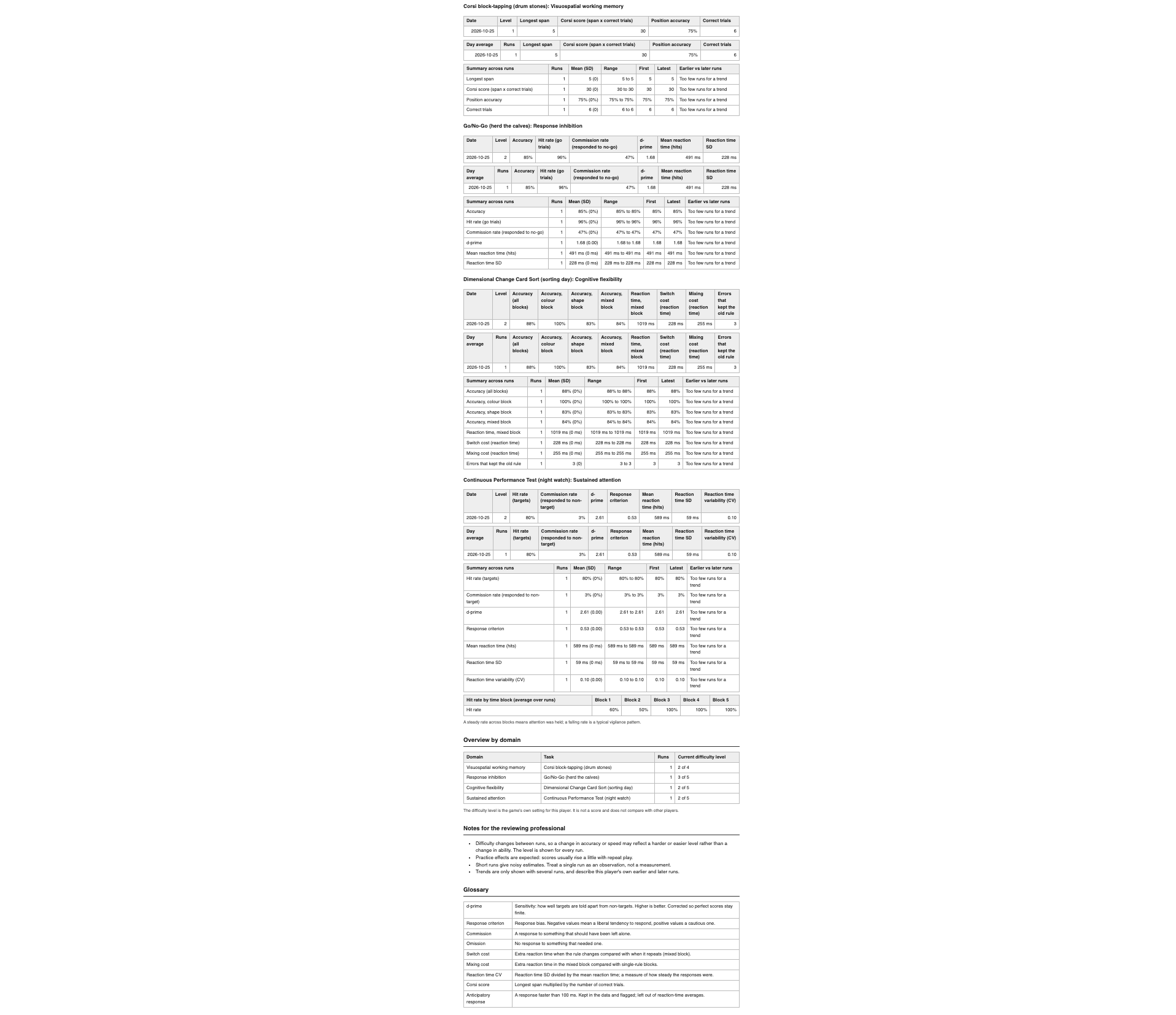
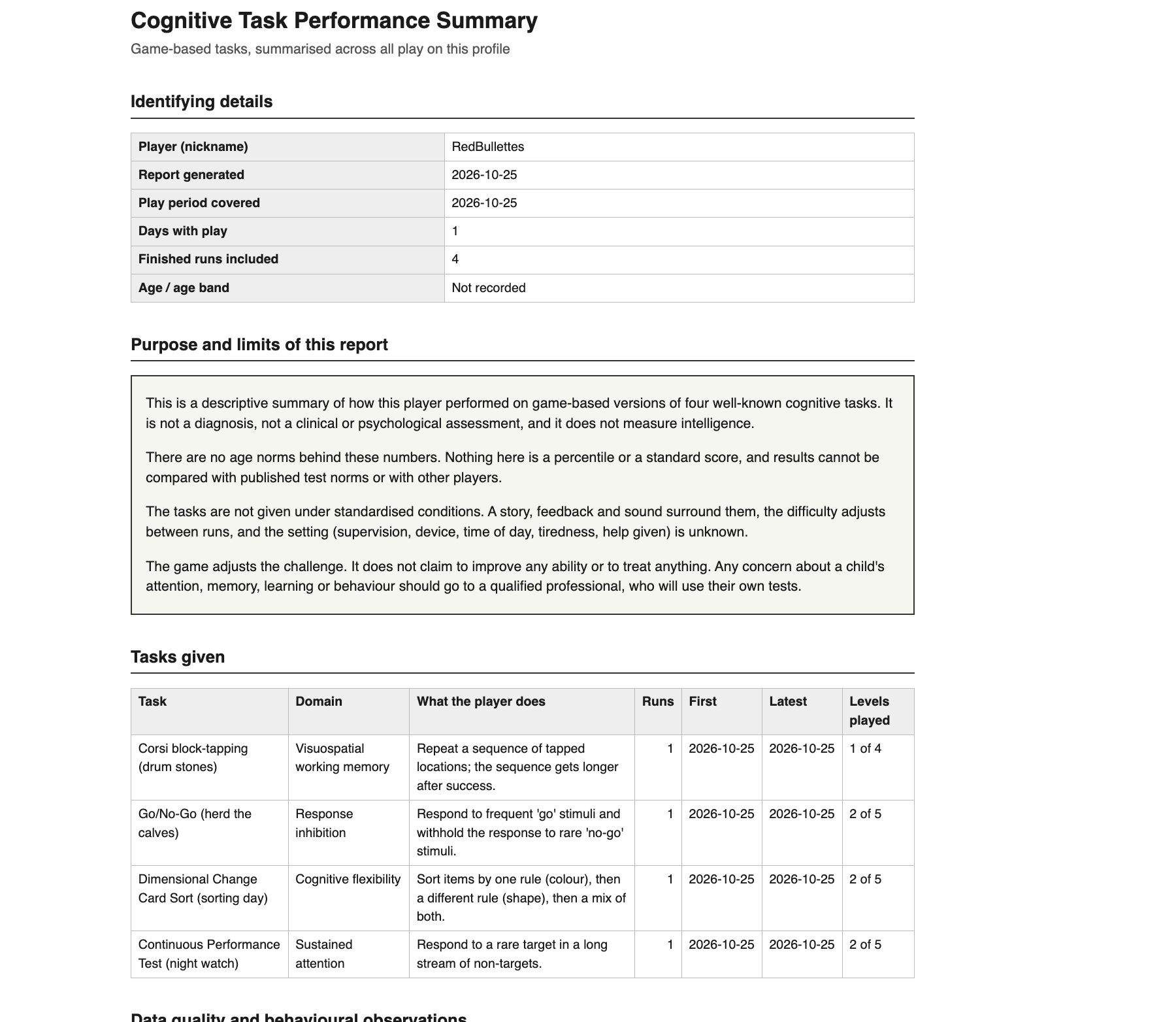
Full Report
-
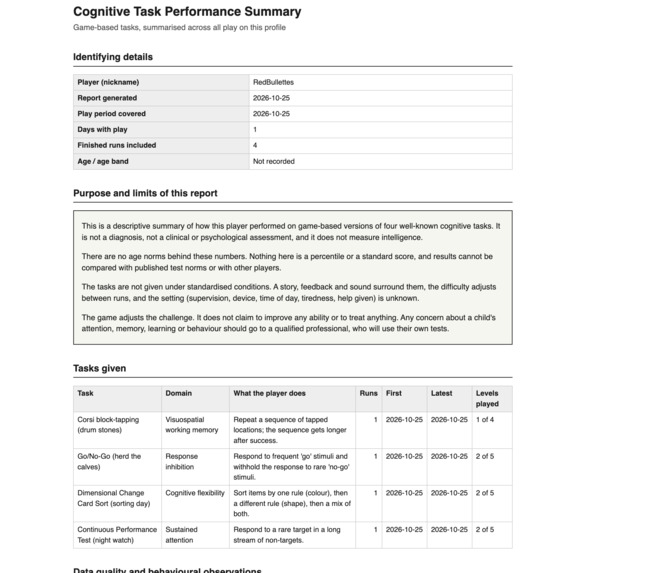
Report (zoomed in)
-
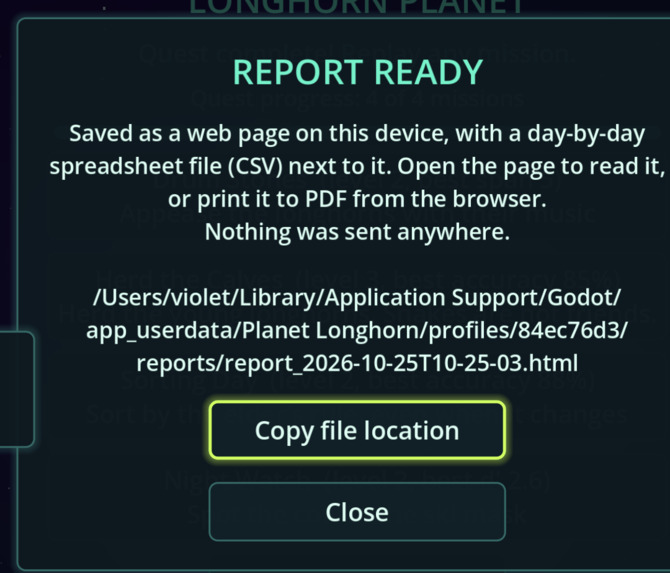
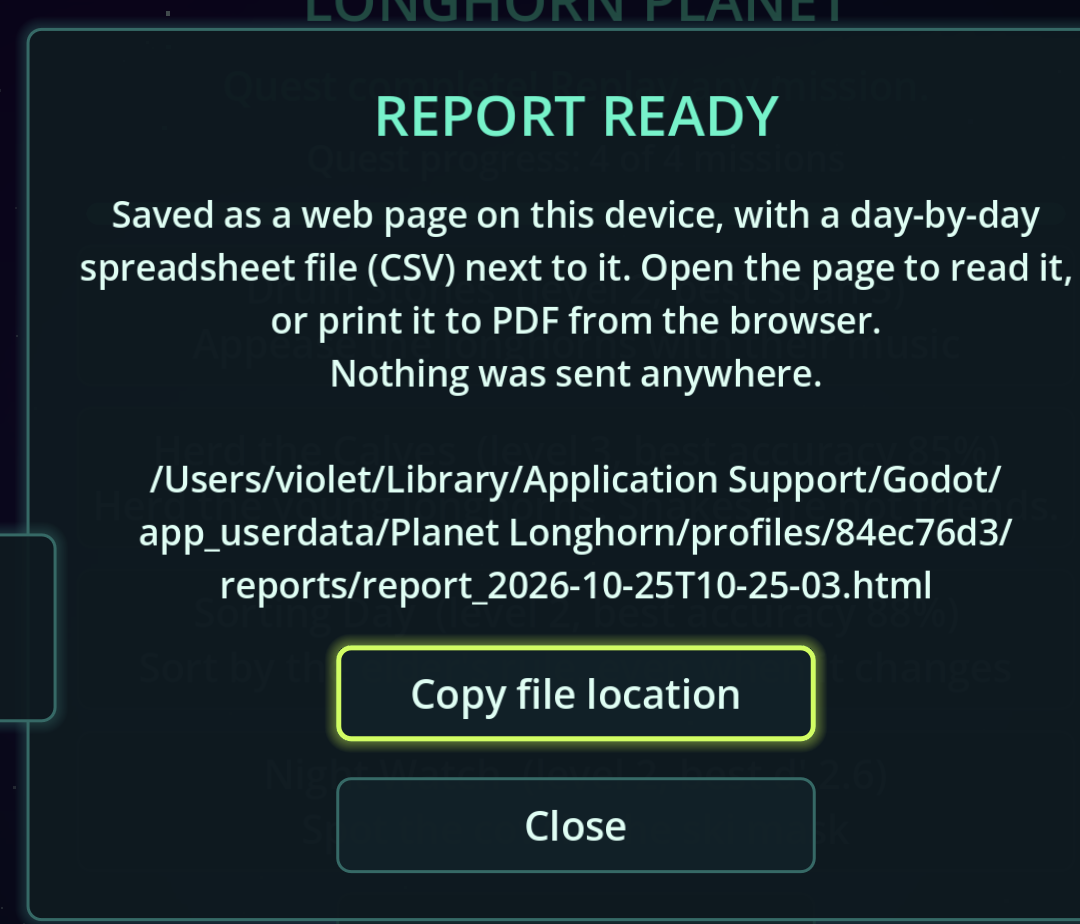
Report ready page
Inspiration
Cognitive assessments are quite well known, but often not very engaging. Especially for younger children. This is especially important as boredom, frustration and mental fatigue are known to be confounding factors in children’s test scores. We wanted to explore whether identical tasks could be embedded in a narrative that would engage children without reducing the effectiveness of the tasks. We hope that with more time and clinical evaluations, it can be used as a preliminary assessment for neurodevelopmental delays in young children.
What it does
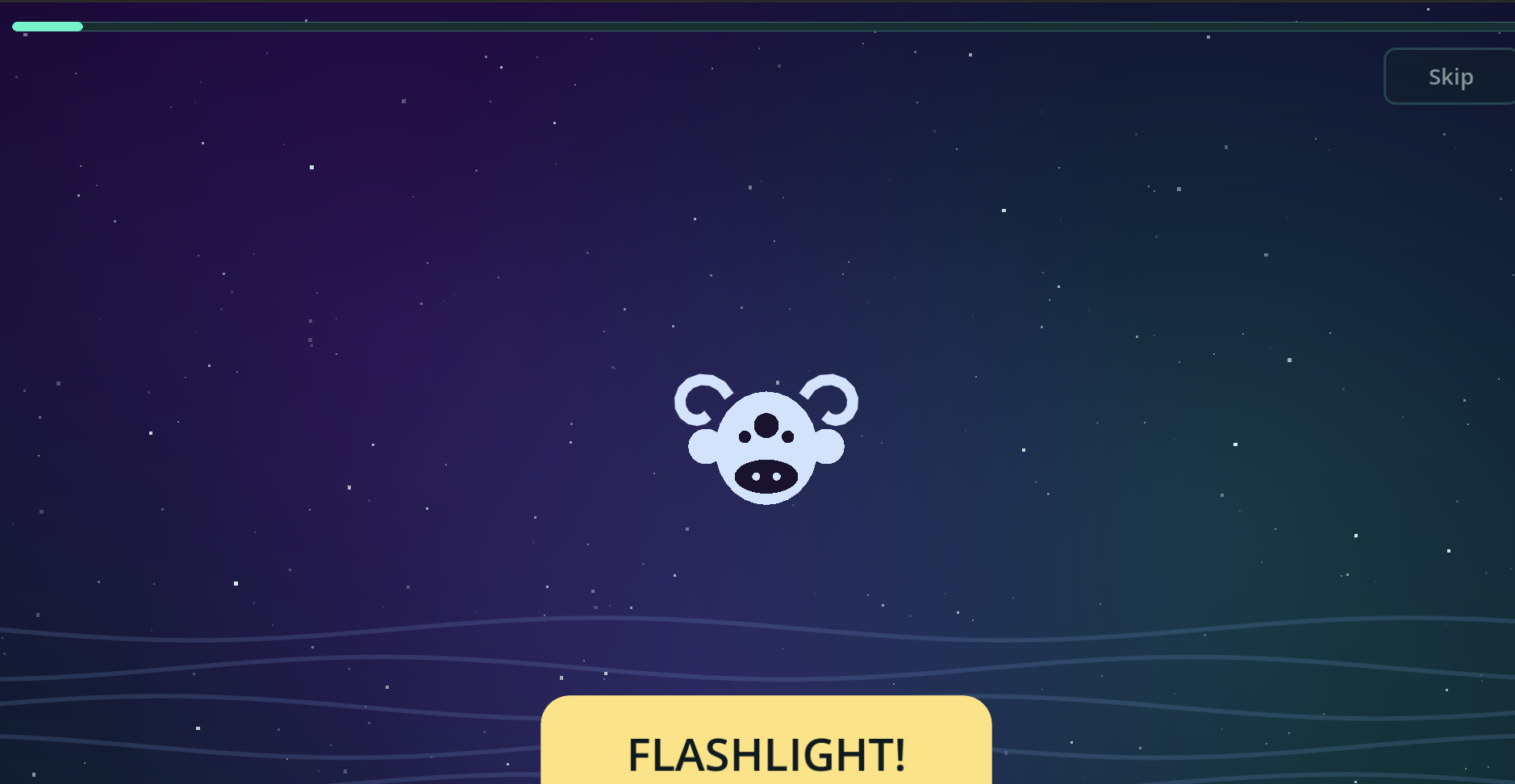
Players (ages 6-9) control a kid who is transported to a planet run by alien cartoon longhorns. Each story mission is built on an established cognitive task:
Drum Circle (Corsi blocks): repeat the elders’ drum pattern to earn their trust and escape the spaceship. Herd Rescue (Go/No-Go): tap the friendly space cows and hold back on the evil snakes. Sorting Day (DCCS): sort creatures into pens as the elder’s rule switches between color and shape. Night Watch (CPT): guard the herd through a long, quiet stream and respond only to the rare thief.
The game adapts using two separate dials. Difficulty adjusts after each run to keep play winnable, aiming for roughly 75-85% accuracy. Exposure gives more missions to the domains where the player is relatively weakest, while never dropping the strong ones. Difficulty ranges tuned for ages 6-9.
It also produces a detailed clinician report with real user data. We do not attempt to interpret the results, but provide it to support trained professional judgement. The report provides detailed summary statistics such as reaction time, number of trials completed, d-prime, incomplete/skipped trials, hit rates and more.
How we built it
Developed with Claude Code, using a design document and rule file so every session stayed consistent with the architecture.
Timing uses microsecond timestamps and frame-driven loops rather than tweens, so reaction times stay trustworthy. During trials there is no dialogue, popup, or distraction not portioning to task as to not muddle the test results.
We tested game play ourselves, and got preliminary feedback from two children in our target age range and their dad, a practicing psychiatrist. The kids confirmed that the game was fun, and their dad remarked that they were fully engaged, which differed significantly from clinical settings.
Challenges we ran into
Making repetitive lab tasks feel like play without changing what they measure. Designing difficulty that works for a 6-year-old and a 12-year-old, which was our original plan, and telling “weak in one domain” apart from “tired today.” This is still a work in progress. We decided to narrow the age limit to 6-9 and display day-specific metrics in the clinician report to address this. Keeping a kids’ game private by design: no accounts, no network calls, and all data stays on the device.
This was also the first time any of us had incorporated AI into code. We learnt a lot about prompt construction and the challenges of coding with AI. For instance, in the beginning of this project, we had trouble sticking a strong idea of the project skeleton for collaborative code and thoroughly checking Claudes' results to ensure a lack of bugs. We fixed this later in the process, however, by circling back and getting a better understanding of the project as a whole and its current issues.
Accomplishments that we're proud of
We were able to learn a lot, make a working game, and have fun doing it. We worked cohesively as a team, with each member having a good balance of playing to their strengths and challenging themselves to learn something new. It was also really rewarding knowing that the game we built in 24 hours was actually engaging to kids in our target audience, even if we couldn't realistically demonstrate clinical validity. We were very conscious about making scientifically honest claims and interpreting our findings ethically, which we are really proud of.
What we learned
Theming a task is easy, structuring the game took a lot more effort. We learned a lot about working with AI as well as working with a team. In addition we learned a lot about AI use in game development, human cognition and the moral challenges of neuropsychological testing in young kids.
A note on claims This is a game that adjusts its challenge and could serve as a crude early screening tool. It is not a diagnostic tool and does not claim to train or improve cognition.
NOTE: use https://toyinog.itch.io/planet-longhorn (password encrypted) to access online password: longhorn
Built With
- claude
- godot
- gpt

Log in or sign up for Devpost to join the conversation.