-
-
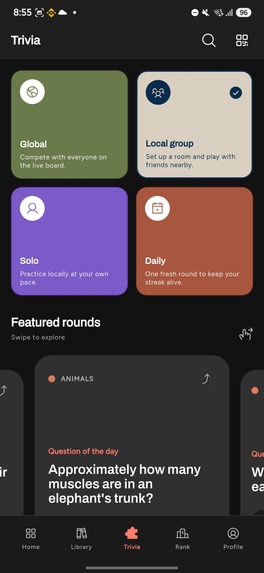
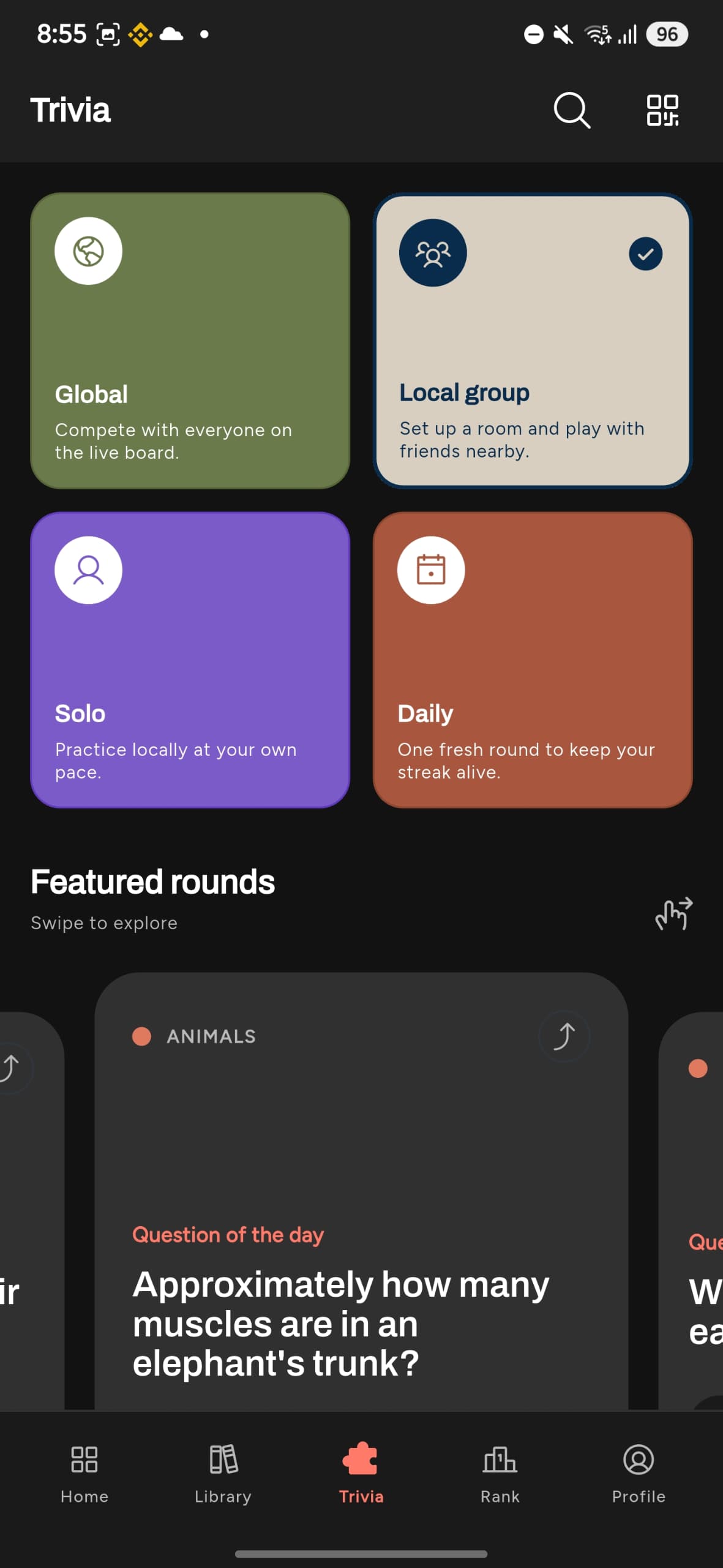
Trivia Screen
-
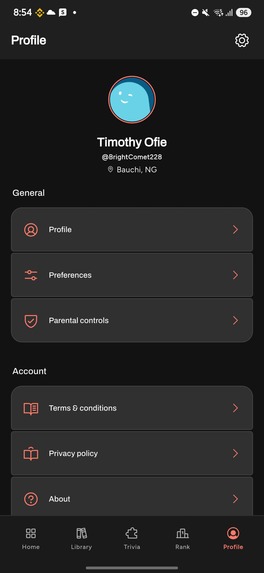
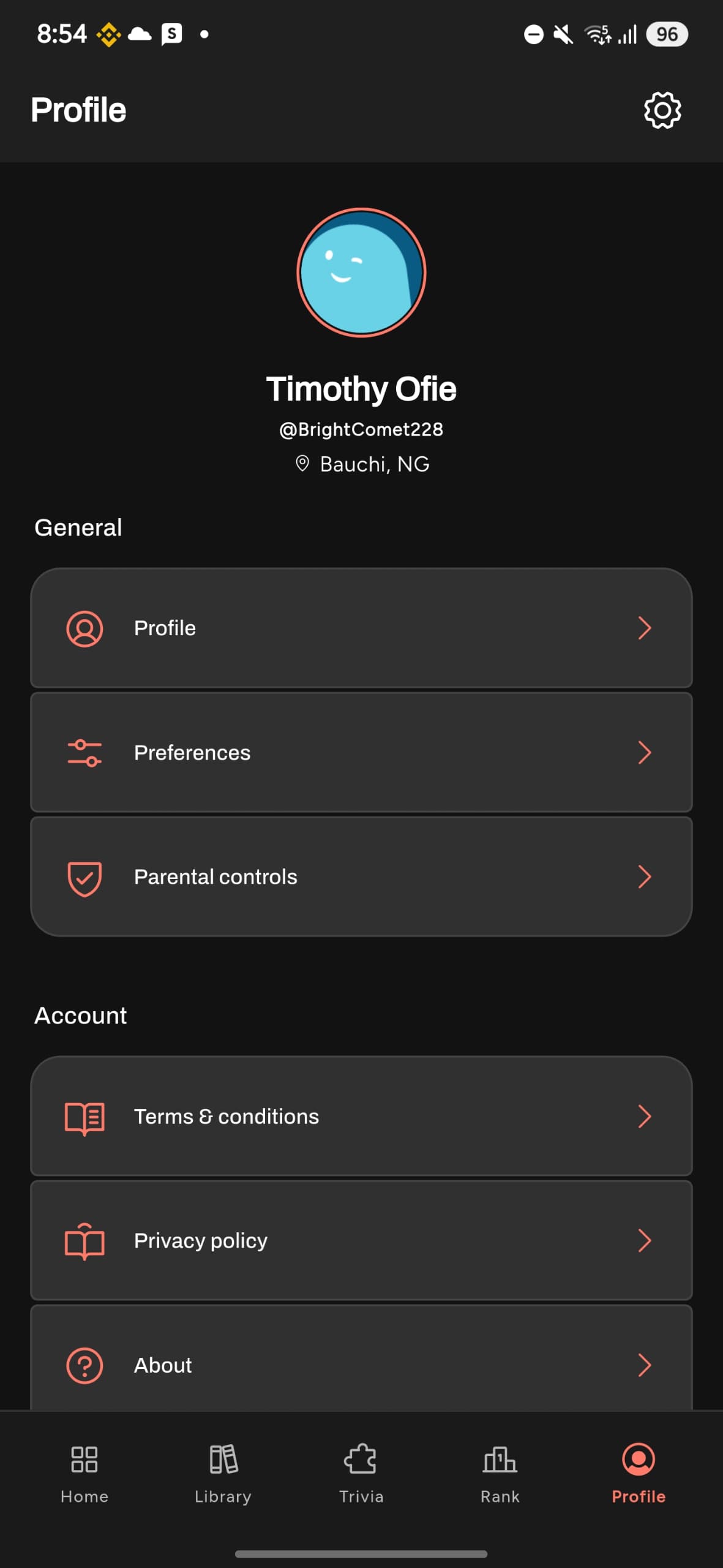
Profile Screen
-
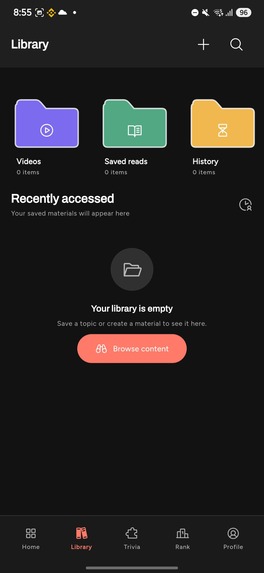
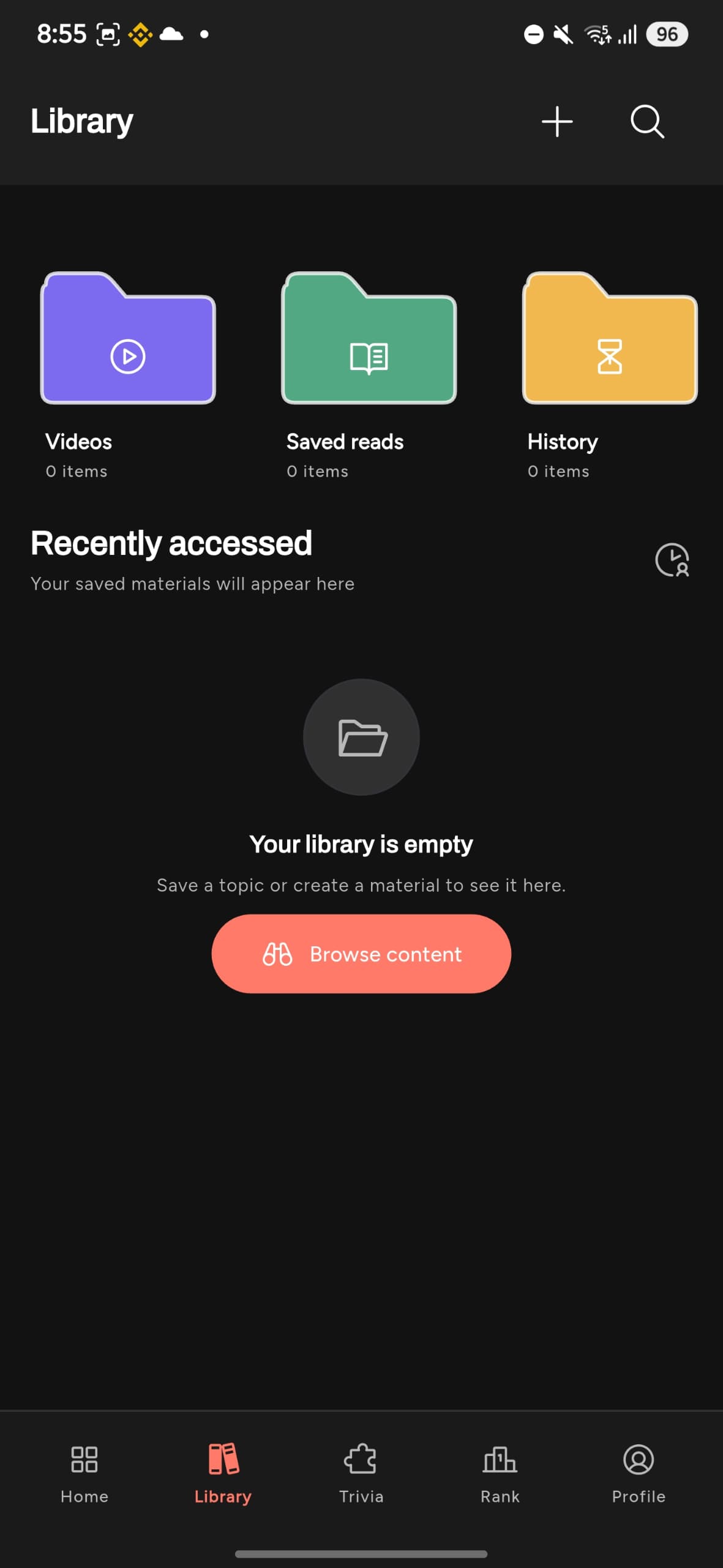
Library Screen
-
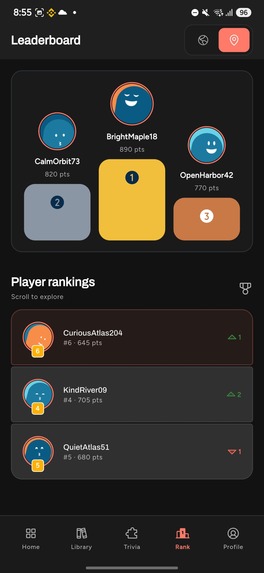
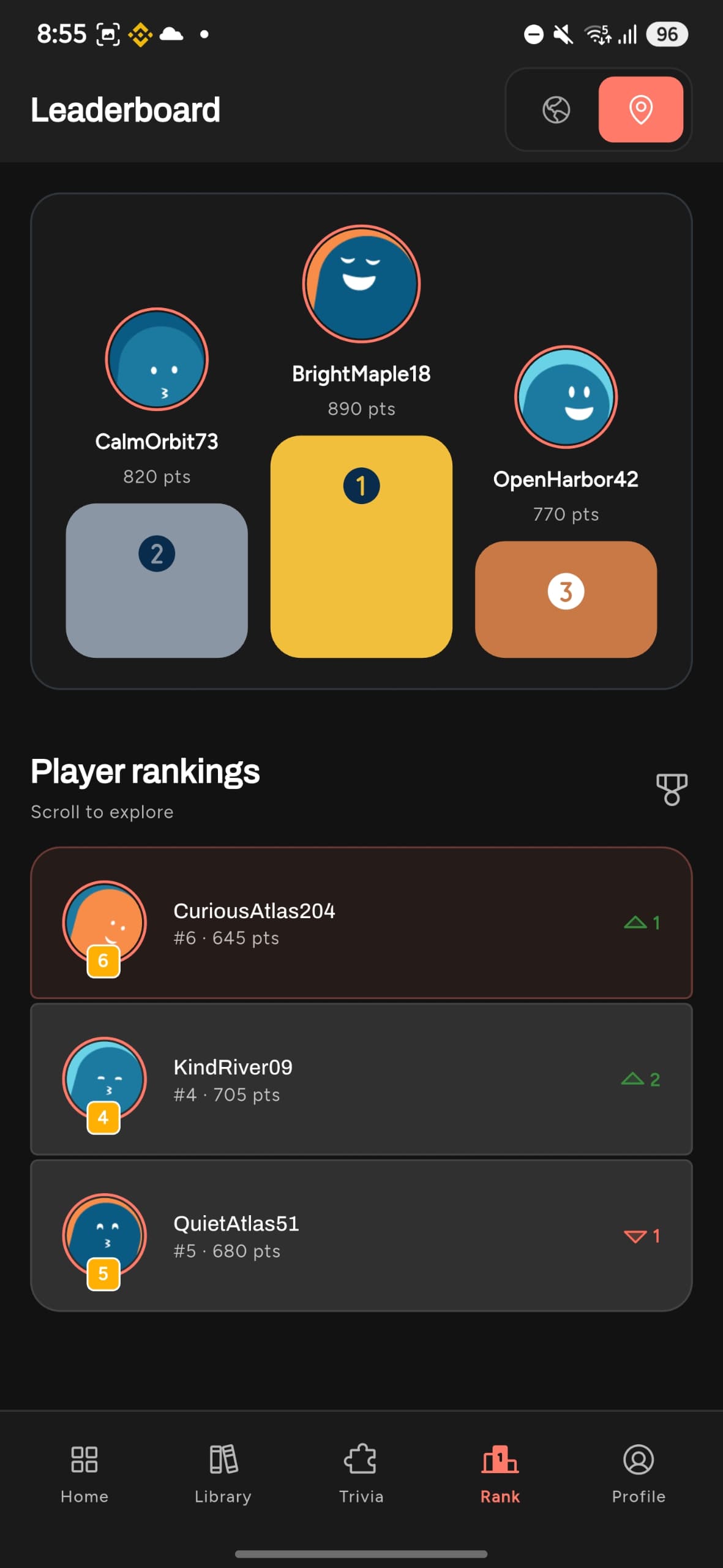
Leaderboard Screen
Inspiration
Most educational content online Wikipedia especially is comprehensive but poorly suited to how people actually want to learn on a phone: long, unstructured paragraphs, written for one reading level, and not built for a quick scroll-through session. We wanted to build a tool where anyone a curious kid or an adult with five minutes to spare could learn any topic at their own pace, through short, well-told stories instead of an encyclopedia wall of text.
What it does
For this event, we used Codex to build Alia's foundational account and content layer full authentication (email/password, forgot password, guest access, and Google/Apple/Facebook social login), automatic profile creation, a personal Library for saved notes, and category/content browsing — including a parent-child content model so subjects like "the Alphabet" are represented as one coherent system rather than a flat list of unrelated letters.
How we built it
Alia was built as a content-first learning platform with three major pieces working together: A Flutter mobile app for the learner experience. A Supabase backend for auth, profiles, catalog data, library data, and release-ready content. A local operator/admin dashboard for reviewing pipeline-generated content before it reaches the app.
Challenges we ran into
The hardest part was making the content pipeline reliable and reviewable. Long source documents, local model limits, malformed model output, trivia quality, and schema drift all created problems we had to solve deliberately. We also had to refine the release model. Early versions made it too easy for candidate data, published data, and review state to blur together. We corrected that by keeping candidate/staging tables separate from app-facing published tables, and by adding a revision/republish flow instead of editing published content directly.
Accomplishments that we're proud of
We now have an end-to-end path from raw source material to reviewed app content: Ingest source material. Generate structured educational content. Stage it for review. Review and correct it in Admin. Approve narratives, trivia, and assets. Promote a release. Display published content in the mobile app.
What we learned
We learned that AI-generated educational content needs a strong review layer. It is not enough to generate text and push it directly into the app. The system needs provenance, validation, editorial review, structured schemas, and safe publishing. We also learned that content is not just one blob of text. A useful learning topic may include narratives for different audiences, facts, timeline blocks, trivia, media prompts, images, videos, attribution, and relationships to other topics.
What's next for Alia
Next, we want to deepen the content and review loop: Improve AI-assisted review and correction. Generate and review real images, videos, and narration from saved media prompts. Add stronger trivia validation and gameplay flows. Expand the catalog across more categories. Build richer search and discovery using full-text search first, then embeddings. Improve the learner library, saved content, and personalized recommendations. Add leaderboard and multiplayer trivia features after the content foundation is stable. The immediate goal is to keep strengthening the content pipeline so Alia can reliably turn high-quality source material into safe, engaging, app-ready learning experiences.
Built With
- codex
- dart
- flutter
- gpt-5.6
- node.js
- openai
- python
- supabase
- typescript

Log in or sign up for Devpost to join the conversation.