-
-
AlgowiseWallet
Inspiration
We wanted to build a wallet that goes beyond just storage something that empowers users and businesses to actually use crypto in everyday life. In many parts of the world, especially in emerging markets, crypto is more than just an investment; it's a tool for accessing financial services, paying bills, and conducting business. With Algowise, our goal was to make crypto truly functional not just for trading, but for real-world usage. By leveraging the Algorand blockchain and building on Bolt.new, we aimed to deliver a sleek, mobile-first experience that bridges the gap between Web3 and daily life
What it does
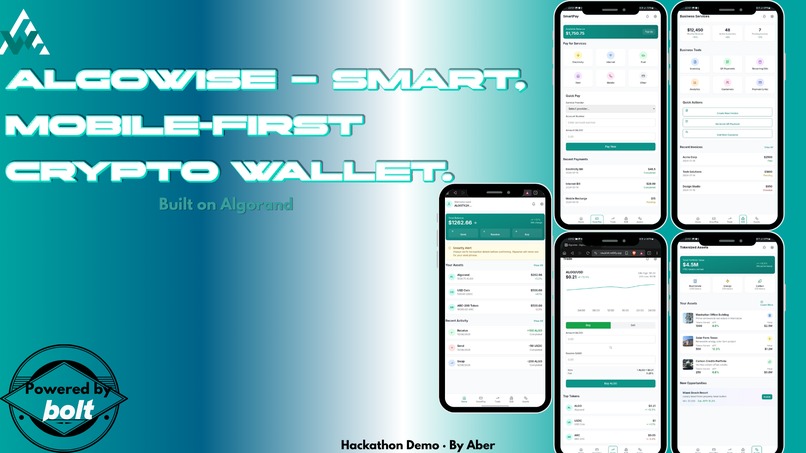
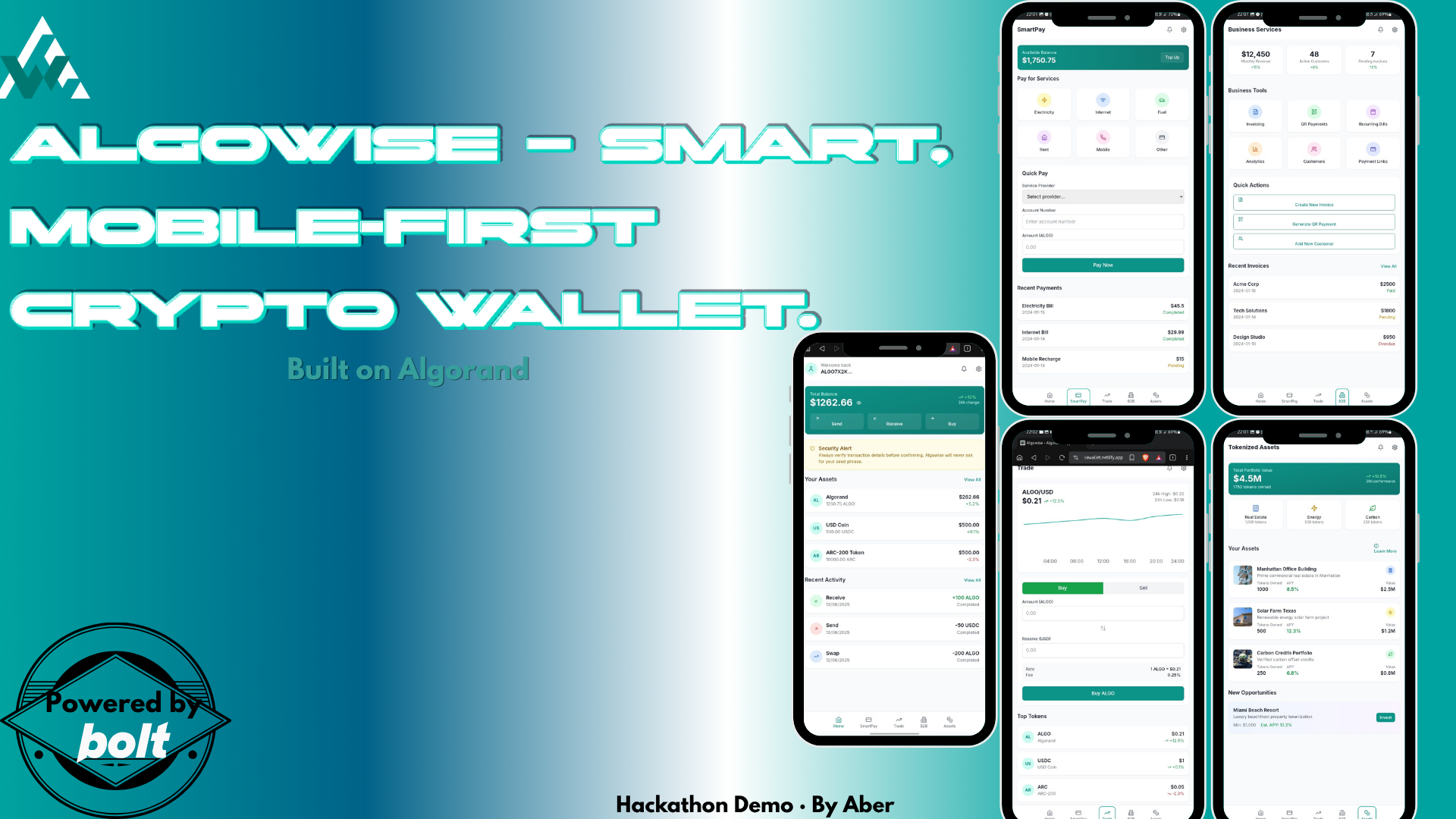
AlgowiseWallet is a mobile-first crypto wallet designed for both consumers and businesses. It enables real-world crypto payments, wallet management, token swaps, and even tracking of tokenized assets all on the Algorand blockchain. Key features include:
- Wallet management for ALGO and ASA tokens.
- SmartPay: Pay for real-world services like electricity, mobile airtime, and utilities using crypto.
- Trade module: Swap tokens seamlessly within the app
- B2B dashboard: Tools for businesses including invoicing, QR-based payments, and recurring billing
- Asset tracking: MVP support for tracking tokenized real estate, energy, and carbon credits
- Scam alert center: Helps protect users from known scams and phishing threats All of this is built without a backend, using Bolt.new ensuring a highly responsive, front-end driven experience.
How we built it
We built Algowise entirely with Bolt.new, a no-backend React-based tool that allowed rapid prototyping and UI development. Key components include:
- React-based UI optimized for mobile, similar to Trust Wallet in UX
- Algorand SDKs for wallet creation, signing, and transaction handling
- SmartPay module using predefined utility APIs (mocked for MVP)
- Trade module integrated with token swap endpoints (via Algorand testnet)
- B2B tools built with reusable, form-based components for invoicing and checkout 6.Tokenized asset tracking using mocked asset metadata tied to Algorand tokens.
Challenges we ran into
Feature overload and rollback: After successfully completing the fist stage of the app on June 10th, we attempted to add additional features to expand functionality. However, these changes caused unexpected crashes and instability. After several failed attempts at fixing the issues, we made the decision to roll back to the stable version from June 10th. This experience taught us the importance of gradual iteration, moving forward, we plan to introduce new features one at a time and test thoroughly before merging them into the core app.
Backend-less constraints: Since Bolt.new doesn’t support backends, we had to simulate dynamic logic like transaction history, user state, and real-world data handling purely on the frontend.
Algorand integration complexity: Learning to work with wallet signing, token transactions, and Algorand-specific logic had a steep learning curve, especially for developers new to the ecosystem.
Simulating real-world payments: Building a SmartPay module meant mocking APIs and utility services in a way that still felt real and useful in a demo environment.
Designing B2B tools: Building features like invoicing, recurring billing, and QR checkouts without backend logic required careful structuring and design workarounds.
Accomplishments that we're proud of
- Built a full 5-module crypto wallet from scratch in a short time
- Designed and implemented a functional SmartPay system for utility-like payments
- Integrated with Algorand wallet and token logic successfully
- Delivered a clean, mobile-first UI with intuitive flows
- Created an MVP for tokenized asset tracking paving the way for real-world tokenization use cases
- Developed a scam alert center to improve user safety a highly relevant and often-overlooked feature in wallets
What we learned
- Bolt.new is powerful for building fast, UI-heavy dApps but you must adapt creatively to get a full hold of it.
- Algorand has strong support for tokenization and low-cost transactions, making it ideal for emerging market use cases
- UX matters deeply especially when trying to appeal to both crypto-savvy users and newcomers
- Real-world crypto usage requires thoughtful integration with local needs, not just on-chain logic
- Good security practices must be embedded in design
What's next for AlgowiseWallet
We see strong potential in Algowise, especially for underserved markets. Our next steps include:
- Launching multi-sig wallet support for shared/business accounts Integrating real-time DEX APIs for trading and liquidity
- Deploying smart contracts for more robust asset tokenization and DeFi use cases
- Partnering with local utility providers to pilot SmartPay in real-world environments
- Expanding B2B tools to include payroll, escrow, and logistics tokenization
- Exploring offline payment modes and USSD-style interactions for areas with limited internet access We're excited to continue developing Algowise and bringing real-world crypto utility to life.

Log in or sign up for Devpost to join the conversation.