-
-
App icon
-
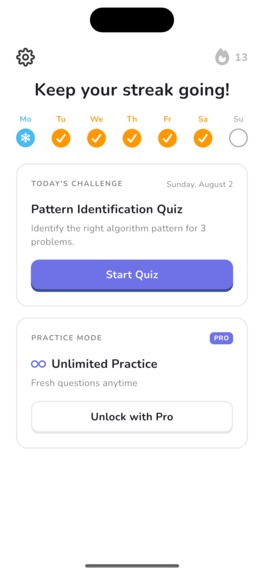
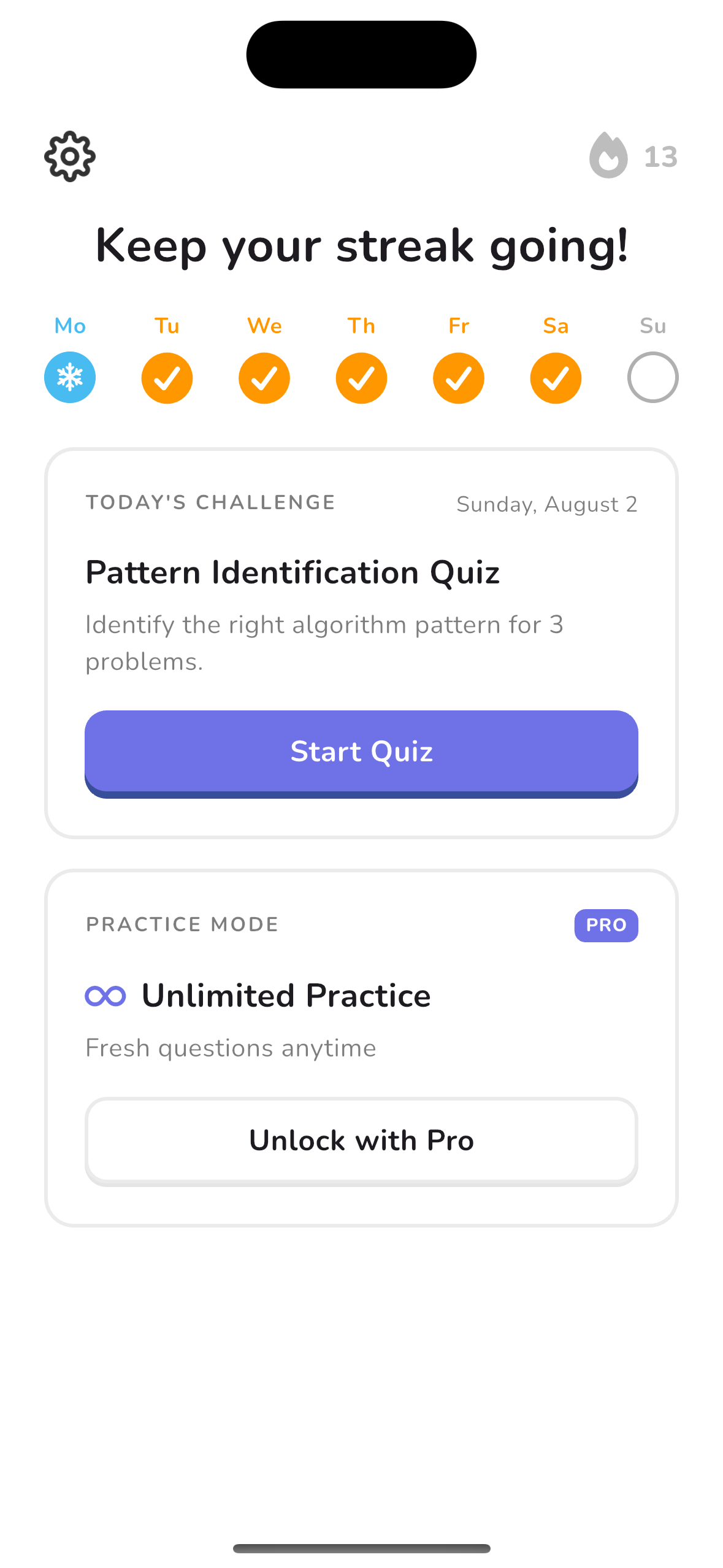
Home screen (August 2)
-
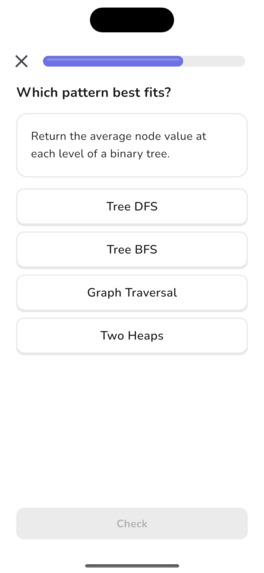
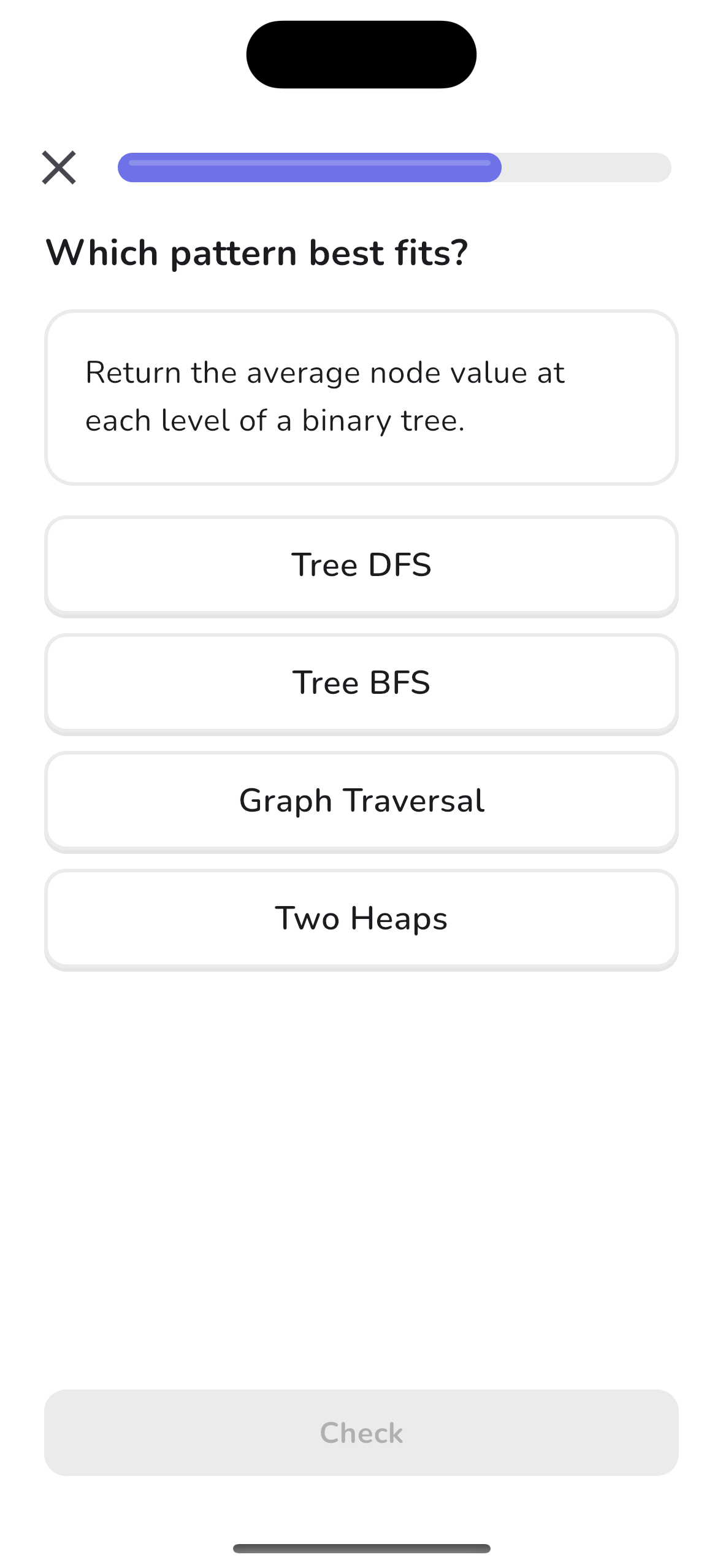
Quiz screen (August 2)
-
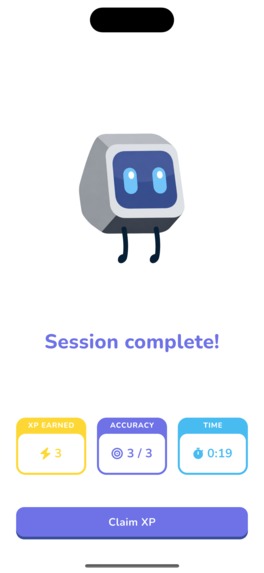
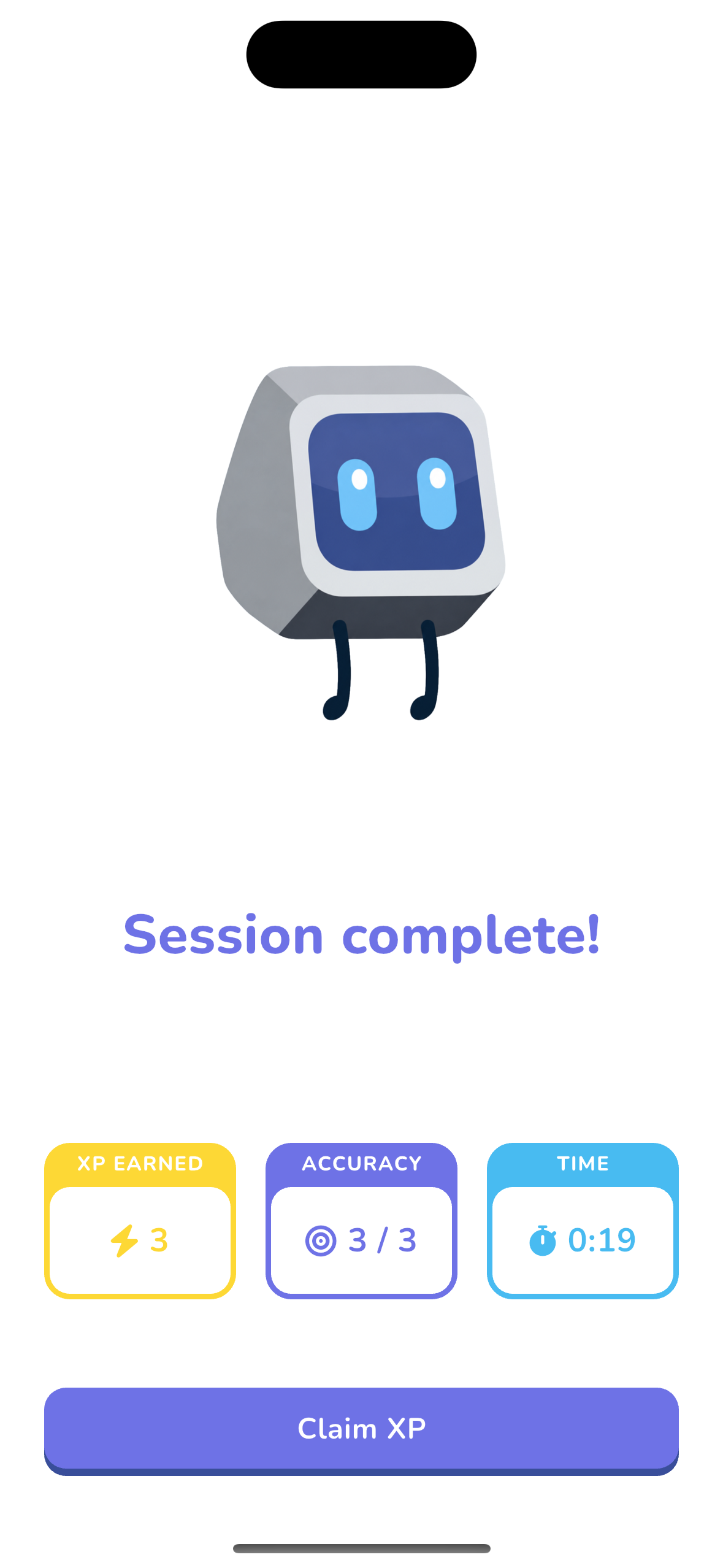
End of session (August 2)
-
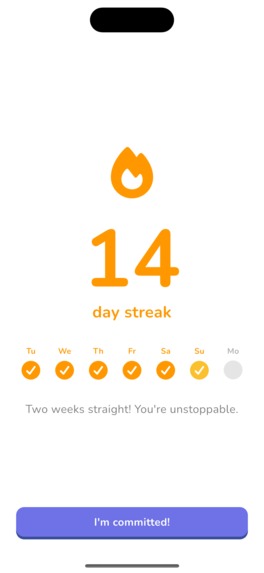
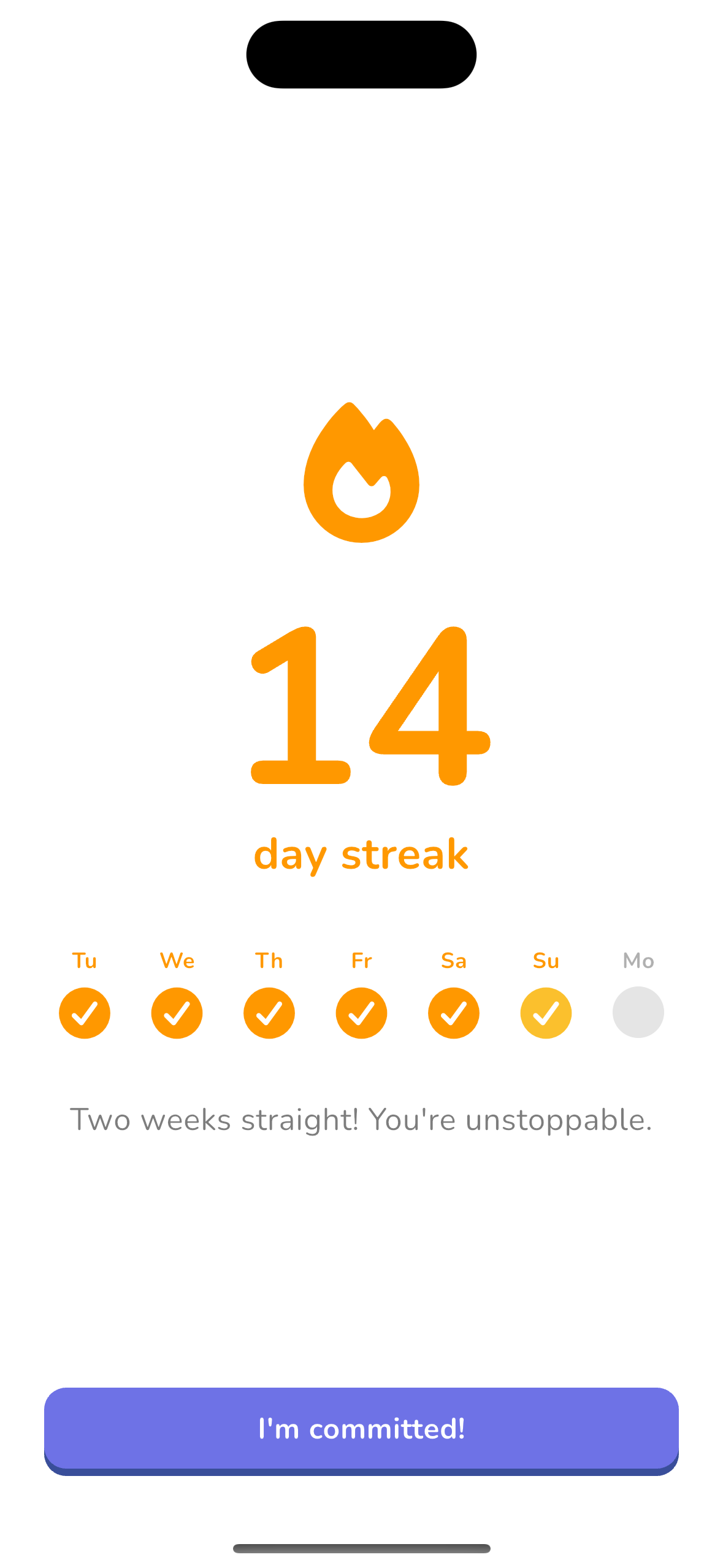
Streak (August 2)
-
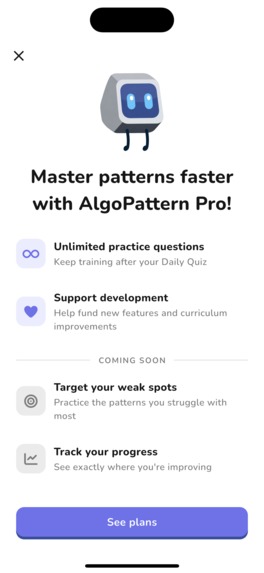
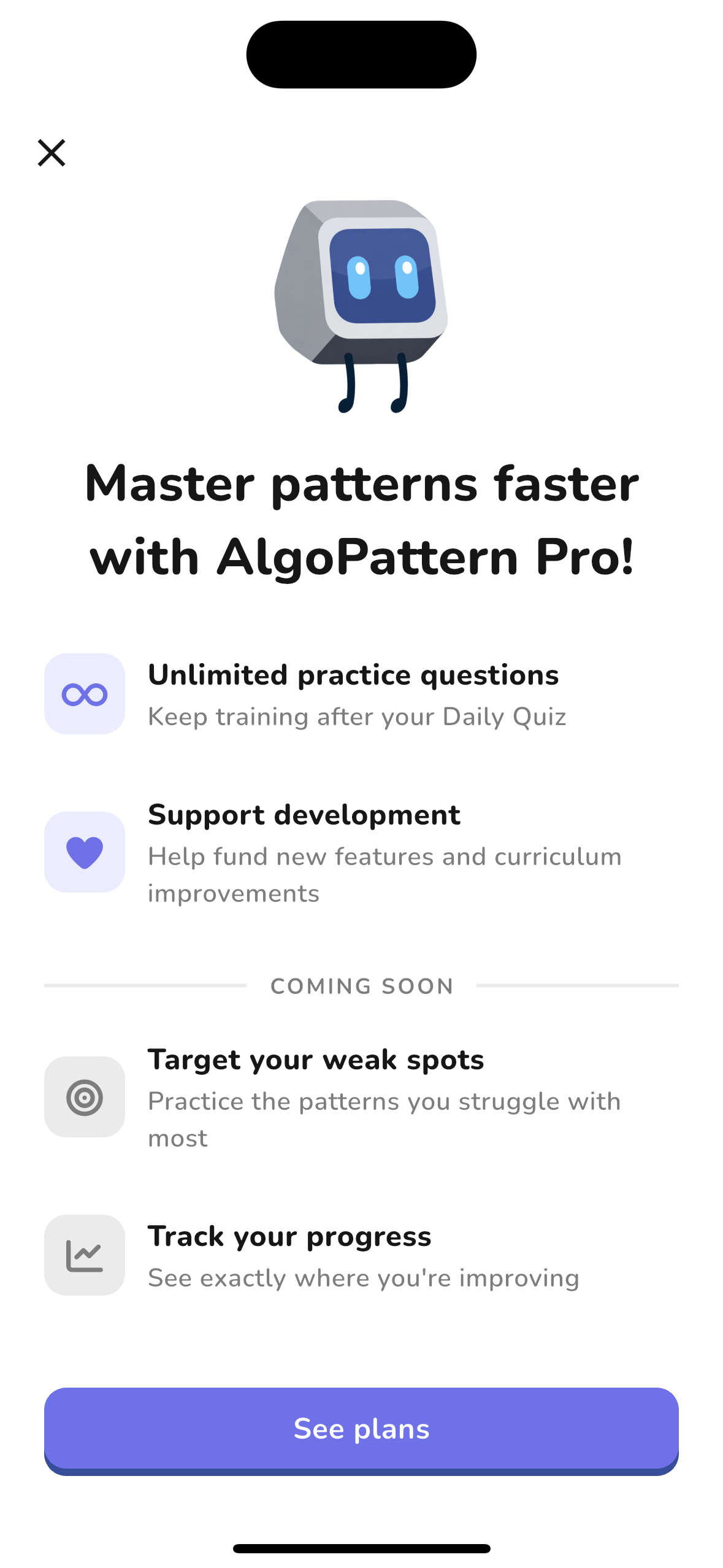
Paywall (August 2)

Inspiration
Preparing for coding interviews often feels like there are only two options: spend an hour struggling through a full LeetCode problem, or do nothing.
But one of the most important skills in a technical interview happens before you write any code: recognizing the underlying pattern. Is this a sliding window problem? Two pointers? Binary search? A hash map?
I built AlgoPattern to make that skill easier to practice consistently. The idea is simple: instead of requiring a laptop, a large block of time, and enough motivation to solve a full problem, AlgoPattern gives aspiring software engineers short, focused practice they can complete from their phones.
My goal is to create something that feels less like another interview-prep grind and more like a daily pattern-recognition gym, similar to what Duolingo does for language learning.
What it does
AlgoPattern is a mobile app for practicing coding interview patterns through short, multiple-choice sessions.
Users can:
- Complete a focused daily quiz
- Practice patterns such as Two Pointers, Sliding Window, Hash Maps, and Binary Search
- Review explanations after every answer
- Track their streak, XP, accuracy, and practice history
- Unlock unlimited practice with AlgoPattern Pro
The first version deliberately focuses on one narrow part of interview preparation: recognizing the right approach before trying to implement it.
How we built it
AlgoPattern is built with Flutter for iOS and Android.
The backend uses Supabase for authentication, database storage, user progress, and server-side functions. RevenueCat manages subscriptions and the AlgoPattern Pro entitlement across both platforms. I use PostHog to understand how users interact with the app and to diagnose issues.
The question curriculum is written as structured content in GitHub and synchronized with the database. This lets me review, version, test, and expand the content without hard-coding it into the mobile app.
I’m a rising senior studying computer science, so I already had several years of programming experience from coursework, internships, and personal projects. But I also built AlgoPattern during a moment when AI is fundamentally changing how software gets made, and I leaned into that. I used Claude Code extensively throughout the development process: to implement features, debug issues, refactor systems, navigate unfamiliar parts of the stack, and iterate much faster than I could have on my own. Rather than spending all of my time manually writing every line of code, I was able to focus more of my energy on defining the product, designing the learning experience, making architectural decisions, testing the results, and deciding what should actually ship.
Challenges we ran into
One of the biggest challenges was balancing ambition with focus.
AlgoPattern originally began as a much larger vision: a complete, gamified “Duolingo for LeetCode.” I spent many months designing curriculum systems, progression mechanics, and a far more expansive learning experience... but one thing was definitively lacking from that list: actually shipping it.
Eventually, I realized I was trying to build too much before proving that the smallest version of the idea was valuable. I narrowed the initial product down to the habit I most wanted to help users develop: opening the app, answering a few questions, and becoming slightly better at recognizing algorithmic patterns each day.
I am also building the app, writing the curriculum, supporting users, creating the brand, and documenting the process largely on my own. Shipaton has forced me to become much more disciplined about deciding what is important enough to build now.
Accomplishments that we're proud of
Before Shipaton, AlgoPattern had spent a few months in an unfinished beta state. Shipaton gave me the deadline and motivation to finally turn it into a public product. Check back later to see the accomplishments we accrue 😉
What we learned
Check back later!
What's next for AlgoPattern
For the remainder of Shipaton, I am focused on learning from real usage and turning AlgoPattern from a promising first release into a product aspiring software engineers genuinely rely on.
The next steps include:
- Expanding the question library
- Adding targeted practice so users can focus on their weakest areas
- Improving explanations and curriculum quality
- Making practice more adaptive and personalized
- Refining onboarding, retention, and the AlgoPattern Pro experience
- Continuing to incorporate feedback from users
- Measuring which parts of the product actually help people build stronger pattern-recognition skills
Longer term, I want AlgoPattern to become a complete mobile practice companion for coding interviews: something that complements deeper LeetCode study by making consistent, focused practice possible anywhere.
Built With
- dart
- flutter
- posthog
- revenuecat
- supabase


Log in or sign up for Devpost to join the conversation.