-
-
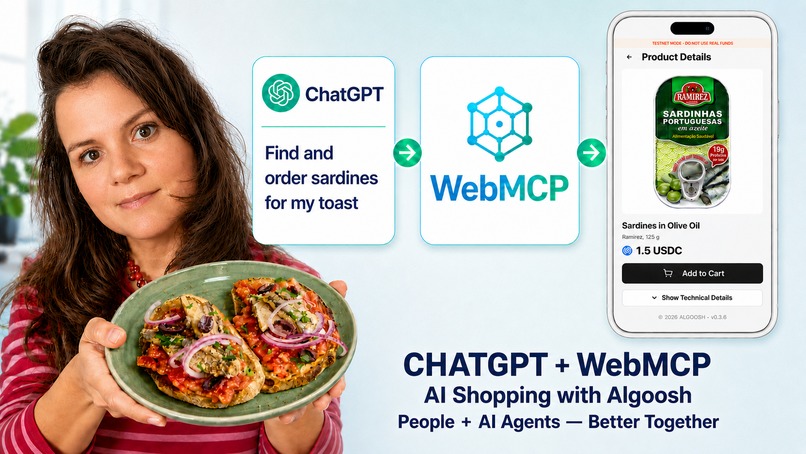
Algoosh, webMCP agentic shopping
-
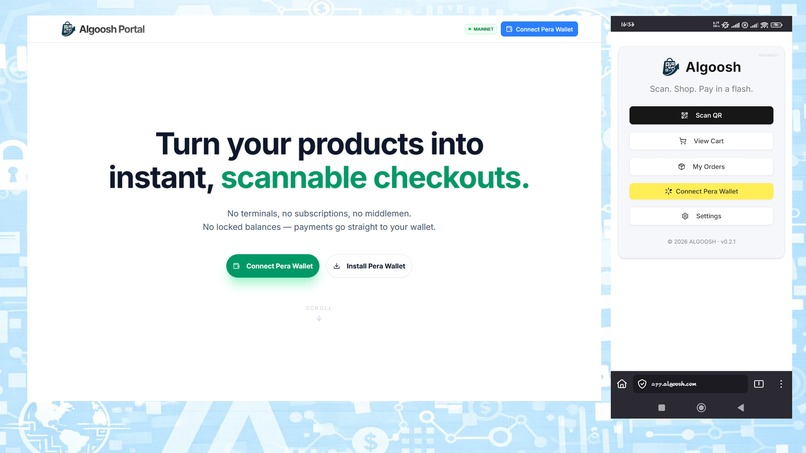
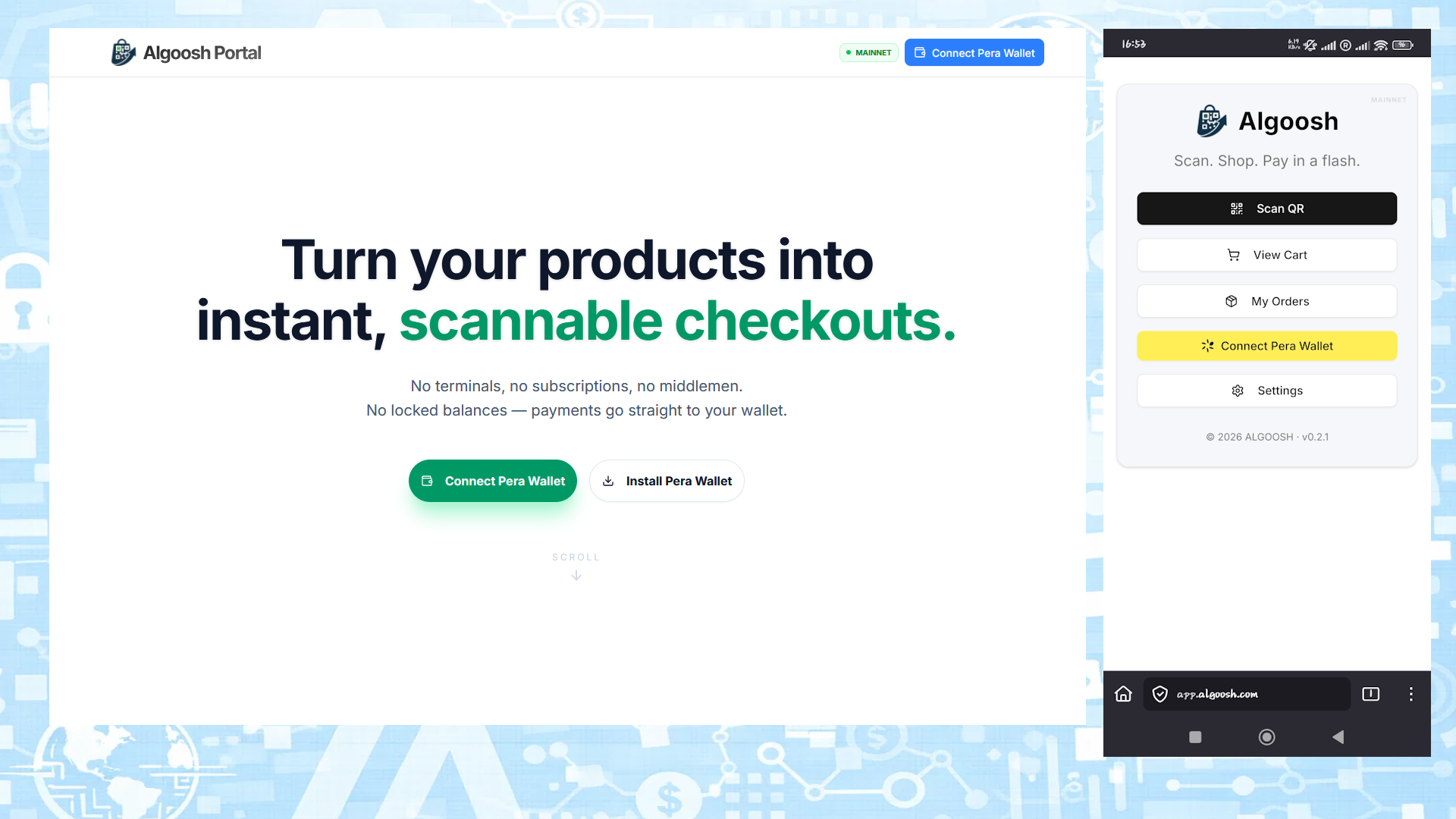
Algoosh
-
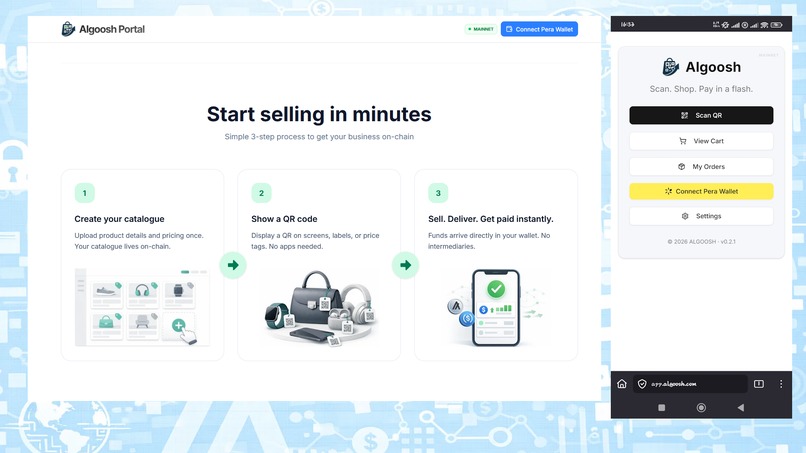
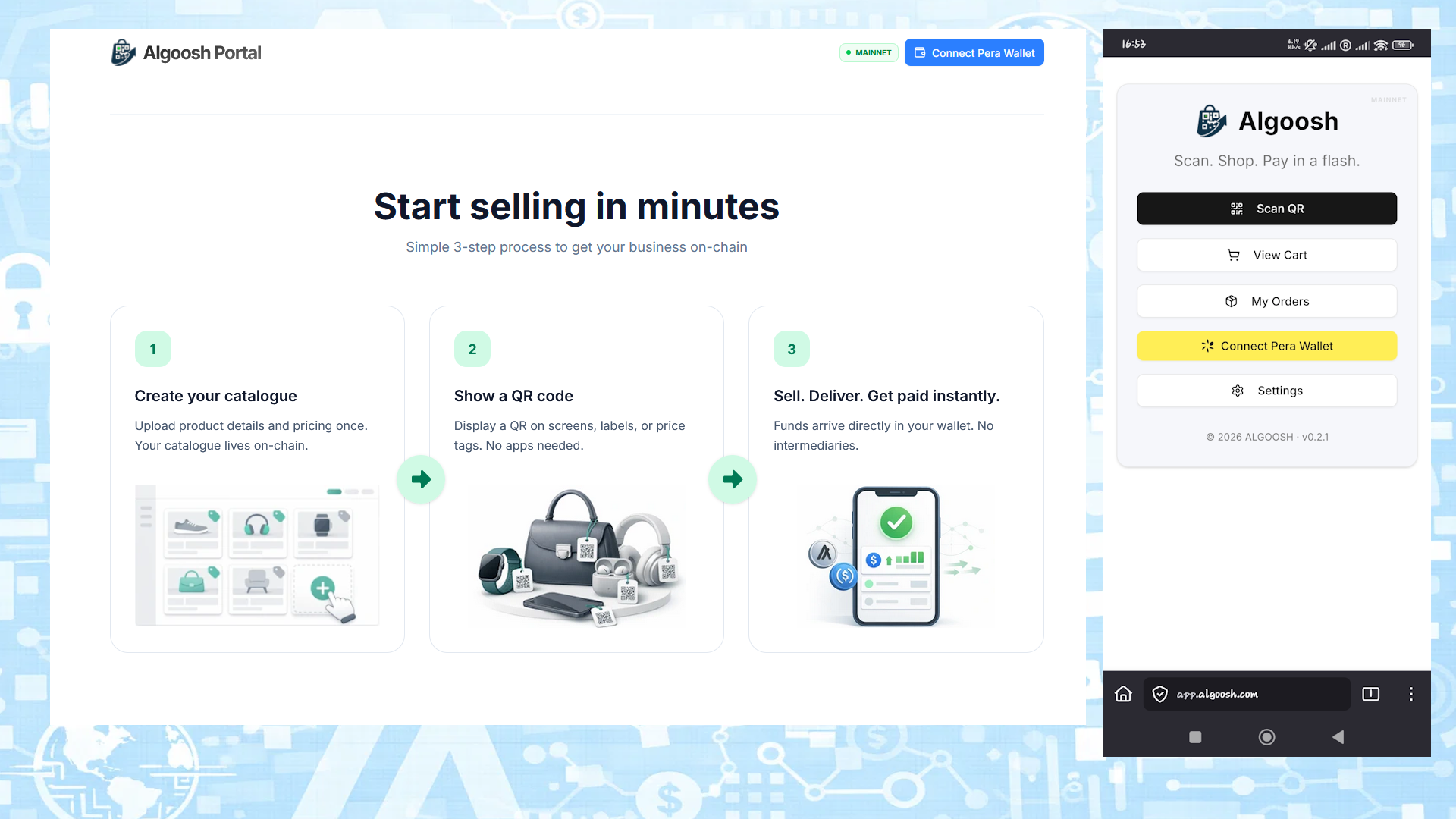
Seller Protal, client app
-
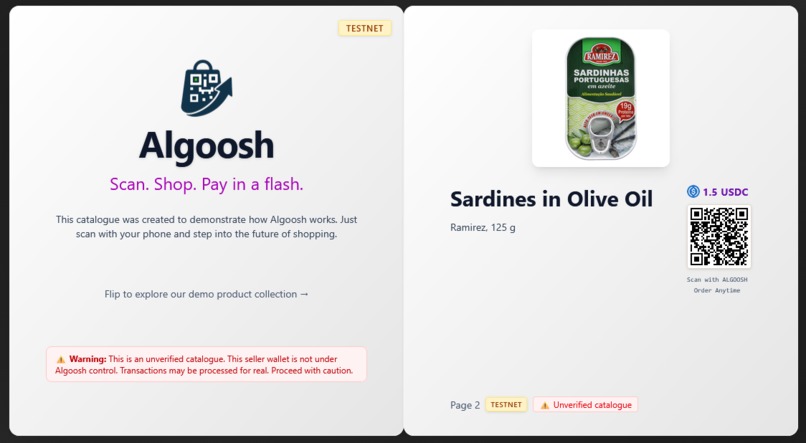
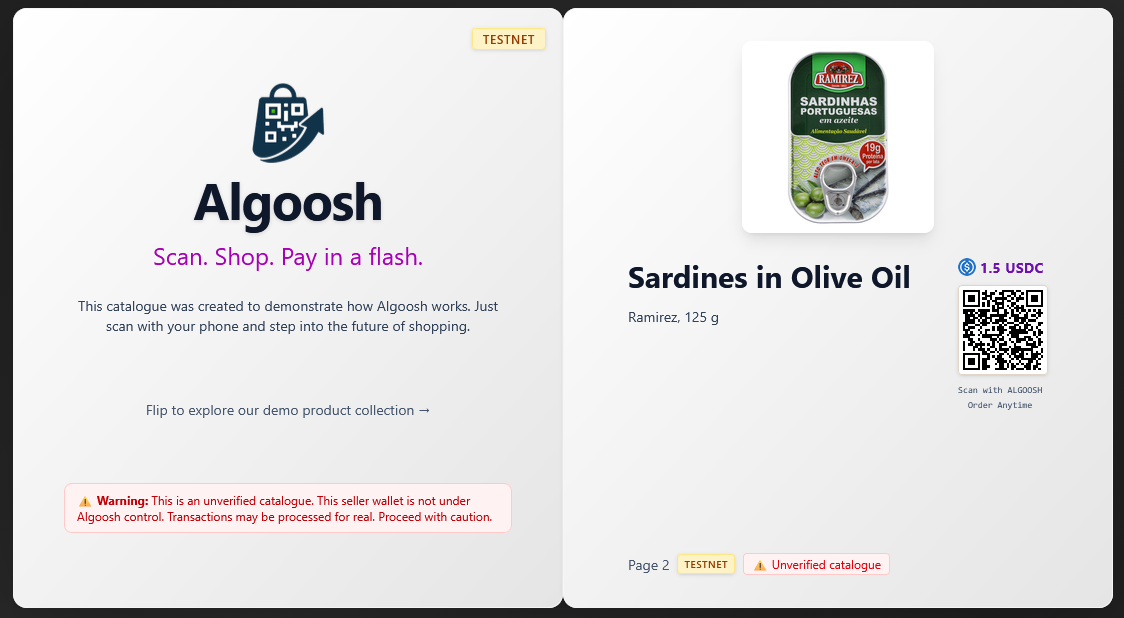
Promo catalog
-
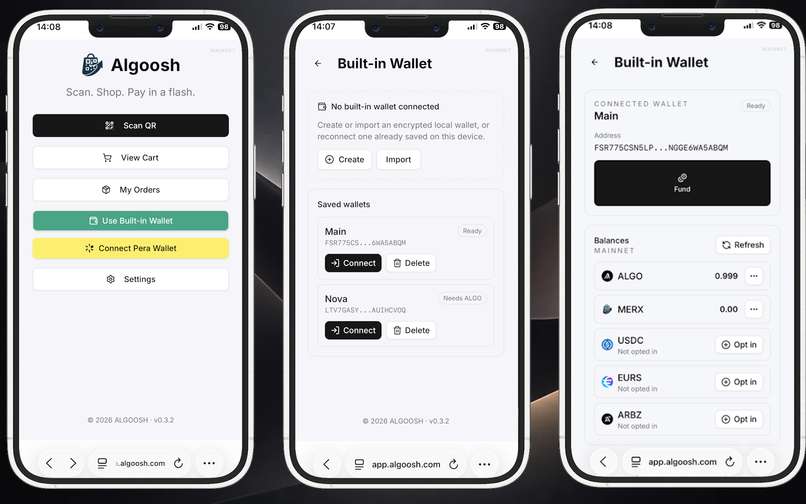
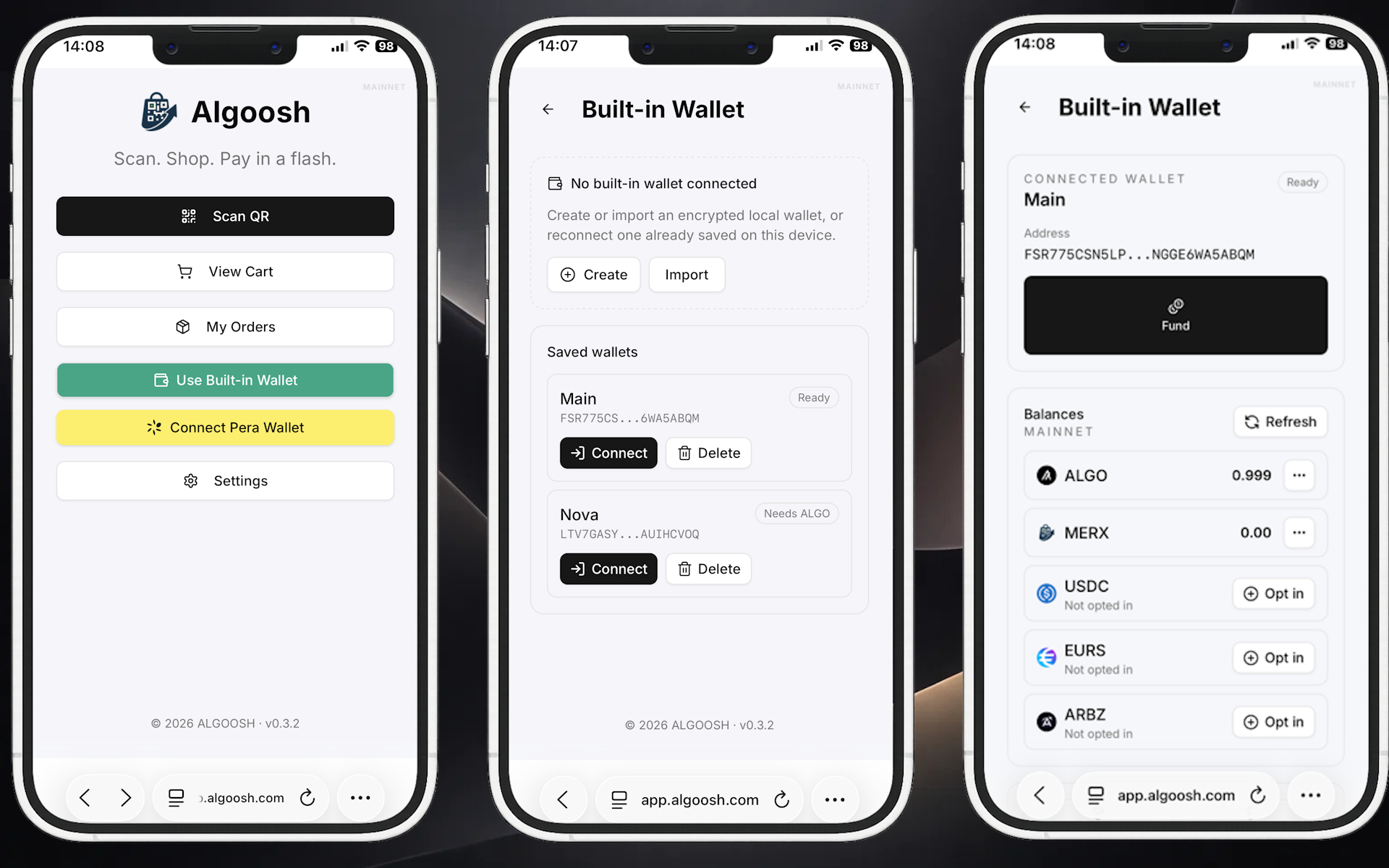
Buyer application UI
-
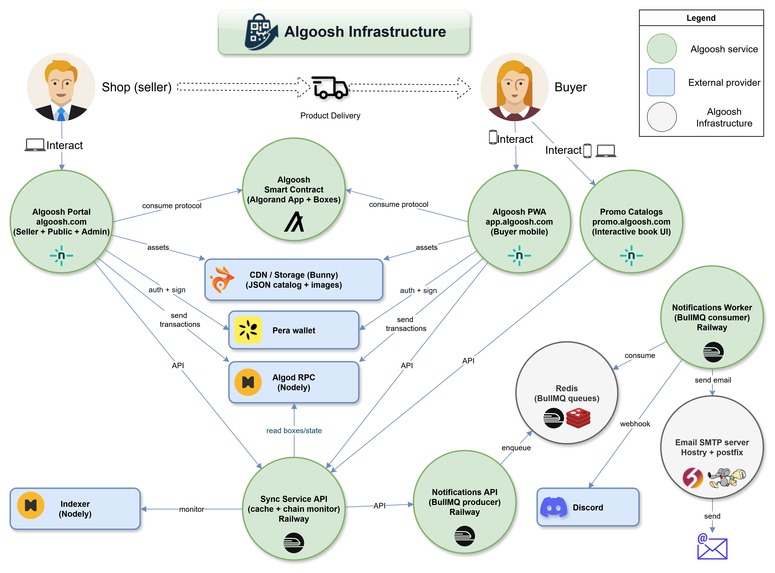
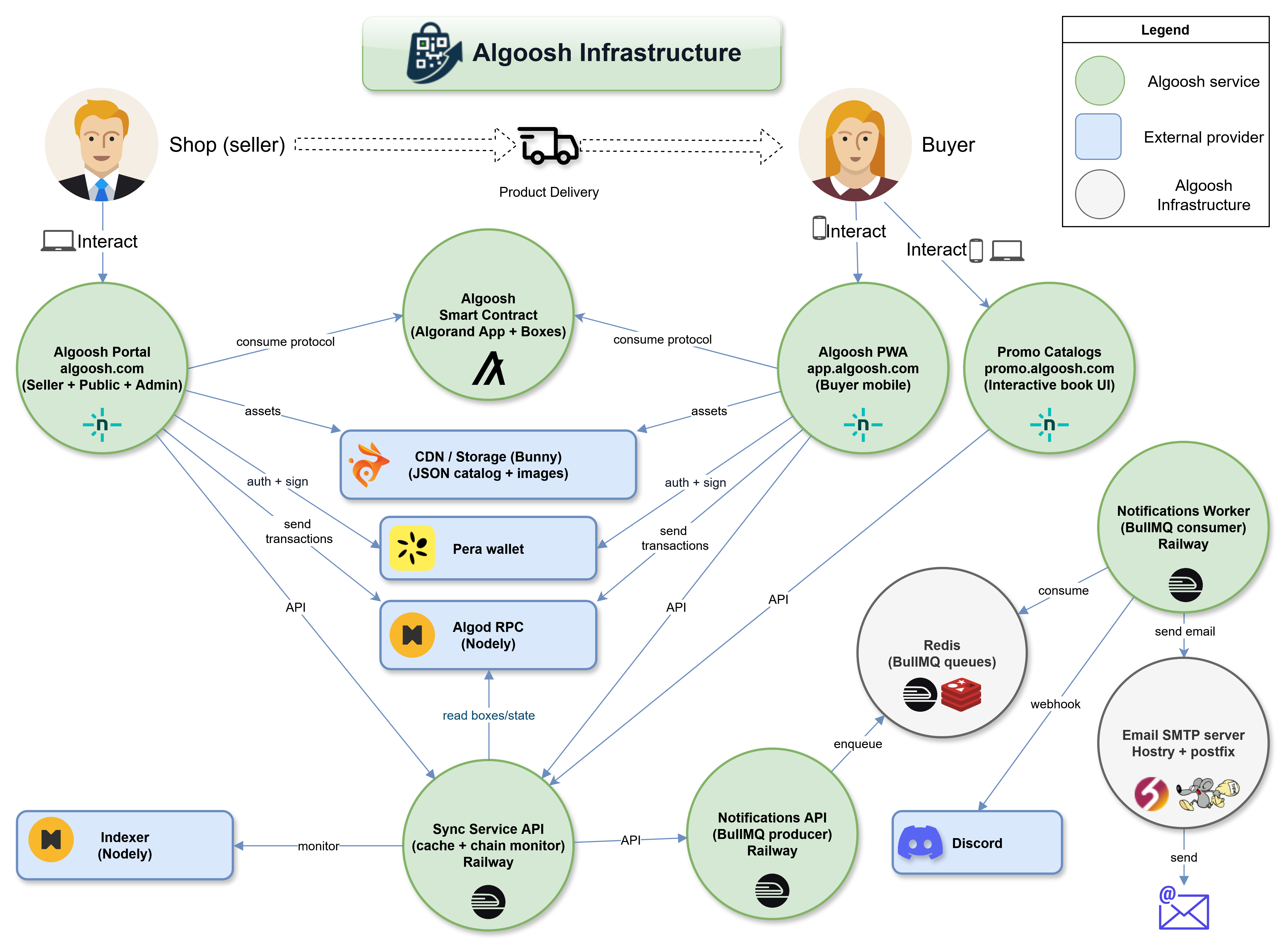
Infrastructure
-
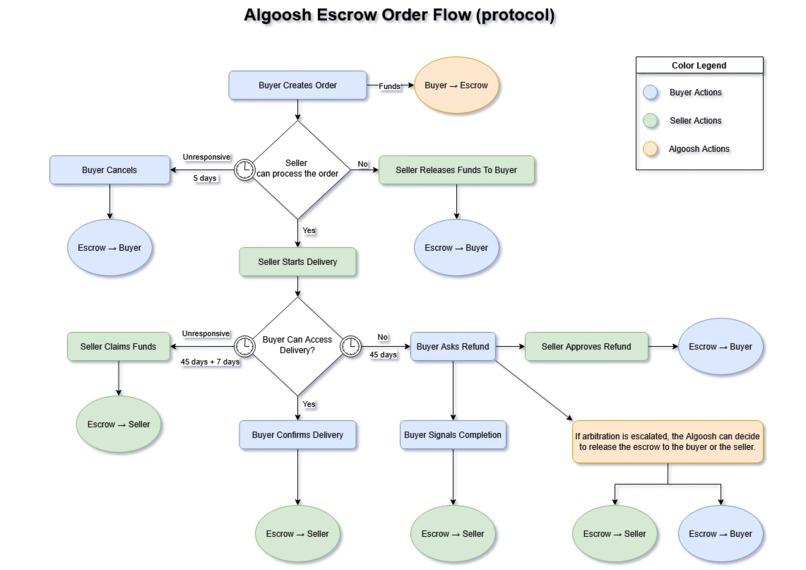
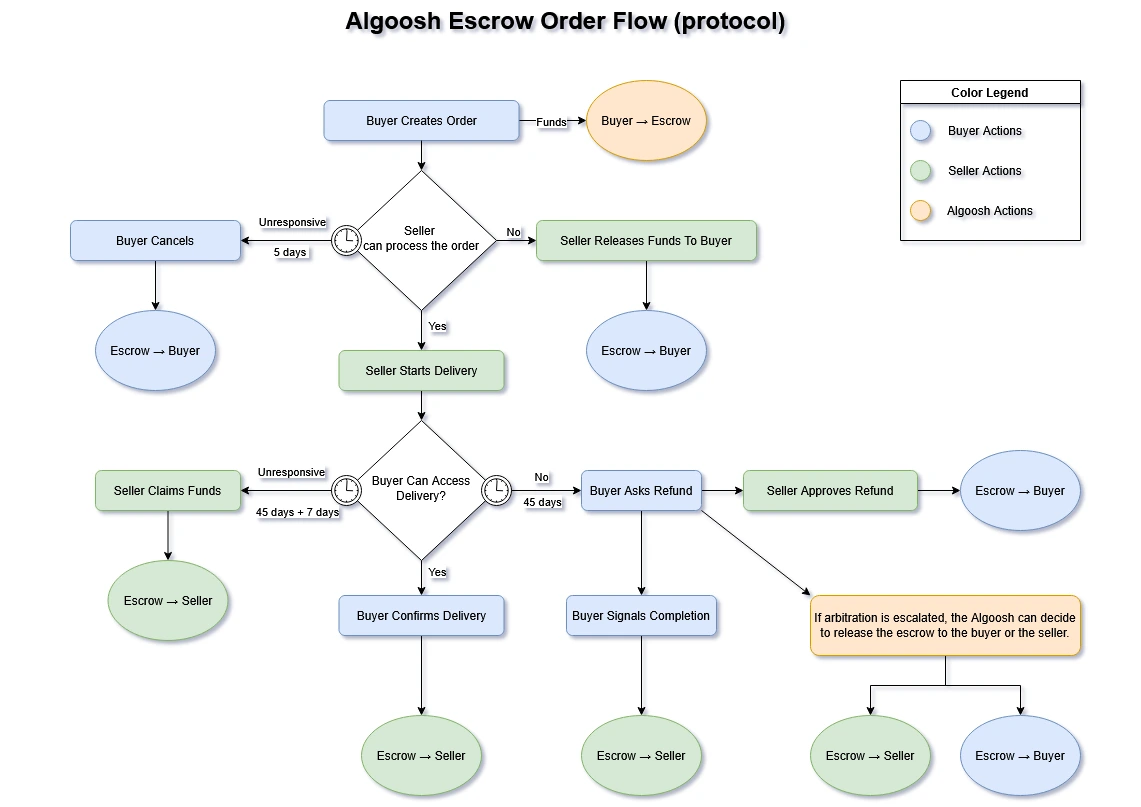
Smart Contract payment protocol
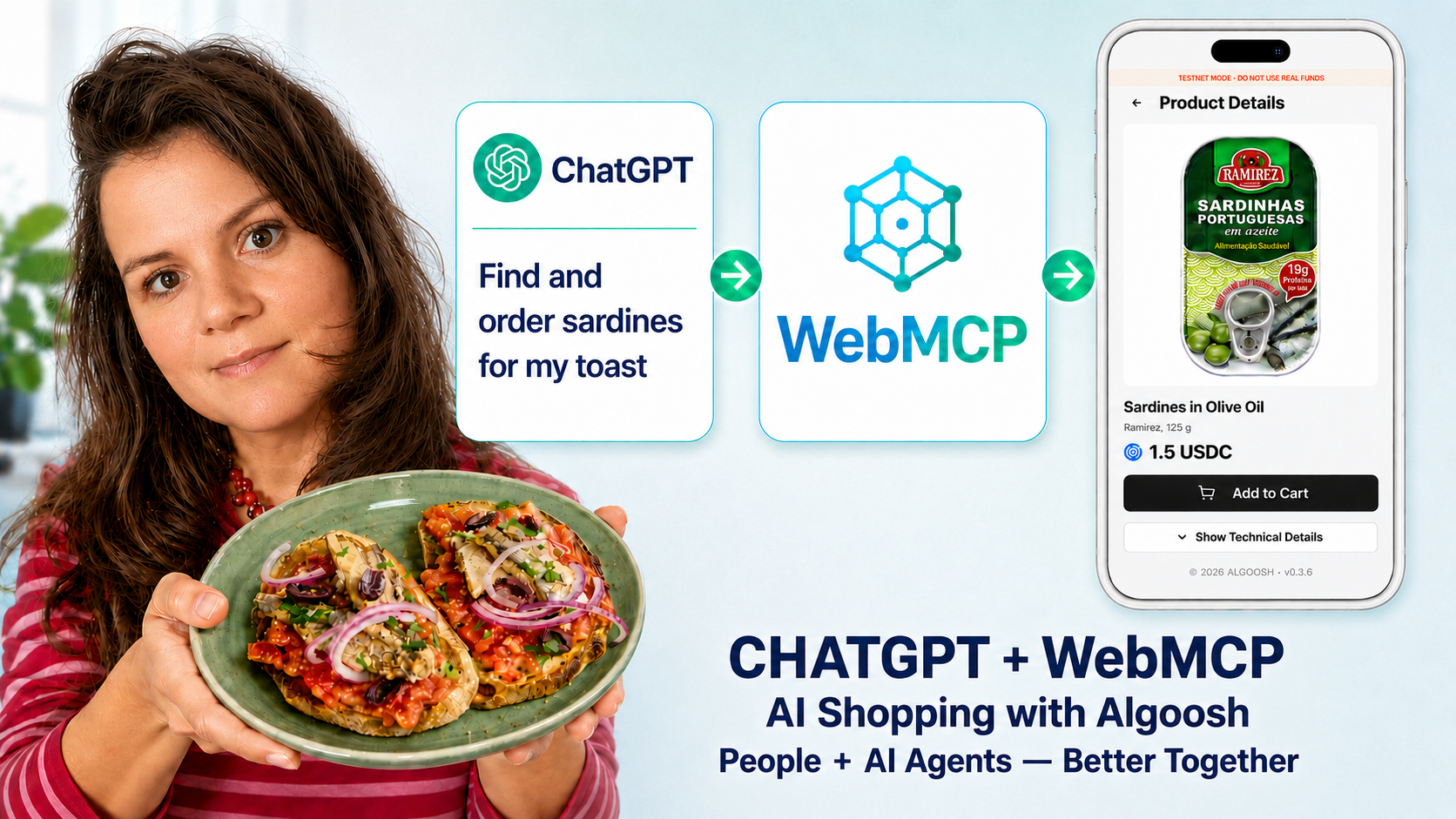
Algoosh Agentic Shopping
Inspiration
Shopping with an AI agent should feel easier than browsing dozens of pages, comparing products, filling a cart, and repeatedly entering the same checkout information. Most websites, however, still force agents to interpret visual interfaces and simulate clicks, which can be unreliable.
At the other extreme, allowing an agent to control a wallet or submit payments creates unacceptable security and trust risks.
Algoosh Agentic Shopping explores a better model: let AI handle product discovery and order preparation while keeping the buyer in control of delivery details, wallet access, and payment approval.
Algoosh was already a QR-first commerce platform built on Algorand. WebMCP gave us the opportunity to transform every Algoosh Promo catalogue into an agent-readable storefront, while x402 provided a structured way to connect agent-prepared orders with verifiable payments.
Our guiding principle became:
The AI can shop and prepare. Only the human can approve and pay.
What it does
Algoosh Agentic Shopping lets a shopper open an Algoosh catalogue and ask an AI agent for help using natural language.
For example:
I want to make mushroom risotto tonight.
I already have rice, olive oil, and garlic.
Find the missing ingredients in this store and prepare an order for me to review.
The agent can:
- Read the current catalogue.
- Inspect individual products and prices.
- Select products and quantities.
- Prepare a durable order.
- Return an approval link and QR code.
- Check the order state before or after the buyer completes checkout.
The buyer then opens the approval link in the official Algoosh application, either on the same device or by scanning the QR code with a phone. There, the buyer:
- Reviews the selected products and preliminary subtotal.
- Chooses a fulfillment method.
- Provides any required delivery information.
- Reviews the final authoritative price.
- Explicitly approves the transaction in their own wallet.
Through this interface, the AI never receives private delivery information, unlocks the wallet, signs a transaction, or submits payment. Algoosh's WebMCP tools neither request nor return delivery plaintext or wallet credentials.
After payment, the agent can retrieve a privacy-safe order summary, the payment state, the selected fulfillment option, the final total, and links to the verified payment and application transactions.
How we built it
We extended the existing Algoosh platform with four page-local WebMCP tools:
get_current_algoosh_catalogueget_current_algoosh_productprepare_algoosh_orderget_algoosh_order_status
The tools are registered through document.modelContext.registerTool() only after the current catalogue has loaded. Their lifecycle is tied to an AbortSignal, so stale registrations are removed when the catalogue changes or the page unloads. No separate MCP server installation is required for this flow; the loaded catalogue page exposes the tools directly.
The ordering system uses a two-stage process.
First, the WebMCP tool creates a durable but non-payable preliminary intent. The agent supplies only product IDs, quantities, and an idempotency key. It cannot set authoritative prices, seller addresses, payment destinations, delivery details, or wallet information in the order request.
Next, the buyer opens the approval handoff. The Algoosh application collects fulfillment information, encrypts the private delivery payload in the browser, and asks the x402 service to finalize the order.
Before issuing a payment requirement, the service independently reloads the seller's catalogue and verifies:
- Product identities and quantities.
- Current prices and payment assets.
- Seller and payment addresses.
- The selected fulfillment option and its current terms and cost.
- The target Algorand network and application.
The service then binds the buyer identity and encrypted-order commitments into the signed quote. If any important commercial term changed, the order stops before payment and the buyer must create and review a new order.
Because a token transfer alone is not sufficient evidence of an Algoosh order, we implemented a custom x402 v2 scheme named algoosh-order. Settlement validation checks both the payment and the adjacent createOrderPaid smart-contract call against the signed quote.
The finalized order uses an x402 PAYMENT-REQUIRED response containing the signed quote. The buyer application verifies that quote and constructs an atomic Algorand transaction group containing the payment and the Algoosh smart-contract order call. Only the buyer's wallet can approve and submit that group.
Redis stores the durable state used for atomic intent creation, idempotency, settlement recovery, and duplicate-order protection. Algoosh Sync validates the resulting public on-chain evidence and correlates it with the prepared order.
The approval URL is a short-lived opaque capability link. It contains no personal information, is served with Cache-Control: no-store, and cannot be redirected to an untrusted destination.
Challenges we ran into
The biggest challenge was preserving human wallet control while still creating a genuine agentic shopping experience. Many agent-payment flows assume that the agent or facilitator can sign and submit the payment. That model did not fit Algoosh.
We designed the preliminary-intent and browser-approval stages so the agent can make useful progress without ever receiving payment authority.
Another challenge was maintaining trust across several independent surfaces:
Promo catalogue -> WebMCP agent -> x402 service -> Buyer application -> Wallet -> Algorand -> Sync
The trust-critical components needed to preserve consistent bindings across the catalogue, products, mount, buyer, seller, fulfillment selection, order seed, and transaction, while exposing only the information appropriate to each surface.
Accomplishments that we're proud of
We are especially proud that Algoosh Agentic Shopping is more than a catalogue-reading demo. It connects WebMCP product discovery to a real, human-approved commerce flow.
Key accomplishments include:
- Four functional WebMCP tools verified in a production browser context.
- A cross-device approval handoff with both a link and generated QR code.
- A complete low-value Algorand TestNet purchase with explicit buyer approval.
- x402 payment requirements carrying a signed quote backed by authoritative catalogue data.
- A custom x402 settlement scheme that validates the complete Algoosh atomic group rather than only a token transfer.
- Redis-backed recovery that survives service restarts.
- Protection against duplicate payments during uncertain confirmation.
- Recovery from temporary blockchain indexer delays.
- Detection of changed prices or selected fulfillment terms before payment.
- Privacy-safe agent status responses containing no delivery details.
- Exact display amounts, ISO timestamps, consistent network metadata, repeated order summaries, and transaction explorer links for agents.
- Browser-side encryption of the buyer's delivery information.
- Strict separation between AI assistance and wallet authority.
Most importantly, we extended the real Algoosh shopping and payment architecture instead of building a disconnected hackathon simulation.
What we learned
We learned that agentic commerce does not have to mean autonomous spending.
The most useful experience is collaborative: the agent handles discovery, comparison, and preparation, while the person remains responsible for private information and consequential decisions.
We also learned that structured WebMCP tools are far more reliable than asking an agent to interpret and click through an unfamiliar interface. Clear tool schemas improve both usability and security by limiting exactly what an agent can provide.
Payment confirmation is not a single API call. It is a distributed state machine involving browser state, durable server state, wallet submission, blockchain confirmation, and delayed indexer evidence. Idempotency and recovery are therefore just as important as the successful path.
Finally, WebMCP and x402 complement one another well: WebMCP helps the agent understand and use the storefront, while x402 connects the prepared intent to a verifiable payment without giving the agent control of the buyer's wallet.
What's next for Algoosh Agentic Shopping
Next, we plan to validate the same flow with a controlled MainNet purchase and test it across more WebMCP-capable clients as the proposal evolves. We also want to add explicit cancellation UX, privacy-safe operational telemetry, and better navigation for larger catalogues.
Longer term, agents may help shoppers compare products across more Algoosh catalogues and explain post-purchase state, while delivery information, wallet access, and payment approval remain inside the official buyer application.
The principle will remain unchanged: AI may discover, compare, and prepare; only the human reviews and pays.
Thank You!
Built With
- algorand
- docker
- netlify
- node.js
- openai
- railway
- react
- redis
- typescript
- webmcp
- x402


Log in or sign up for Devpost to join the conversation.