-
-
project image
Inspiration
This project was inspired by the need to optimize urban traffic flow using intelligent algorithms. The challenge of reducing congestion and wait times at intersections motivated the use of Genetic Algorithms for adaptive traffic light control.
What it does
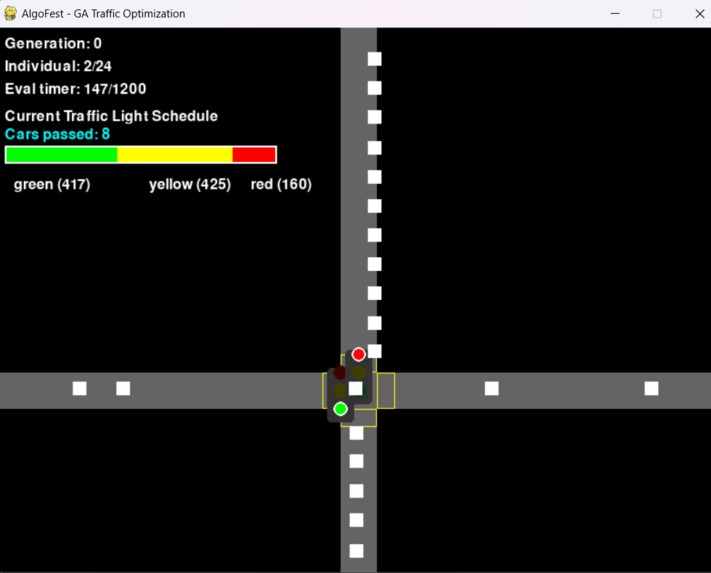
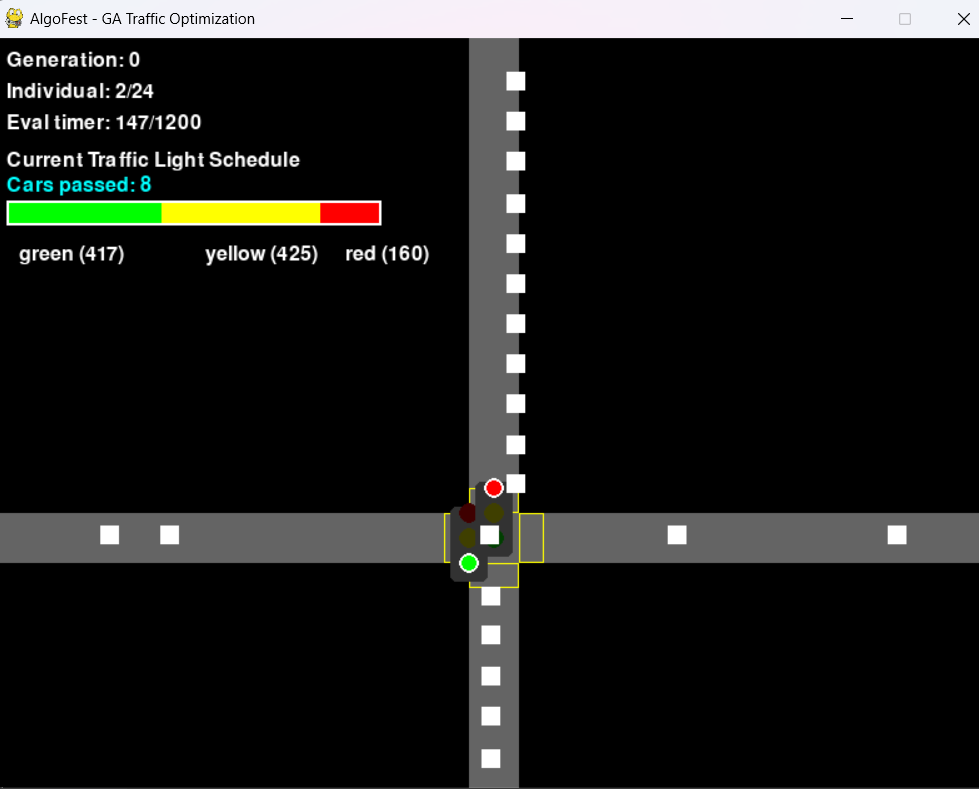
The simulation models a simple 2-road intersection with cars moving according to traffic light signals. It uses a Genetic Algorithm to optimize the durations of green, yellow, and red phases to minimize overall car wait times and improve traffic throughput.
How we built it
We built the simulation using Python and Pygame for visualization. The Genetic Algorithm was implemented from scratch to evolve traffic light timing schedules. Cars are simulated with basic physics and obey traffic signals. The system evaluates each GA individual by running the simulation and measuring fitness based on wait times.
Challenges we ran into
One challenge was balancing the simulation speed and accuracy to allow real-time visualization while maintaining meaningful fitness evaluation. Another was designing a fitness function that effectively guides the GA towards better traffic flow.
Accomplishments that we're proud of
We successfully integrated a Genetic Algorithm with a real-time traffic simulation, achieving visible improvements in traffic flow over generations. The visualization clearly shows the optimization progress and traffic dynamics.
What we learned
We learned how to implement Genetic Algorithms for real-world optimization problems and how to simulate traffic dynamics with Pygame. We also gained experience in balancing simulation fidelity and computational efficiency.
What's next for AlgoFlow: Smart Traffic Optimization
Future work includes extending the simulation to more complex intersections, adding pedestrian and cyclist modeling, and integrating real traffic data for validation and further optimization.

Log in or sign up for Devpost to join the conversation.