-
-
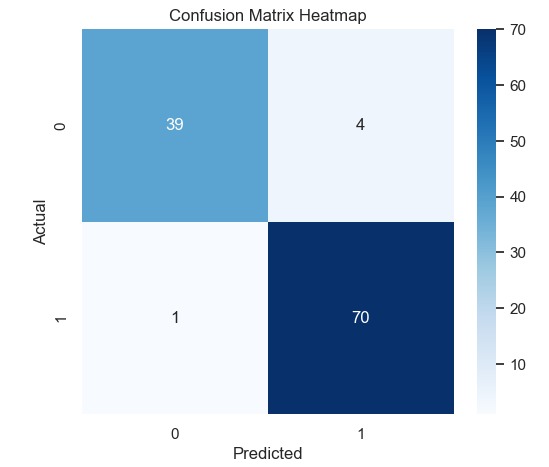
Logistic Regression- Confusion Matrix Heatmap
-

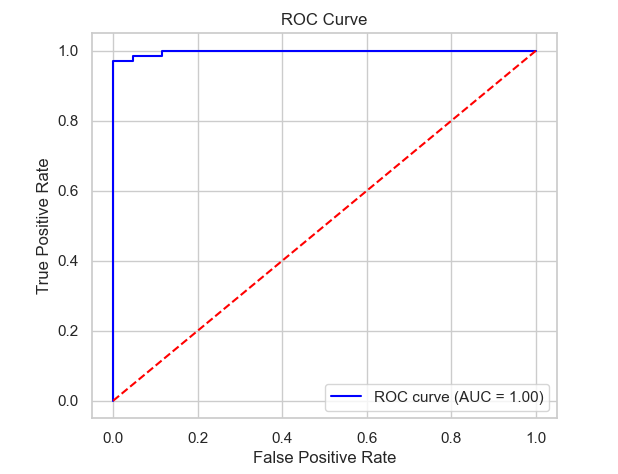
Logistic Regression- ROC Curve
-
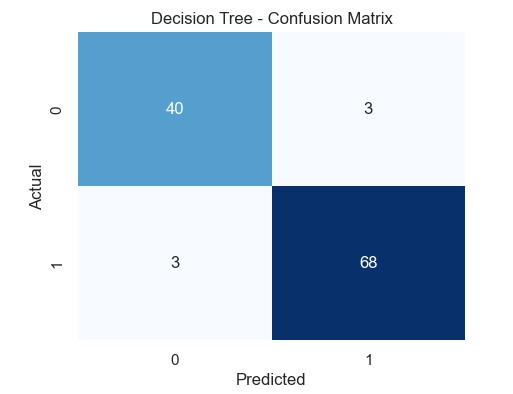
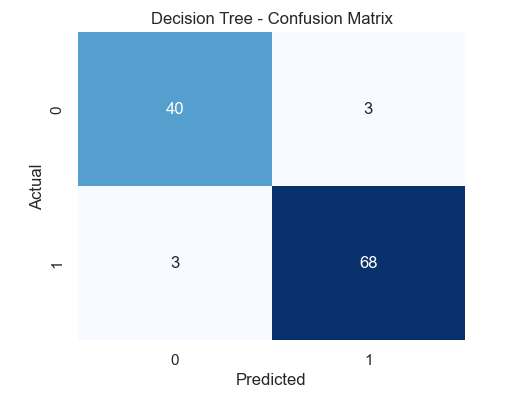
Decision Tree- Confusion Matrix
-
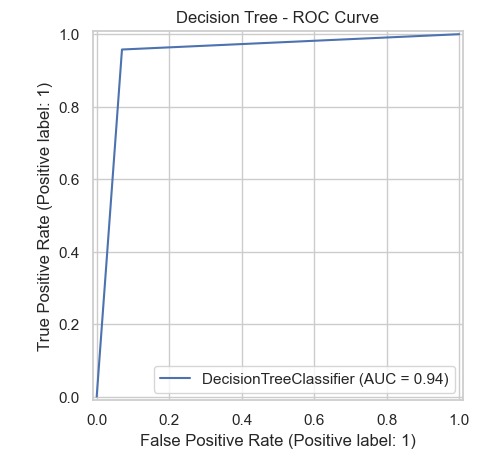
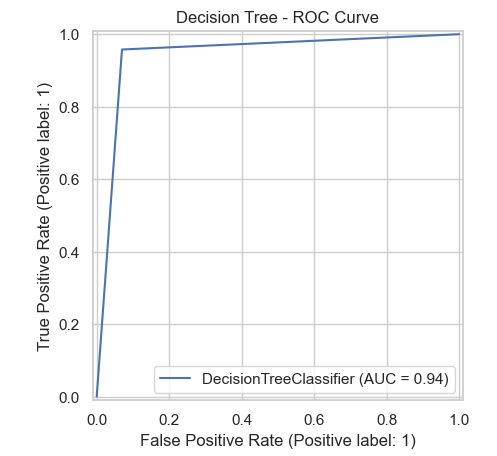
Decision Tree- ROC Curve
-
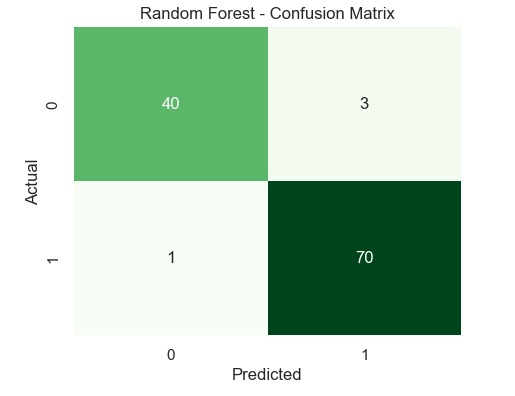
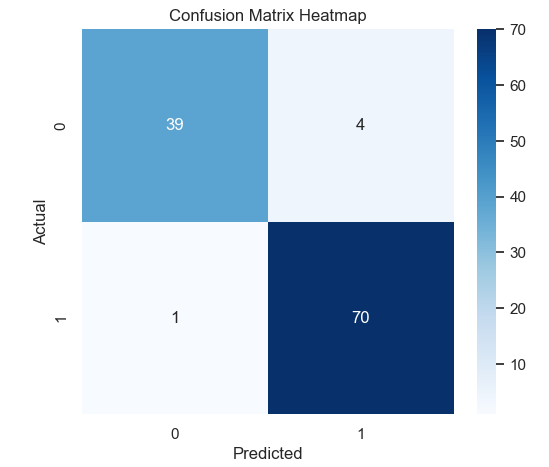
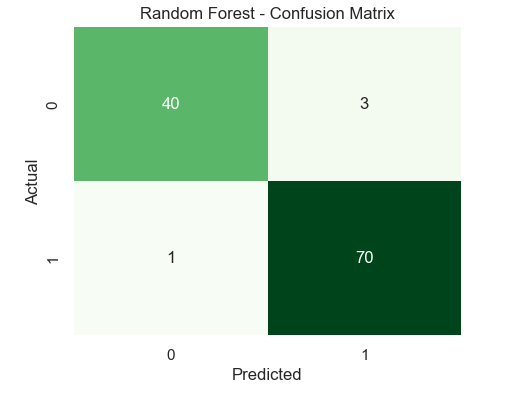
Random Forest- Confusion Matrix
-
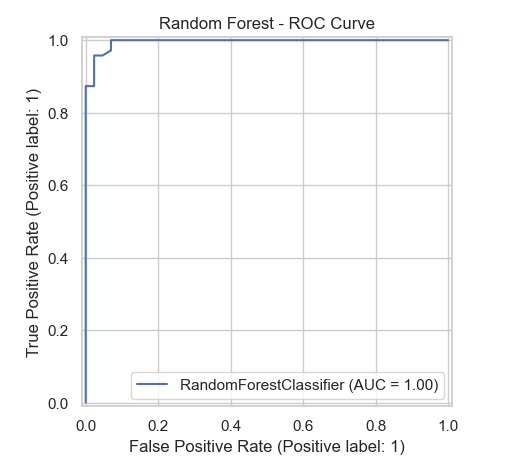
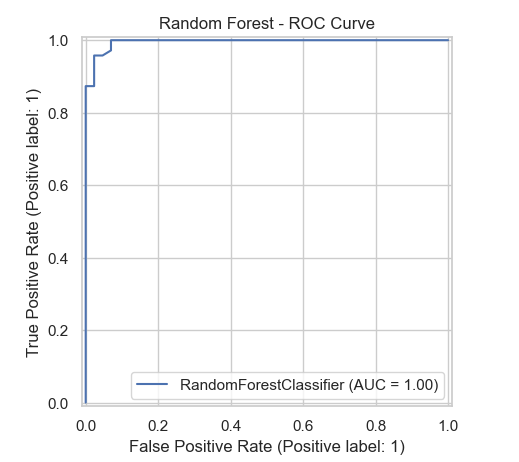
Random Forest- ROC Curve
-

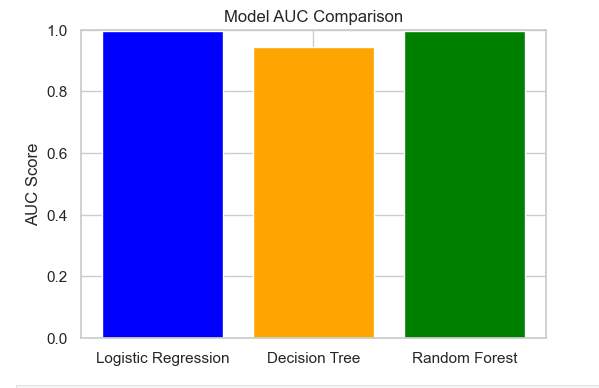
Model AUC Comparison
-
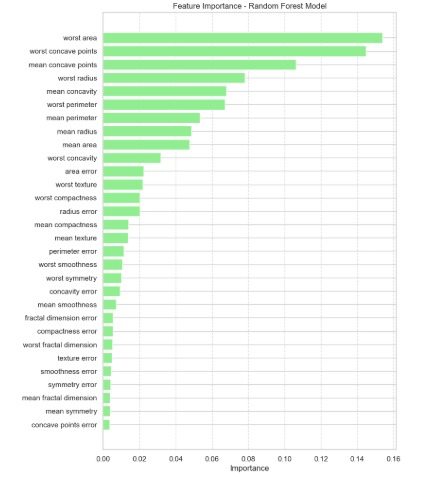
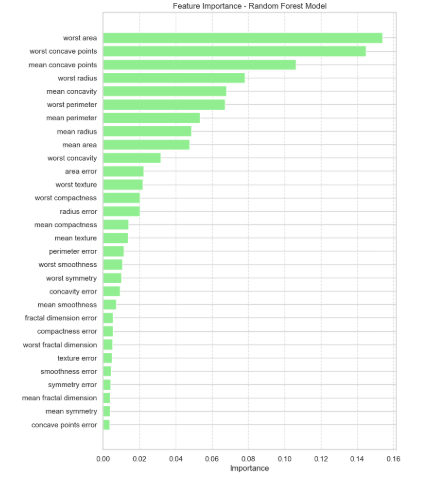
Feature Importance- Random Forest Model
-
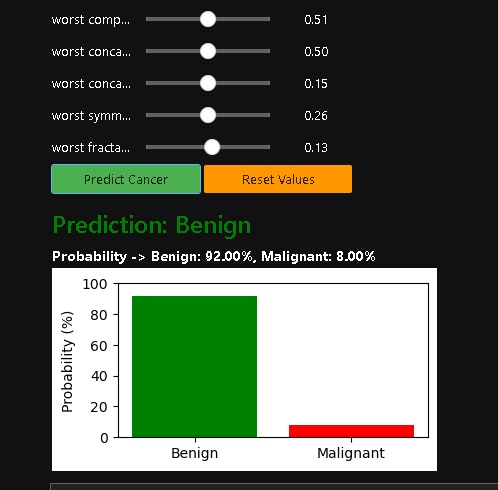
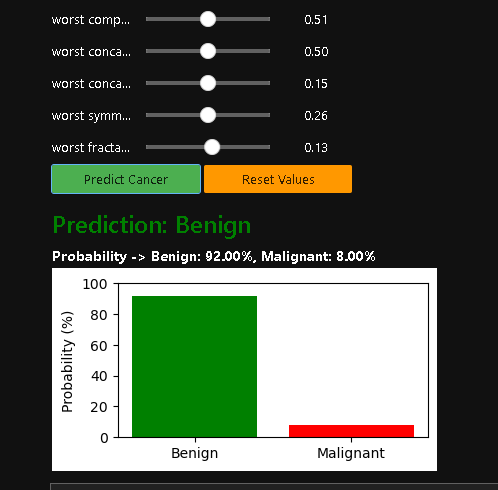
Prediction by setting features' values
-

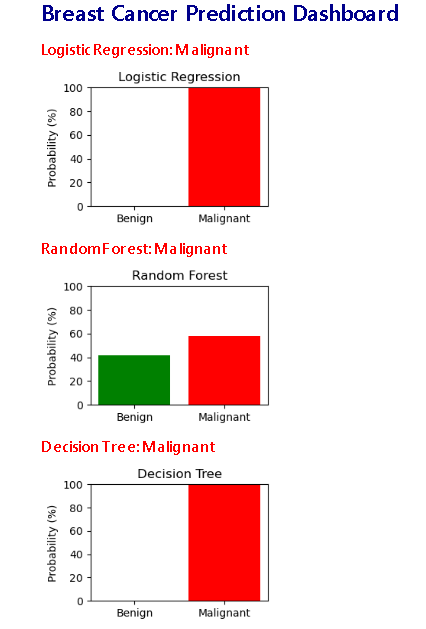
Breast Cancer Prediction Dashboard
Inspiration
This project is deeply personal. When I was 9, my aunt was diagnosed with cancer and unfortunately could not survive. She had hoped I would become a cancer specialist. While I could not pursue a medical career, I wanted to contribute in my own way. This motivated me to explore how AI and machine learning can help in early cancer detection, making a small difference even outside the medical field.
What it does
AlgoFest_CancerPrediction predicts whether a tumor is Benign or Malignant based on 30 features from a breast cancer dataset. The interactive demo allows:
- Users to input feature values via sliders
- Real-time prediction with probabilities
- Visual bar charts showing confidence levels for both classes
- Colorful, user-friendly interface for easy understanding
How we built it
- Dataset: Breast cancer dataset with 30 features
- Models: Logistic Regression, Random Forest, and Decision Tree
- Libraries:
scikit-learn,pandas,numpy,matplotlib,ipywidgets,joblib - Interface: Jupyter Notebook with
ipywidgetsfor interactive sliders and buttons - Visualization: HTML styling and bar charts for probabilities
Challenges we ran into
- Ensuring realistic predictions instead of defaulting to one class
- Handling 30 features with correct value ranges
- Creating a clean, interactive demo within Jupyter Notebook
- Managing and saving multiple models for consistent predictions
Accomplishments that we're proud of
- Built a full interactive demo with three machine learning models
- Successfully implemented real-time probability visualization
- Created a system that transforms a personal motivation into a practical AI solution for early cancer detection
What we learned
- How to preprocess and handle real-world medical datasets
- Training and evaluating multiple ML models using
scikit-learn - Building interactive demos with
ipywidgets - Visualizing prediction results effectively with HTML and Matplotlib
What's next for AlgoFest_CancerPrediction
- Deploy as a web application for broader accessibility
- Add support for batch predictions and CSV input
- Incorporate additional ML models to improve prediction accuracy
- Collect real patient data (anonymized) to fine-tune and validate models further
Built With
- decision
- github
- ipywidgets
- joblib
- joblib-**platform:**-jupyter-notebook-**tools:**-github-(for-version-control-and-project-hosting)-**models-implemented:**-logistic-regression
- jupyternotebook
- logistic-regression
- matplotlib
- numpy
- pandas
- python
- random-forest
- scikit-learn
- seaborn
- tree


Log in or sign up for Devpost to join the conversation.