-
-
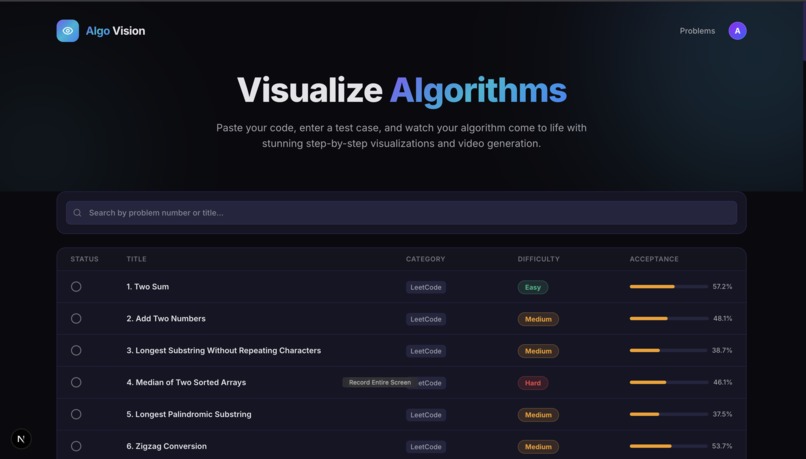
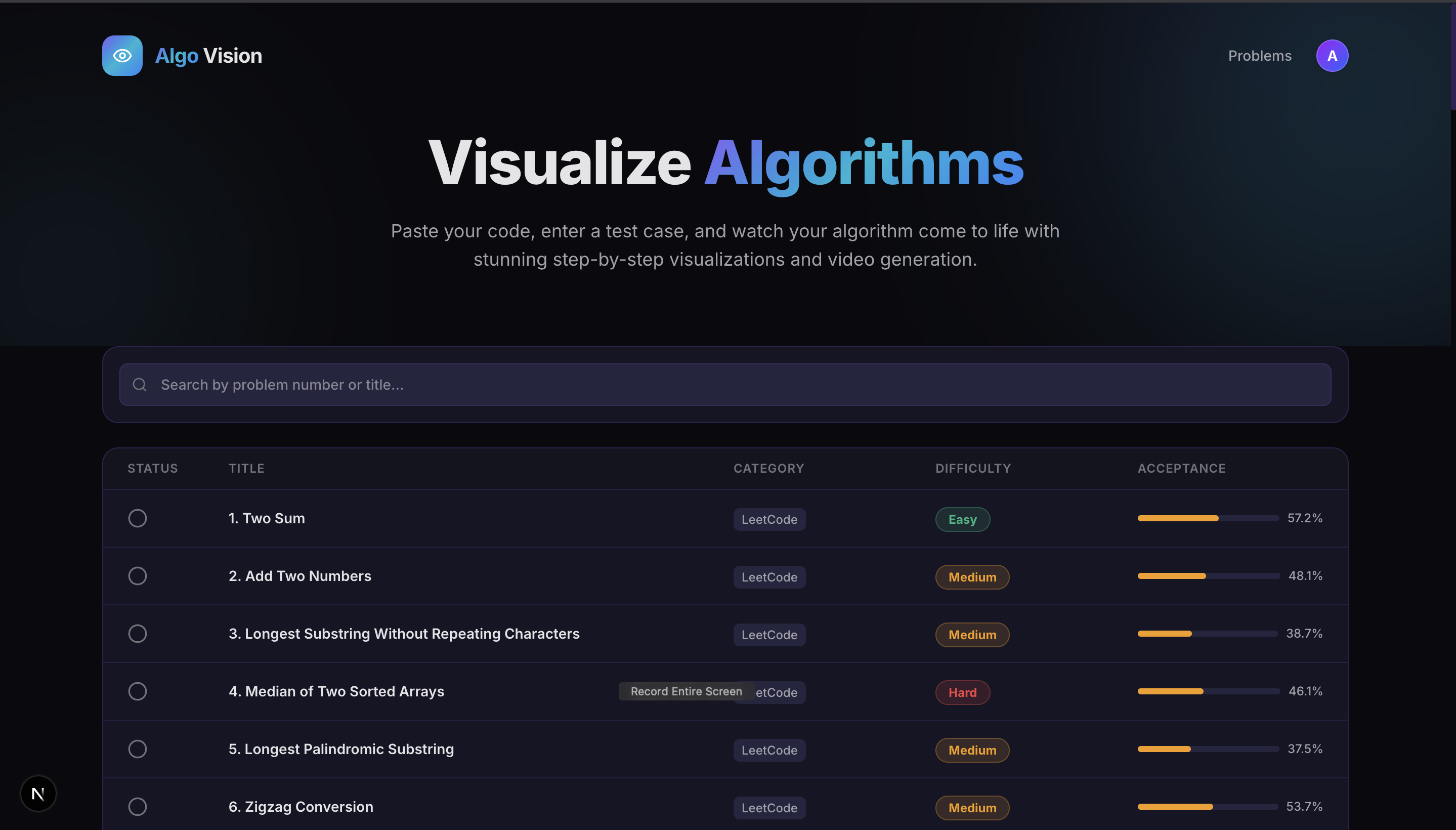
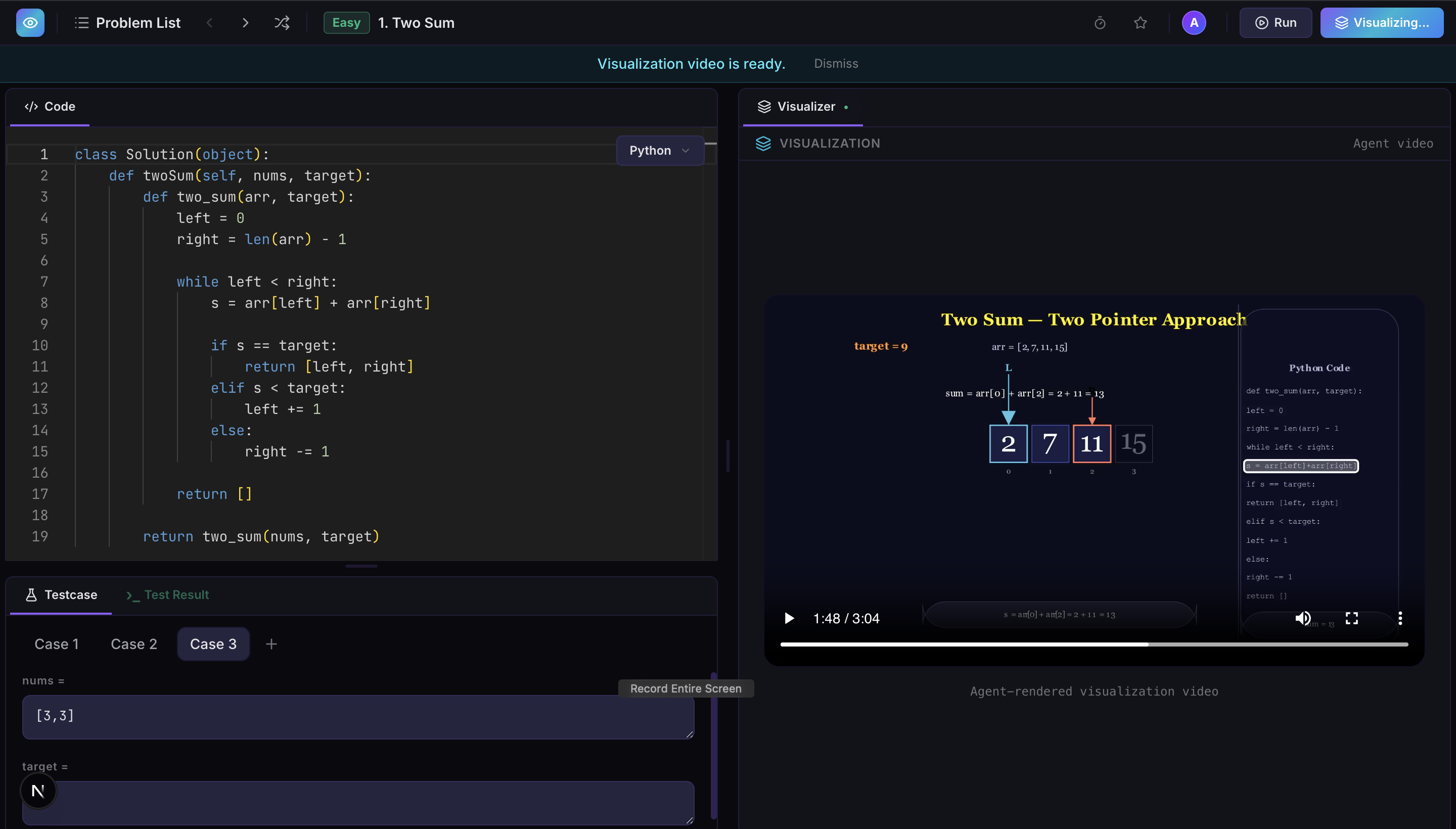
Landing Page After Google Signup Select The Problem
-
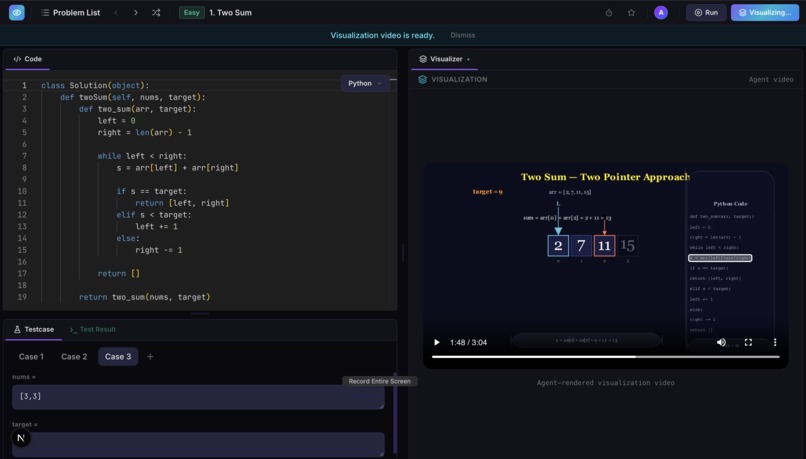
A personalized video visualization is generated that performs a full dry run of the algorithm for the provided test cases.
-
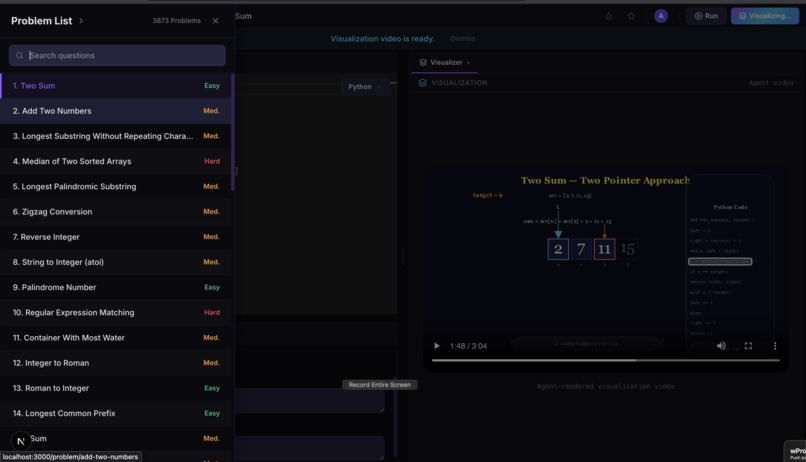
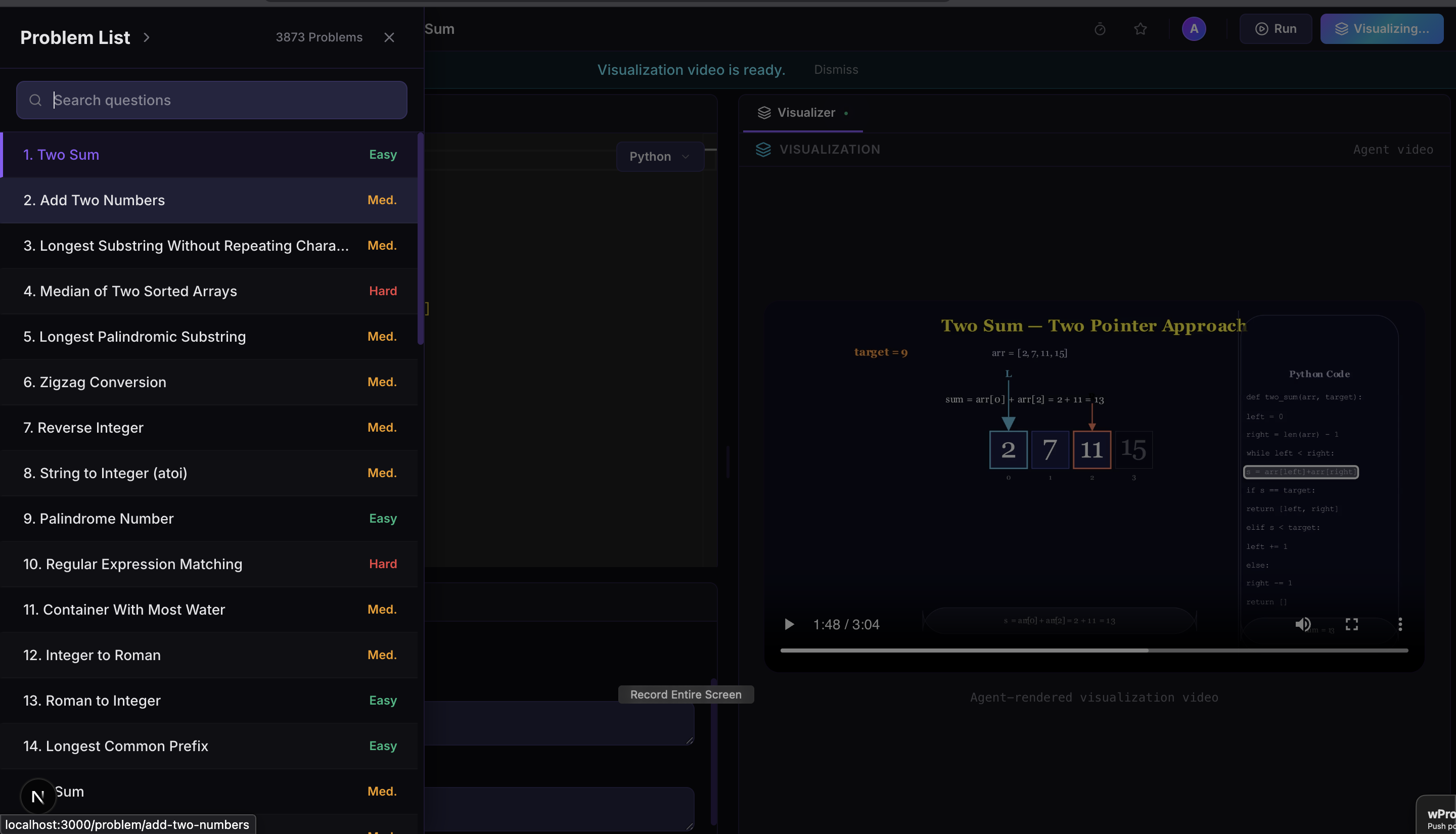
Each and Every Question Available Which is Present in LeetCode
Inspiration
Algorithms are fundamental to computer science, yet many learners struggle to understand how they actually execute. Platforms like LeetCode provide excellent problems, but most explanations rely only on static code and textual walkthroughs.
We realized that the biggest challenge for beginners is visualizing how data structures evolve step-by-step during execution, especially for complex algorithms such as Dynamic Programming or Graph algorithms.
This inspired us to build Algo Vision, an AI-powered platform that converts algorithmic code into dynamic visual explanations.
To power reasoning and explanations, Algo Vision integrates Amazon Nova, a multimodal foundation model capable of understanding code, generating structured reasoning, and guiding learners through complex algorithmic logic.
What it does
Algo Vision transforms algorithm problems into interactive visual learning experiences.
Key features include:
- Amazon Nova-powered AI reasoning to analyze algorithm logic
- Step-by-step visualization of algorithm execution
- Dynamic visualization of arrays, stacks, trees, graphs, and DP tables
- A Live AI Tutor powered by Amazon Nova that explains algorithm behavior
- Animated visual explanations generated from code execution
For example, consider the classic Dynamic Programming Fibonacci problem.
Inline recurrence relation:
\(F(n) = F(n-1) + F(n-2)\)
Display math representation:
$$ DP[i] = DP[i-1] + DP[i-2] $$
Instead of manually tracing recursive calls, Algo Vision visually shows how the DP table evolves step-by-step, helping learners understand overlapping subproblems and optimal substructure.
Amazon Nova analyzes the algorithm and generates explanations describing how each DP state is computed.
How we built it
Algo Vision uses a modern AI-powered full stack architecture combining visualization systems and intelligent reasoning.
Frontend
- Next.js
- TypeScript
- Interactive UI for visualization playback
Backend
- Python FastAPI
- Code execution tracing
- Visualization state generation
Visualization Engine
- Manim for generating algorithm animations
- FFmpeg for rendering animation videos
AI System
- Amazon Nova for code reasoning, algorithm explanations, and tutoring
- Agent-based architecture for task orchestration
- Retrieval pipelines for algorithm documentation and context
When a user submits code, Amazon Nova analyzes the algorithm, extracts logical steps, and helps generate structured execution traces that are later converted into animations.
Many algorithms visualized in Algo Vision follow computational models such as:
$$ DP[i] = \max(DP[i-1], DP[i-2] + value_i) $$
which appears in optimization problems like House Robber or other dynamic programming tasks.
Challenges we ran into
Building Algo Vision involved several technical challenges:
- Extracting deterministic execution traces from arbitrary user code
- Designing a flexible system capable of visualizing multiple data structures
- Ensuring explanations generated by Amazon Nova accurately match program execution
- Optimizing rendering performance for algorithm animations
- Maintaining scalability when generating animations for complex problems
Accomplishments that we're proud of
- Built a complete AI-powered algorithm visualization platform
- Integrated Amazon Nova to power reasoning, explanations, and tutoring
- Generated animated explanations directly from user code
- Created a Live AI Tutor capable of explaining algorithm steps
- Designed a scalable architecture combining AI reasoning and visualization engines
What we learned
During development we learned:
- How foundation models like Amazon Nova can assist algorithm education
- Techniques for converting execution traces into visual representations
- How AI can analyze complex algorithms such as Dynamic Programming
- The challenges of building multimodal systems combining code, text, and visualization
For example, dynamic programming problems often involve computing optimal states:
$$ DP[i][j] = \max(DP[i-1][j], DP[i-1][j-w_i] + v_i) $$
Visualizing these transitions makes it much easier for learners to understand how optimal solutions are built.
What's next for Algo Vision
We plan to expand Algo Vision into a full AI-powered algorithm learning platform.
Future improvements include:
- Support for multiple programming languages
- Visualization of advanced algorithms and graph problems
- More advanced reasoning powered by Amazon Nova multimodal models
- Personalized AI learning paths
- Real-time visualization while coding
- Interactive algorithm simulations
Our long-term vision is to build a platform where any algorithm can be instantly analyzed, explained, and visualized using AI.
Built With
- amazon-nova
- amazon-web-services
- docker
- fastapi
- ffmpeg
- github
- langchain
- leetcode-api
- manim
- next.js
- node.js
- python
- typescript


Log in or sign up for Devpost to join the conversation.