-
-
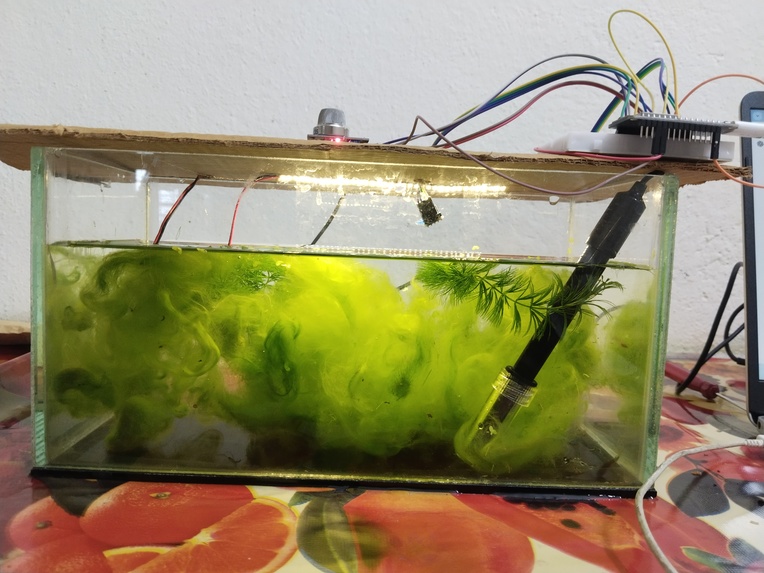
Setup
-
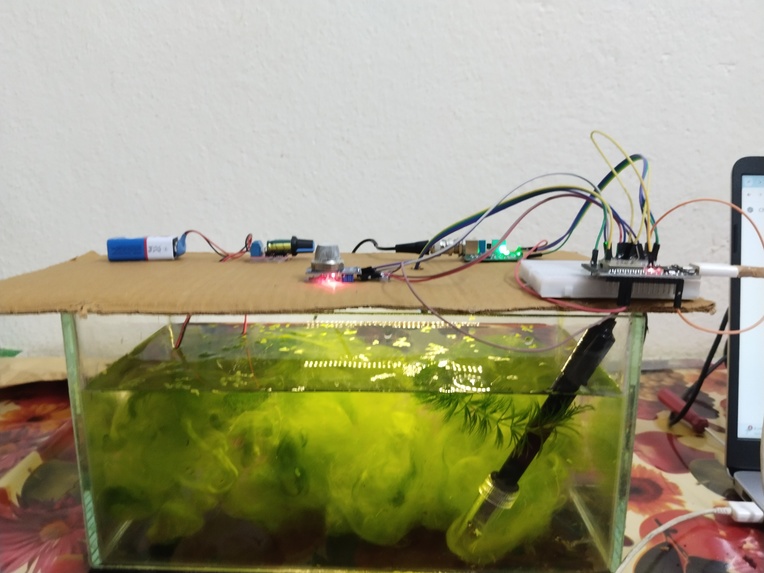
Sensors
Inspiration
The idea for this project came from observing how algae naturally absorb carbon dioxide and release oxygen through photosynthesis. Seeing rising air-quality issues in homes, classrooms, and hostels, I wanted to create a natural, low-cost, and sustainable air-purification system. The thought that a simple living organism could actively clean the air inspired me to experiment with algae as a bio-solution.
What it does
It uses microalgae to absorb CO₂, release oxygen, and naturally purify indoor air while sensors monitor and maintain healthy algae growth.
How we built it
Selected a fast-growing algae strain suitable for indoor environments
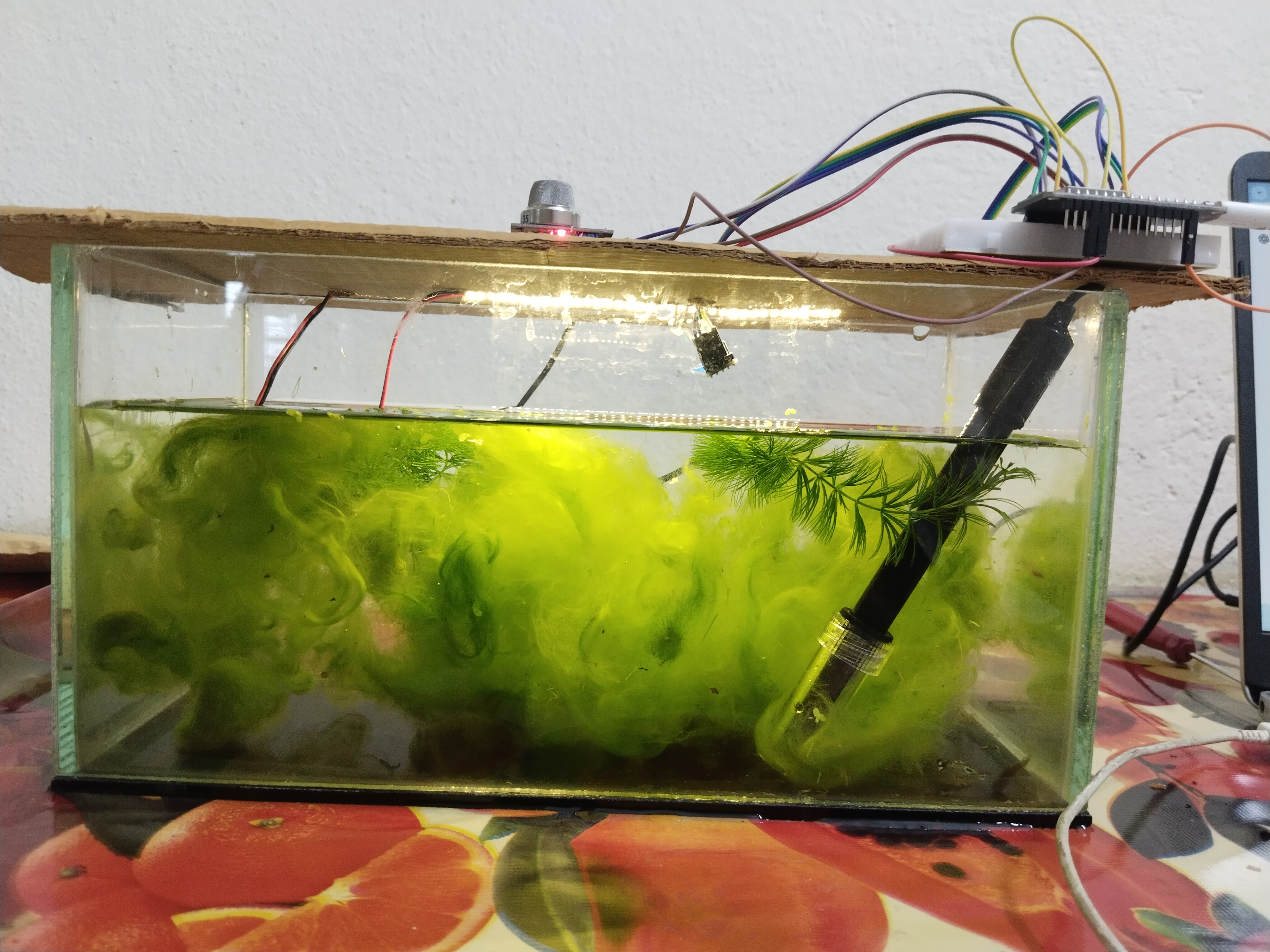
Designed a transparent chamber for algae growth and easy light penetration
Added LED grow lights to maintain stable light intensity
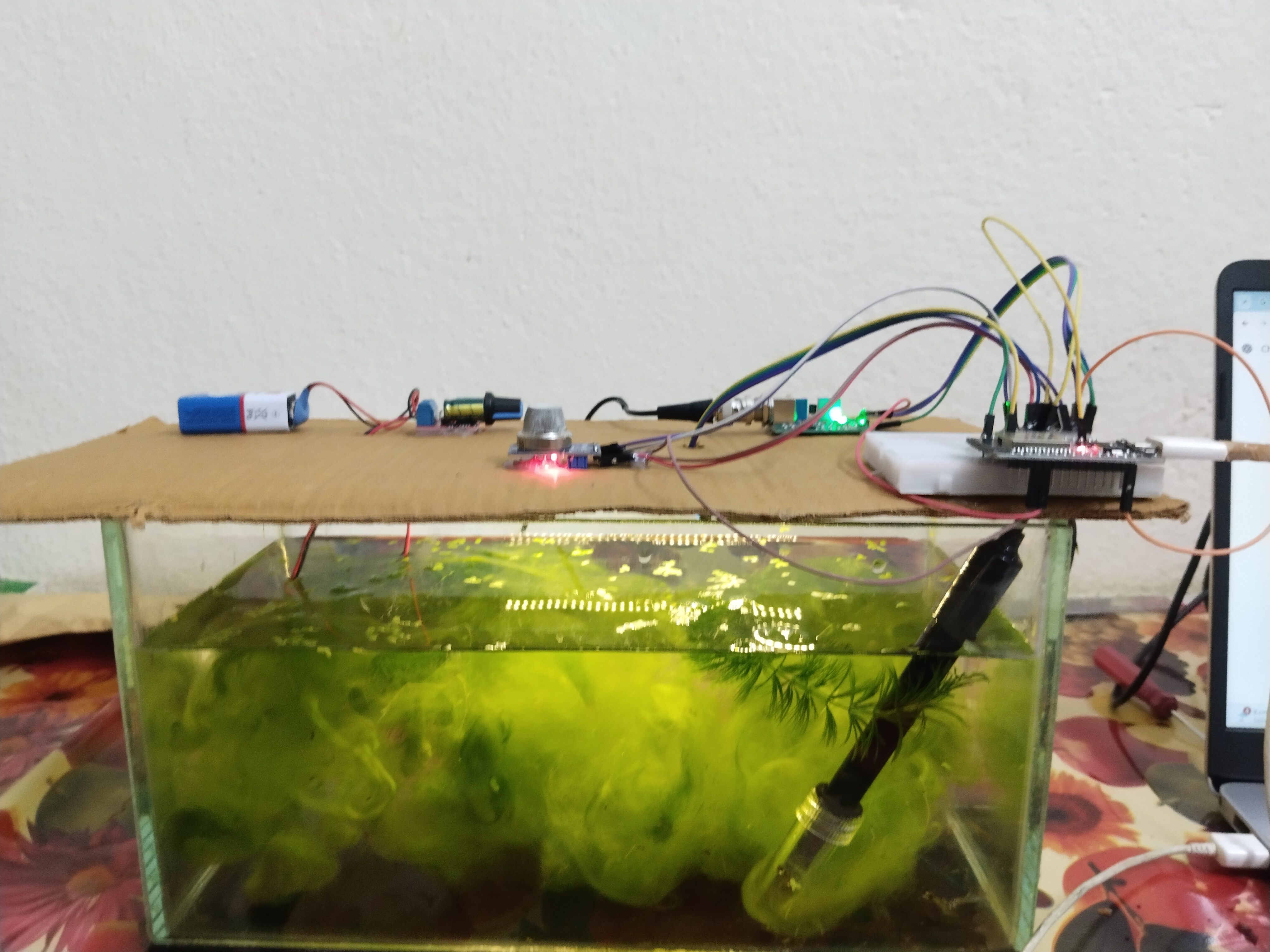
Integrated low-cost sensors (CO₂, temperature, humidity, pH) connected to ESP32
Set up a small air pump to circulate indoor air through the algae chamber
Built a simple dashboard to monitor air-quality changes
Tested different algae densities to find the most efficient purification rate
Challenges we ran into
Finding affordable sensors within a tight budget
Maintaining stable temperature and pH levels for algae growth
The algae sometimes produced odour, so I tested different strains and filtration methods
Preventing contamination inside the algae chamber
Balancing light intensity: too little slowed growth, too much caused overheating
Despite these challenges, each problem taught me how to improve the design and move closer to a functional, eco-friendly air purifier.
Accomplishments that we're proud of
Built a working algae-based purifier using simple, low-cost materials
Successfully reduced CO₂ levels and increased oxygen in test environments
Integrated sensors and ESP32 to monitor air quality in real time
Achieved stable algae growth with controlled light and airflow
Created an eco-friendly, sustainable purification system without chemical filters
What we learned
During this project, I learned:
How microalgae grow, reproduce, and perform photosynthesis
How CO₂, O₂, temperature, pH, and humidity affect algae metabolism
How to use basic sensors with an ESP32 to monitor environmental conditions
Designing a small bioreactor and setting up LED light cycles for healthy algae growth
How natural systems can work with technology to solve real problems
What's next for Algae air purifier
Improve purification speed by testing different algae species
Add automatic nutrient and water circulation system for algae maintenance
Develop a mobile app for live air-quality monitoring and alerts
Design a compact and attractive purifier model for homes and classrooms
Integrate solar power to make the system fully energy-efficient
Conduct long-term testing for performance, odour control, and durability
Explore patenting and turning the prototype into a commercial eco-product
Built With
- air-pump
- algae-chamber-platforms-&-tools:-arduino-ide
- blynk-/-thingspeak
- co?-sensor
- firebase-(optional)-technologies:-iot-dashboard
- languages:-c/c++-(arduino)
- ph-sensor-electronics:-led-grow-lights
- python-hardware:-esp32
- sensor-data-api
- serial
- temperature-&-humidity-sensor

Log in or sign up for Devpost to join the conversation.