AlexStudies: AI-Powered Personalized Learning
Inspiration
As a university student, I often study using PDFs, lecture slides, and YouTube videos.
However, learning from different resources can be difficult. Students also struggle to identify their weak topics and find the right questions to practice.
I created AlexStudies to make learning easier, smarter, and more personalized.
What It Does
AlexStudies is an AI-powered learning platform that helps students learn from their own educational materials.
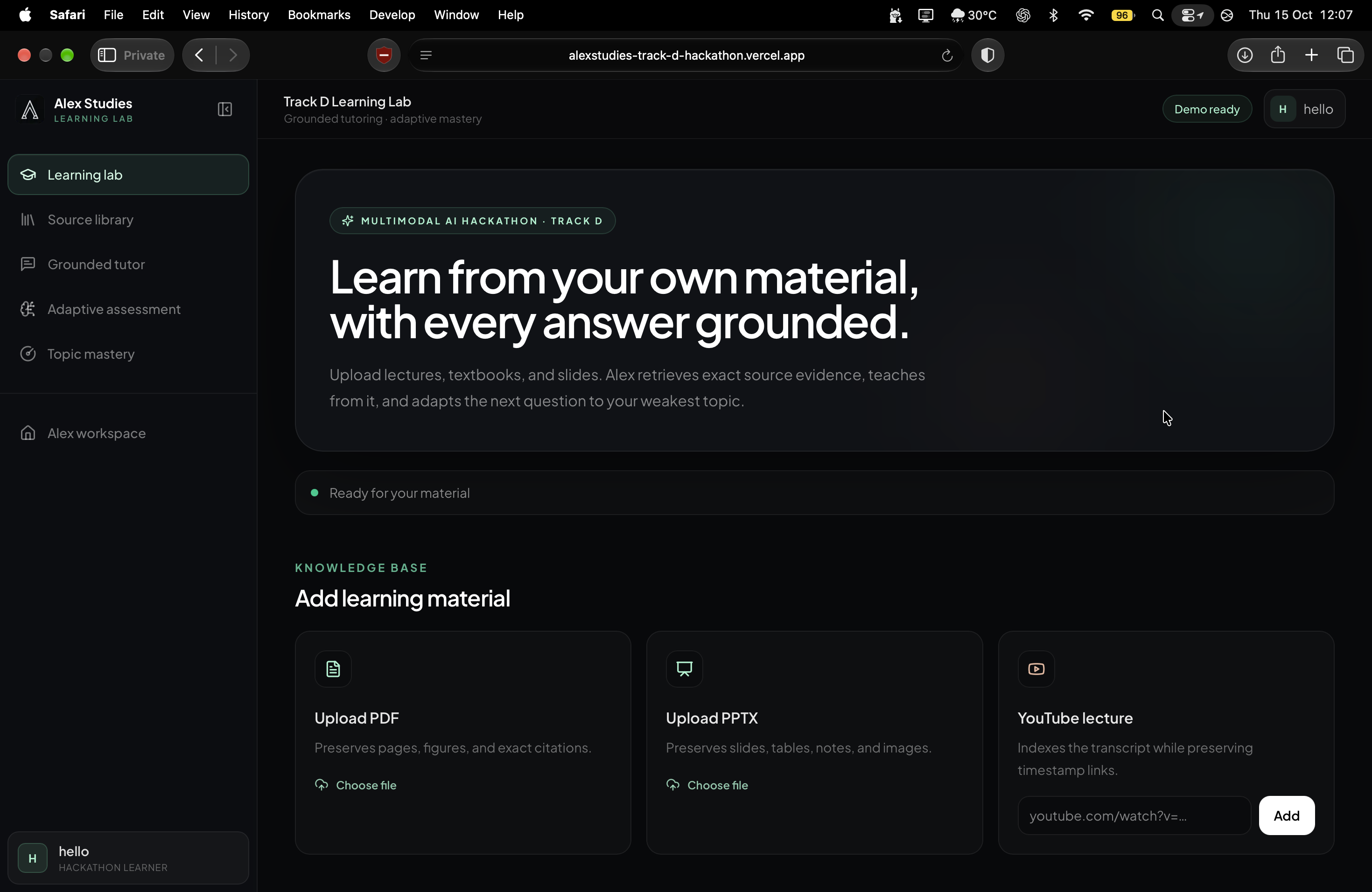
For the Multimodal AI Hackathon 2026, I developed the Track D Learning Lab.
Key Features
1. Multimodal Learning Materials
Students can upload PDF documents and PowerPoint presentations or add educational YouTube videos.
AlexStudies processes these resources and organizes their content into a searchable knowledge base.
2. Source-Grounded AI Tutoring
Students can ask questions about their uploaded materials.
The AI tutor is designed to retrieve relevant information and provide explanations supported by source citations.
If there is not enough evidence, the tutor can refuse to provide an unsupported answer.
3. Diagnostic Assessments
AlexStudies generates questions based on the student's learning materials to evaluate their understanding.
4. Adaptive Practice
The platform tracks student performance and uses topic mastery to select practice questions.
Question difficulty can change based on the student's understanding.
5. Personalized Learning Workspace
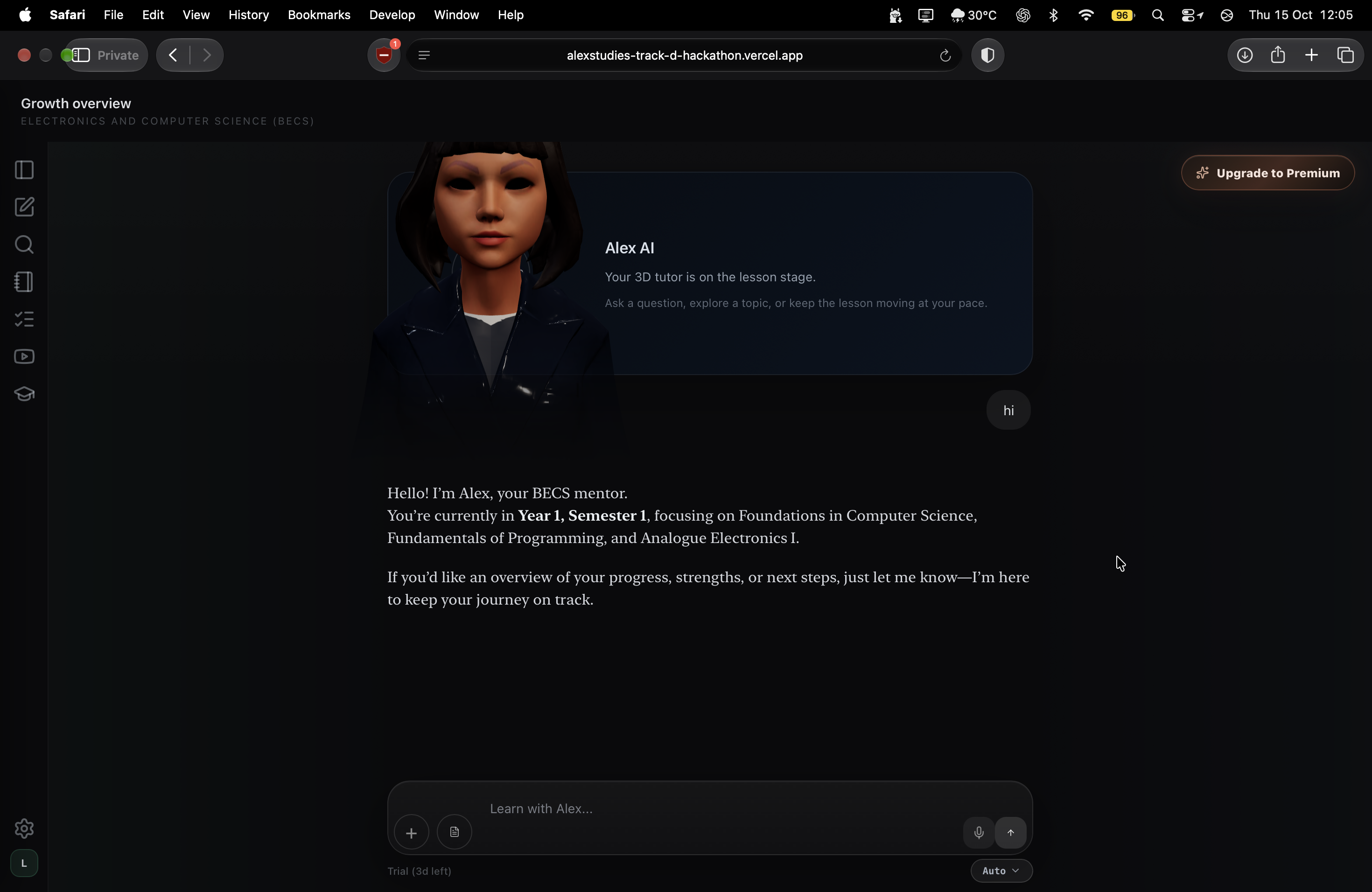
AlexStudies also includes a broader learning workspace with personalized study plans and interactive AI learning tools.
How I Built It
I developed the frontend using Next.js, React, TypeScript, and Tailwind CSS.
The backend uses Python, Reflex, and PostgreSQL.
I integrated Groq for AI-powered tutoring, Supadata for YouTube transcript extraction, and source retrieval to support evidence-based learning.
The application is deployed using Vercel and Render, with Neon PostgreSQL for data storage.
Challenges I Faced
One major challenge was processing different learning materials and organizing them into a common knowledge base.
Another challenge was implementing source-grounded AI responses while reducing unsupported answers.
I also faced difficulties with authentication, session management, deployment configuration, and communication between the frontend and backend.
These challenges helped me improve the application's architecture and reliability.
What I Learned
During this project, I learned more about multimodal data processing, retrieval-based AI tutoring, adaptive assessments, authentication, and full-stack deployment.
I also gained experience integrating AI models into a real educational application.
What's Next?
I plan to improve the accuracy of AI tutoring, expand adaptive learning, support more educational formats, and make AlexStudies accessible to more students.
My long-term goal is to build an AI learning companion that adapts to every student's needs.
Try AlexStudies
Live Application: https://alexstudies-track-d-hackathon.vercel.app/track-d
GitHub: https://github.com/anushkasenmehar1208-hub/alexstudies-multimodal-ai-hackathon
Built With
- artificial-intelligence
- groq
- neon
- nextjs
- postgresql
- python
- react
- reflex
- render
- supadata
- tailwindcss
- typescript
- vercel

Log in or sign up for Devpost to join the conversation.