-
-
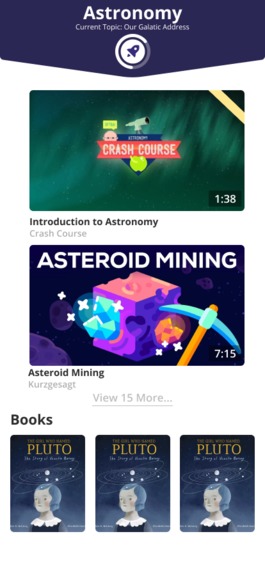
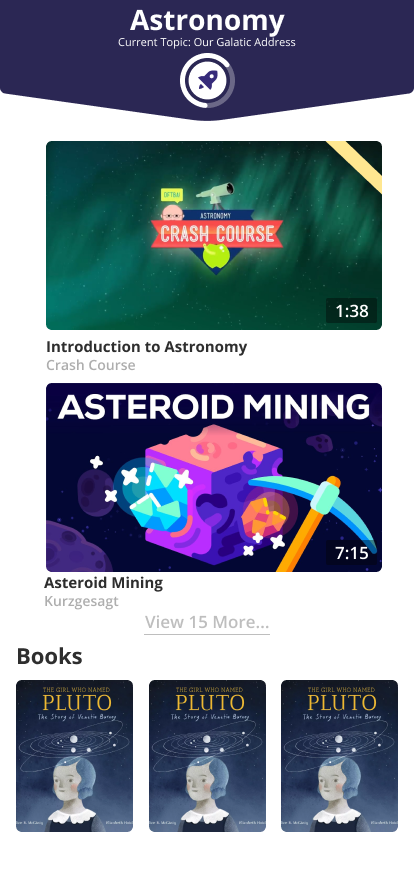
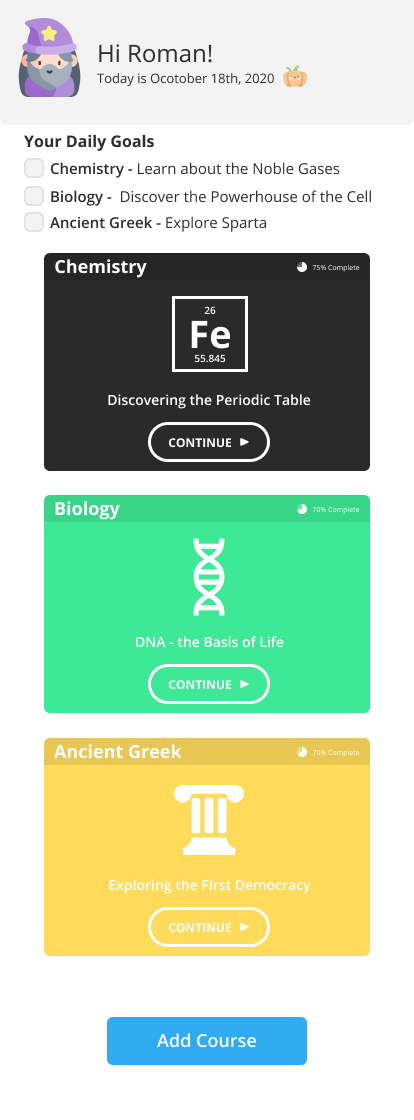
Landing
-
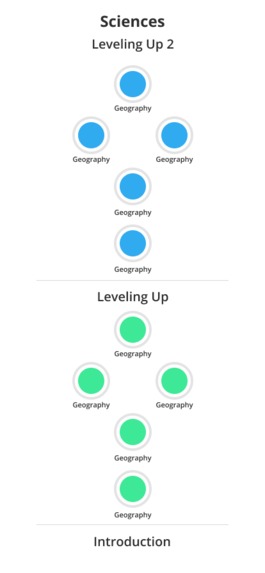
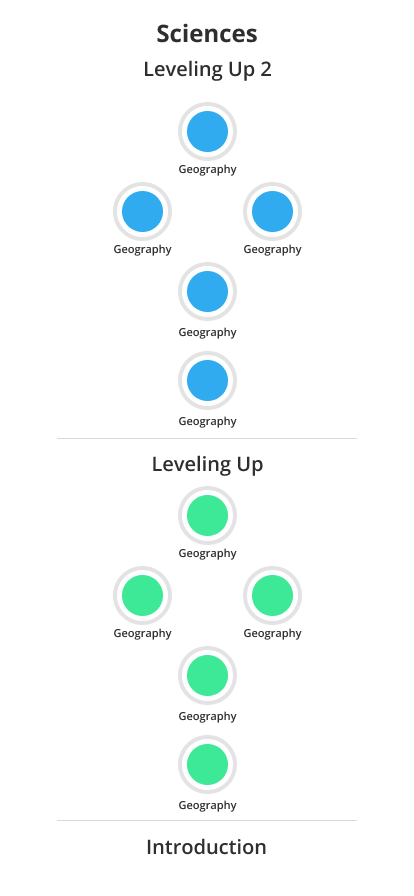
Skill Tree
-
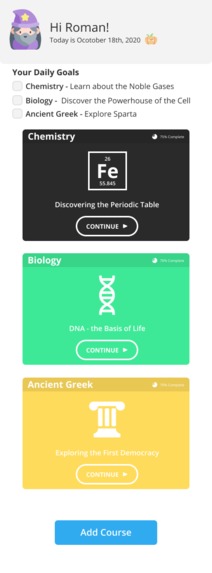
Course Page
-
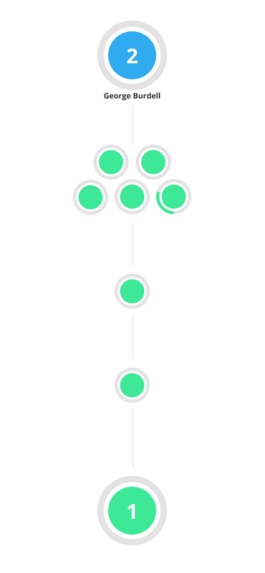
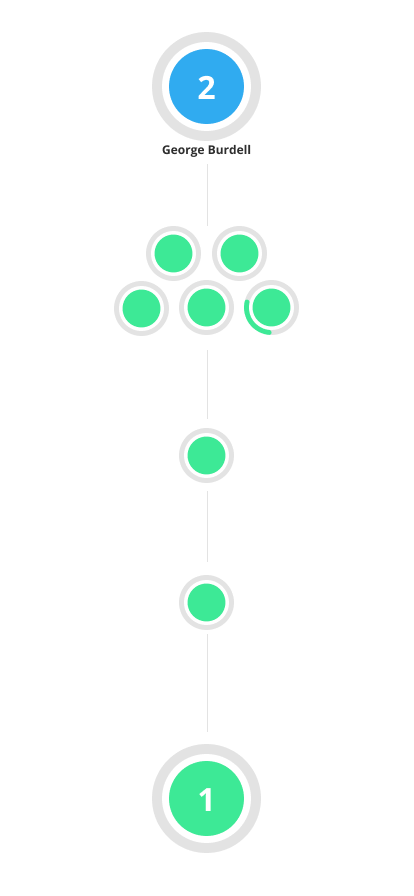
Skill Tree 2
Welcome to the Library
This year, we were met with a reimagining of just about every reality we knew. Habits and routines we’ve known for years were ripped away from us, and all of us have had our own struggles in adapting to the new way of the world. As College Students, we immediately saw a change in our own ability to focus and how we worked with a transition to remote learning. While the impact on us as students was profound, what we couldn’t stop thinking about how that impact may be worsened for younger students. Children, as maturing individuals, lack the habits and self control that are helpful and perhaps even necessary to succeed in an online learning setting.
We knew if we were struggling, our younger peers must be even worse off, and we wanted to try and fix that. How do you keep children engaged in schooling when they’re only way to be engaged is through a computer screen? Our project, Alexandria, named for the ancient library of the same name, is our proposed solution. A platform to “gamify” schooling and engage a wide age range of learners through their computer screen.
How do we engage Students, Learners, and Scholars to be?
Everyone loves to be rewarded, children especially. We wanted to try and make online schooling more interactive, more fun, and more enjoyable by providing rewarding “games” and satisfying results for children who are struggling to engage with an online education. We accomplished this through a number of ways
Levels
As students progress through their educational career, they will be rewarded for completing lessons and growing their knowledge base. This is tracked through a level system that manages their advancement.
Skills
Levels provide a very “at a glance” view of a students progress, but skills allow a more detailed view. Tied to certain attributes in execution, such as algebra or world history, these skills would be unlocked as students completed the relevant lessons.
Peers
In an online setting, interacting with fellow students is more difficult. Our platform would address part of this disconnect, by providing a way for students to collaborate with their peers. This would encourage cooperation with their friends and a motivation to advance, and be engaged in their coursework.
Technologies
Alexandria was built using several different layered technologies. React Native was employed for the creation of the frontend, while Node and Express were used to design a basic API to interact with our SQL database hosted through Microsoft Azure.
Challenges we ran into
An immediate concern we found was scope. We knew that Alexandria was a big project to take on, and one that polishing and completing in a weekend was impossible. We also found difficulty in adapting and learning a handful of new technologies in the timeframe, such as NodeJS and React Native. Despite these, we all felt passionately about exploring and developing a proof of concept for the idea; as a result, we spent a lot of our time trying to create well designed mockups, even if we couldn’t fully replicate them in code over the weekend. We believe the idea of what Alexandria can become is much more important than the prototype that can be built over a weekend.
What's next for Alexandria
This is one library that won’t burn down. We hope that over the semester we can continue to refine and make a true platform out of Alexandria. Every member of our team has been personally affected or had family that has been directly affected by the difficulties of online learning. This is our new reality, and for many it’s an uncomfortable one. We hope to continue working on Alexandria and make it realize its full potential, with trial runs and limited deployment before scaling up. With Alexandria, we hope to reimagine reality for children struggling to engage in their studies, and make this new normal a little easier to accept.


Log in or sign up for Devpost to join the conversation.