-
-
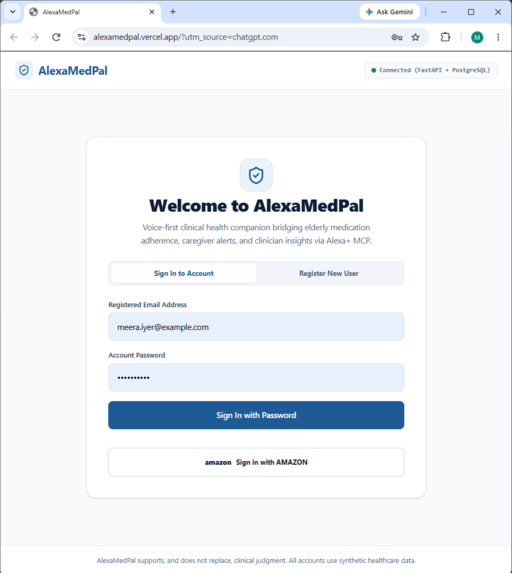
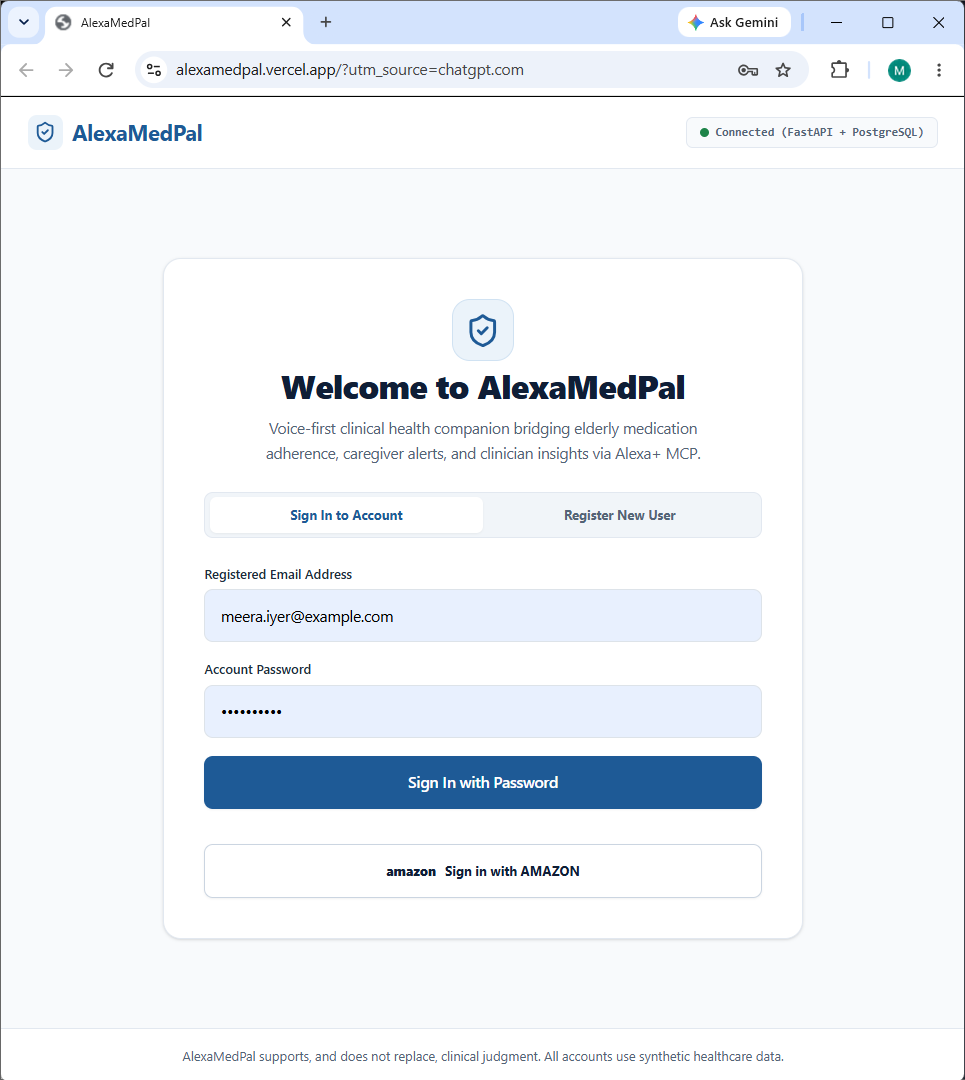
1. Landing page / Login
-
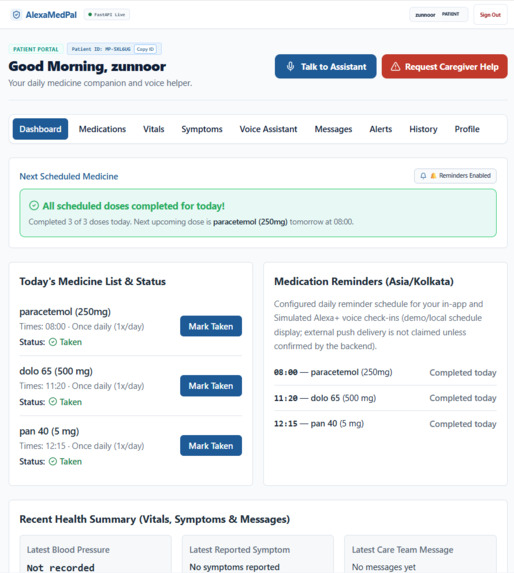
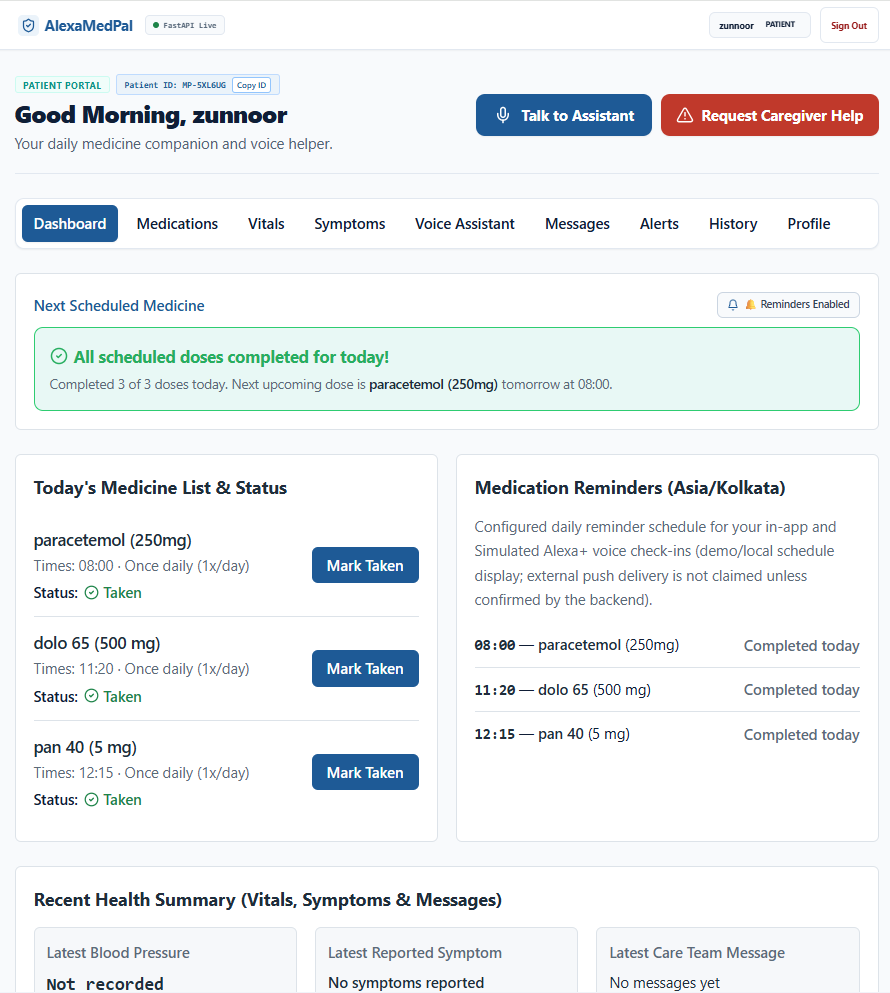
2. Patient dashboard
-
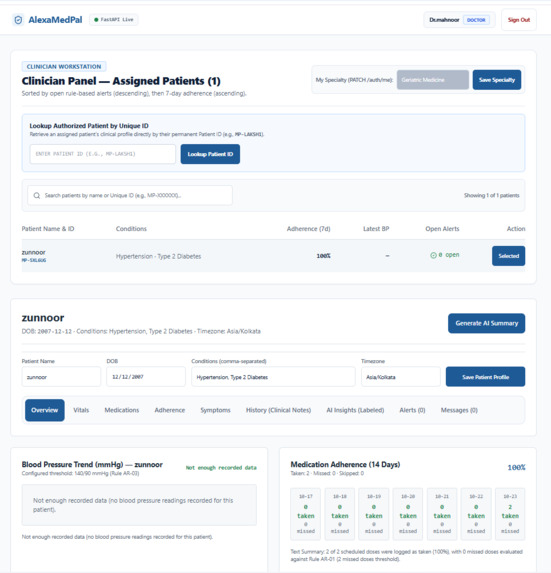
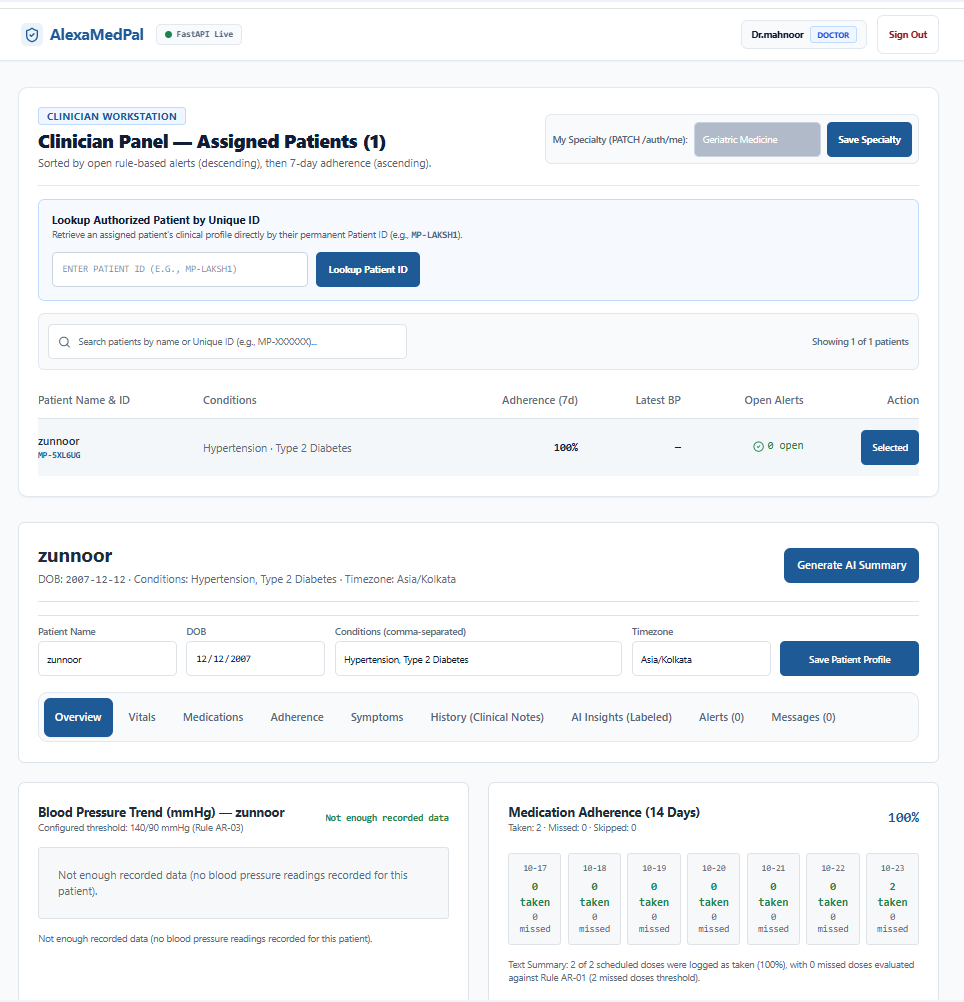
3. Doctor dashboard
-
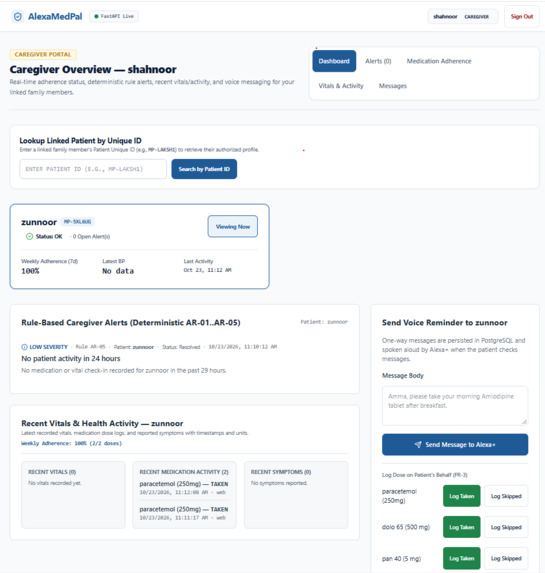
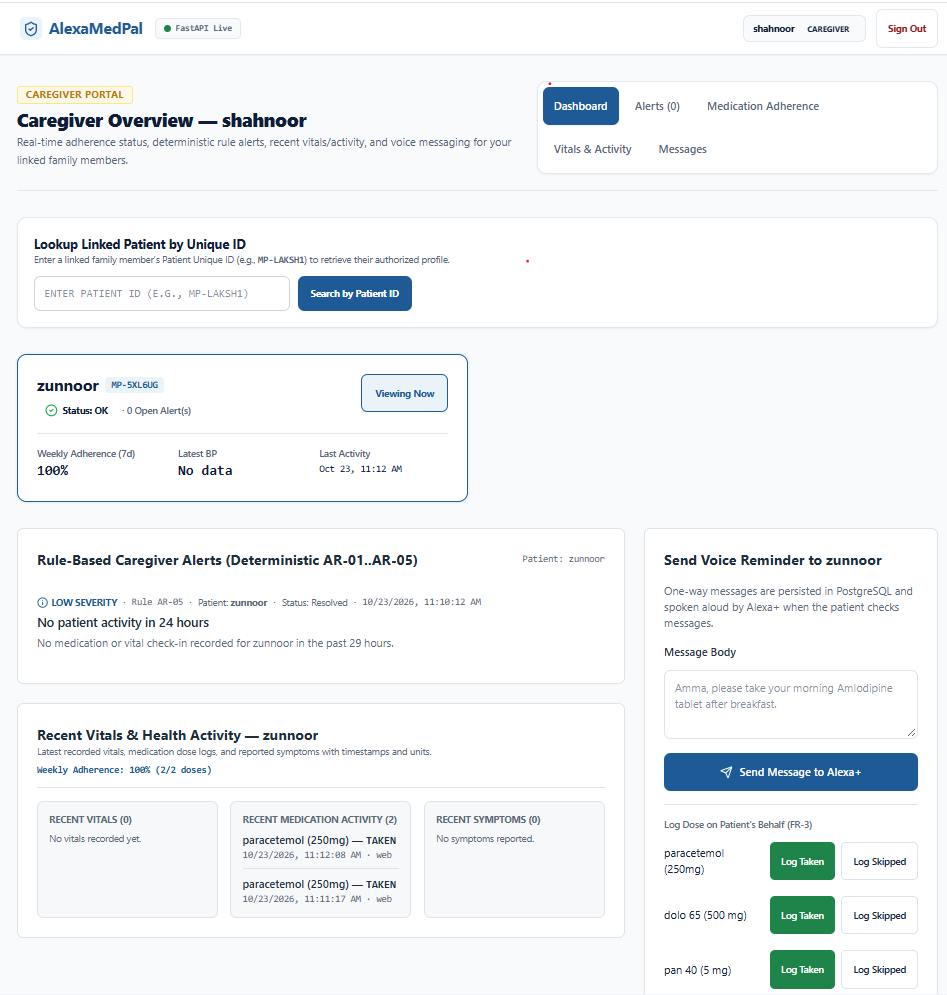
4. Caregiver dashboard
Inspiration
Managing medication routines can become difficult for older adults, especially when they rely on caregivers or need help keeping track of doses and health updates. We wanted to build a solution that makes medication routines easier to manage and helps patients, caregivers, and doctors stay connected.
That idea inspired AlexaMedPal, a voice-first medication adherence and health-tracking application designed around simple interactions and coordinated care.
What it does
AlexaMedPal brings together three key roles:
- Patients: Access their medication routines, record dose-related updates, and interact with supported voice workflows.
- Caregivers: Stay connected to linked patients and help monitor relevant medication and health updates.
- Doctors: Manage medication information and review available patient updates to support care coordination.
The project includes role-based access and voice-oriented workflows. It is designed to support medication management, not to diagnose medical conditions or replace professional medical advice.
How we built it
We built AlexaMedPal using a React and Vite frontend, a FastAPI backend, and PostgreSQL for data storage. The backend organizes API operations and role-based access, while SQLAlchemy and Alembic support database models and schema migrations.
The application also includes voice interaction workflows and an Alexa skill integration path. Our architecture separates the user interface, API services, persistent data, and voice-related functionality so they can be developed and tested independently.
Challenges we faced
One of our biggest challenges was coordinating multiple user roles while keeping patient information and actions appropriately restricted. We also worked on connecting medication workflows across roles, handling voice interactions, and maintaining consistency between the frontend and backend.
Testing these connected workflows required attention to API behavior, database state, authentication, and the relationship between patient, caregiver, and doctor experiences. We focused on validating individual features as well as the end-to-end journey.
What we learned
Building AlexaMedPal taught us how important clear API boundaries, role-based authorization, reliable data persistence, and realistic end-to-end testing are when building a multi-user application. We also learned to treat voice interaction as part of the complete user experience rather than an isolated feature.
What's next
We aim to continue improving the voice experience, strengthen integration reliability, refine the patient-caregiver-doctor workflows, and make the interface more accessible and intuitive.
AlexaMedPal is a medication-management and care-coordination project. It does not diagnose conditions or replace advice from qualified healthcare professionals.
Built With
- alembic
- amazon-alexa
- fastapi
- healthcare
- postgresql
- python
- react
- sqlalchemy
- vite
- voice-assistant

Log in or sign up for Devpost to join the conversation.