-
-
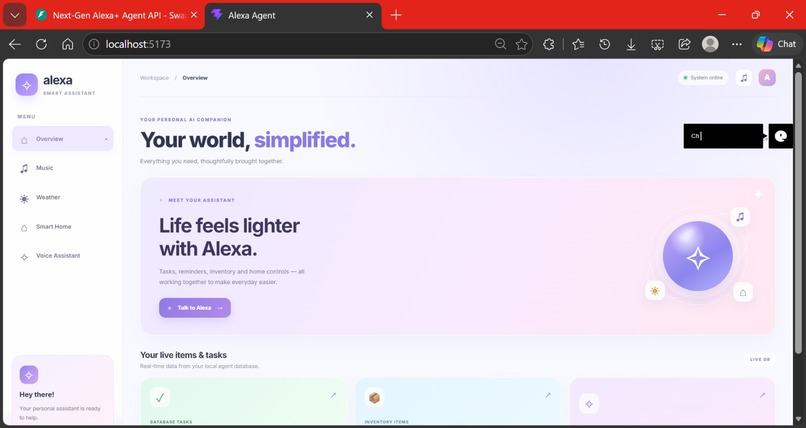
Home
-
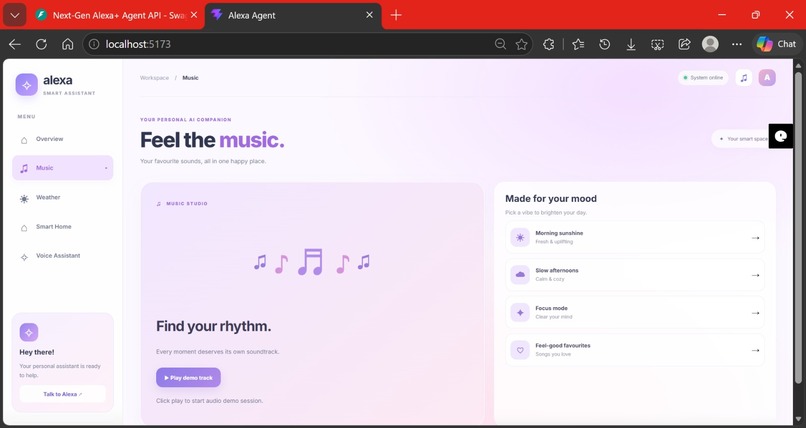
Music
-
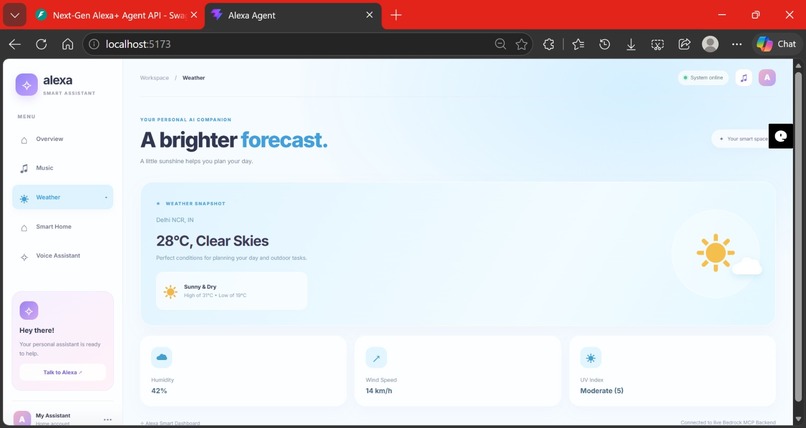
Weather
-
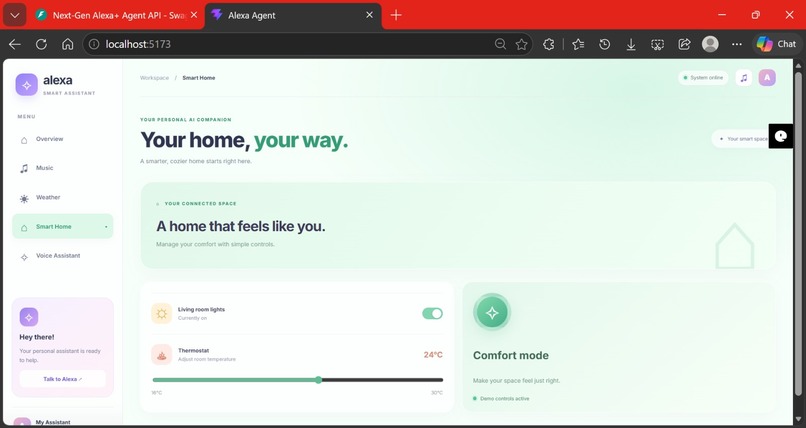
Smart Home
-
Alexa
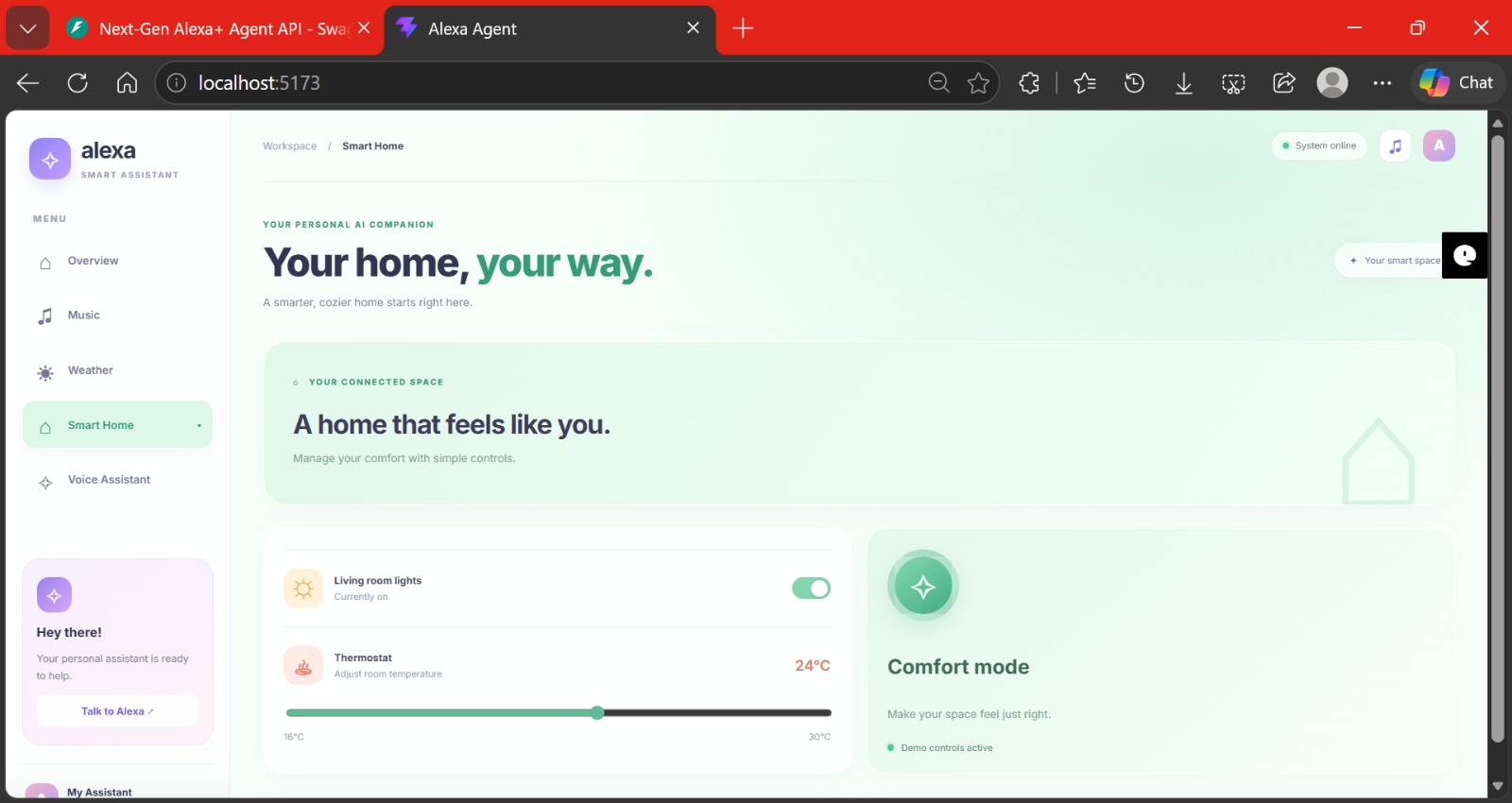
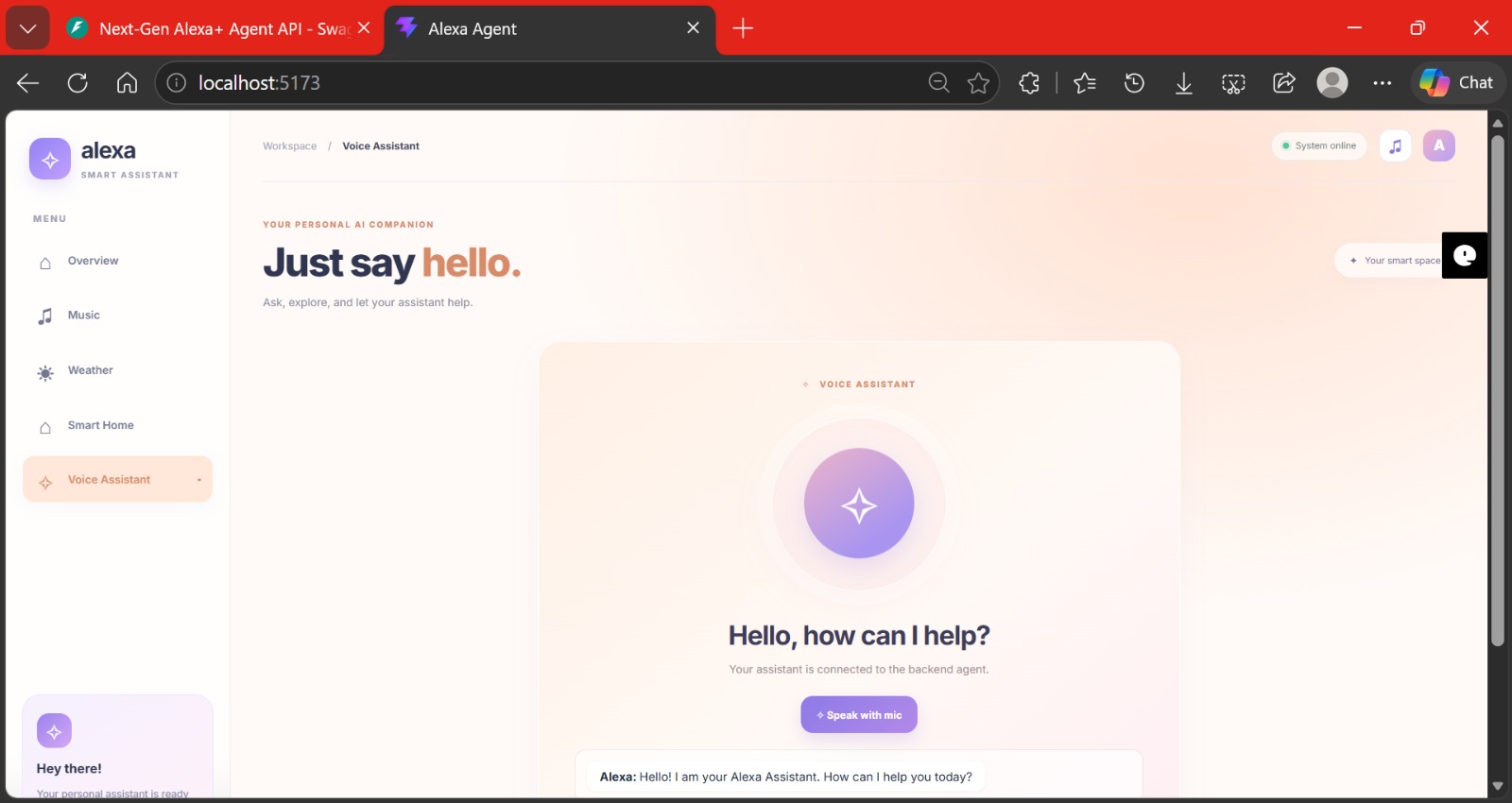
Next-Gen Alexa+ Autonomous AI Agent Overview
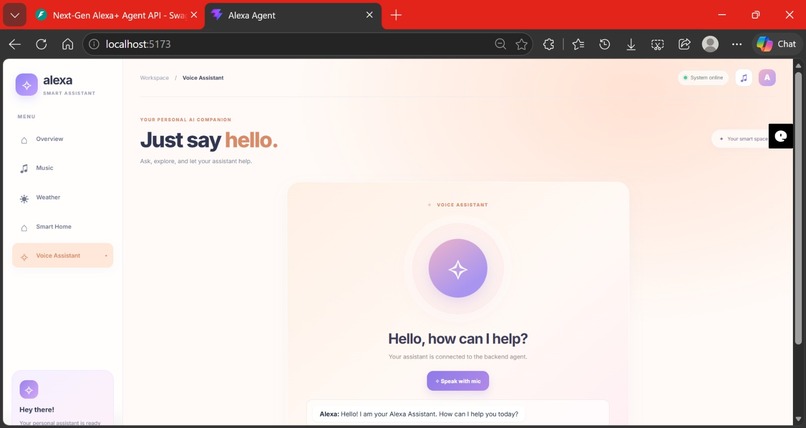
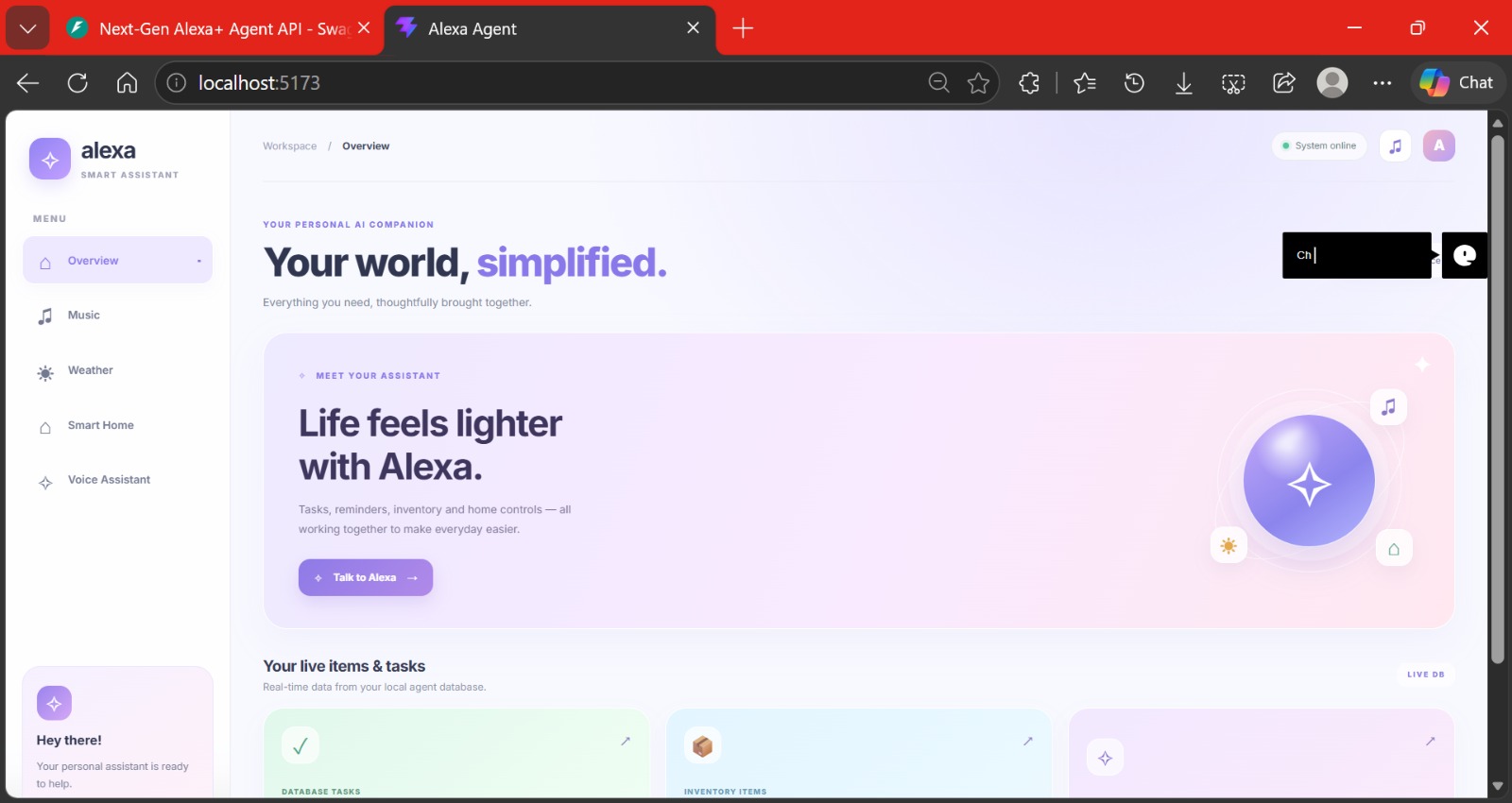
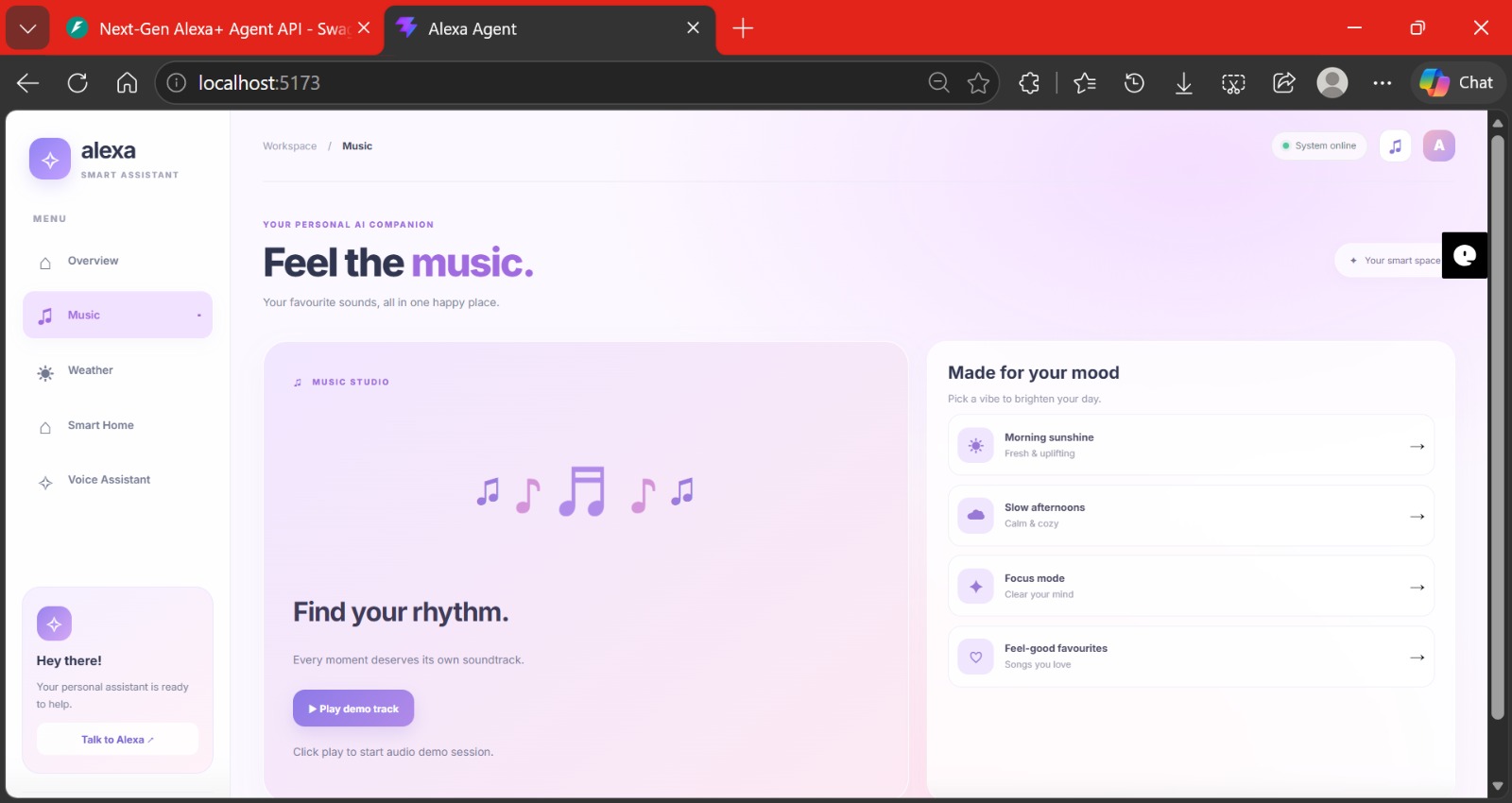
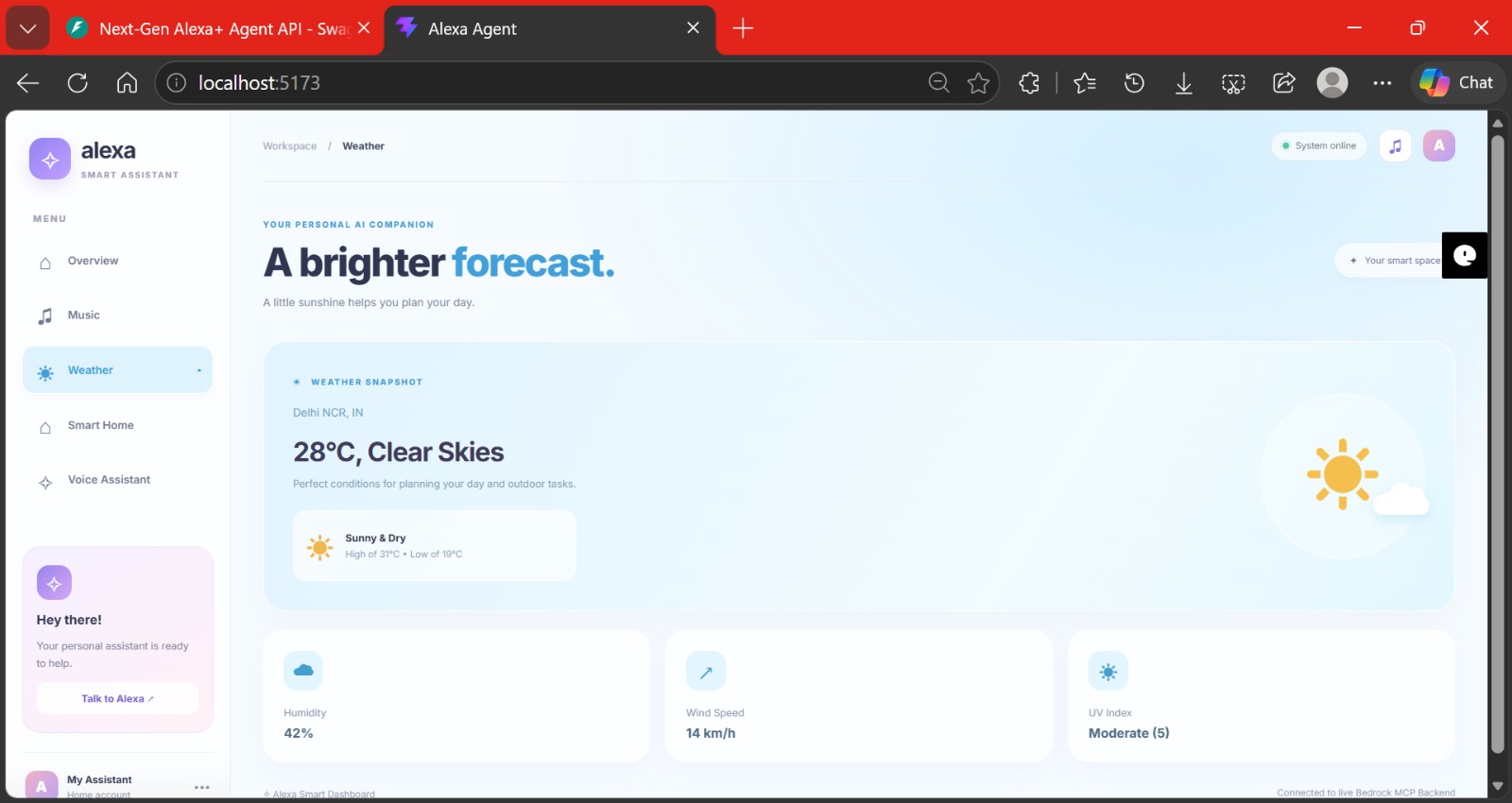
Next-Gen Alexa+ is a smart-assistant project made of two parts. A React dashboard inspired by Amazon Alexa shows music controls, smart home automation, weather updates and a voice assistant. A Python backend uses an AI model (Claude on Amazon Bedrock) to understand natural-language requests and decide what actions to take. The user can simply type or say things like “add a task to buy milk” or “remind me to call mom in 2 hours”.
How It Works The frontend sends the user’s message to the backend (POST /api/chat). The backend asks the AI model what to do through the Amazon Bedrock Converse API. The model picks from 8 tools: add, list, complete and delete tasks; create and list reminders; check and update inventory. These tools run on a separate MCP (Model Context Protocol) server and store data in SQLite. The backend returns the assistant’s reply plus a short list of the actions taken. Key Features Autonomous tool use: the AI chooses and chains several tools in one request, within limits on steps, tool calls and time. Confirmation for risky actions: deleting a task or removing stock only happens after the user replies “confirm”. Demo mode: the whole system runs without AWS credentials, using a clearly labelled mock model. Tools and database are real. Honest reminders: reminders are stored only, and the system says clearly that no notifications are sent. Frontend dashboard: music controls, smart home interface, weather section and voice assistant built with React and Vite. Technology Stack Frontend: React.js, JavaScript, HTML, CSS, Vite Backend: Python 3.11+, FastAPI, Uvicorn, Pydantic, httpx AI: Amazon Bedrock (Converse API), boto3 Tools layer: official Python MCP SDK (Streamable HTTP) Database: SQLite Testing: pytest Security and Reliability The AI can only use 8 allow-listed tools. It has no access to code execution, shell, raw SQL or arbitrary URLs. Every tool validates its inputs again on its own. The MCP server runs locally and supports a bearer token. AWS credentials are never stored in the code; they come from the standard AWS credential chain. CORS is limited to allowed origins, and error messages never show stack traces. Testing
The backend has 96 automated tests, all passing on Python 3.11 and 3.12. They cover the database, tool validation, the real MCP protocol, the Bedrock tool-use loop (with a mocked model) and the API routes. The tests make no paid AWS calls. The two backend processes were also run together and checked over real HTTP.
Outcome
The project is a complete assistant: a dashboard, an AI agent that safely uses tools, and a documented API that the frontend can connect to.

Log in or sign up for Devpost to join the conversation.