-
-
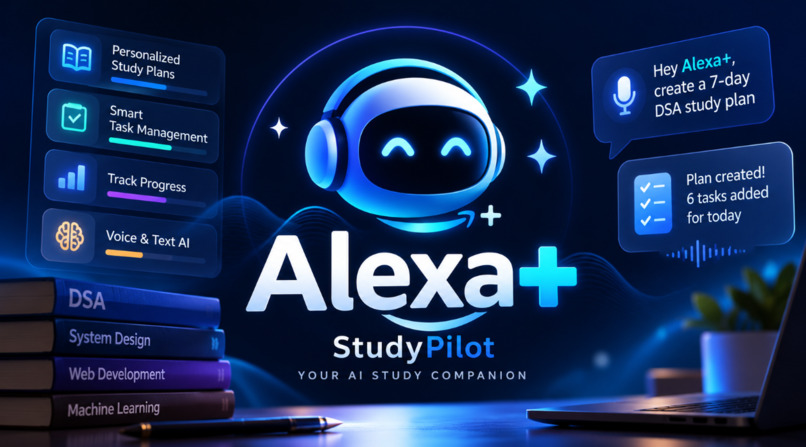
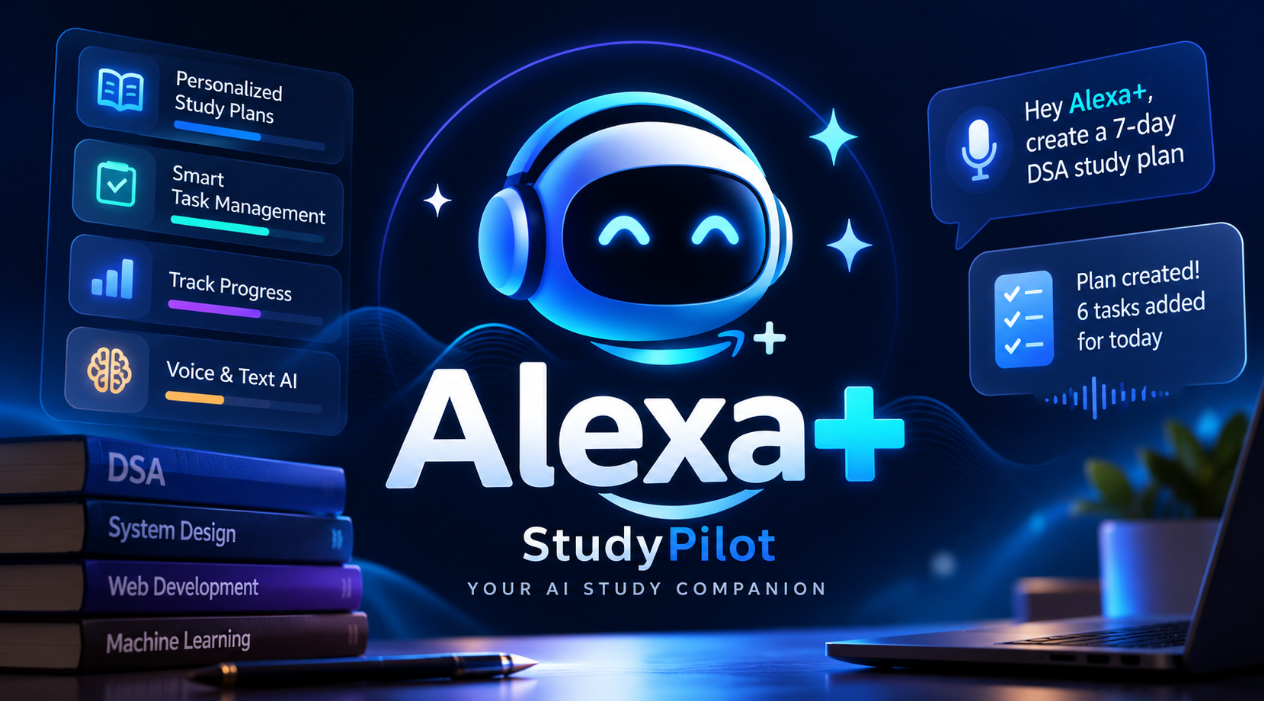
Thumbnail: Meet Alexa+ StudyPilot , your AI-powered companion for smarter, more personalized learning.
-
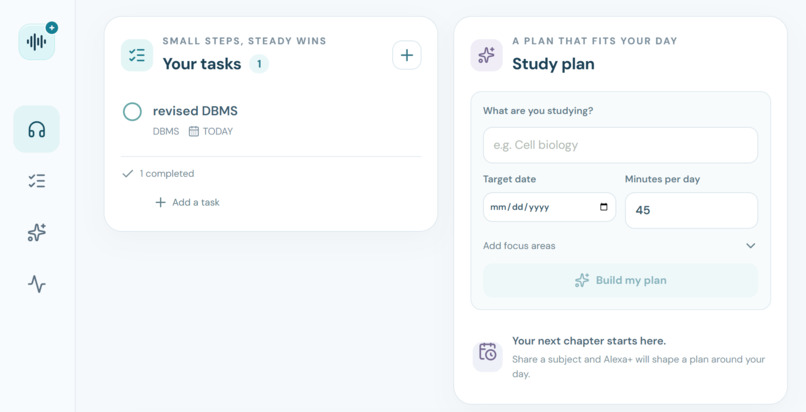
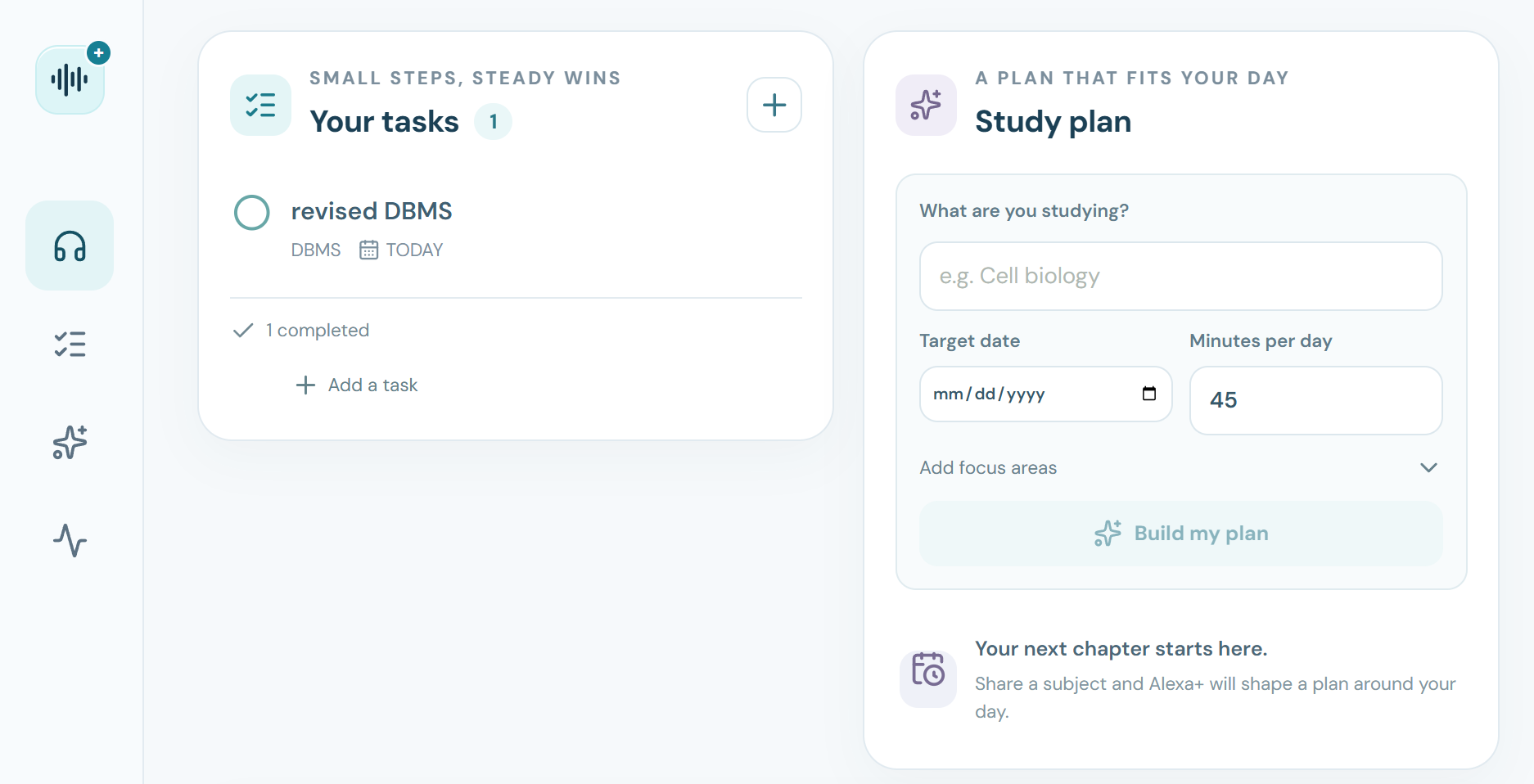
Task Box: Turn intentions into action with simple, conversational study task management.
-
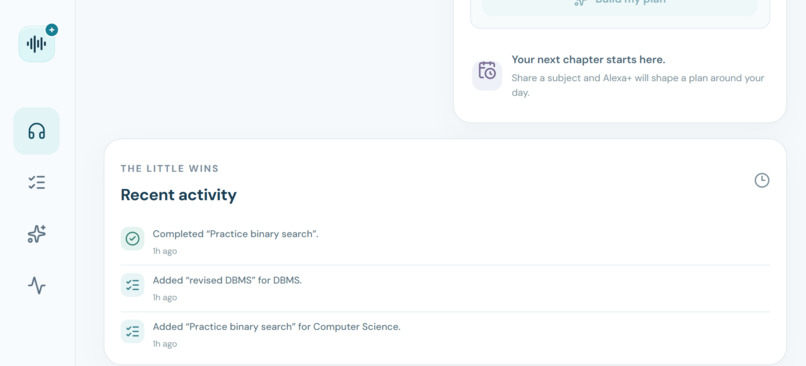
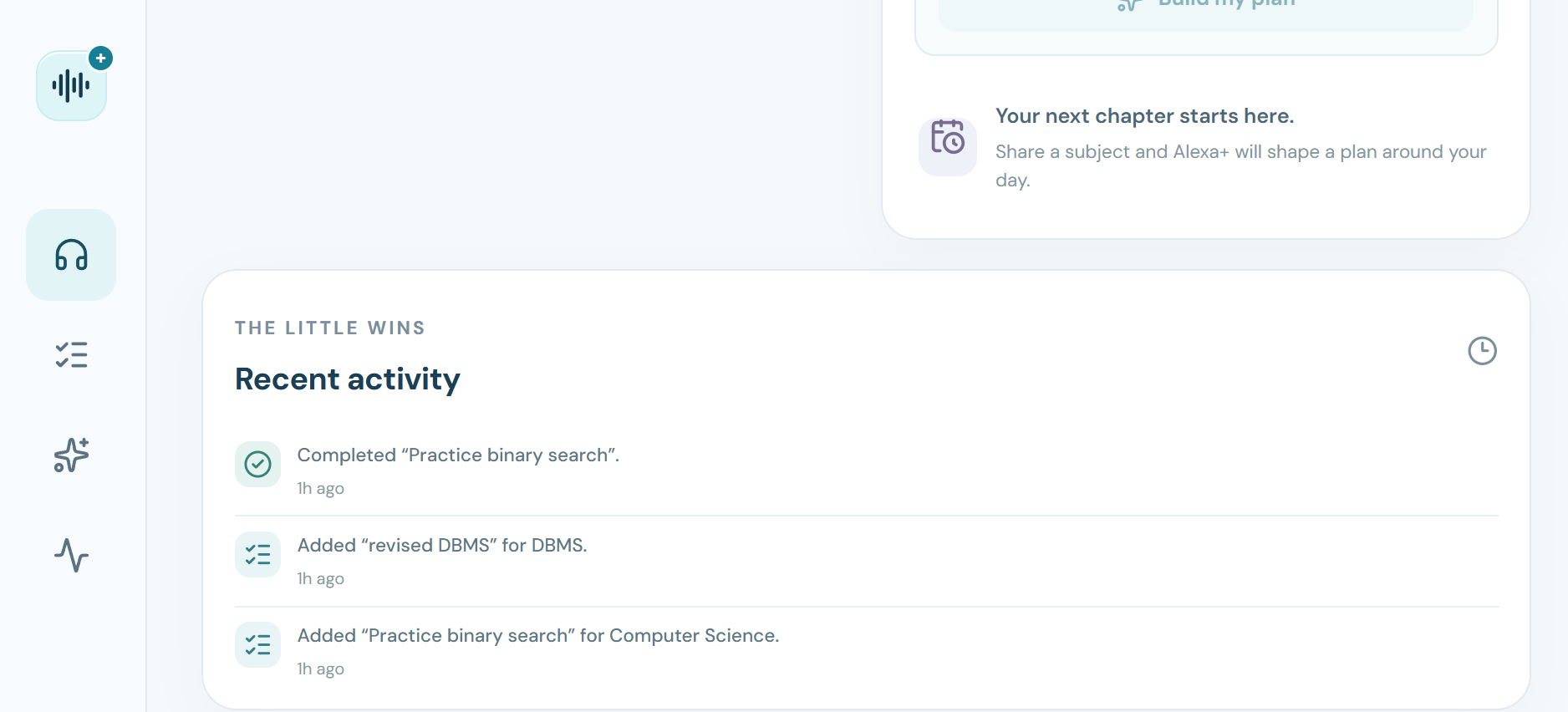
Recent Activity: Every step forward counts track completed tasks and keep your learning journey on course.
-
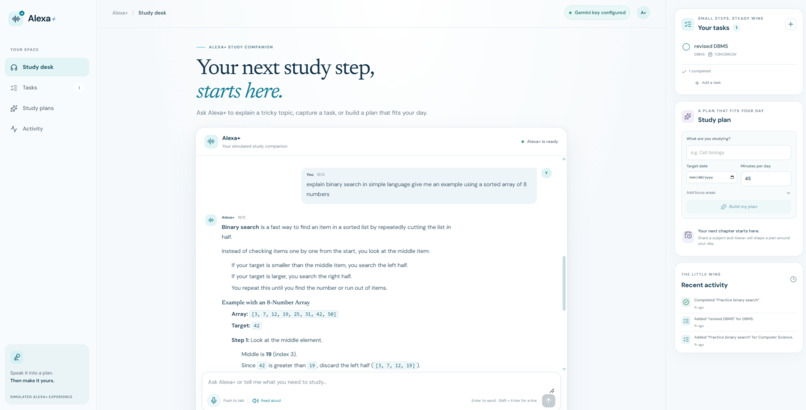
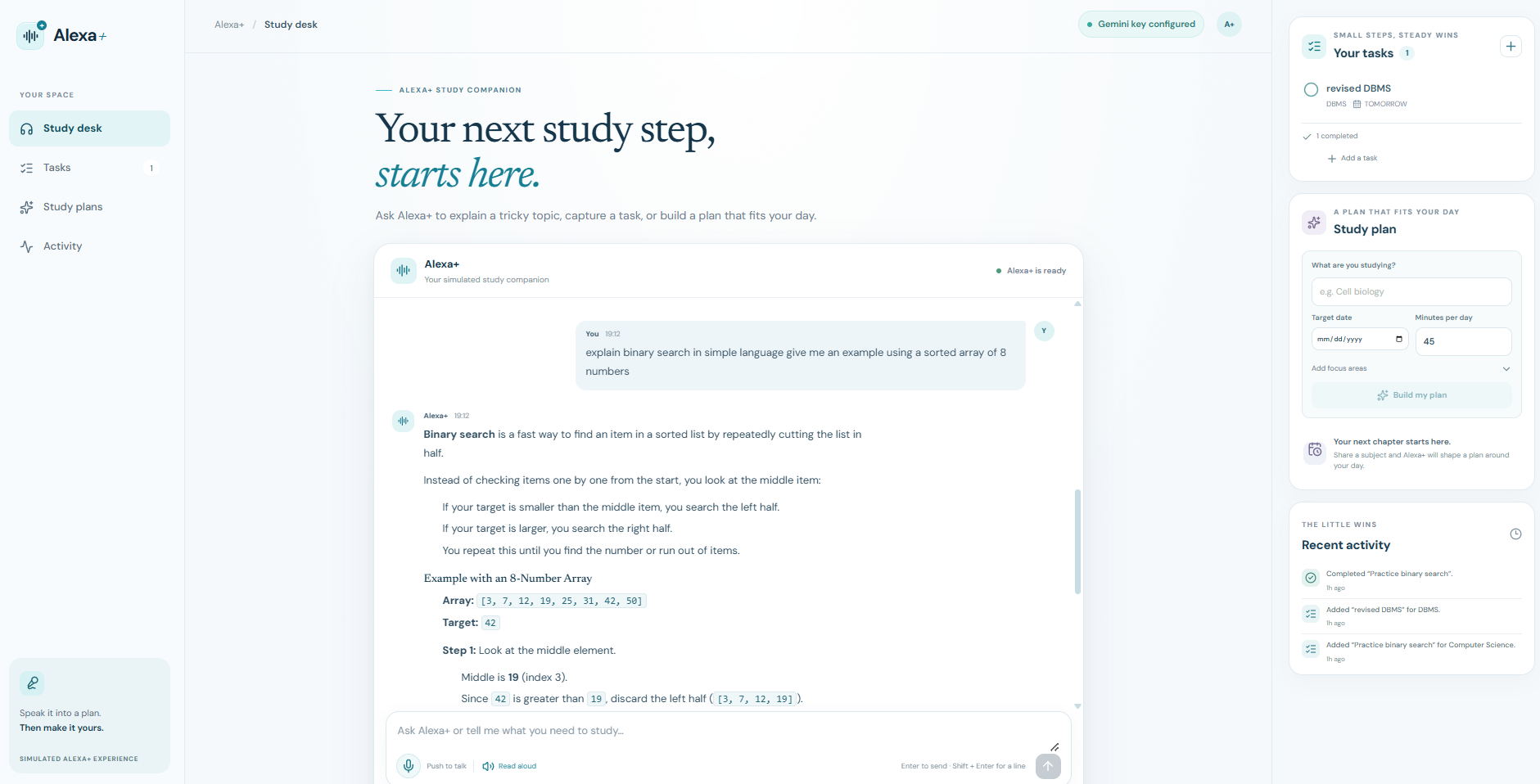
Your learning command center: organize study plans, manage tasks, and stay focused on your goals.
Inspiration
Students often struggle to turn their learning goals into consistent action. Managing study schedules, tracking tasks, planning revision, and staying organized across multiple tools creates unnecessary friction. We wanted to explore a better approach: what if students could manage their entire study workflow simply by talking to an AI assistant?
That idea inspired Alexa+ StudyPilot, a conversational AI study companion designed to turn everyday requests into practical learning actions.
What It Does
Alexa+ StudyPilot brings study planning and productivity into one conversational experience. Students can interact through text and voice to:
- Create personalized study plans tailored to their learning goals.
- Manage tasks by creating, viewing, and completing study activities.
- Organize learning workflows through natural-language instructions.
- Track study progress and keep learning activities organized.
- Interact naturally through a clean, intuitive assistant interface.
Our goal is to move beyond an assistant that merely answers questions toward one that helps students take meaningful action.
How We Built It
The application uses a React, TypeScript, and Vite frontend, with an Express backend responsible for processing requests and coordinating assistant actions.
For local AI inference, we integrated Llama 3.2 through Ollama, reducing the application's dependence on cloud-based AI APIs. The backend uses structured JSON responses to interpret requests, validate action arguments, and route supported operations to the appropriate application functions.
A persistent JSON-based storage layer keeps study tasks and plans available across sessions. We also incorporated browser-based speech recognition and text-to-speech to explore a more natural, voice-enabled study experience.
The project is presented as a simulated Alexa+ experience; it does not claim an official Alexa+ service integration.
Challenges We Faced
One of our biggest challenges was making conversational AI reliable enough to perform structured actions. Natural-language models can return unexpected output, even when given a defined response format. That creates a challenge when an assistant must distinguish an ordinary conversation from a request to create or update application data.
We also had to consider how to validate AI-generated arguments, preserve user data, handle provider failures, and connect voice interaction with the application's existing workflows.
These challenges reinforced an important engineering principle: an AI assistant is only as useful as the reliability of the actions behind its responses.
What We Learned
Building Alexa+ StudyPilot helped us explore the practical integration of local language models, structured AI outputs, backend action handling, persistent storage, and conversational user interfaces.
We learned that building a useful AI product requires more than connecting a model to a chat window. It requires carefully designed workflows, validation, error handling, and a user experience that makes the system's capabilities understandable.
What's Next
We envision expanding StudyPilot with more adaptive learning plans, richer progress insights, improved conversational reliability, and additional integrations that help students stay focused on their goals.
Our broader vision is simple: make personalized learning support more accessible by turning the way students naturally communicate into a practical productivity tool.
Built With
- api
- css
- express.js
- git
- github
- html
- ispeech-text-to-speech
- javascript
- json
- llama3.2
- node.js
- ollama
- python
- react
- restapi
- speech-recognition
- typescript
- vite
- webspeech


Log in or sign up for Devpost to join the conversation.