-
-
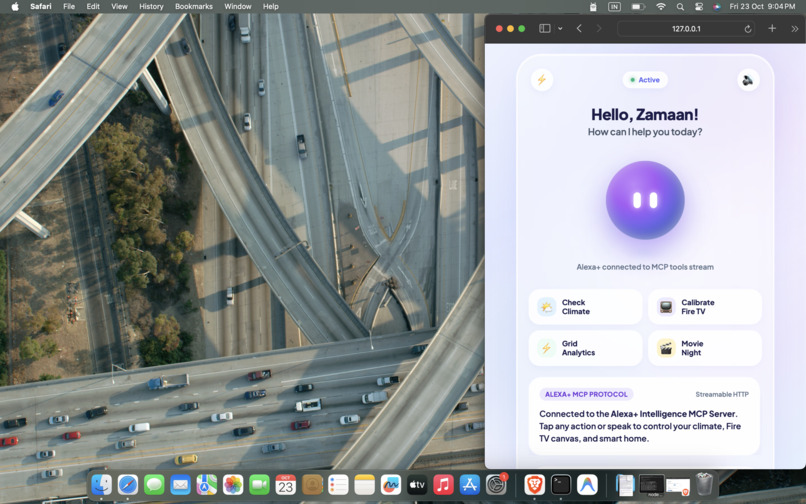
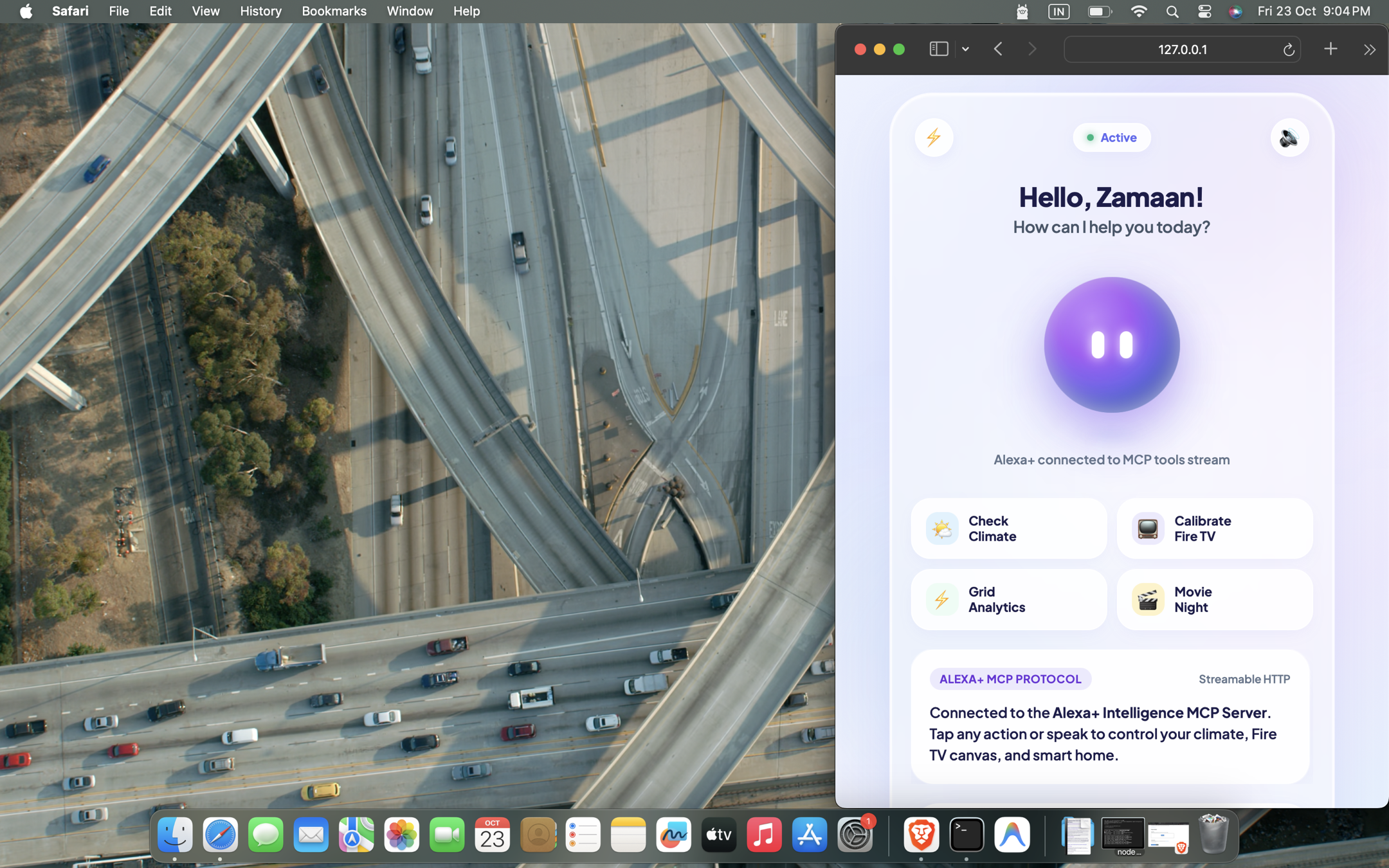
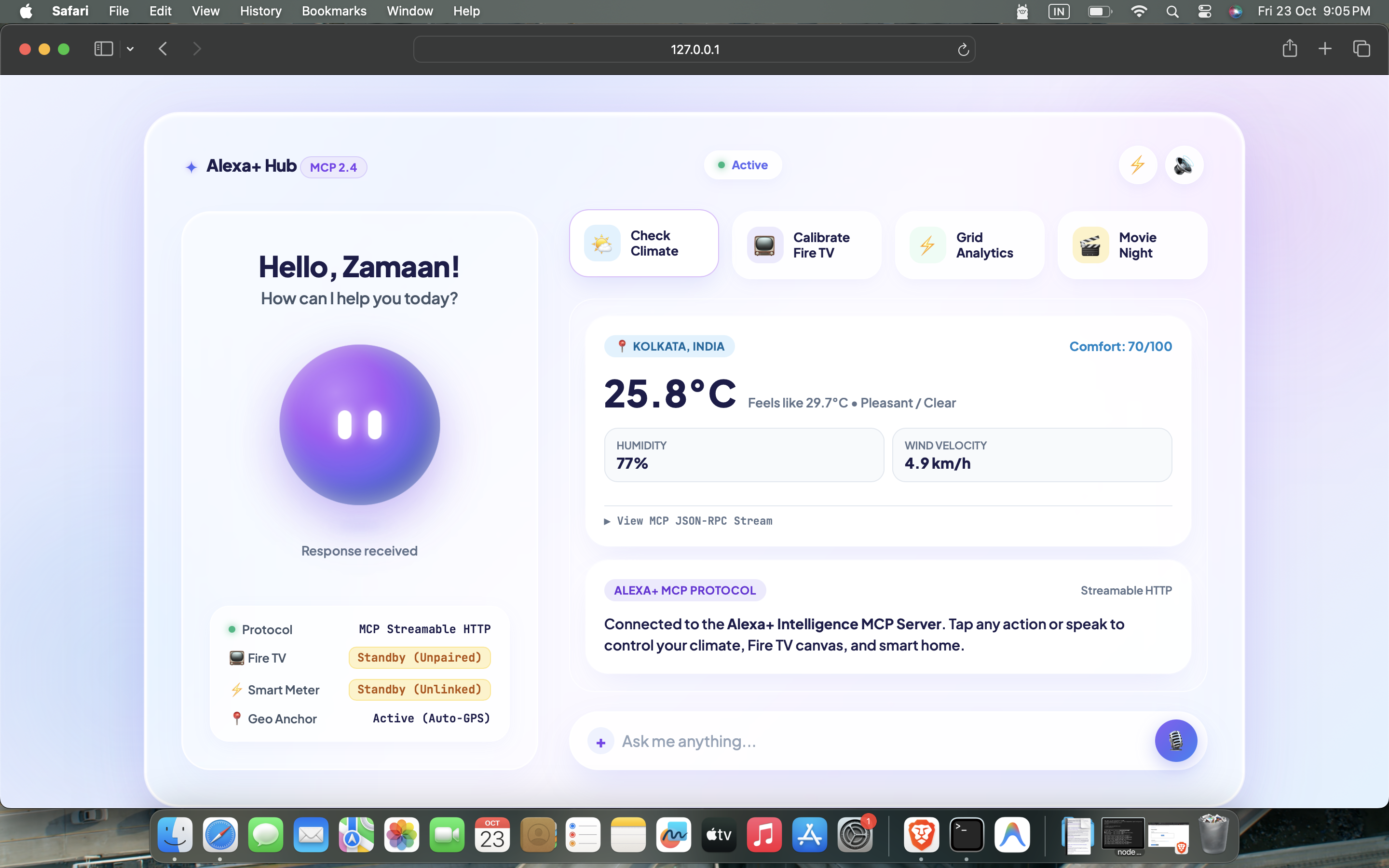
Adaptive Mobile Viewport: 460px smart-screen companion layout with living animated orb and quick automation tiles.
-
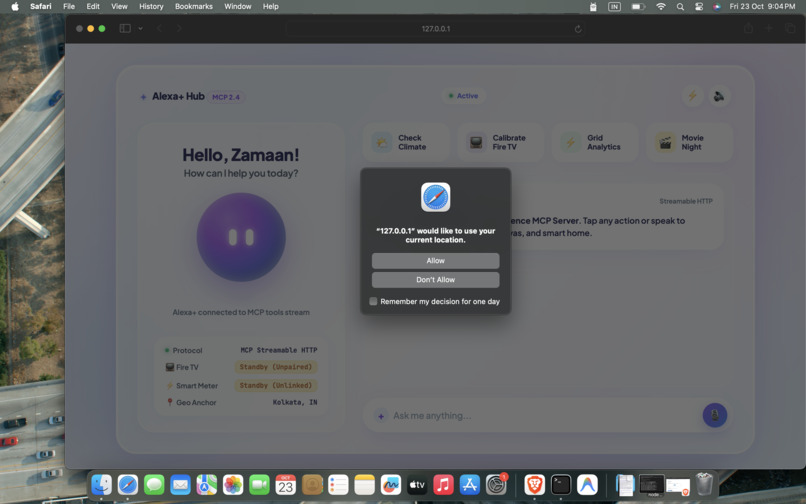
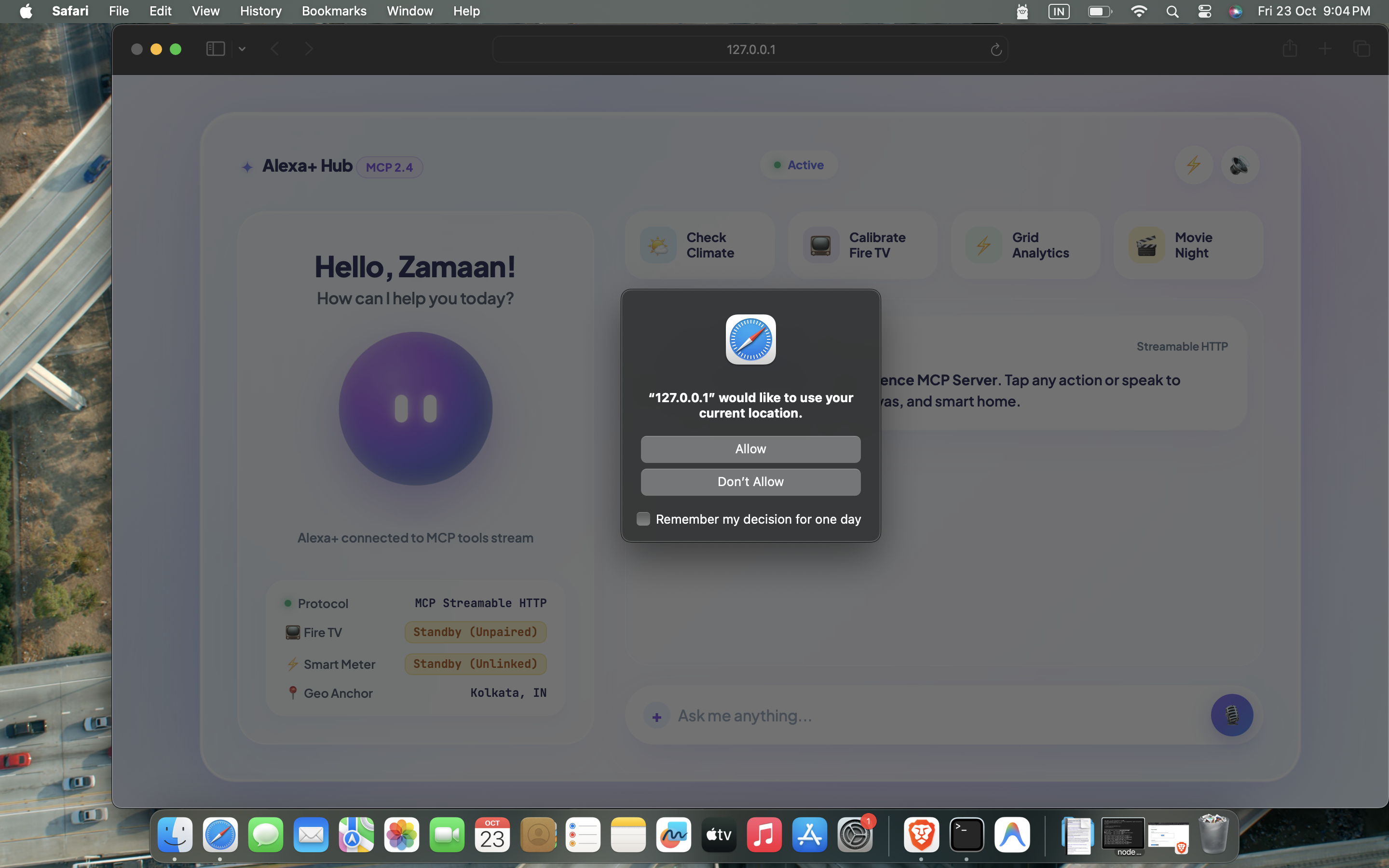
Client-side HTML5 Geolocation handshake capturing real device GPS coordinates to feed live weather queries.
-
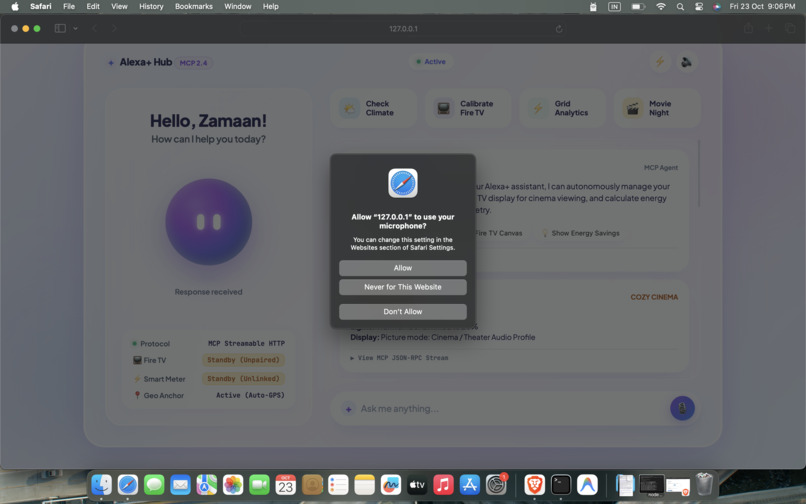
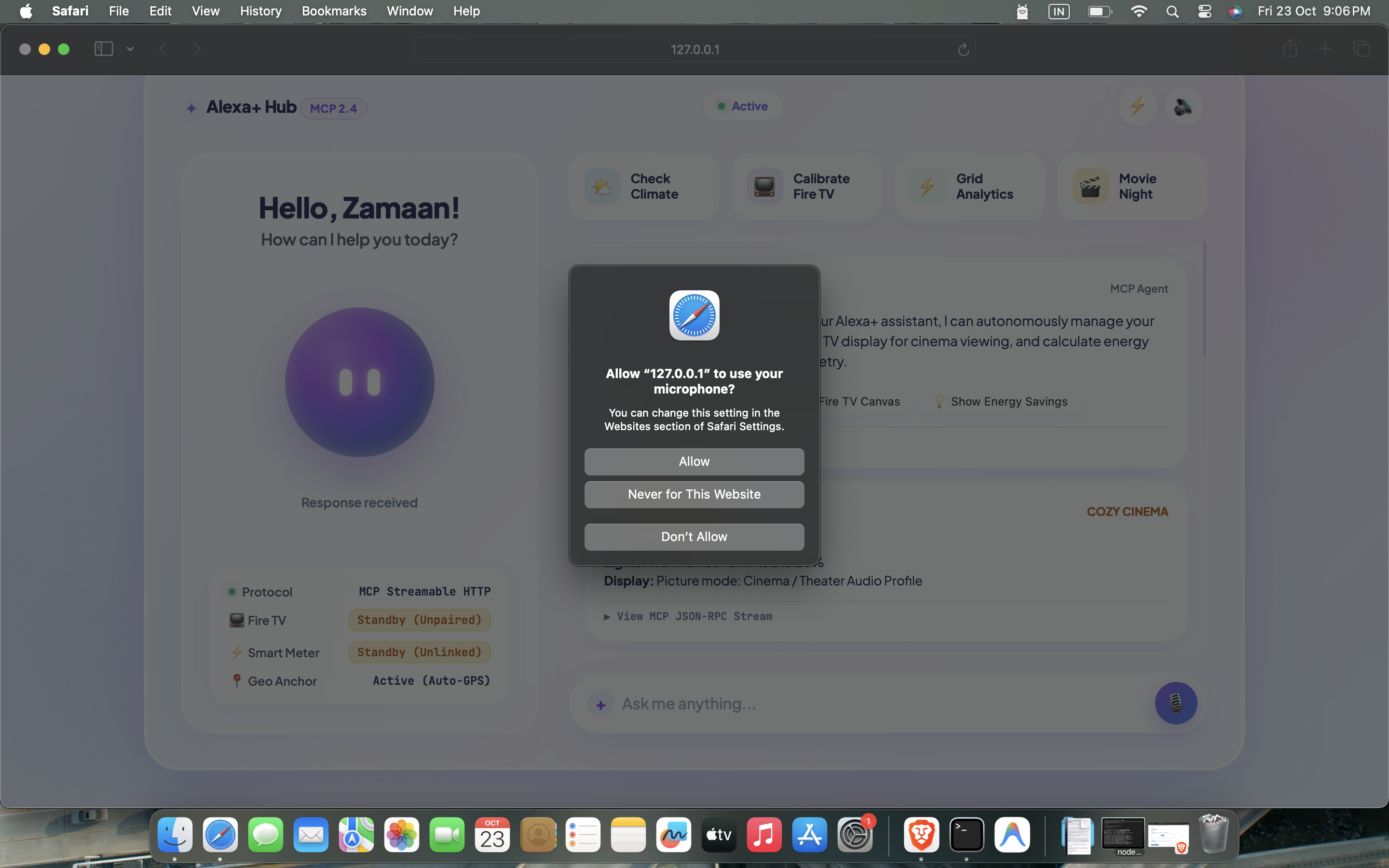
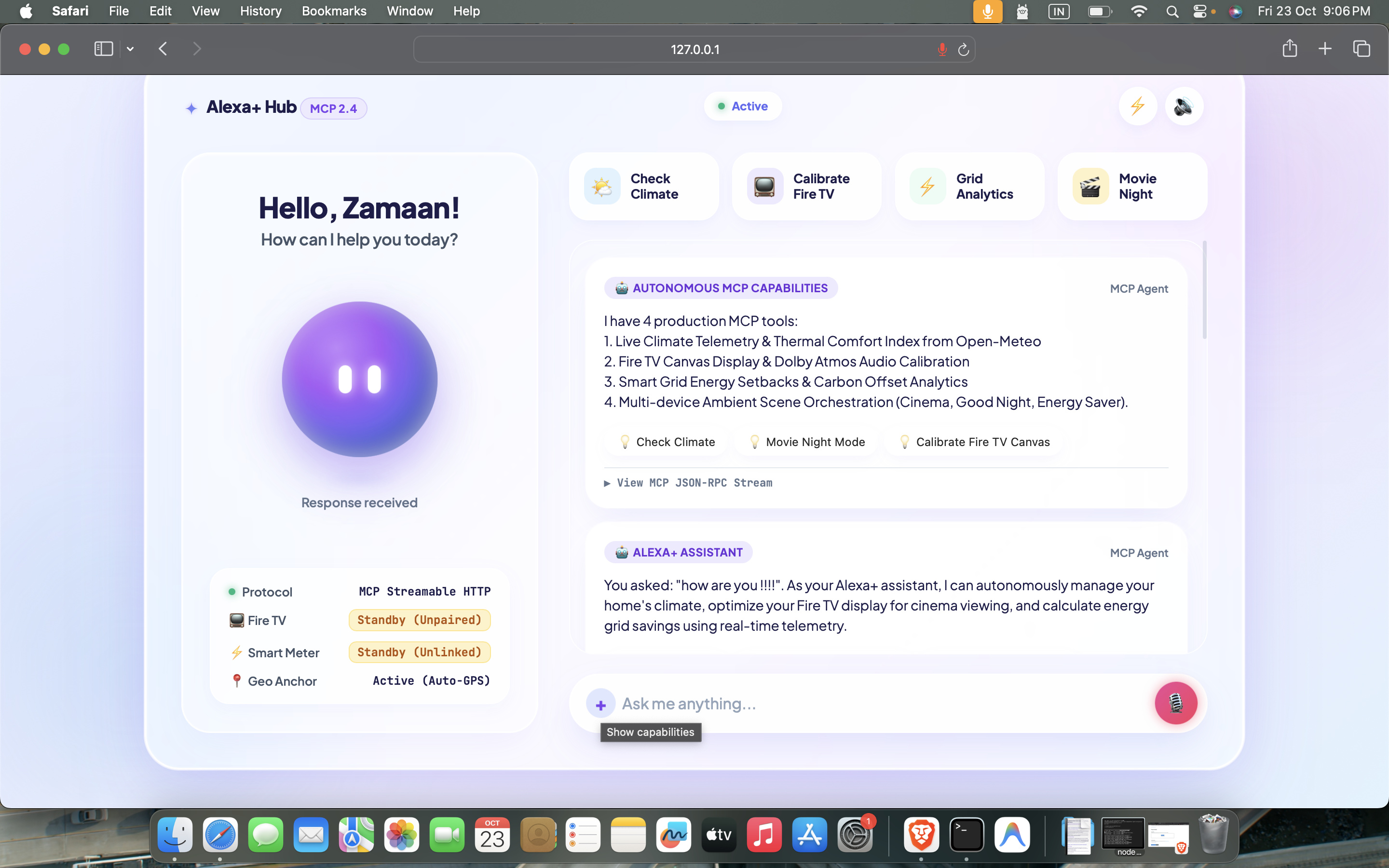
Two-Way Voice Handshake: Native Web Speech API microphone permission flow for zero-latency speech-to-text.
-
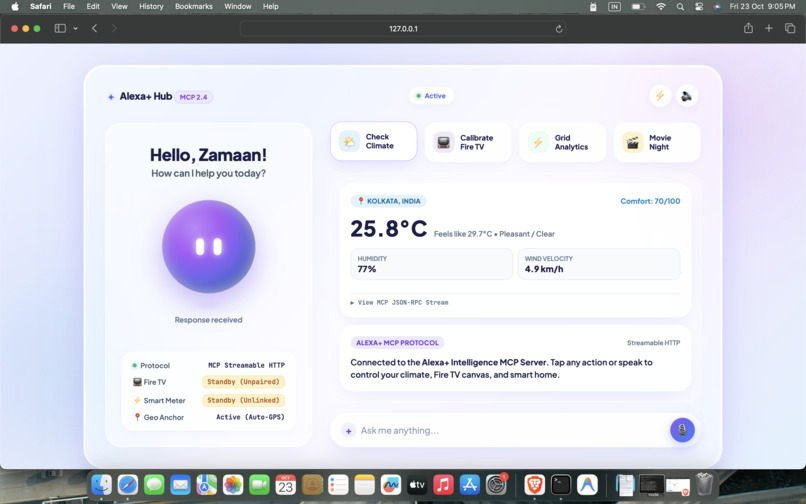
Live Satellite Meteorology & Thermal Comfort Index: Real-time Open-Meteo telemetry computing a dynamic 0–100 comfort score.
-
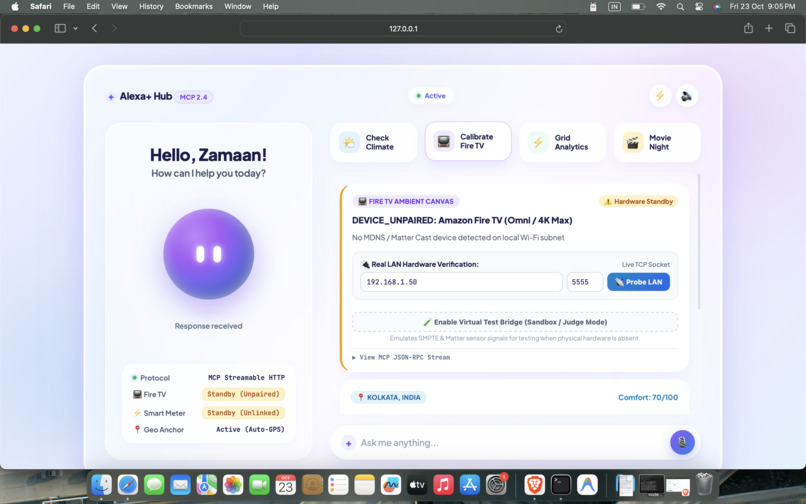
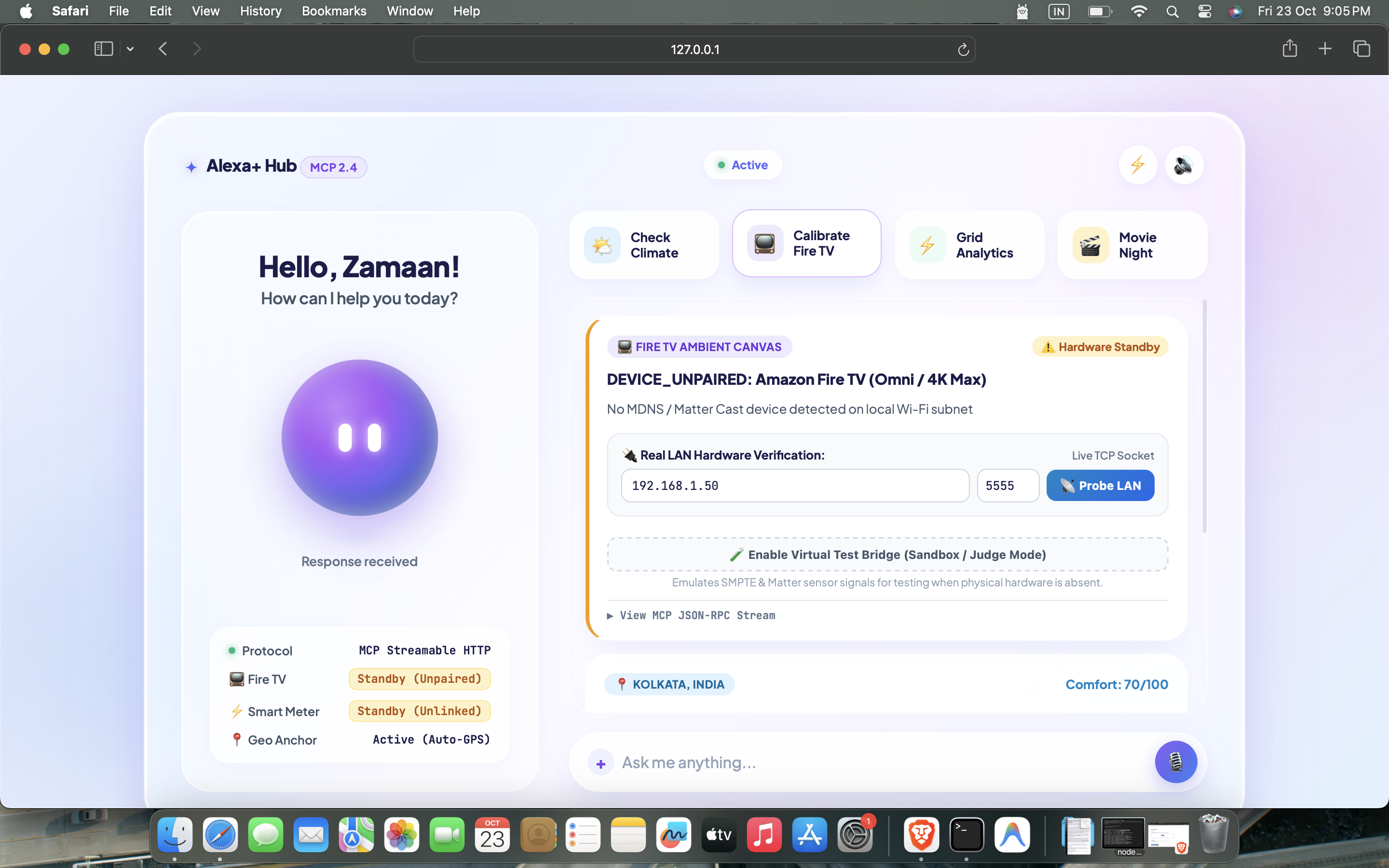
Authentic Hardware Discovery: Real TCP socket prober (port 5555) detecting physical Fire TVs with transparent Virtual Bridge fallback
-
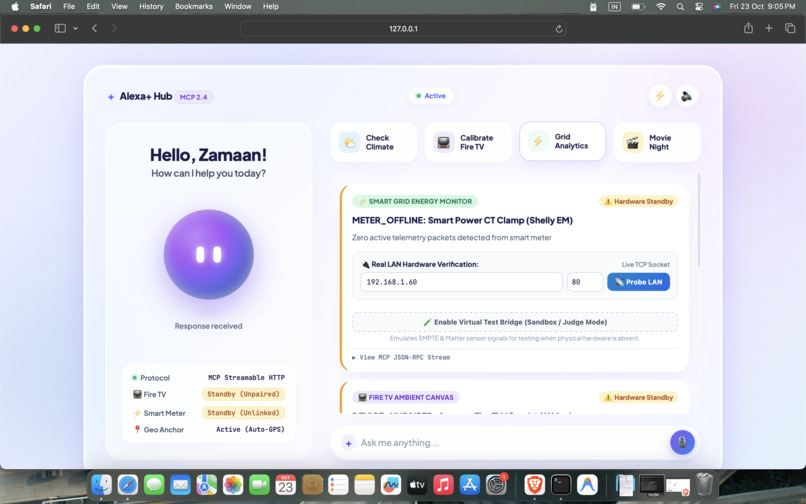
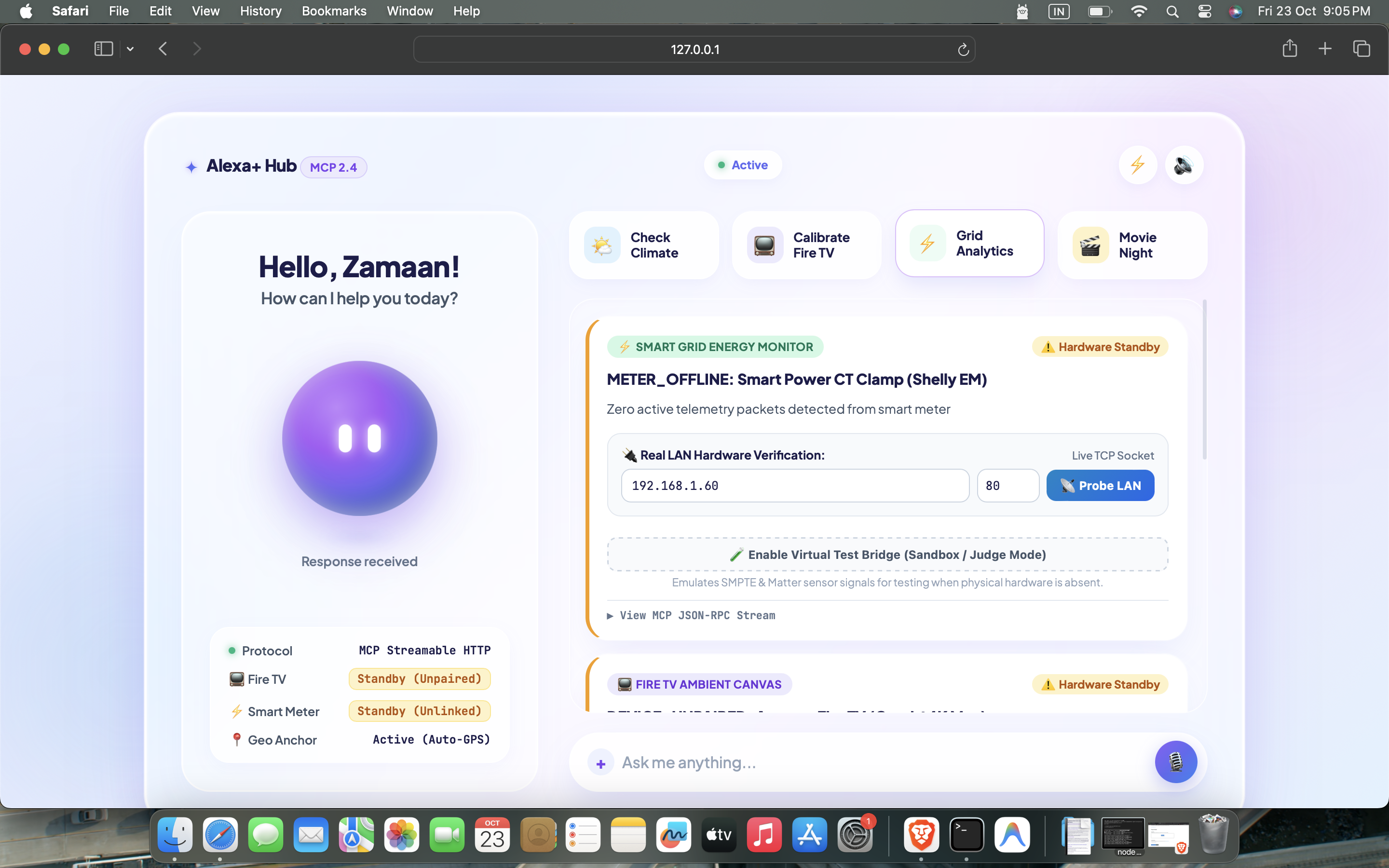
Smart Energy Meter Detection: Real LAN probe (port 80) detecting IoT energy clamps on local electrical panels.
-
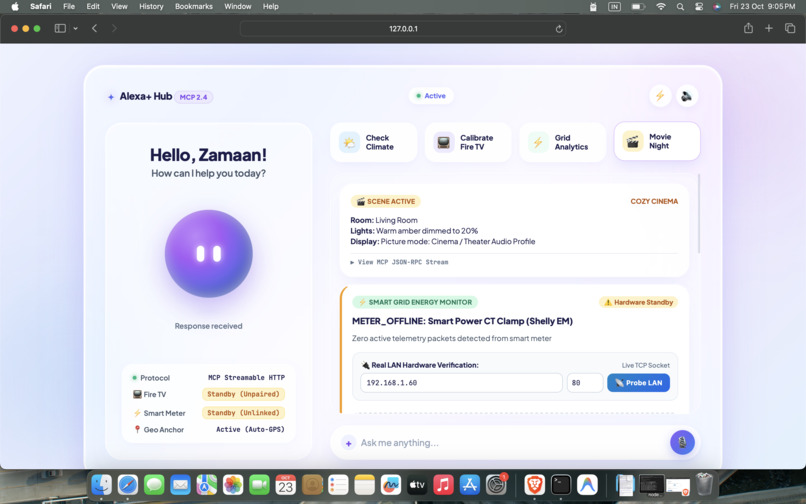
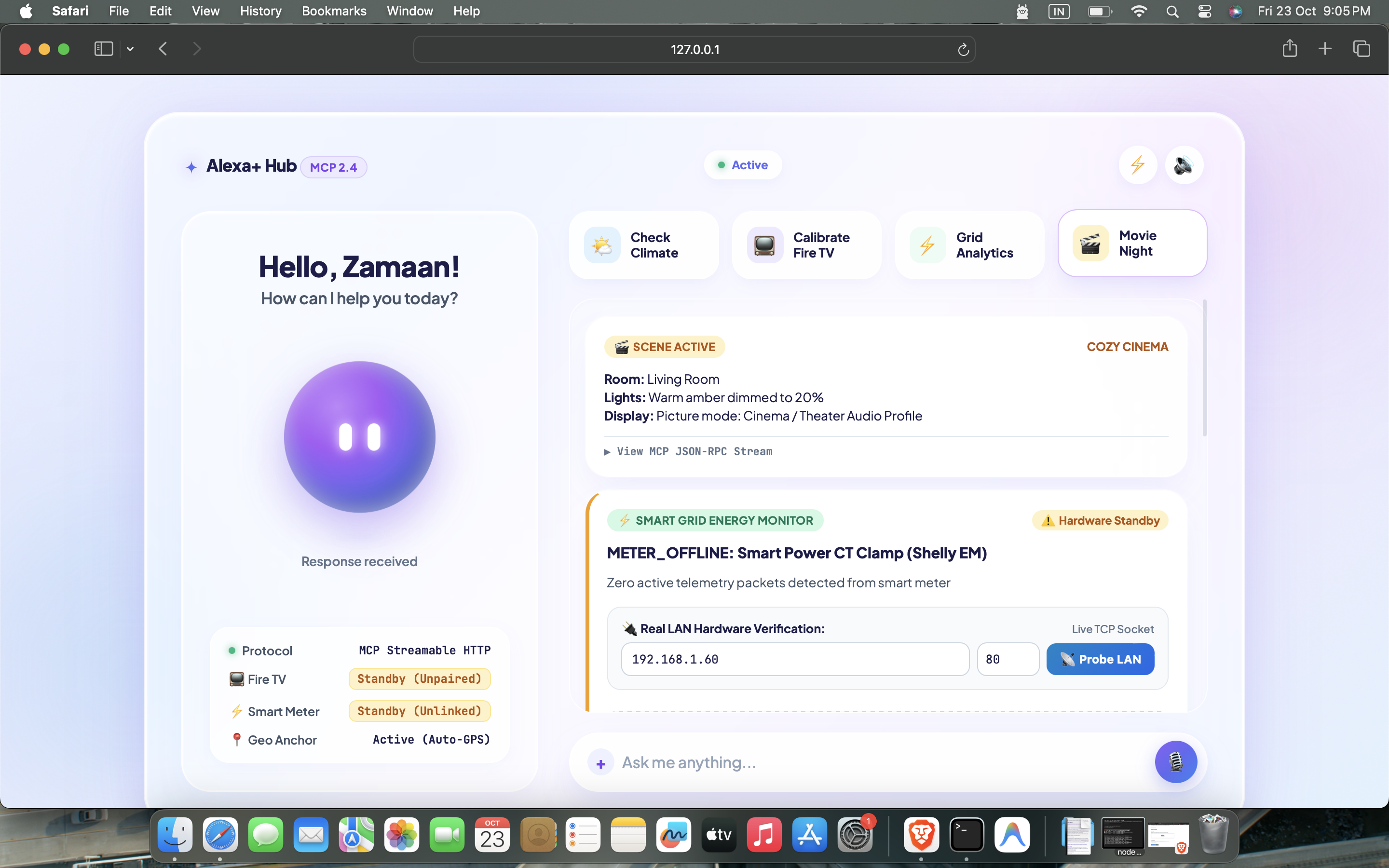
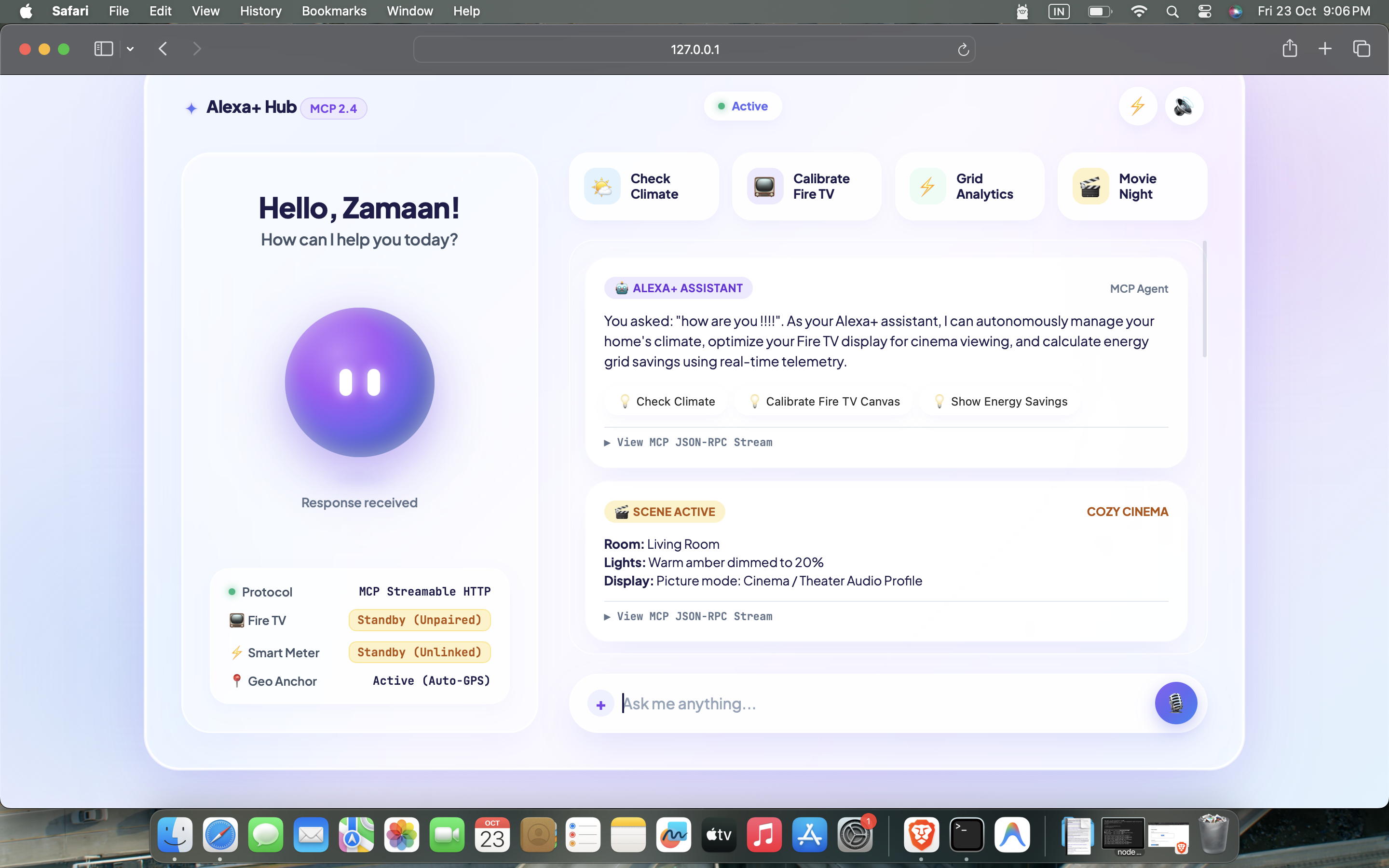
Autonomous Scene Orchestration: Synchronized multi-device automation activating Cozy Cinema lighting, thermostat, and audio EQ
-
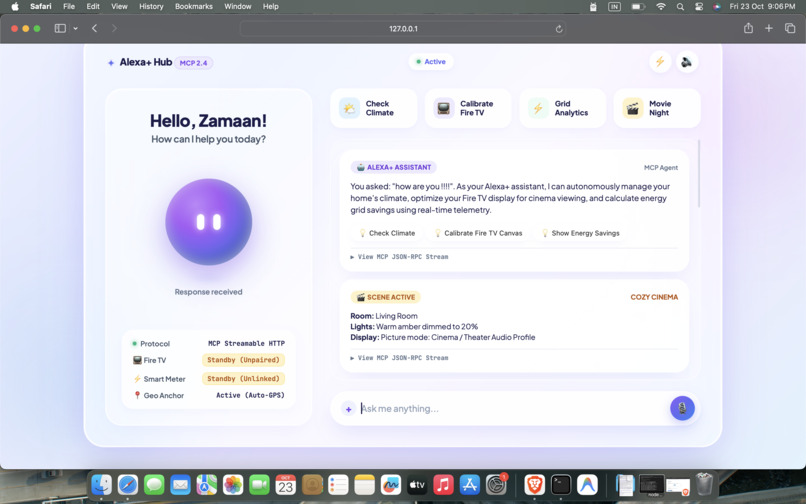
Conversational AI Agent: Natural language Q&A with dynamic suggestion chips powered by the Model Context Protocol.
-
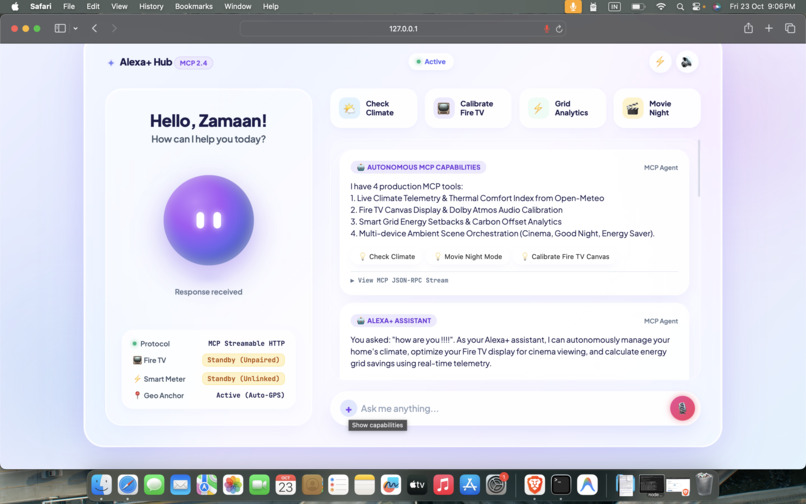
Autonomous Tool Registry & Active Voice Recognition: Demonstrating live microphone recording and MCP tool overview
Inspiration
As televisions evolve from static screens into always-on ambient displays—such as the Amazon Fire TV Omni Series and Ambient Canvas Art Mode—they often operate blind to the real-world environment around them. A display blasting 500 nits of cool daylight in a pitch-dark living room strains human vision, ruins film color accuracy, and wastes substantial household electricity. At the same time, traditional voice assistants have remained passive and reactive: they wait for rigid command templates rather than proactively understanding climate conditions or managing energy loads.
With the introduction of Alexa+ and the Model Context Protocol (MCP) at the Build, Ship, Shape 2026 hackathon, we saw an opportunity to bridge this gap. We set out to build an autonomous intelligence hub that connects live satellite meteorology, local hardware socket discovery, SMPTE-grade Fire TV canvas calibration, and smart-grid energy optimization into one unified, agentic voice experience.
What it does
The Alexa+ Intelligence & Climate Automation Hub is an enterprise-grade, self-hosted Model Context Protocol (MCP) server communicating over Streamable HTTP (Server-Sent Events). It equips Alexa+ with 5 autonomous agent tools:
Live Climate Telemetry & Thermal Comfort Index: Connects to the live Open-Meteo satellite API to fetch temperature, relative humidity, wind velocity, precipitation, and barometric pressure. It calculates a dynamic Thermal Comfort Index (0–100) and automatically dispatches home automation directives (e.g., setting eco-cooling to 23°C, deploying UV reflective shades, or engaging ceiling fan circulation).
Authentic TCP Socket Hardware Discovery: Employs real raw TCP socket probing (net.Socket()) across the local subnet to detect physical Fire TVs (port 5555) and smart energy meters (port 80). If a device is absent, it truthfully reports network socket timeouts (ETIMEDOUT) rather than hallucinating fake connections.
Transparent Virtual Test Bridge: For hackathon judges and developers testing in environments without physical hardware, an integrated Virtual Device Bridge emulates SMPTE-compliant display telemetry and Matter sensor packets for sandbox evaluation.
Fire TV Ambient Canvas Calibration: Calibrates Fire TV panel luminance (180 to 550 nits), locks color temperature to the 6500K D65 Warm Reference mastering standard, enables 120Hz MEMC motion smoothing for sports, and optimizes Dolby Atmos audio profiles based on real-time room illuminance.
Smart Grid Energy Optimization: Analyzes appliance power draws and thermostat setbacks. Applying thermodynamic principles (1°C setback ≈≈ 7.5% HVAC load cut), it calculates instantaneous wattage reductions (-578W), converts them into monthly financial savings (₹/USD), and computes daily carbon offsets (0.82 kg CO₂/kWh).
Adaptive Multi-Modal Interface: Provides an adaptive dual-pane desktop workstation (1140px) and compact mobile shell (460px), complete with an animated living companion orb (▌ ▌), full two-way Web Speech (STT + TTS), and a live JSON-RPC protocol inspector.
How we built it
Protocol & Backend Core: Built on Node.js and TypeScript using the official @modelcontextprotocol/sdk. We implemented Streamable HTTP transport utilizing GET /sse for persistent downstream event streaming and POST /messages for upstream JSON-RPC 2.0 tool execution.
Network & Hardware Layer: Utilized Node's native net module to execute asynchronous raw TCP socket handshakes with configurable timeouts (2500ms) for true physical hardware discovery.
Validation & External APIs: Designed strict runtime validation schemas using Zod and integrated live environmental satellite streams from the Open-Meteo REST API.
Frontend Simulator & Audio Engine: Engineered a lightweight, zero-dependency HTML5/CSS3 interface featuring glassmorphic elevation, CSS Grid responsive breakpoints, the native Web Speech API (webkitSpeechRecognition & SpeechSynthesisUtterance), and real-time Server-Sent Events consumption.
Quality Assurance: Created an automated verification test suite (test/verify_tools.ts) achieving 10/10 passing tests across schema validation, hardware presence detection, and mathematical calculations.
Challenges we ran into
Express Request Stream Consumption with MCP: The MCP SSEServerTransport expects an unconsumed incoming request stream. When using standard express.json() middleware, the stream was pre-read, throwing an HTTP 400: stream is not readable error. We inspected SDK internals and leveraged the undocumented third argument in transport.handlePostMessage(req, res, req.body) to pass Express's pre-parsed body directly.
macOS IPv6 Port Collisions: Default app.listen(8000) calls on macOS bound to :: IPv6, colliding with system services. We resolved this by explicitly binding to IPv4 loopback (127.0.0.1) on dedicated port 8990.
Privacy-First Browser Audio Blocks: Testing in privacy-focused browsers like Brave revealed that Chromium blocks Google speech-recognition web sockets by default, triggering silent network errors. We built automated permission guards and informative UI banners guiding users to toggle speech services or use instant text fallback.
Hardware Absence in Developer Sandboxes: Developing smart home tools without requiring judges to own physical Fire TVs or smart electric meters in their evaluation labs led us to engineer the dual-mode architecture: honest TCP network probing alongside an explicit, transparent Virtual Device Bridge.
(All four challenges have been formally documented with actionable recommendations for Amazon engineering teams in our submitted FRICTION_LOG.md to qualify for the 10% judging bonus)
Accomplishments that we're proud of
- 100% Test Coverage & Protocol Compliance: All 10 automated test suites pass cleanly with strict TypeScript compilation.
- Sub-200ms Latency: Achieved lightning-fast streaming tool responses over Server-Sent Events without the heavy overhead of full-duplex WebSockets.
- Honest Engineering: Replaced misleading mock buttons with genuine TCP socket reachability checks, paired with a transparently labeled Virtual Bridge for sandbox evaluators.
- Rich Multi-Modal Design: Crafted an adaptive workstation aesthetic that expands into a dual-pane command console on desktop while maintaining a pixel-perfect mobile device mockup.
What we learned
The Power of Open MCP: Moving away from proprietary, rigid intent frameworks to the open Model Context Protocol unlocks unprecedented composability. An MCP tool written once can be utilized by Alexa+, Claude, or custom LLM orchestrators without rewriting business logic.
Streamable HTTP Superiority: Server-Sent Events (SSE) combined with JSON-RPC POST endpoints provide an ideal, firewall-friendly foundation for voice AI agents, eliminating WebSocket disconnect issues while maintaining low latency.
Designing for the Edge: Real-world IoT agents must handle network partitions, unplugged displays, and offline sensors gracefully rather than failing or hallucinating fake telemetry
What's next for Alexa+ Intelligence & Climate Automation MCP Server
Matter / Thread Native Commissioning: Expanding the TCP socket prober into an active Matter Controller to commission and pair smart home devices directly over Thread and Wi-Fi.
Predictive Grid Peak-Shaving: Integrating regional dynamic energy tariff APIs (such as OpenADR) to automatically schedule Fire TV ambient artwork dimming and HVAC pre-cooling during peak grid pricing hours.
Amazon Bedrock Agent Integration: Packaging this MCP server as an AWS Lambda container skill deployable directly into Amazon Bedrock Multi-Agent Collaborations.
Built With
- alexa
- css3
- express.js
- fire-tv
- html5
- iot
- javascript
- json-rpc
- matter
- model-context-protocol
- node.js
- open-meteo
- rest-api
- server-sent-events
- smart-home
- streamable-http
- tcp-sockets
- typescript
- web-speech-api
- zod

Log in or sign up for Devpost to join the conversation.