Inspiration
The idea for Alexa Health Assistant started with a conversation with a friend who told me how his smartwatch tracks his sleep quality and provides insights into his health. It made me wonder: What if we could go beyond tracking health metrics and understand what those numbers mean in the context of someone's everyday life?
A wearable can tell us that we slept poorly or that our heart rate has changed, but it doesn't know that we've been feeling unwell, started taking a new medication, or experienced an unusually stressful week. Our health data and personal experiences often remain disconnected.
I wanted to build something that connects these pieces of information and helps people become more aware of their health.
What it does
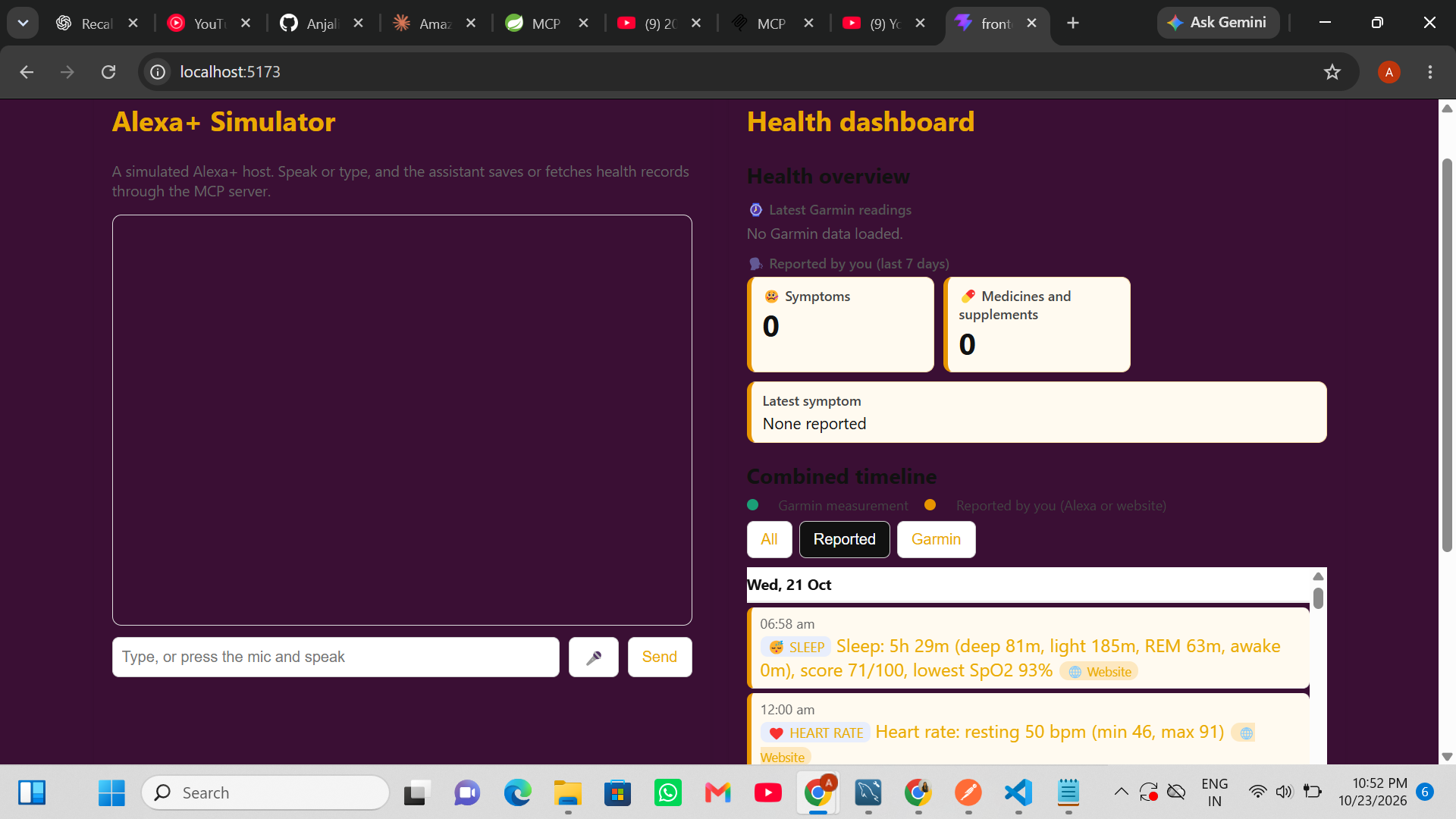
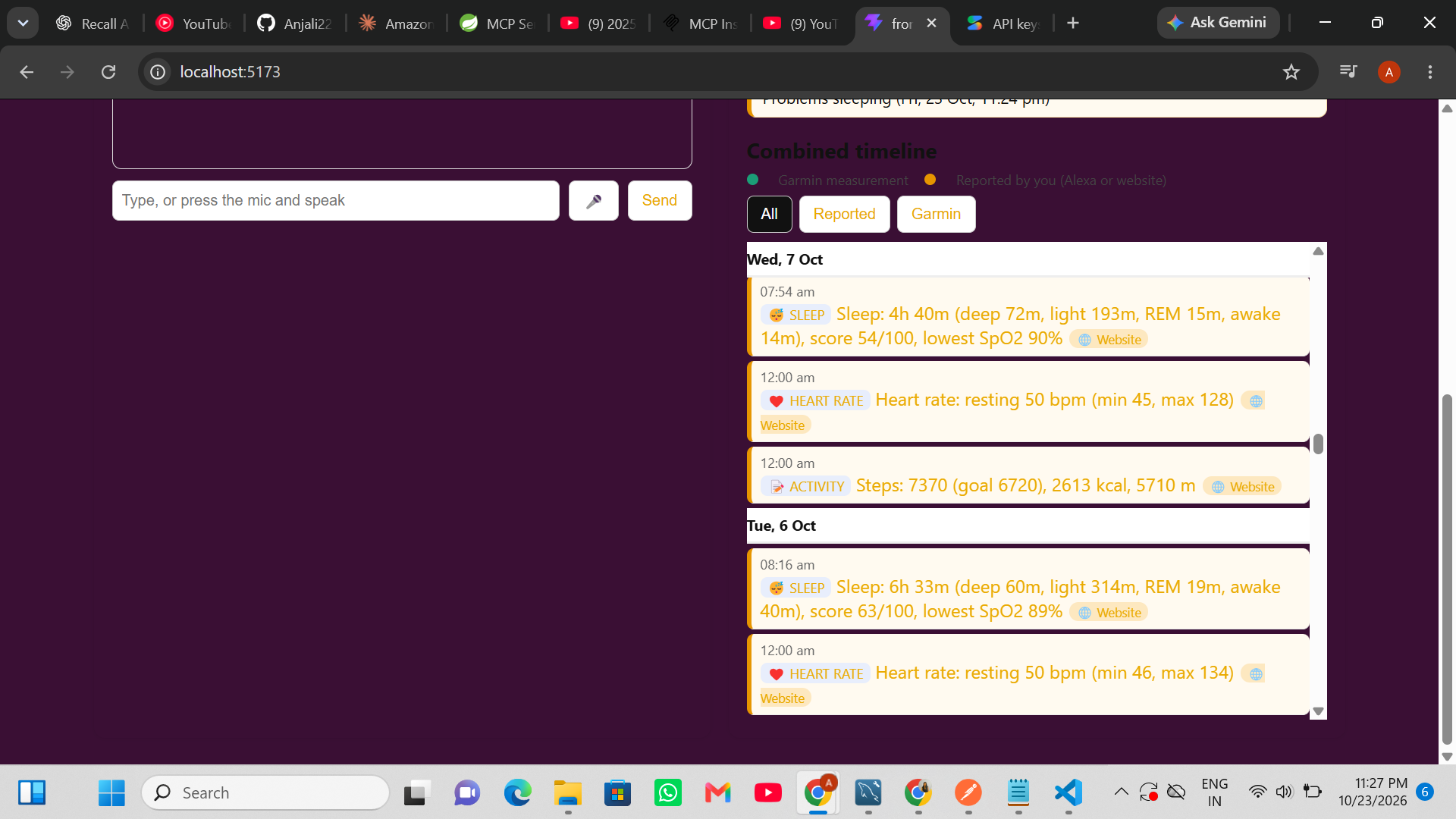
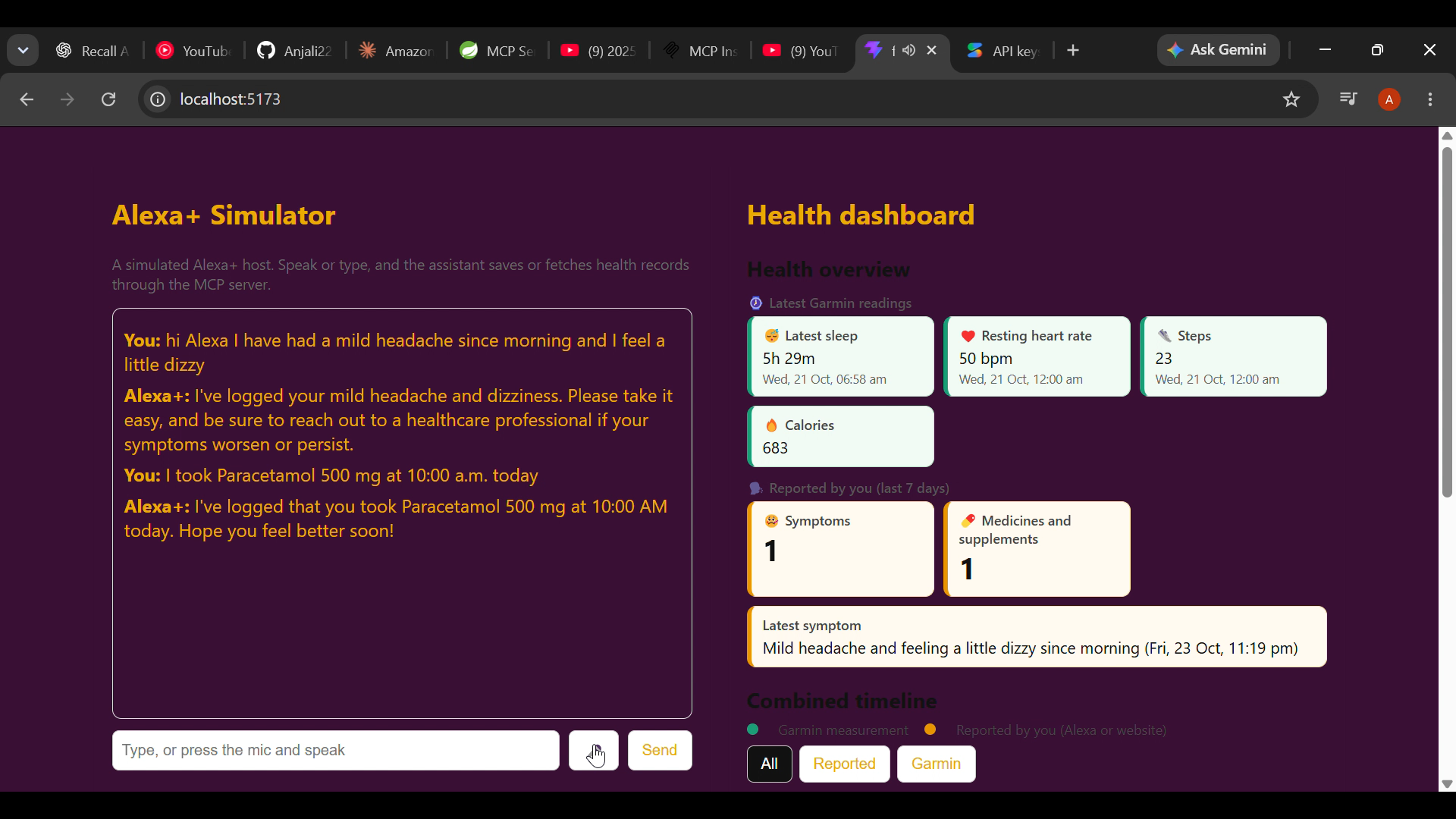
Alexa Health Assistant is a personal health-context platform that brings wearable health data and user-provided health records together in one place.
Users can maintain records of medications, vitamins, symptoms, and important health-related events. By combining these records with wearable measurements such as heart rate and sleep quality, the assistant aims to provide a more complete picture of a user's well-being.
For example, when a user reports feeling unwell and their recent records also show poor sleep or an unusual heart-rate pattern, the assistant can bring these observations together and suggest that the user consider seeking professional medical advice.
The platform also aims to provide basic first-aid information, medication and appointment reminders, and an organized health summary that users can share with healthcare professionals.
The goal is not to diagnose conditions, but to help users understand their health information, recognize when something may deserve attention, and make more informed decisions about seeking care.
How we built it
We built the backend using Java and Spring Boot, with MySQL for storing health records. The application uses a structured data model to manage information such as record type, content, recordedAt, createdAt, and source, allowing records to come from different channels, including the website, Alexa, and wearable-data imports.
We use REST APIs to manage health records and DTOs to structure the data exchanged between the frontend and backend. The architecture is designed to bring personal health information and wearable measurements into a common context.
The project is being developed with the goal of incorporating Alexa-based interaction and wearable data, including Garmin health exports, so users can interact with their health information more naturally and receive context-aware assistance.
Challenges we ran into
One of our main challenges was figuring out how to combine different kinds of information into something genuinely useful. A heart-rate measurement, a sleep record, a medication entry, and a personal event each tell only part of the story. Connecting them meaningfully without making unsupported medical conclusions is an important challenge.
We also faced backend development challenges involving entity design, DTO mapping, database configuration, and API validation. Making sure that health records are stored correctly and retain information about their source is essential when data may come from multiple systems.
Another challenge was defining a realistic role for a health assistant. We wanted to build something more useful than a conventional tracker while ensuring that it supports health awareness rather than attempting to replace medical professionals.
Accomplishments that we're proud of
We turned a simple observation about smartwatch sleep tracking into a broader idea: a personal health assistant that considers both measurable health data and the user's lived experiences.
We have established the Spring Boot backend foundation, created the health-record data model, and worked on APIs for storing structured health information. We have also designed the project around multiple record sources, creating a foundation for bringing wearable data and user-entered records together.
Most importantly, we are approaching the problem from a context-first perspective. Instead of simply displaying numbers, we want to help users understand how their health measurements and personal records relate to one another.
What we learned
We learned that collecting health data and making it useful are two very different things. Wearables can generate large amounts of information, but personal context is often what makes that information meaningful.
We also learned the importance of building reliable foundations: well-designed APIs, consistent data models, validation, and clear separation between database entities and API representations.
Finally, we learned that health-related AI requires careful boundaries. An assistant should communicate uncertainty, avoid unsupported diagnoses, and encourage professional care when appropriate.
What's next for Alexa Health Assistant
We also want to improve the assistant's ability to provide appropriate first-aid guidance and identify situations where users should seek medical attention, while clearly communicating its limitations.
Our long-term vision is to create a personal health companion that helps people connect the dots between their daily lives and their health data—making it easier to stay informed, organized, and proactive about their well-being.

Log in or sign up for Devpost to join the conversation.