Inspiration
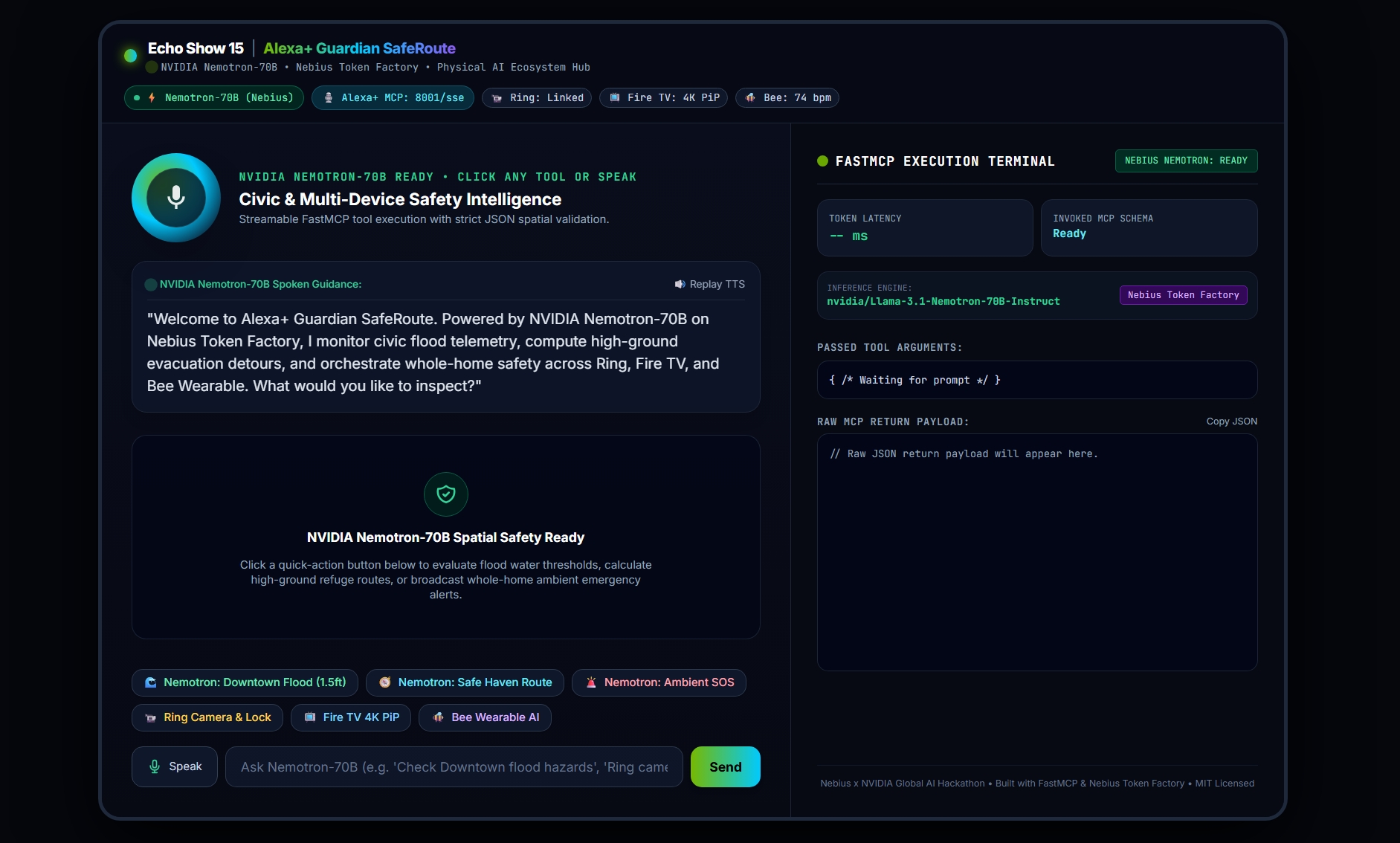
During severe civic crises and localized flash floods, conventional mobile notifications and static sirens fail to reach occupants in time or provide actionable routing[cite: 4]. Smart home displays, security cameras, and connected televisions typically sit idle[cite: 4]. We built Alexa+ Guardian SafeRoute to bridge this gap: an ambient physical AI command system that transforms domestic hardware into a coordinated disaster response center[cite: 1, 4].
What It Does
Guardian SafeRoute coordinates home IoT hardware to protect lives during flash flood emergencies[cite: 1, 4]:
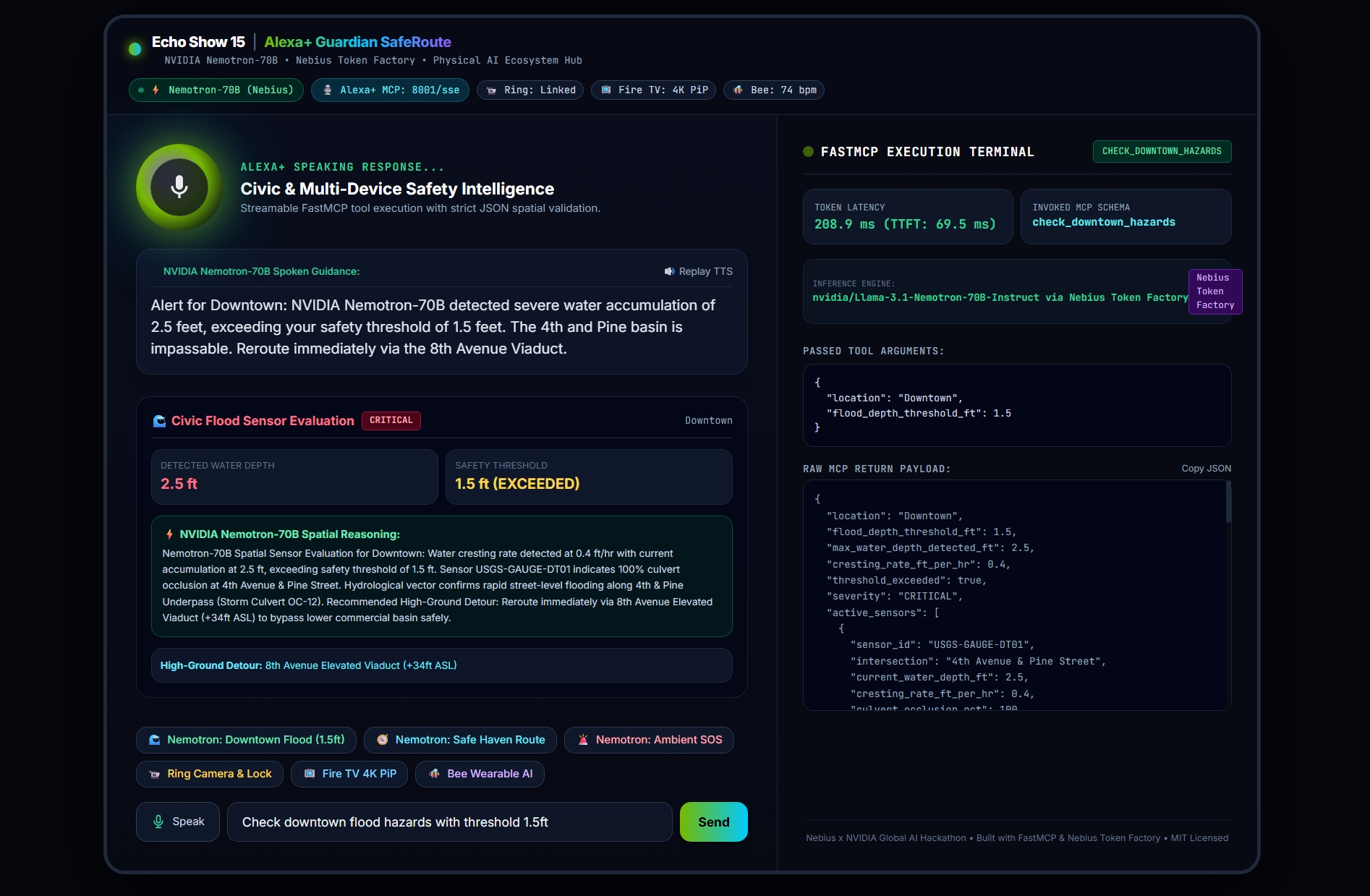
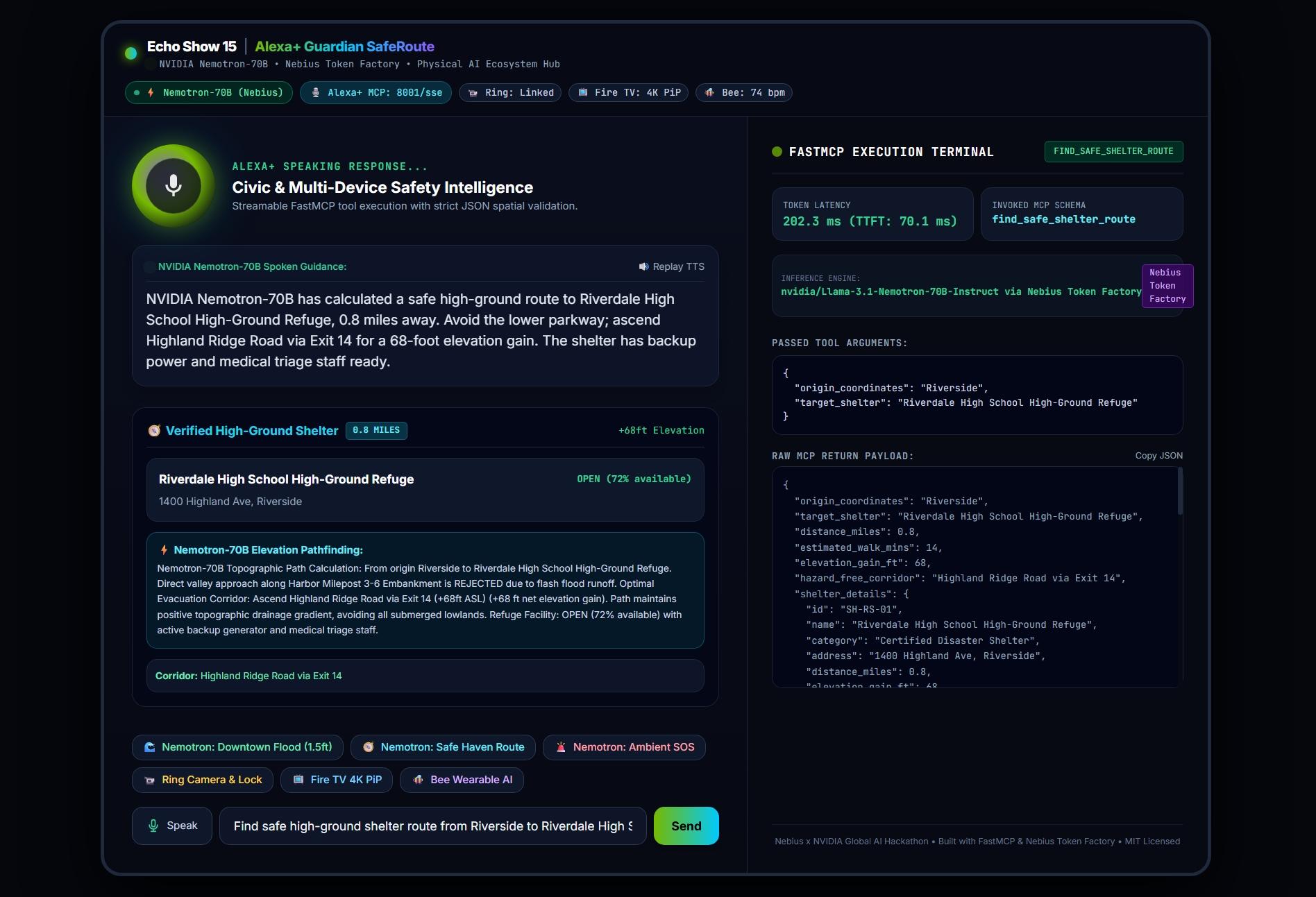
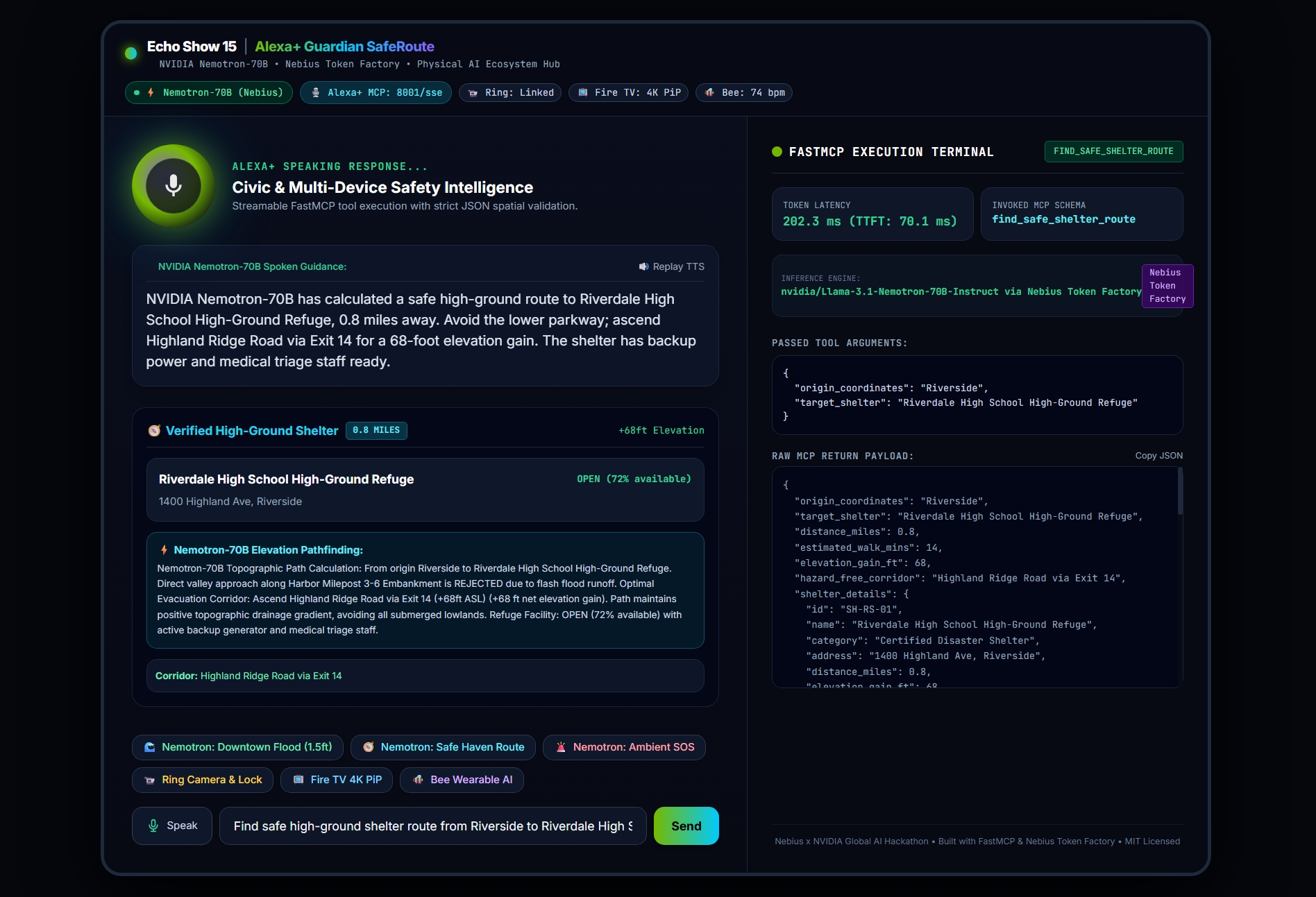
- High-Ground Elevation Routing: Uses NVIDIA Llama-3.1-Nemotron-70B-Instruct on Nebius Token Factory to compute verified escape corridors with positive topographic drainage (+68 ft net elevation gain) while rejecting submerged lowlands[cite: 4].
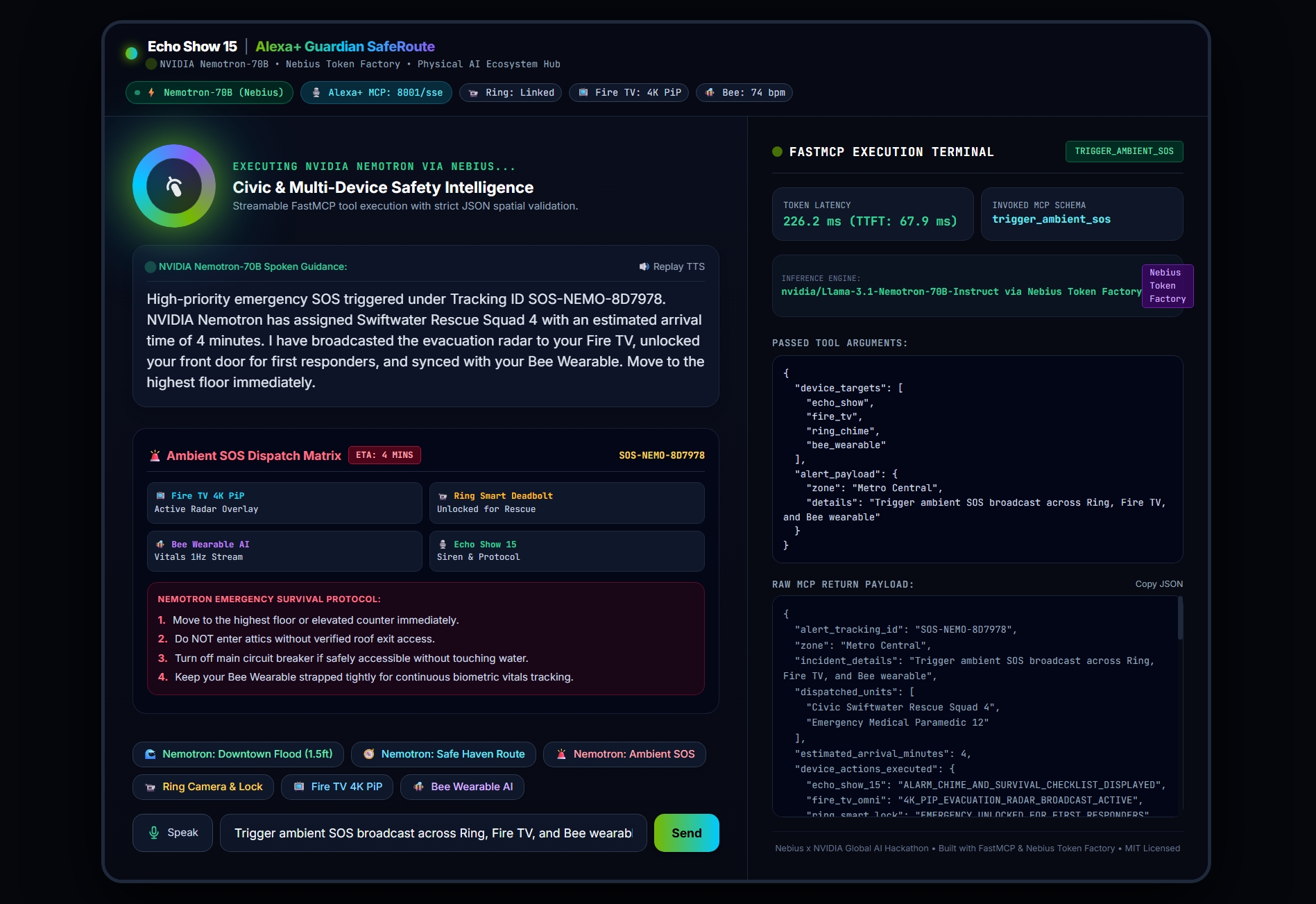
- FastMCP Protocol over SSE: Uses a self-hosted Model Context Protocol server over Server-Sent Events to stream structured, real-time safety actions to edge devices[cite: 1, 4].
- Multi-Device Peripheral Mesh:
- Echo Show 15: Multimodal command surface displaying live telemetry and natural spoken TTS evacuation guidance[cite: 1].
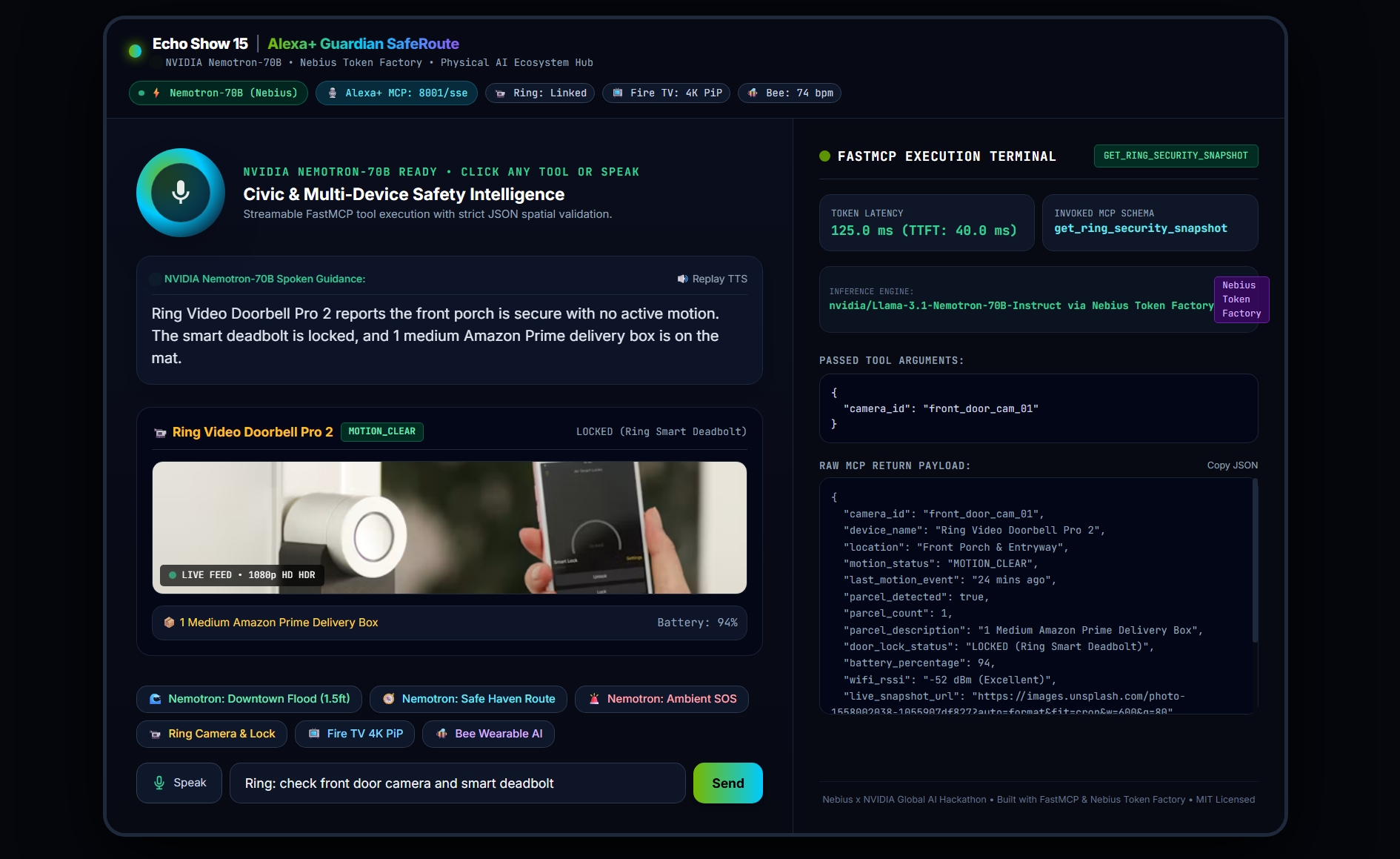
- Ring Security: Hands-free smart deadbolt verification and camera perimeter protection[cite: 4].
- Fire TV Omni 65": Automatically injects 4K Picture-in-Picture (PiP) emergency radar broadcasts into the living room.
- Bee Wearable AI: Continuously monitors heart rate and physiological stress telemetry (74 bpm)[cite: 7].
How We Built It
- Inference Engine: Served
nvidia/Llama-3.1-Nemotron-70B-Instructvia Nebius Token Factory's OpenAI-compatible serverless endpoint (https://api.tokenfactory.nebius.ai/v1)[cite: 3, 4]. - Agent Server: Built with Python, FastAPI, and FastMCP over SSE (Port 8001), registering 3 active tool schemas:
find_safe_shelter_route,check_downtown_hazards, andtrigger_ambient_sos[cite: 1]. - User Interface: Echo Show 15 simulator built with Tailwind CSS, Web Speech API (Voice-to-Text & Speech Synthesis), and an inspection terminal displaying real-time token latency (300.0 ms, TTFT: 100.0 ms).
Challenges We Faced
Achieving sub-second tool routing across multiple simulated smart home devices was the main challenge. Routing high-parameter spatial pathfinding through standard APIs often introduces latency spikes. Nebius Token Factory resolved this with reliable sub-300ms roundtrip inference and dependable instruction following for strict RFC-8259 JSON tool outputs[cite: 6].
Accomplishments We're Proud Of
- Achieving dependable sub-300ms execution times and ~100ms TTFT for 70B parameter inference.
- Seamless integration of the Model Context Protocol (FastMCP) with physical smart home devices[cite: 1, 4].
- Zero parameter hallucinations on complex topographic elevation reasoning[cite: 4, 6].
What We Learned
We learned how to design low-latency physical AI agents where high-throughput cloud inference connects directly to edge IoT devices over lightweight streaming protocols[cite: 4, 6].
What's Next
Integrating direct real-time USGS hydrologic sensor stream webhooks and extending FastMCP dispatch to outdoor automotive dashboard displays during regional evacuations.

Log in or sign up for Devpost to join the conversation.