-
-
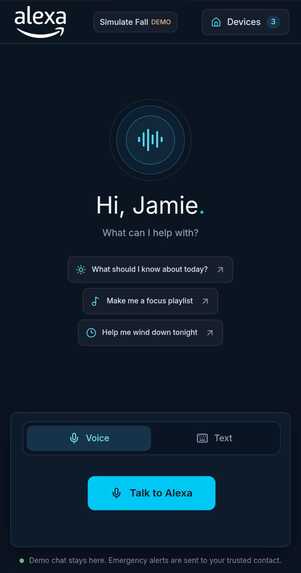
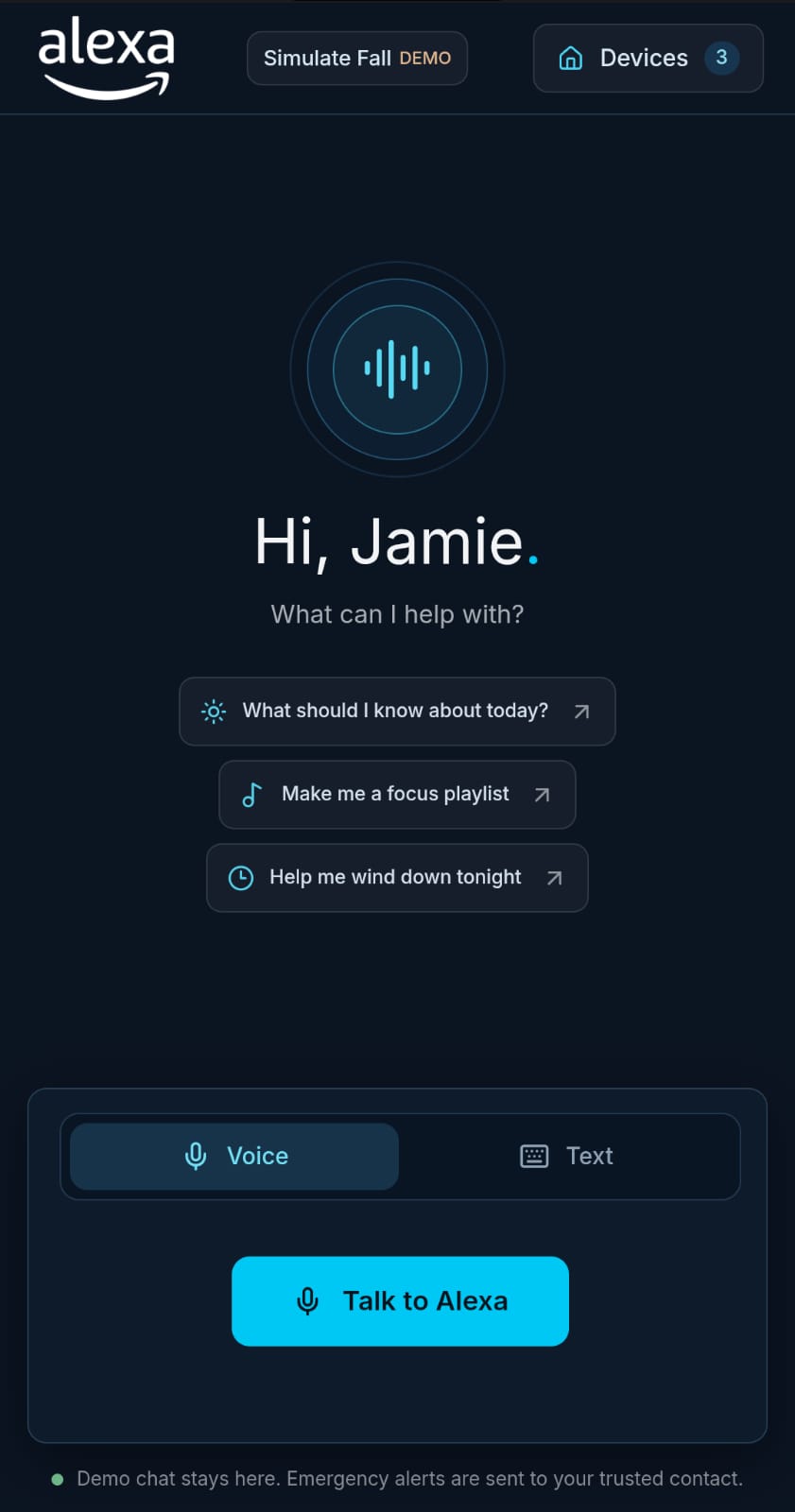
Alexa Emergency System – Main Interface (Prototype)
-

Home Safety Monitor – Device Setup & Language Selection
-
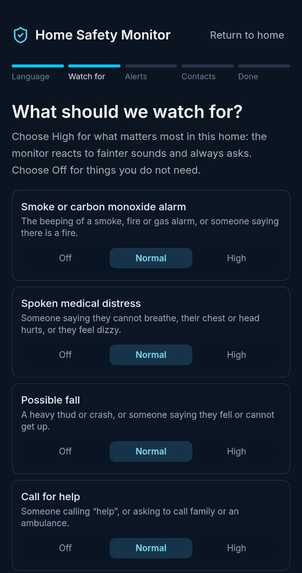
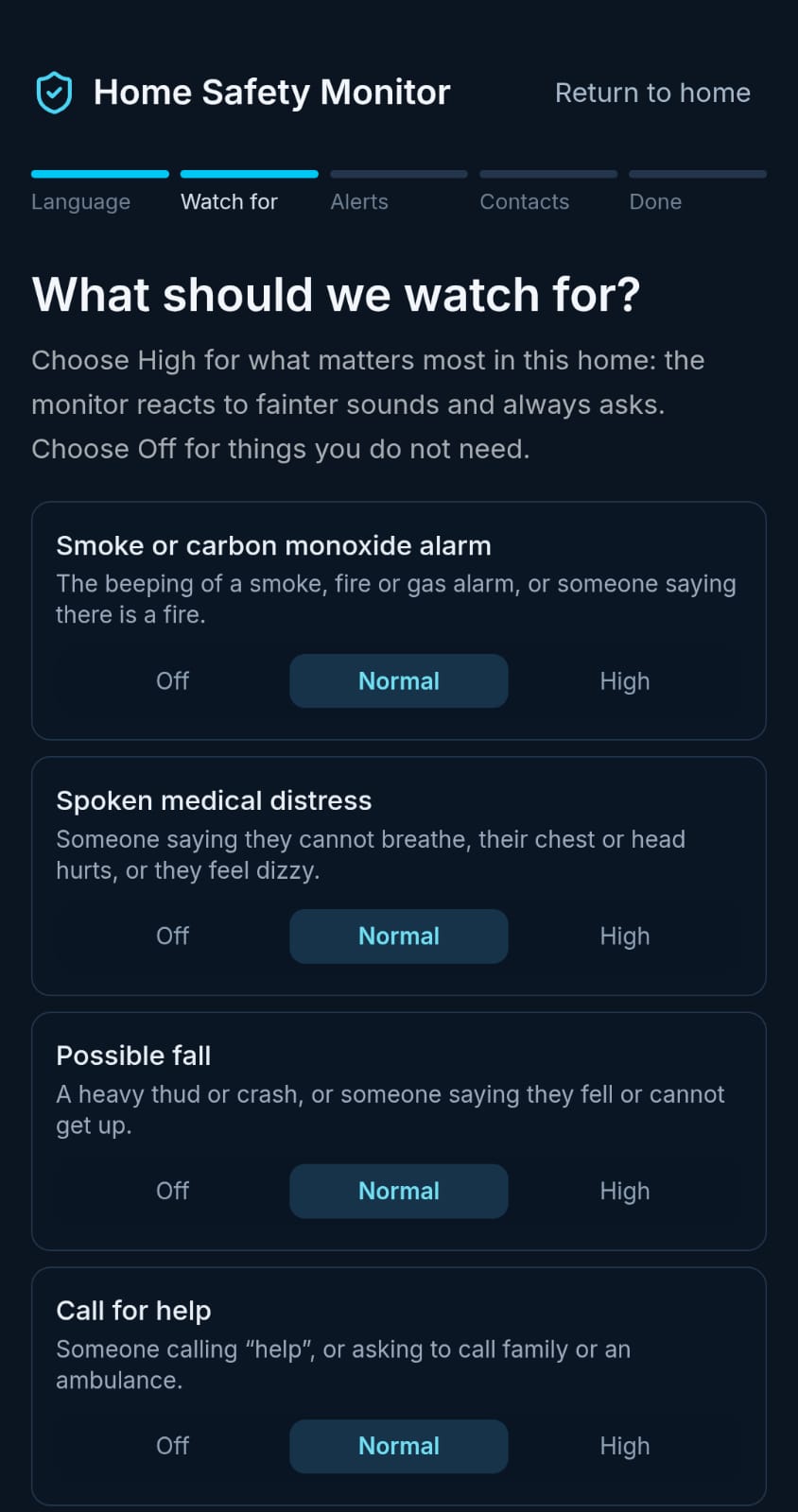
Home Safety Monitor – Emergency Detection Preferences
-
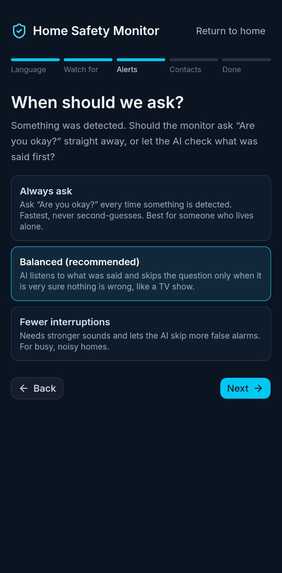
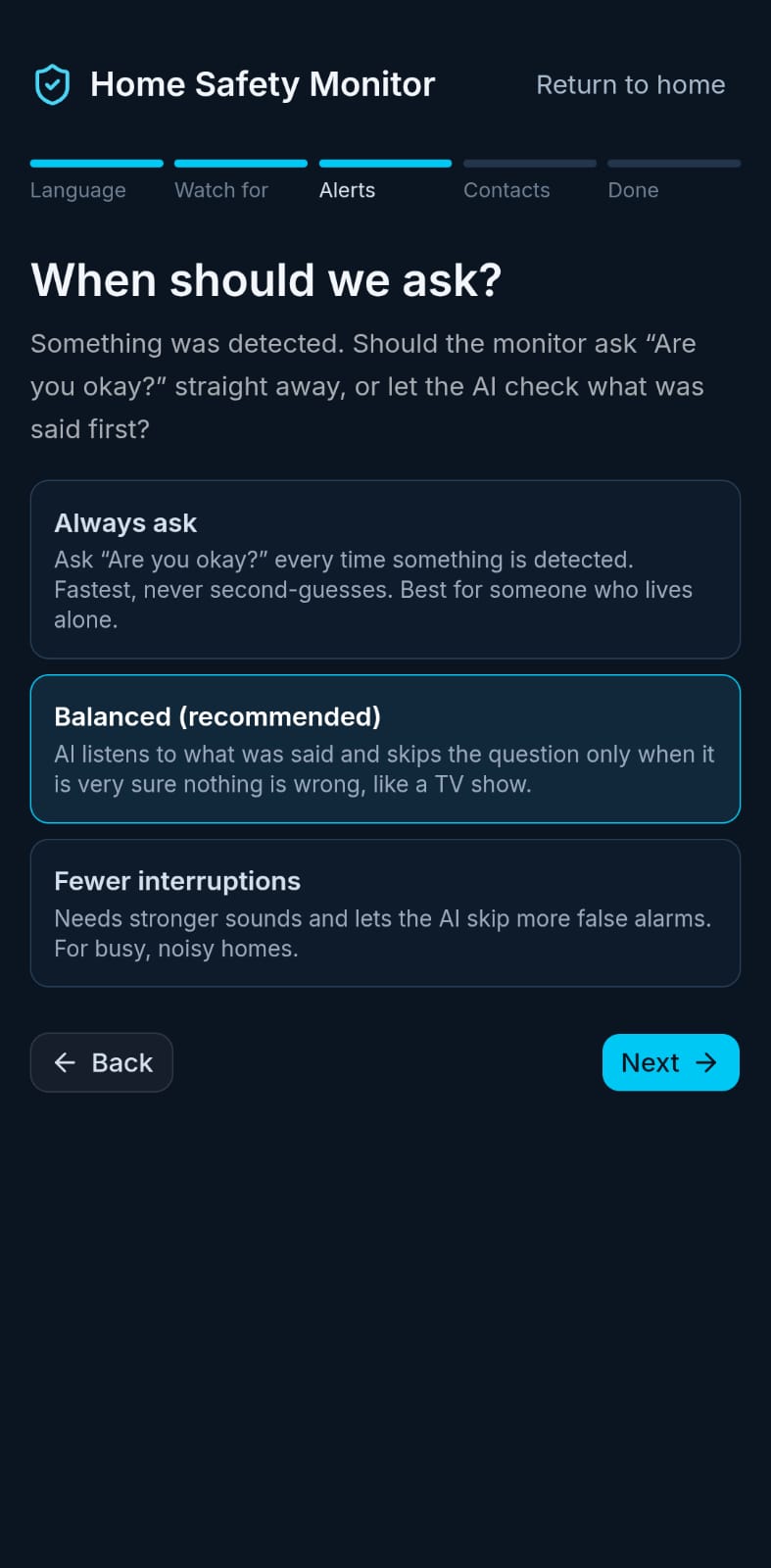
Home Safety Monitor – Customizable Emergency Response Settings
-
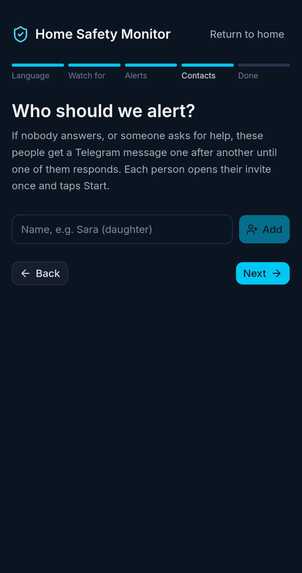
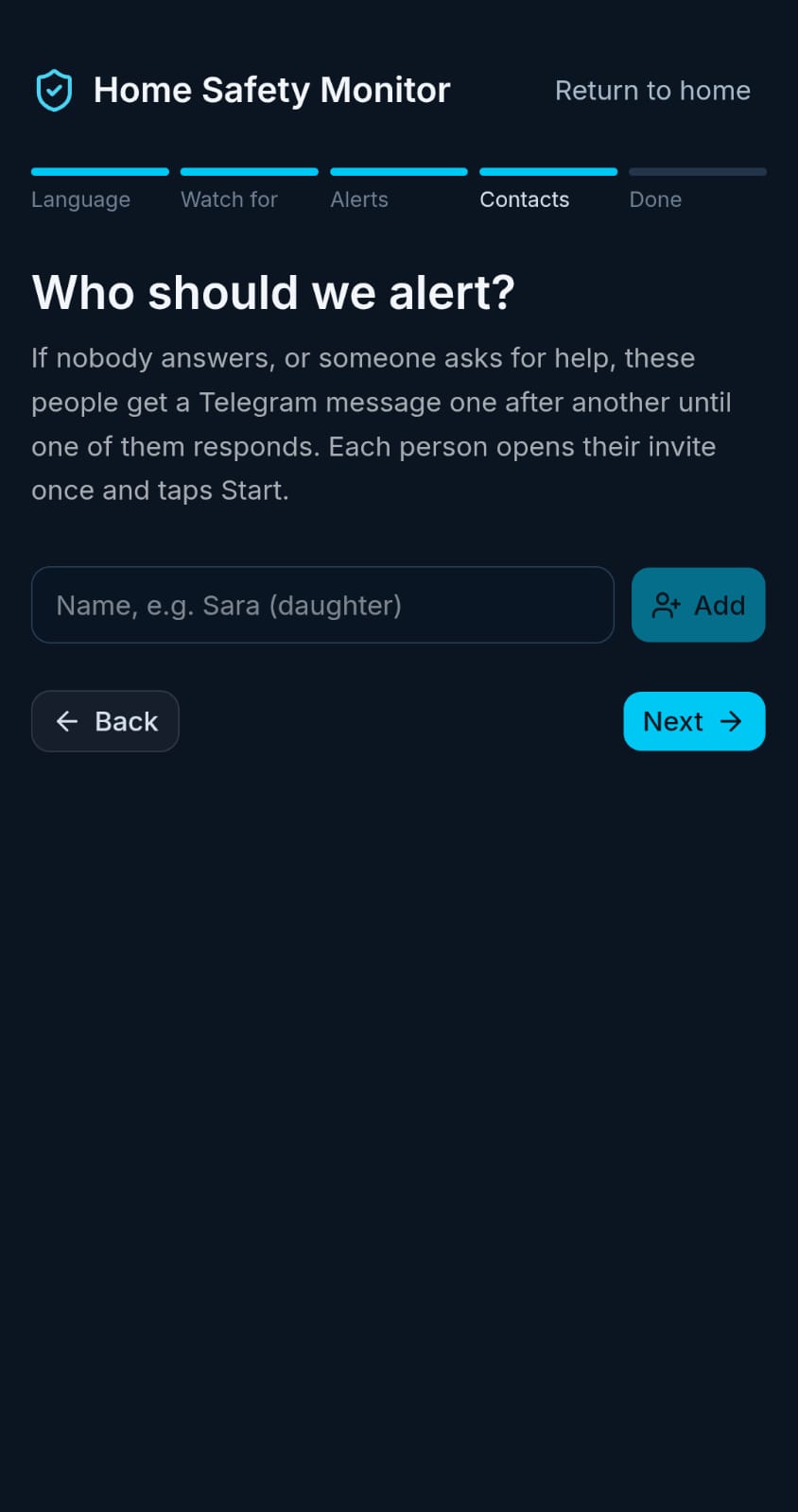
Home Safety Monitor – Trusted Contact Setup & Emergency Alerts
-
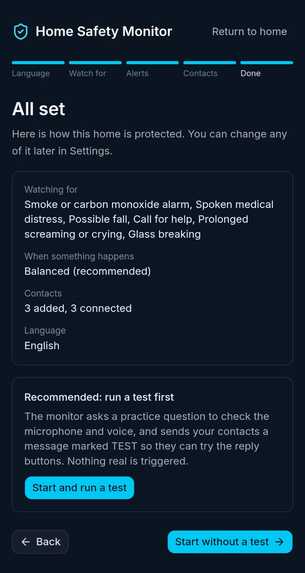
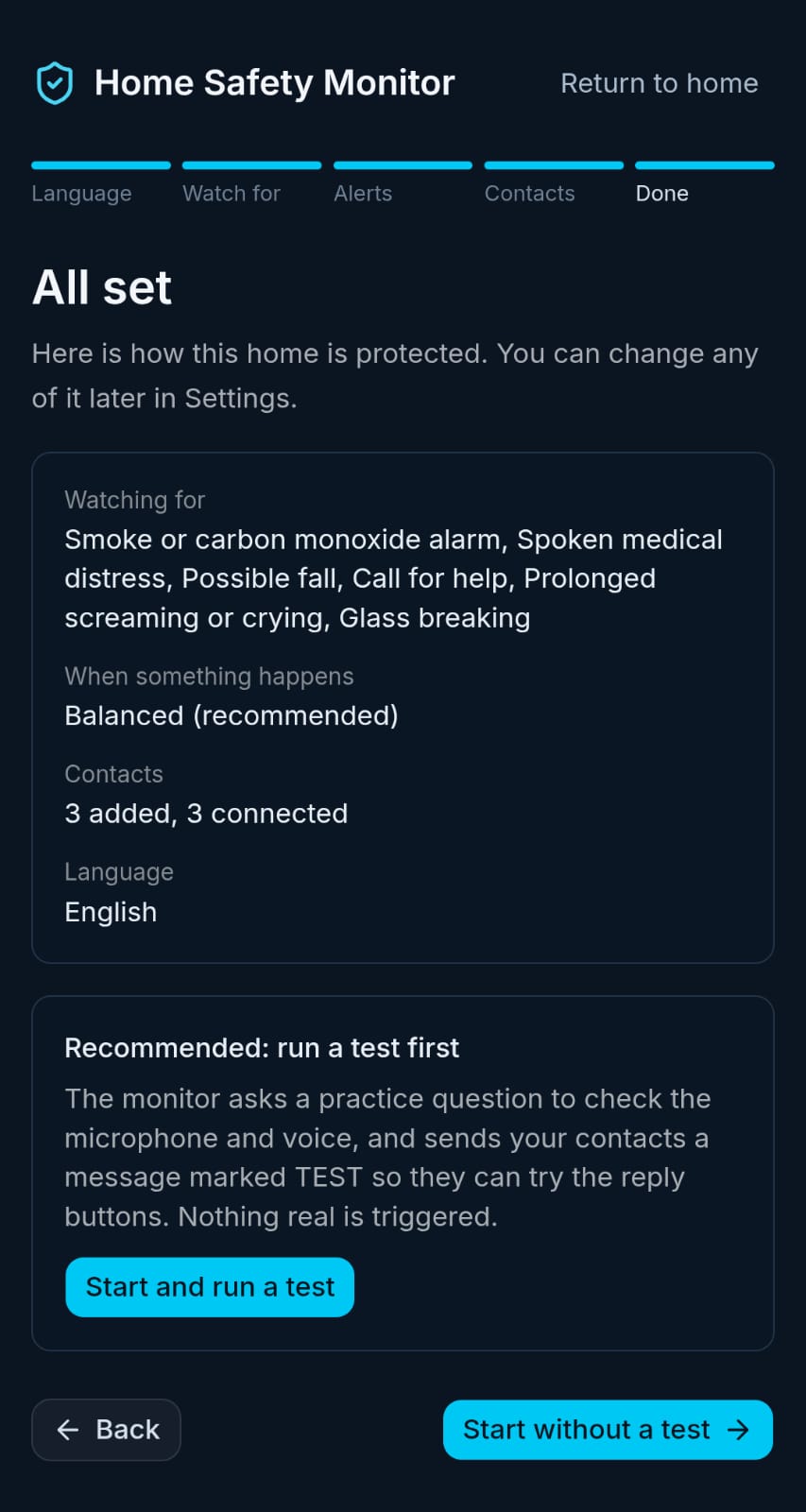
Home Safety Monitor – Setup Complete & Safety Overview

Inspiration
A safer home, even when you're home alone.
Every year, millions of people experience falls that can lead to serious injuries. The statistics highlight just how widespread this problem is:
- Over 14 million older Americans report falling each year, according to the Centers for Disease Control and Prevention (CDC).
- 51% of fall-related hospital admissions among adults aged 65 and older in Cheshire West and Chester, England, were recorded as occurring at home in 2021–2022.
- Nearly 2 million American children aged 0–19 were treated in emergency departments for unintentional fall-related injuries in 2023.
But behind these numbers lies an even more concerning question:
What happens when someone falls and there's nobody around to help?
Imagine an older adult living alone who suddenly falls and cannot reach their phone. Or someone who experiences an emergency at home while their family is away. In these situations, getting help quickly can be critical.
This inspired us to rethink the role of voice assistants in everyday life.
What if Alexa could do more than answer questions, play music, or control smart home devices? What if it could recognize a possible emergency, check whether you're okay, and alert someone you trust when you can't respond?
That's the idea behind Alexa Emergency System, a prototype exploring how voice-enabled technology could make homes safer by combining possible fall detection, interactive safety checks, voice-activated help requests, and automatic emergency notifications.
References
- CDC – Older Adult Falls Data
- Cheshire West and Chester – Falls Joint Strategic Needs Assessment, 2023
- UpToDate – Falls and Fall-Related Injuries in Children: Prevention
What it does
Alexa Emergency System transforms the concept of a traditional voice assistant into a proactive home safety experience, designed to help people during emergencies when they may be unable to ask for assistance.
Instead of relying entirely on someone to say "Alexa, call for help," our prototype demonstrates how a possible emergency could initiate a safety check and, when necessary, notify trusted contacts.
How the emergency response works
Our prototype demonstrates an interactive emergency response workflow:
- Possible emergency detected: A simulated fall event activates the emergency response system.
- Interactive safety check: The assistant asks, "It sounded like something fell. Are you okay? Say I'm fine, or say help."
- Safety confirmation: If the user responds with "I'm fine," the system recognizes the response and immediately cancels the emergency process.
- Voice-activated assistance: If the user says "Help," the system initiates the emergency notification process.
- Automatic emergency escalation: If the user remains unresponsive for 20 seconds, the system automatically sends an emergency notification to their designated trusted contact.
This workflow allows the system to respond to different situations, whether the user confirms they are safe, actively requests assistance, or cannot respond. By combining voice interaction with automatic escalation, the prototype demonstrates how emergency assistance could be initiated without requiring the user to reach for a phone.
Personalized home safety settings
Every household has different safety needs. That's why our prototype includes a guided setup experience that allows users to customize their preferences.
Emergency monitoring preferences: The setup interface allows users to select potential emergency categories, including possible falls, spoken medical distress, calls for help, smoke or carbon monoxide alarms, prolonged screaming or crying, and glass breaking. Each category offers adjustable sensitivity settings: Off, Normal, or High. These preferences demonstrate the broader monitoring capabilities envisioned for the system, while the current demonstration focuses on a simulated fall detection scenario.
Customizable response behavior: Users can choose how the assistant responds to potential emergencies through three settings:
- Always Ask: Initiates a safety check whenever a potential emergency is flagged.
- Balanced: Designed to consider context before initiating a safety check, reducing unnecessary interruptions.
- Fewer Interruptions: Designed for busier households where ordinary sounds could otherwise trigger frequent checks.
These settings demonstrate how a future AI-powered safety system could adapt to different environments and individual preferences.
Trusted contacts and emergency notifications
Users can configure trusted contacts who should receive notifications when an emergency requires attention.
The prototype's notification workflow incorporates Amazon Simple Notification Service (SNS) for automated email alerts. The interface also includes Telegram-based contact notifications, designed to support communication with designated contacts.
By connecting a possible emergency to a notification workflow, the system aims to reduce the risk of someone remaining unnoticed after an incident.
Designed around accessibility and everyday use
The system is presented through a familiar, Alexa-inspired interface with voice and text interaction options.
Its setup experience also includes language selection, allowing users to choose between English and Arabic in the interface.
Most importantly, our approach explores home safety without requiring users to continuously wear a device or operate specialized equipment.
Alexa Emergency System is currently a web-based prototype, not a deployed Alexa skill or a certified emergency detection service. Fall detection is simulated for the demonstration, while the broader audio-based detection capabilities represent the direction of future development.
Our goal is to demonstrate how proactive safety checks, personalization, and trusted-contact communication could work together to make everyday technology more useful when someone needs help.
How we built it
We began by conducting extensive research into home emergencies, audio-based detection technologies, and the capabilities of Alexa+. Our research focused on identifying potential emergency scenarios, understanding how AI could recognize unusual sounds and vocal distress, and evaluating the feasibility of implementing these features within Amazon's ecosystem.
Based on our findings, we developed an emergency response workflow centered on detecting a possible emergency, verifying the user's safety through voice interaction, and notifying trusted contacts when assistance may be needed.
For development, we built a web-based prototype using Next.js, TypeScript, and shadcn/ui to create an interactive, Alexa-inspired interface. We integrated Supabase and SQL for database management and Amazon Simple Notification Service (SNS) to send automated email notifications when an emergency is triggered. The project also incorporates the Telegram API for trusted-contact notifications.
To test the emergency response workflow, we implemented a simulated fall detection trigger and developed the logic to handle different user responses. The prototype recognizes safety confirmations such as "I'm fine," processes requests for assistance such as "Help," and automatically initiates an emergency notification when no response is received within 20 seconds. We tested these scenarios to demonstrate how the system responds to different emergency situations.
Throughout development, we combined our research findings with technical implementation to create a prototype demonstrating how proactive emergency assistance could work within a future Alexa-powered home safety system.
Challenges we ran into
One of our main technical challenges was integrating different services and ensuring that emergency events triggered the appropriate notifications. Configuring Amazon SNS and connecting Supabase required testing and troubleshooting to establish communication between the system's components.
Beyond development, we encountered several challenges during our research. One of our biggest limitations was discovering that, although Alexa supports certain built-in sound detection features, its public developer tools do not provide the continuous microphone access needed to implement our proposed emergency detection system directly. This limitation led us to develop a web-based prototype that simulates fall detection while demonstrating a functional emergency response and notification workflow.
Another significant challenge was minimizing false alarms while maintaining timely emergency responses. Our research showed that everyday household sounds, such as dropping heavy objects, can resemble the sounds of a person falling. We therefore explored ways to balance detection sensitivity with reliability, incorporating repeated safety checks and customizable response settings into our prototype's design.
Ultimately, these challenges helped us better understand the technical and practical considerations involved in developing a proactive home safety system.
Accomplishments that we're proud of
One of our biggest accomplishments was transforming an ambitious idea into an interactive prototype that demonstrates how voice-enabled technology could assist people during emergencies at home. We're particularly proud of successfully implementing an interactive emergency response workflow that recognizes when users confirm their safety, responds to direct requests for help, and automatically sends emergency notifications when no response is received within 20 seconds. Beyond the technical implementation, we created a personalized home safety experience that allows users to customize monitoring preferences, response behavior, and emergency contacts. Our team also conducted extensive research into emergency detection technologies, false alarms, privacy considerations, and the limitations of existing voice assistants. By bringing together research, development, and design, we were able to turn our concept into a functional demonstration within the hackathon timeline. Most importantly, we're proud of developing a solution centered on a meaningful real-world problem: helping people receive assistance when they may be unable to ask for it.
What we learned
Throughout this project, we gained a deeper understanding of both the opportunities and challenges involved in developing AI-powered home safety solutions.
Designing the emergency response workflow also taught us the importance of accounting for different user reactions during an emergency. Some users may be able to confirm their safety, others may actively request help, while some may be unable to respond at all. This reinforced the importance of creating a system that can respond appropriately to each situation.
Our research taught us that detecting a possible emergency is only part of the challenge. A reliable system must also consider false alarms, user responsiveness, privacy, and the consequences of unnecessary or delayed notifications.
We also learned about the technical limitations of integrating proactive emergency detection with existing voice assistants. Although Alexa supports several sound-recognition capabilities, access to certain detection features is restricted for third-party developers. This encouraged us to explore alternative approaches and adapt our original concept into a web-based prototype.
From a development perspective, we gained practical experience integrating cloud services, managing data, and connecting different components of an emergency notification workflow.
Above all, we learned the importance of balancing innovation with feasibility. Building a safety-focused system requires more than introducing new features; it requires carefully considering how those features would behave in real-life situations.
What's next for Alexa Emergency System
Our vision for Alexa Emergency System extends far beyond sound recognition and fall detection. We aim to transform Alexa into a proactive home safety companion, capable of recognizing potential dangers, understanding their context, and responding appropriately to different emergency situations.
One of our next steps is to explore integrating additional smart-home sensors, such as motion detectors, presence sensors, door and window sensors, and smoke detectors. By combining information from multiple sources rather than relying on audio alone, we hope to improve detection accuracy, reduce false alarms, and provide a more comprehensive understanding of what is happening inside the home.
We also envision expanding the system to respond to a wider range of emergencies, including fires, medical distress, and potential home intrusions. For example, if connected sensors indicate a possible break-in, Alexa could initiate a safety response, notify trusted contacts, and potentially activate deterrent features such as playing barking sounds through connected speakers. These responses would be configurable according to the household's preferences and designed to avoid unnecessary escalation.
Ultimately, we want Alexa Emergency System to evolve beyond an assistant that simply responds to commands into an intelligent companion that can recognize when something may be wrong and take appropriate action, helping make homes safer and giving families greater peace of mind.
Built With
- amazon-sns
- nextjs
- shadcn
- sql
- supabase
- telegram-api
- typescript

Log in or sign up for Devpost to join the conversation.