Inspiration
inspiration - Aletheia was inspired by the structural imbalance we experienced firsthand in modern financial markets. As retail investors, we faced losses not simply due to poor judgement, but due to a lack of structured tools, integrated analysis, and institutional-grade frameworks for both long and short decision-making. While institutions operate with quantitative models, disciplined risk management, and cohesive research systems, retail participants are often left navigating fragmented data and narrative-driven noise. We realized the true edge in investing is not access to more information, but access to structured interpretation and risk-aware tools. Aletheia was built to bridge that gap - bringing hedge fund-inspired analytical discipline, sentiment intelligence, and factor-based portfolio construction into a single coherent system for everyday investors.
What it does
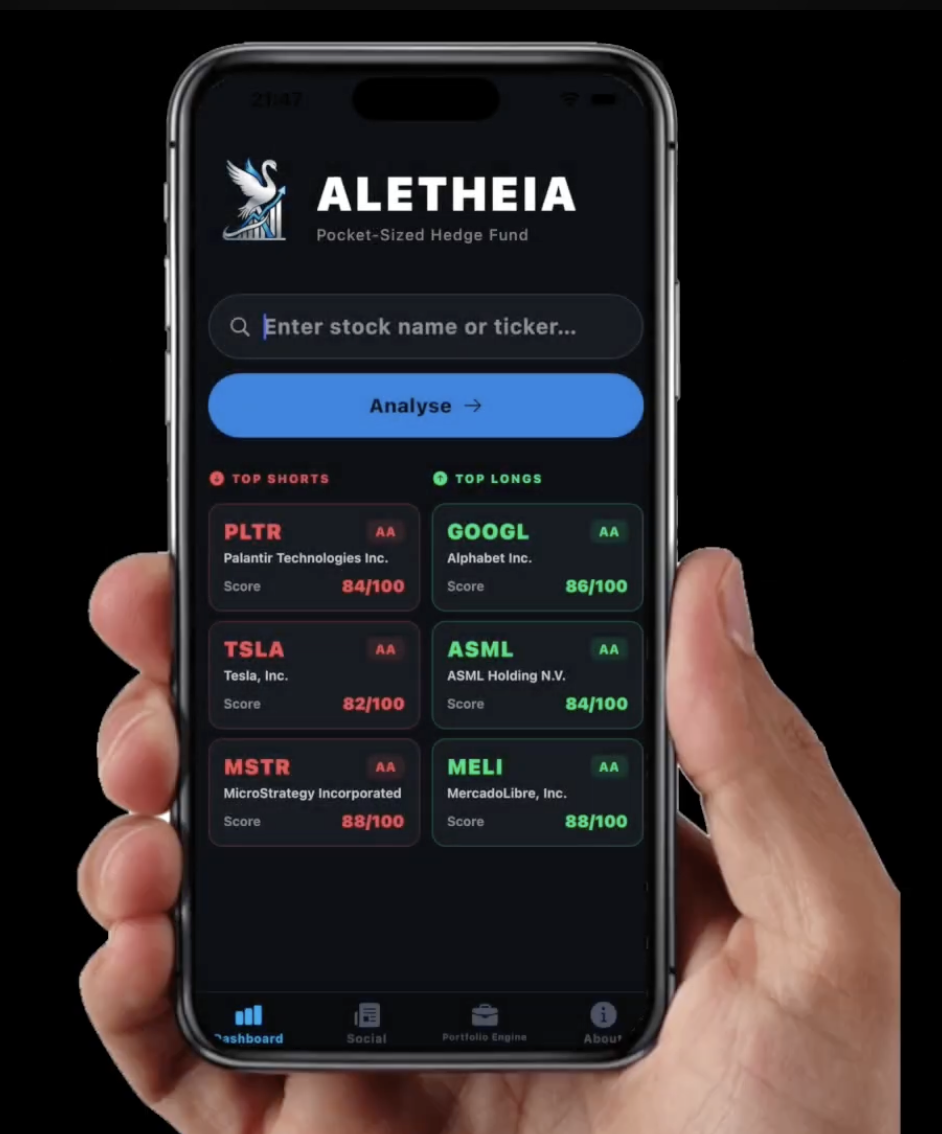
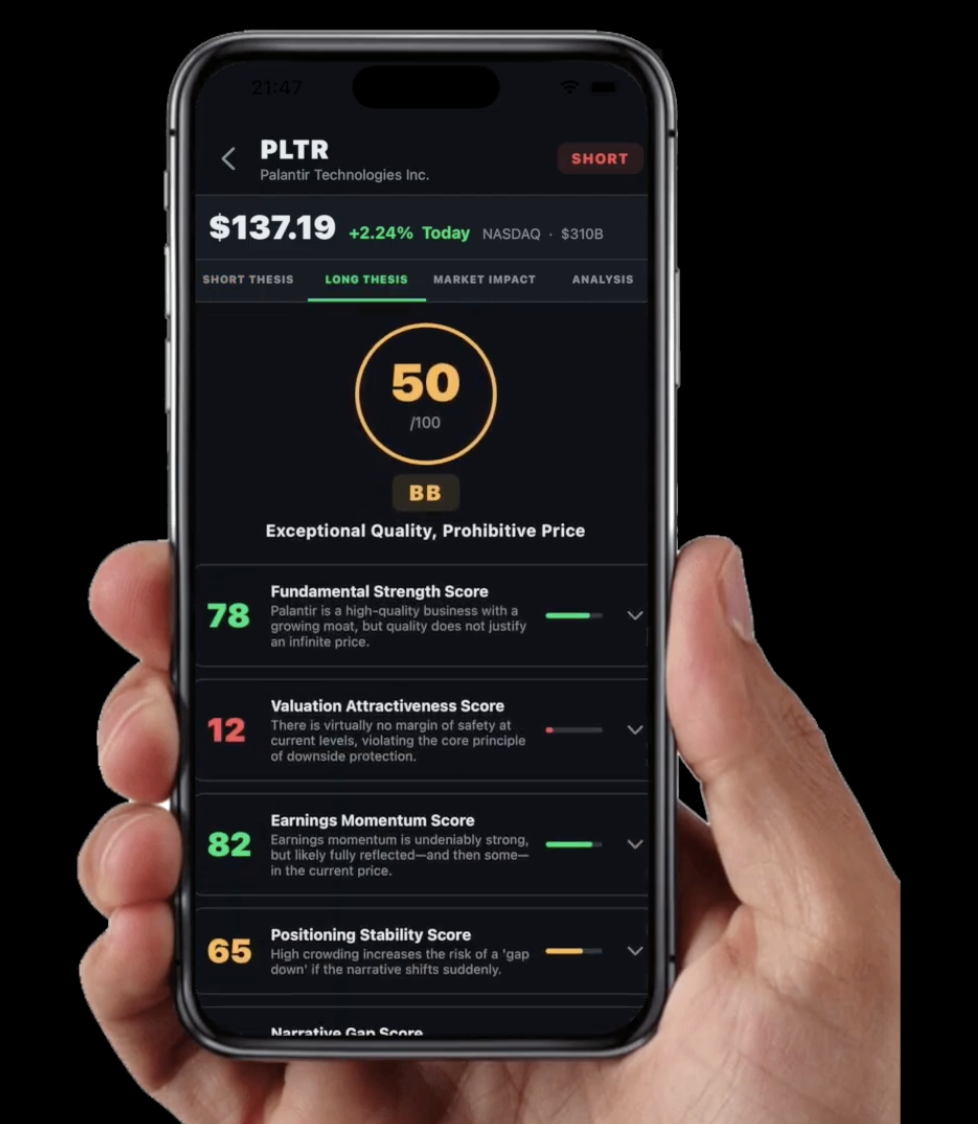
We present to you - Aletheia. A pocket-sized Hedge-Fund. Aletheia brings hedge-fund level research and recommendations to retail investors.
First, quantitative, strategic and calculated Long/Short (L/S) picks on each and every stock listed. Aletheia includes a huge number of carefully chosen statistical metrics (including but limited to; Earnings quality and revisions, Revenue and margin trends, Balance sheet strength, Valuation excess, Price momentum and positioning, Narrative intensity vs. fundamentals) taken from official sources like CapitalIQ/Yahoo finance/historical numbers, to calculate a final rating (AAA/AA/A) and a number (XX/100) which reflects the potential of the selected stock to be executed as a Long or a Short Trade, giving investors a perfectly calculated investment metric.
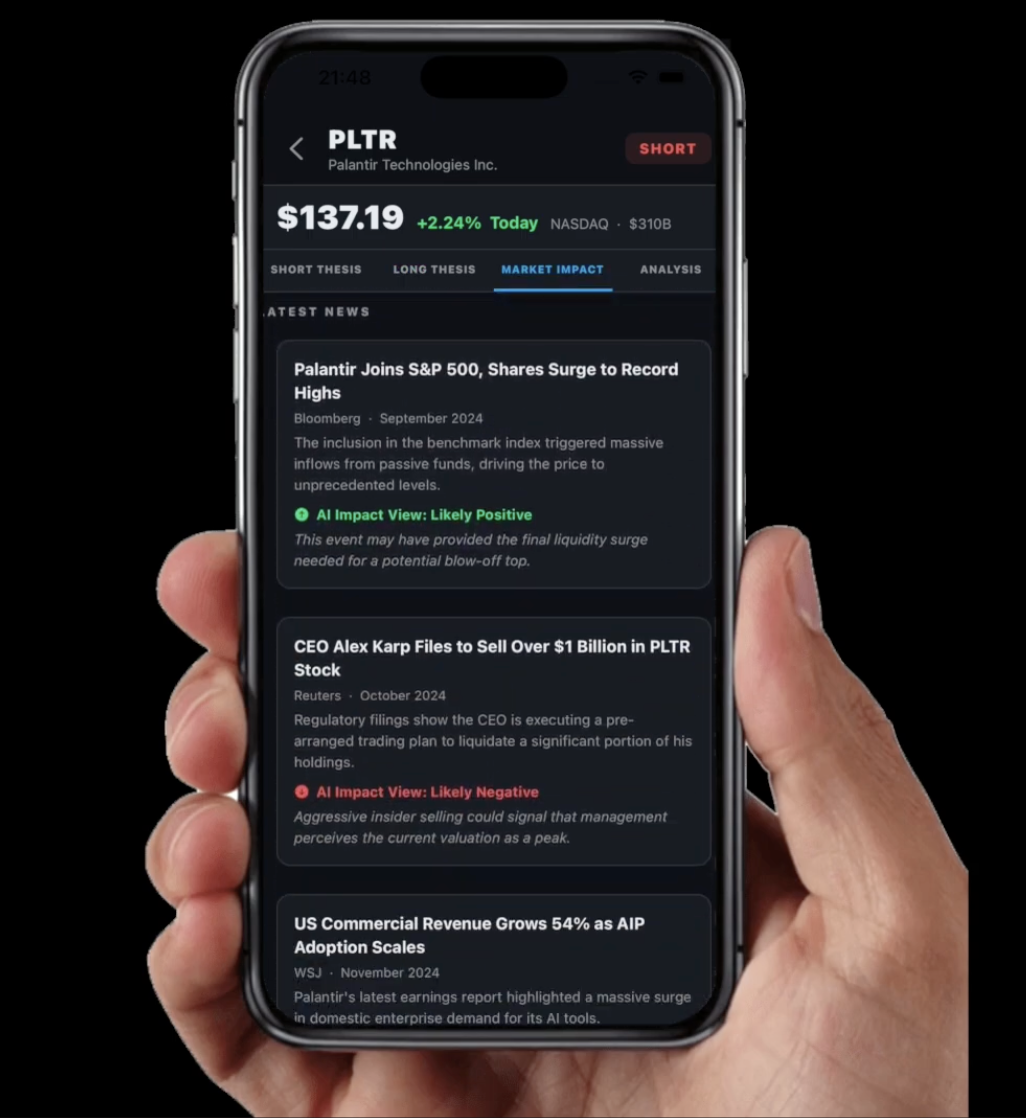
Secondly, we make market news efficient and evaluative - not just noise. Aletheia collates all prevailing market news (both stock specific and general) and additionally, reflects the impact of the news on the stock price (negatively impacted, positively impacted or neutral).
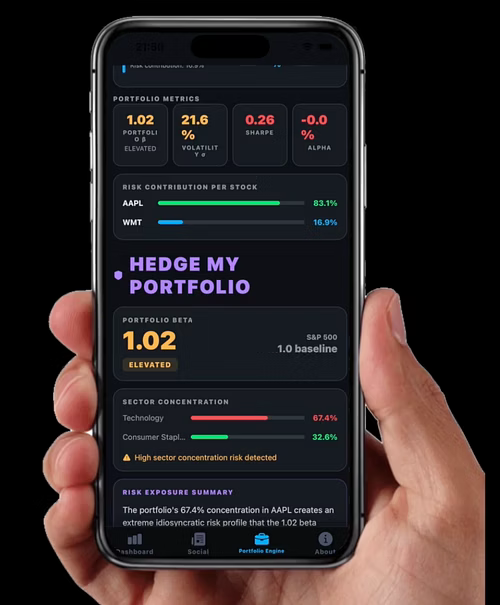
Not only this, Aletheia also captures the prevailing market sentiment analysis by scanning the ends of the internet, using Reddit and Twitter threads of investor discussions to create a sentiment analysis - differentiating hype vs. numbers. Furthermore, the Portfolio Engine. This feature, one-of-its-kind, allows users to choose the stocks within their portfolio and uses quantitative metrics to calculate and reflect your portfolio's sector concentration, Sharpe Value, Beta Value and Alpha Value, giving investors a calculated statistic of how risky their current portfolio is.
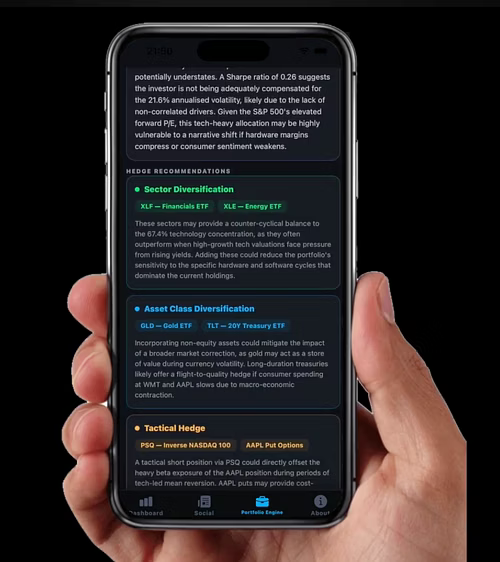
Building on this, Aletheia will now act as your Hedge Fund. After carefully studying your Beta Risk (portfolio risk), Aletheia provides calculated hedge investment recommendations to reduce risk and loss (examples include - Sector diversification suggestions, Defensive ETF exposure, Commodity allocations, V olatility or inverse instruments). Aletheia makes sure your profile is not one-sided and risky, but diverse and safe. Aletheia will make sure you are risk-aware and simultaneously also know how to hedge these risks. These one-of-a-kind services make Aletheia your own personal hedge-fund.
How we built it
We built ALETHEIA as a mobile first investing platform using Expo SDK 53 and TypeScript to maintain a single, reliable codebase across iOS and Android. The application is structured around file based navigation and a modular service layer that separates AI logic, market data, and portfolio analytics. Google Gemini 1.5 Flash powers the analytical engine, with two distinct modes: structured JSON outputs for stock analysis and portfolio recommendations, and plain text responses for the in app chat experience. All prompts are engineered around a disciplined, probabilistic investment philosophy and explicitly avoid deterministic language. Real time pricing and fundamentals are sourced from multiple Yahoo Finance endpoints with layered caching to reduce latency and API load. Portfolio risk is calculated through a factor based framework using beta, volatility, CAPM derived expected return, and marginal contribution to portfolio variance. For charting, we embedded TradingView through a WebView component rather than building a native charting engine, allowing us to provide institutional grade visuals without unnecessary complexity. Sentiment data is aggregated from the alternative.me Fear and Greed Index, Reddit’s public JSON feeds, and AI synthesised market narratives.
Challenges we ran into
The primary challenges were related to reliability, consistency, and mobile interaction design rather than model capability. Large AI responses were initially truncated due to token limits, which produced incomplete JSON and forced us to carefully profile and increase output ceilings. We also encountered score discrepancies between the dashboard and detailed stock pages because separate AI calls introduced natural variation. This was resolved through background pre warming and by passing explicit recommendation context when navigating between screens. Free market data endpoints required defensive engineering, including replacing unstable sources and implementing strict typing to handle missing fields correctly. On the interface side, embedded WebViews conflicted with native scroll behavior, and keyboard handling within nested layouts required careful adjustment to prevent input fields from being obscured. We ultimately refined gesture control, introduced lazy loading for heavy analysis modules, strengthened caching strategy, and tuned visual hierarchy to ensure clarity. The result is a system that balances probabilistic AI outputs with engineering discipline to maintain trust and usability.
What we learned
What we learnt - Through building Aletheia, we came to understand that the true challenge in investing is not access to information, but the ability to synthesize it with structure and discipline. Markets are shaped simultaneously by fundamentals, narrative momentum, sentiment cycles, and risk positioning - yet most retail tools treat these dimensions in isolation. We learnt that long/short decision-making requires a probabilistic framework, not conviction driven by headlines. We discovered that risk management is not defensive thinking, but strategic thinking; portfolio construction matters as much as stock selection. Most importantly, we realized that institutional advantage lies in structured interpretation, the systematic blending of data, qualitative judgement, and risk awareness. Aletheia reflects this lesson: investing is not about reacting faster, but thinking better.
Built With
- claude
- expo.io
- geminai
- javascript
- nextjs
- react
- typescript

Log in or sign up for Devpost to join the conversation.