-
-
Cover
-
Introduction
-
Index
-
Our Mission
-
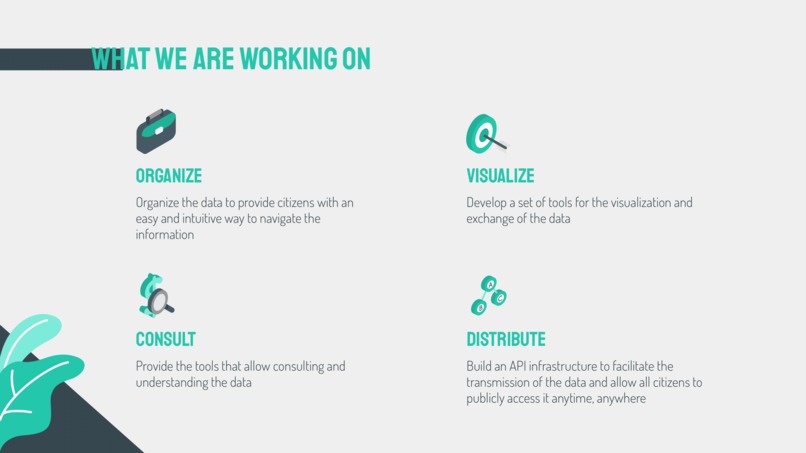
what we are working on
-
The Problem
-
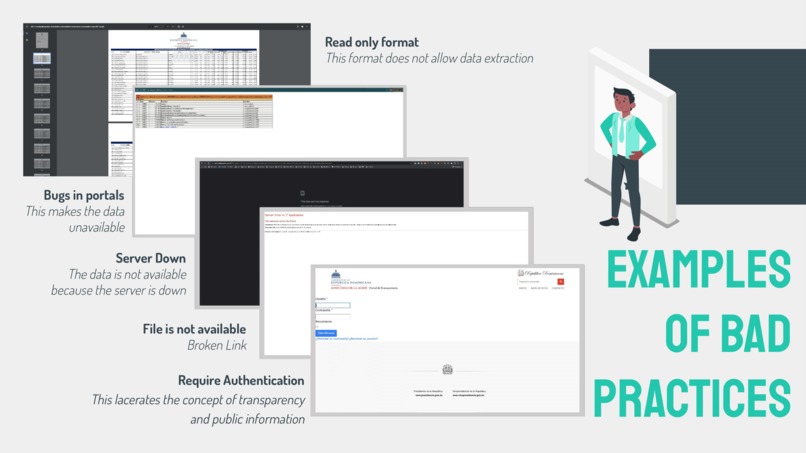
Example of bad practices
-
Lack of Standards
-
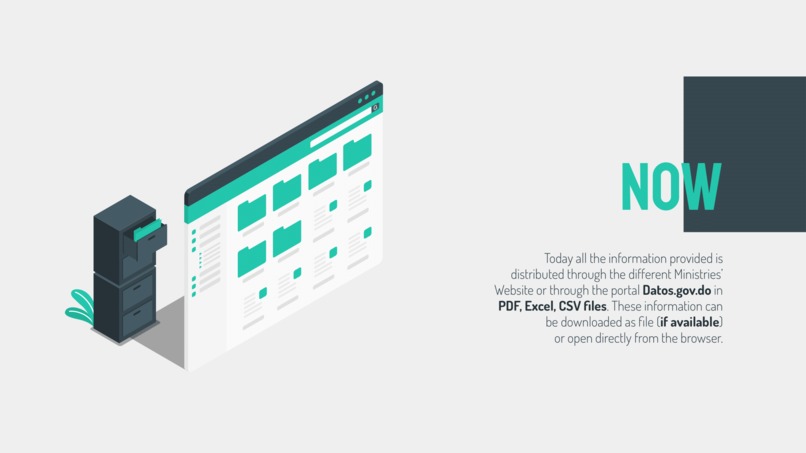
Now
-
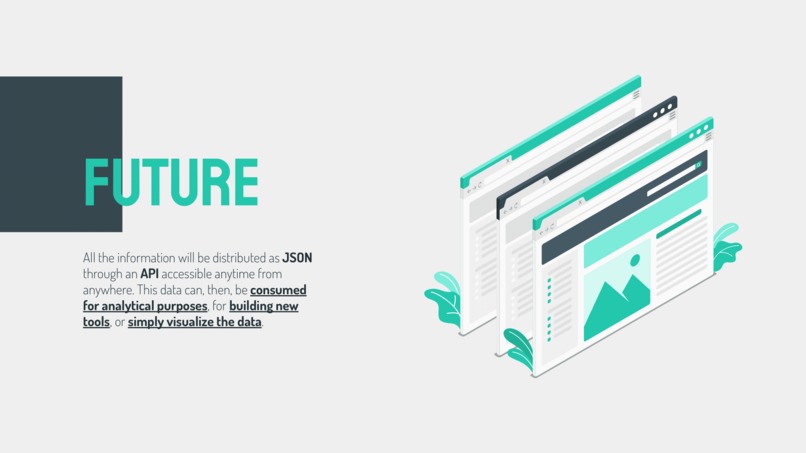
Future
-
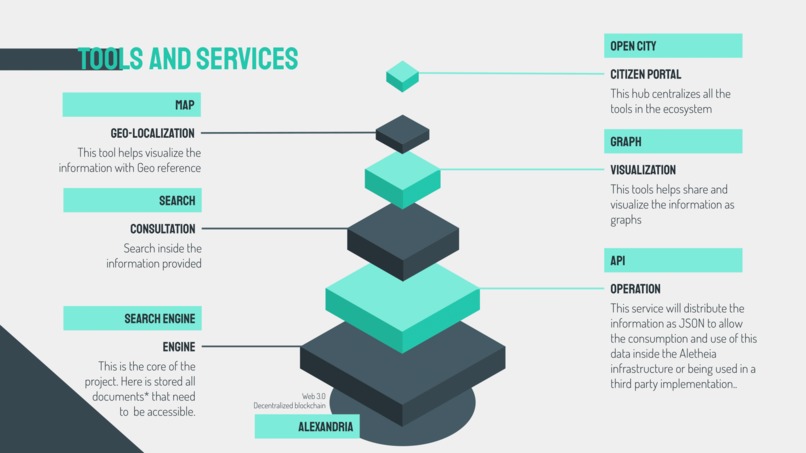
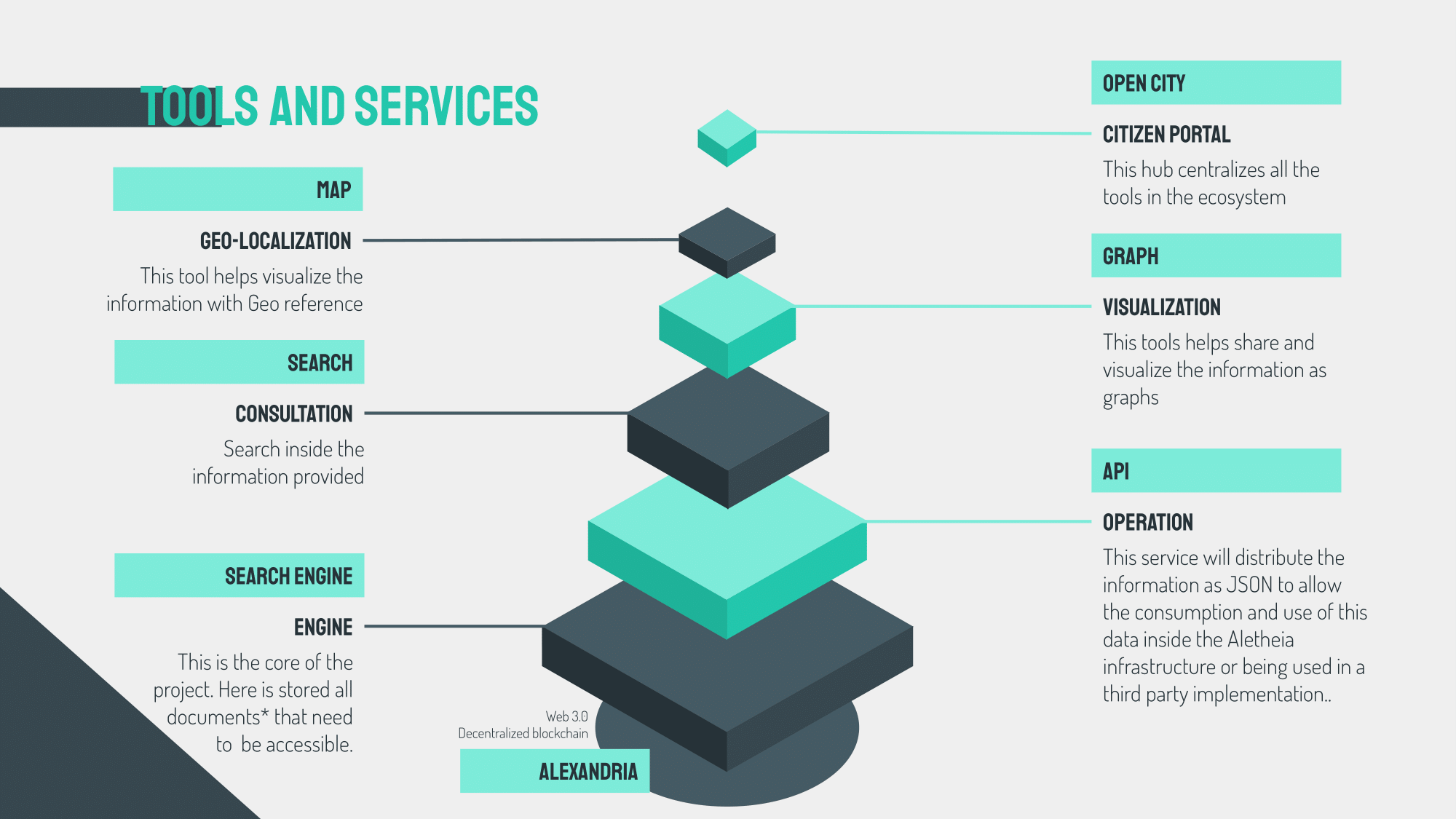
Tools and Services
-
Web3.0
-
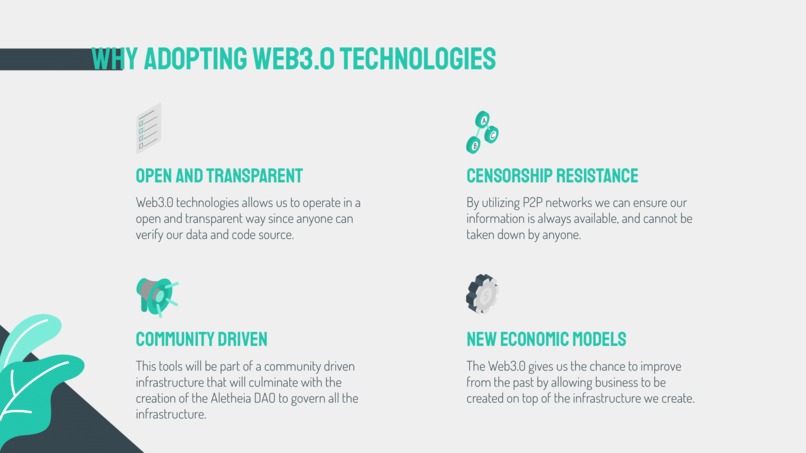
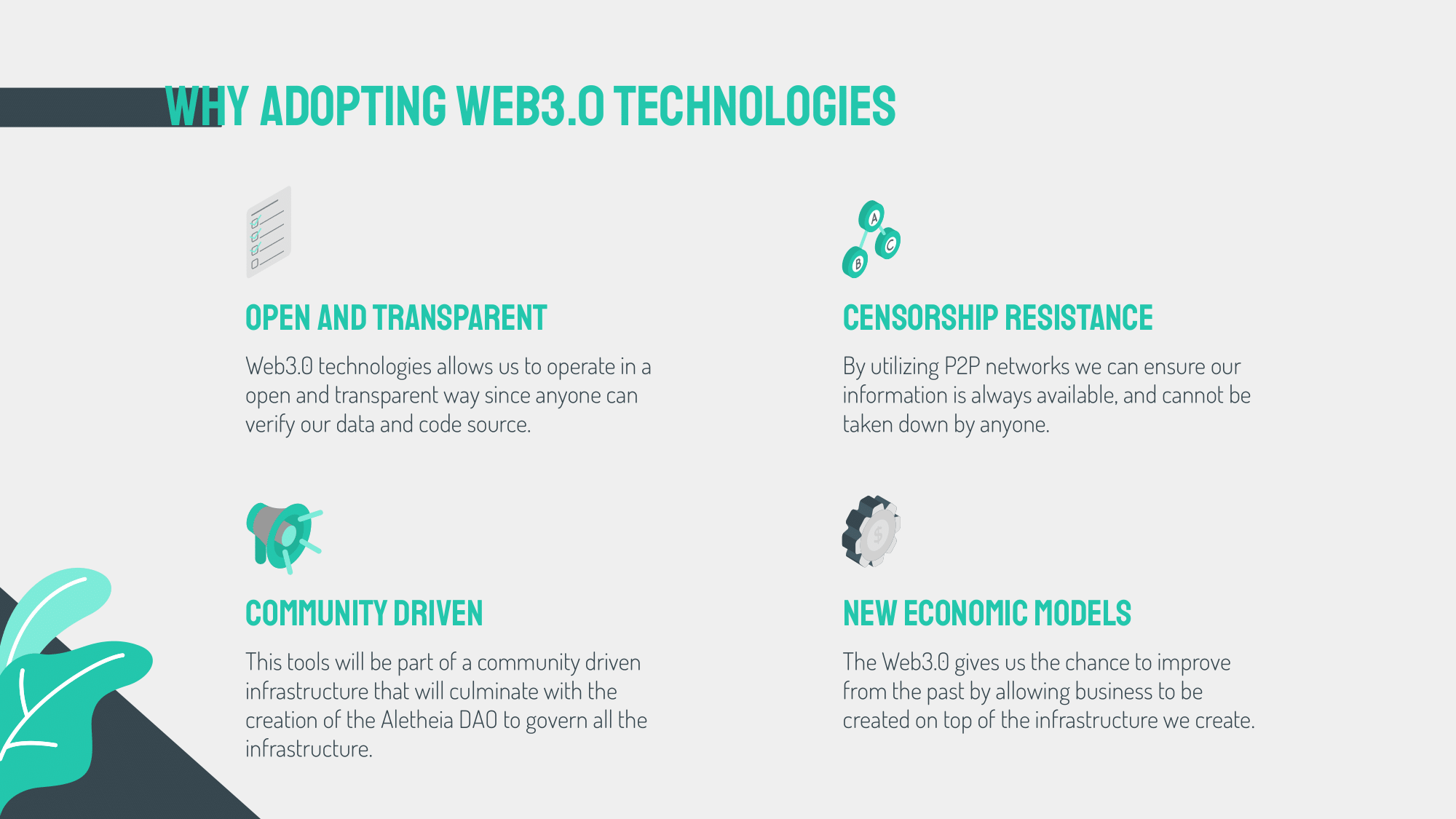
Why adopting Web3.0 Technologies
-
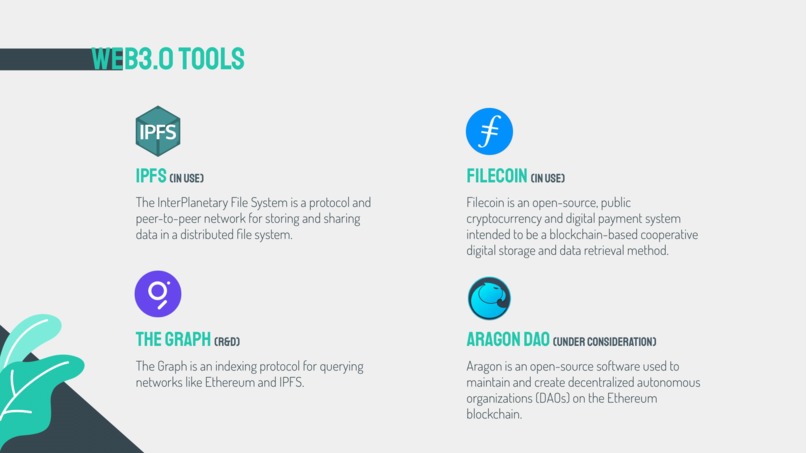
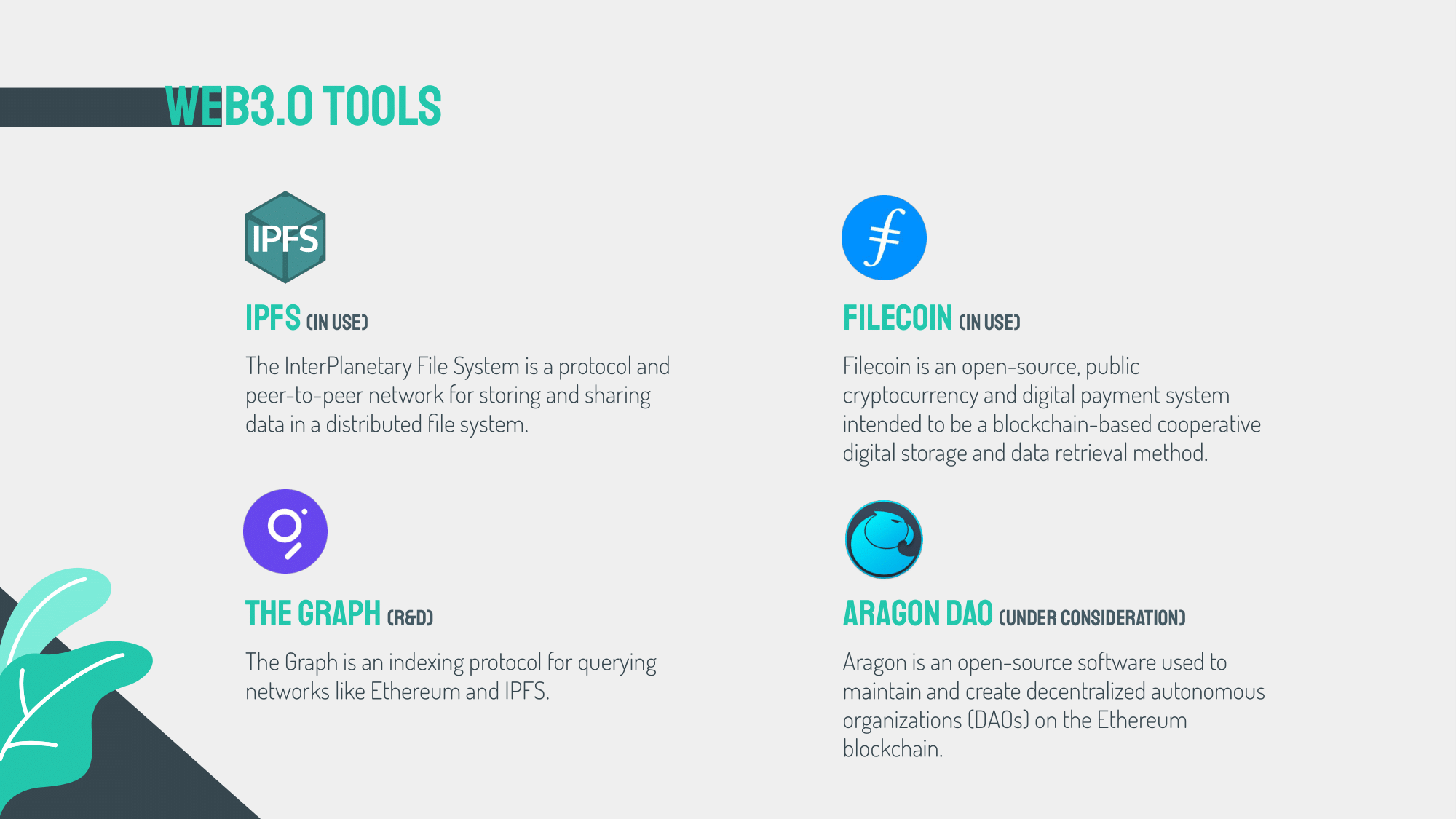
Web3.0 Tools
-
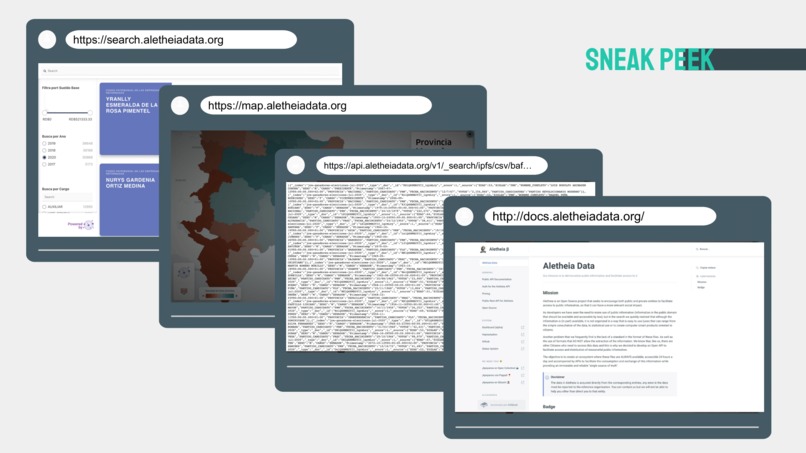
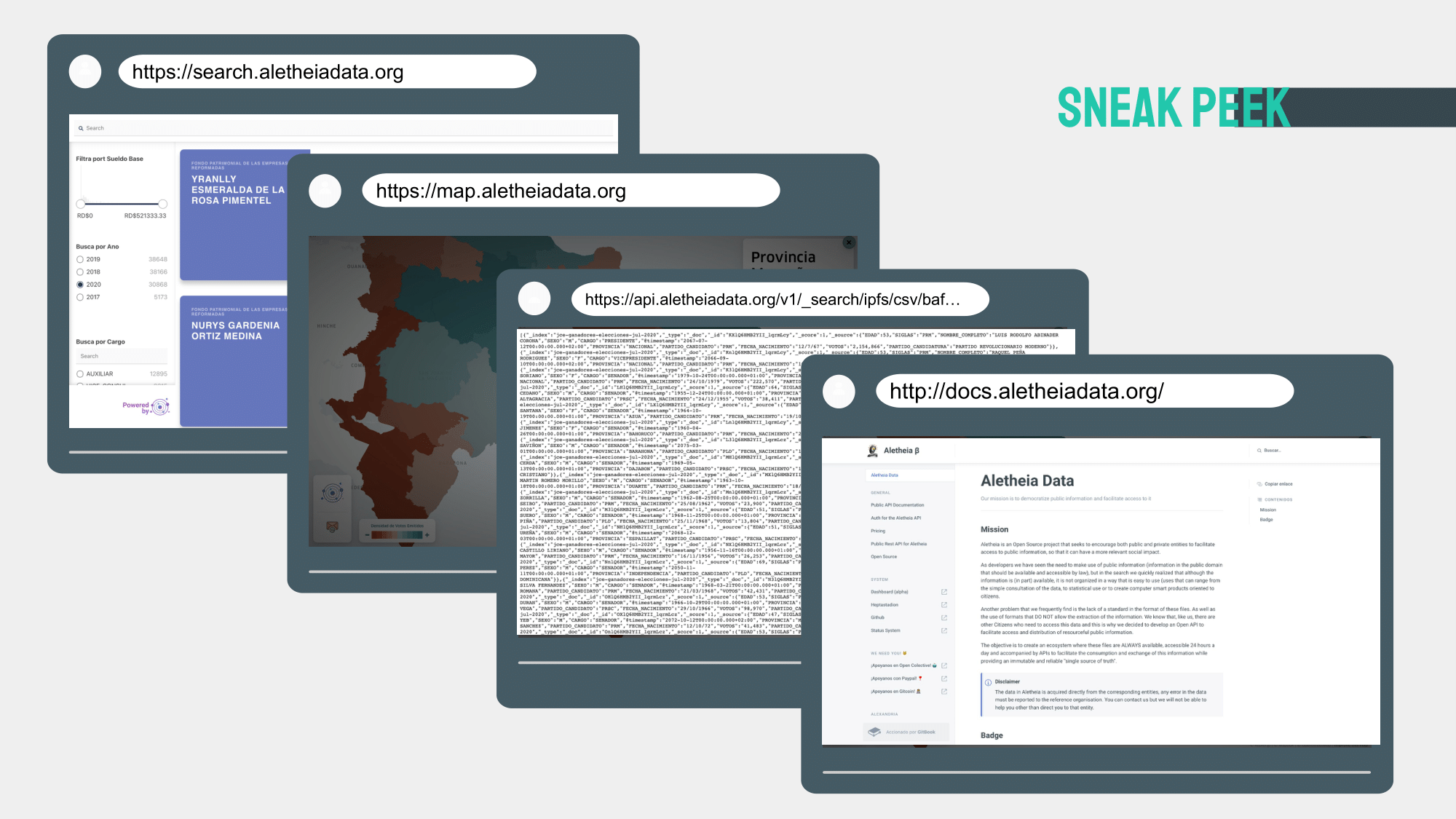
Sneak Peak
-
Thanks



What it does
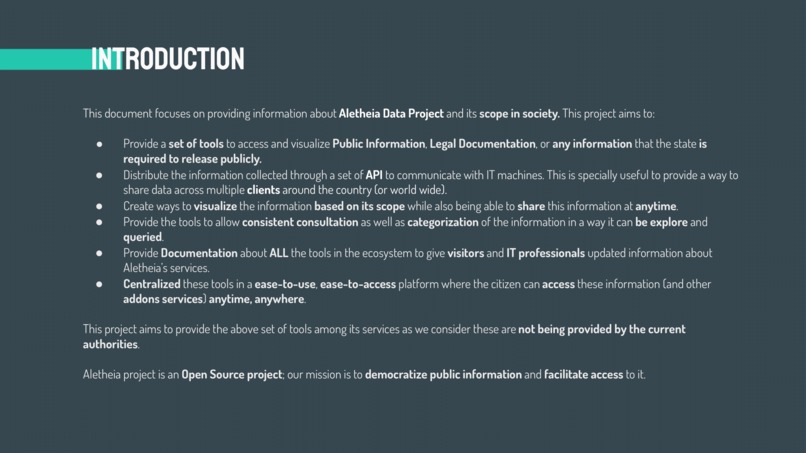
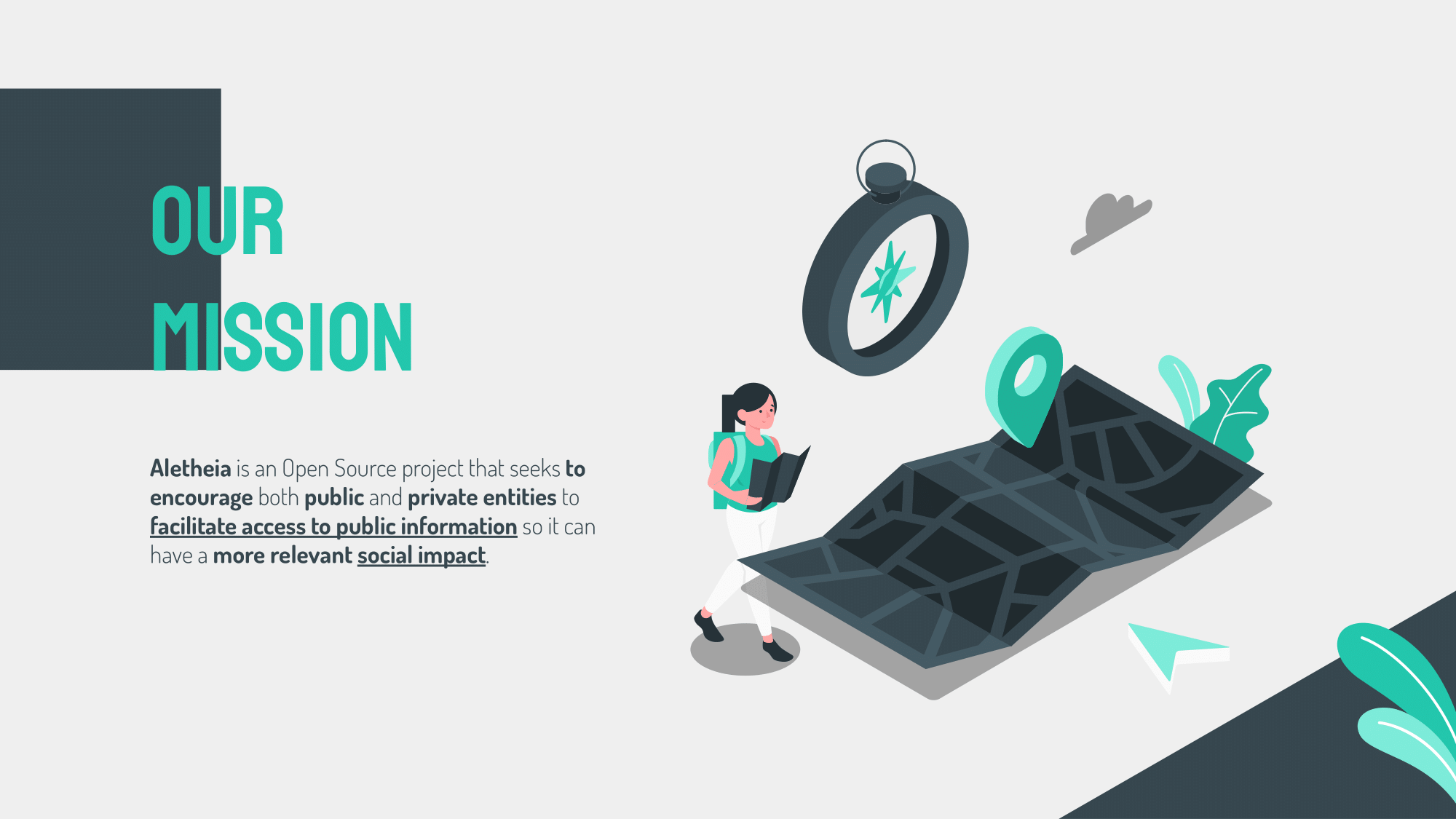
Aletheia is an Open Source project that seeks to encourage both public and private entities to facilitate access to public information, so that it can have a more relevant social impact.
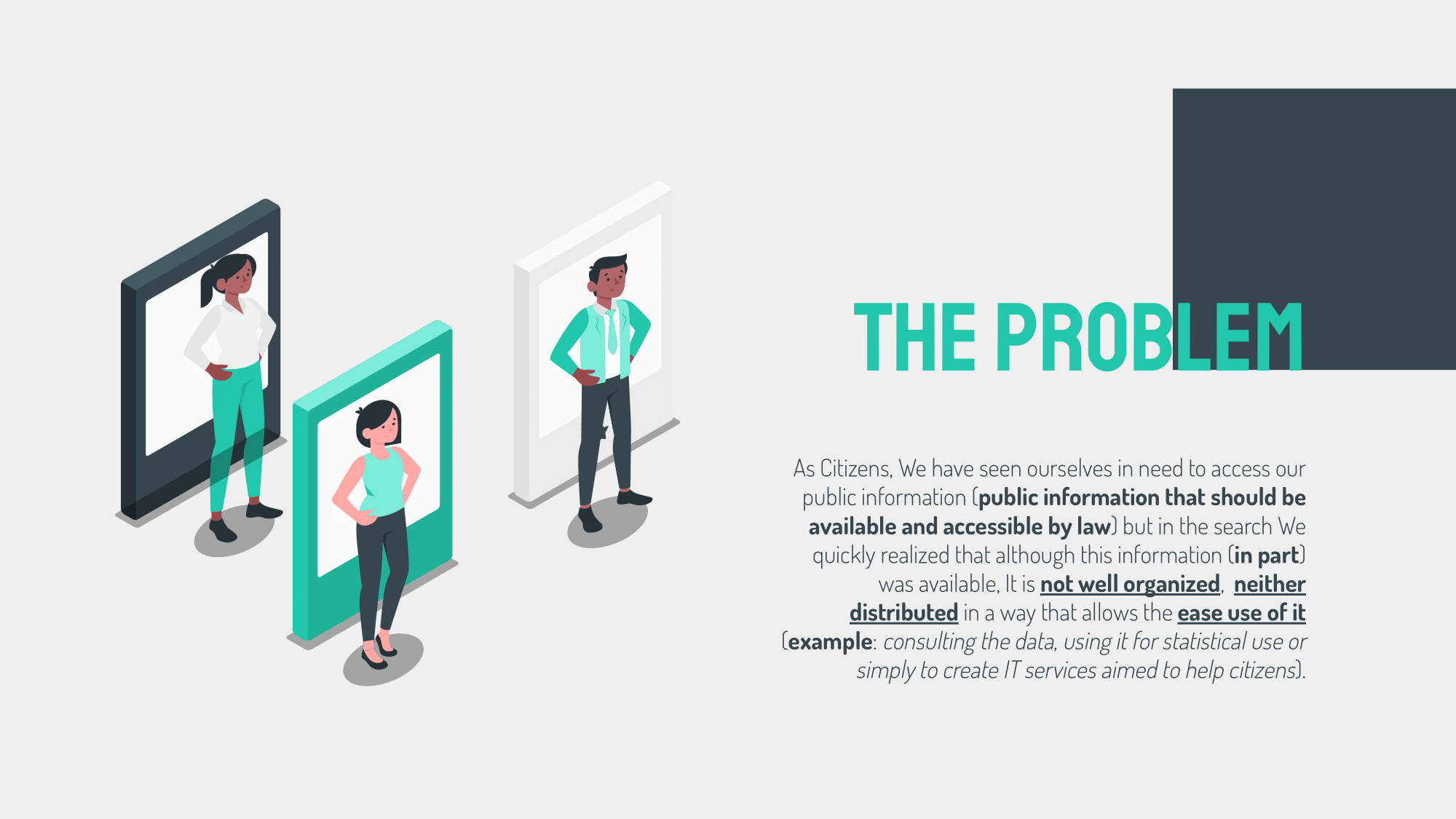
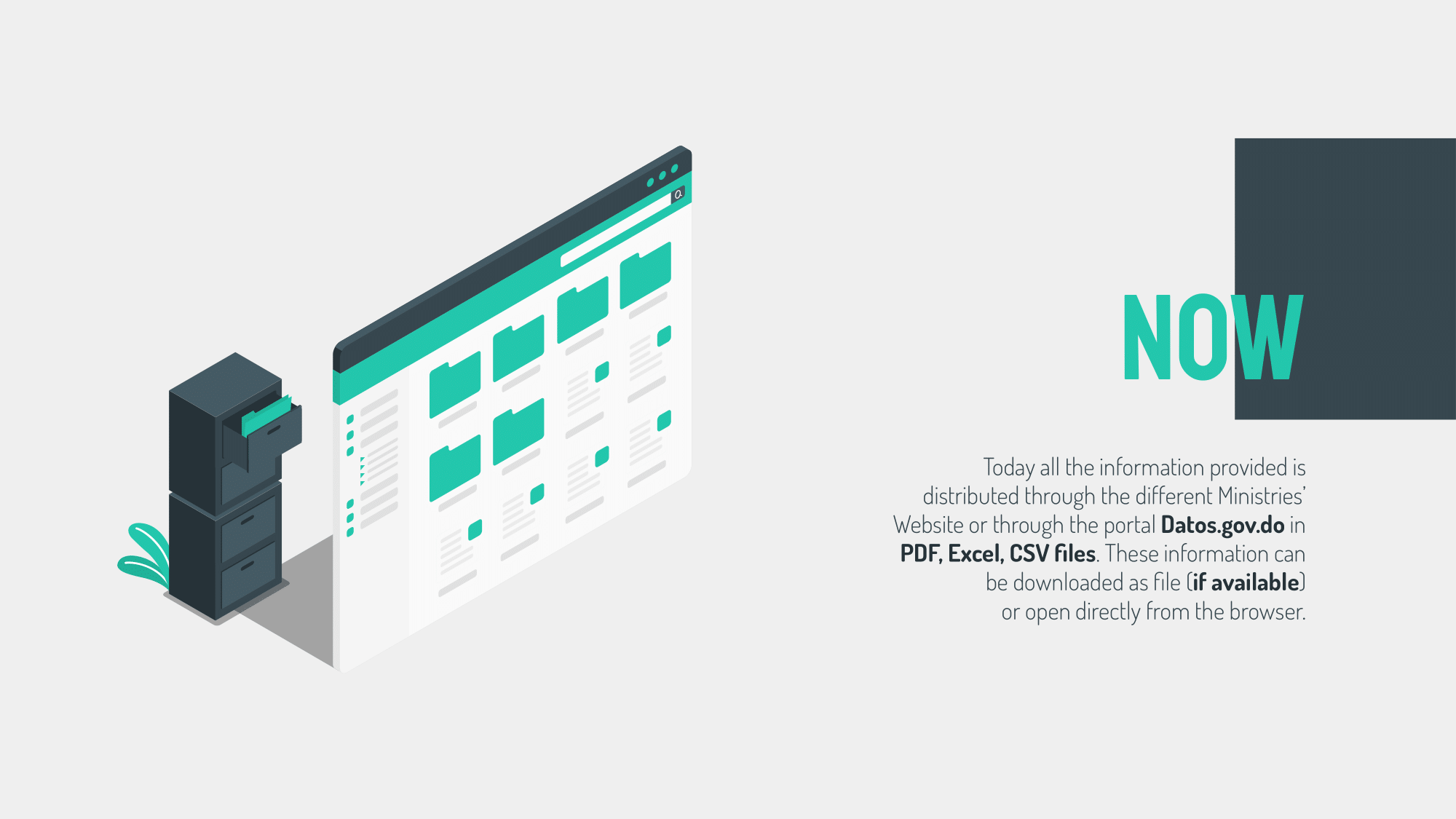
As developers we have seen the need to make use of public information (information in the public domain that should be available and accessible by law), but in the effort we quickly realised that although the information (in part) was available, it wasn't organised in a way that would allow easy access to it making very hard searching for public datasets. The society need data to thrive, we use data for uses that ranges from a simple consultation of the dataset, to statistical use or used in smart system oriented to citizens.
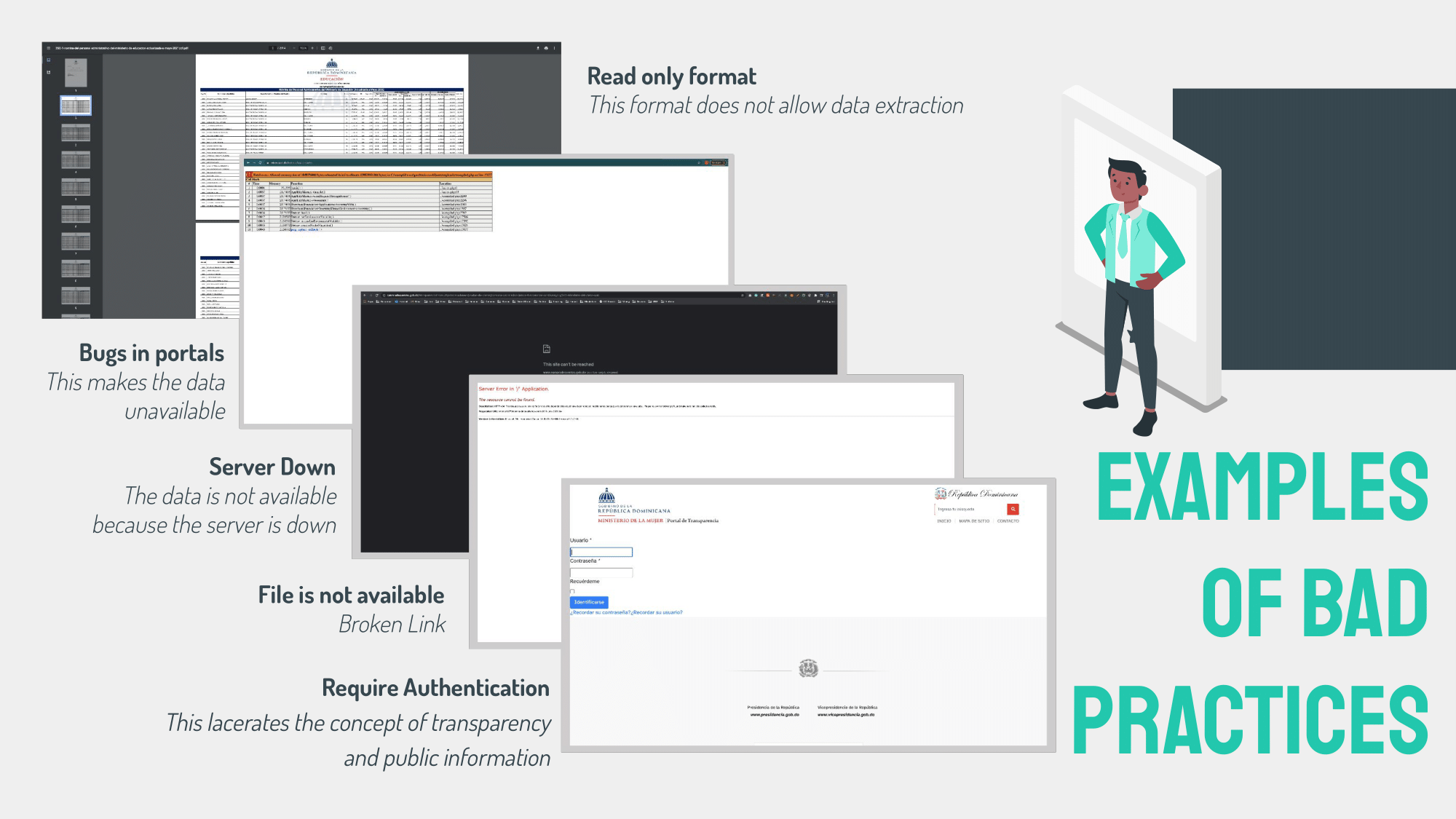
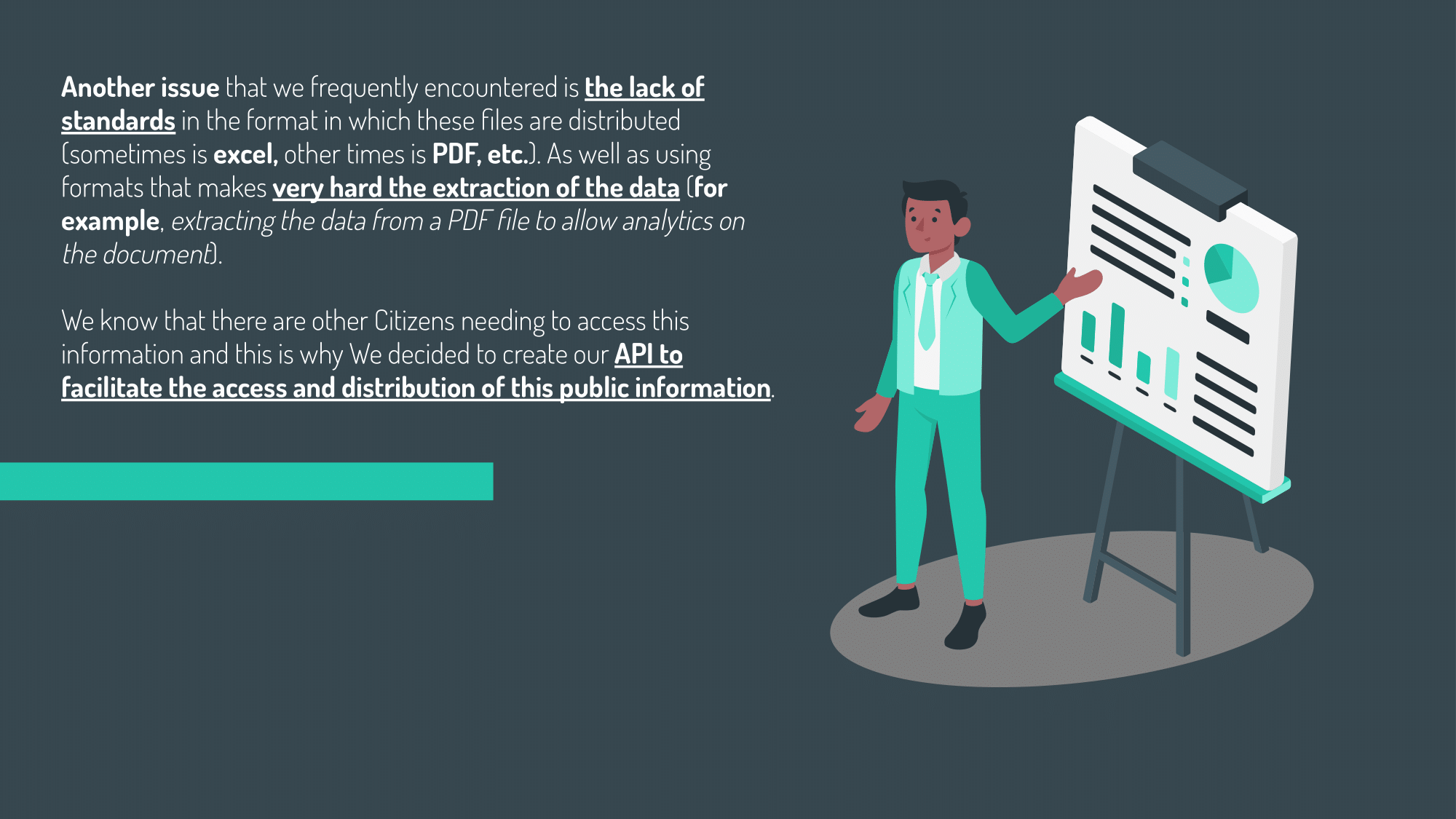
Another problem that we frequently find is the lack of standards in the format of these files. As well as the use of formats that DO NOT allow the extraction of the information. We know that, like us, there are other Citizens who need to access this data and this is why we decided to develop an Open API to facilitate access and distribution of resourceful public information with the help of distributed systems and blockchain technologies .
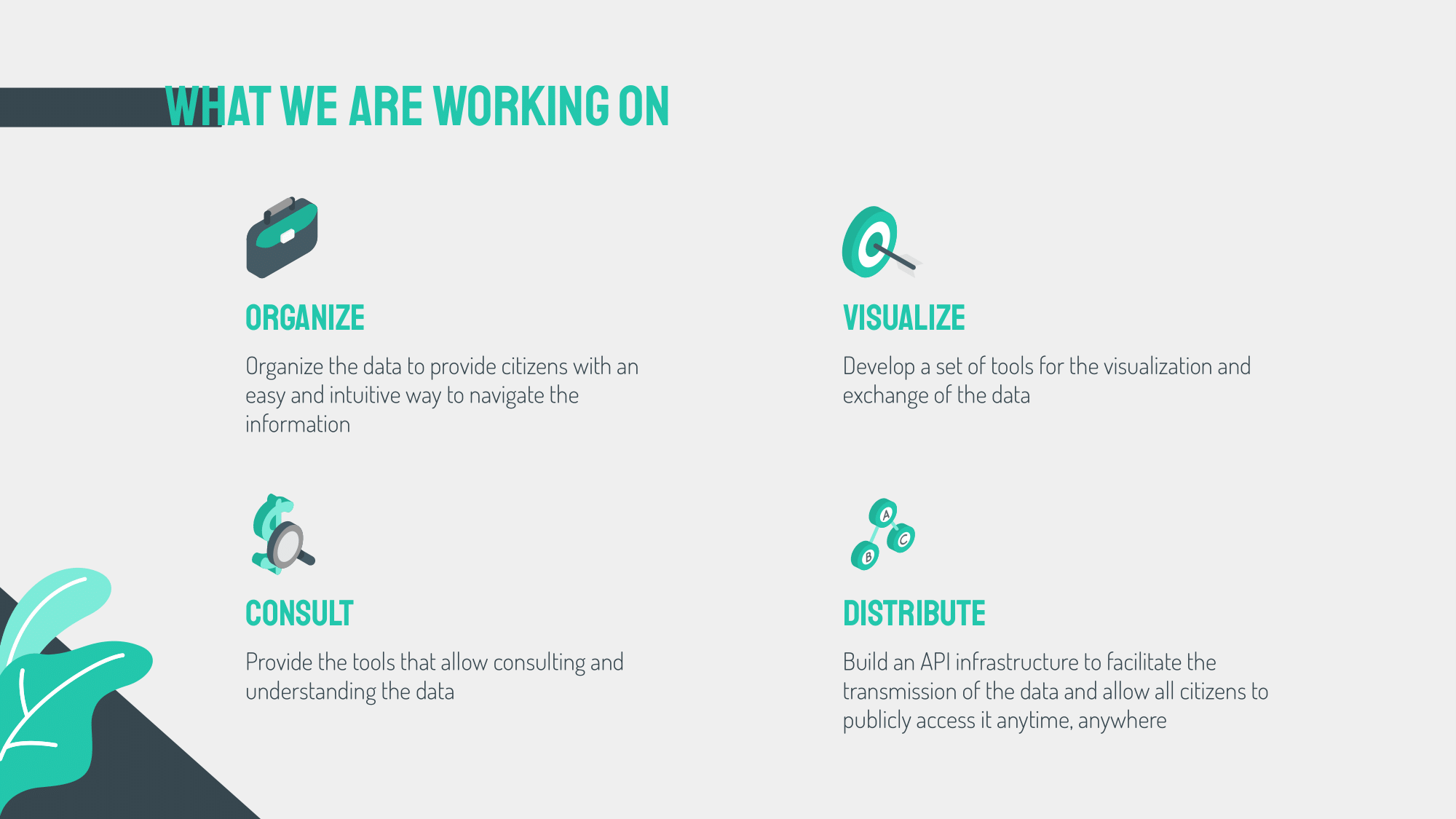
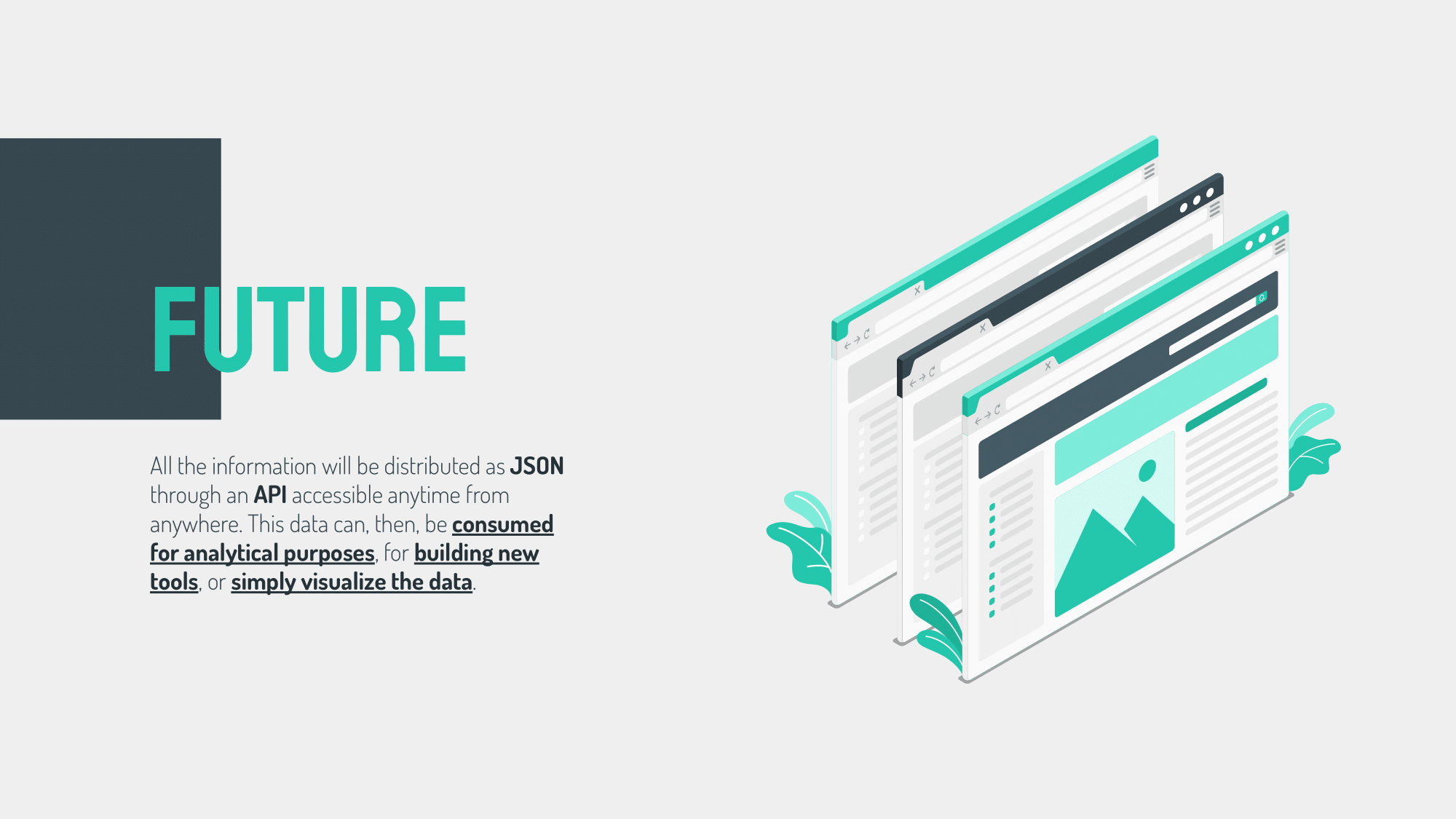
The objective is to create an ecosystem where these datasets are ALWAYS available, accessible 24 hours, and accompanied by APIs to facilitate consumption and exchange of information while providing an immutable and reliable "single source of truth".
How we built it
I been developing this solutions since 2018, trying news ideas and improving on what's been built. At first I found web2 solutions which were working, but I never felt confortable knowing that these public files were in AWS' servers or GCP's. It was until 2020 when I decided to pivot toward Web3 as I was learning about all the possibilities that this new tech offers. I began learning about distributed systems and how to make it work for what I'm trying to achieve with Aletheia. Now Aletheia is transitioning to a complete Web3 project, and we're migrating all our infrastructure to Web3 based technologies. We have leverage IPFS technologies to provide our users maximun security, censorship-resistant, and open datasets.
Challenges we ran into
Our main challenge was finding a reliable, open, and distributed data storage. As I mentioned, our first iterations were based on web2 tech like S3 and I never felt like it was truly part of the project. That's why we're changing all our to tech to Web3 based technologies.
Accomplishments that we're proud of
We've been awarded a Dev Grant from the Filecoin foundation which has allows to keep building our infrastructure and gives us a lot of energy knowing Aletheia has been recognised to have potential on helping our community.
What we learned
It's been an amazing journey, I learned that the Open source sector is incredible and needs more actors in the field, I learned that building technology products required a lot work and iterations, and I learned that growing requires time and hard work. That why we're growing into a small team of devs working in the project and plan to increase our head count soon.
What's next for Aletheia Data
Building, building, building. There's a lot of work to do, it just began. We want to created an ecosystem of utilities for the public to allow them to navigate through humanities' knowledge.


Log in or sign up for Devpost to join the conversation.