Inspiration
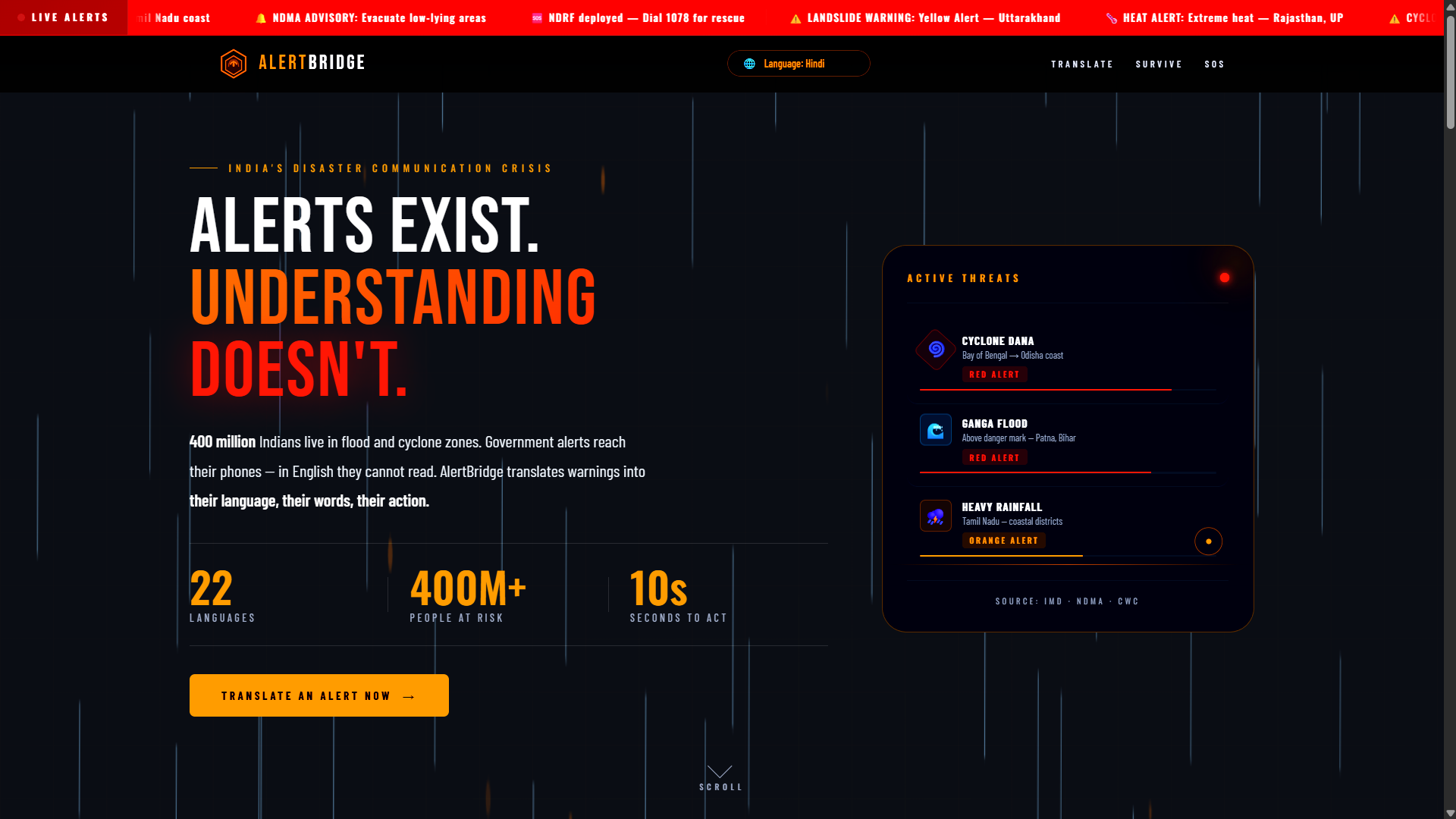
During extreme floods and cyclones in rural India, the tragic reality is that the early warning systems don't fail—the communication fails.
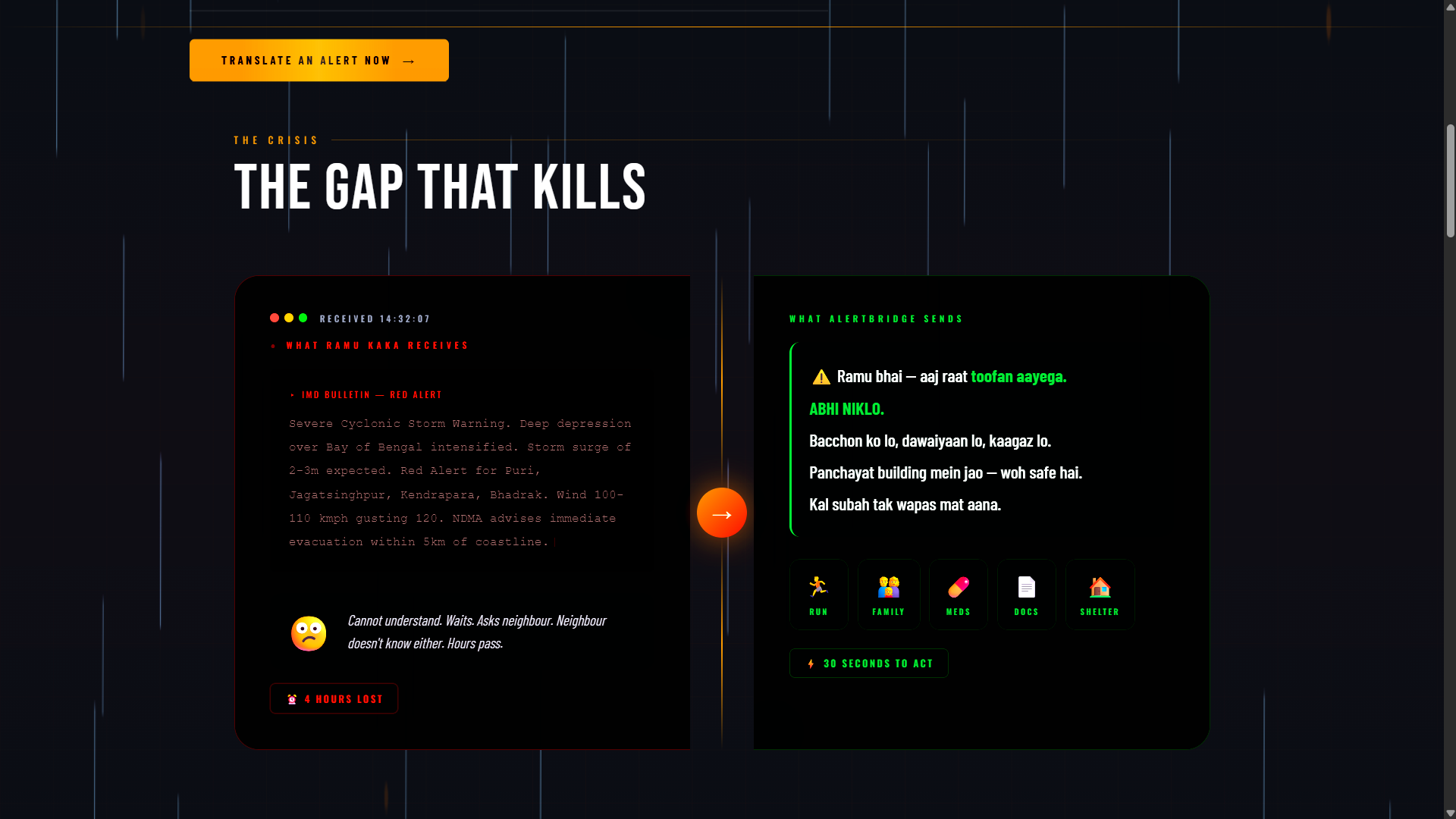
Every year, 400 million people living in disaster zones receive robust alerts from the government. But imagine being an Odia fisherman or a Maithili-speaking farmer and receiving an SMS that says: "Severe Cyclonic storm forming at 13.5°N. Anticipated barometric drop. 110kmph gusts. Evacuate."
Because they don't speak English or understand meteorological jargon, they hesitate. They ask neighbors. They wait. In a natural disaster, a two-hour hesitation is the difference between life and death. Our inspiration wasn't to build a better weather app; it was to eliminate the language barrier that costs human lives. The real enemy isn't the storm—it's the gap in understanding.
What it does
AlertBridge is India’s first AI-powered disaster survival network. It is a "translation bridge" designed specifically for rural communities.
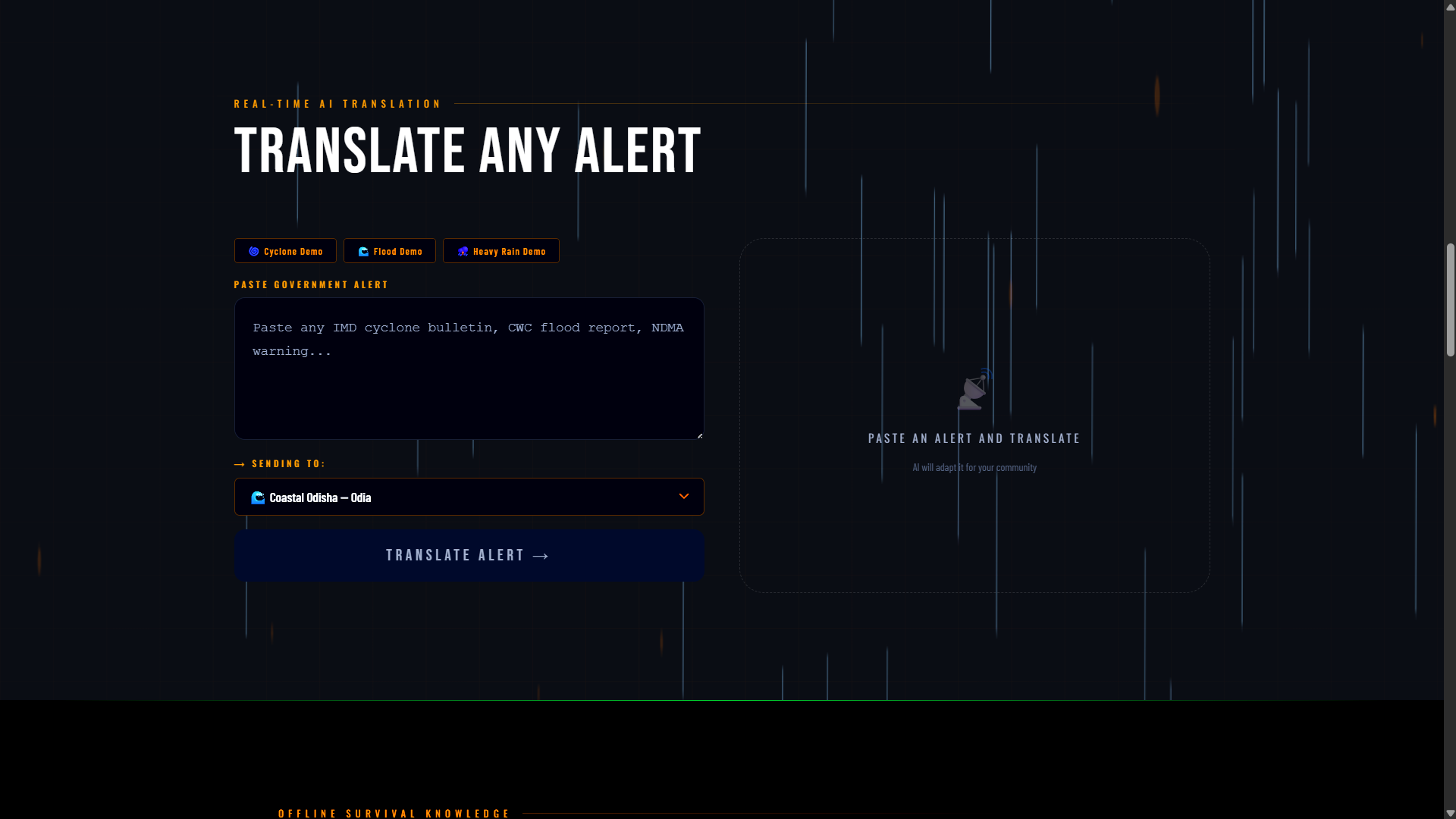
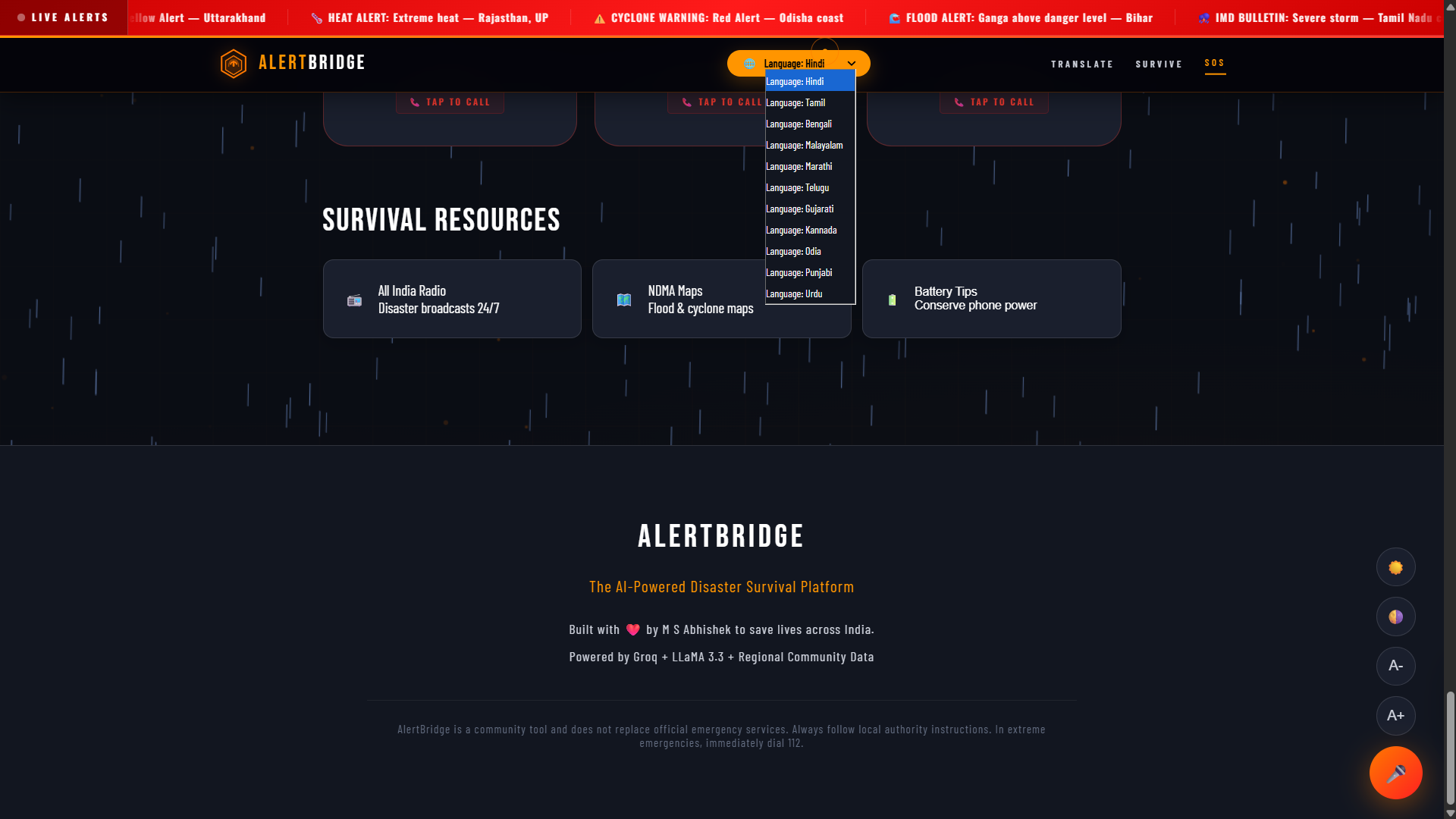
You feed the system a highly technical, bureaucratic government weather bulletin. Within 10 seconds, AlertBridge digests the data and transforms it into a localized, empathetic, and highly actionable survival warning in over 12 regional languages.
Instead of saying "Evacuate due to barometric drops," it translates into their local dialect: "Ramu Bhai, a massive storm is hitting tonight. Grab your family, take your medicines, and run to the Panchayat building right now." It formats these alerts perfectly for WhatsApp forwarding, and even generates one-tap Voice read-outs (Sunao) so illiterate citizens can simply listen to instructions out loud.
How we built it
To solve a problem for the masses, the tech had to be radically accessible. We couldn't build a bloated application that requires a 5G connection to download.
So, we built AlertBridge as a zero-dependency, single-file architecture. The entire platform—complete with stunning animations and a full AI engine—lives inside one single HTML file. It can load instantly on a 2G network in a remote village.
To power the lightning-fast translation, we integrated the Llama-3.3 model running over the blazingly fast Groq API. We built a 3-Agent pipeline that extracts the threat, adapts it to local cultural contexts, and formats it for SMS and WhatsApp seamlessly.
Challenges we ran into
Our greatest challenge was tone alignment. Disasters are terrifying, and we needed the AI to sound urgent without inducing mass panic. Tricking a highly advanced LLM into sounding like a "trusted local neighbor" rather than a robotic weather forecaster took relentless prompt engineering and cultural tuning for each specific dialect.
Additionally, crafting an interface that felt like a serious "Emergency Command Center" while maintaining strict accessibility rules (like robust Light Modes and extreme A-to-A+ dynamic text scaling) in a single-file environment was a massive UI/UX hurdle.
Accomplishments that we're proud of
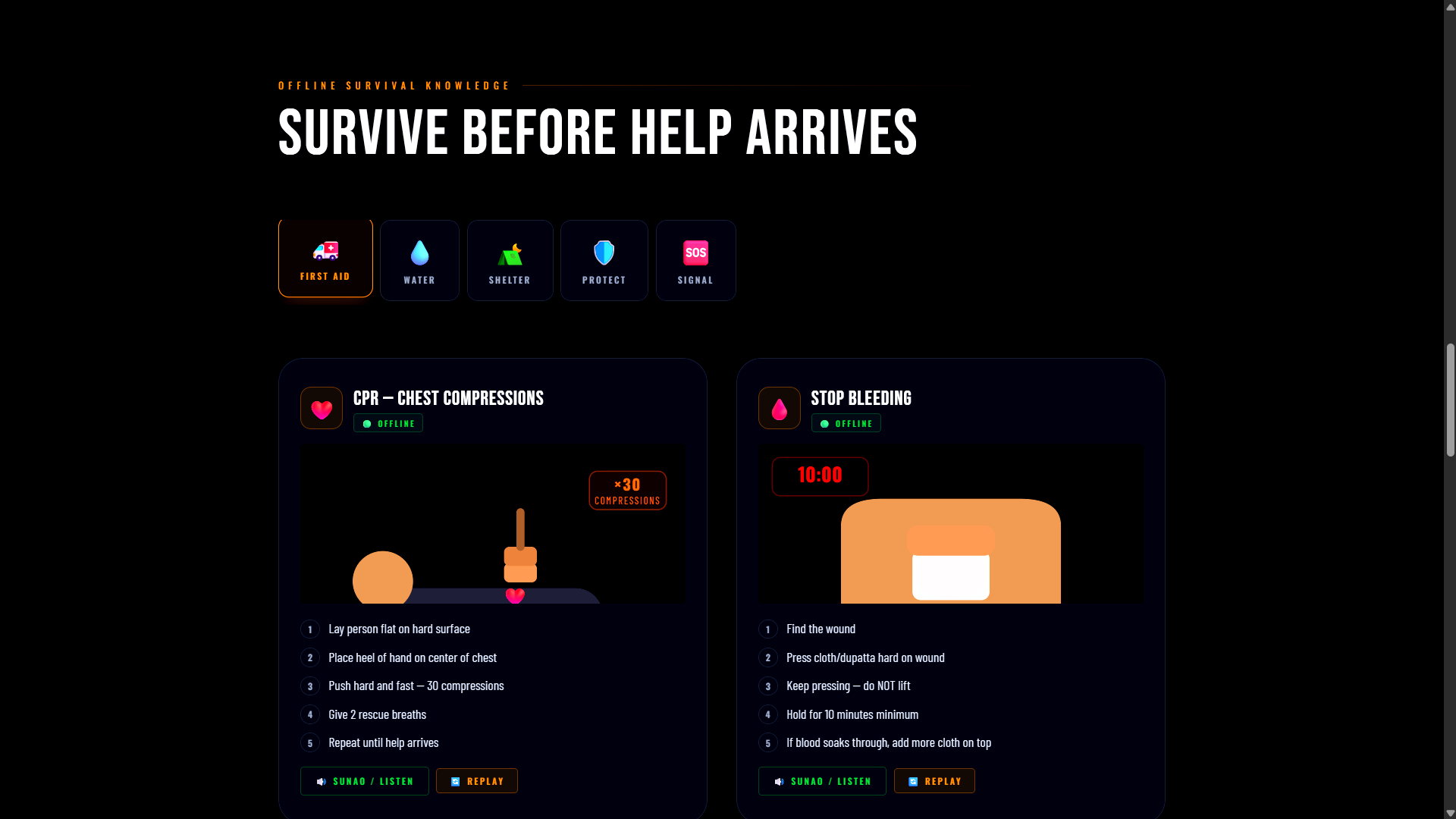
We are incredibly proud of our Dynamic Offline Survival Guides. We took standard PDF survival manuals (like "How to do CPR" or "How to boil water") and turned them into beautifully animated, interactive modules. Thanks to our AI pipeline, even these offline manuals dynamically translate themselves into the user's selected language instantly.
We successfully escaped the modern curse of bloated web development to create something that runs flawlessly anywhere, anytime, taking up less memory than a single photograph.
What we learned
We learned that true tech accessibility goes far beyond screen readers. True accessibility is empathy. It’s understanding that giving an illiterate farmer a button to make his phone speak his native language is infinitely more valuable than a beautiful dashboard. We learned that the world's most advanced AI means absolutely nothing if the person at the end of the line doesn't know whether to run or stay.
What's next for AlertBridge
We want to take this out of the browser entirely. Our next step is integrating AlertBridge directly into the WhatsApp Business API. This would allow AlertBridge to automatically intercept government alerts and auto-broadcast the translated, localized survival instructions directly into the WhatsApp groups of local village heads (Sarpanchs) across India—completely automating the chain of survival.
Built With
- api
- canvas
- css3
- geolocation-api
- groq
- html5
- javascript
- json
- llama-3.3
- openweathermap
- vanilla-js
- web-speech-api


Log in or sign up for Devpost to join the conversation.